
"Little" Review: The Laughs Make Up For The Story

There is certainly an attrition in regard to the person we were as a child versus who we are as an adult. Why that happens and if we can continue to be ourselves from adolescence to adulthood is what Little takes aim at. While the movie has some pacing and story issues, the calories you’ll burn laughing evens things out!
Jordan Sanders (Regina Hall) is the type of boss you don’t want to have. She’s mean, self-centered, condescending, and has enough money and power to get away with it all. Her assistant, April Williams (Issa Rae), is her talented but overlooked and overworked doormat. Jordan’s latest technological invention, Homegirl (voiced by Tracee Ellis Ross- think Alexa but a cool black version) is in beta testing. When her biggest client, Connor (Mikey Day) gives her 48 hours to give a new innovation before he leaves her firm, Jordan goes Hulk on her employees. She just happens to be mean to a little girl who casts a spell on her in the process.
The next morning, Jordan wakes up as the middle school version of herself (Marsai Martin). She quickly pulls in April to help her figure out what’s going on, while using her to continue the day to day activities in the company. Shenanigans ensue as Jordan learns more about herself, friendship, and what it means to be yourself.
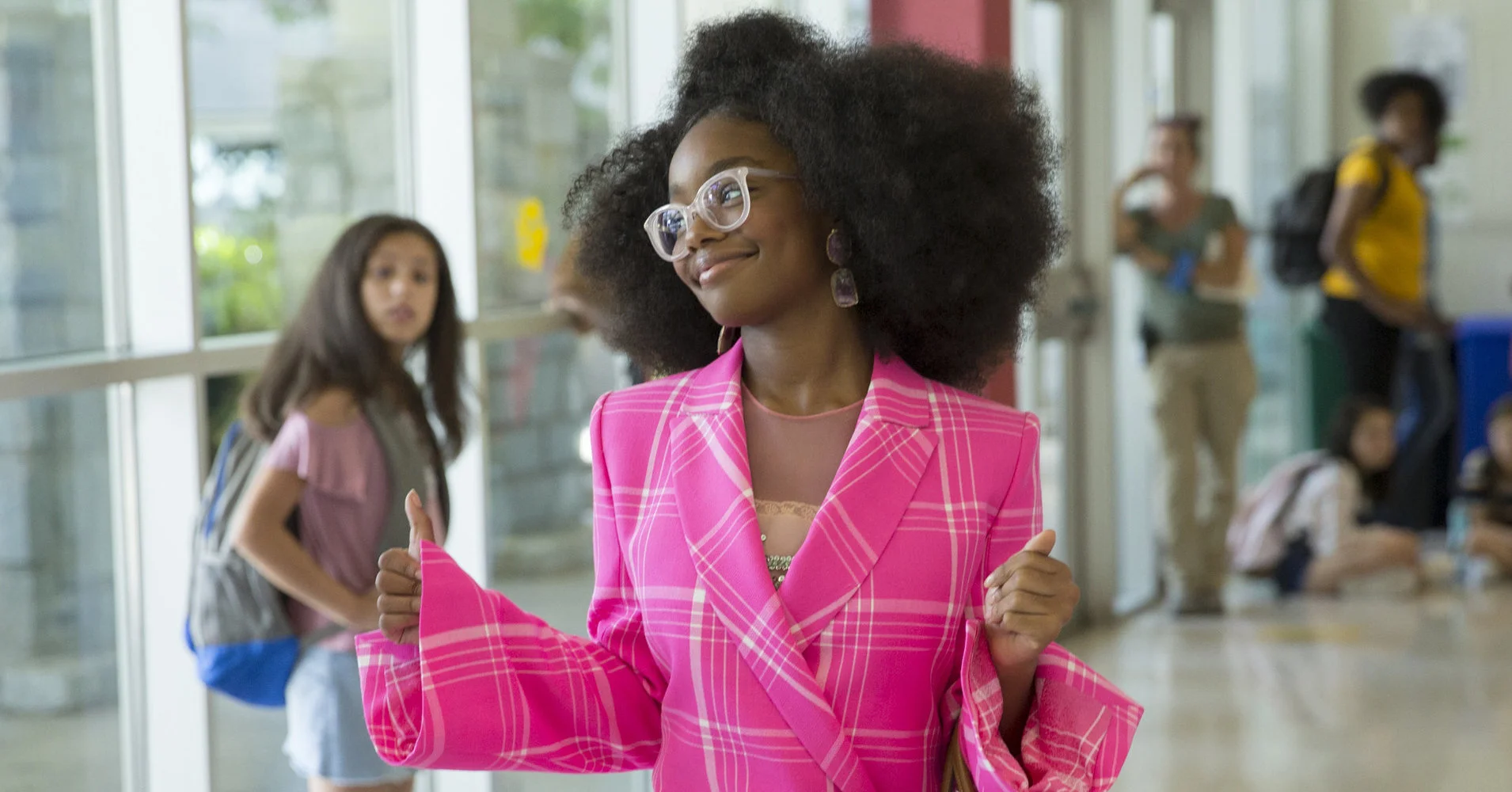
Both a blessing and a curse, the screenplay fires off jokes like a TV sitcom. It seems like the jokes come at least once per minute of screen time. Many of the jokes hit, but others noticeably don’t. When you have power players like Issa Rae, Marsai Martin, and Regina Hall (while she’s in less of the film in comparison) the funny moments of this film are not just in the dialogue but also in their expressions. All three nail their character’s persona. It is a pleasure to watch Martin outside of her role on Black-ish as she commands the screen acting as a 38 year old in a 13 year old’s body. The rapport between her and Rae is so authentic and infuses life into some of the scenes that in other hands would be hackneyed.
While the laughs come consistently and the film taps into some emotional moments, many of the scenes within the film feel common in a bad way. Inspired by the movie Big, Little doesn’t do much innovating in the body switching, Freaky Friday, type of genre. Due to that, some of the storytelling and transitions force you to forgive it for following the leader rather than lead you down a refreshingly original path.
Regardless, this film is packed with the right kind of girl power. Co-writer/director Tina Gordon takes us on a funny ride. Both Hall and Martin serve as executive producers on the film, making Marsai Martin one of the youngest executive producers in Hollywood. This movie finds itself lending to crowds somewhere in between date night and an outing with the girls, but it’s an overall entertaining time at the movies.
Rating: B-
"Missing Link" Review: Something's Missing Alright!
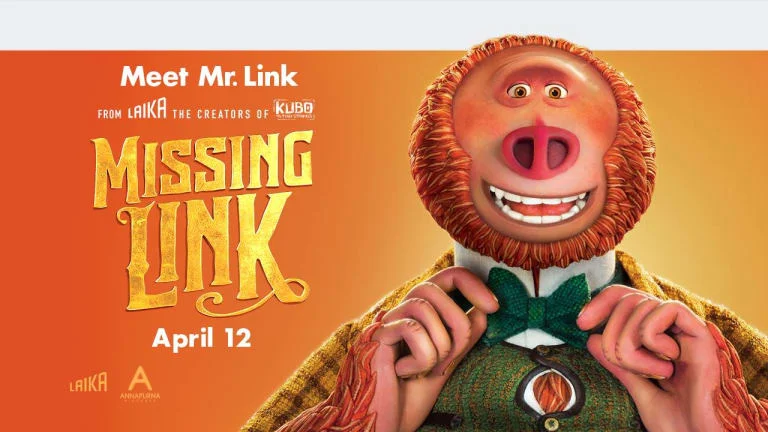
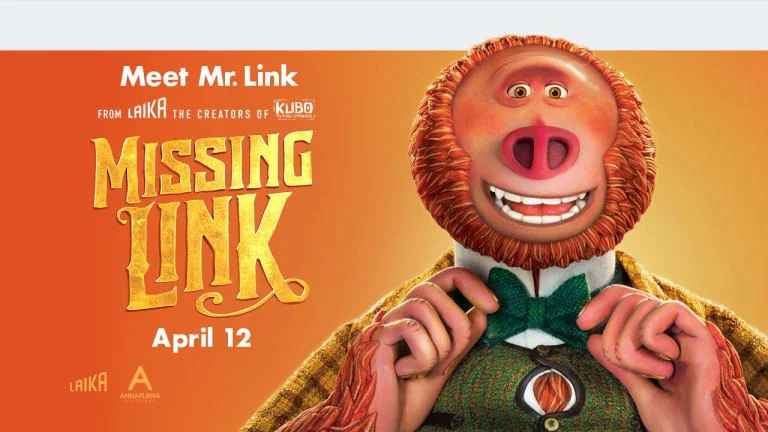
You may not know the name Laika Studios, but you know their work. Movies like Coraline, ParaNorman, The Boxtrolls and Kubo and the Two Strings are some their beloved prior films. While Missing Link is just as gorgeously handcrafted as their previous works, its missing the magic to elicit the warm fuzzies like its predecessors.
Sir Lionel Frost (Hugh Jackman) is an explorer and investigator of myths and monsters in the age of global exploration. He is fearless in his quest to find these creatures, but can’t seem to keep an assistant in doing so. After his latest assistant walks out, he receives a letter from Mr. Links (Zach Galifianakis), who turns out to be Big Foot. With the west being conquered by pioneers in North America, Mr. Links desires to find his long lost relatives, the Abominable Snowmen in Shangri-La. Not knowing how to get there, Frost and Links visit Adelina Fortnight (Zoe Saldana), a widow whose husband possessed a map to the mythical place.
Writer/Director Chris Butler is a master craftsman of the optics of the film. His attention to detail make for an entertaining watch. The light by the fireplace produces a warm orange on characters’ faces, an aerial shot in which the heroes travel by horse and carriage shows the shadows of the horses galloping along beside it, and the facial movements of the characters are so spot on that you can’t help but be swept away by the performances. The marriage between the actors’ delivery of lines to the crafting of their animated image is perfection! There is a grandmother the cast meets on the way to Shangri-La who is perhaps the funniest character in the film, but Butler shows her with a constant head tremor. It’s such a small detail, but it makes her character so authentic. The craftsmanship of the film must be honored!
While the visuals and voice acting is amazing in this film, the story is just plain dull. The screenplay doesn’t rise above stereotypical fare. You could argue that this is a film about the characters finding themselves on the harrowing journey to Shangri-La, but that’s boiler plate marketing. The screenplay gives little to care about by investing in the characters we see. So much of the film consists of watching the set production and waiting for the next bit of humor to break up the stodgy storyline.
Generally, I could give the stamp of approval for your kids enjoying the film more than you will, but I’m not so sure this time. The script and its’ jokes strike somewhere in between humor for kids and adult humor (and that doesn’t equal teenage humor), thus it gets lost in the middle of nowhere. I can’t quite put my finger on it, but there’s some missing link to making this film great! As beautiful as it is, it may be best to catch this one after it gets out of the theaters.
Rating: C+

"The Best Of Enemies" Review: Another Been There Seen That Blockbuster on Race Relations
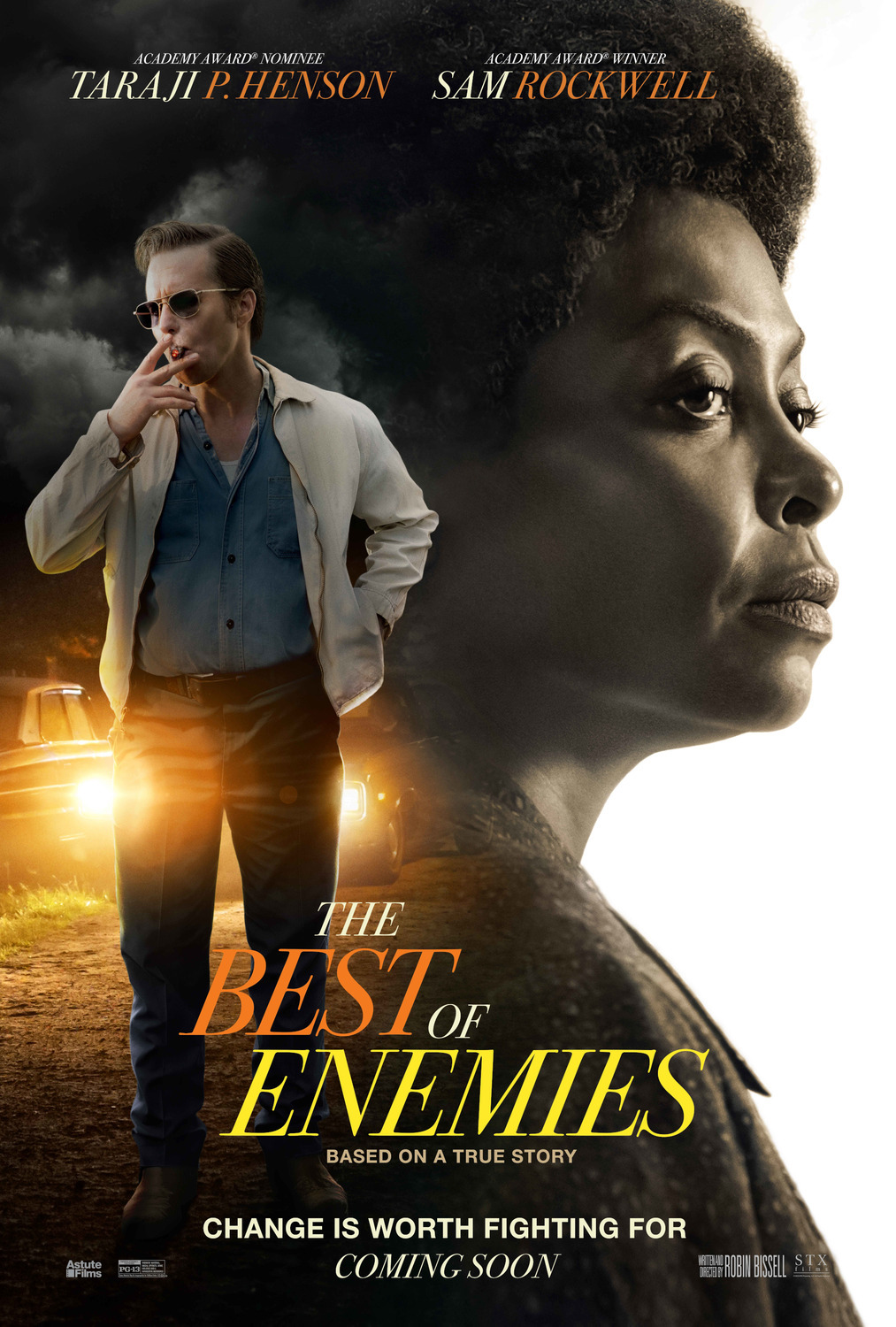
If you’ve seen a blockbuster Hollywood film dealing with race, you’ve seen The Best of Enemies. You can expect to learn more about the white antagonist than the black protagonist, whose weight in the true story is equal or greater to the other. The heart of the message, as it usually is, is definitely one that is good and should be celebrated. The problem is, with the same old screenplay structure, this film is still preaching to the choir and not digging deep enough to give us a sense of hidden figures in our nation’s history.
The film is set in 1971, when C.P. Ellis (Sam Rockwell) was the Exalted Cyclops of the Durham, North Carolina klavern of the United Klans of America. Ann Atwater (Taraji P. Henson) was a fair-housing activist at the time, trying to fight for the treatment of African-American residents in the community. After the segregated black elementary school burns from an electrical fire, the community has to decide whether to integrate the white school or not. Bill Riddick (Babou Ceesay) is brought in from Raleigh to conduct a charette, a deadline driven time of planning or activity, in order to bring the city to a conclusion.
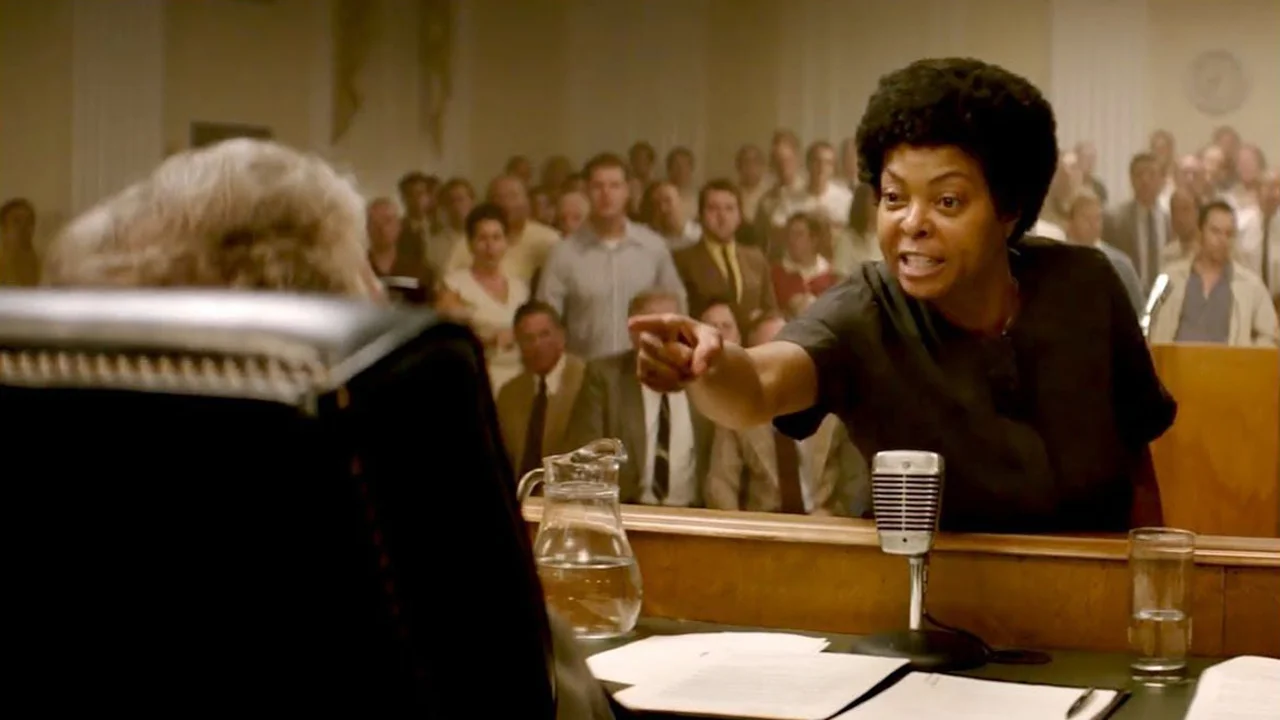
The film builds Ellis’s character early on by showing him and fellow klansmen shooting up a home of a white woman who is dating a black man. “Wait for the light!” C.P. says. They shoot through the bottom floor of the home to intimidate her as soon as the light upstairs is turned on. It’s an interesting look from the inside of the Klan as to how they’re doing their “job”. Ellis also has a son in a mental hospital who he visits regularly and pours love into. So it’s evident that he understands loving someone who may be different, but is staunch in his racist thinking. Atwater is always breathing hard. It could be because she’s overweight, but there is a sense of anger brewing under the surface with her that comes from years of hard work and hard living. While she’s not afraid to talk to the city officials who don’t care what she has to say (one turns in his chair to give her his back during a hearing) Atwater means business and expects them to listen.
The elements of a dynamic drama are there. There is an internal clock within the film that pushes the movie forward. You have a man who hates black people but loves his family and a woman who advocates for black people by speaking truth to power on a daily basis. The question becomes, how did they go from enemies to having the kind of friendship in which Atwater delivered the eulogy when Ellis died in 2005? It’s this deep study in character development and human interaction that writer/director Robin Bissell misses the mark on in exchange for symbolism over exhibiting the internal reflection/change of his characters.
Throughout the film, social class is represented through clothing. The rich and educated wear suits and nice clothes in the film, while the “common folk” wear button ups and dresses thin enough for their sweat stains to seep through and make sure we know they work hard. In fact, the rich don’t ever seem to sweat in a community that seems to be hot as evidenced by Atwater’s constant use of a handkerchief to dab away her sweat. There is a surface level exploration of the politics of the town that would give the viewer an inside look at why tensions exist amongst the the groups represented in the film.
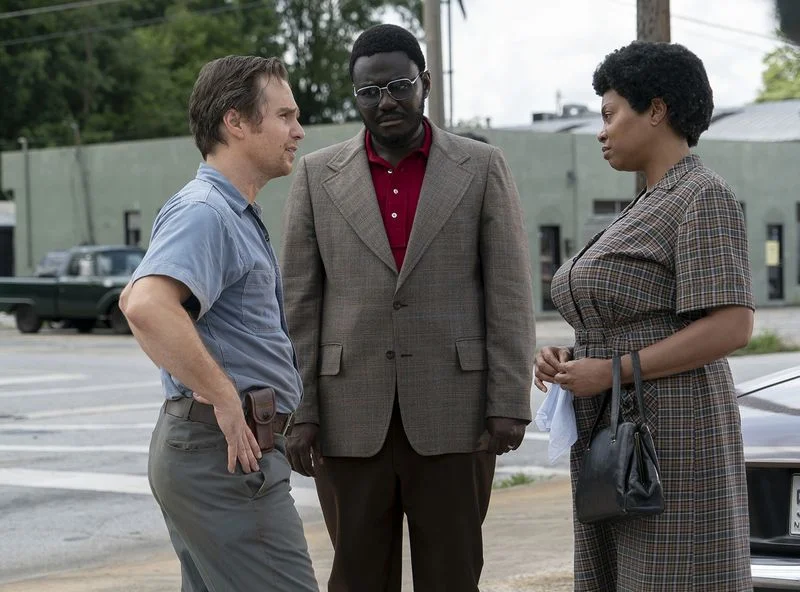
Atwater does a nice thing for the Ellis family, unbeknownst to them, which simply serves as an example of being kind even when someone is mean to you. At the end of the charette, Atwater gives a one sentence answer in whether the schools should be integrated or not. We get a monologue from Ellis for his decision to do what we knew was right from the beginning. There is a disproportionate amount of focus and backstory on both characters in this film, and that has to stop.
If The Best of Enemies had never been made, the vast majority of people who see the film would never know about Ann Atwater and C.P. Ellis. So there has to be some credit given to the people who brought this movie to life. However, if we’re going to have stories dealing with race and overcoming prejudice in our history, let’s do it the right way! Taraji P. Henson and Sam Rockwell brought it as their characters, but perhaps the same equality their characters were fighting for should be brought to similar screenplays in the future!
Rating: C
My Video Review:
"Dumbo" Review: The Film Doesn't Soar

2019 promises to give us a slew of live-action films based off of some classic property. Aladdin, The Lion King and Dumbo are the titles parents can get ready to take their kids to. As a parent of young children, I now realize that some films my parents took me to growing up is another example of their love because sitting through it must have been hard to endure. Dumbo is retribution for their sacrifice, and I can only hope the rest of the year doesn’t exact more vengeance!
Danny DeVito runs the Medici Bros circus as Max Medici. His circus of outsiders travel from town to town in 1919 by train, bringing fun to the towns they stop in. Amongst the circus family is Holt Farrier (Colin Farrell) and his two children: Milly (Nico Parker) and Joe (Finley Hobbins). They take care of the elephants, which includes Dumbo, the newest addition to the clan. Dumbo has oversized ears and they quickly learn that the tickle of a feather can make him fly.
Once the word is out that there’s a flying elephant in the world, the chance to bring the spectacle under his own circus brings tycoon V.A. Vandevere (Michael Keaton) running. He buys the Medici circus and pushes to make Dumbo the main event. You can imagine the heroism that has to follow in order to keep Dumbo safe.

This film comes down to casting and it’s hit and miss. Danny DeVito is great, but he gets put into a closet literally and figuratively after Vandevere takes over. Keaton enjoys playing Vandevere a little too much, becoming a caricature of the evil villain missing a mustache but with a bad toupee. Farrell’s southern accent is absolutely ridiculous, and Nico Parker’s delivery of her lines is equally cringeworthy.
The first half of the film feels like Disney got director Tim Burton to succumb to their bright and beautiful ways, but once Dumbo goes under Vandevere control the film takes a darker tone. Cinematographer Ben Davis changes the bright and hopeful lighting scheme to a dark and oppressed washed out dark blue. There’s no doubt that Burton is able to capture some of the wonder and awe of the circus through his set pieces and swells in the score, but that’s the best part of the film and it’s not enough.

My kids loved the film, and I was shocked at the number of adults in the theater without kids as well. So this film will definitely have an audience of kids or adults looking for a nostalgia fix from the 1941 animation. If it’s an indication of the films we’re about to see this year take a deep breath and make sure you’re seats are reclinable because at least your money will go toward getting a comfortable spot to watch the back of your eyelids.
Rating: C-
"The Brink" Review: The Charismatic Uncle That Needs To Sit Down Somewhere
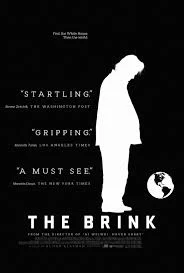
Steve Bannon is a conservative media and political strategist and the former chief strategist for Donald Trump’s presidential campaign. Just in case you weren’t aware. If you’re expecting to leave The Brink knowing more about his background and what made him who he is, this isn’t that type of documentary. However, that’s the one thing that makes it intriguing because it doesn’t ask you to pick a side, nor does it build its main character up. It simply gives you a slice of life look at Bannon and let’s you do what you’d like with that information.
An early scene in the documentary shows Bannon talking about how well engineered the German death camp at Birkenau was. (Auschwitz used buildings that were already there while Birkenau was built from scratch.) He describes coming to an epiphany that there was a group of people who got together to plan out how to efficiently erect an infrastructure to kill, dispose and repeat the process with Jews. He says he can see the coffee and strategy conversations that were had. While his admiration is more than a bit haunting, this isn’t a random scene, it’s the set up for the rest of the film and metaphor for his life.
From there we continue to get a fly on the wall look at Bannon’s life shortly after departing from the Trump White House. Director Alison Klayman doesn’t give us a structured storyline outside of following him to the 2018 midterms, and jumps from event to event, hotel room to hotel room, and rally to rally across Europe and America. The sum of many parts allows certain stump speeches, phrases, and interactions to become clear to the viewer. As much as Bannon gives off the cool, charismatic uncle that needs to sit down somewhere vibe, he bathes in his own hype to try to wash his insecurities.
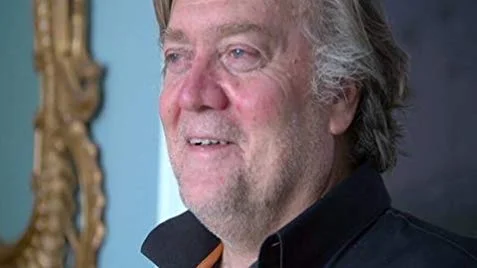
Bannon is given room to be himself and dig himself in a hole with some of the things he says within the film. He even mentions how he’ll be crushed after the doc comes out. He’s self-aware and understands how to use negative press to his advantage. His charm and doggedness to see economic nationalism grow makes it clear why he’s successful with his base. Yet, even while he’s interacting with people and crowds on a weekly basis, there’s a hint of loneliness and isolation in the road he’s chosen. Klayman could have cut it out or not captured it, but you never see a real sense of connection to anyone.
This is the type of film that makes the film festival circuit, does low numbers in the box office and finds a home on some streaming network. That’s where I’d catch it, if you’re one of the folks that would be interested in what goes on behind the scenes of Steve Bannon’s life.
Rating: C

"Us" Review: Be Prepared for Nightmares
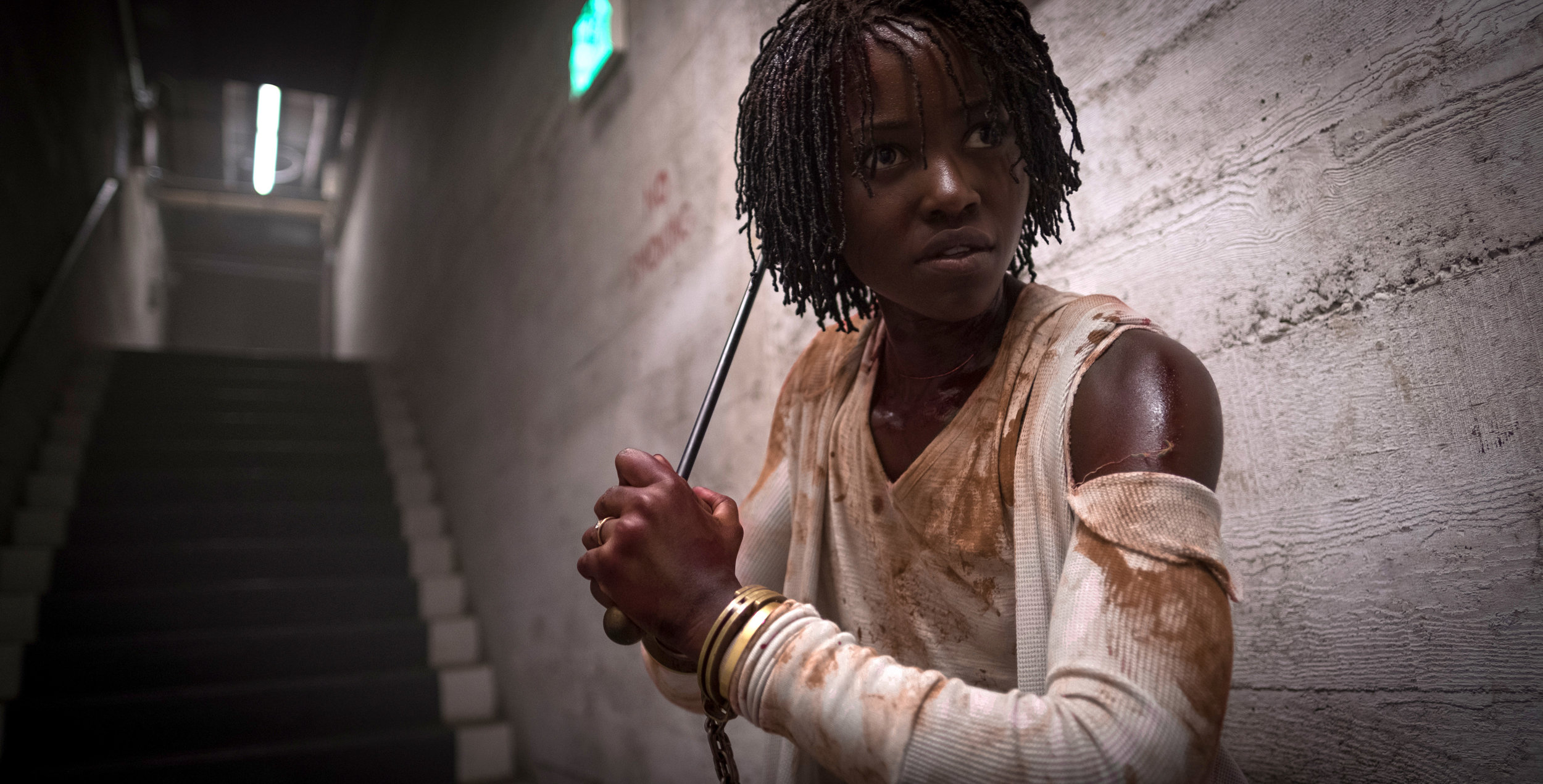
A little over two years ago, Jordan Peele told us to Get Out. This time he wants us to look at ourselves in his new movie Us. While this film doesn’t rise to the masterpiece heights of its predecessor, it sure proves that Peele understands cinema and he’s no one hit wonder. Usually I’d say the hype is real, but the truth is true this time around, and Us is the sci-fi/horror truth!
As a young girl, Adelaide Wilson (Lupita Nyong’o) wandered off from her parents at the Santa Cruz beach. The experience left her speechless and in therapy for years. So years later, when her husband Gabe (Winston Duke) decides that her and the kids should go to the same beach for vacation, she begrudgingly goes. They meet up with the Tyler family and Adelaide learns Kitty’s (Elizabeth Moss) secret to dealing with life is booze, while Gabe and Josh (Tim Heidecker) compare boat sizes.
Once they finally get home and Zora (Shahadi Wright Joseph) and Jason (Evan Alex) are tucked in, the lights go out and things get weird. A family stands at the edge of the drive way and won’t budge off the property. Once the Wilson family realizes the family is comprised of themselves (called the tethered), a story only Jordan Peele could unveil begins.
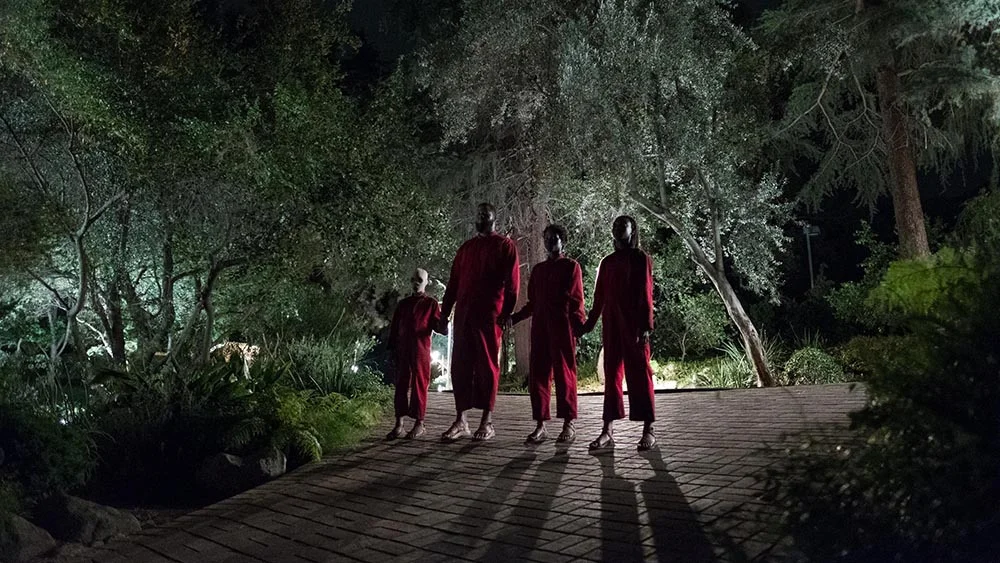
Peele hits every note of suspense in setting up scenes that we as an audience are frightened by and using every element of cinema to capitalize on that fear in a way in which you feel like you are in the situation. He uses sound and the lack thereof to build those fight or flight moments that we experience in real life. He’s not afraid to let a moment breathe and build the tension in a scene like some directors in the genre back away from these days. His blocking of characters shows an understanding of a frame of film and how to use it. In a scene with Adelaide riding shotgun in the foreground on the way to the beach with a look of absolute nervousness and Gabe in the background obliviously happy, he allows the story to be told without a useless back and forth of camera shots.
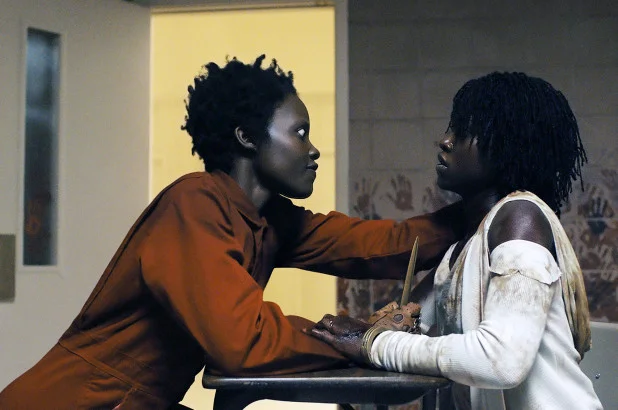
Lupita Nyong’o gives a stellar performance as both Adelaide and her tethered, Red. She plays a range of emotions as both characters and is stellar at it. Red’s presence is almost good enough to put her in the top lists of movie villains. The rest of the cast equally play their parts well in such a way that once the story comes together, you’ll have tons to talk about in the parking lot.
You better believe I’m talking around this film so you can go in as blank as possible. Us does have some story issues, but the setup and storytelling more than make up for those issues. See this film with as many black people as possible! It will only enhance your experience because this is definitely a film you may find yourself talking to the screen in throughout its second and third acts. If you don’t know how to do it, sit back and take notes because it might get hilarious in all the right ways. The best part is, the main characters don’t constantly make silly decisions. It’s old fashion horror and sci-fi with all the good twists and turns it seems we will come to expect from a Jordan Peele movie. With this film, it seems we’re on the verge of seeing a new auteur in the suspense thriller genre.
Rating: B+
WATCH MY IN DEPTH REVIEW BELOW:

"Captive State" Review: An Earnest Attempt At Something New But Familiar
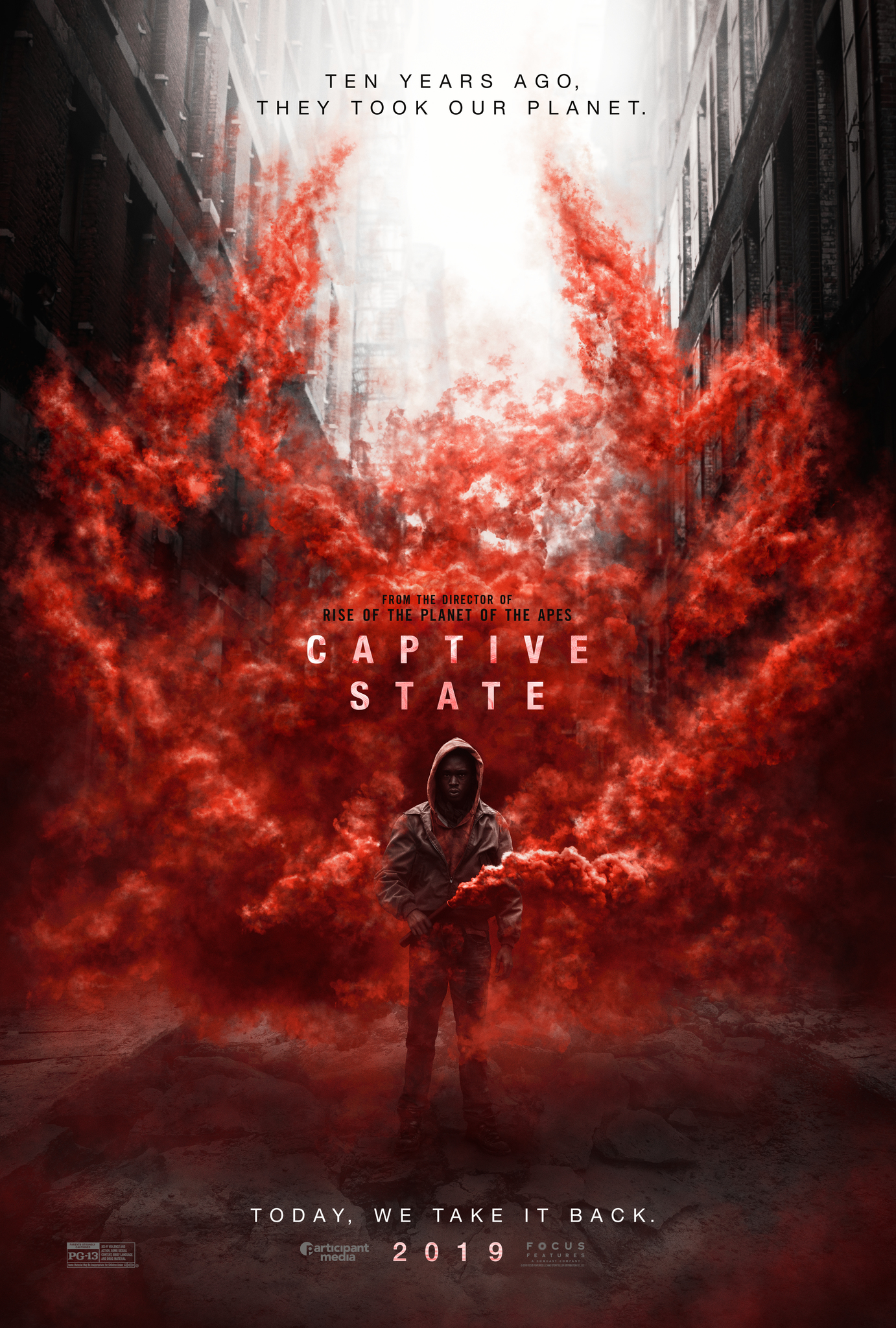
Science fiction films have an amazing way of drawing out the collective wonder, mystery about the universe, and our relationship to it. Good sci-fi finds a balance between questions unknown and what we do know. Captive State works because it shies away from what we expect to see in a film about an invasion of our planet. We expect to see aliens. We expect to see technology we don’t understand. Instead, co-writer/director Rupert Wyatt gives us a tense thriller dealing with what the beginnings of an uprising looks like with science fiction as the backdrop.
We’re immediately dropped into a family car tearing through the streets of Chicago just after a species has descended upon us and are making their dominant presence known. Lines are drawn, and there are certainly places that humans can’t or won’t go. The Drummond family ignores the rules, resulting in the mother and father being vaporized in front of their two sons, Gabriel (Ashton Sanders) and Rafe (Jonathan Majors). Nine years later, humanity is fully submissive to the alien race.
There is no exposition as to what the new world order and rule is. We learn through characters and their actions. John Goodman is detective William Mulligan. Crime is at an all time low because the aliens (rarely seen) apparently don’t play that. So police not only serve and protect us, but now observe and keep tabs on humans that may step out of line for the invaders. Mulligan is keeping tabs on his ex-partner’s son Gabriel, whose brother, Rafe, became a recent martyr for an underground resistance called Phoenix. With an upcoming peace rally in which the aliens will make an appearance, surveillance is at an all time high.
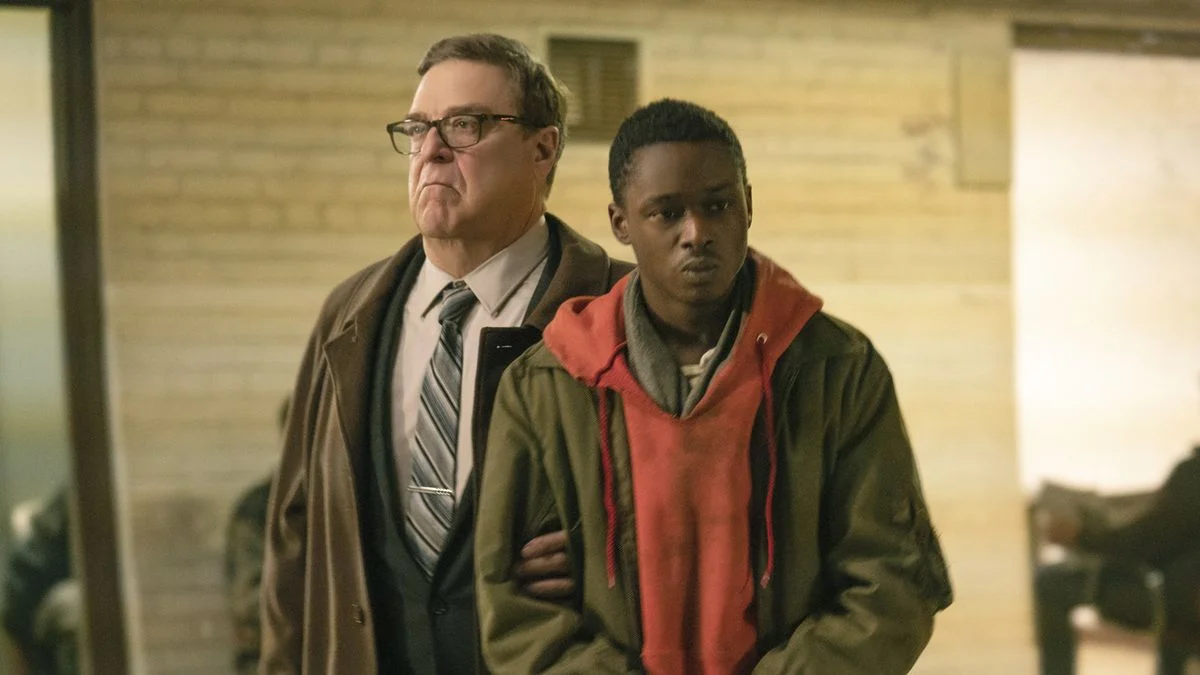
Captive State may be fifteen minutes too long, but there is no doubt that screenwriters Erica Beeney and Rupert Wyatt have thought this world through from A to Z. That’s what makes this particular sci-fi film fun. It may take itself too seriously, but you don’t have time to realize that because you’re too busy trying to keep up with what’s unfolding. With strong performances from Goodman, Majors, Sanders and Vera Farmiga as Jane Doe, the world of Captive State feels authentic, lived in, and realistic.
This is the type of film that may not take the box office by storm this weekend, but people will say “that was actually pretty good” as they discover it on streaming platforms in the future. I think its worthy of the big screen treatment for your plans this weekend. Its earnest attempt at giving us something refreshingly new but familiar might just captivate your mind and imagination.
Rating: B

"Yardie" Review: A Run of The Mill Gangster Flick

The gangster film genre has been a favorite since the early beginnings of film. With its rags to riches story of a person who works their way up in the world is the American dream from a sinister angle. Based on the 1992 crime novel by Victor Headley, Yardie, Idris Elba’s directorial debut, walks and talks like a gangster film. It just doesn’t compare to the titans of the genre.
1973 Kingston, Jamaica is the setting for the opening of the film. A young Denis (Antwayne Eccleston), who goes by D, is in that phase of pre-teen life where even though the world around him is full of violence, he still has a chance to go down the right path. His older brother, Jerry “Dread” (Evelrado Creary) is trying to get the two warring factions of the community to put down their guns with a peaceful dance party. Unfortunately, the party ends when Jerry is gunned down by a local boy. This moment in time becomes the shift for D to the dark-side.
Six years later D (the older D is played by Aml Ameen) is now under King Fox (Sheldon Sheperd), one of the original gang leaders his brother was trying to have squash the beef, and a rising star in the organization. After D gets in hot water with a rival gang he’s sent to London to lay low and handle a cocaine drop overseas until things quiet down. Once there, D reunites with his Jamaican sweetheart and baby momma Yvonne (Shantol Jackson), who left Kingston with their baby for hopes of a better life. He also reunites with hot water.

Cinematographer John Conroy paints just the right amount of vibrant color for Elba’s Kingston, and desaturated Earth tones for a dreary London with his lighting scheme. Elba has a good handle on using the camera to tell the story. Unfortunately, the screenplay from Brock Norman Brock and Martin Stellman just isn’t electric. The ensemble cast’s performances aren’t quite good enough to elevate the words on the page either. So what’s left is a stereotypical, predictable, gangster flick.
All things considered, if Elba had stepped into the role of D, he would have brought the gravity the film could have used to enhance its story. It still wouldn’t dismiss the fact that the screenplay doesn’t leave room for us to truly connect with and care for its main character. Much like Denis, Yardie is just another film caught up in an ever changing lineage of films like it ready to ascend to the throne of our collective top films in the genre.
Rating: C

"Captain Marvel" Review: A Speed Bump On The Way To "End Game"
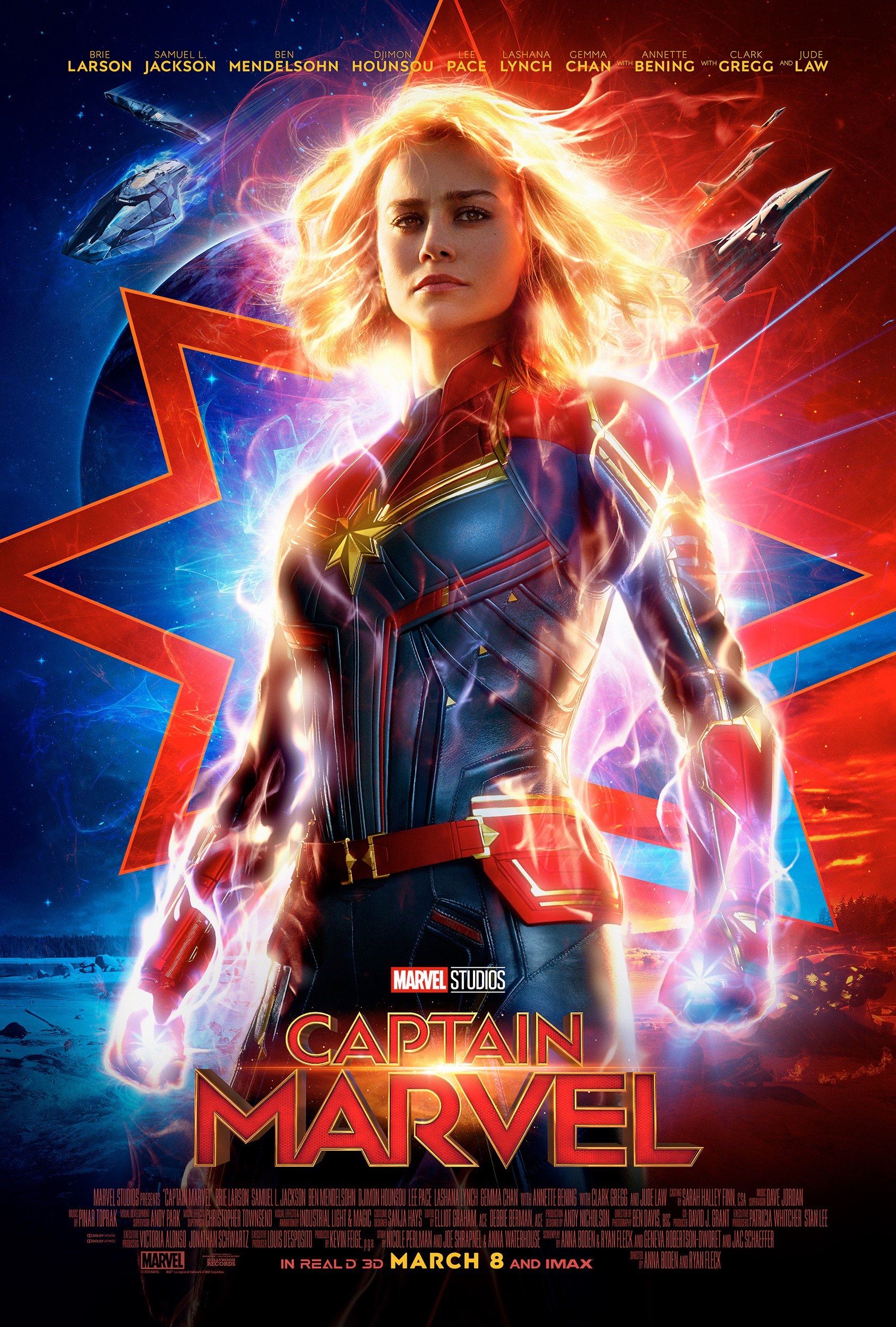
We’ve had an amazing journey in the Marvel Cinematic Universe (MCU) thus far! What the studio has been able to do in growing from 2008’s Iron Man to Captain Marvel is incredible. With half the universe gone and the other in peril, Captain Marvel, while full of great chemistry amongst its cast and female empowerment, feels like a speed bump on the road to Avengers: End Game.
The call went out from Nick Fury (Samuel L. Jackson) via an old two way pager in Avengers: Infinity War during the end credits of the film. We saw the iconic symbol for Captain Marvel, and this weekend in theaters we get our answer as to who she is and what her powers are, kinda. Set in the 90’s, Vers aka Carol Danvers aka Captain Marvel (Brie Larson) doesn’t remember much about her past but sees it in glimpses within her dreams. She’s being prepared for battle by her mentor Yon-Rogg (Jude Law) of the Kree race. Their enemy are shape-shifters called Skrulls. After an interaction with the Skrulls ends with her landing on planet C-53 aka Earth, Vers must hunt for the Skrulls who landed with her while trying to make sense of her past. Her crash into the local Blockbuster brings a young Nick Fury to the site, and thus begins a buddy comedy as only Marvel can do.

The issue with Captain Marvel is that the first two acts of the film are a small, intimate tale that viewers would have ate up in 2011. The magnitude of what’s going on in the 2019 MCU is so big, that Carol Danvers backstory seems so insignificant in the scheme of it all. I realize it’s not, but the convention of storytelling used by writer/directors Anna Boden and Ryan Fleck is all over the place for the first two thirds of the film. It starts out as a mystery, Hangover-esque tale and then becomes a buddy comedy and is heavy handed in making sure its main character knows that she needs to stay in line. It’s also missing an internal clock (a device in film in which the characters are moving to a deadline) to help us move toward the end of the film. So the search for Skrulls doesn’t have any real weight to it other than what the characters tell us.

Once you get to the final act of the film, things take off! Suddenly, we have an engaging film that you feel more invested in. Don’t get me wrong, this film is packed with brilliant performances by Samuel L. Jackson, Brie Larson, and Ben Mendelsohn as Talos/Keller (in that order). The chemistry of the cast and the way they bounce dialogue off of each other is what excuses the first part of the film. Even smaller roles like Carol’s best friend, Maria (Lashana Lynch) and her role model, Mar-Vell (Annette Bening), are nice character performance additions. The final act also gives us something to run toward in regard to impending danger.
As the marketing for this film suggests, there is a strong message of female empowerment that’s great to see, especially for little girls who get to see a powerful female superhero on the big screen! The 90’s references and soundtrack for the film (while the songs are a bit on the nose coupled with each scene) is a nostalgia fest for those of us who lived through them! The one other problem I had is that the film gives us an understanding of how Captain Marvel obtained her powers, but does not tell the extent nor give an actual clear description of them for us to understand what they are and why the internets are saying she’s so powerful. So be sure to sit next to a fanboy/girl who can explain it to you if you don’t know the history like me.
Overall, the film is another decent entry to the MCU, but it just doesn’t have the same bite and excitement in storytelling that the films released in Phase 3 has had. It will be great to see her in the MCU going forward and she is a welcomed addition. Look, speed bumps are necessary, keep us safe and you have to go over them in order to get to your destination. This is a safe entry installment into the broader franchise and I wish it was more! As always, be sure to stick round through the final credit sequences!
Rating: C+

"Mapplethorpe" Review: A Living, Breathing Wiki Page of A Film
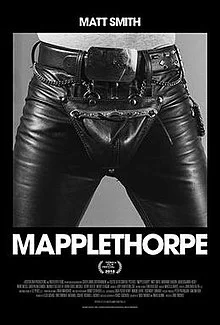
The first time I became aware of Robert Mapplethorpe was during a lecture in college for a History of Photography course I took that semester. The images that our professor showed us were certainly something, and my fellow classmates had some opinions, but it gave a sense of showing the world what kind of photographer he was. Generally, biopics can go one or two ways. For some, biopics can be an enlightening portrait of the person the film is covering to the point that it shines a new light on them. For others, biopics can often feel rushed, like seeing a Wiki page come to light to showcase the greatest hits. In many cases, those biopics failed to bring up why the people were engrossing to begin with. Sadly, Mapplethorpe falls into this realm. For such a provocative photographer, this biopic fails to do him justice. Better yet, it fails to showcase why he was such a compelling figure to begin with.
This latest biopic from filmmaker Ondi Timoner, making her narrative directorial debut after helming documentaries like 2004’s DIG! and 2009’s We Live in Public, covers the life of controversial photographer Robert Mapplethorpe (Matt Smith). From his early beginnings as a struggling artist to getting his hands on his first Polaroid camera, Mapplethorpe begins to find his voice photographing nude figures, the BDSM subculture, and still-life, while coming to terms with his sexuality. As his works begin to hit the nerves of certain groups, we see how Mapplethorpe continues to rise and become the photographer that you either like or hate before his death in 1989 due to AIDS.
On the plus side, it’s interesting to see how Timoner seamlessly interweaves Mapplethorpe’s actual photographs into the film, and the ways that the film transitions to the photographs was spot-on. The acting was fine, but nothing special. The soundtrack that was curated for the film wasn’t bad as well. There were a couple of visual flashes that Timoner and her DP, Nancy Schreiber, came up with that really worked for me. In particular, a scene with Mapplethorpe getting rejected after beginning his career and when they show his life flash before his eyes. If the film had a more of a visual style to begin with, which these scenes made evident it could have had, then at least it would have had some flavor to it.
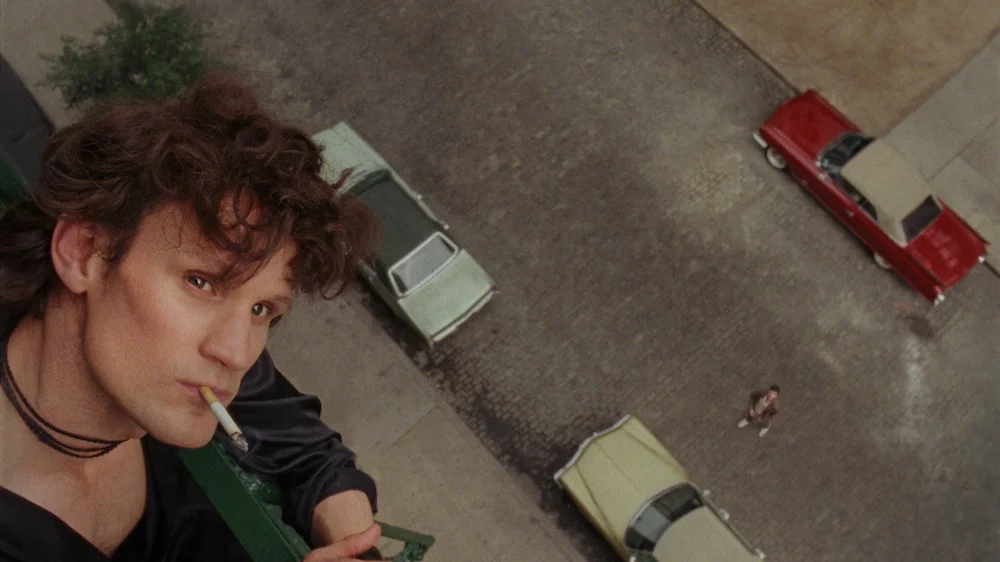
Unfortunately, for such a fascinating figure, this is a dull portrait of a film. The screenplay from Timoner and Mikko Alanne, working from an earlier screenplay by Bruce Goodrich, never gives you insight about Mapplethorpe or what was going on inside his head, but just assumes that you already know. Since it feels like a living, breathing Wiki page film, scenes bounce around without any cohesiveness to connect them, and rushes through important events in his life. Plot threads are introduced that don’t get further explored like his estrangement from his disapproving father (Mark Moses). Characters come and go as the screenplay dictates, but I wanted to see more with his relationship with Patti Smith (Marianne Rendon). Too often, the screenplay has that “been there done that” type of feel that we’ve seen from underwhelming biopics before.
Since the screenplay is weirdly constructed, there is no pacing, which makes the film longer than the 102-minute runtime it has. You also don’t really care for Mapplethorpe, or any of the characters for that matter, since there is no character development. While the visual style for the film gets better towards the end, the first two thirds is flat, and for the type of figure that Mapplethorpe was, you would assume that the style of the film would match his work, but that’s not the case. But hey, there’s a upside to all this, in that it became a fun game to see whether or not at a given time if Smith was using a wig or his actual hair, since it’s fairly obvious in some places.
Overall, I believe there’s a proper way to fully tell his story, but Mapplethorpe doesn’t cut it at all. It’s a misfire on all accounts that make the cardinal sin of filmmaking by being dull. By the time the film ended, I still didn’t know who Robert Mapplethorpe was as a person and what made him tick. If you’re interested in learning more, read up on him or look at his photographs, cause they tell you more about him than this film does. You don’t need to spend your money in the theaters watching this.
Rating: D+

"Fighting With My Family" Review
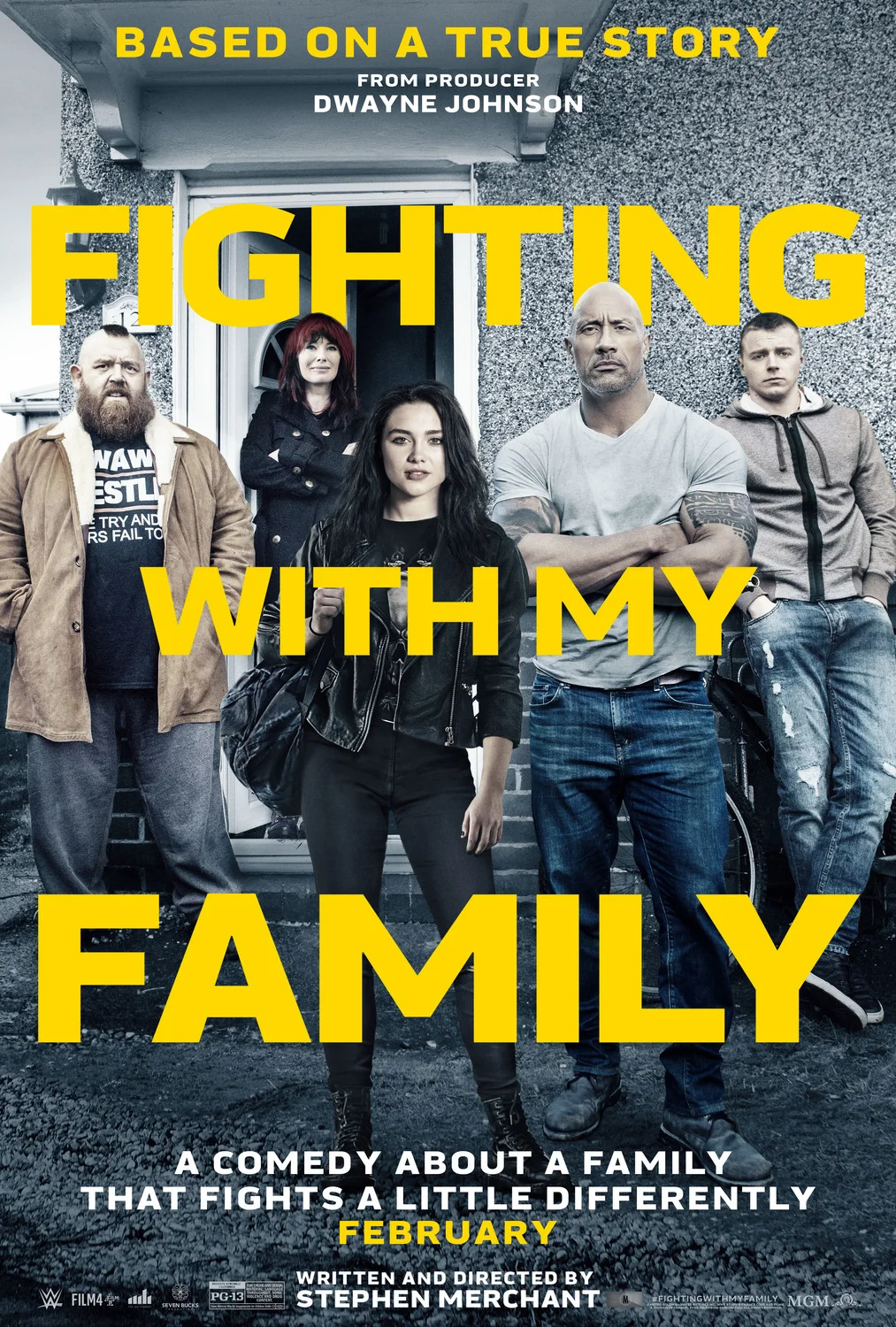
Fighting With My Family is the definition of a crowd pleaser. It’s light hearted, but has heart. It’s got the hero’s journey ingrained in it as it’s based off a true story. If you’re a fan of wrestling, this film is definitely for you! It’s a step above your average sports movie and a good bet for your venture to the theater this weekend.
The Knight family has wrestling in their blood. With a piecemeal amateur wrestling company, the family has been wrestling in their town of Norwich, England for years. While Ricky (Nick Frost) and Julia’s (Lena Headey) glory days in wrestling are behind them, it’s obvious that they put a lot of weight on the possibility of their children Zak (Jack Lowden) and Saraya (Florence Pugh) going “all the way” and become pro wrestlers in the World Wrestling Entertainment organization.
The film boils down to a central point of two conflicts: Saraya and Zak are at odds once she makes makes the cut for the WWE after they both try out, and Saraya has to wrestle with herself to find the drive within to achieve her dream in America with her family thousands of miles away. These conflicts drives the movie forward in a way that no matter where you’re from you can relate to the issues on screen. How do you put aside your feelings to support someone you love who is doing what you were turned down from doing? How do you continue forward knowing your loved one has to stay behind? Is your dream your dream or your family’s dream? What does the weight of your family depending on you make you do? Writer/director Stephen Merchant probes and answers these questions in a delightful way.
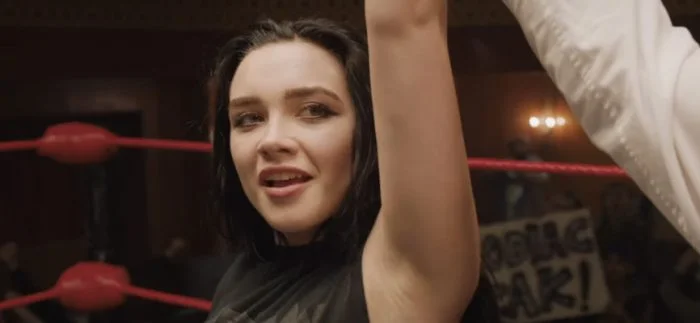
The ensemble cast is fun to watch. They bounce off of one another with dialogue and quips with ease. Most of the film’s depth rests on Pugh as she maneuvers through finding herself and place in achieving her dream. Pugh certainly pulls off the job of playing the loner who desires relationships and the girl who walks to her own beat. With Dwayne “The Rock” Johnson playing himself and Vince Vaughn as the tough but fair WWE scout, the film gives enough star power to believe in the wonder of climbing to the highest heights in wrestling.
This isn’t the greatest sports film to be made, but it’s certainly unique and great to see a true story based on the life of female wrestler Paige (Saraya-Jade Bevis) on the big screen. It doesn’t have the macho action montages that we’re used to, but what it does offer is a nice change of pace, and genuine emotion for the genre. It’s certainly a good time at the movies this weekend.
Rating: B-

"Glass" Review: A Disappointing End to An Entertaining Trilogy

Almost two decades in the making, Glass (the final piece to the Unbreakable trilogy) written and directed by M. Night Shyamalan is creatively shocking. It could be easy to lose focus in the storyline when making a trilogy over such a long period of time, however Shyamalan certainly connects these films seamlessly. Unbreakable, Split and Glass are three stories that correlate within a semi-realistic world that Shyamalan has created, which is unique and noteworthy in itself. However, while the plot of this final installment is interesting, it’s also where the film falters. With all of the wonderful elements put into the making of this film, it certainly isn’t perfect; Shyamalan’s strengths and weaknesses are displayed in various ways throughout Glass.
The film picks up with David Dunn (Bruce Willis) on the hunt for Kevin Wendell Crumb (James McAvoy). Dunn can see into people’s lives by brushing up against them and is seemingly unbreakable, while Crumb’s split personalities hold the key to The Beast, an animal like persona out for blood. Samuel L. Jackson’s Mr. Glass is the final piece to the trio; he’s the evil genius whose bones are so brittle that they shatter to pieces when hit. They all wind up being tossed into Dr. Ellie Staple’s (Sarah Paulson) psych hospital to be analyzed as humans who believe they are superheroes.
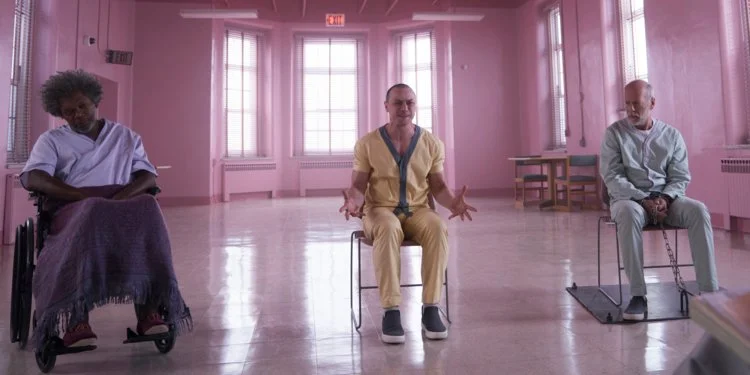
The casting of this film couldn’t be more perfect and I would be remissed not to talk about the performance of James McAvoy (Kevin Wendell Crumb), the villain with 24 split personalities (good and bad) in one body. His performance is truly amazing to say the least, as he is able to stay in each character authentically, yet split into a new character instantly; I have never seen a performance like this one and his talent should be noted. Alongside James McAvoy, Sarah Paulson is notable. She grabs your attention almost hypnotically throughout the film. Sarah Paulson is well known for her roles in the hit series American Horror Story and her skills as a horror film actress do not go unnoticed in this film. Her character is eerie and engaging at the same time; she is an interesting addition to Shyamalan’s universe. Finally, Bruce Willis and Samuel L. Jackson- they certainly make this film and are the reason why the trilogy is as great as it is. Bruce Willis has aged but is the same action hero we all know and love. Samuel L. Jackson is a badass not to be messed with and his character Mr. Glass is exactly the same. All together the acting is great; the cast is strong- especially with previously supporting characters making a come back as well.
Cinematographer Mike Gioulakis (known for: It Follows, Split and Under the Silver Lake) uses the different characters to display camera angles from their perspective. Gioulakis is brilliant when it comes to filming the multiple personalities of Kevin Wendell Crumb, he uses the camera to note the change of personality and emphasizes the new personality with camera framing. Gioulakis is the cinematographer for ⅔ of the Unbreakable trilogy so it is understandable why the cinematography is strong in Glass!

Glass is entertaining but it is also disappointing. One positive thing about the plot is the seamless connection between all three films within the trilogy, which is certainly well done. However, the storyline is limiting and doesn’t allow space for much excitement in its climax. There is not much variation in scenery which becomes boring. At times there are nods towards other possible plotlines but the film decides to follow the most anticlimactic path. To say the least, the film is enjoyable because of the other strong elements but the storyline does not live up to the potential it could have. It is unfortunate that the trilogy is finalized with a film that doesn’t entirely satisfy the Unbreakable series, especially since it started off strong.
Glass is not the best film, but it is not the worst. With some praiseworthy elements of in it, I highly doubt it will win any awards or turn too many heads. With that being said, I do recommend seeing the film in theaters because the visuals are incredibly well done and the actors are extremely entertaining to watch. You should especially see this film in theaters if you are a fan of the trilogy, it does answer questions but since it is an M. Night Shyamalan film, it sparks more questions as well. As a fan of the trilogy, overall the film is entertaining and it isn’t all bad, but I am definitely disappointed with the anticlimactic storyline and wish Shyamalan put more effort into the climax of the iconic trilogy.
Rating: B-

"The Upside" Review: Solid Performances, Formulaic Story
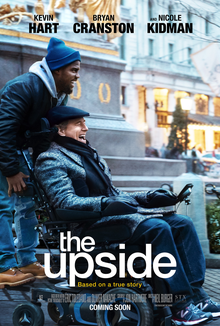
The Upside is one of those films that tackle how two vastly different people’s lives can intertwine to help one another see the brighter side of life. The film is based off a true story and a remake of the 2011 French film The Intouchables. While the performances are solid, this version ultimately lands a bit flat.
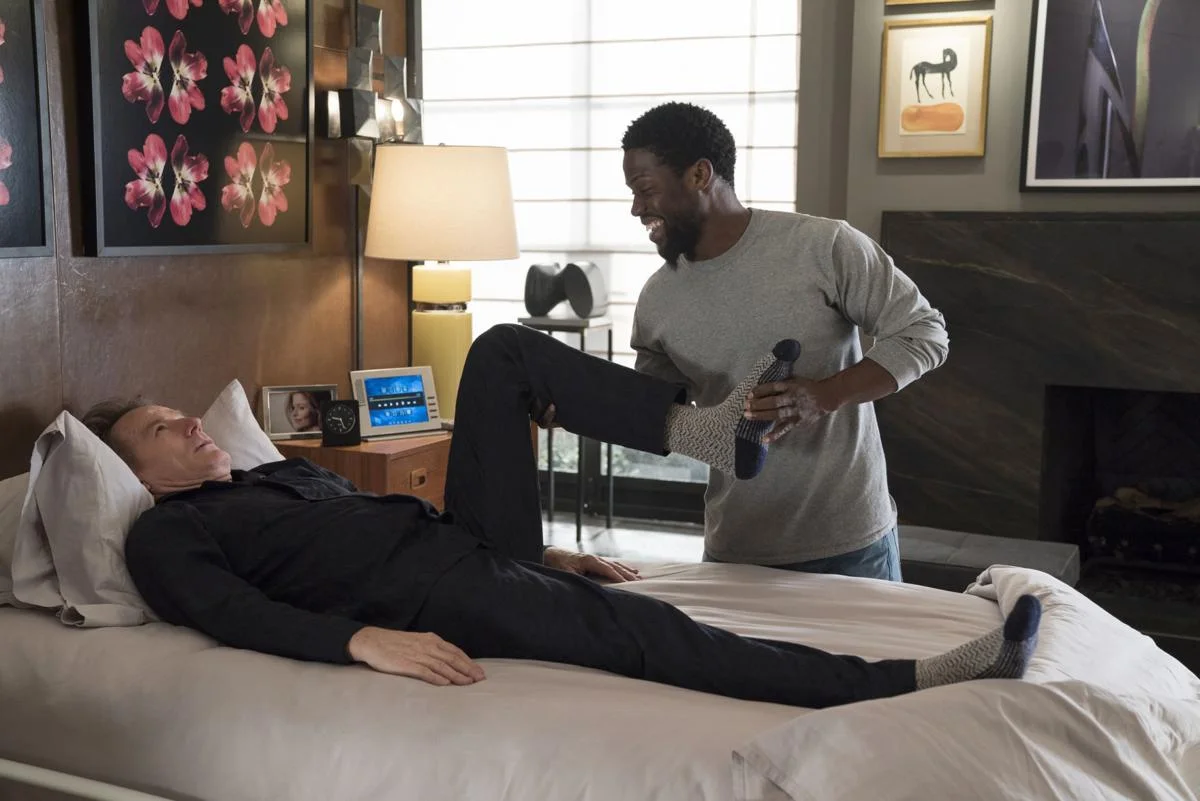
Philip (Bryan Cranston) is a quadriplegic in need of a live in assistant. Dell (Kevin Hart) is an ex-con in search of employment. After Dell stumbles upon the job interview, Philip hires him as the worst candidate for the job in hopes that he might just kill him with his lack of experience. As the two get to know one another, they are called out on their excuses that they make for the cards that life has dealt them.
This film is certainly Hart’s film. When he’s in scenes, they come to life, and when he’s not the film’s energy is sucked out. As a comedian at the top of his game, this film is Hart’s vehicle that will help him crossover in being taken seriously as a dramatic actor. The interactions between Hart and Cranston are authentic and at times hilarious. Due to their blunt honesty with one another, we’re able to analyze life truths that resonate. Nicole Kidman turns in a subtly wonderful performance as Philip’s executive in charge of his affairs.

The issue with the film is that it’s full of beautiful but formulaic moments. These moments are loosely strung together with choppy start-stop pacing. Furthermore, it fails to pull you in and genuinely care for its main characters. You may appreciate Dell and Phillip’s relationship, but you don’t really feel the connection to them that is necessary for the film to soar.
If you’re looking for a feel good film to take grandma to see this weekend, this is it. However, this is a film that I’d suggest you wait to catch when it’s streaming. You’ll forget about it moments after leaving the theater.
Rating: C

"Replicas" Review: Best Sleep I've Had In The Theater in A While!

When a film opens cold (not screened to critics ahead of time) that’s never a good sign. It signifies that there was a point during the production of Replicas in which someone said, “this isn’t going to do well.” By that point, it was too late to go back or abandon ship, and the production pushed forward and was distributed to theaters.
Will Foster (Keanu Reeves) is a scientist on the cusp of transferring human consciousness by mapping the brain of the recently dead and inserting it into a synthetic brain. If the science of what I just said doesn’t make sense, don’t worry, there’s more! After a recently failed attempted transfer, Will and his family decide to take off for the weekend. On the rainy streets of Puerto Rico they get in an accident in which Will is the sole survivor.
Will quickly calls Ed (Thomas Middleditch), his assistant of sorts, to come to the scene so that they can get his family’s consciousness in hopes of cloning them. From there we get a series of moral debates, more scientific jargon that doesn’t make sense, and a scene in which Will grieves more over picking a name out of a bowl than when his family initially died.

This film is not even half baked, it hasn’t even been in the oven. Our connection to the characters in this film is as weak as Will’s to his family. We barely see them interact before the accident, and therefore his push to replicate feels as lifeless as Reeves acting in this film. Middleditch is the bright spot of the film as he offers up the moral questions to the premise that just didn’t transfer well to the big screen. However, his character continues to be complicit in the “nefarious” behavior as even he notes.
The best part of this movie was the minute of sleep that I got during the third act. I woke up refreshed, ready to take on the rest of the snoozer, and push through. I wouldn’t even watch this when it comes out on Netflix if I were you.
Rating: F

"The Upside" Review
Based on a true story, The Upside is a film that is both unexpectedly hilarious yet humbling. Bryan Cranston plays a wealthy quadriplegic named Phillip and Kevin Hart is his caretaker, Dell. Both Cranston and Hart are an unstoppable duo on screen. The duo are no strangers to comedy which makes their interactions more genuine and comical. Their endearing relationship gives you hope for humanity. Alongside the serious moments, the comedy is well written and delivered with perfection.
The acting is great; the relationship between Dell and Phillip in the film seems genuine and playful. The actors are able to portray the writing in a beautiful way that exposes a different aspect of the relationship Dell and Phillip have (they are still friends to this day). In a way, both of the characters are outcasts of society; Phillip as a quadriplegic doesn’t often receive the respect he should, even in small interactions; Dell has a similar experience being formerly incarcerated and now looking for a job. Their relationship builds off of their differences and in result of their friendship growing, they come to find that they are very similar. This development alone is one of my favorite aspects of the film and it is the first reason to go and see The Upside. Cranston and Hart lead the film with great acting but one cannot overlook the talented performances of Nicole Kidman and Golshifteh Farahani as supporting actors as well.
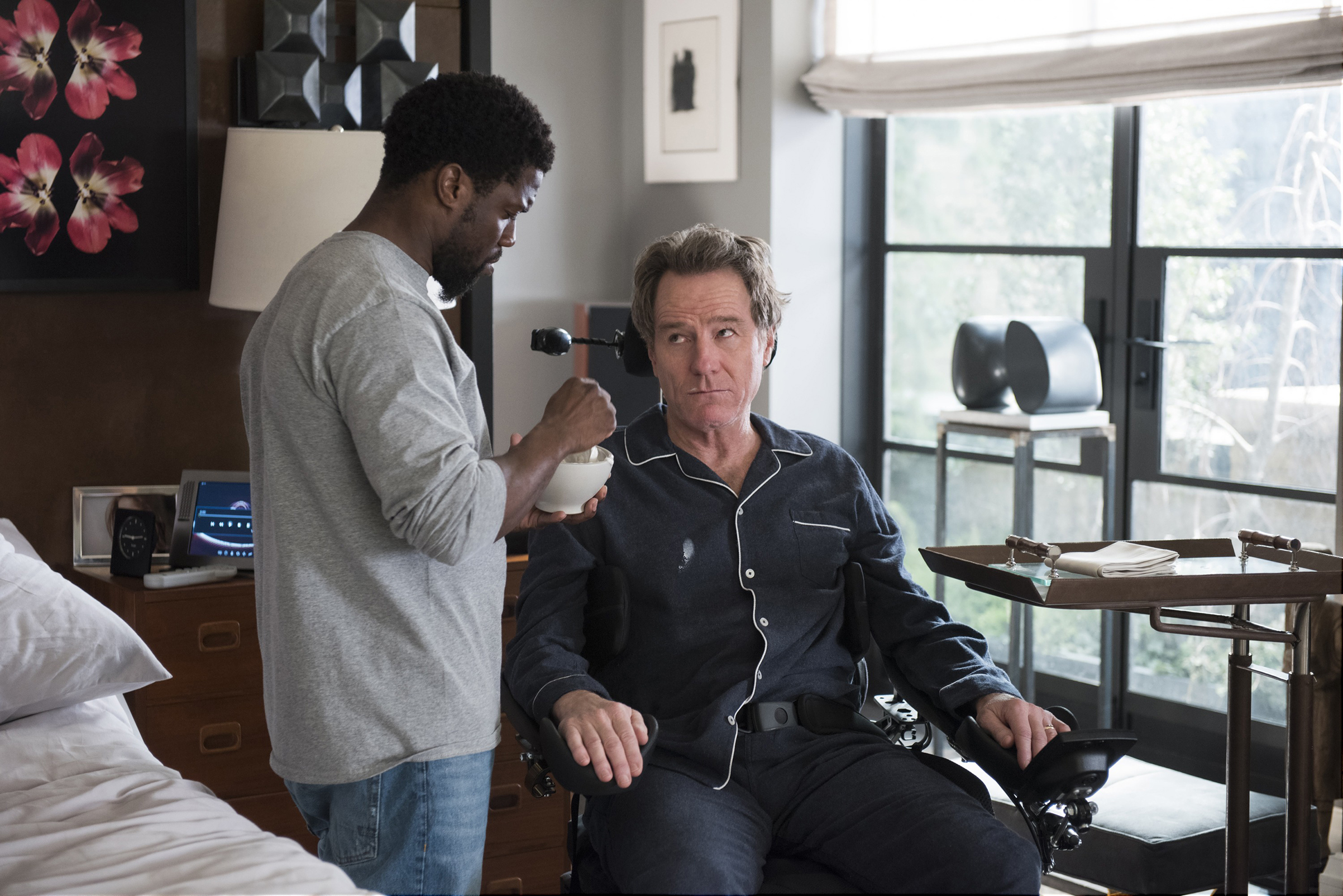
The second reason to go see the film is for the writing, the comedy is innovative and edgy, especially with the quips that Dell and Phillip throw at each other. I found that some of the humor is so awkward and cringe-worthy, you can’t help but laugh. The comedy delivered through the acting carries the film as Bryan Cranston and Kevin Hart truly have a positive chemistry which makes it even better. Together the duo forces the audience to experience every emotion they’re experiencing, and they don’t hold anything back. Both of the characters go through significant change with each other and it is a beautiful process to see.
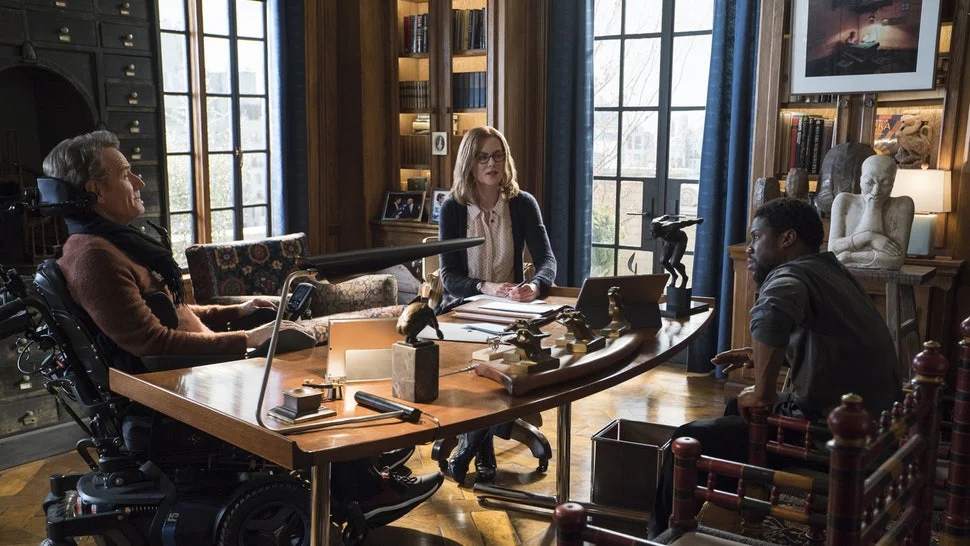
Alongside the writing and acting, the camera work is lovely and even whimsical. The director of photography, Stuart Dryburgh captures the film in a significant way; at times the cinematography reminded me of a painting, especially when the visuals are paired with dramatic moments. The director uses a technique with the cinematographer to expose bits and pieces of Phillip’s past through imaginative visual representations in a way that’s well executed. Joined with the drama and comedy within the film, the cinematography allows space when it is needed, the breathtaking shots are peaceful and meditative; it is almost as if the audience is supposed to feel the peace the characters do. These small decisions of the director and cinematographer makes the film stunning in a unique way.
Overall The Upside is great, it forces the audience to think differently about how to treat the outcasts of society and how much we take for granted on a day to day basis. If you wish to see a film that is action packed with explosions, this is not the film for you. However, if you wish to view the world differently and open your mind to new perspectives, this is a wonderful film to watch. I highly recommend this film if you are familiar with the actors, they certainly hold true to their acting reputations. See The Upside in theaters while you still can, the lovely visuals are made to be seen on a big screen.
Grade: A

"Ralph Breaks The Internet" Review
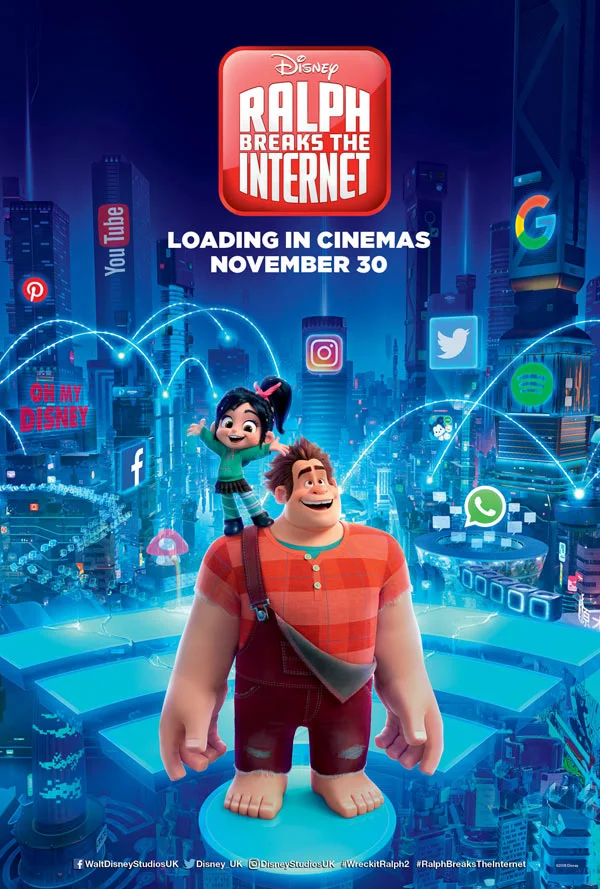
When Wreck-It Ralph was first released in 2012, it quickly became one of my favorite animated Disney films to come out within the last few years. It was innovative, the video game references I grew up with were fun, and it was a perfect starring vehicle to utilize the talents of John C. Reilly. When Disney announced that a second one was coming, it was one of the films I was looking forward to watch this year. After watching the film, even though there are some bumps on the road, I’m happy to report that Ralph Breaks the Internet is a solid sequel.
Set six years after the events of the first film, Ralph (Reilly) and his best friend Vanellope (Sarah Silverman) find themselves traveling to the world of the Internet after Mr. Litwak (Ed O’Neill) recently installs a WiFi connection in his arcade. When a mishap causes a player to accidentally break the controller to Sugar Rush, Ralph and Vanellope have just days to find the part and raise the money before Mr. Litwak pulls the plug on Sugar Rush for good. Along the way, Ralph and Vanellope come across a game called Slaughter Race, which sparks Vanellope’s interest and causes her to question if she wants more to life.
First off, the animation in this film is still absolutely gorgeous to look at. Returning director Rich Moore and co-director Phil Johnston (who co-wrote the first film) and their animators do a good job in separating the different worlds and characters apart to have each stand on their own. Conceptually, Moore and Johnson’s visualization of the Internet to make it a futuristic and Utopic view, works well. Initially, I was somewhat worried that the product placements in the film, since it takes place on the web, would be overbearing or just be paid advertisements for the various apps or websites featured, but for the most part, the filmmakers don’t shove it down your throat, or have the story be compromised with the apps or websites that agreed to be in this film.

Since this is a Disney release, luckily, they don’t overdo the synergy of their various franchises that are featured in this. You can believe the hype you’ve been hearing about Vanellope meeting the Disney Princesses. In an amazing act of genius they got all of the actresses to come back and the banter includes a fun joke at another animation company that Disney owns. The film really begins to hit its groove when Ralph and Vanellope need to find the funds to get the new piece, and some of the skewing of the material is absolutely spot-on and extremely funny at times.
When we view sequels, we tend to see the same song and dance, rinse and repeat again. I appreciate that the screenplay that Johnston and Pamela Ribon concocted in trying to tell something different. If the first film was about how someone who is perceived as bad can become good, this one is about how you grow up and realize that you and your friend sometimes don’t share the same dreams and aspirations as one another and you both come to that crossroad, which is something that I can relate to from time to time. With how they handle it, it’s a nice message and this film wears its heart on its sleeves. Even though we see the Internet these days use for hate and vitriol, this highlights how sometimes the Internet can bring people together for good. Voice wise, the chemistry between Reilly and Silverman is still strong as ever, and they bring some new dimensions to their respective roles that can be quite effective at times. All the other voice actors were good in this and don’t feel out of place, including an uncredited Bill Hader as J.P. Spamley, a figure that Ralph and Vanellope meet along the way, and Gal Gadot as Shank, a racer in Slaughter Race. The cameos in this are fun as well.
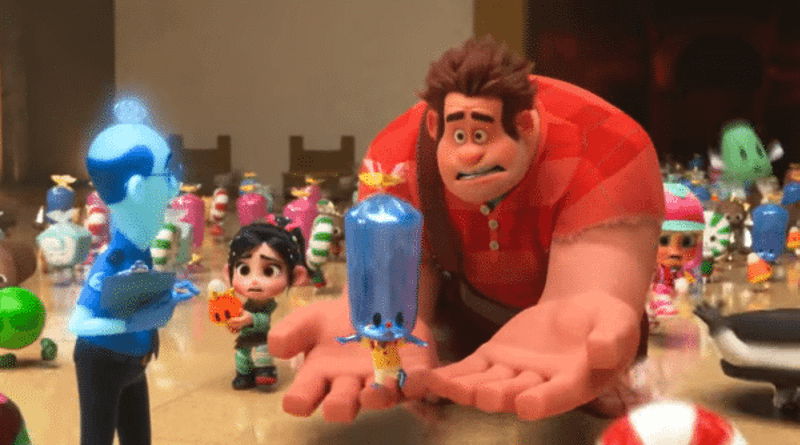
Ralph does take a bit to actually get going. Since it’s introducing so many things that at times, it tends to be a little clunky, which is especially evident in the first act. For the 112-minute runtime that this has, Ralph in hindsight, could have been trimmed down in some places as the pacing hits a snag. There are some story threads that the filmmakers introduce that they don’t follow through on, and some of the characters from the first are barely in this, like Fix-It Felix (Jack McBrayer) and Sergeant Calhoun (Jane Lynch).
Overall, I enjoyed what Ralph Breaks the Internet brought to the table and what it was trying to accomplish. Reilly and Silverman give it their all, and the filmmakers were smart in having the sequel focus more on them and their growth. With the beating heart that this sequel shows, if they continue making films in this series, I’ll surely be there every single time. If you’re looking for something to watch with your family during this holiday season, you can’t go wrong with this. When you do, I would suggest staying until the end of the credits for something special that will surely bring a smile to your face. On that note, I would recommend watching this in the theater!
Rating: B

"Creed II" Review: A Sequel 30 Years in The Making

With eight films under its belt, the Rocky franchise has seen its share of recycled story with a new twist. Creed II knows its legacy and the pressure to get it right had to have been high on writers Juel Taylor and Sylvester Stallone. Director Steven Caple Jr. gives us a film that doesn’t live up to the power of Ryan Coogler’s Creed, but still goes the distance.
The film opens with Adonis (Michael B. Jordan) rising to the height of boxing. Simultaneously, in the Ukraine, Viktor Drago (Florain Munteanu), lives a hard life as a blue collar worker while training with his father, Ivan (Dolph Lundgren). The inevitable fight is brokered by promoter Buddy Marcelle (Russell Hornsby), who tells Adonis his father understood he needed a legacy story that would “stick to the ribs”. Thus, the central concept of Creed II.
The film understands the dramatic weight it carries and plays off of the hype, although at times feeling undercooked. Yet, much like a fighter, it discerns that it has to shake up the story to keep its audience entertained and engaged. It does that in the form of building character backstory. We learn just what we need to about life for Ivan after the infamous showdown and the affect it had on his son. We see Adonis and Bianca’s relationship bloom as their family grows. With key placements like Phylicia Rashad’s Mary Anne Creed and Brigitte Nielsen’s Ludmilla Drago giving just the right touch of nostalgia and added spectacle, the film manages to make it out of the ring in one piece.
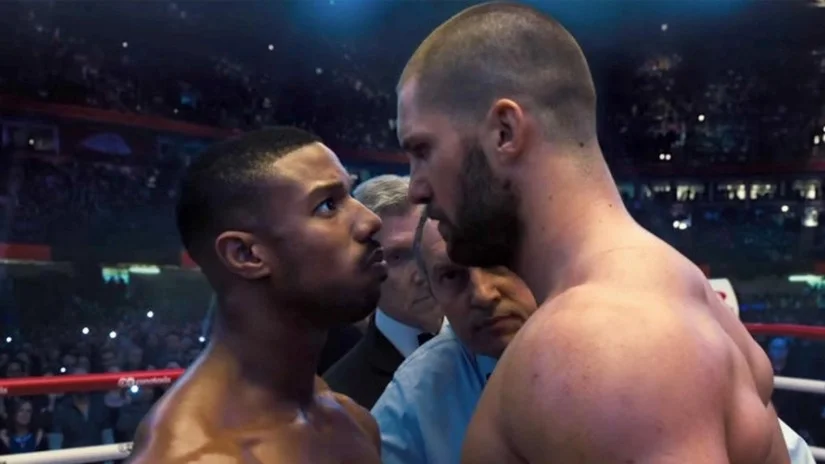
The original Rocky was a little engine that could film. It was a character drama Trojan Horsed inside of a boxing film. It’s the man vs. man, man vs. self storytelling that Creed II hones in on and creates a decent installment in the franchise. After all, seeing Adonis fight Viktor isn’t really what we are going to the movie for. Instead it’s to answer the deep rooted question of what would you do if you could avenge your father’s death in the ring? Will you get back up when you get knocked down? It’s in this space that the the franchise lives and Creed II delivers. It doesn’t quite pack the same punch as Creed, but certainly a solid entry and sure to please fans that never knew this purported sequel to Rocky IV was the film we’ve been waiting over thirty years for.
Rating: B

"The Front Runner" Review: A Timely Bio Drama
The Front Runner is proof that there’s nothing new under the sun. The film looks at a pivotal moment when politics and media crashed together to change the way we analyze political candidates personal lives and decisions forever. We still deal with political scandal today, much like the 1988 presidential run that crashed within a matter of weeks for Gary Hart, but this is when the idea of news media being a watchdog and covering candidates personal lives to ensure they match. We’ve seen bio drama films like this as well, but co-writer/director Jason Reitman gives us that old gum with a new way to chew it.
Gary Hart (Hugh Jackman) is a man of the people. He is charismatic, smart, handsome, and willing to take a stand against politics as usual. You know, the kind of stuff we like to see even today. All signs pointed to him being the frontrunner of the ’88 election before suggesting to a reporter that he’d be bored if he followed him around, and thus encouraging him to do so. Hart’s bluff is called, as the Miami Herald follows him and uncovers a scandal that ultimately ends Harts political run.
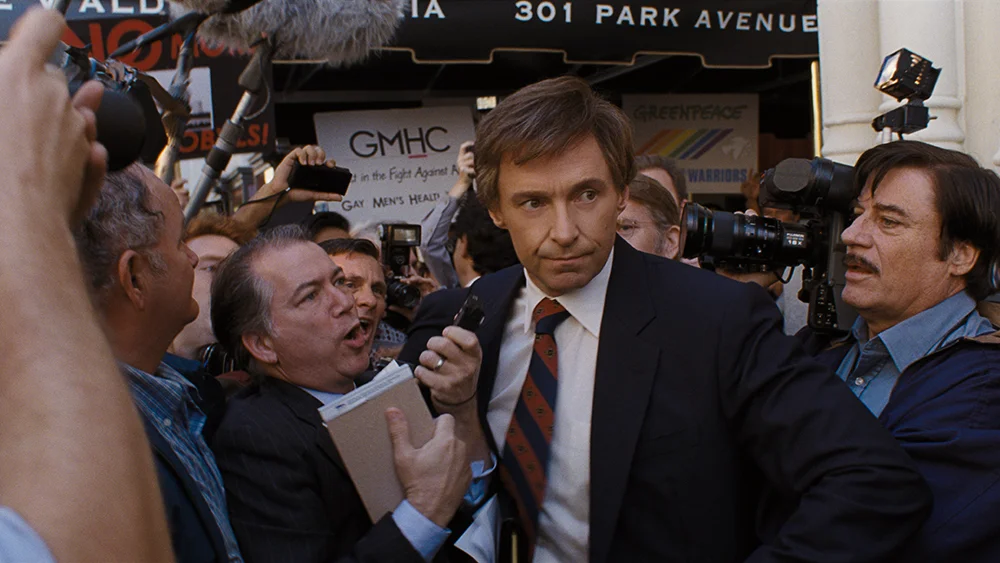
Reitman gives us an inside baseball look at the situation as things unfold. In fact, perspective is key in Reitman’s direction both in the script and in his frame. Numerous times throughout the film he tells two stories simultaneously so that you have to keep up. In one particular scene, Hart sits at a table in a wide shot with his back to the camera as it moves around capturing the conversation amongst Hart’s team. In the background you see a young reporter enter the room and begin a discussion with a member of Hart’s political team. Reitman’s ability to keep our mind engaged, while cleverly displaying multiple stories and pushing each scene forward is what makes the film fun to watch. We know the ending as we watch the story unfold in 2018, but getting there is probably as stimulating cinematically as it was to live through in 1988.
This is an ensemble film in which everyone brings their A game. Jackman, known for his ability to be a larger than life on screen presence, shows considerable controlled restraint and focus. He makes Hart, a player on the team, rather than the star in the film. In doing so, you can focus on all the angles and members of the cast. Vera Farmiga as Lee Hart doesn’t have a lot of screen time in comparison, but her presence is felt. In fact, in one confrontation scene between Gary and Lee, the atmosphere changing of her presence and what’s about to happen is so palpable that you feel as bad for Gary as when your sibling was about to get spanked back in the day. JK Simmons, Molly Ephraim, and Mamoudou Athie all have incredible character archs as they come to grips with Hart’s infidelity and what the fallout means to them. Each perspective gives the audience something to chew on.
The Front Runner may not appeal to mass audiences. It’s certainly a character study that allows viewers to draw conclusions on politics today, and a director’s masterclass on framing and technique. However, its undeniable timeless and timeliness of its subject matter is worth the view!
Rating: B+

Middleburg Film Festival '18: "Boy Erased" Review
Boy Erased is based on the memoir of Garrard Conley’s experience with gay-conversion therapy. Adapted to screen by writer/director Joel Edgerton, the film allows its audience to come to a conclusion based on what’s presented. At its heart, the movie is about where we draw lines in our love, and if we do, is it truly unconditional love?
Lucas Hedges is Jared Eamons, son of minister Marshall Eamons (Russell Crowe) and first lady Nancy Eamons (Nicole Kidman). Growing up a preacher’s kid, Jared finds himself at a crossroads between his faith and family after coming to terms with the fact that he’s gay. Upon his son’s coming out, Marshall seeks wisdom through church elders, while Nancy defers to Marshall’s leadership.
Marshall and Nancy enroll their son in a conversion program called Love in Action that’s directed by Victor Sykes (Joel Edgerton). As time moves forward, Jared quickly sees that something is off in the therapy. His dutiful trust in his parents becomes shaken as he witnesses the degradation of his fellow participants. This sparks action in Jared to take his destiny into his own hands.
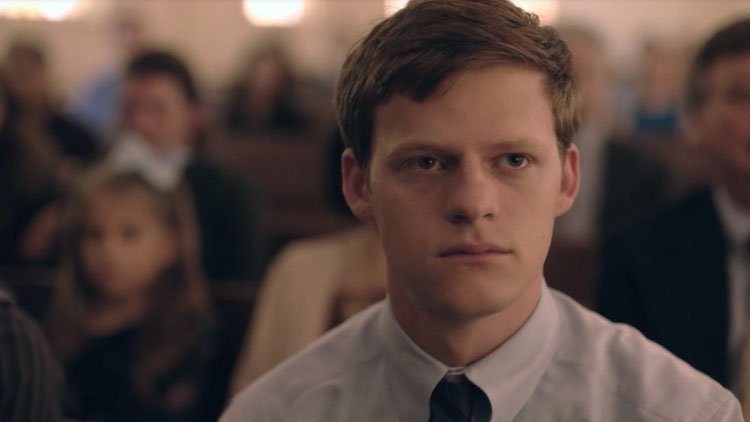
The film jumps around in chronology to give us a picture of Jared’s life leading up to Love in Action and beyond while giving us the “full picture” of Jared’s struggle. The key to this film is that Edgerton makes Jared our eyes into this world. Hedges has a way of displaying his internal conflict without wearing it on his sleeve. Instead, his journey in finding himself, standing up to his abusers, and charting his path in life is easier to understand because the message is not clouded by accusation or heavy judgement. Crowe and Kidman turn in authentic performances as well with both sides clinging to to their belief system.
Boy Erased’s conspicuous restraint allows its viewer to be haunted after the film by what they witnessed. After all, it’s the quiet, solitary moments in life in which we wrestle with the big questions.
Rating: B

"In Search of Greatness" Review: One of The Best Sports Docs Ever Made

In Search of Greatness is a unique documentary that exposes a different side of athleticism that is oftentimes overlooked. The creator, Gabe Polsky, is an up and coming filmmaker and a former Division 1 athlete who graduated from Yale University. His first film Red Army focused on the history of Hockey in the Soviet Union. In Search of Greatness doesn’t focus on one sport, instead it highlights athleticism joined with mindful dedication and training. This film exposes the sacrifices famous athletes have had to make in order to be the best of the best. From the interviews, sound editing, and archival footage, the film paints a beautiful perspective of what it takes to be the greatest.
Kevin Sampson reviews Gabe Polsky's exciting documentary "Red Army".
The first important element to note are the interviews; Polsky was able to speak with legendary athletes from history like Wayne Gretzky, Jerry Rice, and Pelé. These interviews carry the storyline of the film, but most of all they give direct insight into the mind of a professional athlete. I was fortunate to interview the director Gabe Polsky, and he stated that it took about a year to get in contact with these athletes for a video interview. He also went on to state that it was incredibly difficult to get in touch with these legendary people, which lead to difficulty finding female athletes to interview. The lack of female athletes in the film is the only criticism I have of the film itself, but it is understandable how difficult it would be to schedule time to interview these athletes, let alone find the perfect mixture of athletes from throughout history. In order to alleviate this issue, Polsky includes a great deal of archival footage from female athletes, which attributes to the reconciliation of not being able to interview any women.
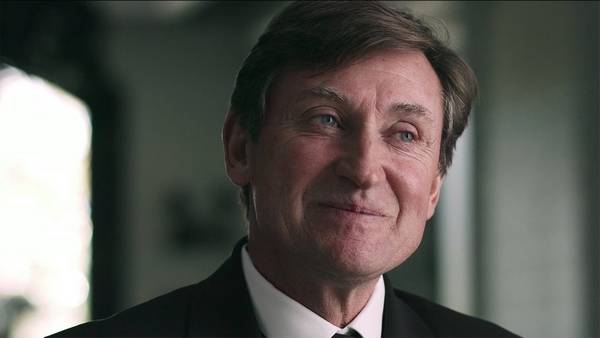
On that note, the amount of archival footage that is included in this documentary is astonishing to say the least. The clips included are able to emphasize what the athletes are saying in the interviews perfectly and allows the audience to get inside the athlete’s mind. The dense amount of archival footage is so impressive that it truly makes the film; it adds to the storyline in such a way that it makes you as an audience member want to be great right alongside these athletes. This documentary inherently breeds feelings of nostalgia as a great deal of these athletes were highlighted in past commercials, movies, and television shows. You can’t help but reminisce on the moments, if you were lucky to be alive during that time, that you saw this history made. Alongside the clips included, the editing of the archival footage makes the film even more electric through juxtaposition, clever transitions, and emphasizing significant moments. They are an important addition to the film’s success as without these strong elements the film would have been completely different.
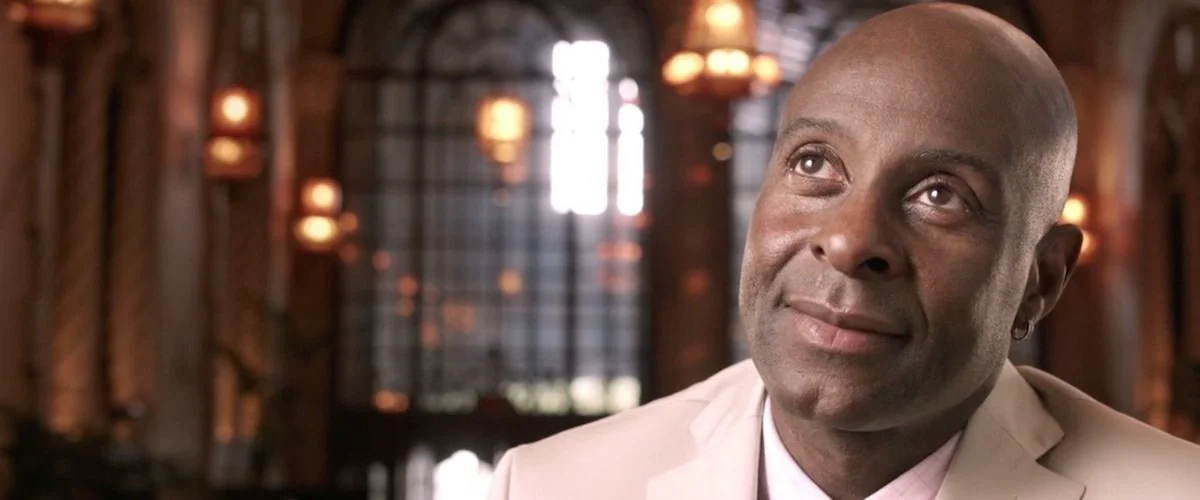
The sound editing and mix is both profound and shocking. One particular moment that stands out is the juxtaposition of Jerry Rice preparing for a game with the throat singing of chanting monks replacing the natural sounds of the stadium. This particular juxtaposition alludes to the mindfulness of a great athlete; the complete presence they have to have while they are in the game. This combination of chanting and archival footage is so beautifully thought out and exquisitely illustrates the thought process that Rice used to go through. This philosophical undertone exposes the thoughtfulness that of director Gabe Polsky, and exposes his brilliance as a filmmaker.
This film should be regarded in history as one of the greatest sports documentaries created. From the athletes highlighted in the documentary, to the intelligence exposed behind the athleticism, and the historical clips that show greatness; this film truly captures the magnitude of power one human can acquire if they believe in themselves. Documentaries like this one creates universal inspiration, allows aspiring athletes to see what it truly takes to be the best (and even how to get there). In Search of Greatness is beyond inspirational and one of a kind; I highly recommend attending a screening it when it is released.
Rating: A-