
"The Menu" Review: Don't Let This Sneak By You!
The Menu is not a film that will be advertised well. The trailers won’t do it justice because it’s hard to really tell what the film is about without spoiling something or oversharing. So it’s doomed from the start from a marketing perspective. You’ll just have to trust me that you should see this film if you enjoy smart, dark humor, and mysteries that reveal the truth in clever ways over the course of the films running time. Much like its main character’s menu, the movie is something you have to ride along with. As the slow burn story unfolds, the ending is delicious!
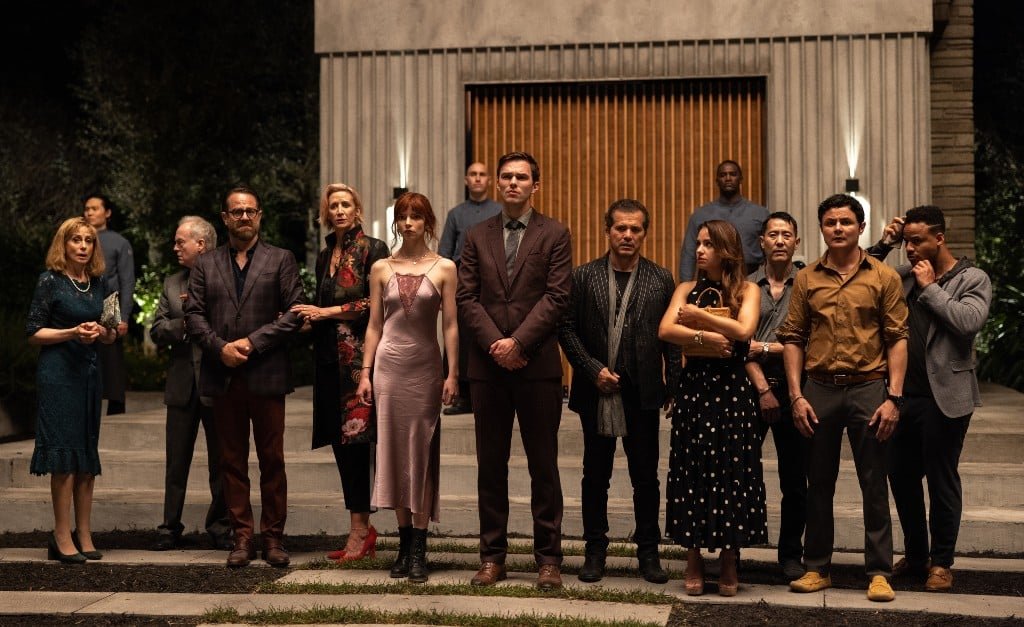
Margo (Anna Taylor-Joy) and Tyler (Nicholas Hoult) are one of many couples going to a nearby island to enjoy the food of Chef Slowik (Ralph Fiennes) at an exclusive restaurant called Hawthorne. Pairs may be a better word as not everyone is romantically involved, but one thing for sure, they’ve been chosen. We’re introduced to each patron in a bumbling fashion as they board the boat. There’s the power broker bros in Bryce (Rob Yang), Dave (Mark St. Cyr), and Soren (Arturo Castro). An actor past his heyday only known as a Movie Star (John Leguizamo) with his assistant Felicity (Aimee Carrero) provide screwball comedy, while an elderly couple Richard (Reed Birney), and Anne (Judith Light) give a glimpse of life on autopilot.
As the evening gets underway, we quickly see that at $1,250 per plate, most guests are there for either the lavish experience or to say they were there. Chef Slowik’s guests don’t have his attention when the first course is served. Yet as each course is dished, that quickly changes.

This film comes down to performance. The ensemble of personalities are what draws us in to care when we otherwise wouldn’t. Anna Taylor-Joy’s Margot is fun to watch as a misfit amongst the guests. Hong Chau is a stand out as Chef Slowik’s right hand, Elsa. She is devoid of emotion and yet her physical presence and delivery of dialogue commands respect. Fiennes exudes an unsettling calm in his cult-like figurehead.
While Fox Searchlight may be the studio behind this film, it feels more like an A24 movie. It is reminiscent of Midsommar in its dark mischief that toys with patrons in the film and viewers watching. Writers Seith Reiss and Will Tracy craft a story that touches on classism, obsession and desensitization. Director Mark Mylod uses the virtually one location shoot to his advantage. The visually intimate and beautiful set, slowly turns into a claustrophobic and horrifying space. This is definitely worth the price of admission! Just remember to tip your waiter.
Rating: B
"Dear Evan Hansen": When Adaptations Go Wrong
Dear Evan Hansen is Netflix’s You the musical! If you’re a fan of You, you understand how the main character seems like a nice person, has an interesting internal dialogue that no-one else hears, but at the end of the day is a stalker/killer. While Evan Hansen (Ben Platt) isn’t a stalker or killer in this film, he certainly has the same underlying creep factor. So this may be enjoyable for some, but I’m flabbergasted as to how anyone would believe this film is a drama/musical when it should be labeled a psychological thriller.
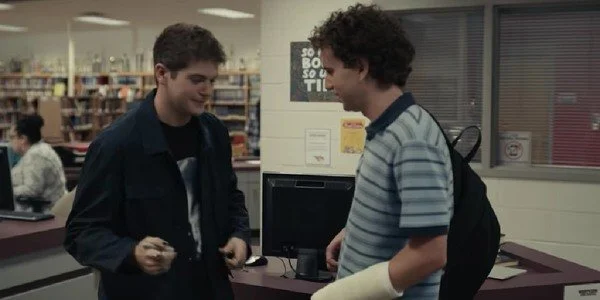
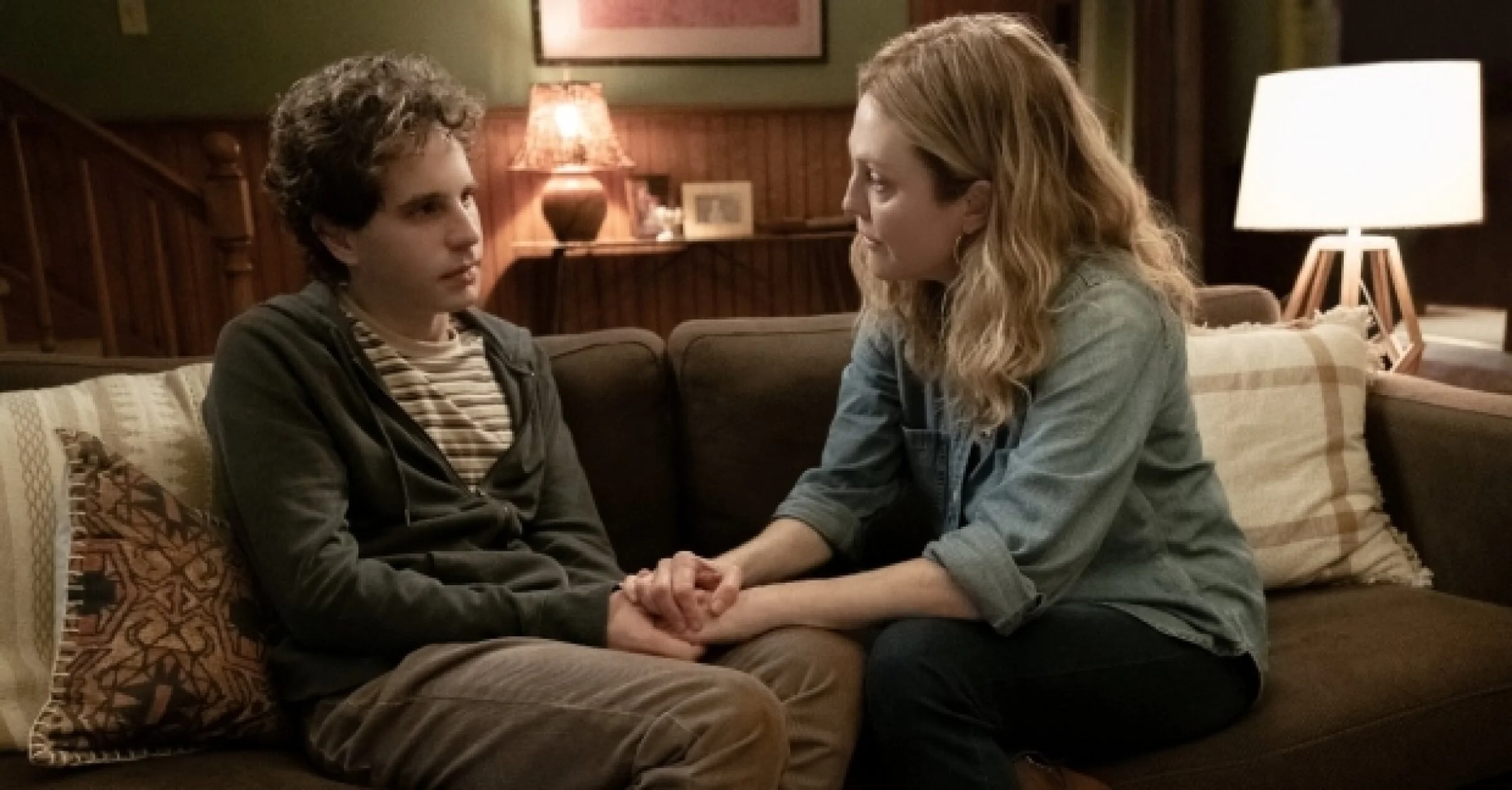
Evan Hansen has a social anxiety disorder that makes it hard for him to make friends. As much as he’d love to, it’s extremely difficult. He’s on medication and writes letters to himself as instructed by his therapist. After Connor Murphy (Colton Ryan) intercepts one of these letters and then commits suicide with the note on him, his parents believe Connor’s only friend was Evan. Evan runs with the lie because Cynthia (Amy Adams), Connor’s mom, is absolutely distraught over Connor’s death while his father, Larry Mora (Danny Pino), is numb. Seeing it as an opportunity to bring healing and maybe get closer to his crush, Zoey (Kaitlyn Dever), Connor’s sister, Evan goes full method acting.
The film is guaranteed to make you as anxiety ridden as its main character, but maybe not for the reasons intended by director Stephen Chbosky. That’s because you have to get over the fact that high school senior, Evan Hansen, is played by 28 year old Ben Platt. That’s if you can go along with the film’s premise, which all of the characters in the film do, leaving its audience befuddled as to why they go with the rouse. The mixture of serious dramatic acting with giant musical numbers feels so out of touch for cinematic adaption from the Tony and Grammy winning play.
The film has its moments in shining a light on how we treat death. The same jocks that ridicule Connor one day, take a solemn selfie in front of his locker the next. Students create The Connor Project in honor of the boy no one seems to have really known, but it brings the entire town together. There are plenty of moments where you think the film is going to make an important statement on suicide, grief, and loss but it never commits to bringing that to light.
I give Dear Evan Hansen credit that it takes itself seriously as a film adaptation. Unfortunately, this is an uneven film. Themes of having empathy for others, understanding we all have something to contribute to the world and recognizing we all have insecurities are lost in the sauce of the uncomfortable, awkwardness of the melodrama of it all. I mean, bursting out into song is expected in musicals, but singing in the midst of a serious conversation doesn’t feel right here. Maybe this worked on stage, but it doesn’t on screen.
Rating: D

"Old" Review: Great Concept, Faulty Execution
When you hear the name M. Night Shyamalan, it doesn’t stir up exciting emotions about cinema. Instead, it’s generally a frustrating mixture as to whether he’s a hack or not. Don’t get me wrong, I think he has talent. I clearly enjoyed The Visit but had issues with After Earth. It’s the constant back and forth battle of his legacy. The premise of his films are always intriguing enough to make you watch, but they don’t quite live up to the excitement of a trailer. Never one to disappoint, Shayamalan’s latest, Old, has interesting concepts and poor execution.
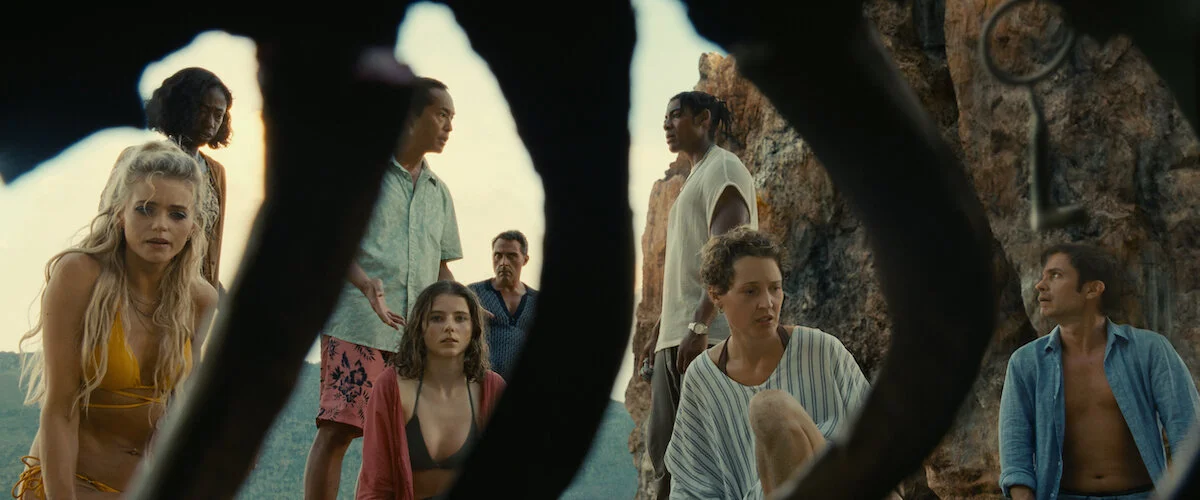
The film has the set up of a horror film. A young family arrives at a resort after winning a sweepstakes. It’s supposed to be one last great outing before the parents tell their kids some news. Guy (Gael Garcia Bernal), Prisca (Vicky Krieps), Maddox (Alexa Swinton), and Trent (Nolan River) are excited to be there. We’re slowly introduced to other couples and families on the resort property. The kind resort manager (Gustaf Hammarsten) suggests that our main family visits a secluded private part of the beach that no one knows about and they take him up on the offer.
Of course, they quickly find out that they weren’t the only ones told about this strip of paradise. Perhaps as swiftly, they also learn that the beach is aging their bodies. Like any good horror film, there are enough people on the beach to have some start leaving the flick in interesting ways due to the situation. Will anyone survive?
Old is another one of Shyamalan’s exercises in camera movement and blocking. I wouldn’t say its masterful camerawork but it is intentional. His camera focuses on what he wants us to see by keeping characters in the foreground with chaos happening in the background, dollying from one part of the beach to another while action is taking place where the camera just left, and giving us angles that exaggerate situations. There is definitely someone behind the camera telling this story, but a mixture of poor performances and weak plot points make the controlled camera engage in a fight between art and a train wreck.

One of the biggest problems with Old is the delivery of lines in the film. It sounds like many of them are doing a live table reading of the script. Vicky Krieps struggles to deliver her lines clearly but her Luxembourg accent muddies it. The chemistry of the cast is missing minus the brother/sister relationship in Maddox (Thomas McKenzie as the 16 year old version) and Trent (Alex Wolff as the 15 year old version). If the cast could have received a few more days to bond before rolling the camera, this may have been more believable. Instead you have many talented actors give a good solo performance while not responding to one another to create an ensemble. The heart of the film’s characters being a mediocre ensemble makes solid performances with chemistry from Nikki Amuka-Bird and Ken Leung go under the radar.
Once the why is revealed, it makes a lot of sense. In fact, it may make you want to read the graphic novel it was based on, “Sandcastle”. Old could have been greater if it was given a little more time and fleshing out. Instead, much like its young characters, it ages rapidly and misses key beats that were important to its development. Not a bad flick to catch when it goes streaming and you’re looking for something to watch though.
Rating: C

"One Night In Miami" Review: A Fly On The Wall Peek
If given the chance to be a fly on the wall for a historic conversation, what conversation would you choose? We’ve been invited to be a fly on the wall with four black historical figures in One Night in Miami. Director/Producer Regina King and screenwriter Kemp Powers have given us a thought-provoking glimpse into history through a fictional interpretation of true events as discussed by iconic figures. The concept is fresh, innovative, and does not disappoint. Thanks to Kemp’s screenplay and a star-studded cast, the transition from stage play to the screen is smooth.
On Feb. 25, 1964, after Cassius Clay (Eli Goree) shocked the world by defeating Sonny Liston to become the Boxing World Champion, he and a few friends (Jim Brown (Aldis Hodge), Sam Cooke (Leslie Odom Jr.), and Malcom X (Kingsley Ben-Adir)) decide to meet in a room at a hotel in Miami before going out to celebrate Clay’s victory. Once in the room, the men begin to exchange stories of their personal trials and tribulations of being a black man with power in America in 1964.

From the cinematography to the music selections, everything is intentional and well crafted. With King in the director’s chair (for the first time, mind you) and Powers’ powerful writing (Disney’s Soul), this film sets a bar for one location plays adapted to the screen. It doesn’t feel like a stage play, but more like a documentary. Powers’ writing captures and confronts topics with a perspective on political, religious and racial issues that still ring true with African Americans today.
The film exposes the difficult situation these men found themselves in as prominent figures in society. There was a particular crossroad they had to pass in terms of the fact that they could personally be successful and wealthy and not ruffle political feathers or use their status to make a difference which would come with strife. An example of a topic of discourse is between Malcom X and Sam Cooke. Malcolm feels Cooke could use his voice through music to help with the black movement in a direct way rather than indirectly helping from the sidelines. Cooke explains how he writes songs and receives royalties to be able to have financial capital to make a difference, stating “I don’t want a piece of the pie; I want the recipe.” The clash gives an interesting notion of the two wanting the same results but attaining it in different ways, which is something we saw from many leaders at the time.

You can feel the emotion that each actor delivers in their interpretation of their characters as though they channelled their real-life counterparts. Goree (Clay) and Ben-Adir (X) re-imagined the expressions of the figures previously portrayed by Will Smith and Denzel Washington (with great success) and etched and expanded their own paths forward. Goree portrays Clay as a charming charismatic version of the champ, coming to make the big decision of converting to the Nation of Islam. Ben-Adir shows multiple facets of Malcom X as a family man whose goal is to advance black people from the harsh realities of America at the time, while fighting a few personal fights within the Nation of Islam simultaneously. Hodge (Jim Brown) and Odom Jr (Sam Cooke) also set a high bar for their performances of the two characters. Hodge shows the calm and dominant demeanor that turned Brown into a household name for both football and acting. The multi-talented Odom, uses the voice we loved in Hamilton to effortlessly step into the crooner’s shoes.
Overall, this concept is a first-class piece of art. I laughed, my thoughts were provoked, and I learned something about each of these high-profile characters on a personal level, especially their stances on the advancement of black people. Most importantly, I was inspired by each character as he shared how his experiences supplied purpose to his life and how status as a celebrity was going to be used to fulfill that purpose. If you love original content that tells a good story, this is a must watch. If it was in theaters, I’d go, but the at home experience does it justice. It’s a well-constructed film that will give you an appreciation for each of these characters and will have you looking for other opportunities to be a fly on the wall. One Night in Miami is set to start streaming on Amazon Prime January 15th.
Rating: A

"Promising Young Woman" Review: The Heavy Handed Gut Punch We Should
Writer/director/producer Emerald Fennell penned “Promising Young Woman” in 2017 during the height of the Me Too Movement. The film is quirky, a little rough around the edges, but focused like its heroine. Its heavy handed with lesson after lesson but it’s a gut punch that men and everyone else should take heed to.
Carey Mulligan is Cassandra Thomas, a med school dropout with a chip on her shoulder. We’re first introduced to her alone, seemingly drunk, and preyed on by a few men in a club. After being taken home by one of the men, she allows him to get far enough to see that he would take advantage of a young woman who, while drunk, clearly said no. She then makes it clear to him that she’s not drunk. We don’t really know what happens after, but that’s the set up for the film.

We’re introduced to Cassandra’s world. She lives at home with her parents, works at a coffee shop, and keeps a running tab of the men she’s taught a lesson too in a small notebook. The sexual assault of her best friend in med school has radicalized her because while everyone seemed to move on from the incident, her brain has been seared by it. Cassandra uses Roman numerals to count each man she’s educated in her notebook and the film uses the Roman numeral theme to set up the various lessons she’ll teach to those who played a particular role in her past trauma over the course of it.
This is a movie where you’re better suited going in with a blank slate. So that’s all I’ll state about its plot. However, this is a film that addresses the issues of the culture behind sexual assault allegations, the victims, the accused, and the community of people that cover it up. As Cassandra implements her plan we’re forced to think about her message as well.

Mulligan really carries the film with her performance. There is a layering of her character that is noteworthy. You can see Cassandra’s brilliance, hard exterior, and wounded soul simultaneously in moments during the film. Alison Brie and Connie Britton also provide brief, but grounded performances as well. Unfortunately, the male actors in this film are mostly hollow, perhaps by design, serving as pieces that move the story forward. Many are portrayed as fragile when confronted by Cassandra, breaking down into scared little boys. Perhaps that’s Fennell’s intent? Yet it feels more like a subjective judgement of men, rather than allowing them to be three-dimensional. If it had been, the film as a whole would be elevated, rather than Mulligan elevating the film herself.
Regardless, Fennell’s points are direct and on target. The hypocrisy, double standards, and depravity of harassment and assault are on full display. Flaws aside, “Promising Young Woman” speaks for those who have and haven’t spoken their truth on the subject. While it is entertaining to watch, we should all listen to its message!
Rating: B

Middleburg Film Festival 2020: "Concrete Cowboy" Review
Concrete Cowboy is not an original story. Estranged son and father come together to try and correct the son’s behavior has been done before. While much of its premise is familiar territory, this film takes a look at traditions of old and what reconnecting or staying in touch with them can do for a person, a family, and a community.
After Cole (Caleb McLaughlin) gets into trouble at school, his mother (Liz Priestley) has had enough. She decides to drop him off with his father, Harp (Idris Elba), to try and have some discipline instilled in him. It’s evident that the neighborhood recognizes Cole, but it’s been long enough for him to be groggy on most of the who’s who. He does know his cousin Smush, (Moonlight’s Jharrel Jerome) who pulls up in a nice ride with some dope kicks. Smush wants Caleb to ditch the stables and hit the streets to make real money.
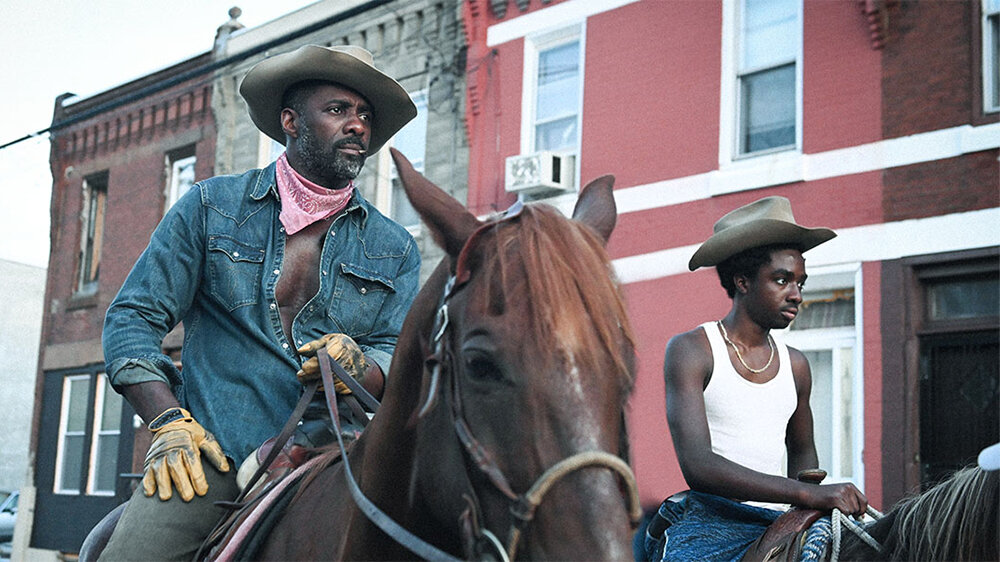
As most films like this go, after some time of friction, Cole begins to understand his father’s urban cowboy way of life. He appreciates the hard work, respect of tradition, and taking care of horses. Smush’s way of life doesn’t fly in Harp’s home, so Cole is forced to make a tough decision on the way he wants to go.
The film boasts of an all star line up. Caleb McLaughlin sheds his Stranger Things persona for a coming of age turn as “Cole from Detroit”. Method Man reminds us that he has some acting chops as Leroy, the former urban cowboy turned lawman. Perhaps the surprise casting comes from the real riders of Fletcher Street in Philadelphia. Sprinkled throughout the group of urban cowboys, these real life cowboys give the film its culture and authenticity.
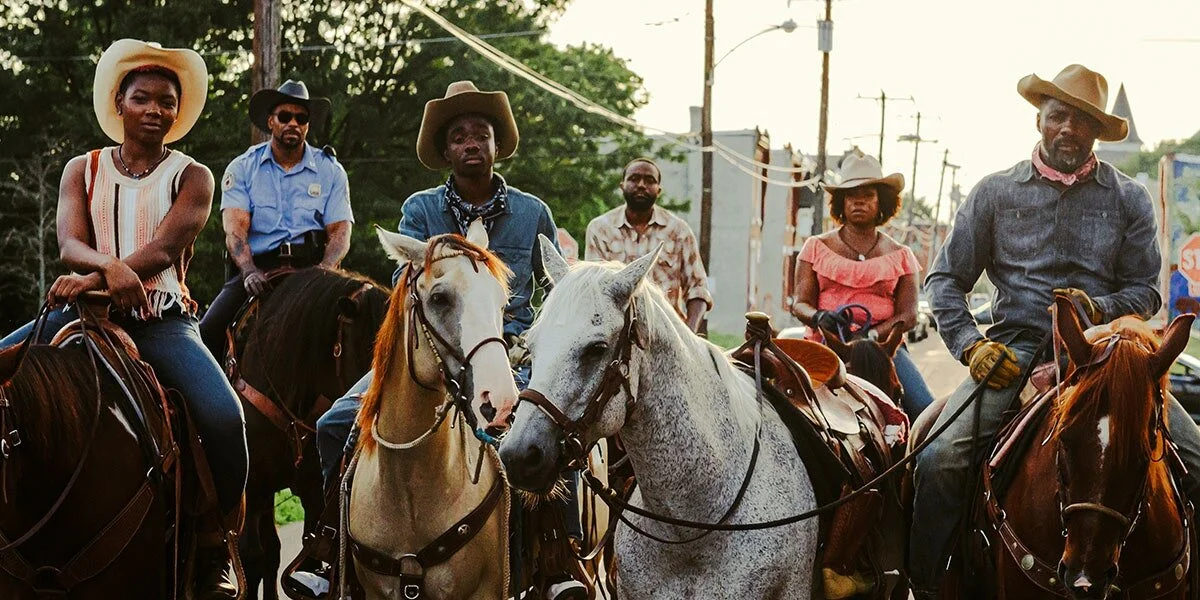
Cinematographer, Minka Farthing Kohl uses natural lighting to draw the viewer in. Small moments like the flickering of firelight used to light subjects, brings a certain amount of intimacy to this story. Director, Ricky Staub, has a way of using the camera and editing to capture moments and lock them in time. Using more mids and close-ups than wide establishing shots, Staub is able to keep the focus on the characters and bring us into their world.
The story of Concrete Cowboy is one of a return to an old fashioned way of life and connection. It lassos the connection of man amongst one another and with horses. It highlights the importance of storytelling amongst generations, with one character even emphasizing the significance of cadence in oral storytelling. This story is a bumpy ride at times in getting to its destination, but there are beautiful visuals and heartfelt moments along the way.
Rating: C+

"The Aeronauts" Review: This High Flying Balloon Falls Flat

Amazon’s The Aeronauts is based on the true story of early meteorology and flight. The film re-teams The Theory of Everything co-stars Eddie Redmayne and Felicity Jones. It’s a harrowing adventure high above the clouds that manages to be equally lifeless at any point the film tells the story of life on the ground.
Amelia Wren (Jones) is a balloon pilot who is no stranger to the skies. She flew with her late husband on plenty of flights. So the opportunity to fly on a scientific expedition with James Glaisher (Redmayne) is welcomed. For Glaisher, he hopes to push past the heights previously set by other pilots to document the unknown of what is above us.

Within the balloon, the duo takes on challenges that come from humans facing atmospheric conditions they’ve never seen before. George Steel’s cinematography and sound designer Andy Kennedy’s attention to detail make the experience of watching Wren and Glaisher feel tangible as an audience member. As the balloon starts to ice over, the basket that separates them from a 20,000+ foot fall to their death does as well. The creaks and pops of the equipment draw you in, as does the cool blues and somewhat desaturated hues of the cinematography.
Weaved in between the experience in the sky is the backstory of Wren and Glaisher. These scenes give us context to who they are, how they met, and how the expedition came together but are not interesting enough to keep the viewer engaged. You’re left with a burning desire to get back into the balloon with their present peril instead of on land with their past.
There’s a scene in The Aeronauts in which Glaisher is trying to convince a body of scientists and explorers to allow him to have his own balloon. They laugh in his face and walk out as he pleads for them to hear him out. “Please, please” he clamors. This scene feels fitting for the entire movie. It begs you to hear it out! This is a film about early exploration of the sky above us for goodness sake! Unfortunately, outside of its outstanding visuals, it doesn’t have much to say.
Rating: D+

"The Best Of Enemies" Review: Another Been There Seen That Blockbuster on Race Relations

If you’ve seen a blockbuster Hollywood film dealing with race, you’ve seen The Best of Enemies. You can expect to learn more about the white antagonist than the black protagonist, whose weight in the true story is equal or greater to the other. The heart of the message, as it usually is, is definitely one that is good and should be celebrated. The problem is, with the same old screenplay structure, this film is still preaching to the choir and not digging deep enough to give us a sense of hidden figures in our nation’s history.
The film is set in 1971, when C.P. Ellis (Sam Rockwell) was the Exalted Cyclops of the Durham, North Carolina klavern of the United Klans of America. Ann Atwater (Taraji P. Henson) was a fair-housing activist at the time, trying to fight for the treatment of African-American residents in the community. After the segregated black elementary school burns from an electrical fire, the community has to decide whether to integrate the white school or not. Bill Riddick (Babou Ceesay) is brought in from Raleigh to conduct a charette, a deadline driven time of planning or activity, in order to bring the city to a conclusion.
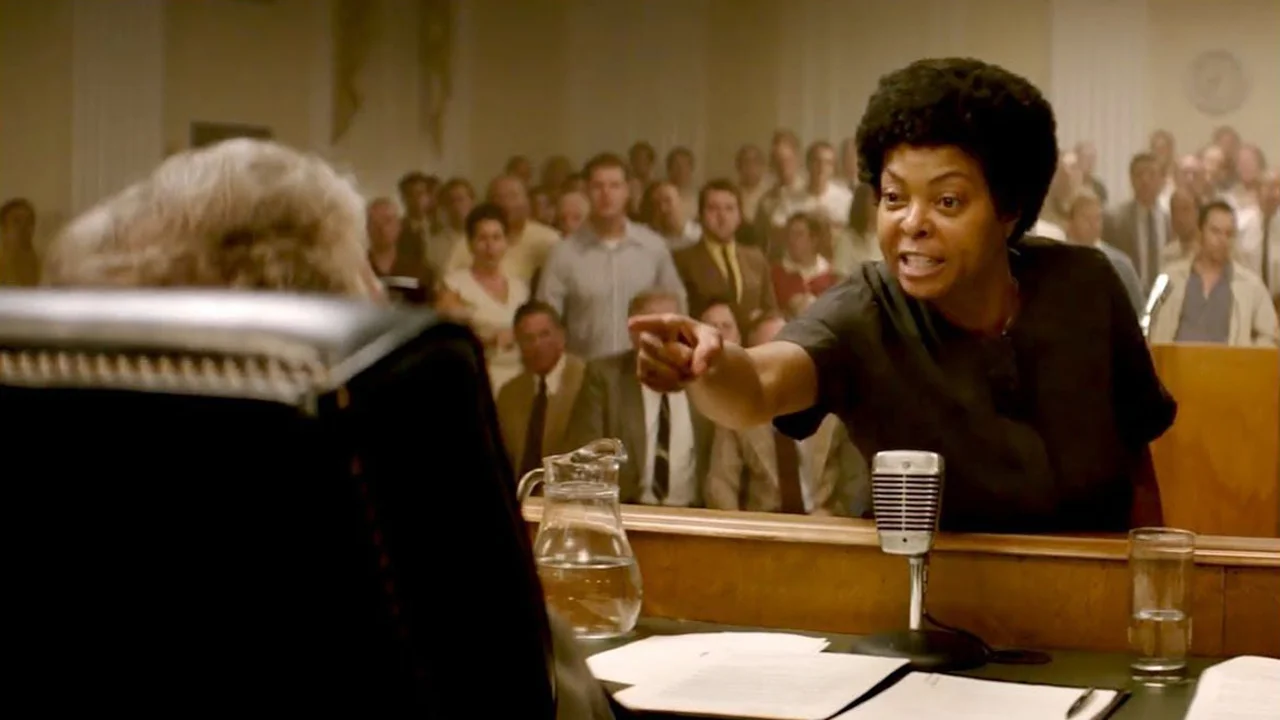
The film builds Ellis’s character early on by showing him and fellow klansmen shooting up a home of a white woman who is dating a black man. “Wait for the light!” C.P. says. They shoot through the bottom floor of the home to intimidate her as soon as the light upstairs is turned on. It’s an interesting look from the inside of the Klan as to how they’re doing their “job”. Ellis also has a son in a mental hospital who he visits regularly and pours love into. So it’s evident that he understands loving someone who may be different, but is staunch in his racist thinking. Atwater is always breathing hard. It could be because she’s overweight, but there is a sense of anger brewing under the surface with her that comes from years of hard work and hard living. While she’s not afraid to talk to the city officials who don’t care what she has to say (one turns in his chair to give her his back during a hearing) Atwater means business and expects them to listen.
The elements of a dynamic drama are there. There is an internal clock within the film that pushes the movie forward. You have a man who hates black people but loves his family and a woman who advocates for black people by speaking truth to power on a daily basis. The question becomes, how did they go from enemies to having the kind of friendship in which Atwater delivered the eulogy when Ellis died in 2005? It’s this deep study in character development and human interaction that writer/director Robin Bissell misses the mark on in exchange for symbolism over exhibiting the internal reflection/change of his characters.
Throughout the film, social class is represented through clothing. The rich and educated wear suits and nice clothes in the film, while the “common folk” wear button ups and dresses thin enough for their sweat stains to seep through and make sure we know they work hard. In fact, the rich don’t ever seem to sweat in a community that seems to be hot as evidenced by Atwater’s constant use of a handkerchief to dab away her sweat. There is a surface level exploration of the politics of the town that would give the viewer an inside look at why tensions exist amongst the the groups represented in the film.
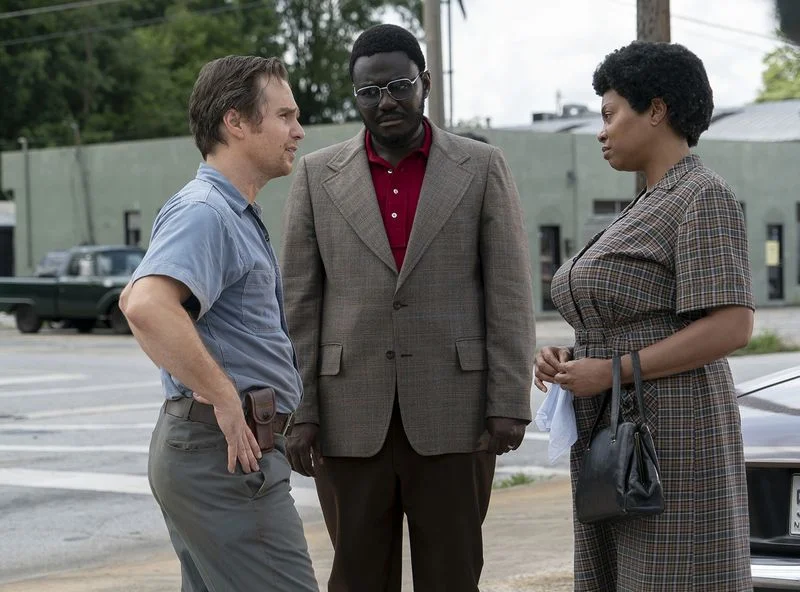
Atwater does a nice thing for the Ellis family, unbeknownst to them, which simply serves as an example of being kind even when someone is mean to you. At the end of the charette, Atwater gives a one sentence answer in whether the schools should be integrated or not. We get a monologue from Ellis for his decision to do what we knew was right from the beginning. There is a disproportionate amount of focus and backstory on both characters in this film, and that has to stop.
If The Best of Enemies had never been made, the vast majority of people who see the film would never know about Ann Atwater and C.P. Ellis. So there has to be some credit given to the people who brought this movie to life. However, if we’re going to have stories dealing with race and overcoming prejudice in our history, let’s do it the right way! Taraji P. Henson and Sam Rockwell brought it as their characters, but perhaps the same equality their characters were fighting for should be brought to similar screenplays in the future!
Rating: C
My Video Review: