
"mid90's" Review

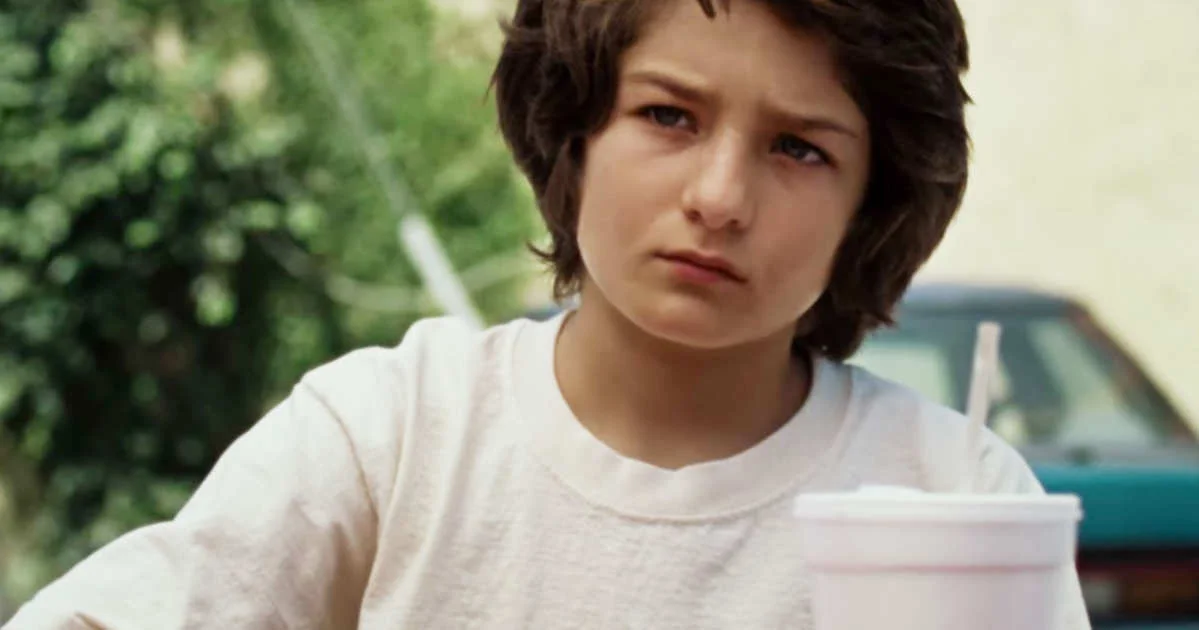
Jonah Hill’s directorial-debut film Mid90s is a movie, at face-value, about a group of skateboarders; but it is certainly more profound than that.
In 1990s Los Angeles, 13-year-old Stevie (Sunny Suljic) flees from a turbulent home life by finding solace in a new group of friends he meets at a local skate shop. The eldest, and leader of the group, Ray (Na-Kel Smith), takes Stevie under his wing and shows him what a family outside the home can look like. Like most families, however, this one has their fair share of tribulations. Their journey is beautifully honest on screen. In fact, their acting is possibly the only thing that rivals the poise of their skating.

There is a scene in the film, a close-up shot of Ray gripping Stevie’s new board and drilling in the wheels, that’s gloriously over-the-top. It is evident that Hill wanted to make a film about skating and hip hop, but it isn’t until the final frame that it becomes clear these two vehicles for narrative offer a unique metaphor for perseverance. Perseverance, I submit, is an underlying message in the film. Can you fall and get up? How hard can you get hit, rather, and still find the strength to get back on your feet? Falling is inevitable. As Hill eloquently puts it, “we are all under construction.” But what Hill finds more important, and what is expressed through the film, is the journey to loving yourself.
This idea is similarly expounded upon in the magazine Hill released in conjunction with A24 and Mid90s. It serves as a companion piece to the film but is also quite an engaging read on its own. In short, Hill interviewed some of his close friends and asked them about the process of loving yourself or, reversely, hiding a part of yourself you are ashamed of. In a way, the film is a representation of how these tough questions can materialize within friend groups.
In that regard, the magazine feels like a director’s notebook for the film. However, there is the film you write, the film you shoot and the film you edit, and it is difficult not to get the impression that much of the film was cut out in the final edit. Although not much change happens over the course of the movie, it runs a mere 90 minutes in length and has ubiquitous quick cuts that are jarring at times. This editorial style is only used effectively during a tense scene towards the end of the film, but I’d be remiss if I gave too much away.
On the other hand, the music in the film is beyond redeemable. Fantastic. A Tribe Called Quest meant to Hill what the Beatles meant to his parents. It was clear before the film began that music would have a significant role in the piece and kudos to Hill for curating and developing this soundtrack with his team, because it carries you through the melodic roller coaster splendidly. I even found myself bouncing my head up and down to the beats.
You may vibe with the music as well if you grew up in the 90s. Or even if you didn’t. You may be brought to tears by the film because it is, like The Florida Project a year ago, wonderfully sad. You may find yourself laughing hysterically because it is filled with wit. And although it is unconventional, the story still seems to work. Jonah Hill may have made this film for himself, and for those kids who feel they do not belong, but I believe everyone can enjoy this film.
Rating: B+

Middleburg Film Festival '18: "Widows" Review
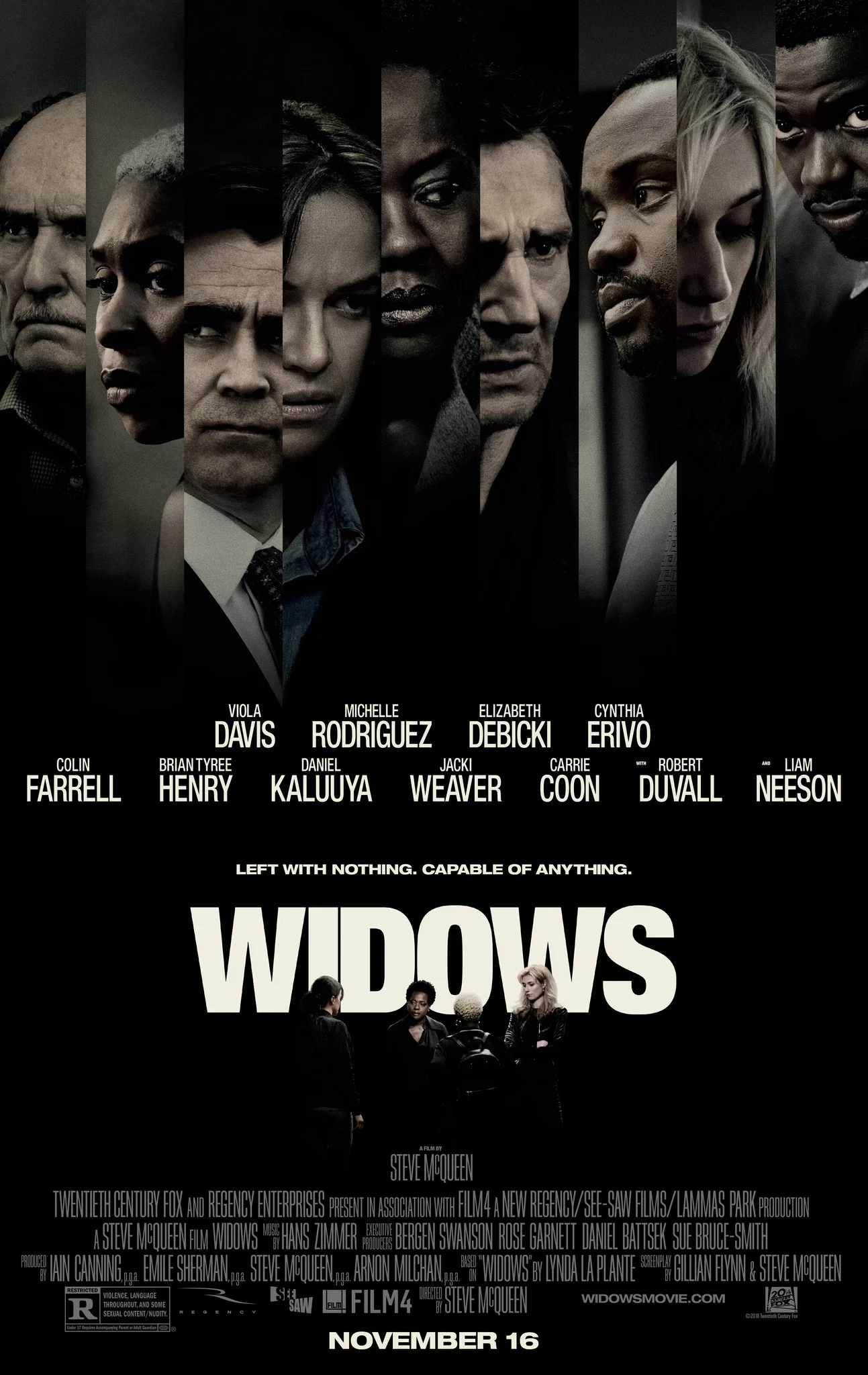
In lesser hands Widows would be a run of the mill heist film. Give this script to any other director and you may not be challenged to keep up visually in the way Steve McQueen intelligently crafts this film. Give this script to any other cast and the words wouldn’t be elevated from the page to create characters that we see transform throughout the course of the film. Grab your popcorn folks; this is why we go to the movies!
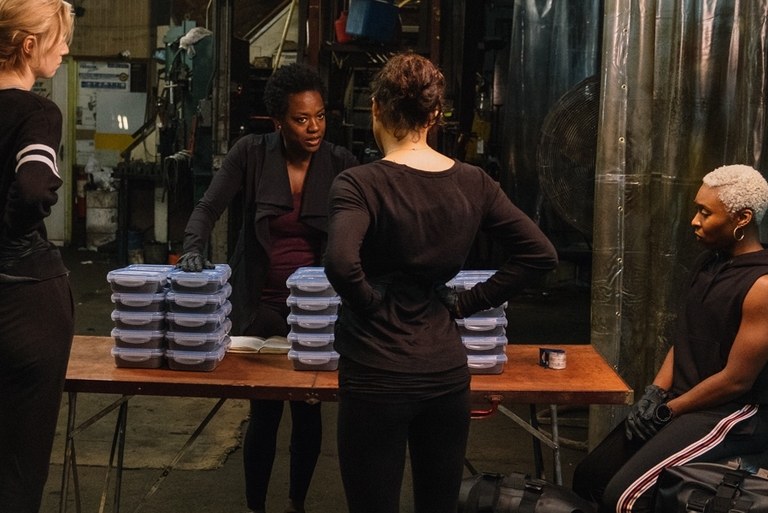
Set in Chicago, Veronica (Viola Davis), Linda (Michelle Rodriguez), Alice (Elizabeth Debicki) and Amanda (Carrie Coon) are found grieving the loss of their criminal husbands. After the hubbies perish in their latest heist attempt, their death means nothing to the people they owed. Local crime boss turning politician, Jamal Manning (Brian Tyree Henry), seeks the money that Harry Rawlings (Liam Neeson) and his crew stole from him on principle, but also because he’s running against Jack Mulligan (Colin Farrell), the man whose family has been alderman of their district for two generations prior. Manning’s motive for getting the two million dollars is solid and with his cold-blooded gangsta brother, Jatemme (Daniel Kaluuya), eager to help his brother win the elected spot, Veronica has no choice but to get to work. Equipped with a notebook her husband Harry left, Veronica decides that she can get out of debt and start a new life if she and her fellow widows can pull off the big caper Harry plotted out.
McQueen’s work has always been raw, dark, and visually biting. He’s able to use those elements, set against the climate of current day Chicago, to give us a memorable, blockbuster heist film. The opening itself is a Soviet Montage of sorts that doesn’t lovingly bring you into the story but crashes together in a rhythmically edited mashup that quickly brings the audience up to speed. McQueen leads the story with his camera, laying the ground work for his actors to step in and knock the ball out of the park, and they come through.

This review would be too long if each cast member got their time to shine here, but know that they do. Of note, Davis delivers a stellar performance as per usual by giving Veronica an internal conflict that is exhibited in a way that only Mrs. Davis can do over the course of the film! Elizabeth Debicki may certainly have the best character development throughout the film as you literally watch a shutdown and abused widow become a leader and empowered woman. All of the lead and supporting cast give us well rounded characters to watch on screen.
McQueen and co-screenwriter Gillian Flynn never telegraph an overt message in dialogue, but rather McQueen uses visuals to explain the issues in Chicago. The political race between Mulligan and Manning is a plot point, but there is a larger conversation to be had in our minds as audience members about the violence in the streets of the Chi. There’s a beautiful single take shot that shows the economic disparity that pushes the story forward while making you think afterwards.
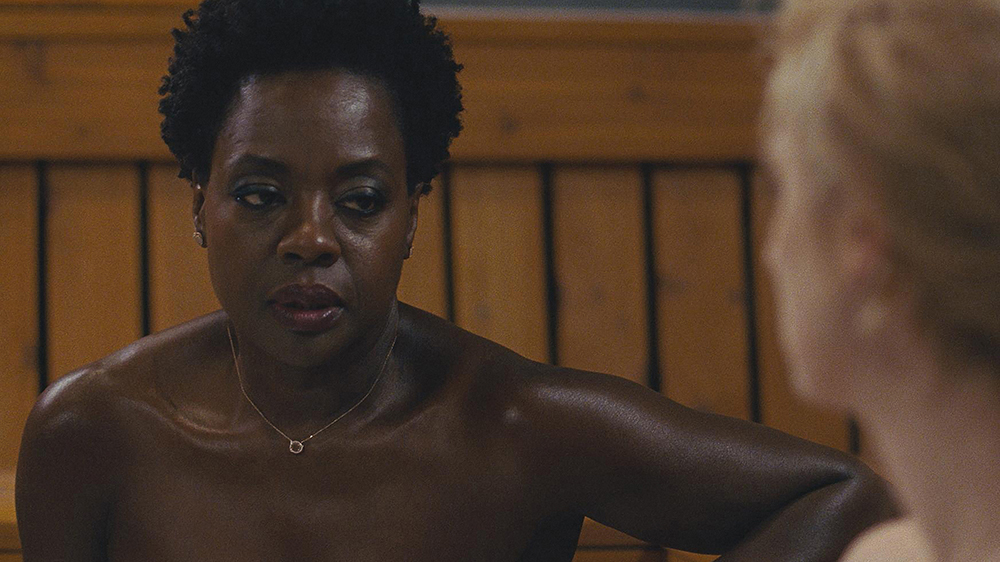
The only small issue with the film may be in the eagerness to gain their dignity and respect, there is an ever pervasive message of the widows trying to prove themselves in their words. Their actions already show that they’re more than capable so we don’t need on the nose lines like “no one thinks we have the balls to pull this off!” While well delivered from Davis, it would be nice to be shown more than told. This in no way takes you out of the film or detracts from the empowerment that it delivers.
Widows proves that heist films can have layered meaning and story to them. It’s a good night out for the ladies, date night, and even time for the fellas! However you see it, make sure it’s in a theater. It will be well worth the money spent!
Rating: A

Beautiful Boy Review: A Haunting Story of Addiction and Family
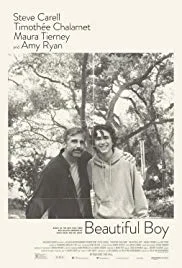
I’ve spent the passed few nights thinking about Felix Van Groeningen’s film “Beautiful Boy.” Rolling Stone critic Peter Travers said it best when he quipped, “[Beautiful Boy is] hard to take and impossible to forget.” I echo these sentiments.
This film depicts the brutally cyclical demons of addiction, while not boasting authority over the conversation. A topic many filmmakers shy away from, however, Groeningen accepts this responsibility with aplomb. What started as a reality for the Sheff family, blossomed into two, moving memoirs and now is a film that calls for an evening indoors this fall.
I recommend this film not because it is enjoyable to watch but for the revered performances given by Steve Carell and Timothée Chalamet. This, of course, is no knock on the integrity of the film’s narrative. I submit, rather, that this film is difficult to watch purposefully. Perhaps overbearing at times, but this film juggles addiction and the idea of letting your children go as well. At times, the film feels more about the feeling (as a parent) of watching your children outgrow dependency. A sad truth that permeates through the film and is brought to life by Carell’s character.
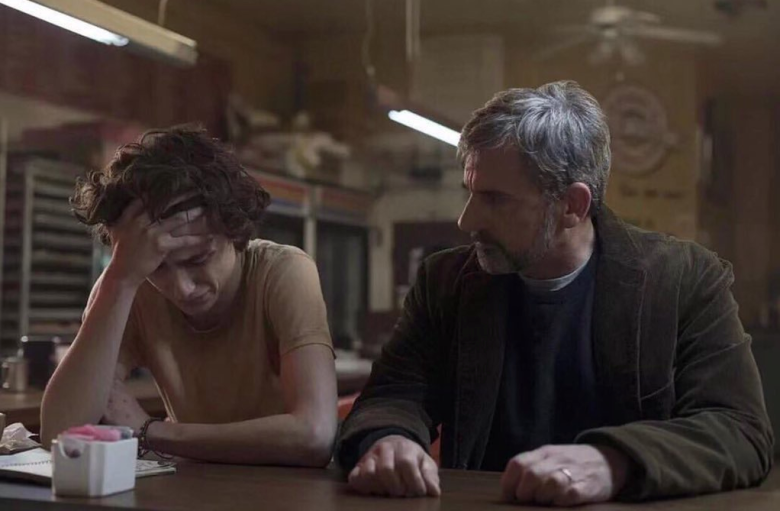
Where the actors shined, the musical score did not. The song choices made in this film are as confusing as the trials of addiction: unpredictable and strange. Notable songs include "Sound and Vision" by David Bowie, "Nanou2" by Aphex Twin, and "Territorial Pissings” by Nirvana. As a non-drug using colleague of mine said, “It’s as if you’re high and relapsing over-and-over again throughout the film.” You truly ride the ever-changing roller-coaster of addiction along with these characters, and the music is the vehicle that carries you there.
From a cinematography standpoint, the film plays exactly as expected. Using bright, natural light and dark shadows when appropriate, while also falling back on color conventions with blues and oranges. More noticeable, however, is the expressions upon the faces of the aforementioned characters. The way their foreheads twist and turn with discomfort feels oddly impressionable.
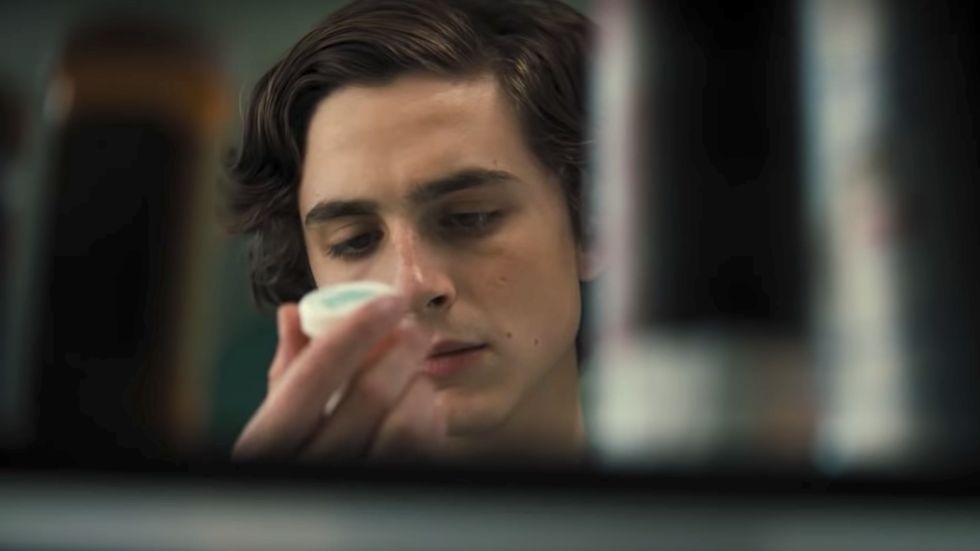
At this point, it’s fair to conclude this film is held up by it’s acting, but nevertheless an important film. If only for the final credit: Overdoses now leading cause of death of Americans under 50. This is a much bigger problem than most realize.
If you are struggling with substance abuse, please call the SAMHSA National Helpline at 1-800-662-4357 for free and confidential information.
Rating: B-

"First Man" Review: The Best Space Race Film to Date

First Man could be the best space race film created to date! Plenty of films have taken us to the moon. Plenty have shown the complications that can arise when an astronaut is alone, hundreds of thousands of miles away from the Earth. None have captured the human sacrifice, internal struggle, and loneliness of getting there so well as this motion picture.
Director Damien Chazelle, hot off his success with La La Land, tells the story of the life of Neil Armstrong (Ryan Gosling) in the eight years leading up to his infamous walk on the moon on July 20, 1969. With a film like this, you know the outcome, but it’s the journey to get there that’s intriguing, entertaining, and educational. Chazelle does more showing than telling with his production of the story. His camera predominately stays in tight on his subjects, forcing us to connect with them, see what they see, and absorb small moments that we may usually miss in wides or mid-shots.

Sound is another important element in the film. Every breath, turn of a knob, rocket roaring, bone crunching accidents, and even the silence of space matters in this film. It accentuates the moment and submerges the viewer further into the emotional weight or lack there of in a scene. The grand stakes of the mission to the moon is perfectly balanced between moments of devastating failure and nuanced humor backed by a beautiful score from Justin Hurwitz. Hurwitz manages to insert a piece of percussion that ticks throughout many of the songs subconsciously pervading the sense of time, whether it’s running out or seemingly nonexistent in space.

The casting is spot on with this ensemble. Gosling turns in a stellar performance as Armstrong with an emotionally distant, introspective yet caring portrayal of the American hero. In films set in the 60’s we typically see the stay at home mother and housewife character portrayed as seen and not heard but there for support. Yet, Claire Foy as Janet Armstrong is able to evoke this enormous sense of a highly intelligent woman, emotionally strong enough to shoulder the burden of raising kids with the ever present reality that her husband could lose his life at any moment. With notable performances from Corey Stoll as Buzz Aldrin, Kyle Chandler as Deke Slayton, and Jason Clarke as Edward White you get the authenticity of the best indie film performances in a blockbuster.
While the film never focuses specifically on the politics of the time, you are able to get glimpses of the economics of the day through various meetings NASA has with politicians and protests. Gil Scott-Heron’s “Whitey On The Moon” gets a surprising moment in the sun during this film. The powerful spoken word allows Chazelle to highlight the disparity of funding for the expensive space program versus the hard working citizens paying for it with tax dollars while trying to survive.
First Man is a film about perspective. It gives the viewer a moment to feel what it must have been like to be in Armstrong’s shoes, what his family and other family’s who lost loved ones for the mission endured, and how small we are in the universe. The focus on character and story, using all of the components of film to engage its’ viewer, makes this film soar above all other race to the moon films that have come before it. Treat yourself to an IMAX showing of this film, because it deserves star treatment!
Rating: A

"A Star Is Born" Review: A Fresh Look At A Classic Story
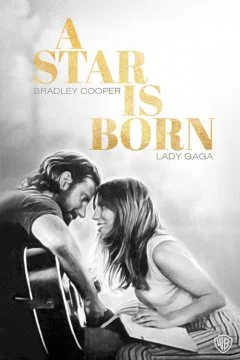
Even before its release, A Star is Born (2018) existed as a landmark point in the history of contemporary American cinema. This is the third version of the story to hit the screen since 1937. It also marks the directorial debut of Bradley Cooper, as well as the big screen debut of Lady Gaga. The press for this iteration has been brimming with praise since the film’s premiere screening at the Venice Film Festival. While not destined for classic status, A Star is Born is a strong debut feature and provides a fresh look at a classic story.
Ally’s (Gaga) life is a struggle; she lives at home with her father (Andrew Dice Clay) and works as a server in an upscale restaurant in the city. Her only reprieve is her weekly slot at a local bar, where her vocal talent allows her to perform live alongside a group of lip-synching drag queens. This all changes when singer-songwriter Jackson Maine (Cooper) swings by the bar on his way home from another headlining arena show. Maine immediately falls for Ally, and the couple embark on a journey through the contemporary music industry filled with soaring highs and soul-crushing lows.
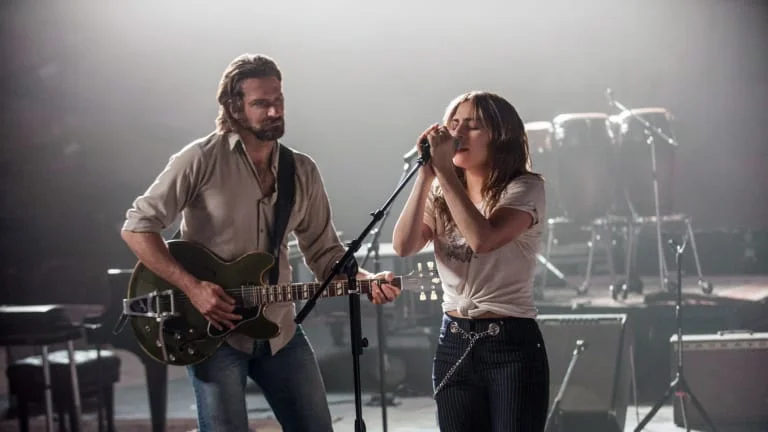
The film serves as a strong directorial debut for Cooper, who quickly draws the audience in, even though they may be familiar with the story. The numerous musical performances were shot live in secret during a number of large musical festivals and feel extremely authentic…because they are. The camera stays close to its characters, resulting in extremely intimate moments within the context of packed stadiums and festivals. The songs, many of which are penned by the stars, are emotional earworms that support the main storyline and will likely stay with audiences after the lights come up in the theater.
Cooper’s reliance on close-ups throughout the rest of the film keep this intimacy going when its characters are offstage as well. Despite the quality of the direction, the film is not without issues. The film’s 135 minute runtime starts to crawl after a while; the momentum built in the opening hour drifts away in the final act. In addition, Cooper’s choice to replace an existing narrative of the rise and fall of musicians with a battle over “authenticity” is an interesting one, but it doesn’t quite land.
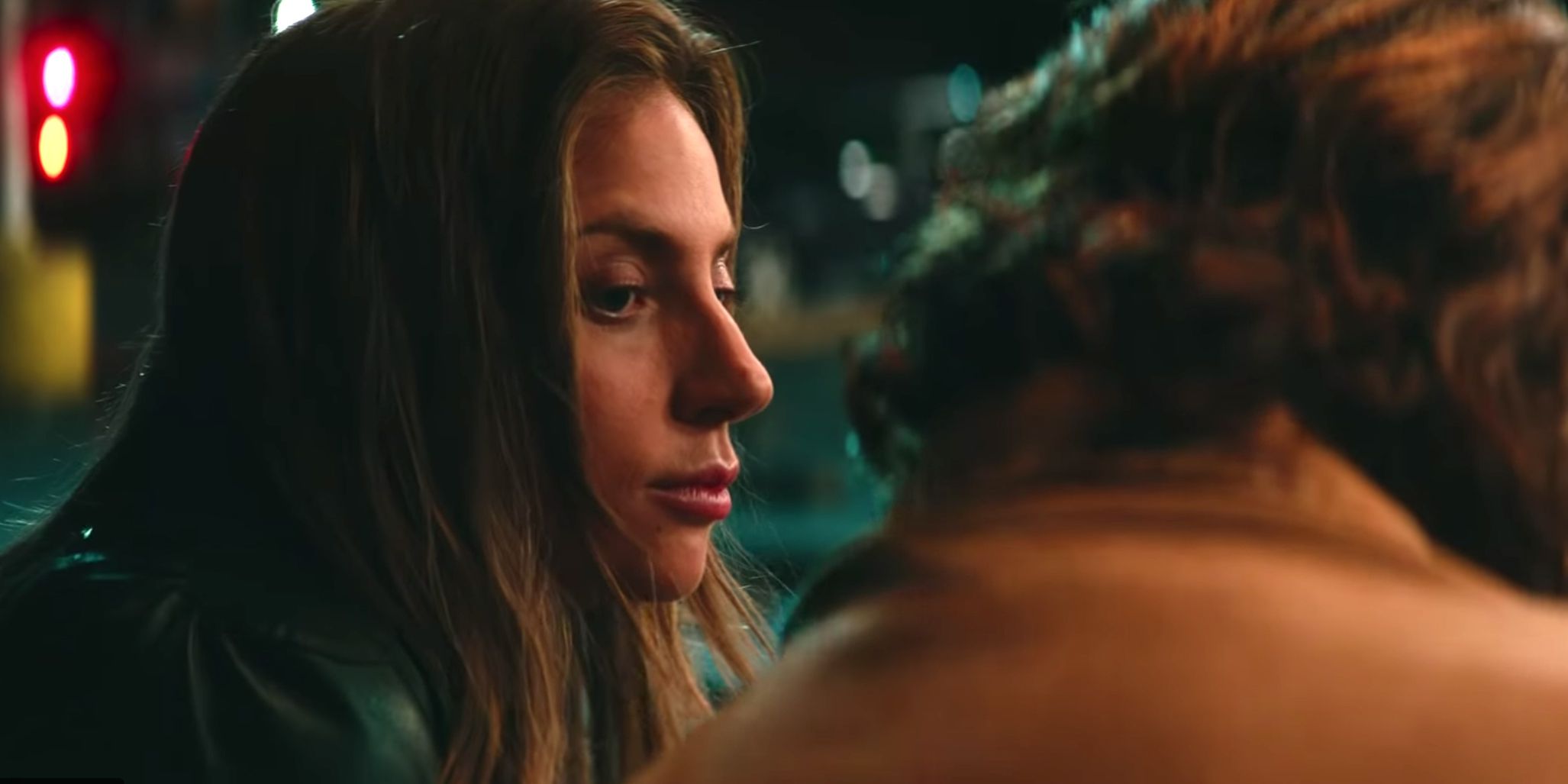
While the film serves as evolution for Cooper’s career, it’s Lady Gaga who steals the show. The pop star’s stripped-down turn as Ally makes her a serious contender in the film industry. Near unrecognizable sans the elaborate costuming she’s known for, Gaga becomes her character and elevates the emotional core of the story. This is in contrast with Cooper, whose performance as Maine, while good, wasn’t born of the same immersion While the leads are obviously the focus here, much could be said for the supporting cast, all of whom provide a real sense of depth to their roles. This is especially true of Sam Elliot, who plays Cooper’s older brother/manager Bobby.
A Star is Born isn’t perfect, but it will likely be remembered as a watermark in the careers of Lady Gaga and Bradley Cooper. The film will probably receive a number of Oscar nominations, although wins are not guaranteed. This reimagining of A Star is Born manages to take a classic Hollywood tale and update it with the visual playbook of modern independent cinema. Fans of either may come away with a positive opinion of the film.
Rating: A-
"The Old Man & The Gun" Review: A Nice Curtain Call For Redford
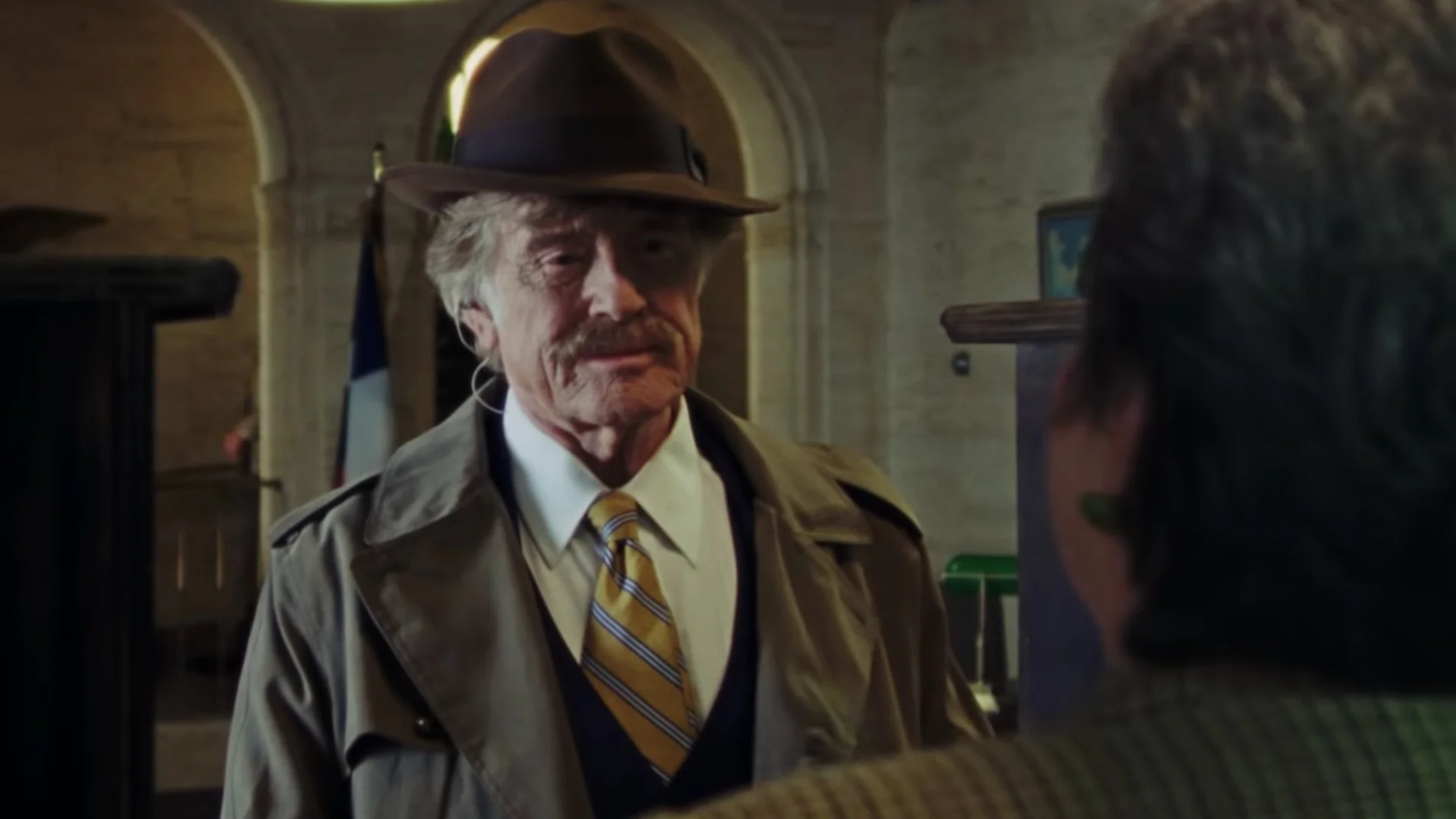
We’re at the curtain call for one of the greatest actors of his generation. After entertaining us for close to sixty years, Robert Redford announced that The Old Man & the Gun would be his final film role. The new film from director David Lowery, who previously directed Redford in 2016’s Pete’s Dragon and last year’s A Ghost Story (which was one of my favorite films of last year), Old Man is a breezy film, in a good way. Never taking itself seriously, it’s nice to see a film set out and do what it’s trying to do: to simply entertain us and have fun with the material on hand. Even though Redford claims this is his final role, this shows that he still has plenty of gas left in the tank should he decide to “un-retire.”
Based on a mostly true story, as the opening title card tells us, Forrest Tucker (Redford) is a seasoned bank robber who’s been in and out of trouble since the age of thirteen and successfully escaped prison sixteen times. Forrest, even though he’s a criminal, is a proper gentleman and always polite. His latest string of bank robberies along with his accomplices Teddy (Danny Glover) and Waller (Tom Waits), whom the media dubs the Over the Hill Gang, catches the attention of local cop John Hunt (Casey Affleck) who’s hot on their trail. Along the way, Forrest develops a relationship with a widower, Jewel (Sissy Spacek), as he and his team plan for one last big heist.
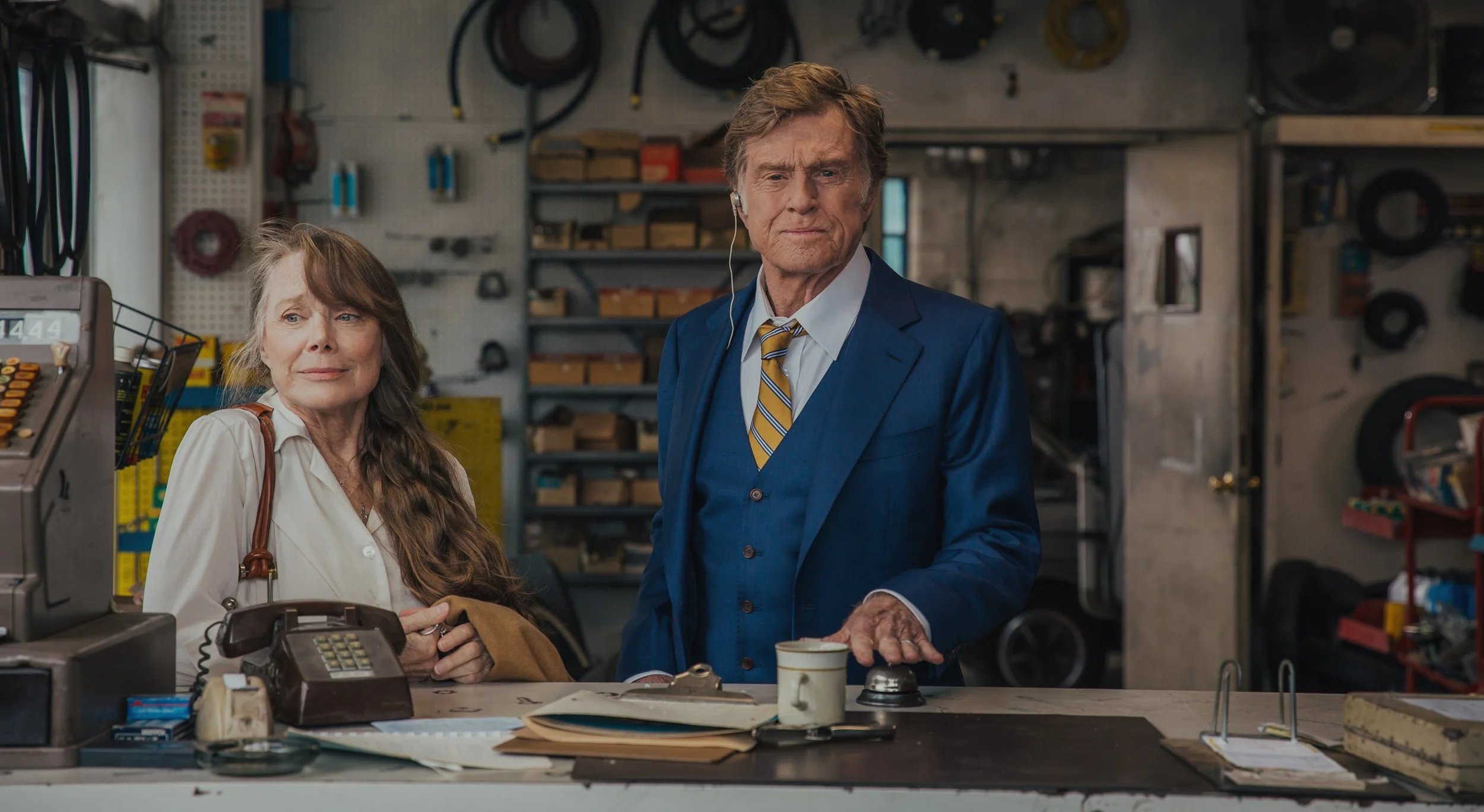
For what he’s calling his final film performance, Redford absolutely delivers as Forrest, a man who just can’t help himself and loves what he does. Watching him charm up the screen and playing it cool shows why he’s considered one of the best of his time. For the story at hand, written by Lowery and based on a 2003 New Yorker article from David Grann, I enjoyed the depths Redford brought to Forrest. He presents himself as a polite, charming gentleman, but beneath the façade, there’s a sort of loneliness to him. I believe no one else could have pulled it off as great as Redford does. The chemistry that Redford exhibits with everyone, from his accomplices to Jewel to even John, was great. In fact, the storyline between Forrest and Jewel was one of the strongest parts of the film, and for these actors to finally be in a film together, you would have been fooled to think they’ve done this song and dance plenty of times. Lowery also presents Forrest and John as the yin and yang to each other. While Forrest is happy to be doing crimes in the prime of his life, John seems like he’s burnt out from being a policeman. All of the other actors were solid in their roles as well.
With each of the films that he has directed, Lowery has shown a certain growth with the ability to navigate through different genres while still giving each film a style and personality of its own. The jazzy soundtrack from Lowery’s musical collaborator, Daniel Hart, helps move the film along and feels appropriate for the film. The look of the film that Lowery and his DP Joe Anderson went for, with shooting on 16mm and then blowing it up, helps to make the film look like something that took place in the late 70s/early 80s. The montage sequences, particularly showing Forrest robbing banks or how he escaped prison so many times, are spot on and have a certain energy to them. The length of the film, at 93 minutes, was perfect to get in and out, so it never overstays its welcome.
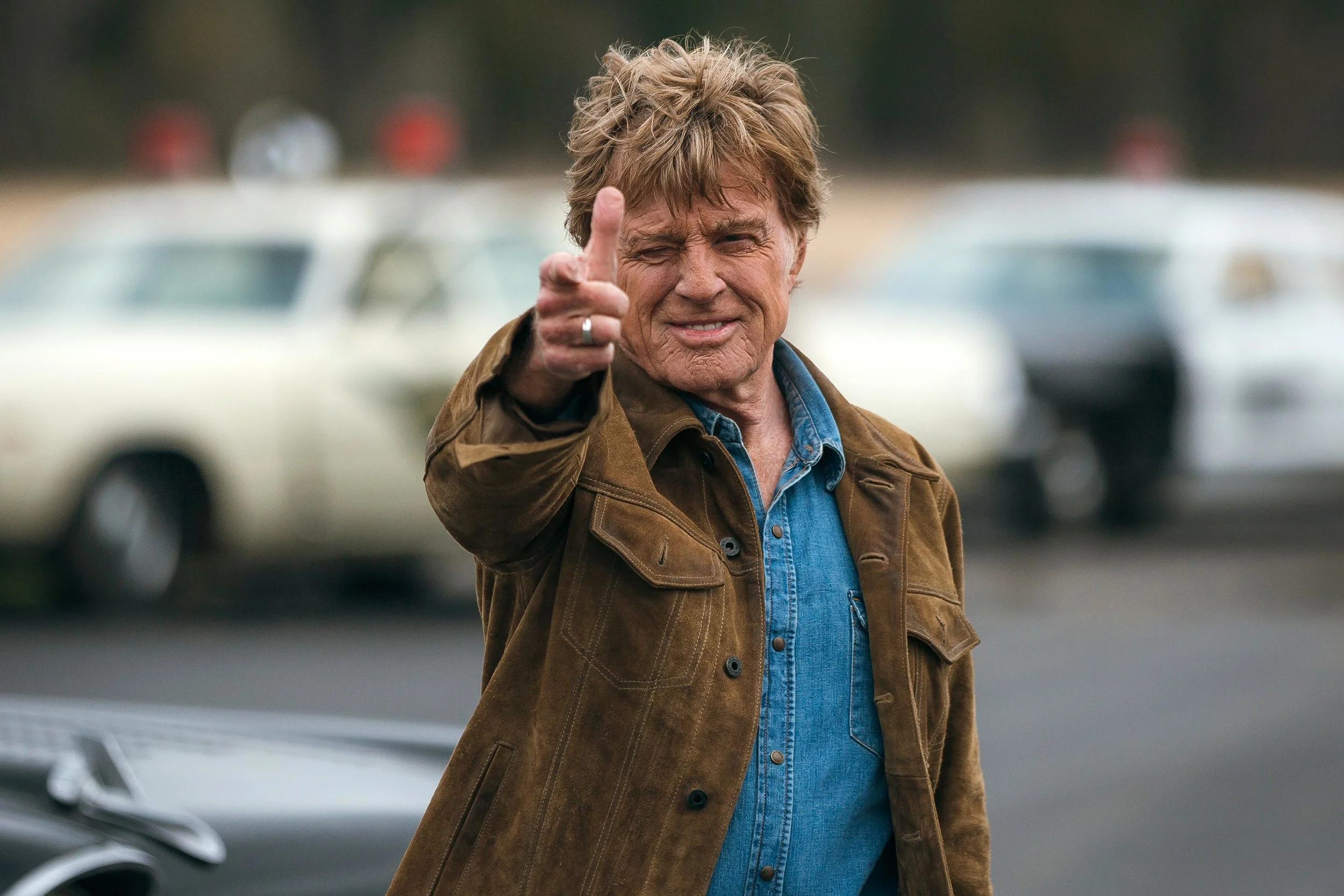
Even though it’s breezy fun, it doesn’t go too in-depth. Since Lowery, at times, feels like he’s focusing more on Forrest, the supporting characters aren’t developed very well. Some of them come and go without any real significance to the story. It would have been fun if there were just a few more scenes with either Glover or Waits’ characters, and to see more interactions with John’s wife Maureen (Tika Sumpter).
Overall, for his final performance, you couldn’t ask for anything more from Redford. This is his film through and through. In this time and age, it’s refreshing to go to a film and just have fun for a couple of hours. The Old Man & the Gun delivers on that front. If this indeed is the end of the road for him, he picked a good film to go out on. And I’m looking forward to whatever Lowery has coming up next. I would recommend checking this film out whenever it comes to your theater.
Rating: B+

"Night School" Review: A Lesson in Bad Comedy
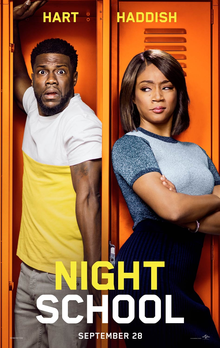
Let’s start with an alliteration. Night School begs for comedy charity chuckles. Let’s do the math. Kevin Hart plus Tiffany Hadish doesn’t make comedy gold. Now, let me take you to school.
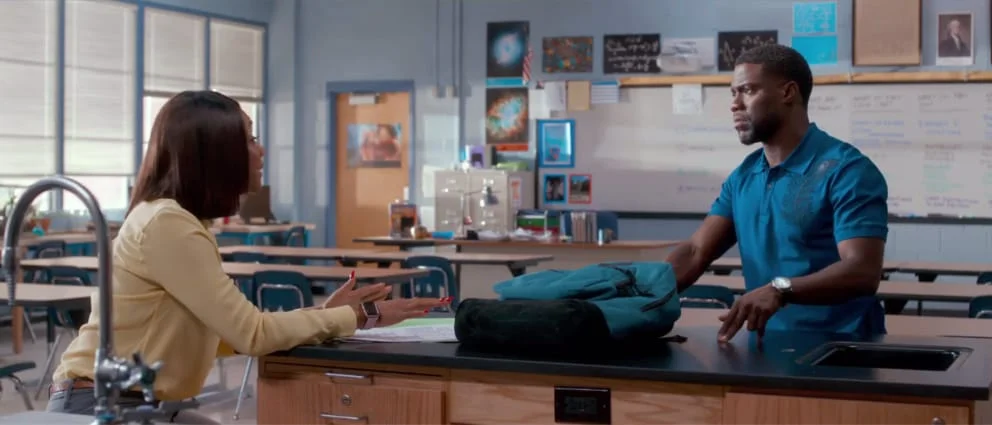
Directed by Malcolm D. Lee, Night School follows the story of Teddy Walker (Kevin Hart), a high school drop out who has used his quick wit and charm to get ahead in life. He has it all. His girlfriend Lisa (Megalyn Echikunwoke) is a beautiful businesswoman, and the porsche he drives is equally elegant. The only problem is he’s maxing out on his credit cards to keep her impressed and in his life. After a freak accident following his proposal to Lisa, Teddy finds himself unemployed and unable to keep up the facade. So he decides to go to night school in an effort to become a financial analyst.
From there we’re introduced to the ragtag bunch of night school students in Teddy’s class. There’s the stressed and under-appreciated stay at home mom Theresa (Mary Lynn Rajskub), woke brother Jaylen (Romany Malco), former jock Mackenzie (Rob Riggle), high school teen queen Mila (Anne Winters), wanna be pop star Luis (Al Madrigal), and in confinement convict Bobby (Fat Joe). They’re all led by an underpaid teacher named Carrie (Tiffany Haddish).
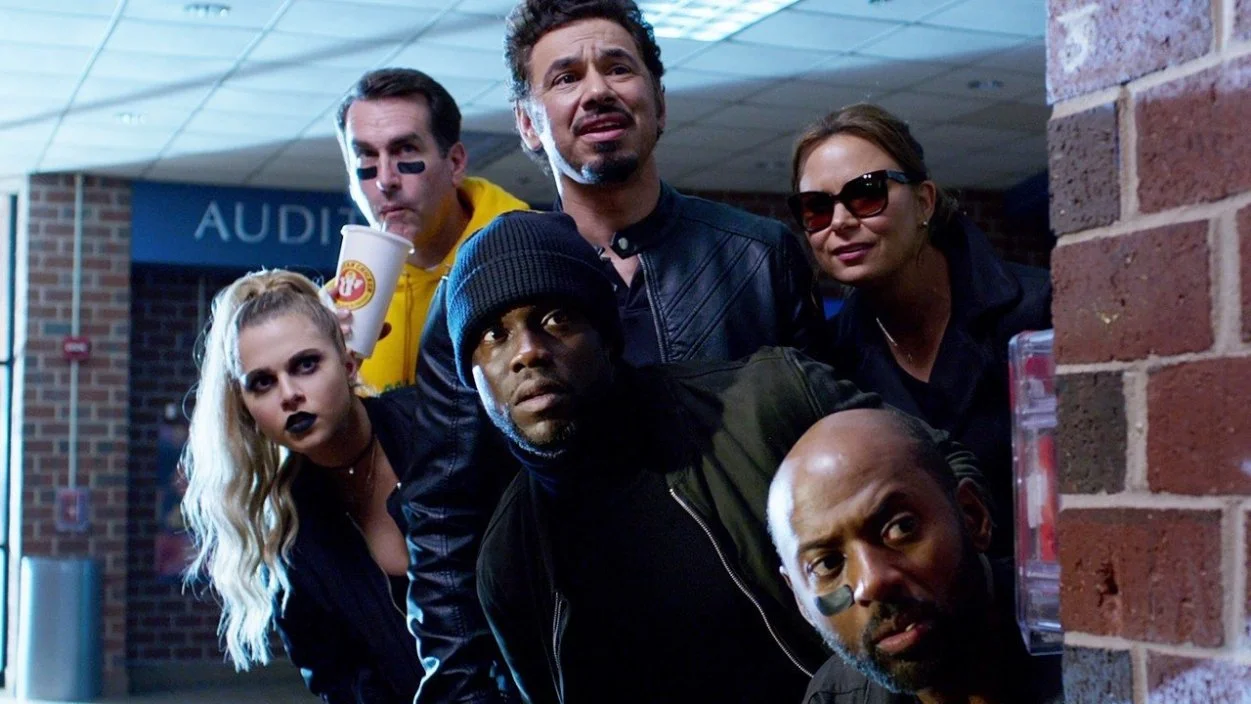
The problem with the film is that at the script level its thinner than a sheet of paper. With six names on the writing credits you would think that someone would say, “hey, let’s make sure the stakes are more than our main character has to hide educating himself from his fiance.” There is no major emotional investment for the viewer to take the ride on this unlikely story. Yet, the six writing credits may explain why the story goes into so many different directions. It’s a caper comedy, teen comedy (equipped with choreographed dance moves from a group of students during a prom scene), buddy comedy, and more. So we’re forced to hope that the banter amongst the characters will be worth the entry. It’s not.
You start out wanting to see more of Haddish, but quickly realize she’s underused in her role. Hart works too much and brings nothing new to this character. So the lesser names in the ensemble wind up bringing more creativity to the mix. Romany Malco is almost unrecognizable as Jaylen and he brings a full character to the screen and some good moments of humor. Even though Fat Joe can’t act, you can tell he was being himself as the Skyped in convict, and it makes for some good bits. In fact, the small details in the film are worth paying attention to. I’ve compiled my top five things to look for if you dare to go:
1) Fat Joe’s graduation jewelry.
2) The names of the sodas at Christian Chicken where Teddy works. Names like Ruth’s Beer and Coconut Christ Water were pretty funny.
3) How (Jaylen) Romany Malco brushes his hair. If you pay attention to what he’s doing, you’ll see it’s pretty funny.
4) Poor editing during the film. There are more than a few times when an action takes place from one angle and then the same thing happens again in the very next cut. (Haddish hitting Hart in the Christian Chicken parking lot for one.)
5) The terrible dub-overs in the film. There were plenty of times where you wonder if the audio is out of synch. My theory is that to keep the rating PG-13, certain dialogue had to be changed. There is a specific moment where heffer is used instead of the clear f-bomb Haddish actually said.
Overall, this film is a great pitch concept and nothing more. Kevin Hart and Tiffany Haddish are talented comedians at the top of their game, but this experiment didn’t produce a great outcome. I stayed awake through the end in order to write this review, but the man snoring extremely loud in the last ten minutes of this twenty-minutes-too-long movie provided more laughs and conversation amongst the audience than the movie itself. Save your money on this one!
Rating: D

"The House With A Clock in its Walls" Review

The House with a Clock in its Walls is masterfully nostalgic; director Eli Roth reignites the forgotten appreciation Millennials have for Jack Black. Even though the film is technically created for kids, I was on the edge of my seat throughout the movie. The film is based on a mystery fiction novel written by John Bellairs in 1973. The House with a Clock in its Walls certainly pays homage to the book in its own unique ways, however books are rarely fully realized when adapted to the big screen. The story is not quite the same as the book, but the movie makes up for that with polished special effects, great acting, and multi-generational humor. The movie is reminiscent of such films like A Series of Unfortunate Events, The Golden Compass, and even Goosebumps.
Lewis Bernavelt (Owen Vaccaro) is a recently orphaned 10 year old who moves to the fictional town of New Zebedee, Michigan to live with his uncle Jonathan (Jack Black). His uncle happens to be a warlock with a best friend, Mrs. Zimmerman (Cate Blanchett), who is a powerful witch. This hodgepodge of characters form a makeshift family on a mission to do one thing, find a way to stop the doomsday clock left by an earlier tenant of the house!

The first notable thing about the film is the casting, Jack Black does an amazing job in his role as the creepy, misunderstood uncle. This role is the Jack Black we’ve come to expect to see on screen through and through; he creates such an interesting character within the storyline, it’s hard to look away. Owen Vaccaro steals the show with his ability to cry on cue, competency with linguistics, and charming character. He is the typical nerdy, misunderstood kid, but he certainly proves himself time and time again. Finally, sure to be a character favorite (she was mine) is Florence Zimmerman (Cate Blanchett), the platonic friend of Jack Black; their friendship is hilarious and wonderful. They truly care about each other as friends but they don’t waste a moment without dishing out a good insult towards one another. Overall, the acting truly carries the film, and the relationships between all of the actors feels genuine, adding to their creativity.

Alongside the quarrels and quips between characters, the storyline is incredibly intriguing. The plot is solid and engaging, yet you can never assume what will happen next. The House with a Clock in its Walls is a story that cannot be forgotten (not recommended for kids under age 8), and yet it is filled with humor for different generations. At one point during the screening I saw, an audience member nearby noted out loud that there were more adults laughing at the jokes within the audience than kids which truly speaks to the talent behind the writing by Eric Kripke. As was mentioned before, the character interactions are incredible, and the writing can partially be thanked for this. The actors are able to create palpable, genuine relationships on screen with the dialogue; some of the most impressive acting came from Owen Vaccaro, simply because of the way he “used his words,” (this is even commented on within the film).
The House With a Clock on it's Walls uses a variety of cinematic elements to give an entertaining final product. The production of the film is well thought out, the creativity shines, and the plot doesn’t falter. The dedication of the actors alongside the great writing help make these characters memorable. As stated earlier, the film is incredibly nostalgic for Millennials; it relates to so many movies in the past that are now reminiscent of our childhood. Hopefully, Jack Black’s role sparks the same sentimental value for the next generation that he created in past films like School of Rock; this film definitely has potential to become a Jack Black cult classic.
Rating: A-

"Mandy" Review: A Vision Both Strange and Eternal

It has been seven years since filmmaker Panos Cosmanos burst onto the scene with the cult sci-fi film Beyond the Black Rainbow, and many have wondered if and how the writer-director could top Rainbow’s ramped-up hallucinogenic visuals. Fans of the director now have their answer, as Cosmanos has returned with Mandy, an acid-drenched revenge thriller unlike anything released in theaters this year.
Lumberjack, Red Miller (Nicolas Cage), lives a quiet life in the forests of the Shadow Mountains alongside the love of his life, the titular artist Mandy (Andrea Riseborough). However the serenity of the forest is disrupted by the arrival of Jeremiah Sand (Linus Roache), a failed folk singer- turned-cult leader and his group of God-loving hippies. After a passing encounter on a desolate logging road, Sand decides that Mandy must join his group. Tragedy eventually ensues and leads Red and his home-forged battle axe into the night seeking revenge at any cost.
Cosmanos takes this simple plot and drowns it in gallons of blood and LSD. Mandy’s forest setting is constantly punctuated by beams of Giallo-influenced color, animated hallucinations, and an ever-present heavy metal-influenced score composed by the late Jóhann Jóhannsson. The film contains homages to midnight films of the past, but these blend seamlessly into Cosmanos’ world and never feel tired or cliche. It takes a special film to do that in a nostalgia-dominated media landscape, and Cosmanos has shown that a throwback film doesn’t need to consist of yelling “HEY REMEMBER THIS?” at its viewers.
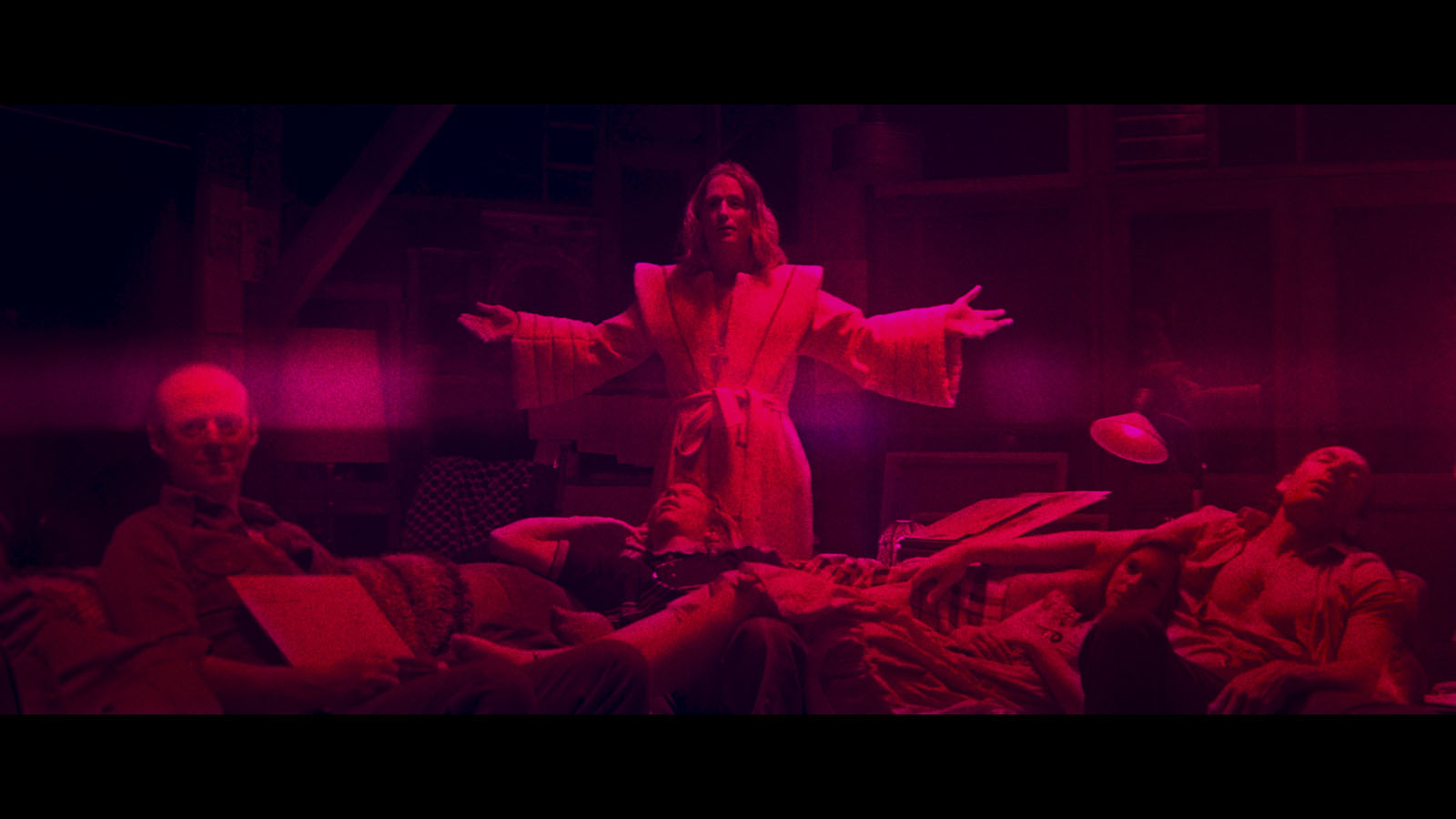
Of course, the film isn’t all nostalgia, and provides a number of original set-pieces that must be seen to be believed. Otherworldly S&M bikers are summoned via ocarina, and grown men duel with chainsaws under the lights of a mining quarry. These (and other) insane sequences aren’t for everyone, but they certainly draw the viewer into Mandy’s unique vision. It takes a total commitment to the craft to pull things like this off without irony, and the film succeeds where other camp-focused features may fail.
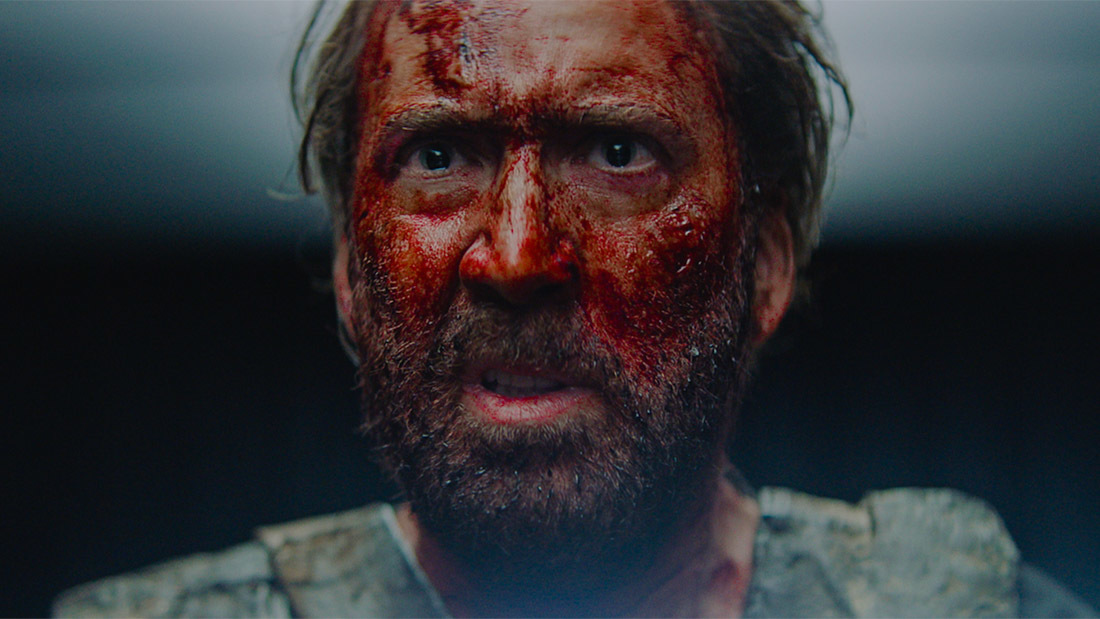
This all-in feeling is buttressed by the film’s impressive cast, many of whom turn in milestone performances in their respective careers. Nicolas Cage’s monolithic filmography has been varied to such a degree that the internet has designed a four-point matrix on which to graph his performances. This, however, is a role no one else could pull off, and Cage’s performance as Red transcends the points on the aforementioned Cage matrix. Red’s transition from loving partner to blood-soaked death machine requires just about every emotion to come through on screen, and Cage nails every beat required of him. The viewer really feels Red’s emotional arc, and when Cage engages in one of his legendary on-screen freak-outs, the moment is more than earned. This is a performance for the ages, and should be seen as a return to form by one of Hollywood’s finest.
While most of the press surrounding the film’s post-Sundance premiere has focused on Cage, Andrea Riseborough and Linus Roache deserve equal amounts of praise. Riseborough’s portrayal of Mandy is wonderful, and Roache’s turn as the villainous Sand should be seen as a breakout moment in his career. A confrontation between the two is one of the film’s highlights and provides a clear piece of social commentary in the age of #metoo. Expect to see both actors doing big things in the future.

All of this praise is certainly warranted, but the film is not without some issues. The filmmaker’s editing style is a bit of a double-edged sword, as it was in Rainbow. The pivotal shift in tone occurs about halfway through Mandy’s 2-hour run time. This gives the viewer plenty of time to invest in Red’s eventual rampage, but the film does drag a bit. Those expecting a pace similar to other action-oriented films may find the glacial pace of Mandy’s first half off-putting, but it’s hard to say whether the film’s tender first half could be shortened.
Nontheless, Mandy is a strong addition to Cosmano’s filmography, and fans of genre-filmmaking looking for an unforgettable experience should strongly consider giving Cosmanos’ latest a view. Mandy is showing in a limited run of theaters and is available on VOD.
Rating: B+
"The Predator": A Case for Diversity & Feminism In The Sci-fi Genre
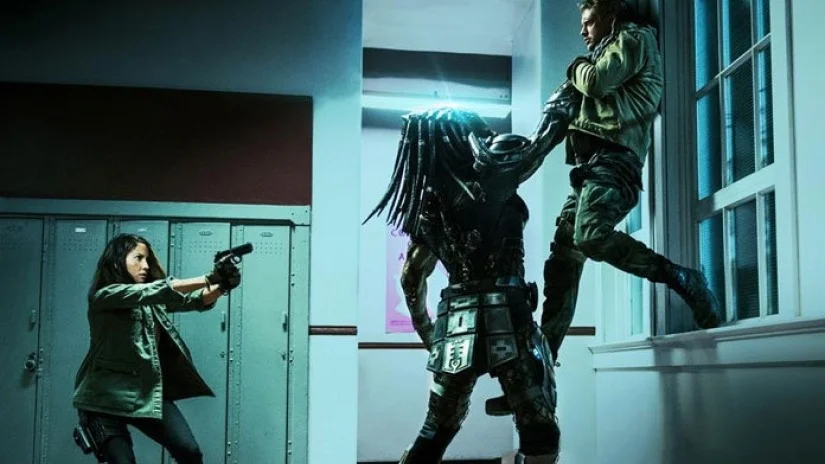
Seasoned director Shane Black is no novice when it comes to making action films. In the past he’s been known for the Lethal Weapon Series, The Last Action Hero, and The Long Kiss Goodnight; and he doesn’t hold back in 2018’s The Predator. Not only did Black direct, but he also co-wrote the script for this film, which explains the superb dialogue. Black is considered one of the pioneer screenwriters of the action genre. While he made his mark with the Lethal Weapon Series, he also wrote the cult classic Kiss Kiss Bang Bang. So it’s no surprise that this installment in the Predator franchise is stand out in comparison to similar films in the Sci-Fi genre. The diversity of representation is truly thoughtful, the humor is timely, and the amount of blood and guts is just right. I’d go even as far to say the film pays homage to the original in a clever, new age way.
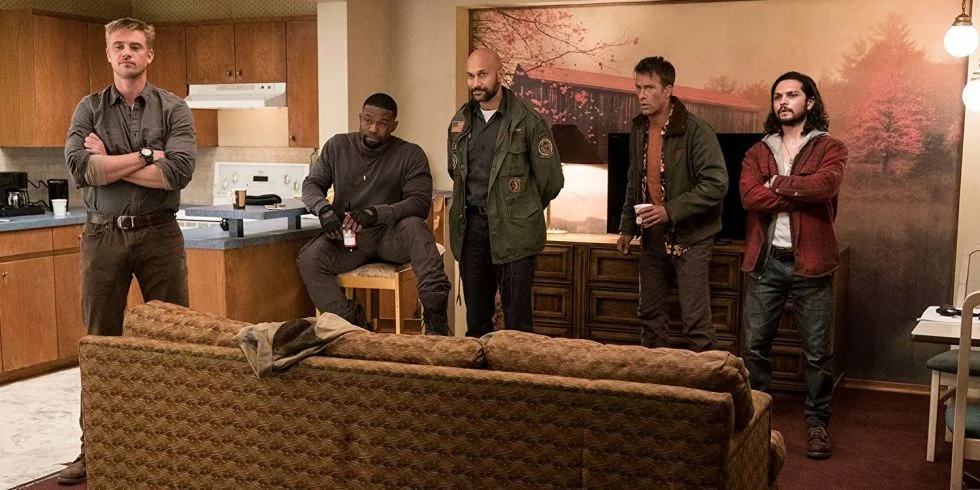
First and foremost the comic relief is perfectly timed, and every character has their quick-witted moment. However, something that is most prevalent is the politically correct lens that the humor is placed under. In a film that one may expect to have hyper-masculine dialogue, no one makes a sexist joke, and if a character makes a comment that is remotely sexist it is always thwarted with a feminist response. There are many types of comedy reflective of the film’s diverse characters. Of course, there is the typical archetype in all action films, “the comedian”, played by Keegan-Michael Key, but he is by no means the sole funny person in the film; the film doesn’t depend on his humor. Not only did the humor add a wonderful element to the film, the diverse humor from the characters also makes it a unique film. This type of humor isn’t often found in action films, but it can be found in the sci-fi genre; Shane Black hones in on the comedic diversity of his cast and plays to their strengths, making their humor inclusive yet different.
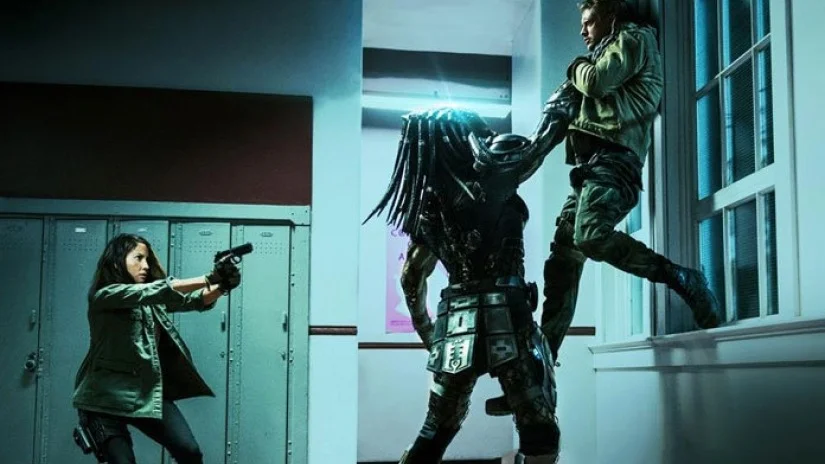
Another strong aspect of the film is the diverse cast. The Sci-fi genre hasn’t always been incredibly inclusive with diversity, especially for people of color and women. This film broke the barriers by upholding people of color and women in a positive light within the script; even the “evil” characters were relatable on some level. With that being said, there are only two women in the film, which is typical of the Sci-Fi genre (usually there’s only one female lead and she is almost always the love interest). However in this film, there are two women. Emily (Yvonne Strahovski) is the wife of the main crazy soldier, Quinn McKenna played by Boyd Holbrook. Within the film the other male characters expect Emily to be like the other female archetypes of the Sci-Fi genre (just an ignorant love interest) but she is not only the wife of a soldier, she is trained like a soldier as well. There is a moment where I was actually surprised; Emily starts commanding the men around her to do things and as she proceeds to take a gun off the wall she clearly knows how to use it. Emily’s character isn’t a huge role by any means, but she certainly made an impression by being a badass. The second badass female character who is featured prevalently in the film is Olivia Munn who plays scientist Casey Bracket. She is clearly the most informed character on the Predator and she is also trained in combat. The main thing that stands out to me about Olivia Munn’s character is the fact that the other male soldiers expect her to be strong-willed and cunning; they even make jokes about how she surprises them. Throughout the film Olivia’s character is surrounded by men, and yet none of them really made a pass at her, beyond giving her a pathetic tinfoil unicorn as a gift. She does not become a love interest and she is a key character to understanding the “ultimate” Predator. There is even an eco-feminist lens that could arguably be placed on Olivia Munn’s character as well; she is the only character to interact with the alien dogs within the film, as she alone plays fetch with them. Both of these female characters outsmart men within the storyline multiple times; they are independent, smart, refreshingly tactful and well equipped to handle weapons.
Not only does this film represent women in a positive way, it represents men in a way that’s also unique to the genre. Male characters show more emotions than usual, they have heart to hearts with each other, and they understand that nobody is perfect. What makes these characters perfect, is their imperfections. Keegan-Michael Key plays the comedic soldier Coyle who I mentioned before, he has PTSD from being an incredibly accurate sniper. Key even has an anxiety attack in the film and one of the other male characters consoles him then says, “Its okay, this happens sometimes.” The fact that his PTSD is addressed along with Coyle’s anxiety attack is a big advancement in Hollywood action filmmaking, in the past soldiers would probably say something toxic like, “man up!” or “No time for tears soldier!” In action films, men are oftentimes displayed as emotionless and violent, especially men of color. However this group of crazy soldiers is a diverse bunch. Key is one of three men of color within the group and there are more men of color throughout the film as well including the actor behind the Predator, government officials, and scientists. Nebraska Williams, played by Trevante Rhodes, is an especially interesting character. He is clearly an insane man, but he is also loyal to his fellow soldiers and has a good heart. There is a moment in the film where Nebraska opens up about being a suicidal soldier, which is something I have never seen in Hollywood cinema before unless it is the sole focus of the film. This moment where he confides about his past depression is a monumental step away from the toxic masculinity that has hindered so many films in the past. The fact that the character felt comfortable to talk about his mental troubles truly is an important highlight of how men should be able to talk to each other.
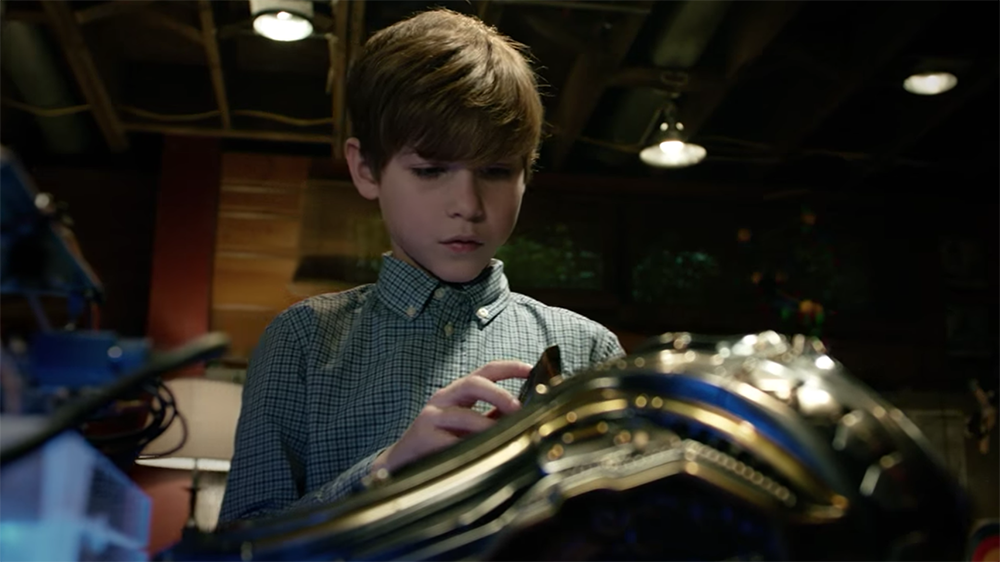
Alongside the soldiers defeating toxic masculinity, Quinn McKenna’s son Rory (Jacob Tremblay) is an interesting character as well. Rory is on the spectrum and it is believed that he has Aspergers (other kids tease him by calling him ASS-Burgers). This representation is certainly underrepresented in cinema and this film finds an interesting way to highlight how smart some people with Aspergers can truly be. Even though Rory is a child, he is one of the smartest characters in the film. In films of the past, the soldier father imposes toxic masculinity onto their child, yet in this film that was not the case. Quinn and Rory seem to have a wonderful relationship and communication, which says a lot when you have a son who has Aspergers. Alongside all of these characters, there is a Latino character that is incredibly religious and socially awkward, and a character with turrets syndrome. These representations might not seem like a lot, but they are incredibly important if we want to create meaningful cinema that is relatable to the population as a whole. This is a film that relates to more people than other Sci-Fi films in the past, which is important because white men are not the only demographic in this world.
Finally, let’s talk about the gore. Horror films are one of my favorite genres of cinema and oftentimes Sci-Fi films dabble in horror elements to improve the action of the film. The Predator had the exact amount of gore that was needed to make the film great. There are still guts and blood but it isn’t to the degree where you feel queasy after you watch the film. Someone with a feint heart probably shouldn’t watch the film (I am quite desensitized to horror), but if you are a horror fanatic like myself, you will truly enjoy the effort behind the special effects horror makeup. Alongside the blood and guts, the costuming was great. I remember making a note while watching the film that the female scientists aren’t sexualized much like I have seen in the past. They don’t have a ridiculous amount of makeup on, they aren’t showing cleavage and they are viewed as equals to the male scientists. There is even a part where Olivia Munn’s character is naked and she is still not sexualized. This is almost revolutionary for the sci-fi genre, a naked woman who ISN’T sexualized.? Again, the costuming for the female scientists is great simply because they are equal to their male counterparts. The special effects makeup and 3D animation of The Predator was chilling! It’s both terrifying to look at and yet you can’t look away; its almost as if you want to figure out how they operate biologically. This element truly made the film, because in the past you could easily point out what is digitally added and what is makeup. This felt like they have finally found a perfect blend that makes the Predator more realistic than ever.
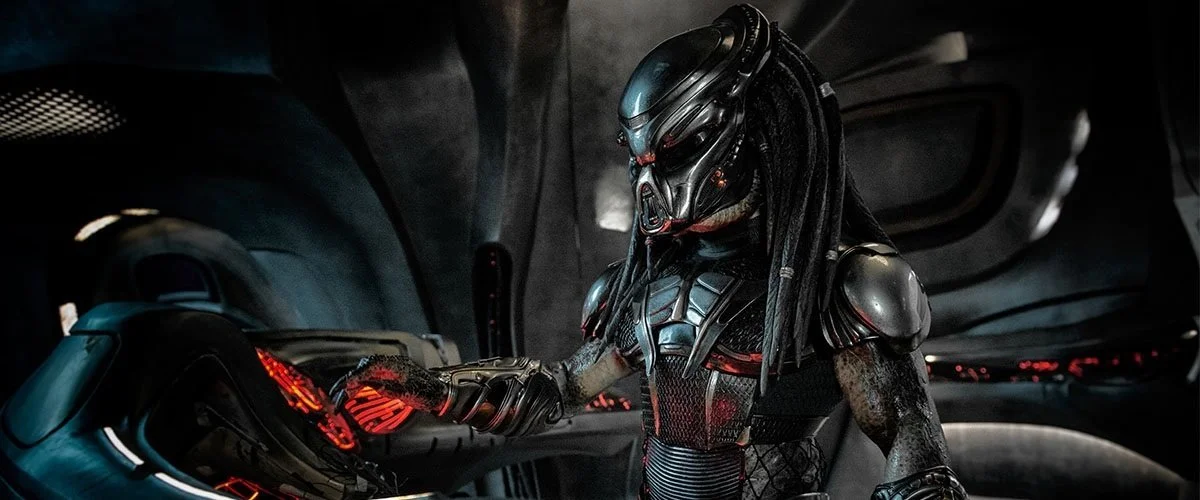
Overall I truly enjoyed the film, I think it is the first of many modernized and diverse Sci-Fi films that are to come. Of course the film isn’t perfect, there are still only two women in the film, and the majority of the main cast is still white, but these efforts of diversity are note-worthy and appreciated. As an audience, we need to support more films that are focusing on a diverse lens; we need to make it known that these types of films are welcomed. The world is not filled with only white men, so our films should not be filled with only white people, this change in diversity and inclusion will create a new generation of cinema that will possibly be even more enjoyable than the past; simply because the voiceless will now have a voice.
Overall Grade: A-

"The Nun" Review: Save Your Money for the Warren's Next Adventure
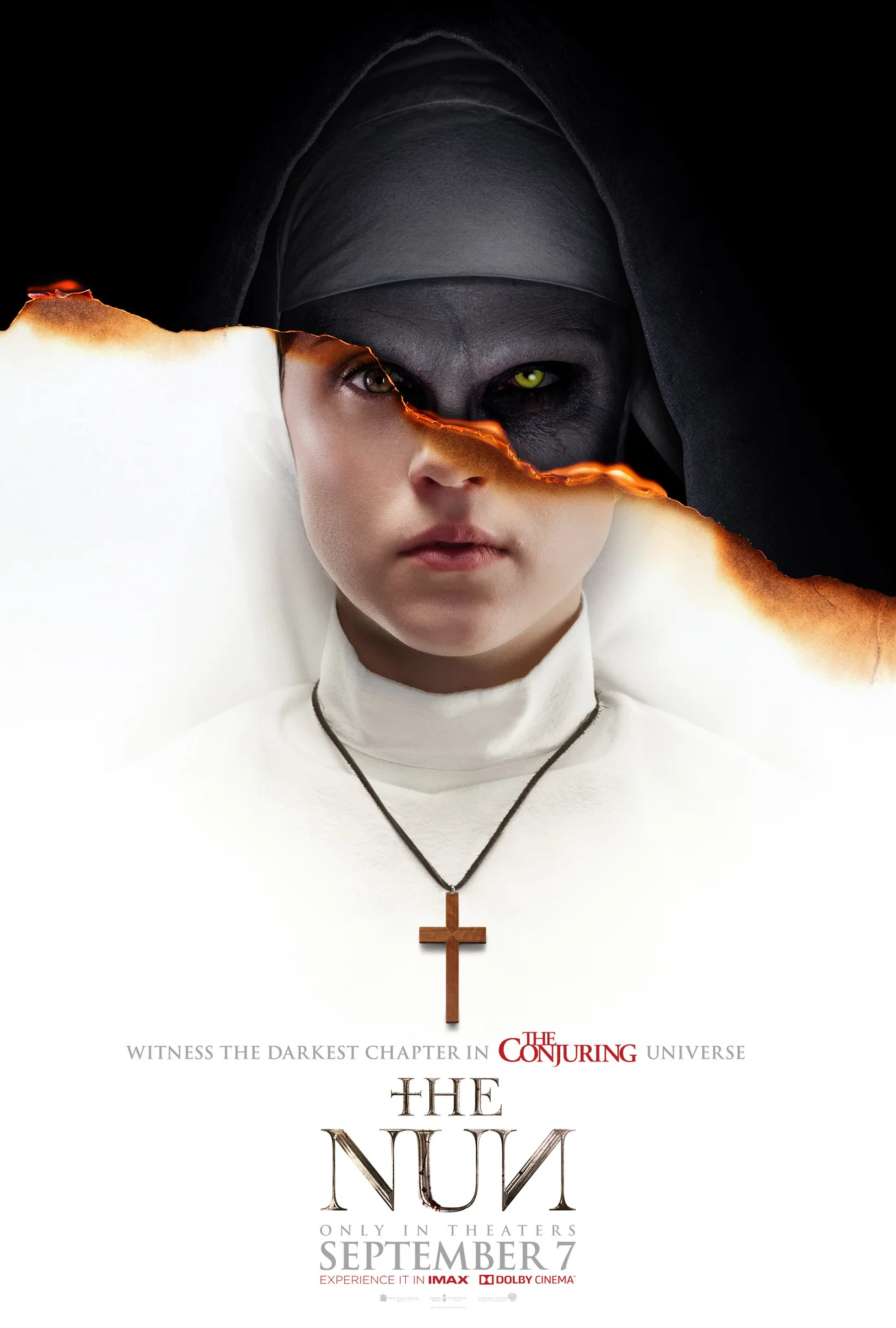
Since its debut in 2013, The Conjuring has grown beyond stand-alone status into a fully realized cinematic universe, all fueled by the real-life investigations of Ed and Lorraine Warren. The newest entry in this gathering of demons and ghouls is Valak, the hell-spawned nun first seen terrorizing the Warren’s home in The Conjuring 2. Director Colin Hardy takes the viewer back to the source of the demon’s power in the newest Conjuring-related film. However, the interpersonal relationships and horrific imagery of the source films have unfortunately been stripped away, leaving a carnival ride that fans of the horror genre have ridden a few too many times before.
Upon hearing of a suspicious suicide at the Abbey of St. Carta, the Vatican dispatches paranormal investigator Father Burke (Demián Bichir) and novitiate Sister Irene (Taissa Farmiga) to the Romanian countryside. Upon their arrival at the Abbey, the pair, along with French Canadian farmer “Frenchie” (Jonas Bloquet), confront and attempt to overcome Valak’s evil influence.
Despite providing an imposing, Hammer Films-esque haunted house and vague glimpses of the dark history of the Abbey, the film chooses to provide a minimum amount of world building. After all, the filmmakers have viewers to scare! However, the scares here mostly fall flat, as the viewer is rarely exposed to anything truly terrifying.
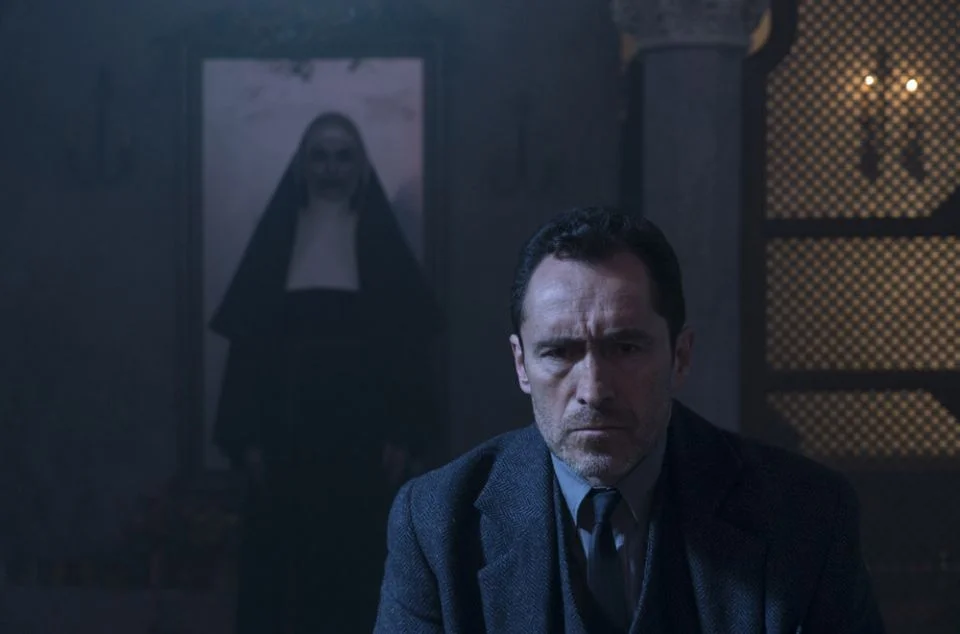
The old standbys are all here: unseen forces inverting crosses, undead beings lurking around the corner, and mysterious pairs of hands reaching out from the dark-all accompanied by a shrieking violin or loud otherworldly thump. Look, a jump scare is an effective way to get a reaction from the viewer, but so is any unexpected loud noise. The most iconic films of the horror genre invade the mind of the viewer, implanting imagery and a sense of unease that lasts long after the lights go up in the theater. Unfortunately, The Nun provides very little in the way of true nightmare fuel. Instead, the film relies on recycled cliches and involuntary nervous system responses to illicit cheap reactions from its viewers. Some imagery may have felt transgressive at an earlier time but feels tired in 2018.
The quickly established characters of Burke and Irene, both possessing hints of a troubled past, ultimately serve as little more than engines to move the barebones plot forward. The dialogue between the two consists mainly of heavy exposition punctuated by screaming. The duo constantly separate, dragging the audience from scare to scare until finally reuniting with Frenchie and Valak for the film’s welcomed ending.
Credit should be given to Farmiga, who injects some level of humanity into her character. Nonetheless, the film gives the viewer little reason to care about the fate of its inhabitants. Bichir’s portrayal of Father Burke is relegated to a confused facial expression and the desire to run towards any strange sight or otherworldly sound the film throws at him. The campers at Camp Crystal Lake had more sense than the Vatican’s top “Miracle Hunter” has in this film.

It could be argued that the traditional imagery and lack of characterization is itself an homage to the B-movies of old. After all, weak characterization in horror films isn’t exactly a new phenomenon, and lord knows film buffs have seen their fair share of haunted houses/castles/hotels/etc, but The Nun doesn’t fully commit to B-Movie status. Instead, it floats somewhere between Hollywood blockbuster and midnight trash. If the filmmakers chose to lean further toward one of the two extremes, it may have resulted in a better product. However, the lack of commitment here hurts more than helps.
Save your money for the Warren’s next official adventure, and leave The Nun alone.
Rating: D+
"Operation Finale" Review

Operation Finale is a historic think piece that depicts the take down of a Nazi who acted as one of the masterminds behind the Holocaust. Adolf Eichmann (Ben Kingsley) was less famous than Hitler but he was equally horrible in the extent of his actions- they were beyond just “following orders”. Adolf Eichmann fled to Argentina to avoid being tried for his actions in an Israeli court. A team of trained agents (who happened to be Jewish) sought to bring this evil man to justice to honor his victims. Even though the film is a political drama, the storyline doesn’t distort history in a distasteful manner. The film genuinely follows the events to the best of the ability a historical account could.
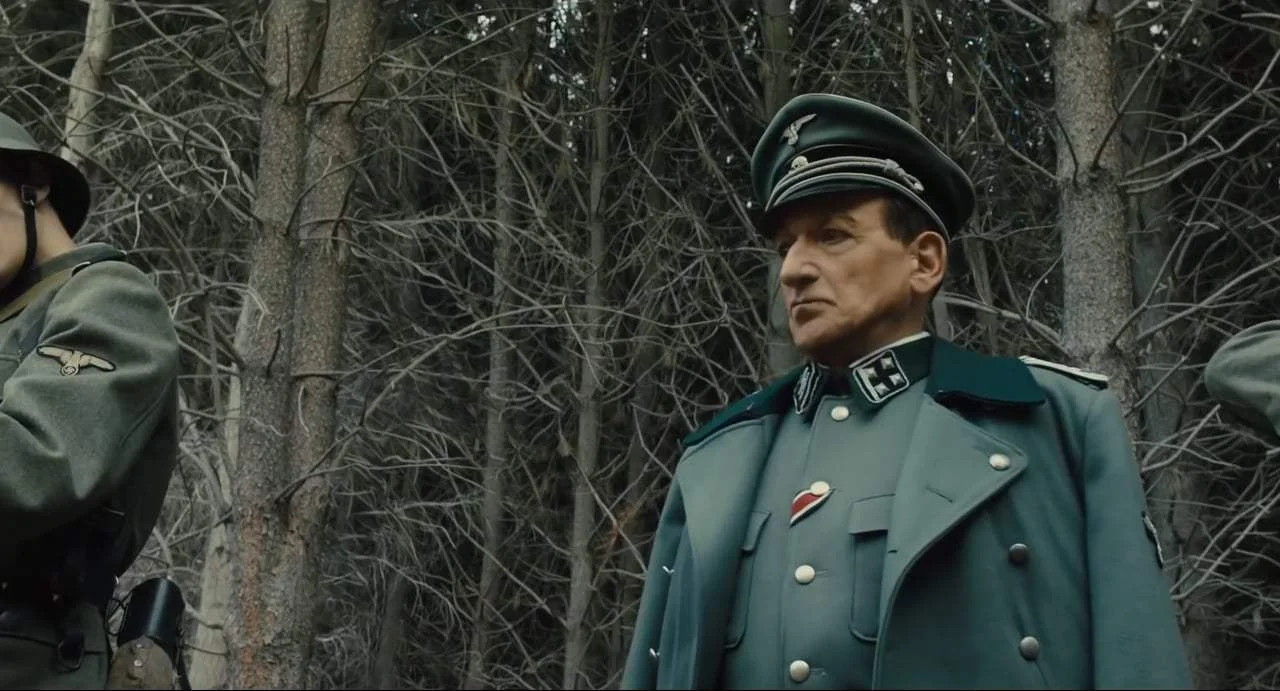
The cinematography of Operation Finale is incredible! Director of photography, Javier Aguirresarobe, certainly created masterful work. The shots are calculated and creative; the coloring of the film uses muted tones to reflect the era. Alongside the camera work, the lighting is delicate yet deliberate with night shots having a neo-noir feel to them, while other scenes take your breath away from beautifully diffused sunlight. Unfortunately, all that glitters isn’t gold and these aesthetics don’t carry the film in the manner one would hope.
Even though the film is two hours in duration, the pacing is not what will deter audience engagement, kind of. While the cinematography is beautiful, and the acting is well executed, something about the entire piece feels flat. Seasoned film director Chris Weitz creates an intriguing film that contemplates the political nature of the time, however, he doesn’t take into account the lack of action in the script which becomes problematic with the plot. The story comes to a crawl, which forces the audience out of the film. This distraction throughout the movie ultimately builds to an anticlimactic climax.
Finding an appropriate balance is the true issue for Operation Finale, which can understandably be difficult to tackle with historical pieces like this. Sometimes the story doesn’t have a lot of action, but usually, creatives have a way of using the thought-provoking material to compensate for the lack of action. Other times the film is filled with so much action that it just becomes an unnecessary and violent bloodbath. Screenwriter Matthew Orton uses interesting threads to weave a storyline together, however, the essence of the story is never quite found. The film reads as interesting ideas that are underutilized and falls flat. This is unfortunate because for a film that depicts such an important part of history, it demands a better-crafted execution.
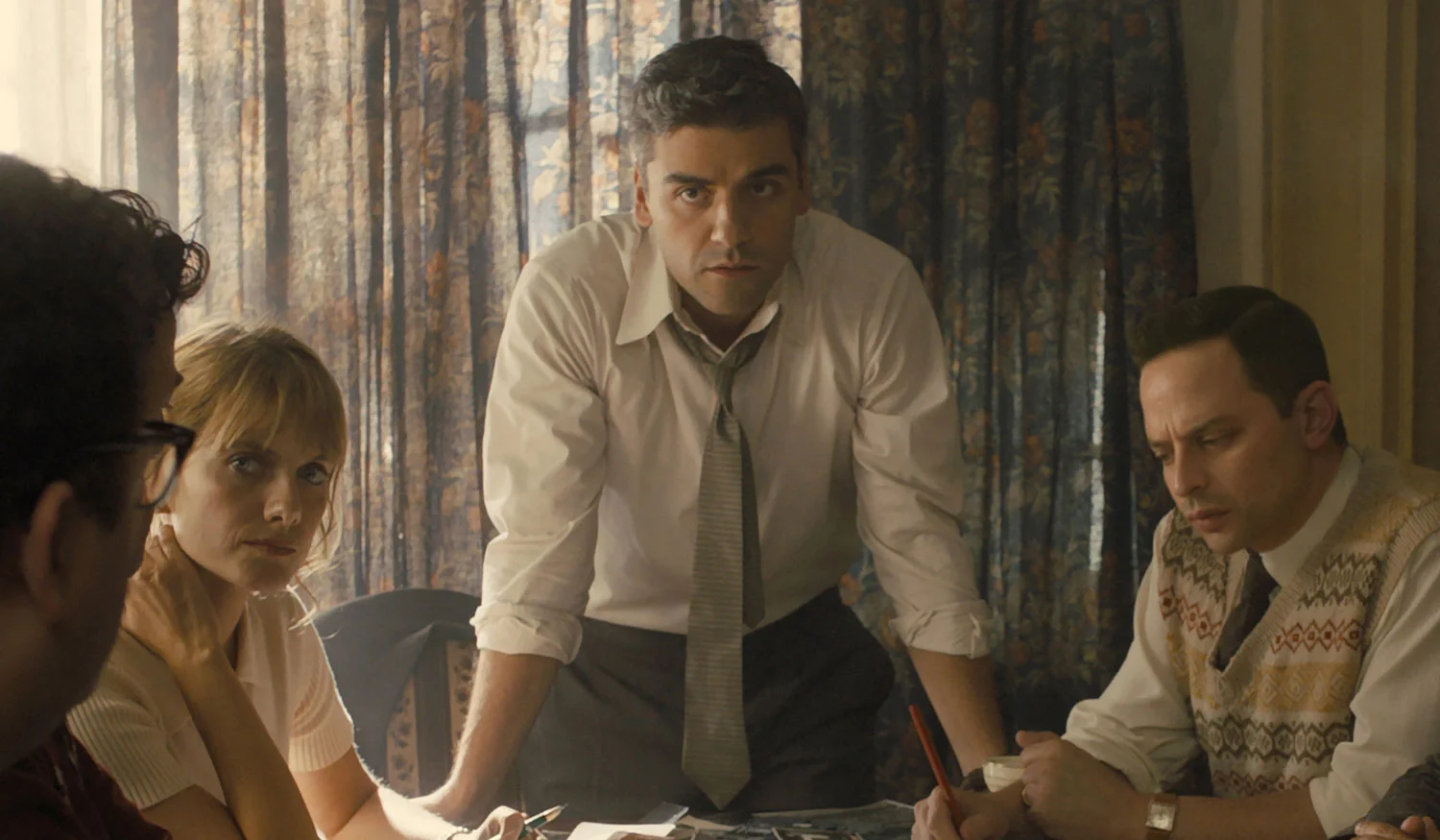
It’s unfortunate the writing doesn’t do the story justice. However, I would not go as far to say I will never watch the film again; it was engaging to see. It is peppered with the commonly recognized Hollywood Jewish Humor which acted as the comedic relief throughout the story. This part of the writing was well executed and the humor came at the perfect time, every time. Small, charming things within the film gave it personality, the characters each had their quips and one liners, making the film more enjoyable within the heavy subject matter. The interpersonal relationships between each actor is genuine and believable.
With all of that being said, this film is a great example of how big budgets can sometimes fail; the elements of the film were there to make it a great piece but there wasn’t a clear cut storyline that was capable of being followed by even the best actors. The cinematography carries the film but I fear the story itself may disengage the average viewer. Even with the elemental issues within the film, I would still recommend seeing it; the story is an important one to know and the tactical actions that were taken to bring Adolf Eichmann to justice are noteworthy.
Rating: C+
"Teen Titans Go! To the Movies" Review
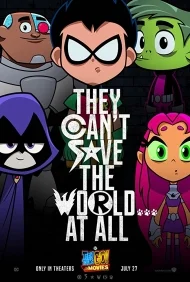
I’ll be up front with you, I’ve never watched an episode of Teen Titans Go!. I’m aware of the Cartoon Network animated series that began airing in 2013, and that people have different opinions about the show itself. I’ve only seen clips here and there, so watching the film adaptation of the series was my first time experiencing this property. Other than the clips I’ve seen and the trailers, this film piqued my interest when it was announced that they got Nicolas Cage to voice Superman, since he was slated to be Superman in Tim Burton’s planned Superman Lives movie twenty years ago before it collapsed. Not knowing what to expect, it certainly won me over with this: Teen Titans Go! To the Movies is a much more enjoyable experience than last fall’s Justice League, and some parts in this film had me howling in laughter.
Every superhero left and right has his or her movie. In this world, you’re not considered a real superhero until you get a movie made about you. Robin (Scott Menville) dreams of having his own film, but none of the superheroes take him or the Teen Titans, which consist of Beast Boy (Greg Cipes), Cyborg (Khary Payton), Raven (Tara Strong), and Starfire (Hynden Walch) seriously. Popular film director Jade Wilson (Kristen Bell) tells the team that in order to get a film made about their exploits, they need to find an arch nemesis. The Titans might find one in Slade (Will Arnett, who also produced the film), who has nefarious plans of his own.
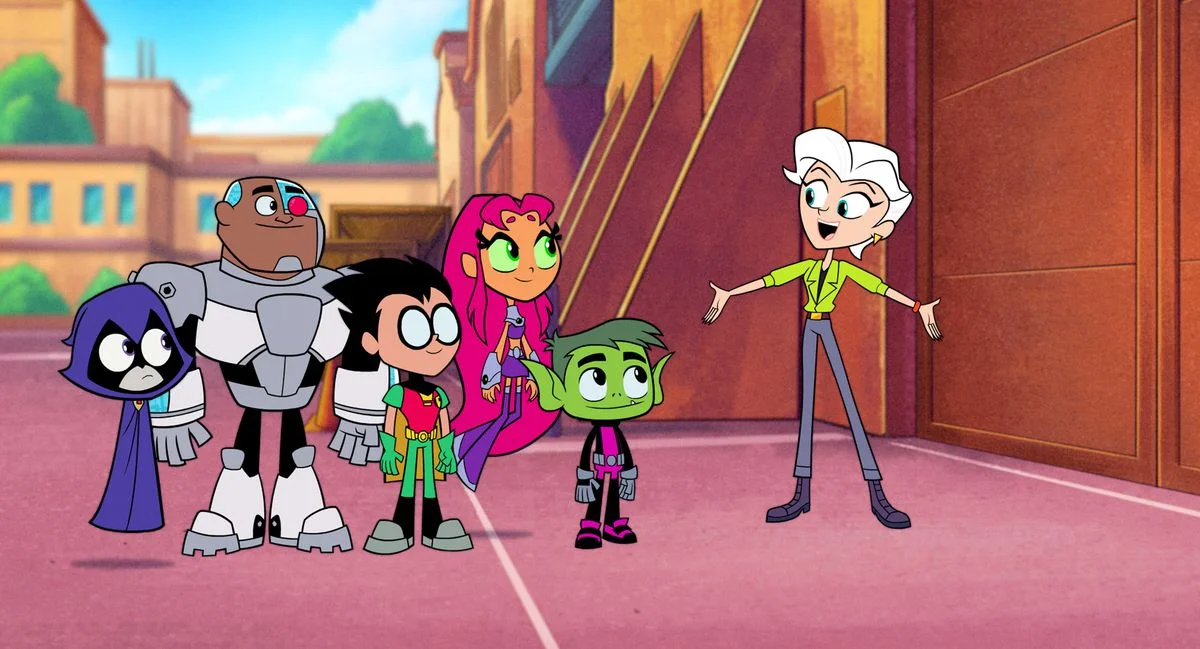
One of the things that I enjoyed about this film is how they sendup all the comic book films that have populated the multiplexes lately. In a sense, whereas the Deadpool films are aimed at an adult crowd, this caters to the kids. Like with last year’s The LEGO Batman Movie, directors Peter Rida Michail and co-creator Aaron Horvath (who also wrote this with co-creator Michael Jelenic) incorporated references of past DC films, TV shows, and comics. No characters are safe, from Batman (there’s a killer joke that WB will basically make any film that’s remotely related to him), Superman, and Wonder Woman, to the most obscured, like the Challengers of the Unknown. While the jokes are mostly catered to the younger demographic, the filmmakers get away with some extremely funny dark humor that adults can appreciate.
Unlike the tone that’s on display with some of the past DC films, this film knows exactly what type of film it’s trying to be. It’s self aware, and it embraces its roots as a film geared towards children, which is to entertain us for 88 minutes. There is an interesting dynamic in which the directors and animators switch up the animation style whenever it drifts away from the reality of the film universe which helps enhance the story. It feels a bit like a cross between Looney Tunes with a dash of anime. Voice wise, the dynamic between the Titans is good, and you can hear the years of teamwork and how they care for one another in their vocal acting. Arnett once again nails the over masculine type character as Slade, and how over the top he portrays it. The cameos did there part, and Cage as Superman was perfection in my eyes. It makes you wish that he would get another opportunity to voice Superman down the road. Also, the songs are catchy enough that you might have a hard time getting them out of your head.
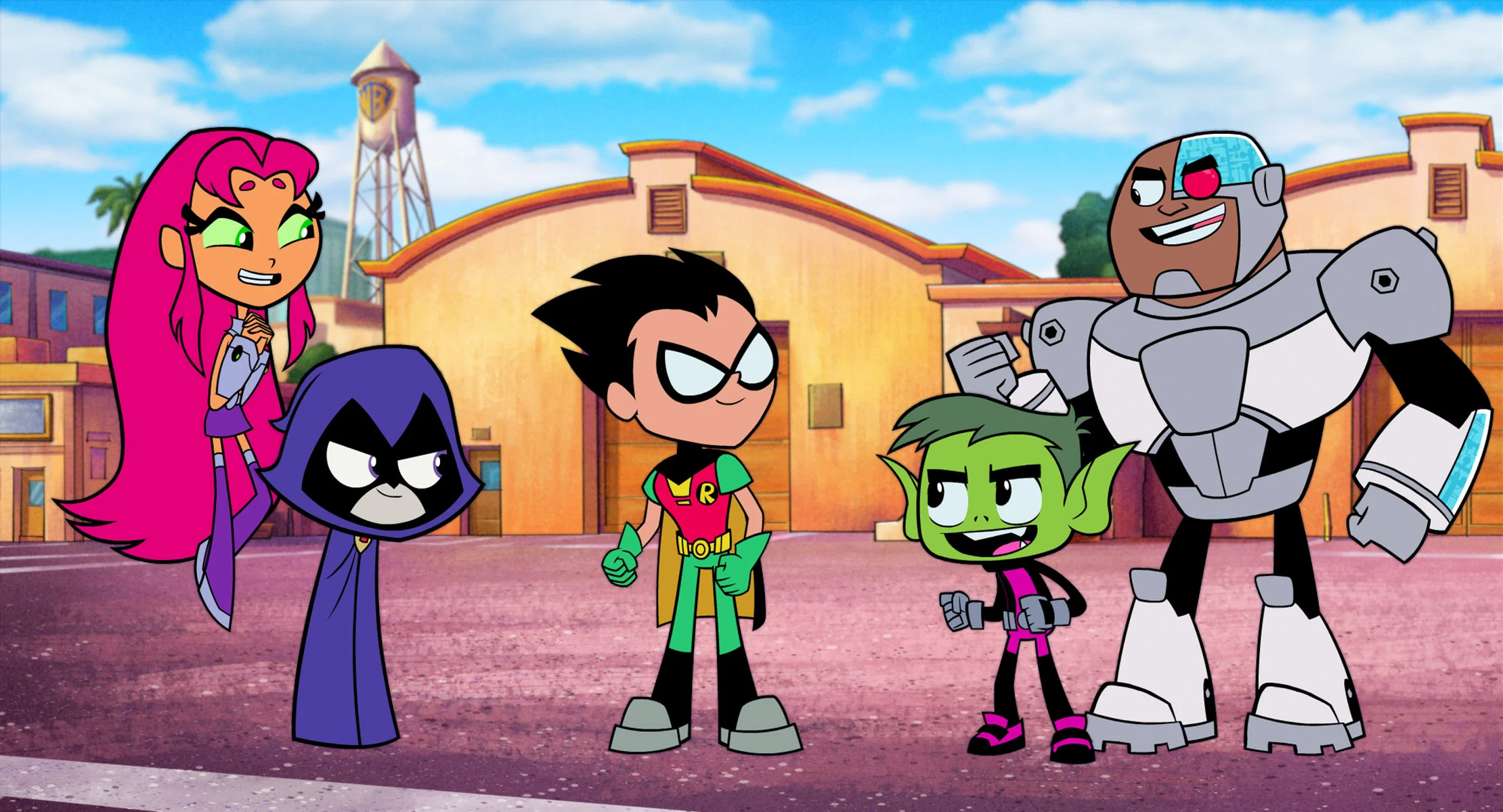
As for any drawbacks, there’s not enough meat to the bones, and it basically feels like a feature length episode of the series. Even though it runs at 88 minutes, at times, it was as if the filmmakers were trying to figure out ways to pad out the runtime by stretching a comedy bit out or throwing things against the wall until something sticks. As the old saying goes, they had style over substance. There isn’t enough plot, and the film doesn’t go any deeper than you may anticipate going into it. Maybe it was because of the PG rating, but I was a little surprised that the name Deathstroke never gets mentioned once (since that’s Slade’s name in the comics). Finally, the DC animated short that precedes the film, involving the DC Super Hero Girls, felt a little off and choppy.
Overall, if you’re a fan of the show, chances are you will have a lot of fun with this film. Even if you haven’t watched the show at all, give it a shot. I know I’m not the target audience for this film, but I’ll admit that it has its charm to it, and I was laughing more than I should have. The real question is whether watching this film will lead to me and others to watching the series? There’s a strong likelihood that newbies like myself, may check out at least a few episodes. Be sure to stay around until the mid-credits, because some of the audience members around me lost their minds when it occurred. In terms of DC Animated Movies, I think The LEGO Batman Movie is better, but hey, it seems like Warner Animation may have a better grasp on the DC characters than the live action division. If you were looking something fun to watch this weekend with your family, or just a fan in general, I would recommend checking this out.
Rating: B

"Mission Impossible- Fallout" Review

Mission: Impossible – Fallout might just be the best film of the summer! Like a nice fine wine that has aged gracefully, this series just keeps getting better and better. In a way, this series has taken off ever since JJ Abrams came on-board to direct Mission: Impossible III (he has stayed on as producer since). This is a film that somehow manages to outdo each action sequence it builds on and with every minute, slowly shows the great madness that Tom Cruise and writer/director Christopher McQuarrie (who returns from 2015’s Mission: Impossible – Rogue Nation, a first for the series) has in store for us. This film goes past nourishing your cinematic needs and leaves you yearning for more! It demands you see this on the biggest IMAX screen possible.
In a nutshell, the film takes place two years after the events of Rogue Nation and the successful capture of Solomon Lane (Sean Harris). After a deal goes south, the IMF team loses a case of three plutonium balls. A group called the Apostles, who spun-off from The Syndicate (the organization that we were introduced to the previous film), plan to detonate them in three cities, causing nuclear destruction. Ethan Hunt (Cruise) and his team, Luther Stickell (Ving Rhames) and Benji Dunn (Simon Pegg) must find the missing plutonium case before its too late while being forced to work with CIA Agent August Walker (Henry Cavill), who has been ordered by CIA Director Erica Sloane (Angela Bassett) to find the case by any means necessary. As they track down the missing plutonium, Hunt and his team once again cross paths with Ilsa Faust (Rebecca Ferguson), who has orders that go directly against what IMF is trying to accomplish.
One of the ways that this film succeeds is that McQuarrie decided to make a more direct sequel than previous films in the franchise, while still, for the most part, having this entry stand on its own. McQuarrie does a good job in bringing in various threads from the past films together, while also having some fun nods to the first two films. For all the twists and turns that the story brings us, McQuarrie writes it so that it’s easy to understand the situation Hunt and his team are in. McQuarrie doesn’t overload you, and there’s no expositional dump, but instead he spaces it out so that you get the information when you need it.

Character building is strong in this one. For the first time in a long time, you feel more connected with the core group of characters. The chemistry between Cruise, Rhames, and Pegg is great! The humor lands when needed. In a sense, the subtitle has both a literal and figurative meaning, in that the threat of nuclear fallout, and figuratively, the fallout of the choices and past actions Ethan has made throughout the course of this series.
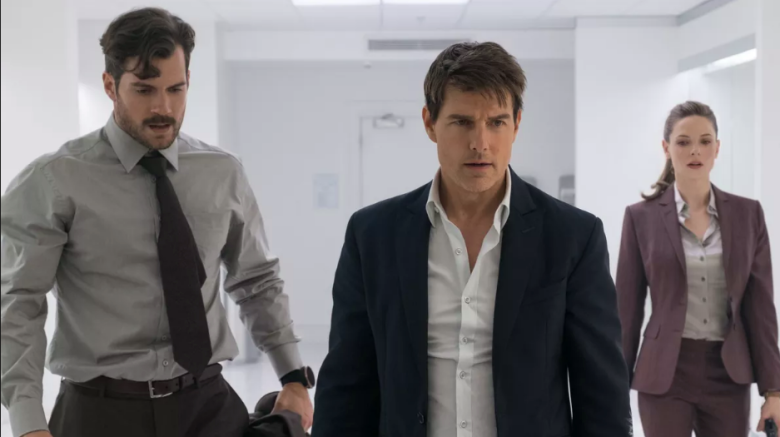
Acting wise, Cruise continues to bring his all to the series. There’s no doubt that with this franchise, he has found his groove. Even more so with his facial expressions and body language, you can see the wear and tear that Ethan has endured for all these years, including some of the choices he had to choose. While not as charming as he was in 2015’s The Man from U.N.C.L.E., I liked what Cavill brought to the table as Walker. The dynamic of how Ethan and Walker approach what needs to be accomplished is noteworthy. (While I will say, Cavill is certainly more memorable in this than most of his appearances as Clark Kent/Superman in the DC films). Rhames has more to do this time, and Ferguson still delivers emotionally on what Ilsa has to deal with throughout the course of the film.
For being the longest film in the series at 147 minutes, the pacing was quite good. We’re talking not look at your watch good! With each passing minute, you’re waiting to see what’s next. The real reason you’re reading this is get a feel for the action sequences, and let me tell you this: just when you think the action can’t top itself, it does. The practical stunts in the films are amazing to watch, and you can’t believe how much they were able to pull off. There are no over-edits on the action, and McQuarrie and his editor, Joe Hamilton, make the action easy to follow! The geographical location of the action scenes are well staged. Some of the action scenes, particularly the bathroom scene, are particularly brutal (and for how committed Cruise is, they left the take in of him breaking his ankle and the aftermath of what happened).
Why do you need to see this above anything else? The IMAX sequences in this film are something to behold! They are absolutely jaw dropping. For sequences alone, and not counting films that basically used IMAX cameras for their entire shoot, they are some of the best usage of the IMAX format to date that I’ve seen since the Burj Khalifa sequence from 2011’s Mission: Impossible – Ghost Protocol. I implore you, you have to see this on the biggest IMAX screen you can find! The music from Lorne Balfe was certainly memorable in places, with it being more emotional than the past couple of the films, while still employing and updating the classic theme we all know.
Some of the plot twists and revelations in the film are easy to predict, with just a tad too much plot convenience. I’d suggest going into this movie cold outside of this review. While the practical effects soar, some of the visual effects looked a little wonky, particularly during the third act.
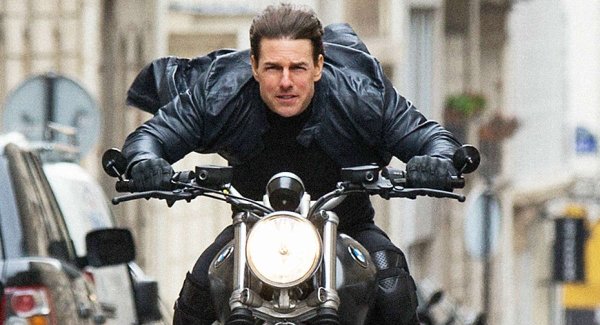
Overall, Mission: Impossible – Fallout certainly ranks as one of the best films of the series, if not the best when it’s all said and done. This is one of the best action films ever assembled during this decade and deservedly needs to be seen on the biggest screen possible. It’s a blast from the first minute onward, and leaves you ready to watch the next film immediately. I could watch a new M:I film for the rest of my life so thank you Tom Cruise for putting your life on the line to continually bring us entertainment for our disposal. This entry was one heck of a ride!
Rating: A-
"Eighth Grade" Review

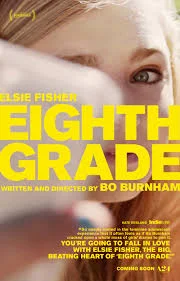
Eighth Grade is an honest and realistic look at that crossroad of life we come across before we begin high school. The directorial debut of Bo Burnham, a comedian who began his career on YouTube, this film is one of the more refreshing takes on this genre that I have seen in quite awhile. Led by what could be a breakout performance from its leading star, this premiered earlier this year at the Sundance Film Festival to positive word of mouth. In short, once again, A24 delivered on the goods with this film.
The story revolves around the last week of eighth grade for Kayla (Elsie Fisher). To put it mildly, it wasn’t the best year for her. She’s awkward, doesn’t have many friends, and spends most of her days on her phone or on her social media pages. After being voted by her fellow peers as being one of the most quiet students in school, Kayla does her best to break out of her shell and be more noticeable, all the while trying to navigate her final week at school.

As I said earlier in my opening paragraph, I suspect this will be Fisher’s breakout role (she previously voiced Agnes in the first two Despicable Me films). Fisher gets the awkwardness down to a capital T and makes her character feel like a living and breathing being. Whether she’s trying to stand out or gets an anxiety attack when forced to attend a fellow student’s birthday party Fisher is impressive with what she brought to the table. Watching this film, I could relate to this film since I was like Kayla in eighth grade. I remember being quiet and painfully awkward at times and didn’t know what to do. Josh Hamilton, playing Mark, Kayla’s father, also puts in good work as a single dad who’s doing his best in trying to connect with Kayla. The chemistry that both Fisher and Hamilton exhibited between one another is authentic and sincere as daughter and father.

For his first directing effort, Burnham does a good job in showcasing how kids these days are more glued to their phones and their social media accounts than interacting with one another in real life. Case in point, it’s evident that Kayla is more confident in doing her videos for her YouTube channel or spending an entire morning trying to get that perfect selfie for Instagram. Burnham never tries to make a statement, but shows us how the younger generation is more adapt to social media. Burnham shows skills in his direction by juxtaposing scenes to match whatever YouTube video Kayla is making, like talking about how to be more confident, being yourself, and so forth. The film also has a nice blend of awkwardness and drama. Since eighth grade is a strange time in our lives when we’re at that age where we slowly start to transition to adulthood. It’s quite effective, especially during a scene in the third act where Burnham plays with the tone all at once. The cinematography from Andrew Wehde felt realistic in that the film is set up so we are alongside Kayla throughout the film. Even though she’s basically a blank spot to the world, it’s as if Kayla’s in the center of the viewer’s world, and the look of the film made the world bigger than what it actually is. What seems trivial now looking back at it is the end all be all for Kayla. The dialogue is natural enough that it feels like real teenagers talking. The music Anna Meredith composed for the film is wonderful as well.

Even though the length of the film was just the right amount at 94 minutes, there were some storylines Burnham that could have been explored more that he introduces in the film. One minute, it’s about how Kayla is trying to get her crush, then the next, a different topic, and so forth. There are a lot of small moments he brings to the film that on it’s own, could possible fill out as a film in itself, but it would have been great to get some resolutions to these storylines.
Overall, Eighth Grade doesn’t try to be hip and cool, but gives a much more grounded look at life from an eighth grader’s point of view. As a first-time filmmaker, Burnham put in solid work in this, and I’m interested to see how his filmmaking career progresses from this film. This is Fisher’s film through and through, and a big part of this film’s success rests on her shoulders. Even though it’s a different generation, the growing pains that Kayla goes through is universal all around. It’s a charming film that shows us that no matter what, we’ll get through this awkward phase of life. I would definitely recommend checking this out in a theater when it opens up near you.
Rating: B+

"The First Purge" Review: It's Just a Movie...But

They say that practice makes perfect. While the fourth installment in the Purge franchise is far from perfection, there is something to it that is undeniably breaking through to speak to real world issues. Yes, The First Purge is more refined and closer to B-movie, survive the night status like some of the classic John Carpenter films. However, the real magic is in how much its’ premise feels a lot more tangible and believable in our present day political climate.
This film takes it back to the beginning when The Purge became The Purge. At this point, it’s called an experiment, created by Dr. Updale (Marisa Tomei). Rather than being nationwide, its’ first at bat is localized to Staten Island. In an effort to get members of the community to participate, the New Founding Fathers of America (NFFA) offers $5,000 for wearing contacts that double as cameras with bonuses for committing violence. Potential candidates that range from psychotic and mentally ill to people trying to feed their family are analyzed by NFFA staff.

The formula here is no different. We’re introduced to the main characters early. Dmitri (Y’lan Noel) is the drug king of the borough. Nya (Lex Scott Davis) and Isaiah (Joivan Wade) are siblings who have each other’s back in a world without parents. Nya is an activist who believes the experiment is not good, while Isaiah is caught in the middle ground, seeing an illegal way to provide for him and his sister he starts dealing on the corner. Dolores (Mugga) is their hilarious neighbor and aunt figure in their lives.
In the midst of main character development, the NFFA is setting up cameras and surveillance around the island to broadcast to the world. Right before and once The Purge commences, so do the one-liners that strike a nerve. The Founding Father president states “We’re all Staten Islanders tonight”. Nya tells her old flame, Dmitri, “we have to make choices to heal or to hurt” after approaching him due to a setback Isaiah had on the street corner.

Since there is little ruckus outside of people robbing and looting when things start, Dr. Updale notes that in order for people to truly embrace The Purge “morality and religious dogma must be dropped”. It’s easy to gloss over that line, but it truly is the key to why The Purge works and why our current real life political climate is as it is. Even if you’re not religious, we all have a moral compass. Whether that compass has been pointed south by life, we all start out with the purity of knowing right from wrong. The statement is truly has Last Action Hero, off of the screen and into the real world impact.

With our morality in question, Arlo Sabien (Patch Darragh) the NFFA Chief of Staff, makes a call to spice things up. Simultaneously, director Gerard McMurray and writer James DeMonaco (who wrote all Purge films) do the same cinematically. Suddenly, white men wearing Ku Klux Klan hoods and throwback Nazi-like regalia show up on the island, forcing Dmitri and friends to fight back. There are particularly harrowing moments of racism and violence that come straight from our history’s headlines as klansmen shoot up a church with predominately black community members. One man is dragged through the street by his leg attached to a vehicle by chain. Tiki torches light the night. These images seem vaguely familiar. While the formula of the film calls for the main characters to get some payback on their oppressors, the joy that one feels for those kills is worth questioning. Sure, it’s just a movie, but why use Klan hoods as masks? That hadn’t been done before. It’s just a movie, but why are the clean cut white men in power positions to experiment in low-income neighborhoods that are comprised of people of color? It’s just a movie, but why does Kendrick Lamar’s “Alright” close it out? The song is the rallying cry of this generation’s people of color. Again, see my opening statement, practice makes perfect and DeMonaco’s pen is getting closer to making powerful statements on the state of our union and lack their of.
Ultimately, the final act of the film is tense and suspenseful as Dmitri must “old school video game” his way up to the 14th floor of Nya’s project apartment building, taking out the bad guys along the way. McMurray’s direction is controlled and his frame is claustrophobic at times, allowing us to see what he wants us to see. He leads the audience to the end like a Carpenter throwback.
Some of the performances in this film are worth noting. Mainly, Y’lan Noel, who has an enormous presence on screen and natural charisma that forces you to root for him, even when he’s murdering people. Mugga provides plenty of laugh out loud moments in the film. In one scene she tells Nya that she left the church to look for her, then got the bubble guts and had to purge another way! Joivan Wade truly portrays a scared teenager trying to do what he thinks will help his family. Perhaps one character that will be a fan favorite is Skeletor, played by Rotimi Paul. He’s a giant psycho who wants to Purge from the opening scene. Rather than playing crazy, Paul truly makes Skeletor feel like the neighborhood fiend who finally gets to reek havoc on the world that looks down on him.
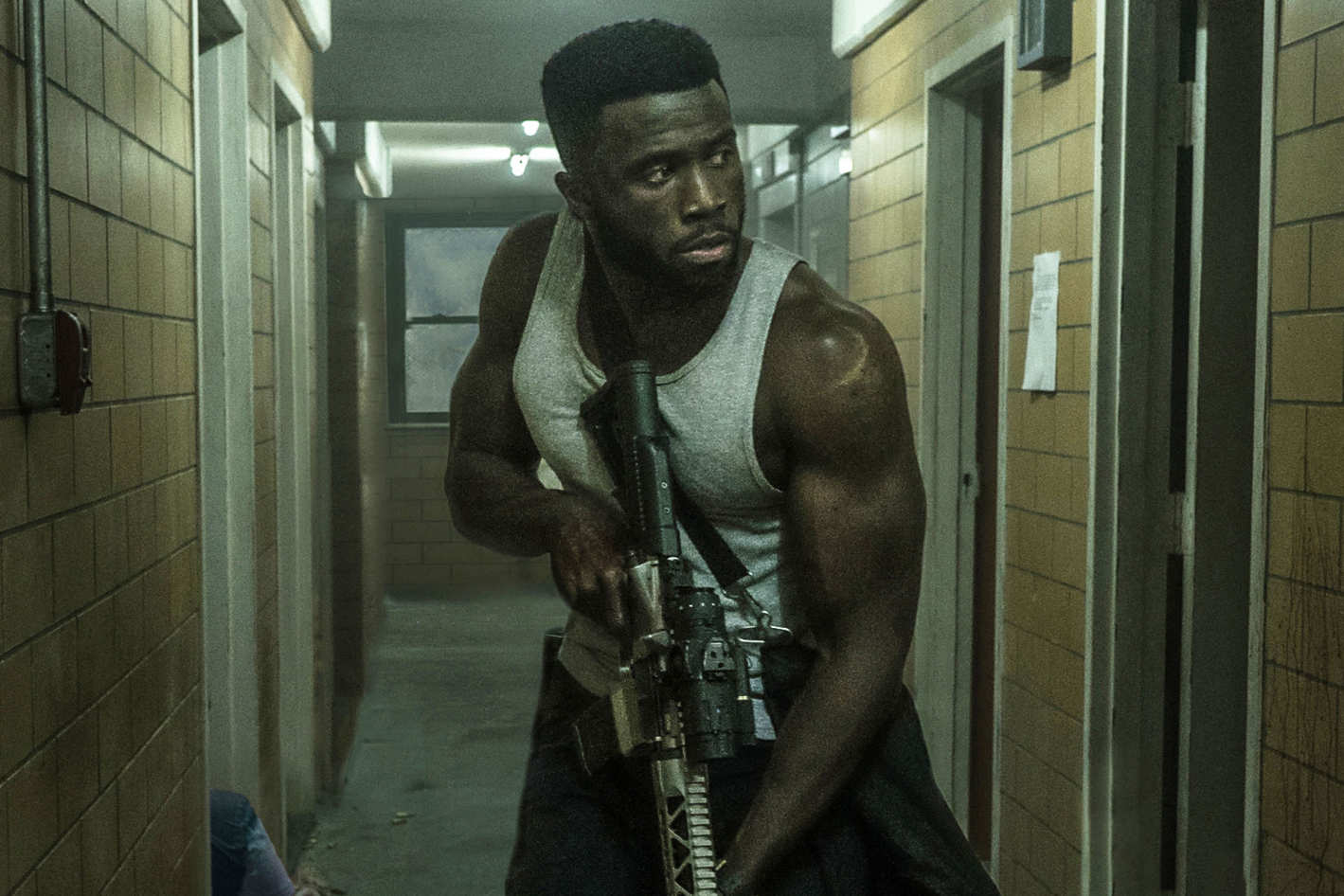
The First Purge certainly shows us how everything started. It’s the right length, and an authentic installment in the thesis of what all Purge films rest on in answering the question “what if all crime was legal for 12 hours?”. However, it low key shows us ourselves as well. That’s worth a deeper conversation after the lights come up.
Rating: B

"Incredibles 2" Review
Incredibles 2 is a fun summer movie sequel. The new film from Brad Bird, whose previous film 2015’s Tomorrowland underperformed greatly at the box office, returns to the world that he created back in 2004 (which feels oddly similar to how after 2012’s John Carter bombed badly at the box office, director Andrew Stanton retreated back to Pixar to direct 2016’s Finding Dory). Even though it feels safe at times, this is an enjoyable film from start to finish! Given Pixar’s spotty track record with their sequels, I would say that this is their best sequel they have made since 2010’s Toy Story 3.
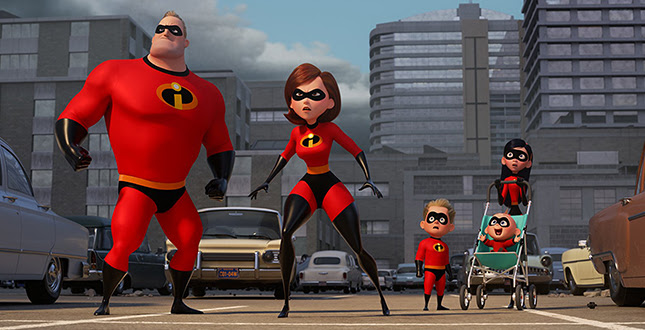
Immediately picking up after the events of the first film, the Parr family comes across Winston Deavor (Bob Odenkirk), a telecommunications tycoon who wants to bring superheroes back into the spotlight. With the assistance of his sister Evelyn (Catherine Keener), they propose a plan to have Helen/Elastigirl (Holly Hunter) be the face of the new program. Helen goes off on her missions leaving Bob/Mr. Incredible (Craig T. Nelson) in charge of looking out for their kids: Violet (Sarah Vowell), Dash (newcomer Huck Milner, replacing Spencer Fox), and Jack-Jack. Along the way, the Incredibles comes face to face with The Screenslaver; a mysterious figure that has nefarious plans of his own.
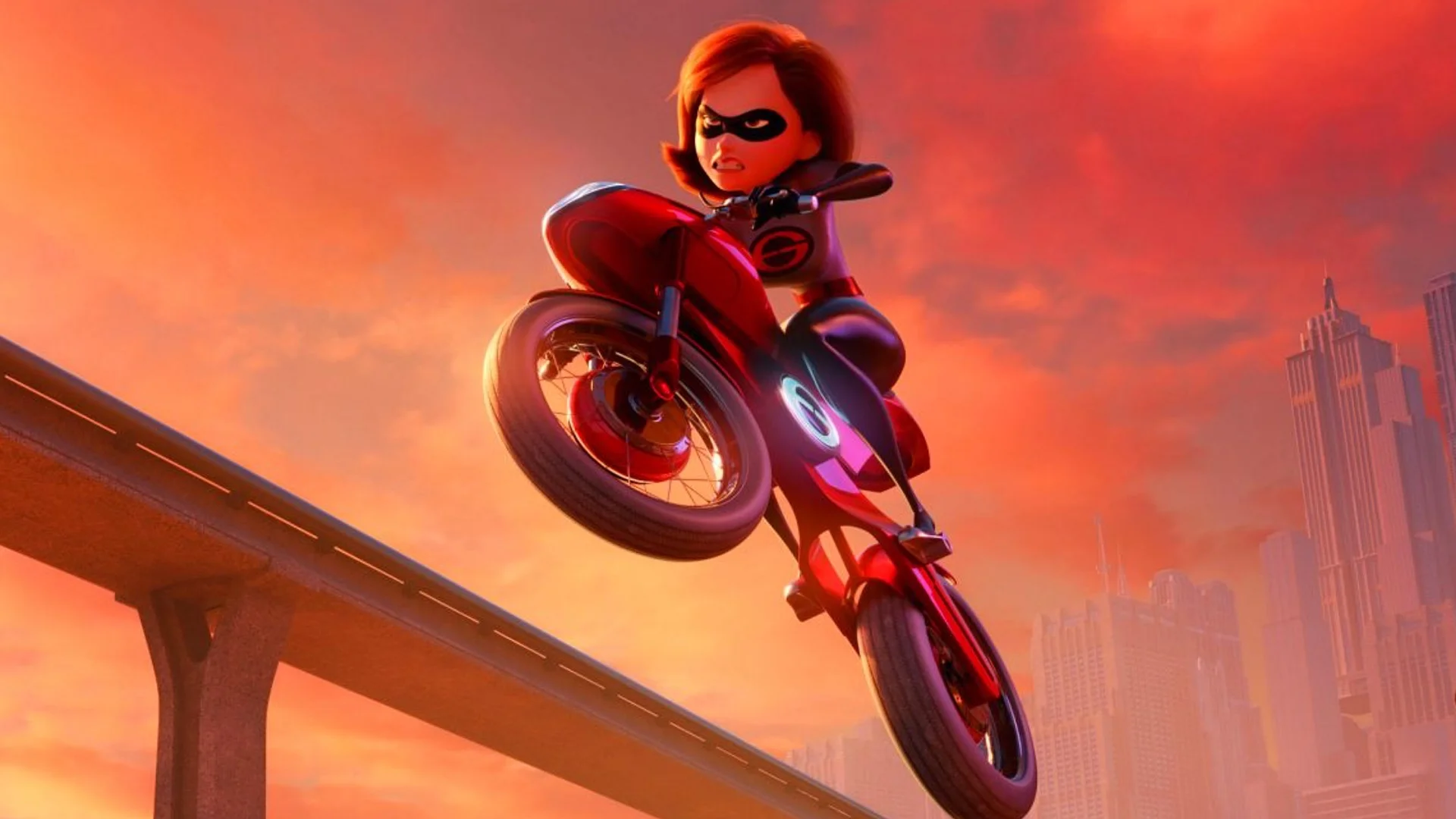
I enjoyed how Bird switched up the dynamic in this one by having Helen take the lead while Bob watches the kids. It’s hilarious to see how Bob adapts to being a stay at home dad, and you can tell that Bob wants no part of it as everything slowly overwhelms him. More often than not, some of the strongest parts of the film revolve around the domestic aspect of the story with fun moments Bird plays with. The voice acting is still on point, especially between Hunter and Nelson and the chemistry they have with one another. Bird gives strong characterizations to the family themselves allowing each family member have their own standout scene. The MVP of the film is easily Jack-Jack, who they all come to realize is way harder to handle than they previously thought. Although at times it feels as if his scenes are lifted from a Looney Tunes short. Side note, if Disney/Pixar can make a spin-off film or a short involving Jack-Jack and Edna (also Bird), that would be awesome!
The animation in this was a beauty to look at, which is expected from Pixar, and there are some gorgeous shots that Bird and his team put together. The 60s aesthetics that Bird employed with the first film is carried over into here, and at times, the film feels like an animated James Bond movie come to life. The action scenes are inventive and nicely edited, with each having their own rhythm and pace to them that doesn’t feel stale. Finally, Michael Giacchino’s score is an absolute standout! Make no mistake about it, it’s one of the best film scores I’ve heard in a theater so far this year!
While I had a good time in the theater watching this, the story in this is predictable at times. This was one of those films where you can figure out the basic plot points of the film from watching the trailers. I didn’t buy into the villain’s motivation at all in the context of the story. In fact, a couple of the storylines that we are introduced to don’t get resolved at all, as if Disney/Pixar were setting certain things up for an inevitable Incredibles 3. Finally, even though the family had great character development, there isn’t much character development with the other characters in the film.
Overall, I think families will love this film. If you enjoyed the first one, chances are you will get a kick out of watching this one. As I said in my opening, I had an enjoyable time watching Incredibles 2. The question I had going into this film was whether or not the story that was presented was absolutely necessary for Disney/Pixar to tell. Even though I had some slight issues with the film, Bird accomplished what he needed to do, which is to make a fun superhero film for families to watch. After watching this, would I watch an Incredibles 3? Sure I would. When you do see this, you will be treated to Pixar’s latest short Bao, which is a sweet and touching story about a lone dumpling. So, on that note, I would say check this out in the theater.
Rating: B

"Superfly" Review

Whoa boy, Superfly is something, but not in a good way. It’s a reimagining of the 1972 Blaxploitation film that had the famous Curtis Mayfield soundtrack to it. The newest version comes to us from veteran music video director, Director X, who makes his feature length debut with this film. I was a little nervous about the film when after it began shooting this past January, Sony announced it was going to be released five months later. It’s worse then I feared. Devoid of any personality of its own, this is a misfire on all accounts, from the questionable acting to poorly staged scenes and everything in between. It also makes one of the worst cardinal sins of any film: it’s boring.
If you’ve seen the original film, the newest version hits on the same basic story, for the most part. Priest (Trevor Jackson) is a successful drug dealer in Atlanta who has enough to get by and flying low from capturing the attention of the authorities. After getting into an altercation with Juju (Kalann Rashard Walker) of the rival Snow Patrol gang, which leaves a bystander getting shot, Priest wants out of the game and wants to make one last big score with his pal Eddie (Jason Mitchell). Since Priest’s mentor Scatter (Michael Kenneth Williams) won’t give him more coke, Priest goes directly to Scatter’s source and makes a deal with the Gonzalez family, a Mexican cartel. Supplied with more coke than they ever gave Scatter, Priest makes his way into trying to make fast cash and then exit the game for good, hoping he doesn’t get killed or captured along the way.

If there’s anything that I liked about the film, which isn’t much, it’s that Williams, Mitchell, and Big Boi (playing Mayor Atkins), are decent enough in the film. These three knew the type of film they were acting in. Whenever Mitchell is on screen as Eddie, it makes you wish that the filmmakers decided to have him play the lead role of Priest, because that version would have made things more interesting to watch. The soundtrack curated by Future, who also produced this update, got the job done, and it was nice to hear some of the classic Mayfield songs from the original film in this. Whenever those songs played, the film suddenly became slightly better. Finally, there were some lines in this that made me laugh, whether that was intentional or not.
Too bad the screenplay sucks the life out of the film. The screenplay, credited to Alex Tse (whose last credit was the under-appreciated and underrated 2009’s Watchmen adaptation), hits the same plot points and beats that you would typically see from a cliché gangster/drug dealer film about someone who’s trying to get one last score equipped with the same basic narration from the main character we hear from every film of this type. Even though this has more story than the original film, it’s all over the place to the point that you won’t care at all as the film tackles police corruption, drug cartels, and potential gang war during the course of the runtime. Superfly is the type of film whose bread crumb trail is comprised of biscuits! You know exactly what’s going to happen, so there’s no tension at all. At least the original film had style to it; this one lacks style or any type of personality. It’s just bland.

From the opening frame of the film, you can feel something’s off. Even though Director X is a music video veteran, you can tell this is a work from a first time feature length filmmaker. The few action scenes that are in this are poorly edited with no flow and a lot of quick cuts to the point of overkill. Even for a dialogue scene, Director X and his editor overcut to the point of distraction. The pacing that Superfly has is extremely slow. For a 103-minute film, this feels even longer than that. Acting wise, the actors ranges from completely amateur hour, like Walker’s Juju or Big Bank Black as Q, Snow Patrol’s leader, to over the top, like Jennifer Morrison’s Detective Mason. I also hate to say this, but the film was completely miscast. No disrespect to Jackson, since he’s good as Aaron in Grown-ish, but I couldn’t believe him as Priest since he looks way too young. There’s no character development for anyone and I didn’t care for any of the characters for me to sympathize with.
Overall, Superfly is easily one of the worst films I’ve seen in the theaters this year. Could a remake have worked in today’s age? I think it could have, but for this iteration, it showed that the filmmakers clearly didn’t care, or had no idea about how to properly adapt it for today. Coming out five months after you started shooting doesn’t help matters at all. With careful development and maybe a different filmmaking team on board, this had the potential to be an entertaining update. Alas, this is a generic, cliché film that follows formula with a capital F and is ultimately super-forgettable. You don’t need to pay money to see this. Truth be told, don’t even bother watching this update. Stick with the original version and whatever you imagined for a remake, it would be infinitely better than what you would have paid to see this. Skip this one.
Rating: D
"Won't You Be My Neighbor?" Review
Won’t You Be My Neighbor? is a thoughtful, celebratory documentary about the impact of the classic landmark series Mister Rogers’ Neighborhood. The new documentary from filmmaker Morgan Neville, who previously directed the 2014 Academy Award winning documentary 20 Feet from Stardom, does not have a dull moment throughout the runtime. At times fascinating, other times jubilant, this celebrates the joyful soul that Fred Rogers was and the positive attitude the show was aiming towards. Be prepared to bring some tissues before you head into the theater.
In 1967, Mister Rogers’ Neighborhood was launched on a local Pittsburgh television station. Fred Rogers, the host of the show, wanted a show that was aimed at the very young age group, as a sort of educational tool to teach them values and talk to them as if they were just another person and not dumbing it down, like some children’s programming were doing at the time. Interspersed with archival footage of Fred are interviews from cast and crew involved with the show, as well as his wife and two kids. In a way, what people saw, and if you grew up on the show, were all aspects of Fred himself.
One of the great tactics Neville does with the documentary is the format that he uses when he interviews Fred’s family or the people who were closely involved with the show. The style of the interviews, and the documentary itself, employs a feel like the show itself. It connects with you, as if they’re talking to you, about the impact the show had on all their lives. The use of the archive footage was well put together, in that we feel like we’re inside of the room as it happens. Rather than have people talk about Fred’s philosophies, we hear from Fred himself about what he hoped to achieved. It was also quite fascinating that he was just about to become a minster before he came across a television, and switched career paths in an instant. Even though he made you feel comfortable, he got his message out more so than if he was a minster. Another item that they touched on was that even though he was a registered Republican, he didn’t make decisions based on his party, but on his faith. If we saw something taboo on the news, he would make it a point to showcase it on his show.
Using puppets and fantasyland, the show would tackle some big subject matters, like Vietnam and Robert Kennedy’s assassination. It also discussed some big questions, like what happens when someone dies. Fred, throughout it all, spoke to the kids in an impactful way, rather than trying to gloss over them. Speaking of puppets, the documentary points out that he couldn’t really express his feelings on his own, but rather used his puppets, like Daniel Striped Tiger, to express his actual thoughts, especially around his family. To further illustrate this, they use animation of Rogers as Daniel, which was effective at times. Another big question that the documentary talks about was if the Fred Rogers that people saw on TV was the real Fred Rogers in real life. The film’s answer to that is yes he was, and he’s someone that we don’t see that much anymore in television, if rarely.
The documentary primarily focuses on the show itself. Even though we do get to hear some aspects of his personal life, the film skims over certain aspects. At times I wanted them to go more in-depth with some of the avenues that they explored throughout the course of the film; I felt like they just didn’t pull back the mask enough. Don’t get me wrong, I thought the length was perfect, but at the end of it, I was ready for more. This documentary could have gone a million different ways, but for the most part, I think Neville went down the right route.
Overall, I truly believe that Won’t You Be My Neighbor? will be nominated for Best Documentary at next year’s Academy Awards. It’s that good of a documentary! We need figures like Mister Rogers in today’s age, since we live in a time of fake news and sometimes discontent. As Mister Rogers showed us on his show, and what the documentary points out, if we’re nice and kind to each other, the world could potentially be a better place to live. It’s a feel good film to watch with everyone, and when it comes to your area, I hope you seek this out. If you were a fan of Mister Rogers’ Neighborhood, then this is a must see. I would highly recommend checking this out in the theater!
Rating: A-
"Hereditary" Review
I’m still speechless about what I saw coming out of the theater. Hereditary is the best horror film that I have seen in the theaters since 2016’s The Witch, which coincidentally was another horror film that A24 released from the same producer. The directorial debut of newcomer Ari Aster, this film signals a new filmmaker that you should keep an eye out for from now on following this release. Unsettling and tense at times, Hereditary is that type of film that slowly builds and builds until finally all hell breaks loose. Super creepy as well, this is a film that will stay with you long after the credits roll, and it might give you some nightmares along the way.
Without going into too much detail, since you should try and go to this as cold as possible, the film begins with the grandmother of the Graham family dying and her family members attending the funeral. After the funeral, Annie (Toni Collette) and her husband Steve (Gabriel Byrne), and their children Peter (Alex Wolff) and Charlie (Milly Shapiro) start experiencing strange occurrences around them, which results in a tragic accident. In the midst of everything, Annie starts to uncover things about her ancestry and must figure out what’s happening to her family before its too late.
To start off, this is Collette’s film through and through. This is a phenomenal performance that results in what could probably be her finest hour yet as an actress (if you must know, she and Byrne are also credited as executive producers of the film as well). Some of the scenes that Collette’s required to perform are absolute standouts, and for all the different types of ranges she goes through, she performs them all flawlessly. I wouldn’t be surprised if at the end of year, Collette is in the mix for award discussions. Another actor that stood out to me was Wolff, who turns in an impressive performance as Peter, as a man who slowly begins to lose his grip on the world. It’s safe to say that for his career so far, this is his best role yet (he’s way better in this then say Jumanji: Welcome to the Jungle or Patriots Day). For her debut film, Shapiro as Charlie definitely plays up the creepy child vibe, but in a good way! Don’t be surprised if she blows up into a future star in Hollywood after this. Most of the characters are well rounded as Aster, who also wrote the film, peels back on the layers to get a sense of who these people are and how each are affected with what’s going on.
Hereditary is that type of horror film that I tend to enjoy a lot, which are those that take on a more psychological approach than having it shoved in your face and being too violent. In my book, horror films are much better if they show you creepy images or imply things rather than showing what happened. If you didn’t know that this was a feature length debut, you would think this was from a master class horror filmmaker. I loved the look that Aster and his cinematographer, Pawel Pogorzelski, came up with. Even though in theory the scenes have simple setups, the shots are meticulous, and for the most part, the only camera movements they employ are either pans or slow zooms in or out. Aster never over-cuts on the scene, but rather lets the scenes play themselves out; to the point where scenes start to get unsettling since you don’t know what’s going to happen next. The bluish tones that the film employs also represents the mood and mindsets our characters are going through. In addition, the use of silence in some of scenes help further the mindset of some of the characters. The sound design gets creepy at times, and the music from Colin Stenson hit the spot. I like the slow burn approach that Hereditary takes as it builds and builds until basically an all out assault, since it takes time to let us know who is who and we get to know them before things start to hit the fan.
If there are any drawbacks that Hereditary has, it is that it may leave people scratching their heads about what’s going on. For a 127-minute film, it relies on you to figure things out on your own rather spelling things out. If you keep up with the dialogue, you should have a grasp in what’s going on. Speaking of scratching your heads, like The Witch, the end gets completely bonkers to the point that you are either on-board or not. The slow burn that the film takes might put people off, but trust me, keep with it and you will be rewarded greatly.
Overall, A24 has another winner on its hands with Hereditary. If you can, try and go into the film cold outside of this review. The less you know about it, the better off you will be. Go see this in a packed theater. This film will give you the creeps, I will assure you of that. By the end of the film, you won’t be able to sleep with what you just saw. I thought going into the film I was getting one thing, but the film became something else than what I expected, with some of the themes and ideas that the film presents to us. I would definitely recommend this to you. Now it’s time to get some of these images out of my head.
Rating: B+