
"Sonic The Hedgehog 3" Review": A Genre Buffet of Family Fun
With it’s third entry into the franchise, Sonic The Hedgehog 3 has it’s footing. It’s full camp. It’s a genre buffet that focuses more on its vignettes than answering plot hole questions. It just might be the most fun you’ll have in theaters with your family this holiday season!
Building on the events of Sonic The Hedgehog 2, the film finds the new Wachowski family with Sonic (Ben Schwartz), Knuckles (Idris Elba) and Tails (Colleen O’Shaughnessey) trying to get away for some R&R with Tom (James Marsden) and Maddie (Tika Sumpter). After a hedgehog named Shadow (Keanu Reeves) is released from his suspended state after fifty years, that peace the family is attempting to get comes to an immediate end. Team Sonic is whisked to Tokyo to try and bring Shadow under control, if at all possible.
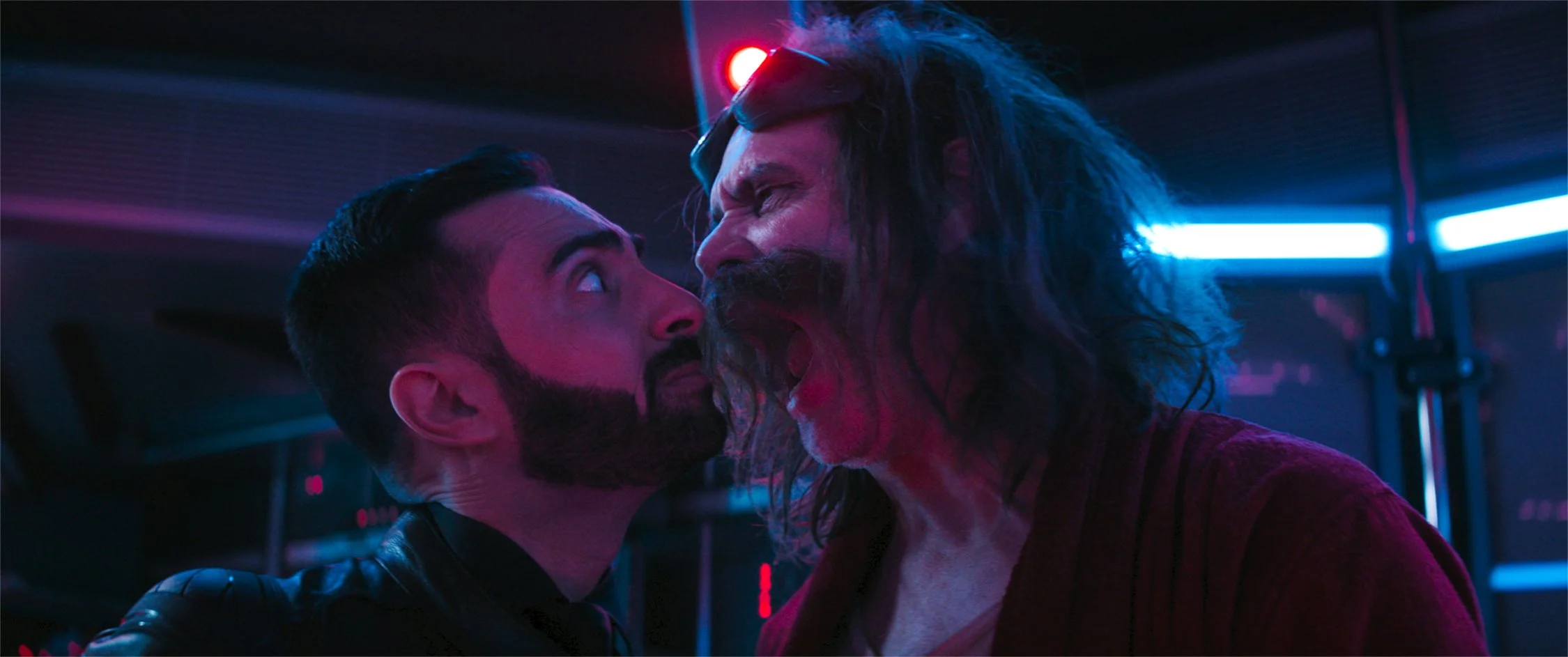
Lee Majdoub as Agent Stone and Jim Carrey as Ivo Robotnik in Sonic the Hedgehog 3 from Paramount Pictures and Sega of America, Inc.
The big question is who released Shadow with what looks like Ivo Robotnik (Jim Carrey) tech? It’s quickly revealed that Ivo has been enjoying telenovelas and getting the Thor post Infinity War treatment (big gut). Enter Gerald Robotnik (Jim Carrey), Ivo’s long lost grandfather. From there, it’s off to the races to stop a world ending machine and Jim Carrey having as much fun as he can on screen.
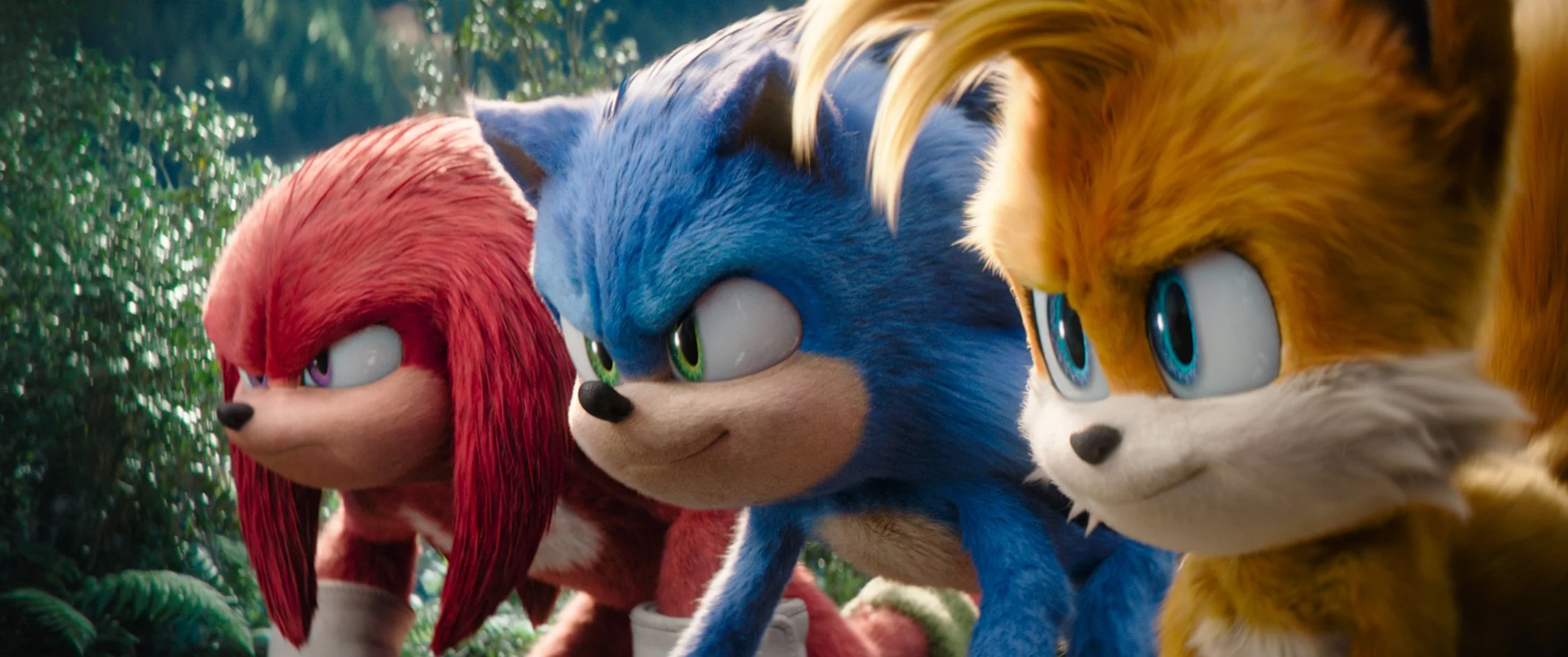
Knuckles (Idris Elba), Sonic (Ben Schwartz) and Tails (Colleen O'Shaughnessey) in Sonic the Hedgehog 3 from Paramount Pictures and Sega of America, Inc.
The film continues to build out the video game world, showcasing character’s skills and power ups. It also noticeably shifts in genre in its dialogue, cinematography and pacing throughout the film. The opening setup is full of action, it moves into a kid friendly horror moment, a musical dance number, comedy and drama. This could seem disjointed at first glance, but for anyone who played the game on Sega, we know that there were different levels with different styles of gameplay and music. It’s this not so subtle change in cinematic genres that confirm the film is self-aware. In fact, there is a joke about making a flash drive work after blowing on it much like we did with game cartridges.
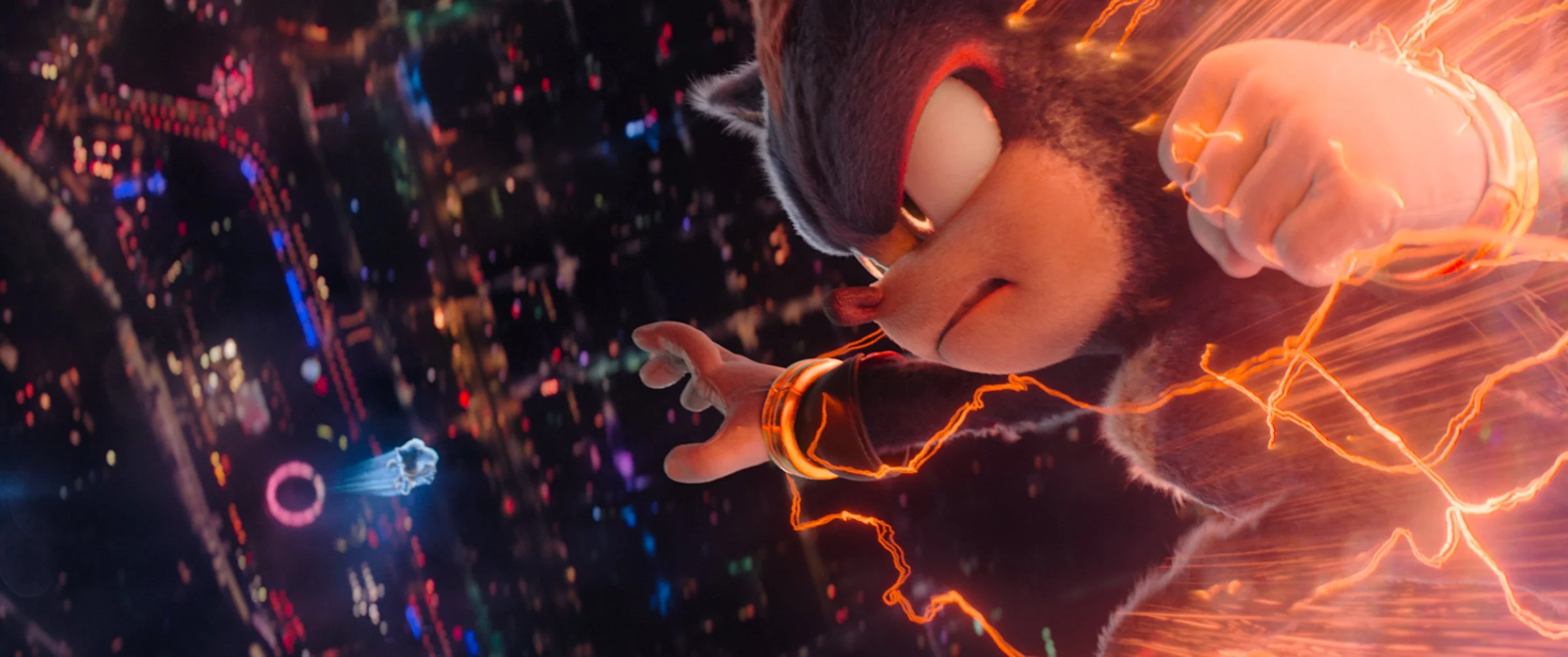
Shadow (Keanu Reeves) in Sonic the Hedgehog 3 from Paramount Pictures and Sega of America, Inc. | © 2024 Par. Pics & SEGA
Jim Carrey said that he came out of retirement for this film because he needed to pay bills. Hopefully he keeps overspending so we’ll see him future films because he’s so much fun to watch as both Ivo and Gerald Robotnik. Each character is fully developed, but they bounce off of each other in comedic fashion as only Carrey can do. Where the first two films were about building family, Keanu Reeves’ Shadow has baggage to deal with in regards to the family he lost. So the franchise keeps revolving around family dynamics while adding more characters to this world.
So make sure you stick around for the post credit scene. This is by no means an Academy Award winning children’s film. It’s fun, nostalgic for those who played the game or watch/ed the shows. It’s a good time at the movies for the family!
Rating: B-

"The Harder They Fall" Review: A Refreshing Western Genre Entry
The Harder They Fall is a stylish, fully realized vision from co-writer/director Jeymes Samuel. Rooted in the western genre it borrows French New Wave characteristics as well. With a stellar cast, engaging dialogue, and a bumpin’ soundtrack, this movie is not only an entertaining watch but memorable as well. With a predominately black cast, the film tells a fictional, swagged-out tale of real-life black cowboys who once roamed the American West.
The film starts out giving us the backstory of Nat Love (Jonathan Majors) as a child. After witnessing the murder of his parents and receiving a scar from Rufus Buck (Idris Elba), we find Nat as an adult years later on the path to finishing his revenge. Layered through this journey we’re introduced to Mary Fields (Zazie Beets), Bass Reeves (Delroy Lindo), Trudy Smith (Regina King), and Cherokee Bill (Lakeith Stanfield) amongst other notable/familiar faces. That’s about all I’ll reveal as far as the plot goes because how the story unfolds is where so much of the enjoyment lies.

There are way too many beautiful shots to talk about in this film but let’s dig into a couple. In a scene where Cherokee Bill is introduced to us, he slowly glides down the center of the train, center framed while the rest of the gang is blocked by his head. He gives a young boy an alternative telling him to “put the gun down or we’ll kill everyone on this train”. When no movement is made, Bill draws his weapon and simultaneously arms from fellow gang members shoot out of his head in the background. This camera placement and blocking of the actors conveys the danger while showing us in one shot, a stylistic but thoughtful use of framing. This is consistent throughout the film as Samuel uses his camera to show instead of tell.

Samuel takes his framing even further with the use of music and sound. Whether it’s pushing in on a character to the thump of a gun hitting the floor or the kick of a drum in the soundtrack, there is intentionality on full display. Two percussion hits reveal one character behind another in step with a camera move to the right. Samuel’s chucking of conventional framing and attention to the fact that we, the audience, are aware we’re watching a movie, has French New Wave written all over it but shows his creativity in constructing a movie that draws on western genre traits while being refreshingly unique.
Cinematographer, Mihai Malaimare Jr. (The Master, Jojo Rabbit) adds his gift of painting with light to the film. The colors in each scene are vibrant while shifting from cool to warm temperatures with ease. Understanding when to implement the shift in palettes may be missed by the average viewer, but it builds this story to perfection. When a character tells something from their past, warm colors are used to bolster the vulnerability of discussing an old memory.
The dialogue in this film is handled masterfully in its delivery from each main cast member. Silence is used where it’s needed to allow the visuals of the film to speak for themselves. If someone speaks, it's important to the forward progression of the film’s storytelling. Otherwise, nothing needs to be said. The southern drawl or New Orleans accent of characters not only rings authentic but serves as a layer to this delicious cake of a film. Each cast member gives nuance and life to their role. To highlight one individual performance would slight this ensemble of no weak links. The soundtrack of the film fills in the role of an additional, unseen character, telling a part of this tale. Turn on the subtitles and you’ll see the lyrics align perfectly with each scene they are heard in.
At a two hour and ten minute running time, you won’t notice it. The Harder They Fall is engaging from start to finish and if we got more from this world we’d be lucky! Grab your popcorn and turn on Netflix as soon as you can!
Rating: A

Middleburg Film Festival 2020: "Concrete Cowboy" Review
Concrete Cowboy is not an original story. Estranged son and father come together to try and correct the son’s behavior has been done before. While much of its premise is familiar territory, this film takes a look at traditions of old and what reconnecting or staying in touch with them can do for a person, a family, and a community.
After Cole (Caleb McLaughlin) gets into trouble at school, his mother (Liz Priestley) has had enough. She decides to drop him off with his father, Harp (Idris Elba), to try and have some discipline instilled in him. It’s evident that the neighborhood recognizes Cole, but it’s been long enough for him to be groggy on most of the who’s who. He does know his cousin Smush, (Moonlight’s Jharrel Jerome) who pulls up in a nice ride with some dope kicks. Smush wants Caleb to ditch the stables and hit the streets to make real money.
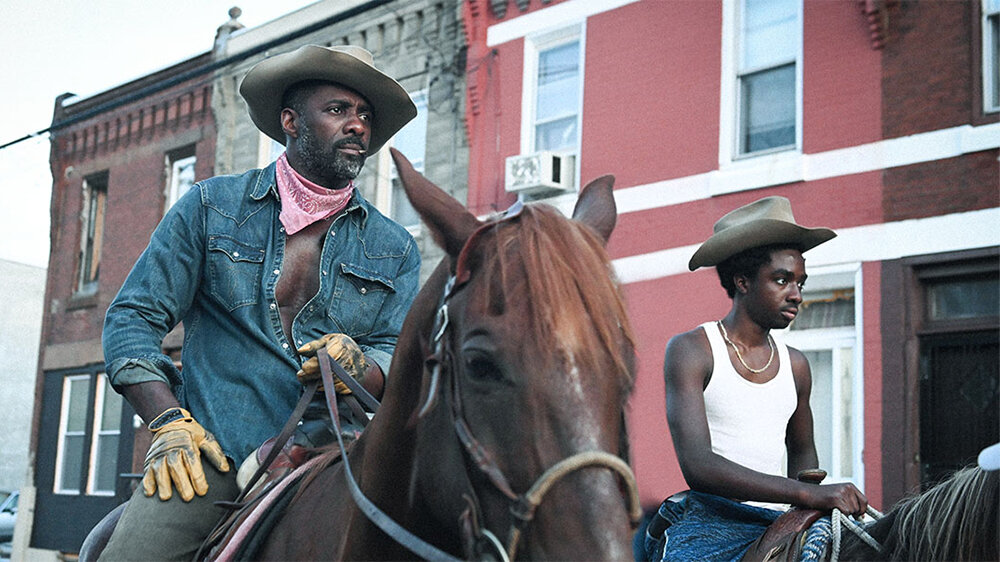
As most films like this go, after some time of friction, Cole begins to understand his father’s urban cowboy way of life. He appreciates the hard work, respect of tradition, and taking care of horses. Smush’s way of life doesn’t fly in Harp’s home, so Cole is forced to make a tough decision on the way he wants to go.
The film boasts of an all star line up. Caleb McLaughlin sheds his Stranger Things persona for a coming of age turn as “Cole from Detroit”. Method Man reminds us that he has some acting chops as Leroy, the former urban cowboy turned lawman. Perhaps the surprise casting comes from the real riders of Fletcher Street in Philadelphia. Sprinkled throughout the group of urban cowboys, these real life cowboys give the film its culture and authenticity.
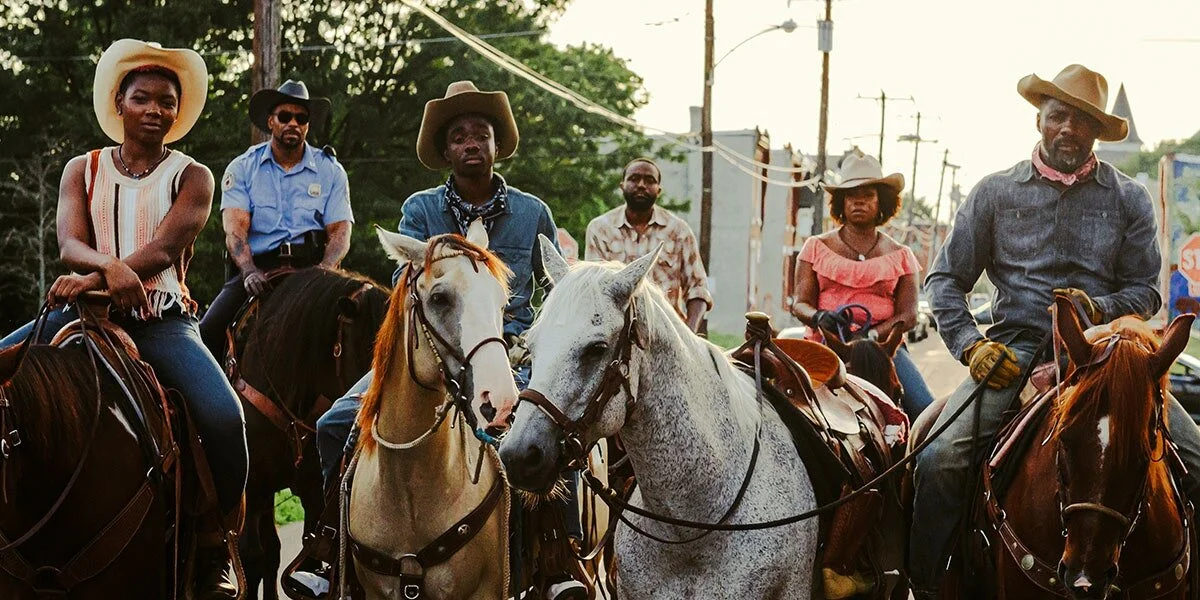
Cinematographer, Minka Farthing Kohl uses natural lighting to draw the viewer in. Small moments like the flickering of firelight used to light subjects, brings a certain amount of intimacy to this story. Director, Ricky Staub, has a way of using the camera and editing to capture moments and lock them in time. Using more mids and close-ups than wide establishing shots, Staub is able to keep the focus on the characters and bring us into their world.
The story of Concrete Cowboy is one of a return to an old fashioned way of life and connection. It lassos the connection of man amongst one another and with horses. It highlights the importance of storytelling amongst generations, with one character even emphasizing the significance of cadence in oral storytelling. This story is a bumpy ride at times in getting to its destination, but there are beautiful visuals and heartfelt moments along the way.
Rating: C+

"Yardie" Review: A Run of The Mill Gangster Flick

The gangster film genre has been a favorite since the early beginnings of film. With its rags to riches story of a person who works their way up in the world is the American dream from a sinister angle. Based on the 1992 crime novel by Victor Headley, Yardie, Idris Elba’s directorial debut, walks and talks like a gangster film. It just doesn’t compare to the titans of the genre.
1973 Kingston, Jamaica is the setting for the opening of the film. A young Denis (Antwayne Eccleston), who goes by D, is in that phase of pre-teen life where even though the world around him is full of violence, he still has a chance to go down the right path. His older brother, Jerry “Dread” (Evelrado Creary) is trying to get the two warring factions of the community to put down their guns with a peaceful dance party. Unfortunately, the party ends when Jerry is gunned down by a local boy. This moment in time becomes the shift for D to the dark-side.
Six years later D (the older D is played by Aml Ameen) is now under King Fox (Sheldon Sheperd), one of the original gang leaders his brother was trying to have squash the beef, and a rising star in the organization. After D gets in hot water with a rival gang he’s sent to London to lay low and handle a cocaine drop overseas until things quiet down. Once there, D reunites with his Jamaican sweetheart and baby momma Yvonne (Shantol Jackson), who left Kingston with their baby for hopes of a better life. He also reunites with hot water.

Cinematographer John Conroy paints just the right amount of vibrant color for Elba’s Kingston, and desaturated Earth tones for a dreary London with his lighting scheme. Elba has a good handle on using the camera to tell the story. Unfortunately, the screenplay from Brock Norman Brock and Martin Stellman just isn’t electric. The ensemble cast’s performances aren’t quite good enough to elevate the words on the page either. So what’s left is a stereotypical, predictable, gangster flick.
All things considered, if Elba had stepped into the role of D, he would have brought the gravity the film could have used to enhance its story. It still wouldn’t dismiss the fact that the screenplay doesn’t leave room for us to truly connect with and care for its main character. Much like Denis, Yardie is just another film caught up in an ever changing lineage of films like it ready to ascend to the throne of our collective top films in the genre.
Rating: C

"The Dark Tower" Review
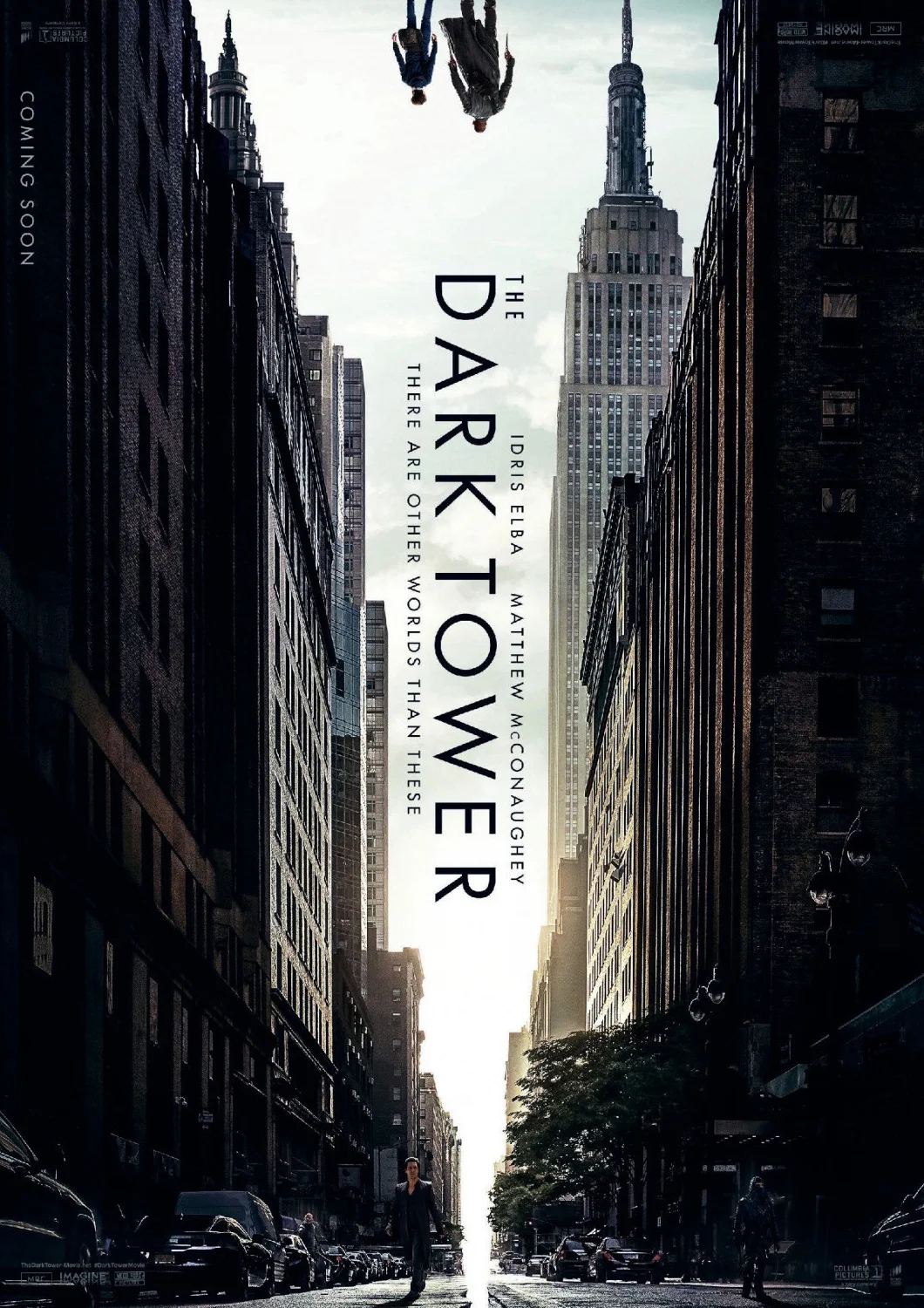
The Dark Tower is considered by many to be Stephen King’s magnum opus. Spanned across eight novels and across other media, it’s the series that sometimes connects to other stories from King. The film adaptation has been in development for quite some time, and after some false starts, the film finally came to life under the direction of Nikolaj Arcel. I feared, given the lack of promotion, that this would be this summer’s Fantastic Four. Well, the film isn’t the disaster that some thought it would be. Instead, it’s just an average film that has some good elements in it.
Described by the filmmakers as a sequel to the novels, and combining elements from the series as well, the film is about Jake Chambers (Tom Taylor) who has been having nightmares about a Dark Tower and Walter Padick/The Man in Black (Matthew McConaughey) who seeks to destroy the tower to let evil forces take over. In his search to find the mystery behind his visions, he suddenly gets transported to Mid-World, where he comes across another person from his dreams, Roland Deschain/The Gunslinger (Idris Elba). Together, Jake and Roland must find a way to stop the Man in Black from accomplishing his goals.
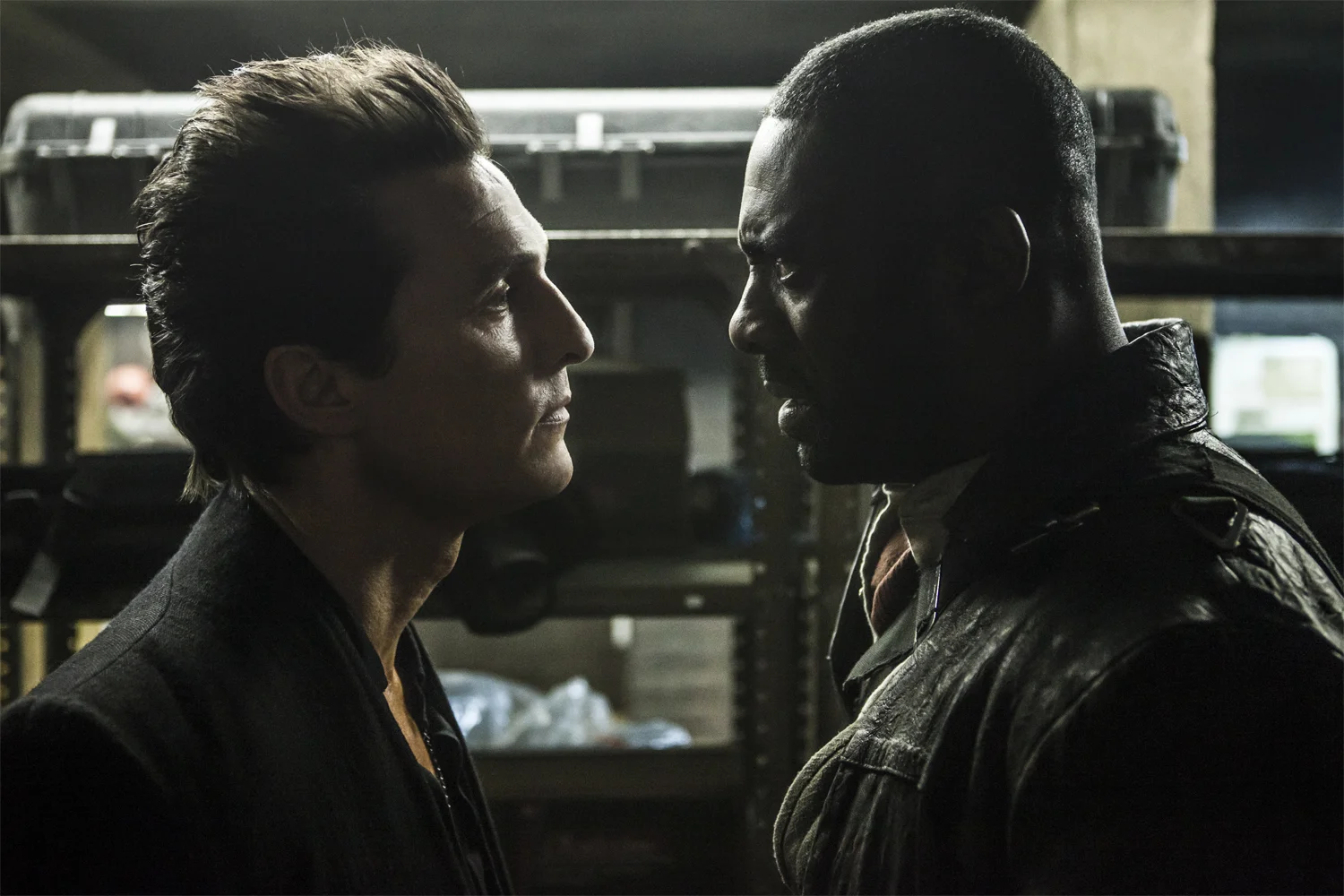
One of the things that I thought worked with the film was McConaughey’s performance as The Man in Black. He seems to be having a lot of fun chewing the scenery in every scene he’s in. McConaughey gets what film he’s in, and the way that he interacts with people and manipulates them to do his bidding is great. Elba does a good job as well playing The Gunslinger. For their characters, this was perfect casting. Whenever they interact with one another, for the most part, the film comes to life. For non-readers of the story, the screenwriters (including Arcel, Anders Thomas Jensen, Akiva Goldsman, and Jeff Pinker) do somewhat a good job in describing what the Dark Tower represents. The film is also humorous in places, especially when Roland comes to Earth. Lastly, since this is supposed to connect to other works from King, be on the lookout for references from The Shining, It, and The Shawshank Redemption to name a few.
For the first third of the film, it wasn’t bad and I enjoyed the pacing of it. Once it gets to Mid-World is when the film sadly collapses to mediocrity. Since this is a 95-minute film, it felt like it was gutted from a much longer film. It felt rushed in places, and some of the editing didn’t feel right. For example, the final battle goes so quickly that it doesn’t make that much sense. On top of this, there’s basically no character development at all in the film, and some of the characters were severely underwritten, like Katheryn Winnick’s Laurie and Jackie Earle Haley’s Sayre. Also, Taylor was somewhat bland as Jake, being very one-noted throughout the runtime. For being based on a fantasy series, most of the film takes place in NYC, as if to save cost. The monsters look isn’t imaginative and there’s some questionable CGI throughout the film. The visual look of the film wasn’t great, especially when Roland and Jake are roaming around Mid-World. The music from Tom Holkenborg isn’t memorable either. The action scenes weren’t staged particularly well, and they make the mistake of overcutting so you have no idea what’s going on.
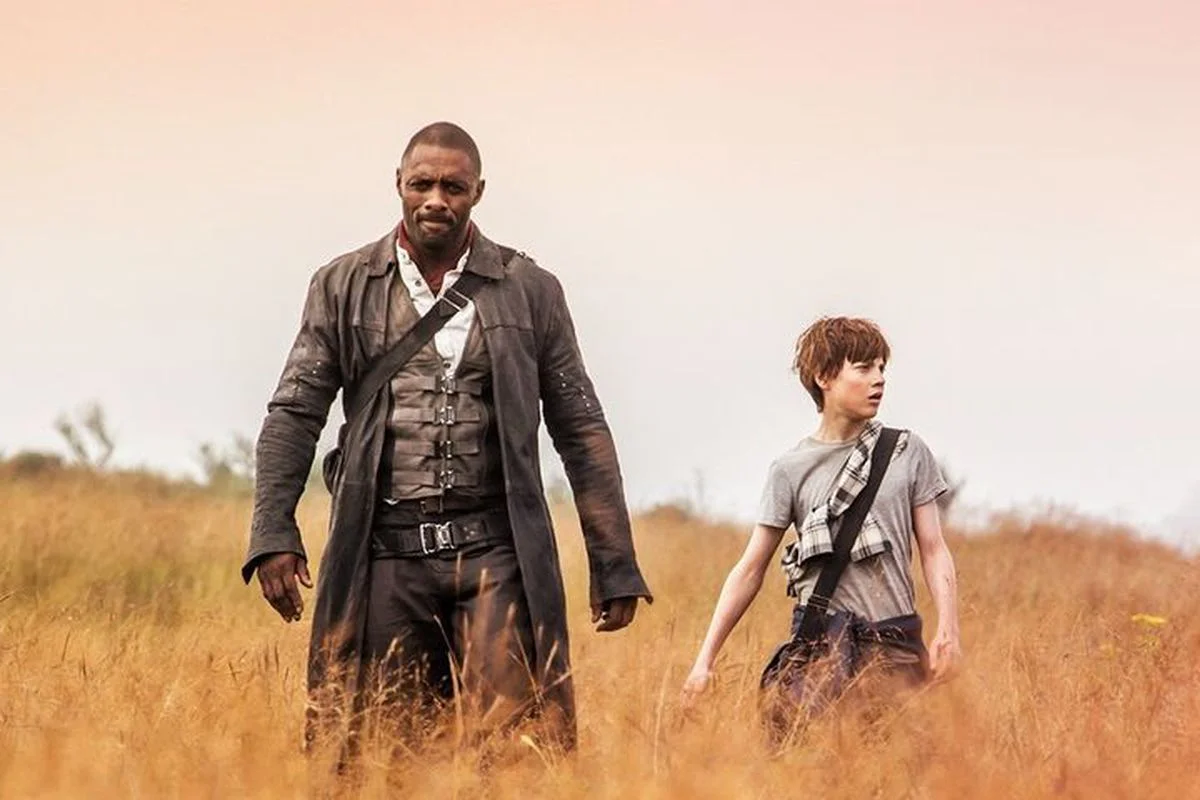
Overall, The Dark Tower is an average film and nothing more. What could have been a fun summer film instead felt like it was compromised in places, and the filmmakers decided to play it safe instead of going for it. For fans of the series, I have a feeling that after seeing this, they might be disappointed with this adaptation. For the lofty plans that they had, which included films and a TV series, this might just be a one and done film. Like I said before, it’s not a disaster by any means, but it’s not a great film. If you’re a Stephen King fan, maybe save your money until next month when It comes out. If you do go see The Dark Tower, I would suggest go to a matinee screening or just wait until TV.
Rating: C
"Star Trek Beyond" Review
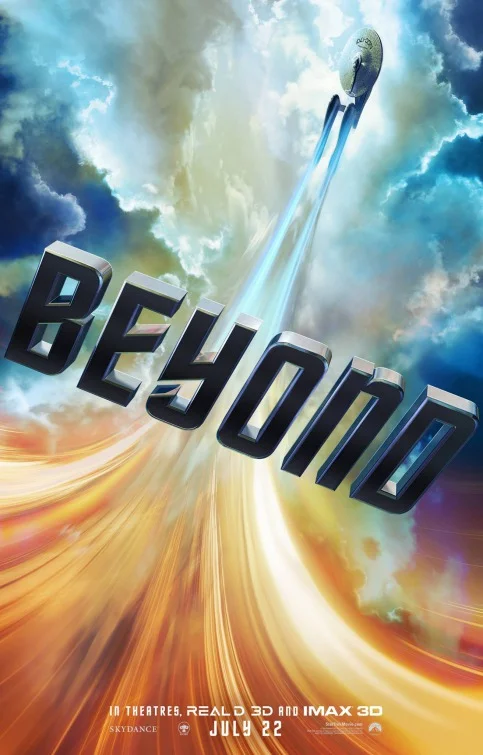
In today’s world, where daily demonstrations of violence, hatred, and fear offer us an uncertain vision of our future, we need an escape. We need movies that take us to worlds that are not our own. Movies that depict people of different races, backgrounds, and sexualities working together in harmony. Movies that thrill us, make us laugh, dazzle us.
We need movies like Star Trek Beyond.
Taking over the captain’s chair from previous series director J.J. Abrams, Justin Lin (Fast and Furious) has crafted a vessel that’s just as sleek, fast-paced, and exciting as its predecessors. Make no mistake: this is not cerebral, thought-provoking sci-fi; it’s a full-speed-ahead action flick. However, there is something notable about Star Trek Beyond in how it celebrates the series’ fifty-year history and how it honors its enduring characters. This film was made with so much love, warmth practically radiates from the screen.
While on their five-year mission to explore the far reaches of space, Captain James T. Kirk (Chris Pine), Commander Spock (Zachary Quinto), and the crew of the U.S.S. Enterprise fall under attack by a hostile alien threat and find themselves marooned on an uncharted planet. With a damaged spacecraft and no means of rescue, the crew must find a way to get back home while evading the grasp of Krall (Idris Elba), a mysterious enemy who will stop at nothing to destroy them.
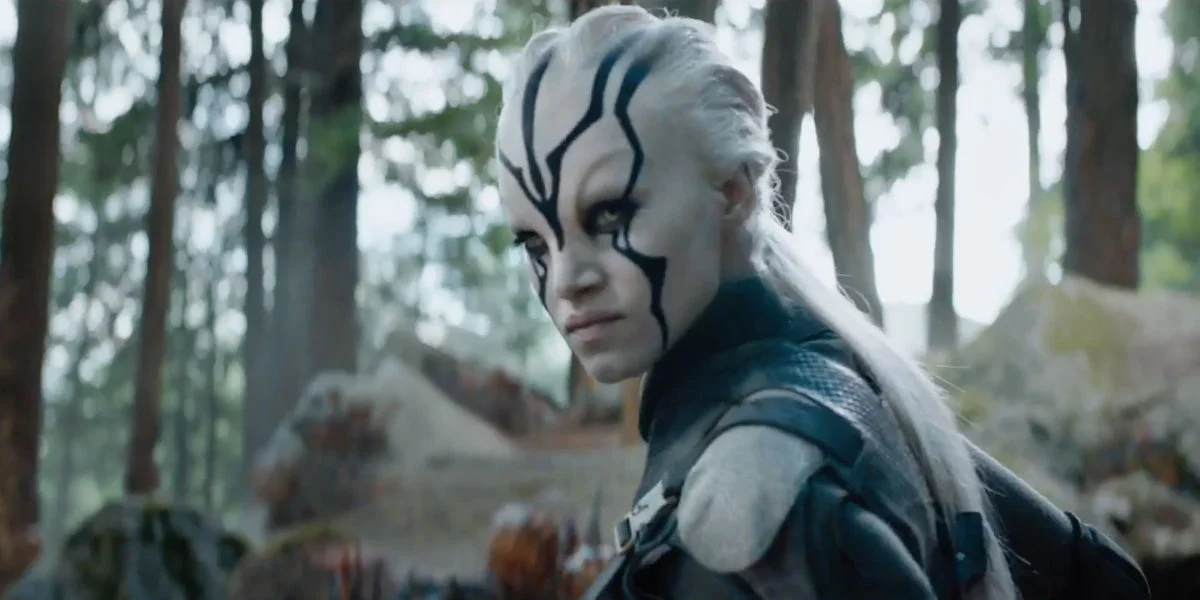
This film really is the total package. It has terrific action set pieces orchestrated by Lin, a witty script co-written by Simon Pegg (who also plays Scotty), and an impressive new character in the form of Jaylah (Sofia Boutella, Kingsman: The Secret Service), a badass alien warrior who aides the crew on their journey.
Beyond also has something unexpected: genuine heartstring tugging. In touching ways I will dare not spoil, the film pays tribute to the memories of two legendary Star Trek actors: our Spock Prime, Leonard Nimoy, and our Chekov, Anton Yelchin. Seeing Yelchin, who tragically died just last month, onscreen—so youthful, so energetic—is melancholy indeed.
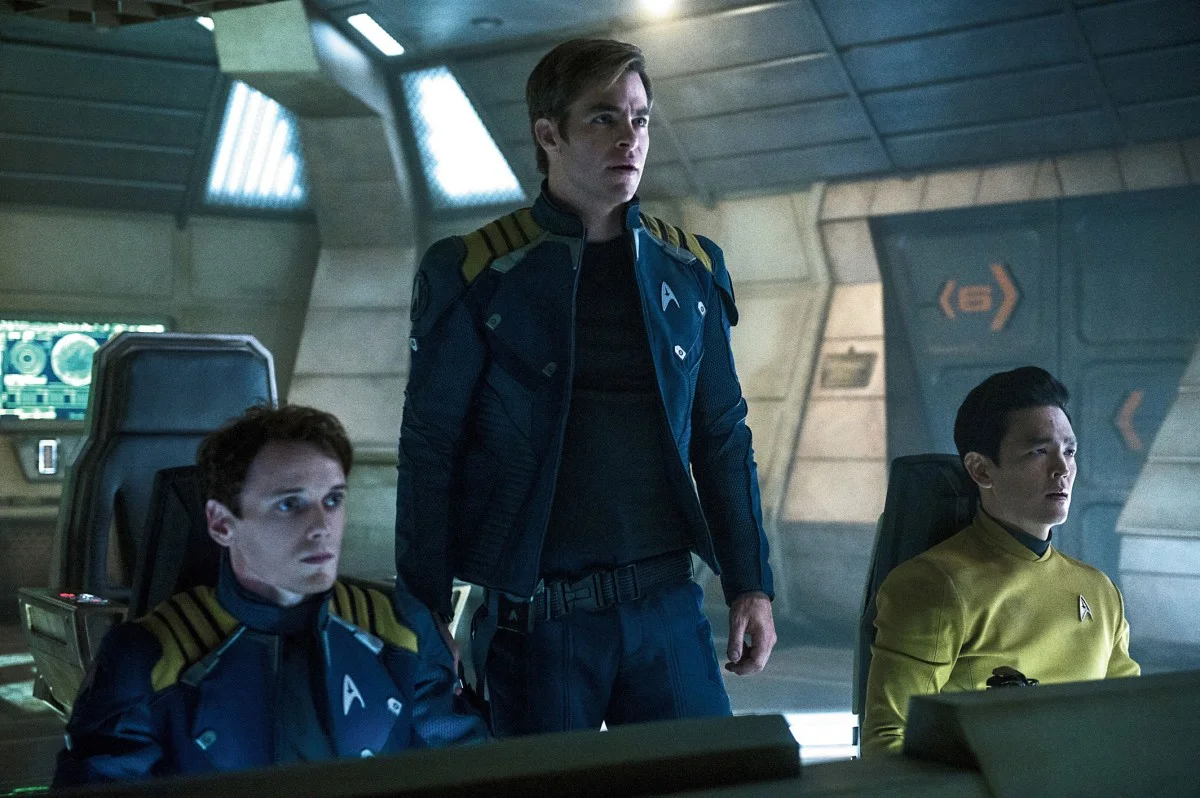
But Beyond also engages us emotionally in another way: it furthers the development of these characters we love so. There is a very tender and heartwarming scene involving Spock and Bones (Karl Urban) that reveals layers to each character that were not even hinted at in the previous entries. And Captain Kirk, Scotty, and Sulu (John Cho), who were all so lacking in any kind of character growth in the last film, Into Darkness (2013), all have their moments to shine here. These actors embody their characters so thoroughly and work with each other so well that they transcend any shortcomings the film might have.
And Star Trek Beyond does, indeed, have its shortcomings.
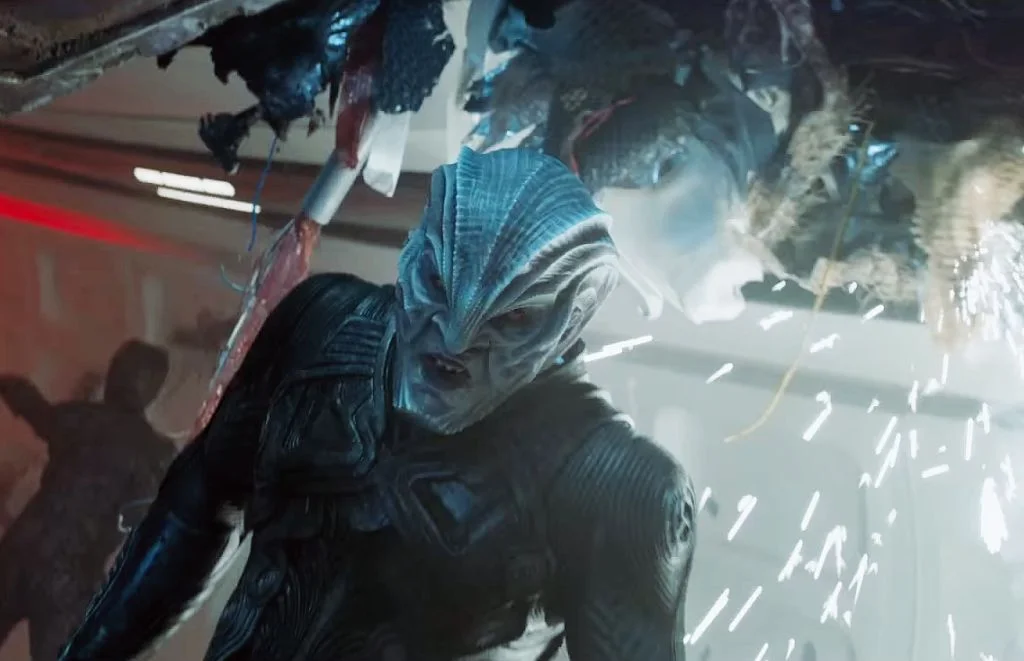
While it is an entertaining and well-made film, Beyond doesn’t seem bold enough to break away from the established formula. Spock and Uhura (Zoe Saldana) continue their lover’s quarrel that seems to never end, and we are treated to the now-routine sight of seeing the Enterprise get totally wrecked yet again. Idris Elba’s Krall—at first an imposing screen presence—is drained of all menace or intrigue once his “motivation” is revealed in the third act. It’s here where the film completely deflates, for what begins as a tale of adventure and survival takes a turn for a plot we’ve seen before.
Despite these flaws, Star Trek Beyond is still a rousing—and as I said before, necessary—entertainment, and until that third act twist, it’s true to the spirit of discovery and camaraderie established in the original series. When Gene Roddenberry first created the Star Trek television series in 1966, he envisioned a future of unity and optimism. Fans will be happy to discover that Star Trek Beyond is very much in keeping with that vision. It encourages us to boldly go… and to look beyond to a bright and beautiful tomorrow. Happy fifty years, Star Trek. Here’s to fifty more.
Grade: B