
"The Best Of Enemies" Review: Another Been There Seen That Blockbuster on Race Relations
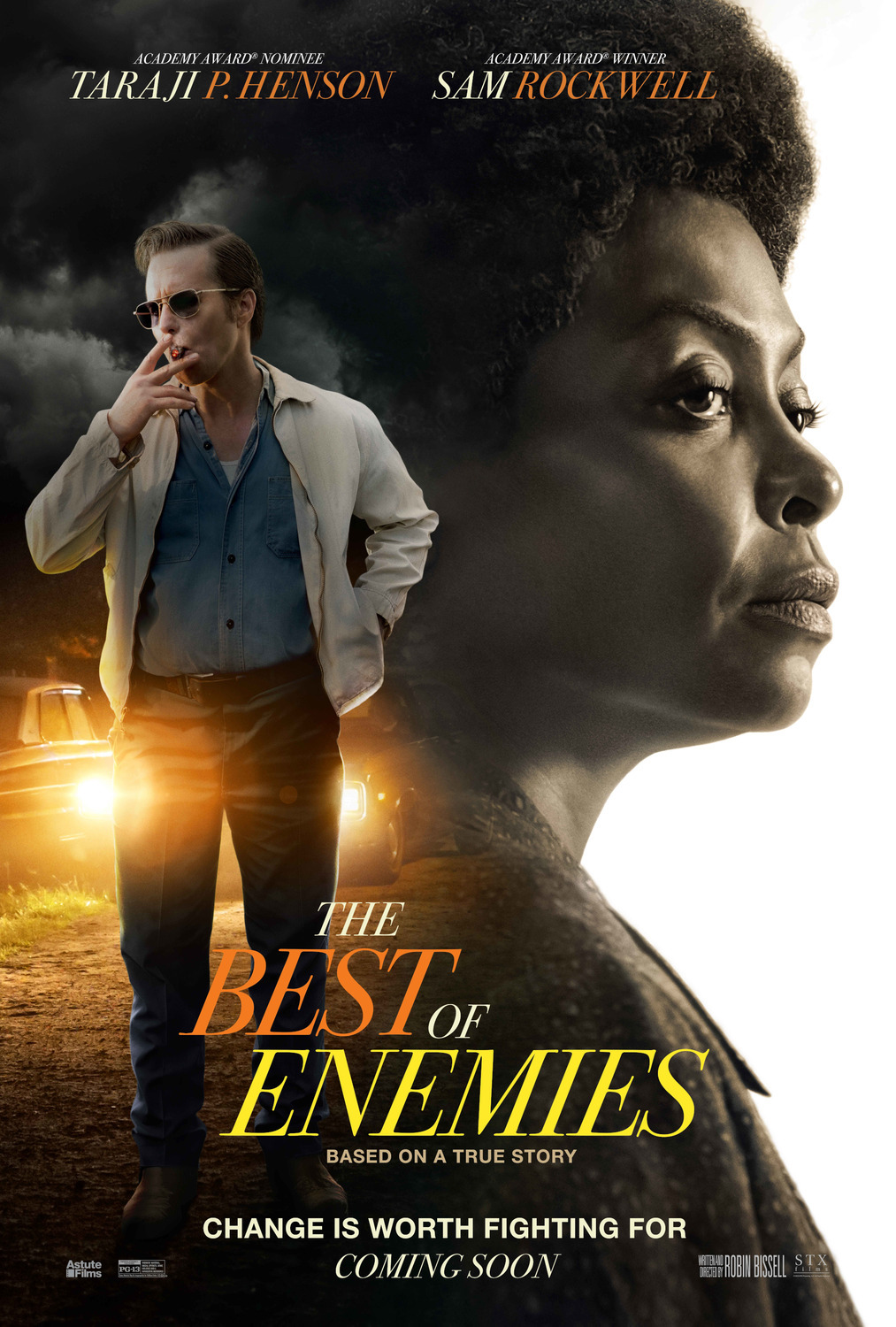
If you’ve seen a blockbuster Hollywood film dealing with race, you’ve seen The Best of Enemies. You can expect to learn more about the white antagonist than the black protagonist, whose weight in the true story is equal or greater to the other. The heart of the message, as it usually is, is definitely one that is good and should be celebrated. The problem is, with the same old screenplay structure, this film is still preaching to the choir and not digging deep enough to give us a sense of hidden figures in our nation’s history.
The film is set in 1971, when C.P. Ellis (Sam Rockwell) was the Exalted Cyclops of the Durham, North Carolina klavern of the United Klans of America. Ann Atwater (Taraji P. Henson) was a fair-housing activist at the time, trying to fight for the treatment of African-American residents in the community. After the segregated black elementary school burns from an electrical fire, the community has to decide whether to integrate the white school or not. Bill Riddick (Babou Ceesay) is brought in from Raleigh to conduct a charette, a deadline driven time of planning or activity, in order to bring the city to a conclusion.
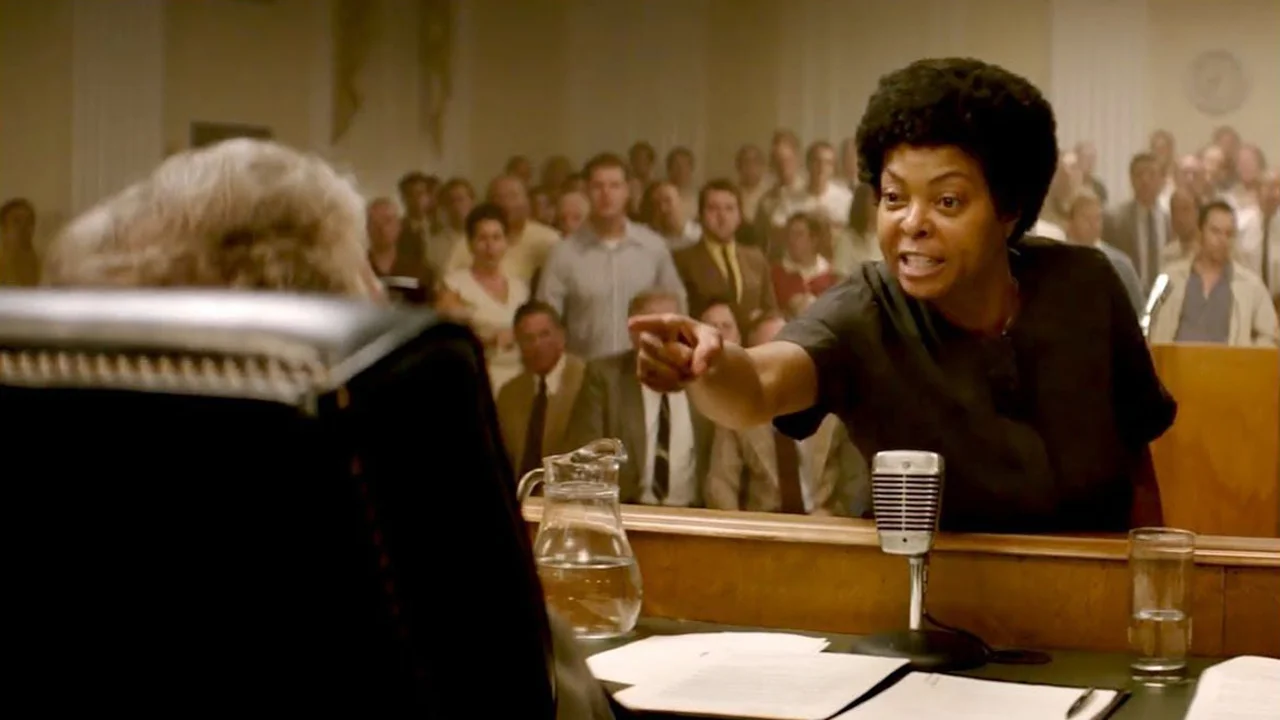
The film builds Ellis’s character early on by showing him and fellow klansmen shooting up a home of a white woman who is dating a black man. “Wait for the light!” C.P. says. They shoot through the bottom floor of the home to intimidate her as soon as the light upstairs is turned on. It’s an interesting look from the inside of the Klan as to how they’re doing their “job”. Ellis also has a son in a mental hospital who he visits regularly and pours love into. So it’s evident that he understands loving someone who may be different, but is staunch in his racist thinking. Atwater is always breathing hard. It could be because she’s overweight, but there is a sense of anger brewing under the surface with her that comes from years of hard work and hard living. While she’s not afraid to talk to the city officials who don’t care what she has to say (one turns in his chair to give her his back during a hearing) Atwater means business and expects them to listen.
The elements of a dynamic drama are there. There is an internal clock within the film that pushes the movie forward. You have a man who hates black people but loves his family and a woman who advocates for black people by speaking truth to power on a daily basis. The question becomes, how did they go from enemies to having the kind of friendship in which Atwater delivered the eulogy when Ellis died in 2005? It’s this deep study in character development and human interaction that writer/director Robin Bissell misses the mark on in exchange for symbolism over exhibiting the internal reflection/change of his characters.
Throughout the film, social class is represented through clothing. The rich and educated wear suits and nice clothes in the film, while the “common folk” wear button ups and dresses thin enough for their sweat stains to seep through and make sure we know they work hard. In fact, the rich don’t ever seem to sweat in a community that seems to be hot as evidenced by Atwater’s constant use of a handkerchief to dab away her sweat. There is a surface level exploration of the politics of the town that would give the viewer an inside look at why tensions exist amongst the the groups represented in the film.
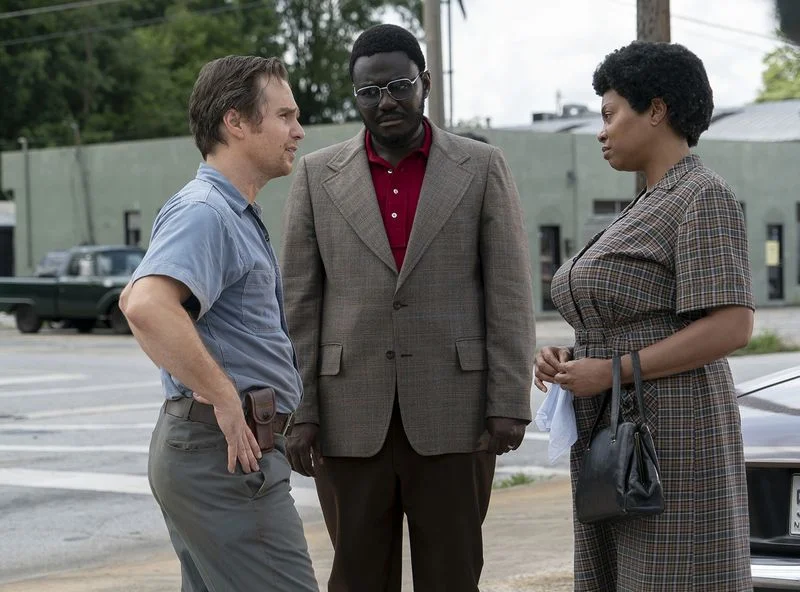
Atwater does a nice thing for the Ellis family, unbeknownst to them, which simply serves as an example of being kind even when someone is mean to you. At the end of the charette, Atwater gives a one sentence answer in whether the schools should be integrated or not. We get a monologue from Ellis for his decision to do what we knew was right from the beginning. There is a disproportionate amount of focus and backstory on both characters in this film, and that has to stop.
If The Best of Enemies had never been made, the vast majority of people who see the film would never know about Ann Atwater and C.P. Ellis. So there has to be some credit given to the people who brought this movie to life. However, if we’re going to have stories dealing with race and overcoming prejudice in our history, let’s do it the right way! Taraji P. Henson and Sam Rockwell brought it as their characters, but perhaps the same equality their characters were fighting for should be brought to similar screenplays in the future!
Rating: C
My Video Review:

Movie Review: The Curious Case of "Proud Mary"

Proud Mary is a sequel to a movie we never saw. It expects us to have a certain level of knowledge about its’ characters that could only be known by having met them before. Writers John Stuart Newman, Christian Swegal, and Steve Antin expect us to care and buy into their script in a way that they don’t earn nor attempt to construct. Yet since we’ve never seen the prequel to this film, we’re left with the work of three clearly inexperienced writers (check their imdb creds) whose rushed script was passed through the Screen Gems studio hierarchy and green-lit without a thorough analyzation of the work. A vehicle for female protagonists like this doesn’t come along very often, especially for African American women. We deserved better than a hooptie.
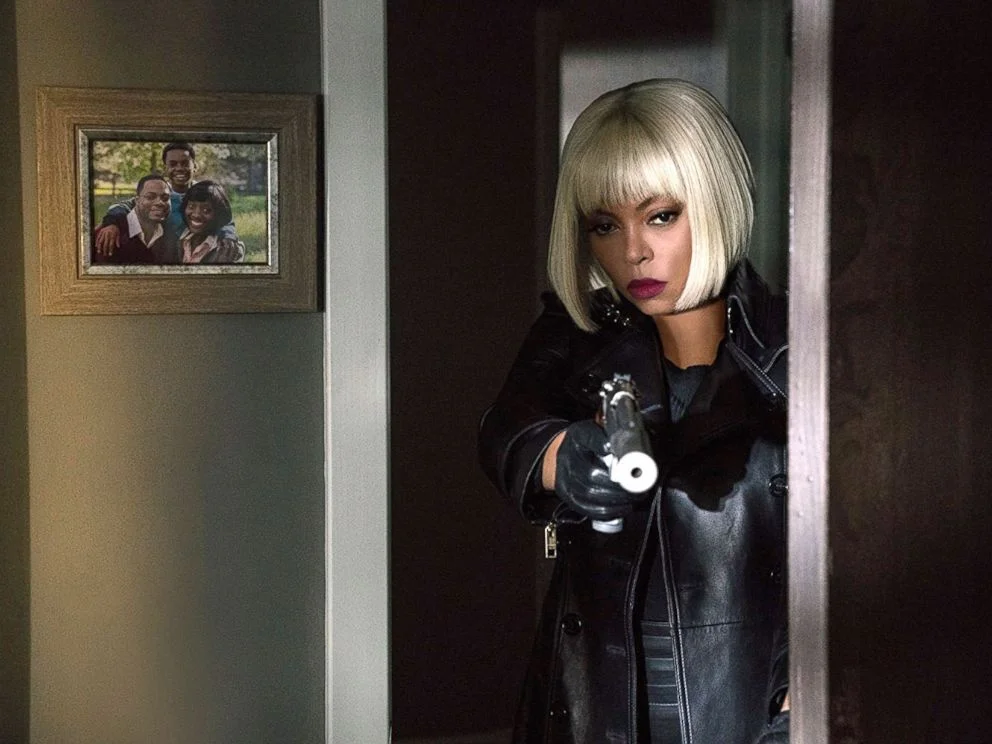
Taraji P. Henson is Mary, a hit woman working for an organized crime family in Boston led by Benny (Danny Glover) and his eagerly “waiting in the wings for the throne” son Tom (Billy Brown). After sparing a kid named Danny (Jahi Di’Allo Winston) from a hit she clearly should have done more research on, we find her keeping tabs on the boy one year later out of the immense guilt of leaving him orphaned. Poor Danny is now a runner for Uncle (Xander Berkeley). He’s physically and verbally abused by Uncle and struggling to find food. So Mary takes Danny in but is sure to omit the small detail of killing his father.
Out of her love for Danny, Mary decides to defend him by confronting Uncle. When this results in Uncle’s death, the white crime family (last names aren’t given) wants blood and the black crime family has to serve someone to them in order not to start a war. If I stopped here and said that Mary serves up someone in her stead to covers her tracks and has to keep the lie going, this would be the premise for a good violence begets violence and covering a lie with a lie never ends well type of film. Instead, we get the one last kill to get out of the game completely storyline, which mushrooms into a kill everyone to get out story. In fact, the entire film feels like a convergence of different crime tale stereotypes we’ve seen before to get to the closing credits. It even boasts of dialogue like “Wake up! He was never gonna let you out!” or “if it weren’t for this family you’d still be a guttersnipe”.
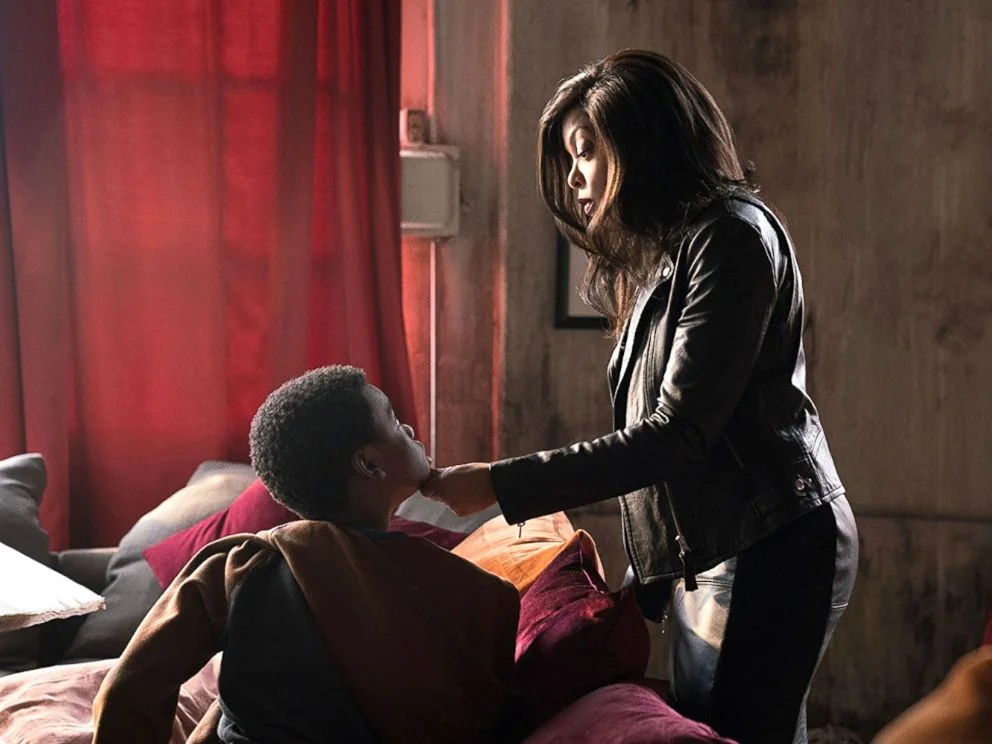
The chemistry in the relationships within the film is lacking or forced. The driving relationship between Mary and Danny has sparks of realness mixed with moments of on-screen mothering that would make Madea proud. There’s a strong theme of the one time romance between Mary and Tom, but even those scenes that bring up their past love are cringeworthy. Everywhere you turn, there’s no escaping the underwritten and underdeveloped characters that have to hit certain beats to make this film a 90-minute feature.
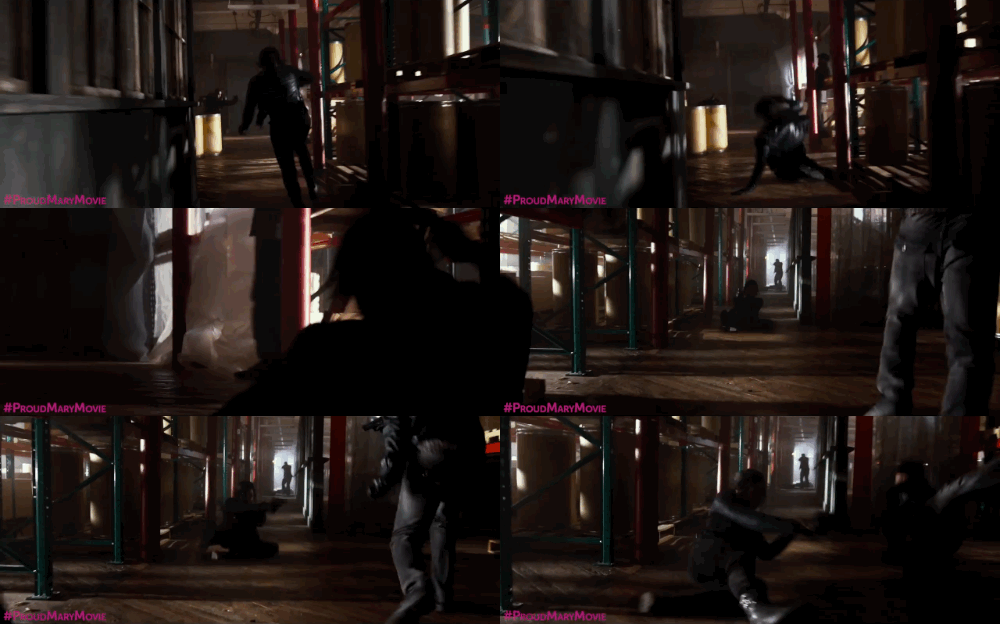
Director Babak Najafi understands how to structure an action sequence. Don’t let this film fool you. He’s done it on the larger $60,000,000 London Has Fallen. Yet, in this film, he can’t quite figure out how to set up his shots in such a way that we can have a frame of reference for our space and location within the action scenes. Cliched shots of Mary with a gun in both hands firing every direction in a stairwell, sliding on her knees and shooting down human targets, or firing out of the window of a bullet-ridden car are all there! We’re just missing the proper orientation of how it all visually works together.
Outside of the terrible screenplay, direction, and editing, the film was executive produced by Henson herself. I’ve seen her elevate a screenplay with her talent alone in a film like From The Rough, but here it’s not enough. Which leads me to point at the elephant in the room. Are black female action leads so uncommon in Hollywood that a film like Proud Mary can get green-lit with hacks for writers, a director who is asleep at the wheel and an attached Academy Award Nominated African-American star in the producer chair who closes her eyes to the flaws in order to get the film made? What am I missing? Female action stars are rare, and black female action stars are unicorns. So why wasn’t more care taken in making this film? Why not create an iconic character that we’ll want to see again? I can only come up with desperation to fill a gap and see a character like this on the big screen.
If numbers don’t lie, then the fact that Proud Mary has virtually made it’s budget of $14,000,000 back in under two weeks since its release and the fact that it was narrowly beaten out by The Commuter (which had double its budget and Liam “particular set of box office skills” Neeson starring in it) in its’ opening weekend says a lot. To me, it says that there is a market out there for this type of film with people ready to support it. The film didn’t get a huge marketing push like last year’s Atomic Blonde or the upcoming Tomb Raider. So the duckets were earned on this one. Yet, it goes back to the age-old debate and double-edged sword of backing a film like Proud Mary with your dollars. Do you do it to tell the industry we want to see action films like this with a black female lead or withhold your hard earned cash to say we demand better?
I backed the film with my money even though I was hearing bad things on social media channels because I want to see minority women as action stars on the big screen. I sat through the film on the edge of my seat, not because of the white-knuckle action, but because I couldn’t wait to get out of there. But I showed up and gave the film a fair shot. What you do is up to you, but our daughters, wives, and mothers deserve to see more representation of themselves on the big screen as action stars that are better than this! Perhaps it will take a Patty Jenkins-esque scenario in which the powers that be empower a female director who actually cares about the story to take the reins. Maybe Taraji should handle the screenplay, producing and direction next time. Maybe. Whatever it is, Proud Mary is the poster child of what not to do in the future and it saddens me to say that!
Rating: F
"From the Rough" Review
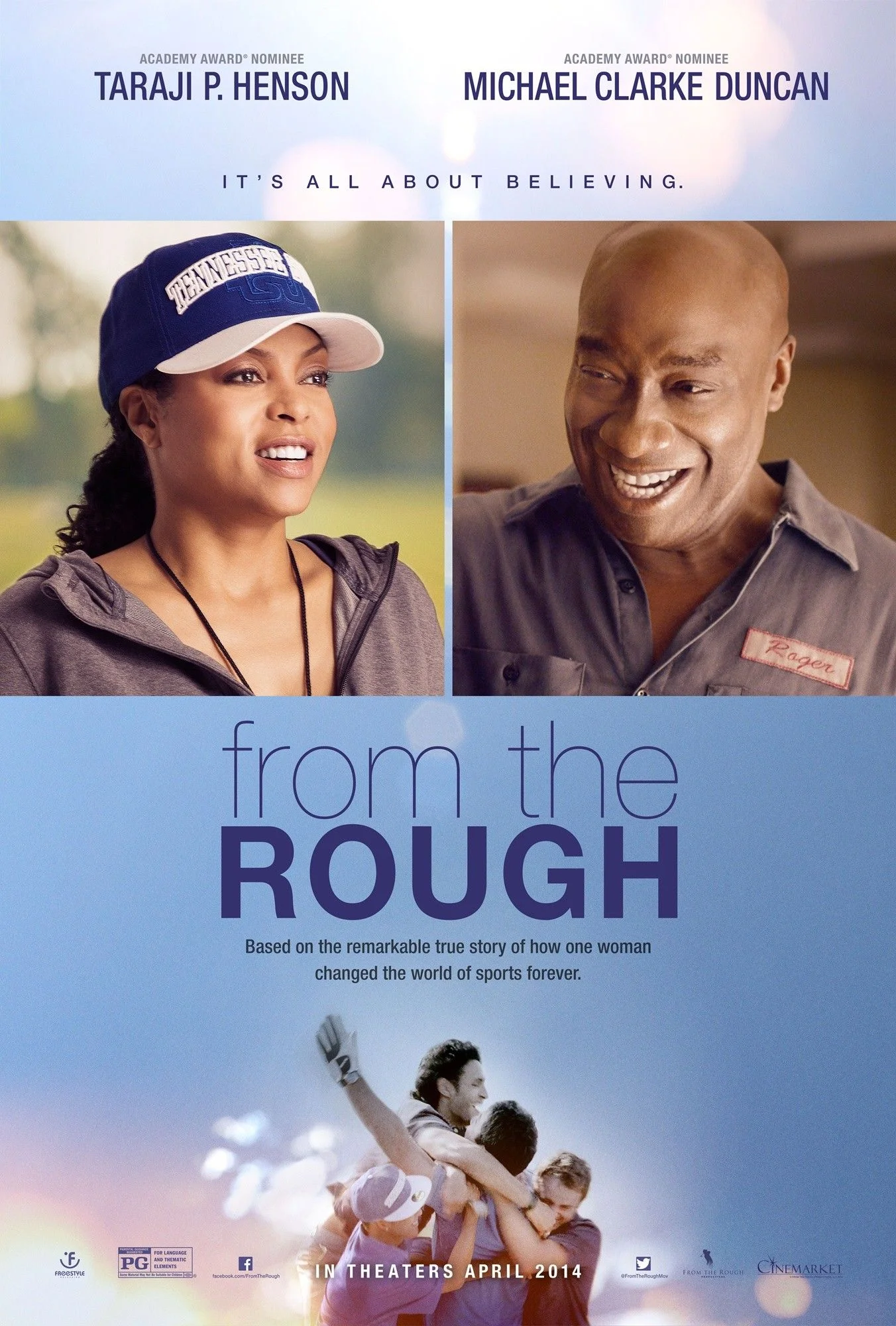
Apparently the theme of overcoming struggle is not just in the movie “From the Rough”, but it’s also a part of the movie’s release. Filmed in 2010, the movie is just seeing the light of day in a nationwide release (it was shown at some film festivals) in 2014. Whatever the reason for the struggle surrounding the film’s release and poor marketing, it’s a shame, because it’s an inspiring, family friendly story that should be seen.
The film is based on the true life story of Catana Starks, the first African-American woman to coach a collegiate Division 1 men’s golf team. In the movie, Starks (Taraji P. Henson) takes on the role of the men’s golf coach at Tennessee State University at the end of her season as women’s swim team coach. Her Athletic Director, Kendrick Paulsen Jr. (Henry Simmons), holds back giving her scholarships and new equipment. Using her resources, Starks eventually finds players internationally to come and play for her.
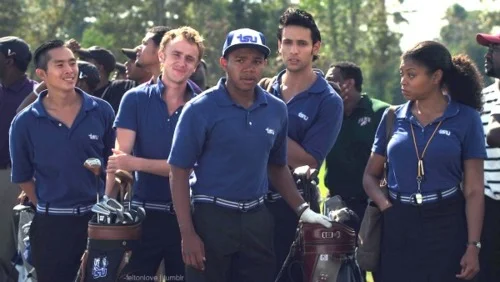
With a ragtag team of misfits, Starks polishes her gems into diamonds. It’s a classic underdog story and each team member has their own as well. Whether dealing with self-identity problems in the case of Korean player Ji-Kyung (who goes by Young G), feeling like you are the trash everyone says you are with Britain’s Edward (Tom Felton), or second guessing yourself like Craig (Robert Bailey Jr.) the players have hurdles to get over. With so many issues you could see how this film could easily turn into a melodrama and get away from the director. While there are plenty of glimpses of it, co-writer/director Pierre Bagley manages to bring the film to touch the line but not cross it in such a way that we never come back.
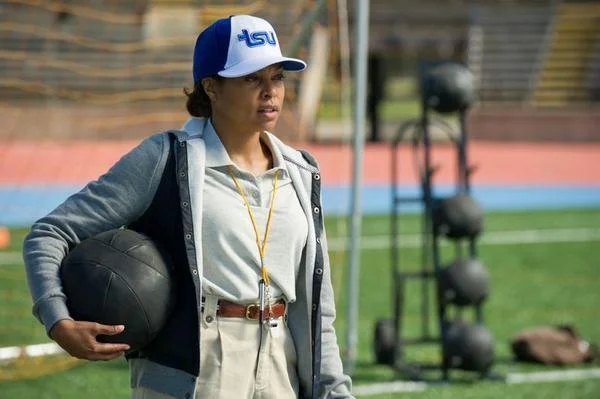
Even though the film’s script reads like an after school special, Taraji P. Henson’s work proves that a great actor can elevate any script to new heights. It’s a performance that I can only imagine inspired her fellow actors around her to rise to the bar set before them. On screen, her tenacity to be the best and pull the best out of her golf team is so genuine that you’re willing to tolerate and even enjoy the syrupy feel good moments of the film...and there are plenty.
“From the Rough” is definitely a family friendly movie that would be played in your local middle and high school for a lesson on themes such as perseverance, commitment, etc. Henson shines in the film and honors the legacy of the real Catana Starks. While I would definitely suggest renting it on Netflix for most people, it may be worth the money for a family outing to the theater as well.
Rating: C+