
Middleburg Film Festival 2020: "Concrete Cowboy" Review
Concrete Cowboy is not an original story. Estranged son and father come together to try and correct the son’s behavior has been done before. While much of its premise is familiar territory, this film takes a look at traditions of old and what reconnecting or staying in touch with them can do for a person, a family, and a community.
After Cole (Caleb McLaughlin) gets into trouble at school, his mother (Liz Priestley) has had enough. She decides to drop him off with his father, Harp (Idris Elba), to try and have some discipline instilled in him. It’s evident that the neighborhood recognizes Cole, but it’s been long enough for him to be groggy on most of the who’s who. He does know his cousin Smush, (Moonlight’s Jharrel Jerome) who pulls up in a nice ride with some dope kicks. Smush wants Caleb to ditch the stables and hit the streets to make real money.
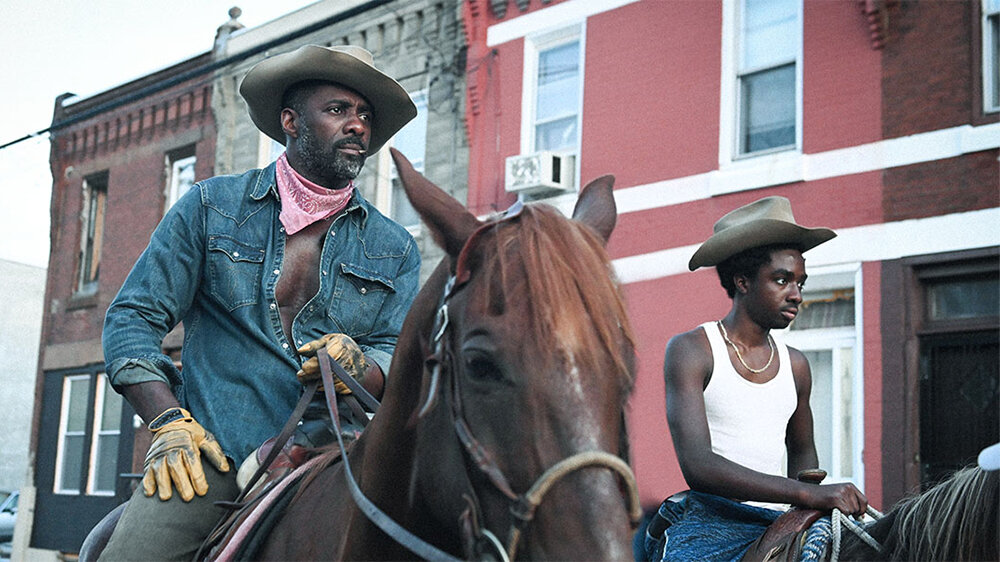
As most films like this go, after some time of friction, Cole begins to understand his father’s urban cowboy way of life. He appreciates the hard work, respect of tradition, and taking care of horses. Smush’s way of life doesn’t fly in Harp’s home, so Cole is forced to make a tough decision on the way he wants to go.
The film boasts of an all star line up. Caleb McLaughlin sheds his Stranger Things persona for a coming of age turn as “Cole from Detroit”. Method Man reminds us that he has some acting chops as Leroy, the former urban cowboy turned lawman. Perhaps the surprise casting comes from the real riders of Fletcher Street in Philadelphia. Sprinkled throughout the group of urban cowboys, these real life cowboys give the film its culture and authenticity.
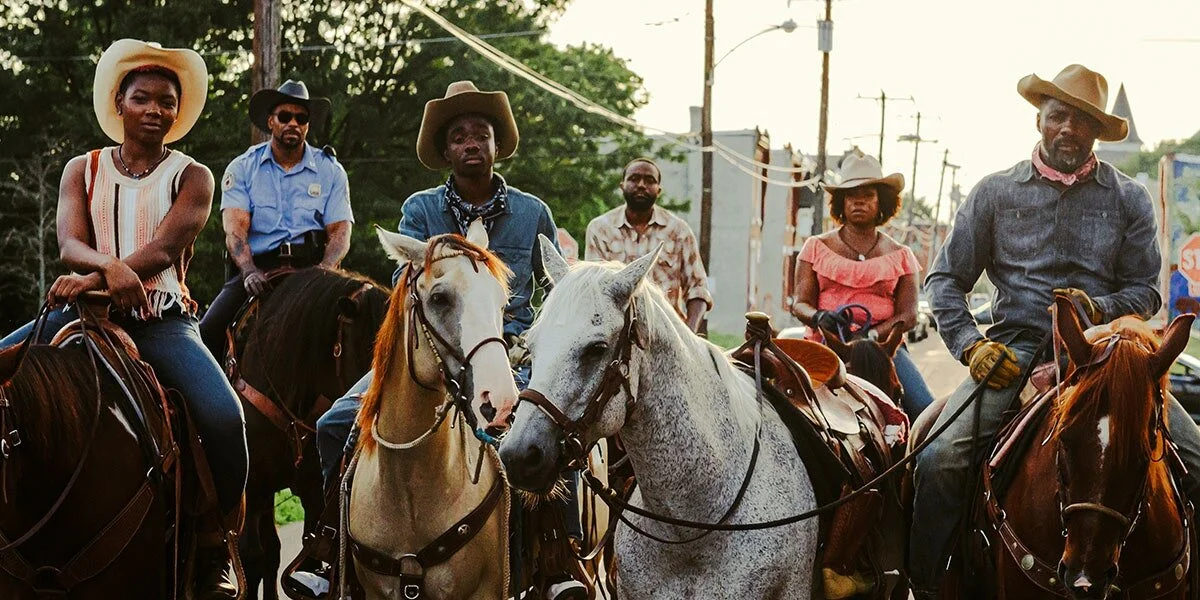
Cinematographer, Minka Farthing Kohl uses natural lighting to draw the viewer in. Small moments like the flickering of firelight used to light subjects, brings a certain amount of intimacy to this story. Director, Ricky Staub, has a way of using the camera and editing to capture moments and lock them in time. Using more mids and close-ups than wide establishing shots, Staub is able to keep the focus on the characters and bring us into their world.
The story of Concrete Cowboy is one of a return to an old fashioned way of life and connection. It lassos the connection of man amongst one another and with horses. It highlights the importance of storytelling amongst generations, with one character even emphasizing the significance of cadence in oral storytelling. This story is a bumpy ride at times in getting to its destination, but there are beautiful visuals and heartfelt moments along the way.
Rating: C+

"The Front Runner" Review: A Timely Bio Drama
The Front Runner is proof that there’s nothing new under the sun. The film looks at a pivotal moment when politics and media crashed together to change the way we analyze political candidates personal lives and decisions forever. We still deal with political scandal today, much like the 1988 presidential run that crashed within a matter of weeks for Gary Hart, but this is when the idea of news media being a watchdog and covering candidates personal lives to ensure they match. We’ve seen bio drama films like this as well, but co-writer/director Jason Reitman gives us that old gum with a new way to chew it.
Gary Hart (Hugh Jackman) is a man of the people. He is charismatic, smart, handsome, and willing to take a stand against politics as usual. You know, the kind of stuff we like to see even today. All signs pointed to him being the frontrunner of the ’88 election before suggesting to a reporter that he’d be bored if he followed him around, and thus encouraging him to do so. Hart’s bluff is called, as the Miami Herald follows him and uncovers a scandal that ultimately ends Harts political run.
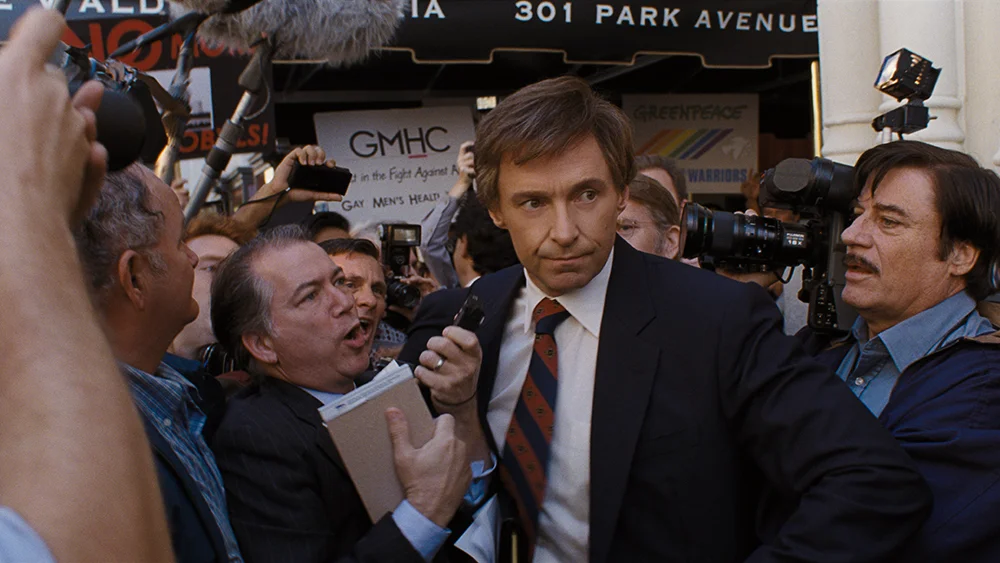
Reitman gives us an inside baseball look at the situation as things unfold. In fact, perspective is key in Reitman’s direction both in the script and in his frame. Numerous times throughout the film he tells two stories simultaneously so that you have to keep up. In one particular scene, Hart sits at a table in a wide shot with his back to the camera as it moves around capturing the conversation amongst Hart’s team. In the background you see a young reporter enter the room and begin a discussion with a member of Hart’s political team. Reitman’s ability to keep our mind engaged, while cleverly displaying multiple stories and pushing each scene forward is what makes the film fun to watch. We know the ending as we watch the story unfold in 2018, but getting there is probably as stimulating cinematically as it was to live through in 1988.
This is an ensemble film in which everyone brings their A game. Jackman, known for his ability to be a larger than life on screen presence, shows considerable controlled restraint and focus. He makes Hart, a player on the team, rather than the star in the film. In doing so, you can focus on all the angles and members of the cast. Vera Farmiga as Lee Hart doesn’t have a lot of screen time in comparison, but her presence is felt. In fact, in one confrontation scene between Gary and Lee, the atmosphere changing of her presence and what’s about to happen is so palpable that you feel as bad for Gary as when your sibling was about to get spanked back in the day. JK Simmons, Molly Ephraim, and Mamoudou Athie all have incredible character archs as they come to grips with Hart’s infidelity and what the fallout means to them. Each perspective gives the audience something to chew on.
The Front Runner may not appeal to mass audiences. It’s certainly a character study that allows viewers to draw conclusions on politics today, and a director’s masterclass on framing and technique. However, its undeniable timeless and timeliness of its subject matter is worth the view!
Rating: B+

Middleburg Film Festival '18: "Boy Erased" Review

Boy Erased is based on the memoir of Garrard Conley’s experience with gay-conversion therapy. Adapted to screen by writer/director Joel Edgerton, the film allows its audience to come to a conclusion based on what’s presented. At its heart, the movie is about where we draw lines in our love, and if we do, is it truly unconditional love?
Lucas Hedges is Jared Eamons, son of minister Marshall Eamons (Russell Crowe) and first lady Nancy Eamons (Nicole Kidman). Growing up a preacher’s kid, Jared finds himself at a crossroads between his faith and family after coming to terms with the fact that he’s gay. Upon his son’s coming out, Marshall seeks wisdom through church elders, while Nancy defers to Marshall’s leadership.
Marshall and Nancy enroll their son in a conversion program called Love in Action that’s directed by Victor Sykes (Joel Edgerton). As time moves forward, Jared quickly sees that something is off in the therapy. His dutiful trust in his parents becomes shaken as he witnesses the degradation of his fellow participants. This sparks action in Jared to take his destiny into his own hands.

The film jumps around in chronology to give us a picture of Jared’s life leading up to Love in Action and beyond while giving us the “full picture” of Jared’s struggle. The key to this film is that Edgerton makes Jared our eyes into this world. Hedges has a way of displaying his internal conflict without wearing it on his sleeve. Instead, his journey in finding himself, standing up to his abusers, and charting his path in life is easier to understand because the message is not clouded by accusation or heavy judgement. Crowe and Kidman turn in authentic performances as well with both sides clinging to to their belief system.
Boy Erased’s conspicuous restraint allows its viewer to be haunted after the film by what they witnessed. After all, it’s the quiet, solitary moments in life in which we wrestle with the big questions.
Rating: B

"Moonlight" Review
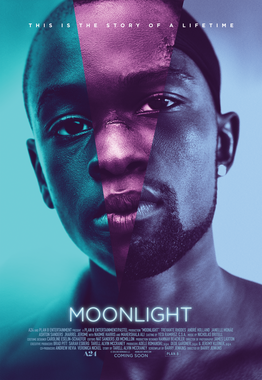
The buzz about Moonlight started after its premiere at Telluride. Since then, it’s been one of the most sought out films on the festival circuit. And it should be. Moonlight is a magnificent film that doesn’t exploit itself or its message. Instead, it simply tells us a story of beauty, bittersweet irony that allows us make our own decisions and conclusions.
Told in three parts of a man’s life, the film begins with a nine year old Chiron (Alex R. Hibbert) who is called Little. Director Barry Jenkins instantly makes us relate and sympathize with the main character in a heart-wrenching scene in which Chiron is chased by the neighborhood kids into an abandoned building. As Jenkins camera hovers over Little like the bullies he runs from, Jenkins also uses sound to put us in Little’s world. A cacophony of inaudible yelling and knocking on the door torments our ears, as it does Little.
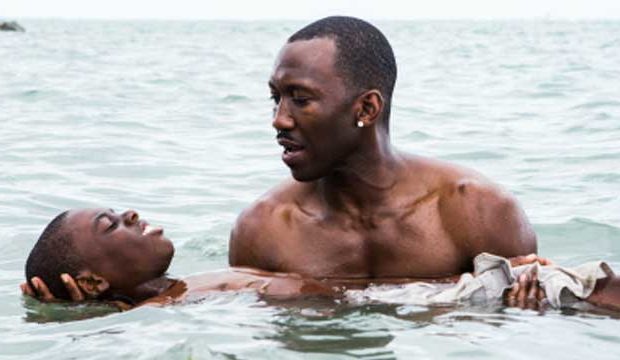
Juan (Mahershala Ali), the kingpin drug dealer of the block, looks after Little, who doesn’t speak accept for when he’s being fed. After trying to reunite Little with his mother (Naomie Harris), Juan quickly finds out that she’s one of the fiends that he serves. From then on, Juan and his girlfriend Teresa (Janelle Monae) take care of Little when his mother neglects him for whatever reason. So when Little asks Juan “What’s a faggot?” due to bullying, there is an incredible dynamic between the machismo of Juan and the innocence of Little. The beauty in watching a crack dealer provide love and support for a young child while ironically continuing to kill his mother slowly are some of the touches that the movie offers up, with no judgment.

As Little grows into Chiron (Ashton Sanders) the teenager in the second act, the bullying hasn’t stopped. In fact, it seems like a state of the way things are. Chiron’s only friend is Kevin (Jharrel Jerome), who has been his friend as a child, but is now a pretty boy and ladies man. It’s in the story of teenage Chiron that we see a point of intersection between the first time he has a sexual experience and when he’s decided he’s had enough of the bullying. This takes us into the final act of the film where we meet Black (Trevante Rhodes), the muscle bound shell of machismo that Chiron has built himself into.
The entire cast of Moonlight does an outstanding job! Mahershala Ali gives Juan the iron fist and open hand that’s needed for us to see the irony in the first act. Harris’s Paula is the only character to be in each act as a steady force in Chiron’s life whether for good or bad, and it stings. Each version of Chiron and Kevin throughout the years bring something different to the table, building off of one another and handing off the baton in a perfect relay race. In the Q&A after the screening I saw of the film, Jenkins said that he never allowed the actors to meet. Knowing that, makes the film that much more impressive.
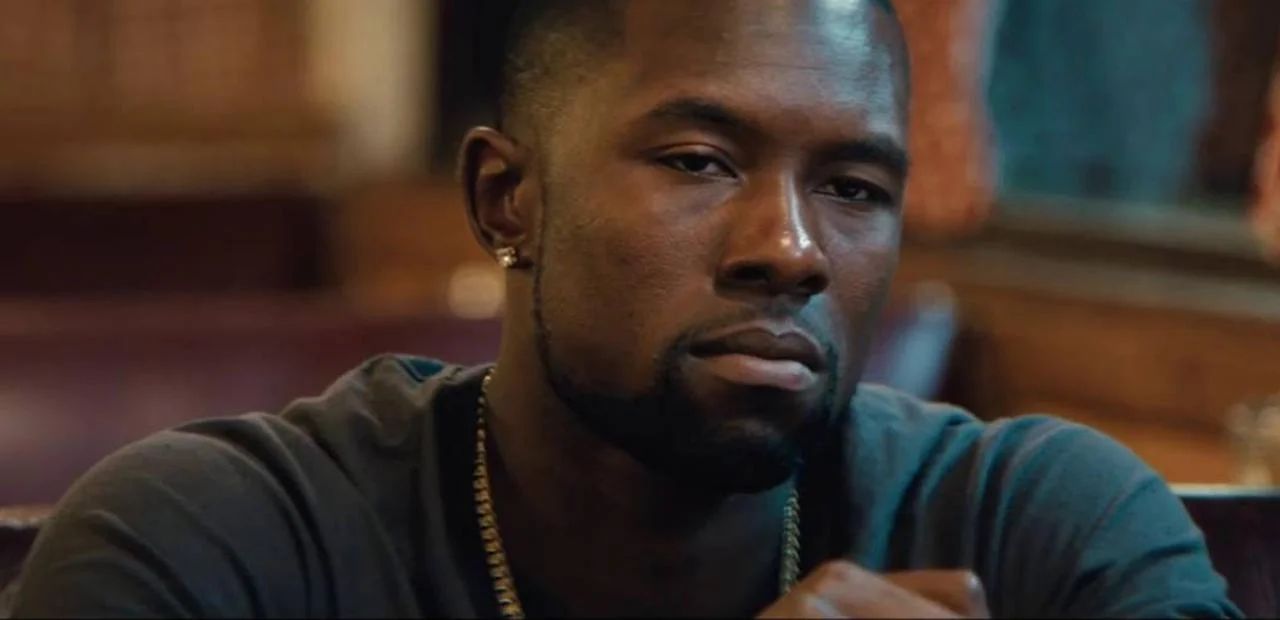
Based off of the play by Tarell Alvin McCraney, Moonlight tells a story that’s rarely heard in regard to black male sexuality and displayed without drama. Without ever using the word gay or having a coming out moment, the film simply shows. Jenkins use of restraint and excellent craftsmanship will definitely put Moonlight in the ring during awards season!
Rating: A