
"Gladiator II" Review: Standing In The Shadow of Its Predecessor
Twenty four years ago, the world of cinema was in a different place. Upon Gladiator’s 2000 release, CGI (computer generated imagery) was burgeoning. The film boasted of scenes of a coliseum built by a computer’s hand. A lot has changed since then. What once was done by trained professionals can be done by anyone with an app on their cell phone. This idea of a culture being shaped and moved into different directions by time is a theme within Gladiator II as well. What will become of our legacy? The statement that Maximus (Russell Crowe) made “What we do in this life echoes in eternity.” before his death, is still wrestled with here. The question is, is this legacy sequel worthy to stand with its predecessor?
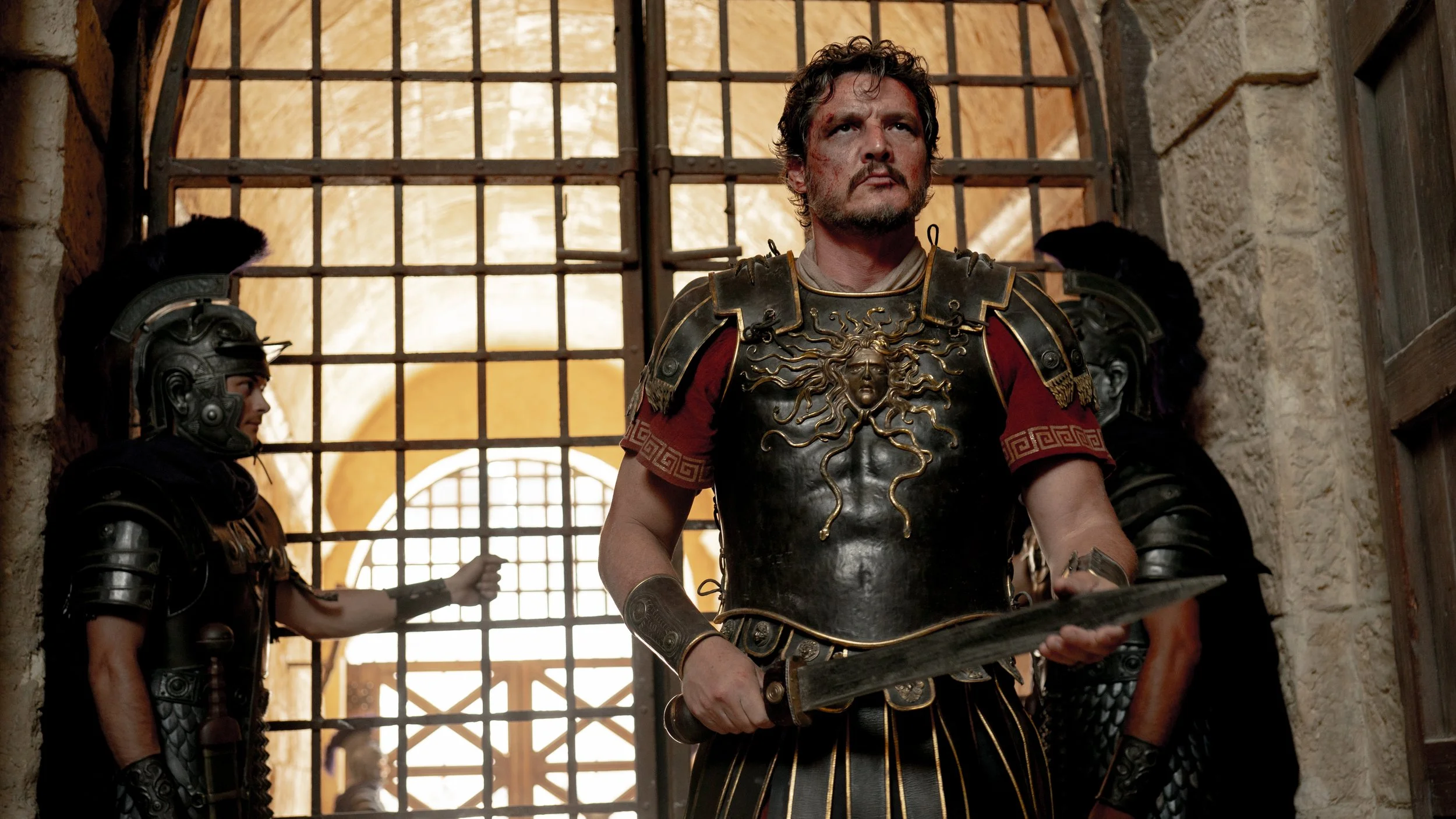
Photo Credit Cuba Scott
Copyright © 2024 PARAMOUNT PICTURES. ALL RIGHTS RESERVED.
Taking place sixteen years after the death of Maximus, a farmer-soldier named Hanno (Paul Mescal) stands between Rome and the impending conquest of his home, Numidia. Surviving the battle but losing the war makes Hanno a prisoner of war; he is sold into the gladiatorial system and shipped to Rome to become entertainment for her people. Of course, this means that he enters the system with a chip on his shoulder and a fury that burns for General Acacius (Pedro Pascal) who took away his former life and loved ones that existed in it.
Rome has changed since we last saw it. It is now governed by twin Emperors Geta (Joseph Quinn) and Caracalla (Fred Hechinger). The twins lust for blood and conquering nations has secretly driven their hero General Acacius to be tired of all the bloodshed. He and his wife, Lucilla (Connie Nielsen), the daughter of Marcus Aurelius, are conspiring to overthrow the twins. This b story is perfect for Hanno’s storyline as he is proving himself to be a fierce competitor for gladiator trader Macrinus (Denzel Washington). Hanno’s one request in exchange for giving his all for Macrinus is the head of Acacius. Thus, a race between the two desires sets course, pitted against the backdrop of three days of Coliseum games.
As different mysteries are revealed, the fading cloud of a dream that Marcus Aurelius had of Rome is continually brought to the forefront by characters. While various characters have their dream of how to achieve a better Rome, it’s clear, the current path and generation at the helm must be ousted. This is the difference between Gladiator and Gladiator II. The former had heart and conviction from a rooted place, while the latter is a shadow imprinted by its forerunner. There is a breaking point in the film in which questions being answered and plots revealed totally let’s out the steam of this engine.
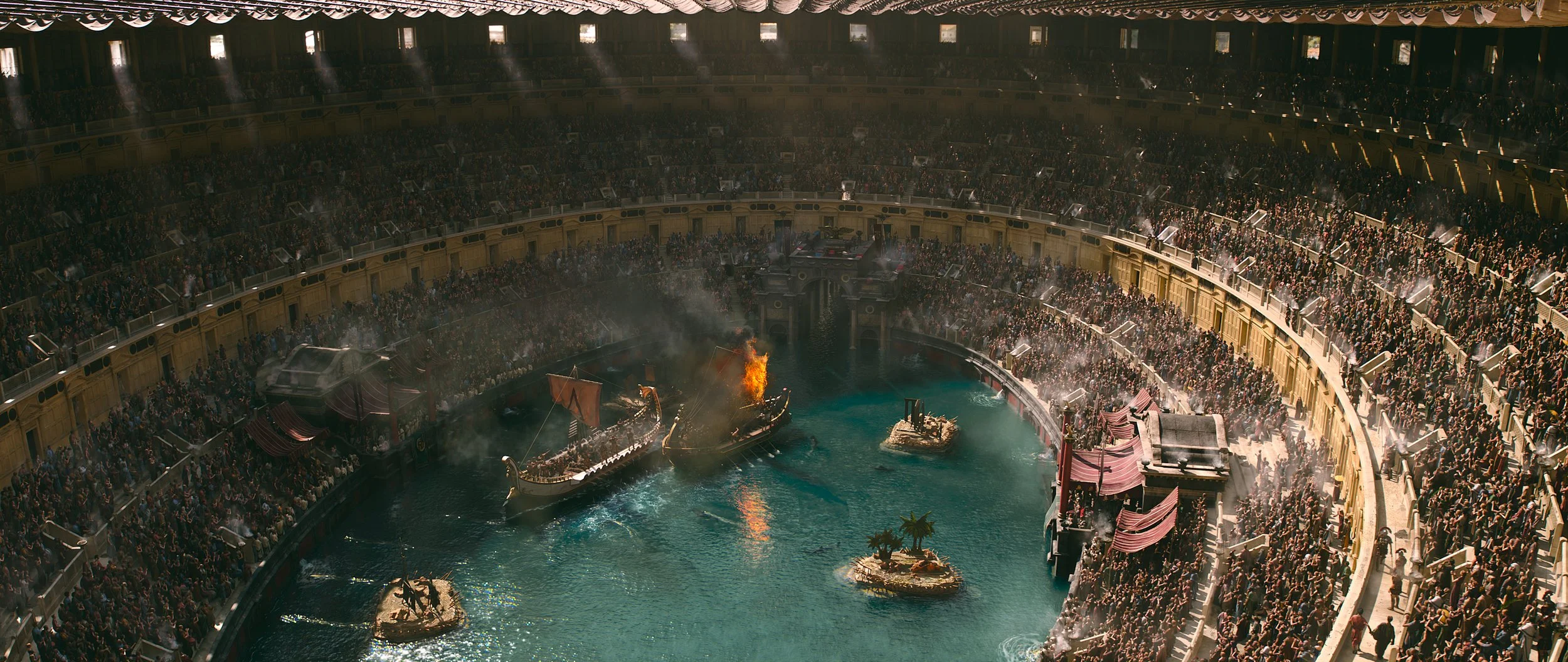
Photo Credit Paramount Pictures
That said, Gladiator II is a spectacle that should be seen on the big screen. Director Ridley Scott’s vision for this time period, the Coliseum, the games, and the bloodlust that still can be prevalent today is on full display. With fights involving baboons, sharks, a rhinoceros, and gladiators there is an impressive use of camera work and fight choreography. Costume designers David Crossman and Janty Yates craftsmanship is exquisite to look at as well.
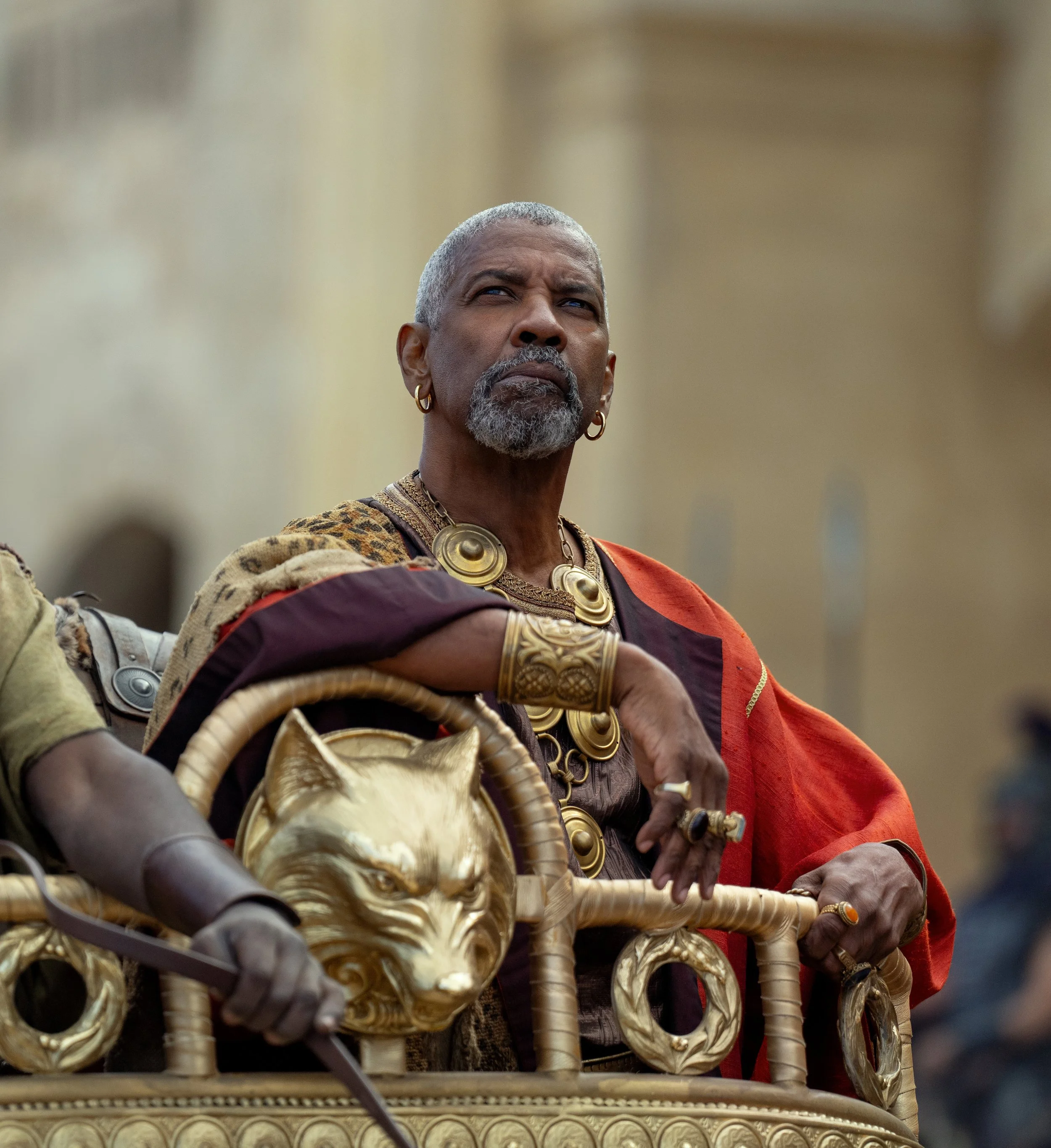
Photo Credit Aidan Monaghan
Denzel Washington’s Macrinus is certainly worth the hype. As the film moves along and we get to know his character better, his delivery of dialogue and physical gestures may afford him a supporting actor nod if the hype machine is loud enough. Either way, he is fun to watch!
Ultimately, Gladiator II, while uninspired in some ways is still an entertaining movie. Nostalgia is another character that interweaves itself in this storyline. It’s mixed into the opening credits and Harry Gregson-Williams score. It makes the film a popcorn blockbuster that will pass the time, but I’m not sure it will stand the test of time as a classic like Gladiator.
Rating: B-

"Wonder Woman 1984" Review: A Made For TV Hero Film
It’s not that “Wonder Woman 1984” is not entertaining. I found myself invested in Diana Prince’s (Gal Gadot) journey by the time it was coming to a close. It’s just not as inspired and handled with the same care that director Patty Jenkins had with its predecessor, Wonder Woman. While the studio was brave in releasing the film in 2020 to HBO Max and theaters during COVID, this film is suited for small screen excitement. It’s not much of a visual spectacle and suffers from a predictable story.

The last time we learned about Diana Prince’s back story it was focused during World War I. This time we’re in Washington D.C. in 1984. (As a 10 year DMV resident, D.C. is displayed well in the film.) Diana works at the Smithsonian and is burdened by her responsibilities as a protector of her city, while not having a true relationship with anyone due to her double life. After a jewelry heist she thwarted reveals precious artifacts were squirreled away in said store, the artifacts wind up coming to the Smithsonian to be analyzed by Dr. Barbara Minerva (Kristen Wiig).

Barbara is the overlooked lab geek that just wants to be noticed. She gets special attention from Maxwell Lord (Pedro Pascal), a failing serial entrepreneur, who is driven to succeed at all costs. He's after the crystal that’s recently come into her possession and seems to be the only person who knows it is a Dream Stone. Anyone who touches it and makes a wish will have it granted at a price. That’s it. That’s the bad guy, the McGuffin, and the lesson. Be careful what you wish for. Diana, Barbara, and Maxwell all get a chance to make a wish, knowingly or unknowingly.
The story is unremarkable and the characters are dull. The problem with characterization in this film is that every person that you think “something ain’t right with him/her”, you’re correct. There is no subtlety in the design and depth of these characters. Everyone as written, whether child actors, villains or heroes are stereotypes of archetypes we’ve seen before. Even the glow up of Kristen Wiig from baggy clothed nerd to beauty feels pedestrian.

Gal Gadot has a strong on screen presence throughout the two and a half hour running time. In fact, her earnest performance is what makes the film palatable. In a year in which we’ve had an unprecedented lack of super hero films, it’s nice to have a moment to escape! I highly recommend seeing it in the comfort of your home over seeing it in theaters. You won’t regret it. Oh, and stick around mid credit roll to see a nice cameo!
Rating: C

"It Chapter Two" Review
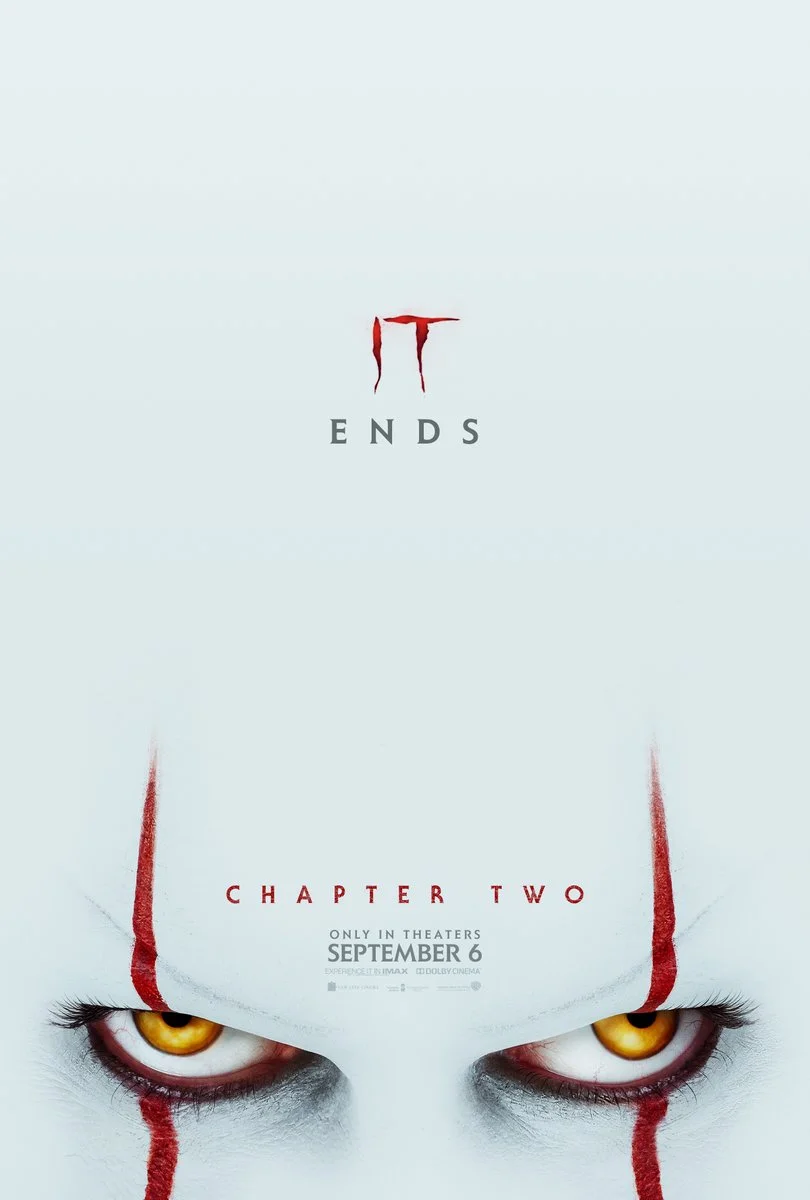
It Chapter Two gives us the conclusion to the Losers story. The film goes big and tries to cram 900 pages of material into its nearly three hour run time. The transition from childhood to adulthood can be tough, and certainly showing that in the sequel to 2017’s It was a difficult task for director Andy Muschietti. His efforts have to be commended. However, with length and structure issues, this doesn’t hit the mark of its predecessor and might wind up being forgotten once you’ve left the theaters much like leaving the town of Derry.
Jumping off with a hate crime towards a homosexual couple, the film gives its first foreshadowing of what you’re about to see: intense setups with questionable or predictable payoffs. After a young man is dismembered by Pennywise (Bill Skarsgard), and once Mike Hanlon (Isaiah Mustafa) hears about the latest murder over a police scanner, he quickly calls the gang back to Derry to finish what they set out to do. Mike’s call to Bill (James McAvoy), Beverly (Jessica Chastain), Ben (Jay Ryan), Richie (Bill Hader), Eddie (James Ransone) and Stanley (Andy Bean) sets off a chain reaction of fear reentering their lives before returning home.
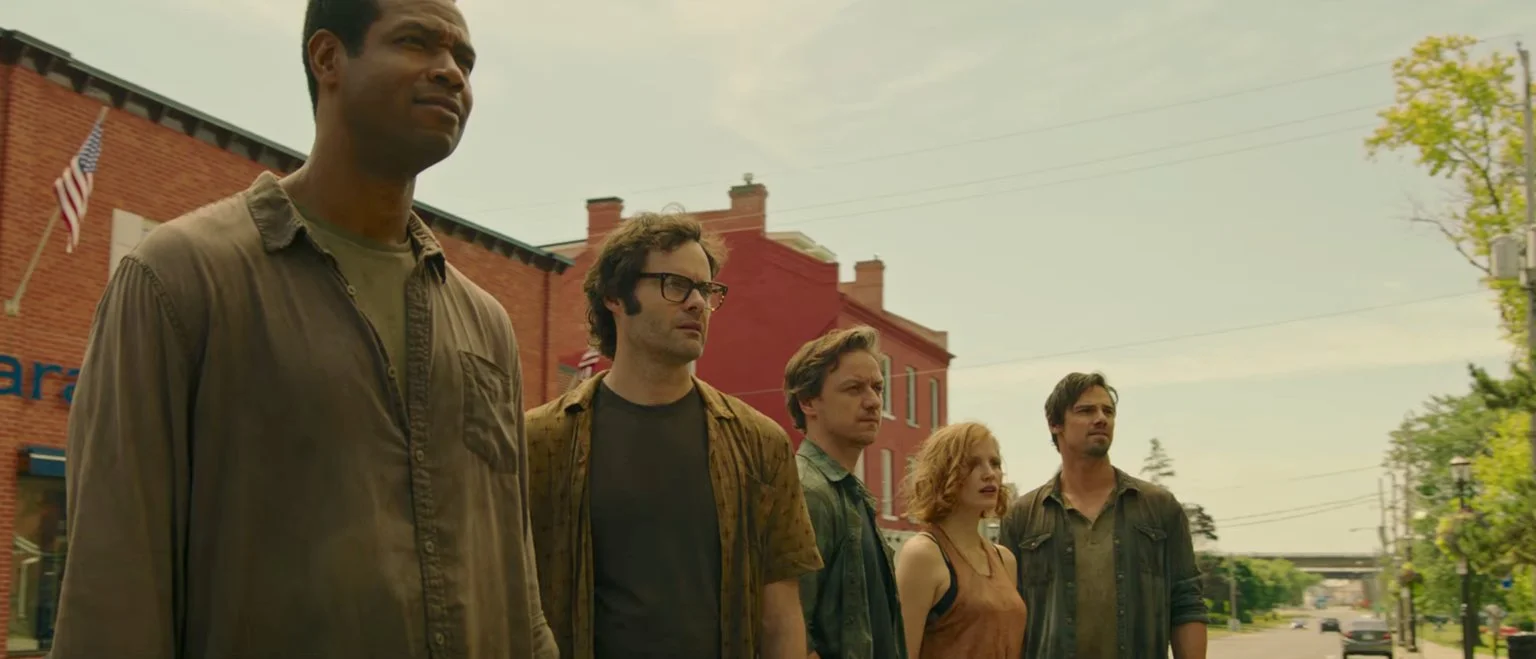
Upon arriving back in Derry, the group quickly falls back into the friendships they left behind 27 years prior. The narrative is pretty straightforward from there. They have a job to do, and there’s an inventive way in which the internal clock on the group’s decision to carryout their mission is employed. Each character has their own moment to reconnect with their childhood fears and It, which is part of the reason for the bloating of the film. In fact, the film is light on the scares this time around in exchange for humor and the exploration of what it takes to overcome fear. That’s not necessarily a bad thing, but its execution is fumbled in some stories.
The casting here is well suited. Bill Hader is stand out as Richie! From the moment he enters the frame, he embodies the role with a scene stealing richness that has to be applauded. (I doubt It: Chapter Two would receive any awards, but you could certainly make a case for Hader’s performance.) While we’re used to Jessica Chastain being a leading woman with a presence, she’s able to shrink herself enough to be one of the gang in a way that really works. It’s a shame that Skarsgard doesn’t get to do a lot with Pennywise in regard to screen time, but when he’s on the screen his performance is masterful.
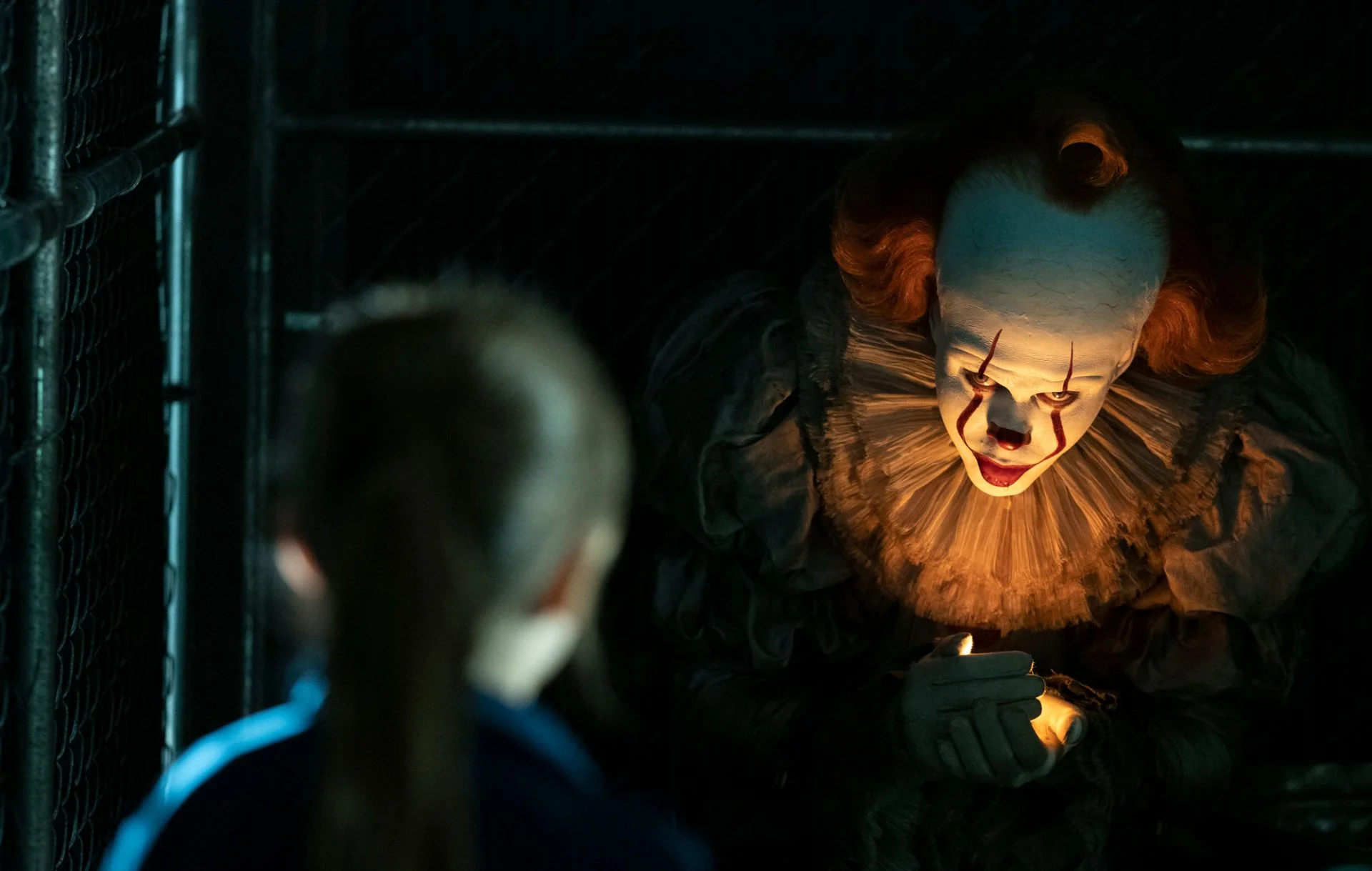
Don’t get me wrong, Chapter Two has nice moments. Cinematographer, Checco Varese, is able to tap into our fears with the way he uses light in scenes. A lightning bug lights up Pennywise’s face in one scene, while the ugly fluorescent and neons in a fun house light another. Certainly the suspense and hair-raising moments of facing your fear is there. With sound being a huge component of creating scares, the sound department deserves their credit as well. It’s the quiet moments followed by the crescendo of a monsters footsteps getting closer and closer that really puts you in the zone.
Ultimately, this sequel doesn’t match the quality of the film before it due to the way the child ensemble masterfully handled the material and the fact that things that go bump in the night is a lot scarier when children are involved. There’s something about the way it feels more believable because we can remember when our imaginations ran wild and the friendly clown at the circus looked more like a threat then a fun time. That said, seeing the story conclude is much more satisfying this time around than the 90s mini-series.
Rating: B-

"Yesterday" Review: Dope Premise Meets A Good Effort
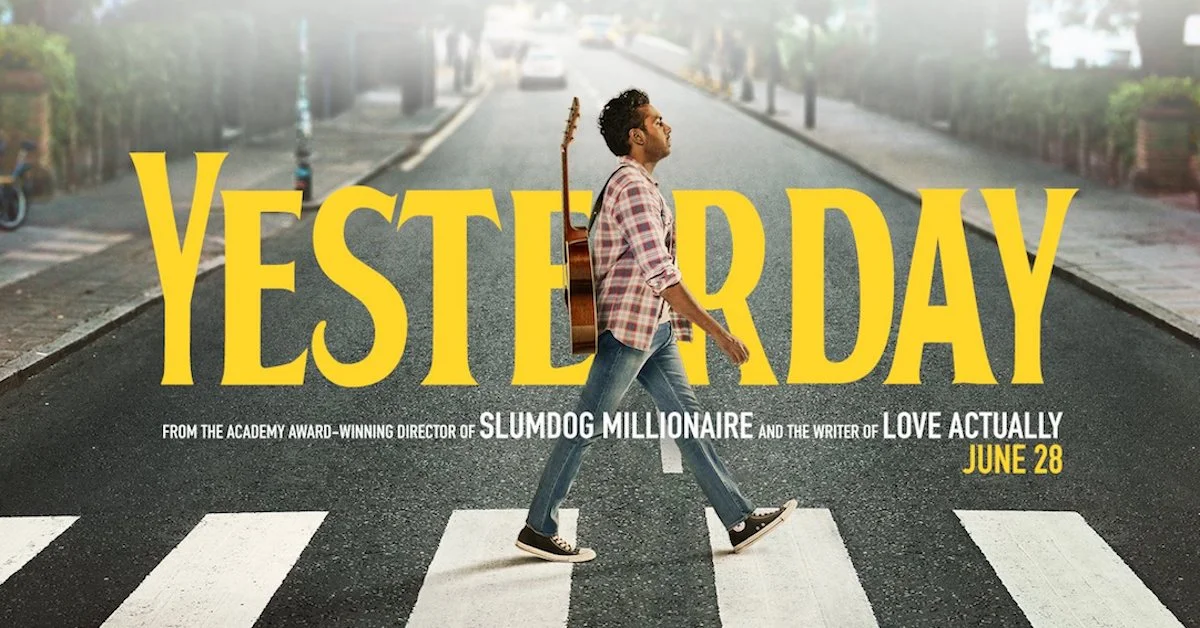
If you woke up and no one remembered The Beatles, what would you do? That’s what director Danny Boyle’s (Slumdog Millionaire) new film analyzes. If you’re a fan of The Beatles, this is likely a must see; if you’re a casual listener, it may not have you clapping along.
Jack Malik (Himesh Patel) wakes up after a car accident. Apparently the world experienced a power outage for twelve seconds, during which he was hit by a bus, and it erased certain things from existence. The Beatles music and everything that goes with it is no longer in the cultural lexicon. As a struggling musician, Jack decides to use this to his advantage by playing and writing down every Beatles song he can remember.

As the world begins to hear his tunes, a star is born. The newfound fame makes his relationship with former manager and best friend, Ellie (Lily James), a bit strained. The train is moving faster than Jack thought it would and it causes him to analyze not only his relationships but himself as well.
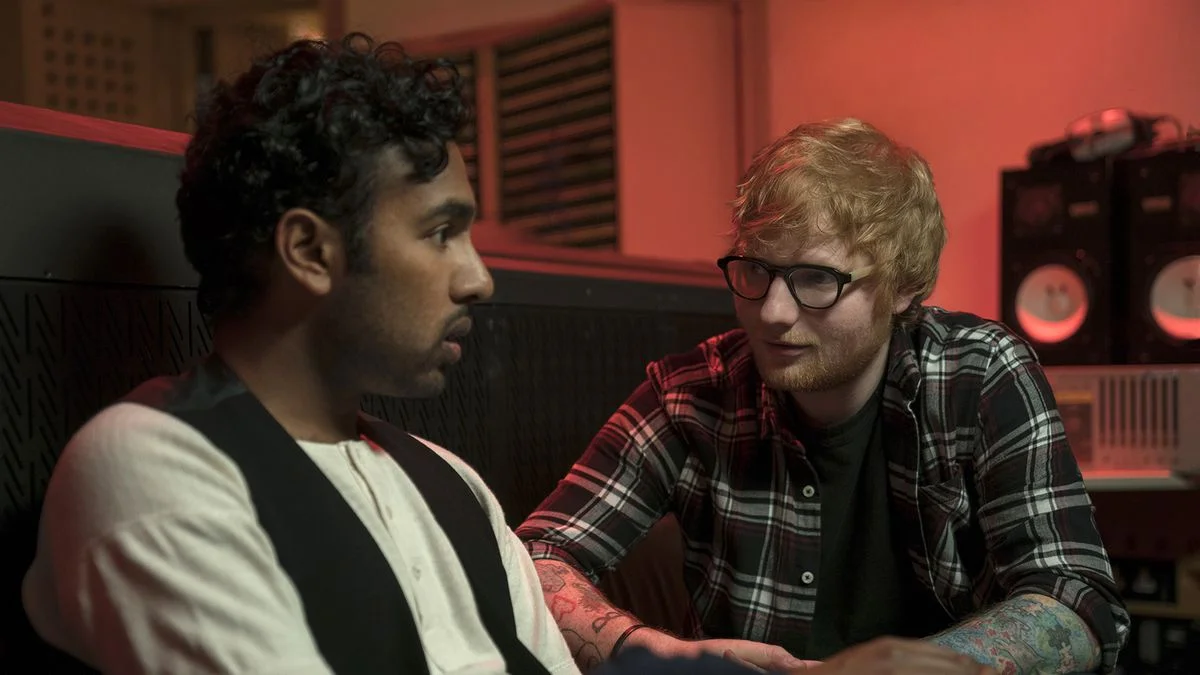
Writer Richard Curtis pens a film that has lots of humor and charm. As an audience member, the thought of a world that hasn’t been changed by The Beatles is hard to find not funny. With Ed Sheeran showing up at Jack’s door to bring him on tour with him, there’s a lot of irony and comical gags in the superstar going up against The Beatles music, unbeknownst to him. However, the film’s premise may also be its kryptonite. More of the story focuses on the music than the bigger story it’s trying to tell, which is lying can catch up to you so be your authentic self.
Jack is forced to face his actions, knowing that his songwriting skills aren’t as great as the iconic band’s. It’s a “what would you do?” hypothetical dilemma that we could ask ourselves. It’s in the space of the decision to live a lie for positive reasons like making money to feed your family, or wanting to finally be seen and heard in the world, that the film tries to address but doesn’t quite knock out of the park. If you’re looking to revisit The Beatles music and have a few laughs, this movie is for you. If you’re not knowledgeable of the band’s music past their top hits like I am, this may be a good pick on Netflix later. When you remove the music, the story is like Patel’s character, meandering, unsure of its direction, but loveably charming.
Rating: B-

"Men In Black: International" Review: Neuralyze Me Now Please!
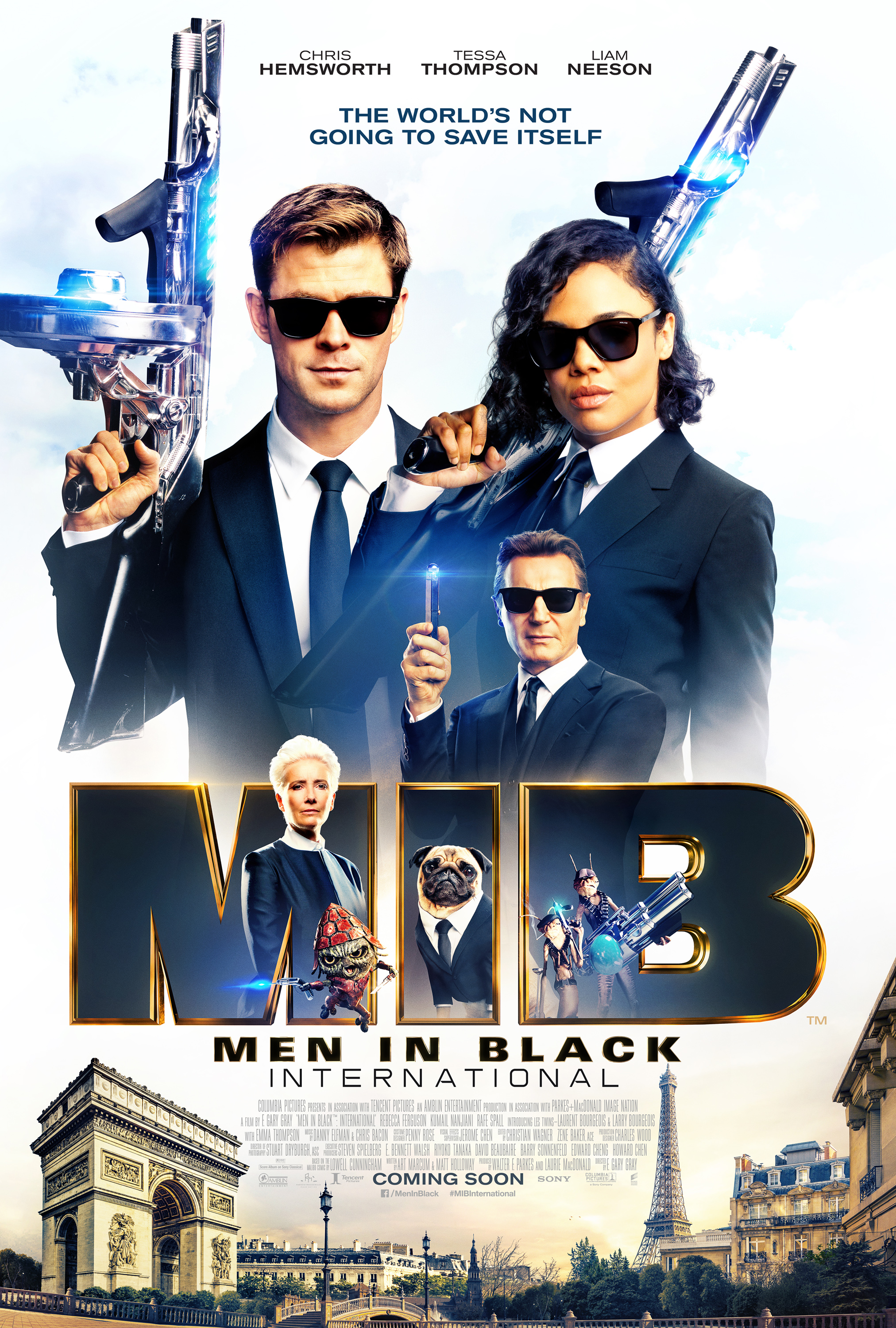
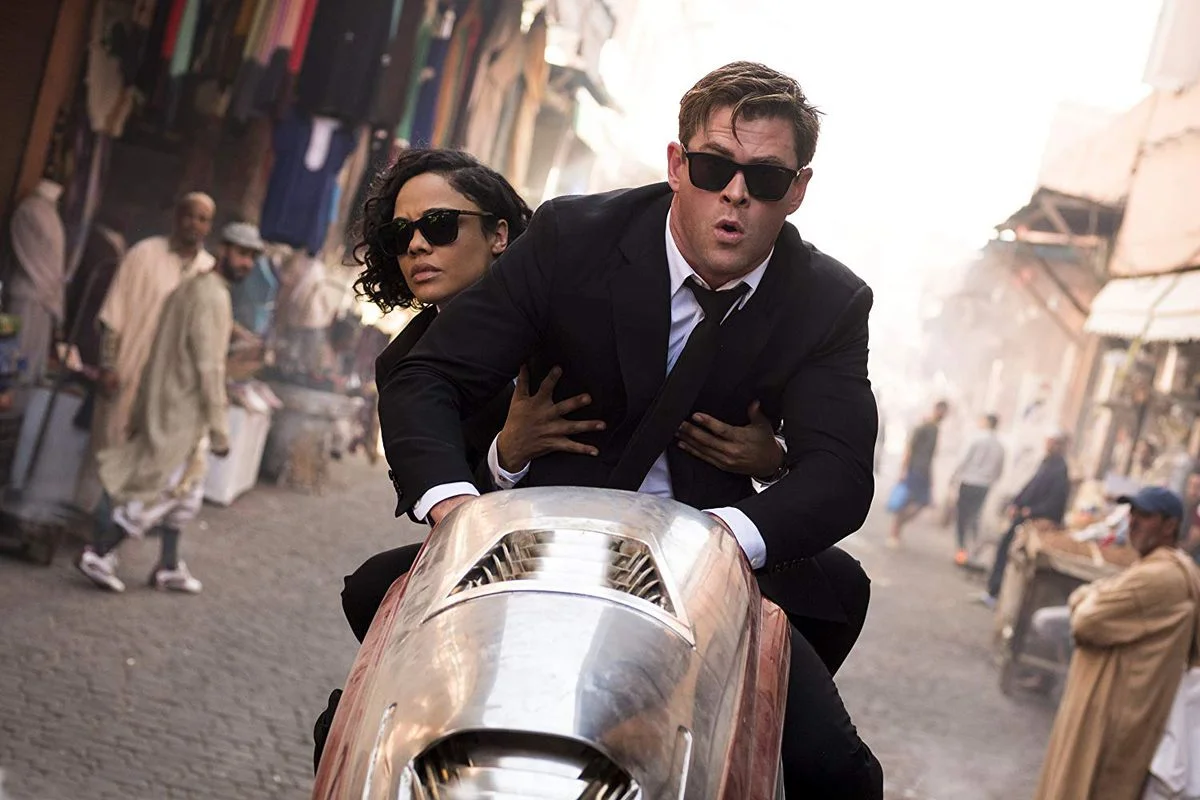
If you’re banking on the chemistry of Tessa Thompson and Chris Hemsworth carrying the Men In Black franchise to new heights, think again. They may have been great together in Thor: Ragnorok, but Men In Black: International focuses more on spectacle than story. With foreshadowing bread crumbs more like muffins, the writing on the wall is easy to read for this movie and let’s hope it’s the same for the franchise’s demise.
Molly (Thompson) witnesses Men In Black agents visit her home as a child. While her parents’ memory was erased, her’s was not. She has spent her life, since that night, trying to find the secret organization. When she finally does, she’s taken in as a probational agent. She’s shipped to London to join Agent H (Hemsworth) on the latest mission to save the planet as a compact weapon that can destroy an entire planet makes its way through various hands.
Rather than focusing on an original story and character development, writers Matt Holloway and Art Marcum focus more on familiar themes that made the franchise successful in the past. Production set pieces, aliens, and tech take the foreground over a plot and creating Agents M and H to be more than stereotypes. The fish out of water and the party boy get swallowed up inside the MIB world as forgettable people.
Director F. Gary Gray is one of the most underrated directors in Hollywood. While he has created notable films in the past, his presence in helming this film is absent. This feels like a studio driven film and a missed opportunity to have a talented director leave a mark.
This film reeks of not believing its audience is smart enough to keep up with its plot. Therefore, Men In Black International instantly becomes a forgettable entry in a franchise that has overstayed its welcome. If they could neuralyze me seeing this film, I’d take it now!
Rating: D

"The Best Of Enemies" Review: Another Been There Seen That Blockbuster on Race Relations

If you’ve seen a blockbuster Hollywood film dealing with race, you’ve seen The Best of Enemies. You can expect to learn more about the white antagonist than the black protagonist, whose weight in the true story is equal or greater to the other. The heart of the message, as it usually is, is definitely one that is good and should be celebrated. The problem is, with the same old screenplay structure, this film is still preaching to the choir and not digging deep enough to give us a sense of hidden figures in our nation’s history.
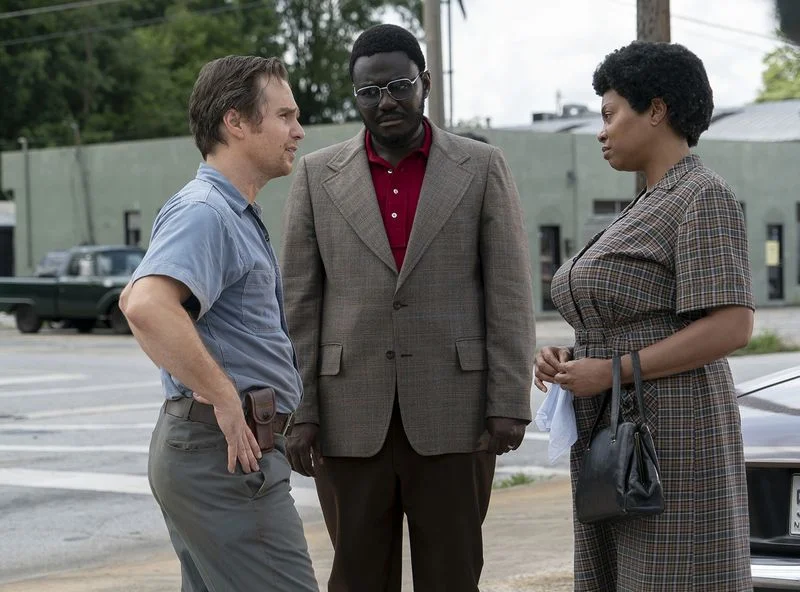
The film is set in 1971, when C.P. Ellis (Sam Rockwell) was the Exalted Cyclops of the Durham, North Carolina klavern of the United Klans of America. Ann Atwater (Taraji P. Henson) was a fair-housing activist at the time, trying to fight for the treatment of African-American residents in the community. After the segregated black elementary school burns from an electrical fire, the community has to decide whether to integrate the white school or not. Bill Riddick (Babou Ceesay) is brought in from Raleigh to conduct a charette, a deadline driven time of planning or activity, in order to bring the city to a conclusion.
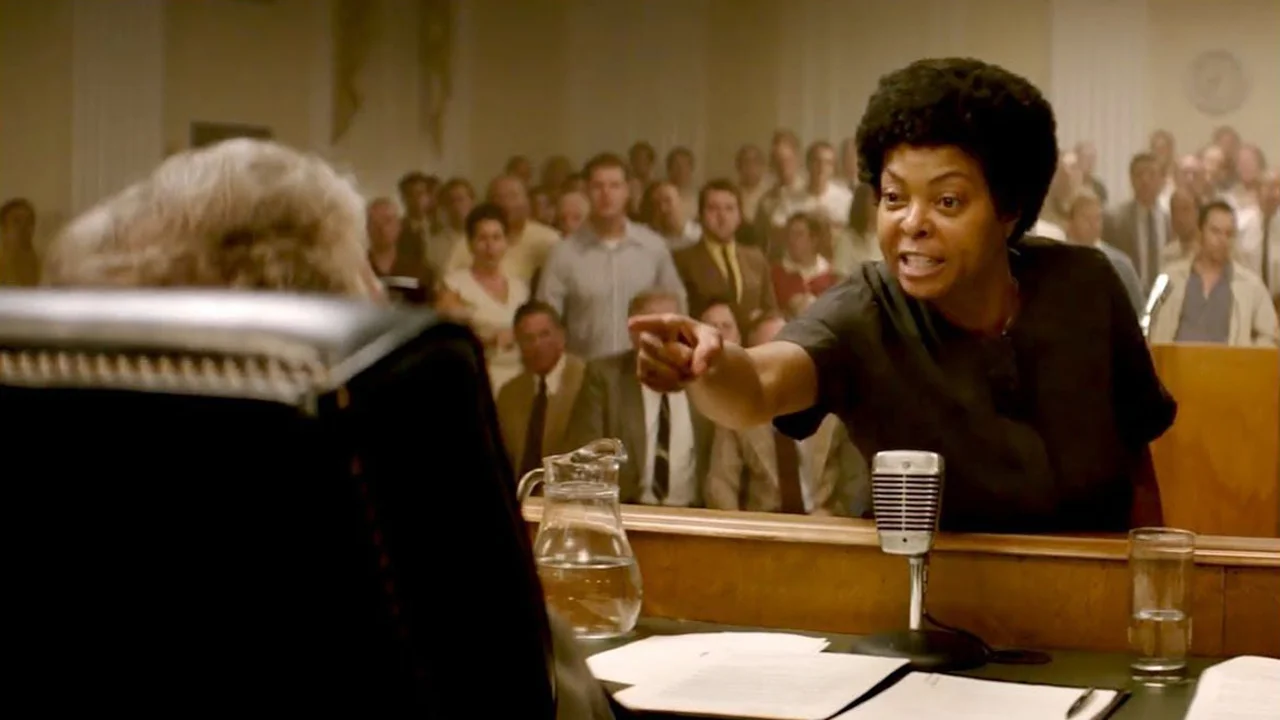
The film builds Ellis’s character early on by showing him and fellow klansmen shooting up a home of a white woman who is dating a black man. “Wait for the light!” C.P. says. They shoot through the bottom floor of the home to intimidate her as soon as the light upstairs is turned on. It’s an interesting look from the inside of the Klan as to how they’re doing their “job”. Ellis also has a son in a mental hospital who he visits regularly and pours love into. So it’s evident that he understands loving someone who may be different, but is staunch in his racist thinking. Atwater is always breathing hard. It could be because she’s overweight, but there is a sense of anger brewing under the surface with her that comes from years of hard work and hard living. While she’s not afraid to talk to the city officials who don’t care what she has to say (one turns in his chair to give her his back during a hearing) Atwater means business and expects them to listen.
The elements of a dynamic drama are there. There is an internal clock within the film that pushes the movie forward. You have a man who hates black people but loves his family and a woman who advocates for black people by speaking truth to power on a daily basis. The question becomes, how did they go from enemies to having the kind of friendship in which Atwater delivered the eulogy when Ellis died in 2005? It’s this deep study in character development and human interaction that writer/director Robin Bissell misses the mark on in exchange for symbolism over exhibiting the internal reflection/change of his characters.
Throughout the film, social class is represented through clothing. The rich and educated wear suits and nice clothes in the film, while the “common folk” wear button ups and dresses thin enough for their sweat stains to seep through and make sure we know they work hard. In fact, the rich don’t ever seem to sweat in a community that seems to be hot as evidenced by Atwater’s constant use of a handkerchief to dab away her sweat. There is a surface level exploration of the politics of the town that would give the viewer an inside look at why tensions exist amongst the the groups represented in the film.
Atwater does a nice thing for the Ellis family, unbeknownst to them, which simply serves as an example of being kind even when someone is mean to you. At the end of the charette, Atwater gives a one sentence answer in whether the schools should be integrated or not. We get a monologue from Ellis for his decision to do what we knew was right from the beginning. There is a disproportionate amount of focus and backstory on both characters in this film, and that has to stop.
If The Best of Enemies had never been made, the vast majority of people who see the film would never know about Ann Atwater and C.P. Ellis. So there has to be some credit given to the people who brought this movie to life. However, if we’re going to have stories dealing with race and overcoming prejudice in our history, let’s do it the right way! Taraji P. Henson and Sam Rockwell brought it as their characters, but perhaps the same equality their characters were fighting for should be brought to similar screenplays in the future!
Rating: C
My Video Review:

"The Front Runner" Review: A Timely Bio Drama
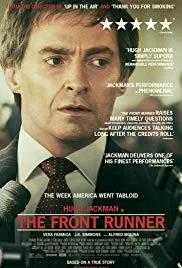
The Front Runner is proof that there’s nothing new under the sun. The film looks at a pivotal moment when politics and media crashed together to change the way we analyze political candidates personal lives and decisions forever. We still deal with political scandal today, much like the 1988 presidential run that crashed within a matter of weeks for Gary Hart, but this is when the idea of news media being a watchdog and covering candidates personal lives to ensure they match. We’ve seen bio drama films like this as well, but co-writer/director Jason Reitman gives us that old gum with a new way to chew it.
Gary Hart (Hugh Jackman) is a man of the people. He is charismatic, smart, handsome, and willing to take a stand against politics as usual. You know, the kind of stuff we like to see even today. All signs pointed to him being the frontrunner of the ’88 election before suggesting to a reporter that he’d be bored if he followed him around, and thus encouraging him to do so. Hart’s bluff is called, as the Miami Herald follows him and uncovers a scandal that ultimately ends Harts political run.
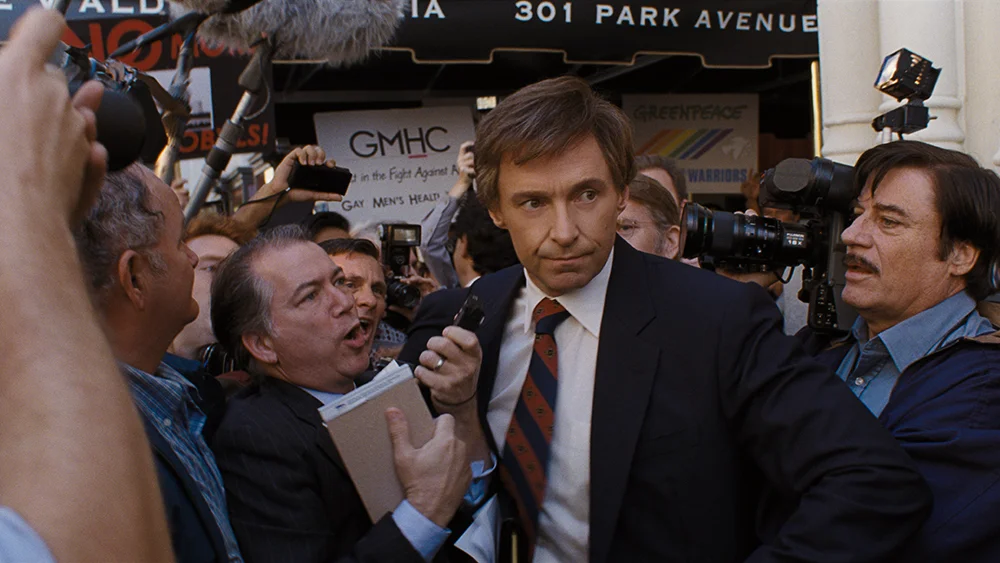
Reitman gives us an inside baseball look at the situation as things unfold. In fact, perspective is key in Reitman’s direction both in the script and in his frame. Numerous times throughout the film he tells two stories simultaneously so that you have to keep up. In one particular scene, Hart sits at a table in a wide shot with his back to the camera as it moves around capturing the conversation amongst Hart’s team. In the background you see a young reporter enter the room and begin a discussion with a member of Hart’s political team. Reitman’s ability to keep our mind engaged, while cleverly displaying multiple stories and pushing each scene forward is what makes the film fun to watch. We know the ending as we watch the story unfold in 2018, but getting there is probably as stimulating cinematically as it was to live through in 1988.
This is an ensemble film in which everyone brings their A game. Jackman, known for his ability to be a larger than life on screen presence, shows considerable controlled restraint and focus. He makes Hart, a player on the team, rather than the star in the film. In doing so, you can focus on all the angles and members of the cast. Vera Farmiga as Lee Hart doesn’t have a lot of screen time in comparison, but her presence is felt. In fact, in one confrontation scene between Gary and Lee, the atmosphere changing of her presence and what’s about to happen is so palpable that you feel as bad for Gary as when your sibling was about to get spanked back in the day. JK Simmons, Molly Ephraim, and Mamoudou Athie all have incredible character archs as they come to grips with Hart’s infidelity and what the fallout means to them. Each perspective gives the audience something to chew on.
The Front Runner may not appeal to mass audiences. It’s certainly a character study that allows viewers to draw conclusions on politics today, and a director’s masterclass on framing and technique. However, its undeniable timeless and timeliness of its subject matter is worth the view!
Rating: B+