
"Wicked: For Good": The Magic of Feeling Over Thinking
What’s more New York than the Empire State Building and a Broadway show? Having seen Wicked on the big screen, we found ourselves taking in the hit Broadway musical during a Spring Break trip to the Big Apple. Sandwiched between the cinematic release of part one and part two, my family and I discovered the magic of the stage play. Wicked: For Good may be the inferior of the three experiences but it still manages to pull off one trick: a theater full of strangers vibing to the songs and spectacle with the sound of sniffles at the end.
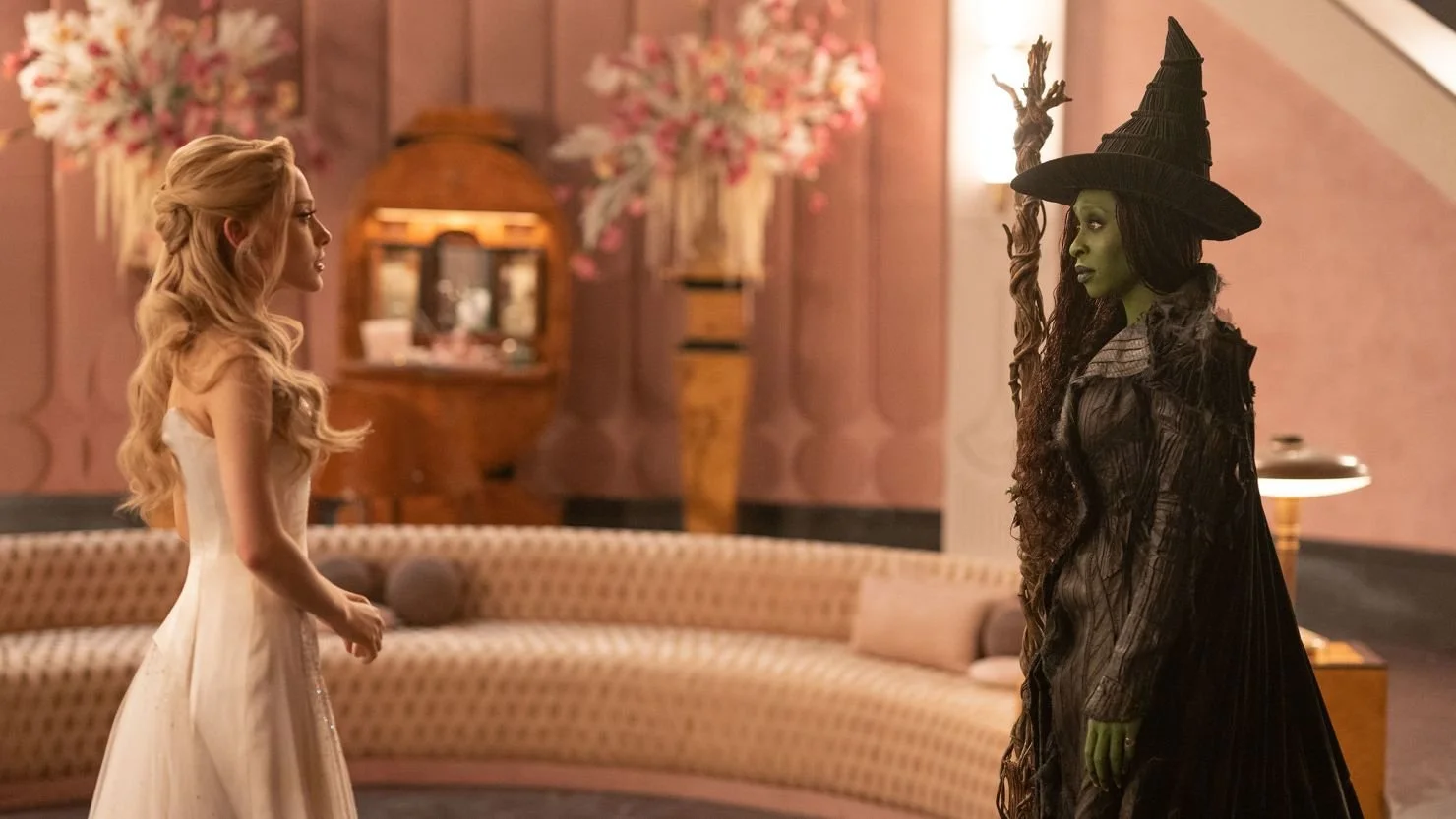
Twelve tide turns since Elphaba (Cynthia Erivo) came into her own and defied gravity, For Good dives further into the world of Oz. It opens showing a yellow brick road that has been laid and the animals who are being used to continue the work. As the freedom fighter, political activist and Wicked Witch of the West, Elphaba, continues to wreak havoc against any plan that the Wizard (Jeff Goldblum) has, Madame Morrible (Michelle Yeoh) has managed to prop Glinda (Arianna Grande) up as the goodwill ambassador for the Wizard. As Elphaba fights for persecuted animals and tries to clue the citizens of Oz to the truth, she lives in the woods to keep her distance from her sister, Nessarose (Marissa Bode), the new Governor of Munchkin Land. In a world where the true good is muffled and the performative good is promoted, it’s a true political slight of hand fit for the times.
It’s the same slight of hand in the movie that writers Stephen Schwartz, Winnie Holzman, and Gregory Maguire want viewers to experience outside of it. The gap in time leaves plot holes that likely would have helped part two be as strong as part one. It’s the journey of seeing Elphaba and Glinda grow in their relationship and power that makes the ending of Wicked so powerful. Here, we have to just go with the jumps in character development. How did Nessa become captor over lover of Boq (Ethan Slater)? Why is Fiyero (Jonathan Bailey) captain of the Wizard’s guards? While the movie does explain Glinda’s desire to be accepted as her reason for sticking around, we don’t quite get an understanding as to why Elphaba would tolerate her bestie continuing to participate in the charade. Regardless, the film isn’t asking you to think. Instead it wants you to feel.
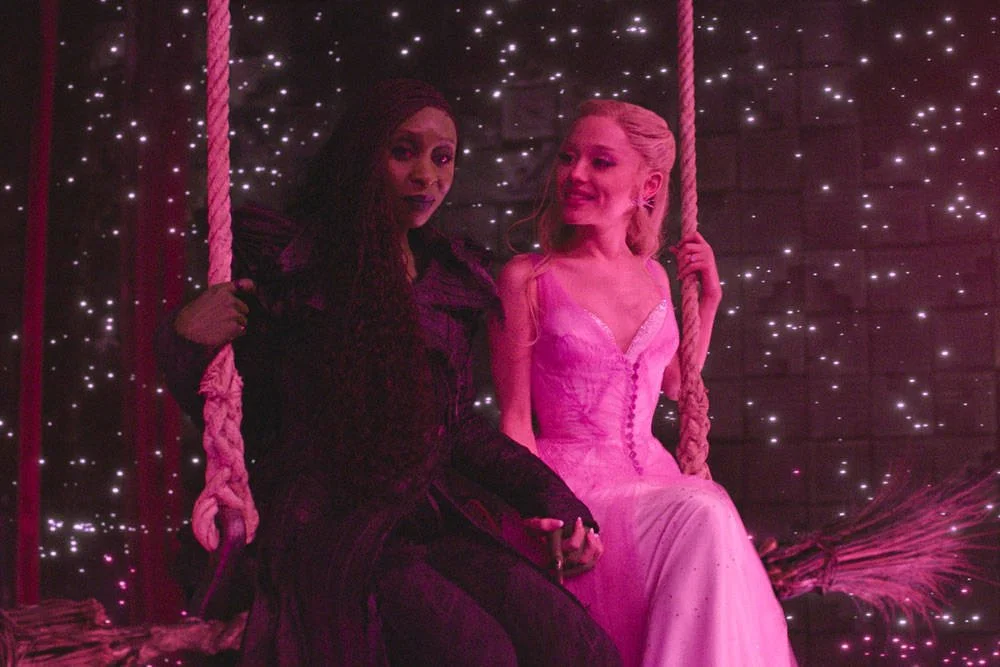
So if you’re willing to roll with it, you can get swept away in the feels of the story. After all, musicals are an outward expression of what we feel through song. The songs and vocals don’t disappoint here. It’s leading ladies have lungs for days. While arguably Wicked holds the more powerful ballads, the songs in Wicked: For Good support the character development and moments that make this musical touching.
The film, like the stage play, rushes the second half of the story. It loops in some of the major plot points of The Wizard of Oz, giving the behind the scenes that we didn’t know while making sure we don’t focus on Dorothy and her companions too much. Ultimately, as the movie made it’s way to it’s final running time, I heard the sound of sniffling in the screening I was in. I saw a grown man crying next to my daughter on one side and a mother holding her young daughter while wiping tears on the other side of me. So plot holes aside, Wicked: For Good is still affective and may still your heart for a clock tick.
Rating: B-

Jurassic World Dominon Review: Fans Will Love It! Anyone Else Should Wait For Streaming.
Let’s cut straight to the point on this. Jurassic World Dominion is great for fans of the franchise and may be disjointed and unbelievable to anyone else. If you are looking for fan service, it’s rich with it. Otherwise, this may be a good streaming pick later.
First, with a word like dominion in the title, you would think that dinosaurs are assorting their dominance in the world. Semantics don’t matter as the species just live among us in this film. Credit goes to screenwriters Emily Carmichael and Colin Trevorrow for creating a world that feels lived in and thought out. What if dinosaurs really lived among us? What would a black market for dinosaurs look like? What would the PETA equivalent look like in this world? They’ve thought of it all, accept how to tell a cohesive story.
The film has a Steve Jobs-like CEO, Lewis Dodgson (Campbell Scott), as its villain. Dodgson was a minor character from the original film and was a corporate rival of the park’s creators. He’s now is the head of a massive company called Biosyn. It’s the type of tech company that is heavily guarded and you have to have an invite to get on campus. He’s bioengineered locusts that eat the crops of the world, in order to control the world’s food supply.
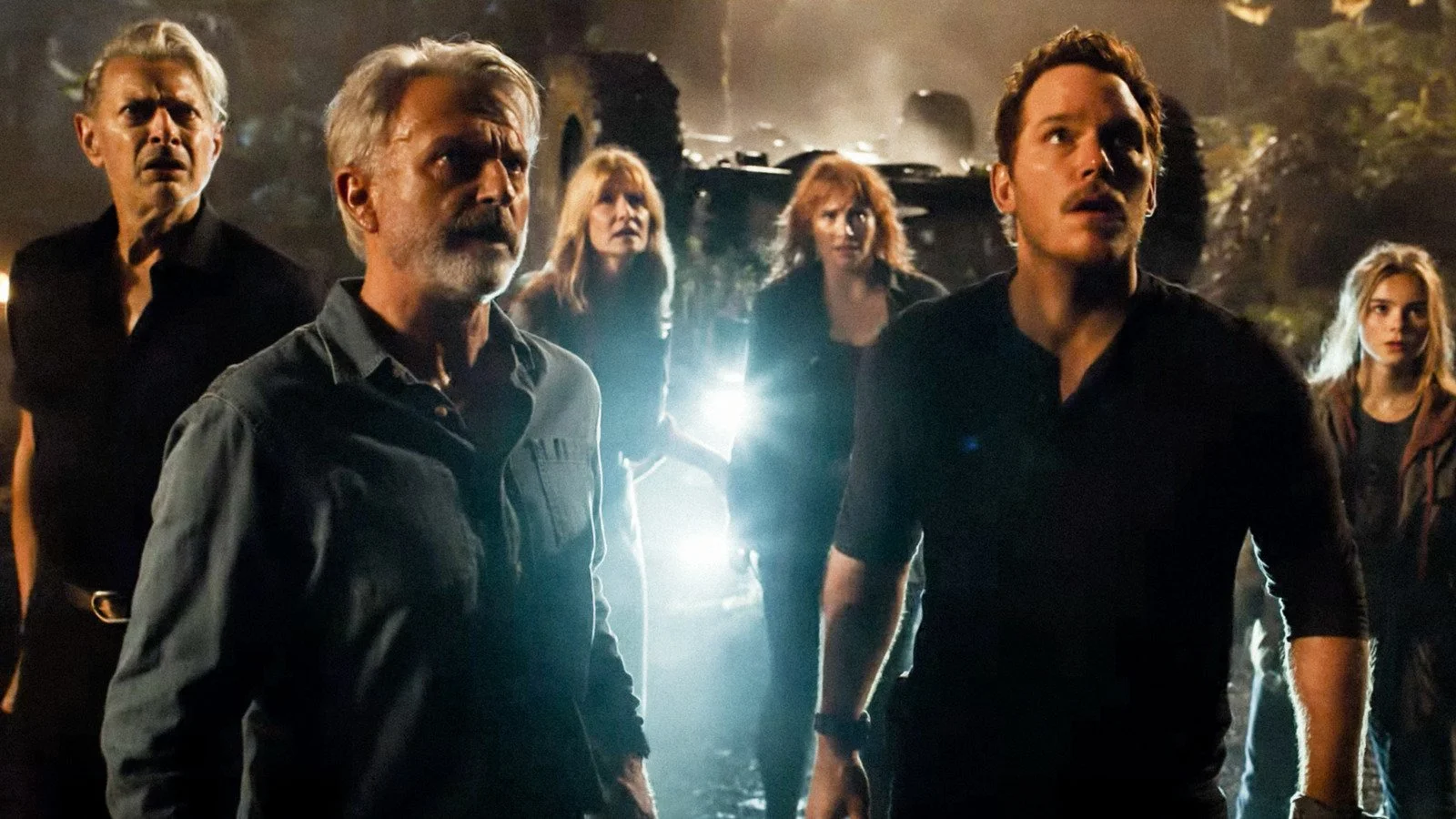
This is where the gang loosely comes together. Owen Grady (Chris Pratt) and Claire Dearing (Bryce Dallas Howard) are looking after Maisie Lockwood (Isabella Sermon), a teenager who Fallen Kingdom revealed to be a clone of a deceased scientist. She holds the key to stopping the disaster and everyone wants a piece of her…kind of literally. We get a globe trotting race to stop impending disaster and the re-introduction of fan favorites Sam Neill, Laura Dern, and Jeff Goldblum. How they all link up is where you have to suspend disbelief. It’s that kind of a film where you really need to just, not think. “It’s a film about dinosaurs!” I hear you yelling at me. I get that, but that doesn’t mean that we have to accept characters being in one location in one scene and appearing in a distant location in the immediate following scene with no context as to how they got there unless they were The Flash.
This film introduces the always interesting Mamoudou Athie as Ramsay and DeWanda Wise as Kayla. Kayla is a black pilot who smuggles whatever for the right price. She provides a source of keep it real comedy that is needed for some of the unrealistic moments in the film. Sermon is the heart of the film as she wars with is she real or not. Jeff Goldblum is his charming, old man swagged out self as Ian Malcolm. His humor is much welcomed as well.
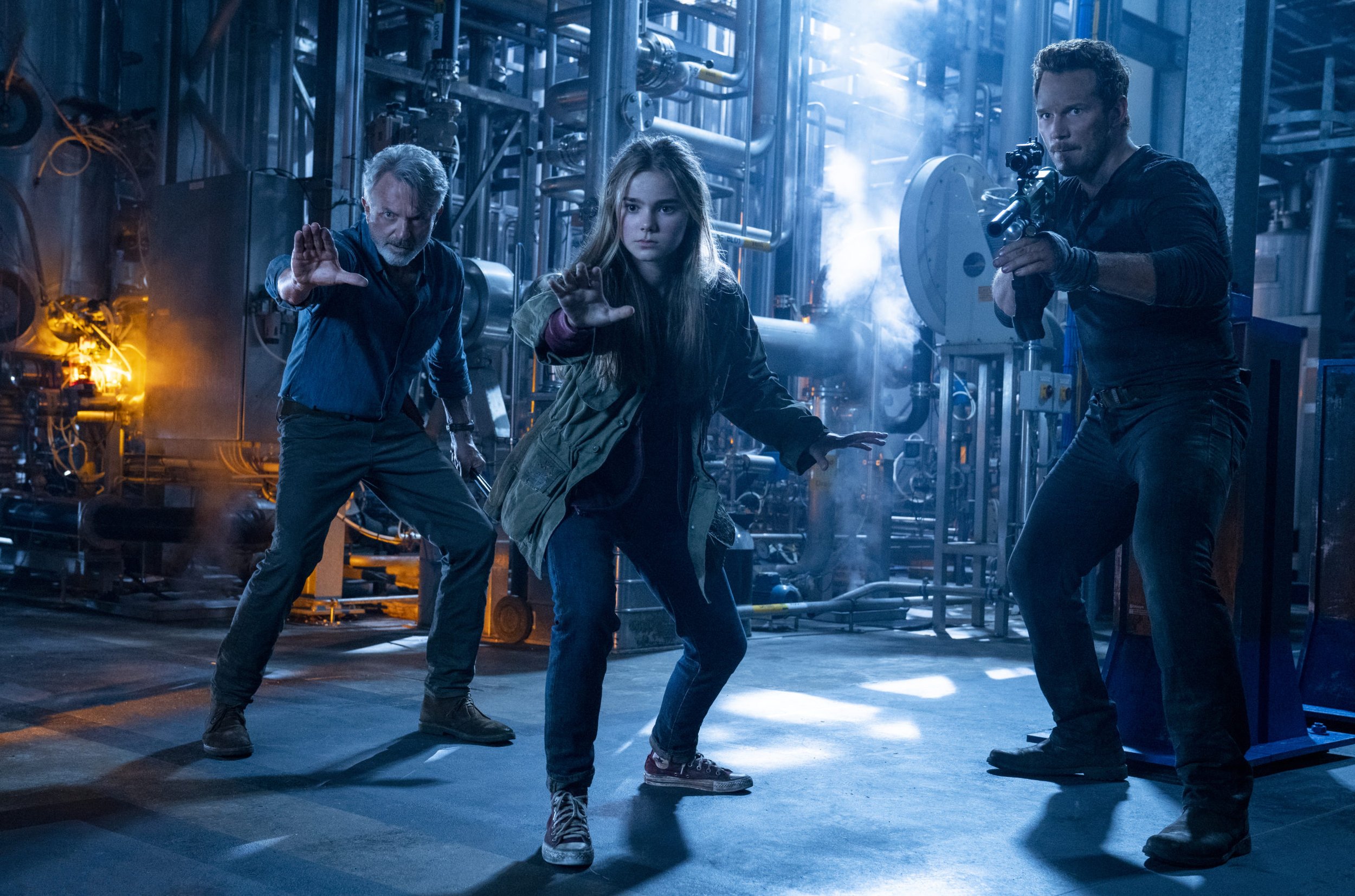
There is a major gripe I’ve had with big beasts/monster movies in cinematic history and that is the fact that, since King Kong (1933), we’ve seen how a white character can bring a beast under control with a touch. This is a film where white characters lift their hand and stare down a dinosaur to make it back down. It happens multiple times throughout this film and this imagery is worrisome because seeing yourself on the big screen is important. King Kong, Godzilla, Frankenstein (before it tosses the girl into the lake), any Potter film and more beasts are always under this spell. Shot sizes and cinematography matters. There is a subconscious message that, against impossible odds, white characters can tame a beast. Hollywood needs to stop planting this in its viewers’ minds or at least spread the wealth in these preposterous situations and reflections of power. Let a little girl from Nepal stare down the next dinosaur!
Off of my soap box, it would definitely be of use to revisit Fallen Kingdom, Jurassic Park, and maybe even Jurassic World for this to catch easter eggs. For fans of the franchise, this is likely to be a good time. If you’re not a huge fan, save your money this weekend, or go see Top Gun: Maverick again!
Rating: C-

"Isle of Dogs" Review
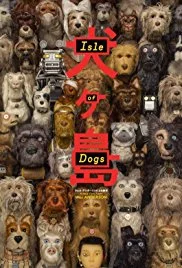
Isle of Dogs might just be Wes Anderson’s most accomplished film yet as a filmmaker. Coming off his most successful film with 2014’s The Grand Budapest Hotel, Anderson returns to the world of stop motion animation that he previously visited having directed 2009’s Fantastic Mr. Fox, which I very much enjoyed when I saw it. Isle of Dogs is a charming film from start to finish with some huge laughs along the way and a big heart. Even though this is in the same wheelhouse as previous Anderson’s films, this is oddly enough his most accessible film to date.
In the not too distant future in Megasaki City, a fictional Japanese city, there has been an outbreak of dog-flu and snout fever. To quarantine this epidemic, Mayor Kobayashi (story co-writer Kunichi Nomura) declares an order to place all dogs on nearby Trash Island. It’s also revealed that throughout the ages, his family lineage prefer cats to dogs. After several months, a young boy named Atari (newcomer Koya Rankin) crash lands onto Trash Island to find his beloved dog Spots (Liev Schreiber). Assisting Atari on his journey to find Spots are fellow dogs Chief (Bryan Cranston), Rex (Edward Norton), Boss (Bill Murray), Duke (Jeff Goldblum), and King (Bob Balaban).
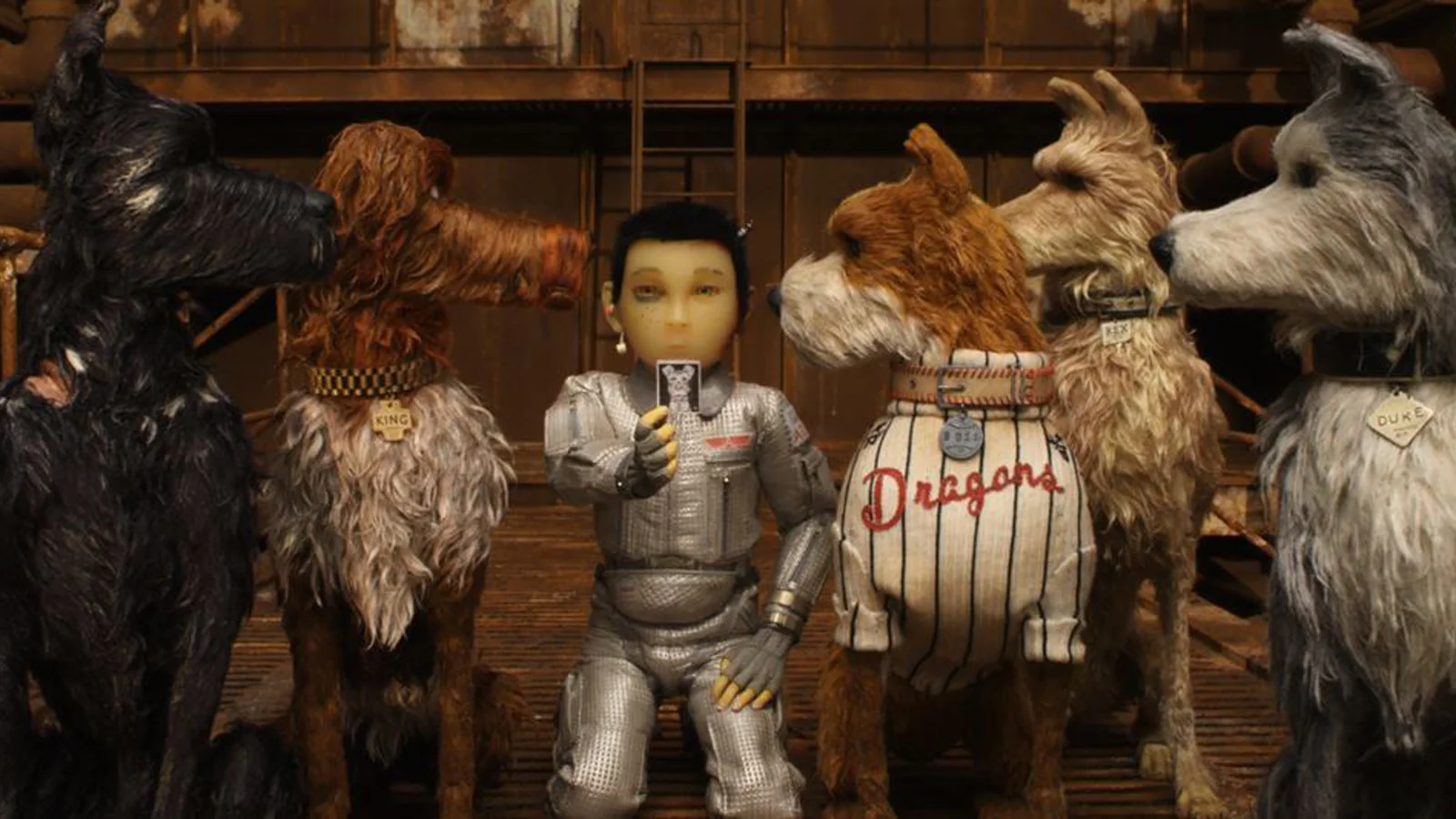
Since Japanese cinema heavily influenced this film, we can tell that Anderson wears those influences heavily on his sleeves. For example, the mechanized dogs look similar in design to Mecha-Godzilla from the Toho’s Godzilla series and the laboratories look like something you would see from a science fiction film. The storyline (written by Anderson from a story from him, Nomura, Roman Coppola, and Jason Schwartzman) is simplistic enough that throughout the 101-minute runtime, you never get confused about what’s transpiring on-screen. The pacing is good for its runtime as well. With the way that Anderson presents the story to the audience, at times, it feels like a story coming to life, which is given since the film is split into five chapters like a book, and most of the characters speak directly to the camera, as if they’re talking to us. Even though it’s a stop motion film, I bought into the story that the film was trying to tell. Like with his previous films, you get the humor that Anderson typically exhibits, whether it’s a deadpan delivery or a visual gag. Truth be told, some of the visual gags were the funniest parts of the film.
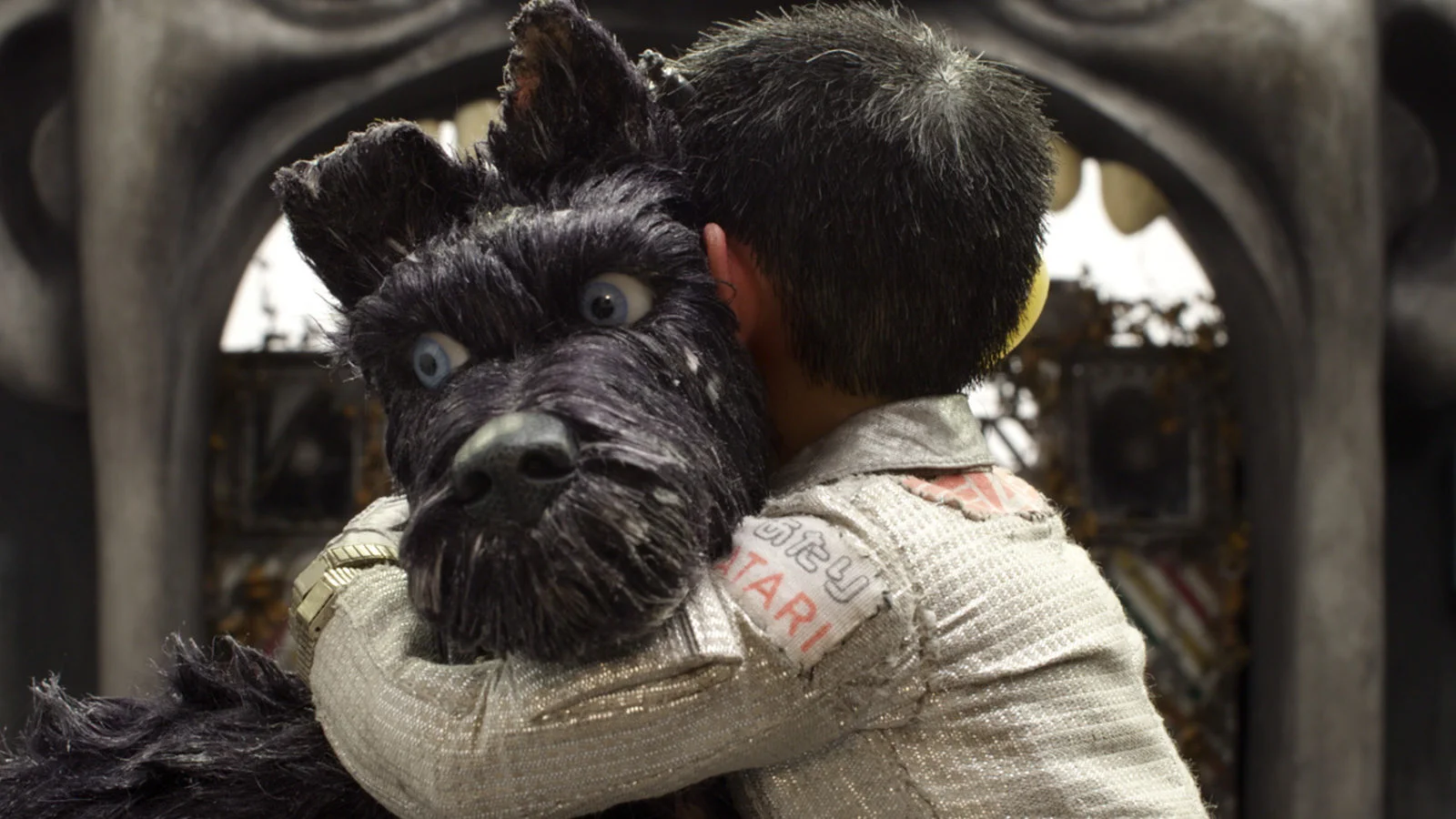
On top of that, all the actors that Anderson assembled for the film (most of them are from his previous films) were enjoyable in the roles they were selected, with the MVP in my opinion being Cranston as Chief, a stray dog in the pack that helps Atari. Like with his other films, Anderson plays with symmetry in the look of the film, and the visual design that was employed was splendid. Case in point, whenever the dogs fight, it becomes a ball of smoke like we’ve seen in previous animated films or shows. The film gets political here and there. Even though it’s a stop-motion film about dogs, Anderson uses it as a springboard to discuss larger topics at hand, like the use of fear mongering, corruption in politics, and uses the plight of the dogs as metaphors. The music choices were spot on, including tracks from Akira Kurosawa’s Seven Samurai and Drunken Angel, since Anderson started that his films were a big influence, and once again, Alexandre Desplat composes another great score for Anderson (he previously won an Oscar for The Grand Budapest Hotel).
If there are any criticisms that I had with this film, it’s that sometimes Anderson throws too much info at the audience. Since we have an overload of information, it feels like as the film gets toward the end it runs out of steam just a tad. Some of the subplots don’t bring anything to the film and if Anderson trimmed some of them out, the film would have played just as well. As usual, if you don’t like the humor his films tend to employ, you might not view this as funny.
Overall, even though we’re in the month of March, it’s safe to say that Isle of Dogs is easily one of the best films of the year so far. At the heart of the film, it’s a story about a boy’s love of his dog, and how dogs are truly man’s best friends. This film shows growth for Anderson as a filmmaker, and is clearly one of his best films to date. I enjoyed this more than what I was anticipating going into it. I urge you to seek this film out as soon as you can, and I would most definitely recommend checking this out in a theater!