
"Godzilla:King of The Monsters" Review- Flush Your Money Down The Toilet Instead
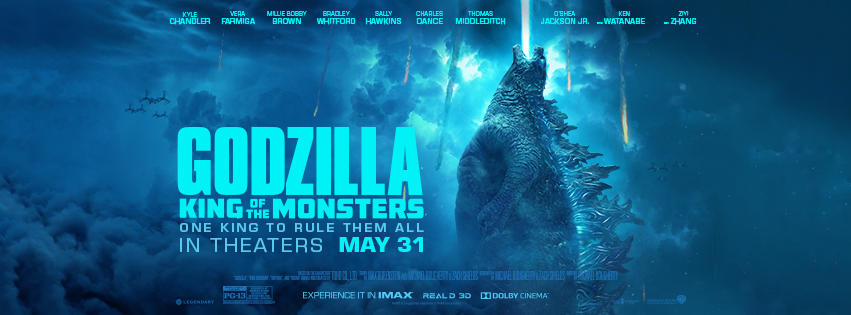
I’m a fan of suspending my disbelief for films. If it’s entertaining, I’ll do it. Godzilla: King of The Monsters crosses a line though. It doesn’t give us characters to invest in or believable action in a world that we are already choosing to accept as reality. It’s a slap in the face to its viewers’ intelligence unworthy of your dollars this weekend.
Picking up where 2014’s Godzilla left off, this film plops us back into the classic world where giant monsters exist. The government has learned that there are numerous titans around the globe and the major decision that has to be made is how to stop the impending doom and destruction they will cause. It seems our only hope may be Godzilla.
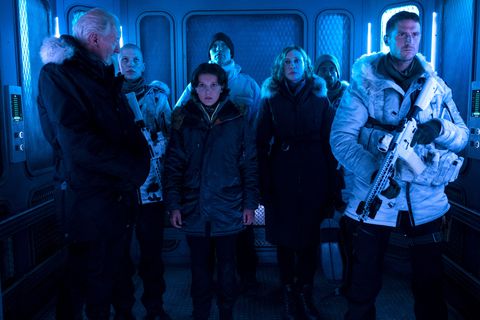
Explaining or giving an elusion to the human side of this story is asinine because writers Michael Dougherty and Zach Shields didn’t care to develop them. However, in a nutshell, there’s a divorced dad (Kyle Chandler) and mom (Vera Farmiga) who don’t see eye to eye and their daughter (Millie Bobby Brown) has to choose which philosophy to follow. The other humans in the film are government, civilians or military and they either provide exposition, bodies to be killed, or fight monsters.
The reason to go to a Godzilla movie is to see giant monsters. It’s obvious the studio listened to the complaints of fans in the 2014 film because you definitely get that here! Hats off to the visual effects and sound team for creating images that look and sound like giant monsters fighting. (They’re the only reason this didn’t get an F rating.) Buildings being demolished from the wind of Rodan flapping its wings looks authentic. It’s easy to believe in the power, scope and destruction the monsters leave in their wake.
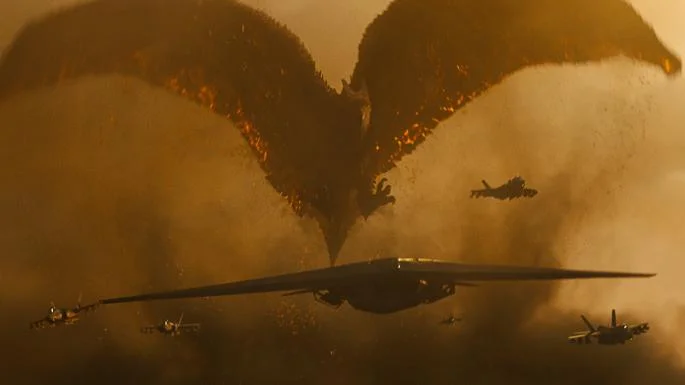
Unfortunately, throughout the fighting scenes of these monsters, the camera work is inconsistent. Sometimes we get clear visuals of what’s happening and which monster is fighting from director Michael Dougherty. Other times, it’s unclear what we’re looking at or what a monster is doing.
With no human story to get behind, you’re left waiting for people to be quiet so we can get to the next monster scene. The audacity of human beings thinking that they can tame, control or even be the pets of giant monsters befuddles my small mind. I’m all for escapist, popcorn blockbusters, but not at the expense of leaving the theater frustrated with seeing a bad film and feeling like I wasted my money. You may as well flush your money down the toilet. At least the plot of wondering if it will get stuck or not will be more entertaining, suspenseful, and plausible.
Rating: D

"Isle of Dogs" Review

Isle of Dogs might just be Wes Anderson’s most accomplished film yet as a filmmaker. Coming off his most successful film with 2014’s The Grand Budapest Hotel, Anderson returns to the world of stop motion animation that he previously visited having directed 2009’s Fantastic Mr. Fox, which I very much enjoyed when I saw it. Isle of Dogs is a charming film from start to finish with some huge laughs along the way and a big heart. Even though this is in the same wheelhouse as previous Anderson’s films, this is oddly enough his most accessible film to date.
In the not too distant future in Megasaki City, a fictional Japanese city, there has been an outbreak of dog-flu and snout fever. To quarantine this epidemic, Mayor Kobayashi (story co-writer Kunichi Nomura) declares an order to place all dogs on nearby Trash Island. It’s also revealed that throughout the ages, his family lineage prefer cats to dogs. After several months, a young boy named Atari (newcomer Koya Rankin) crash lands onto Trash Island to find his beloved dog Spots (Liev Schreiber). Assisting Atari on his journey to find Spots are fellow dogs Chief (Bryan Cranston), Rex (Edward Norton), Boss (Bill Murray), Duke (Jeff Goldblum), and King (Bob Balaban).
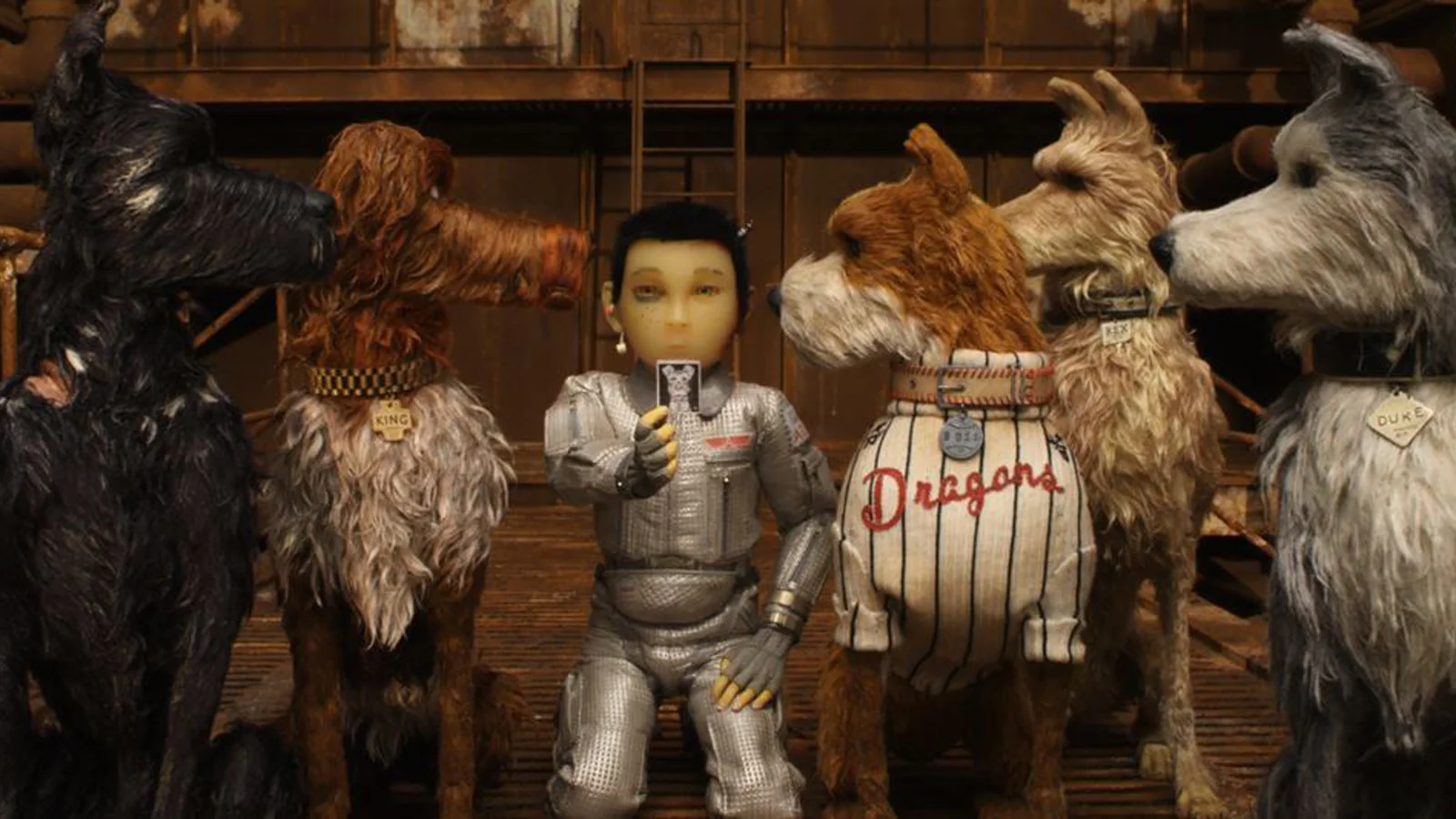
Since Japanese cinema heavily influenced this film, we can tell that Anderson wears those influences heavily on his sleeves. For example, the mechanized dogs look similar in design to Mecha-Godzilla from the Toho’s Godzilla series and the laboratories look like something you would see from a science fiction film. The storyline (written by Anderson from a story from him, Nomura, Roman Coppola, and Jason Schwartzman) is simplistic enough that throughout the 101-minute runtime, you never get confused about what’s transpiring on-screen. The pacing is good for its runtime as well. With the way that Anderson presents the story to the audience, at times, it feels like a story coming to life, which is given since the film is split into five chapters like a book, and most of the characters speak directly to the camera, as if they’re talking to us. Even though it’s a stop motion film, I bought into the story that the film was trying to tell. Like with his previous films, you get the humor that Anderson typically exhibits, whether it’s a deadpan delivery or a visual gag. Truth be told, some of the visual gags were the funniest parts of the film.
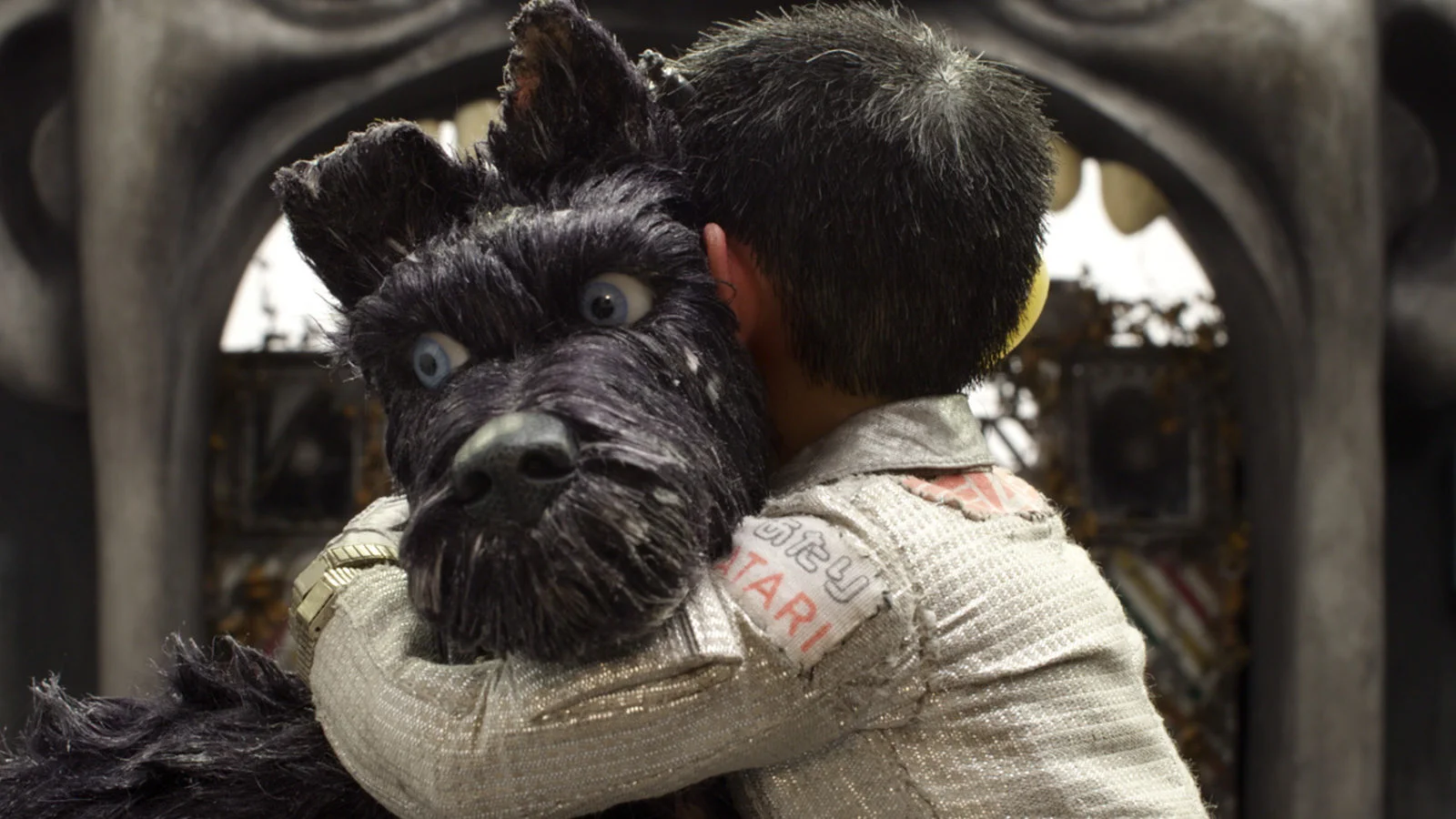
On top of that, all the actors that Anderson assembled for the film (most of them are from his previous films) were enjoyable in the roles they were selected, with the MVP in my opinion being Cranston as Chief, a stray dog in the pack that helps Atari. Like with his other films, Anderson plays with symmetry in the look of the film, and the visual design that was employed was splendid. Case in point, whenever the dogs fight, it becomes a ball of smoke like we’ve seen in previous animated films or shows. The film gets political here and there. Even though it’s a stop-motion film about dogs, Anderson uses it as a springboard to discuss larger topics at hand, like the use of fear mongering, corruption in politics, and uses the plight of the dogs as metaphors. The music choices were spot on, including tracks from Akira Kurosawa’s Seven Samurai and Drunken Angel, since Anderson started that his films were a big influence, and once again, Alexandre Desplat composes another great score for Anderson (he previously won an Oscar for The Grand Budapest Hotel).
If there are any criticisms that I had with this film, it’s that sometimes Anderson throws too much info at the audience. Since we have an overload of information, it feels like as the film gets toward the end it runs out of steam just a tad. Some of the subplots don’t bring anything to the film and if Anderson trimmed some of them out, the film would have played just as well. As usual, if you don’t like the humor his films tend to employ, you might not view this as funny.
Overall, even though we’re in the month of March, it’s safe to say that Isle of Dogs is easily one of the best films of the year so far. At the heart of the film, it’s a story about a boy’s love of his dog, and how dogs are truly man’s best friends. This film shows growth for Anderson as a filmmaker, and is clearly one of his best films to date. I enjoyed this more than what I was anticipating going into it. I urge you to seek this film out as soon as you can, and I would most definitely recommend checking this out in a theater!