
"On The Rocks" Review: Sofia Coppola's Small But Profound Tale!
If you don’t consistently and intentionally work on your marriage, it can fall apart. Insecurities that come out in marriage after a couple of kids, body changes, and growing careers or lack thereof is what Sofia Coppola explores in her latest “On The Rocks”. This is an intimate film with big stars but grounded performances that result in a simple yet profound statement on aspects of our adult lives.

Laura (Rashida Jones) and Dean (Marlon Wayans) start their marriage like any couple in love. They ditch their wedding reception to skinny dip in the hotel pool. Fast forward a few years and a couple kids later and Laura is a struggling in her work while Dean is successfully traveling the world building his business. After feeling like Dean may be cheating, Laura confides in her devil-may-care father, Felix (Bill Murray). Due to his playboy lifestyle, he automatically assumes Dean is doing the worst and stokes the flames of Laura’s suspicion. The result is a father/daughter adventure through New York to find the truth.
The main characters in this film are Laura and Felix. Coppola purposefully brings you into the world of the father/daughter team by making the exterior world a form of set design in their stage play of life. Getting to know Laura’s daughters outside of the fact that they are kids is unnecessary. Getting to know Dean outside of the fact that he seems like a good guy but could be cheating helps us stay suspicious. Not getting to know the people that Laura interacts with in her daily life, outside of Vanessa (a funny for her bit role Jenny Slate), helps keep us focused on Laura’s thoughts about the situation.
This singular focus on Laura and Felix’s opinions and conversations about what’s happening with Dean is what helps make the film grounded in a familiar reality. What’s perhaps more profound is how Coppola’s screenwriting addresses the emotional impact of Felix’s infidelity and philandering on Laura’s life. She’s accepted him for who he is but as the story moves forward, they address those issues as well.

The film is reminiscent of a French New Wave buddy film. Coppola jump cuts through slices of everyday mundane moments that remind you of what you did this week. She gives Murray his time to shine in finely aged Murray monologues that are a joy to behold. Jones’s performance is stripped down and bare in a way that gives room for Murray to shine but not overpower her. Their relationship feels very authentic to the characters and that chemistry shines.
“On The Rocks” is a film that might go under the radar this year, but it shouldn’t be off yours! It’s entertaining, funny and poignant. Whether it hits a nerve in your current stage of life or not, it’s certainly an hour and a half well spent!
Rating: A-

"Isle of Dogs" Review
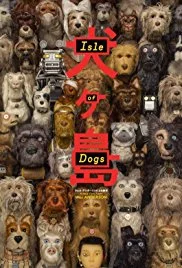
Isle of Dogs might just be Wes Anderson’s most accomplished film yet as a filmmaker. Coming off his most successful film with 2014’s The Grand Budapest Hotel, Anderson returns to the world of stop motion animation that he previously visited having directed 2009’s Fantastic Mr. Fox, which I very much enjoyed when I saw it. Isle of Dogs is a charming film from start to finish with some huge laughs along the way and a big heart. Even though this is in the same wheelhouse as previous Anderson’s films, this is oddly enough his most accessible film to date.
In the not too distant future in Megasaki City, a fictional Japanese city, there has been an outbreak of dog-flu and snout fever. To quarantine this epidemic, Mayor Kobayashi (story co-writer Kunichi Nomura) declares an order to place all dogs on nearby Trash Island. It’s also revealed that throughout the ages, his family lineage prefer cats to dogs. After several months, a young boy named Atari (newcomer Koya Rankin) crash lands onto Trash Island to find his beloved dog Spots (Liev Schreiber). Assisting Atari on his journey to find Spots are fellow dogs Chief (Bryan Cranston), Rex (Edward Norton), Boss (Bill Murray), Duke (Jeff Goldblum), and King (Bob Balaban).
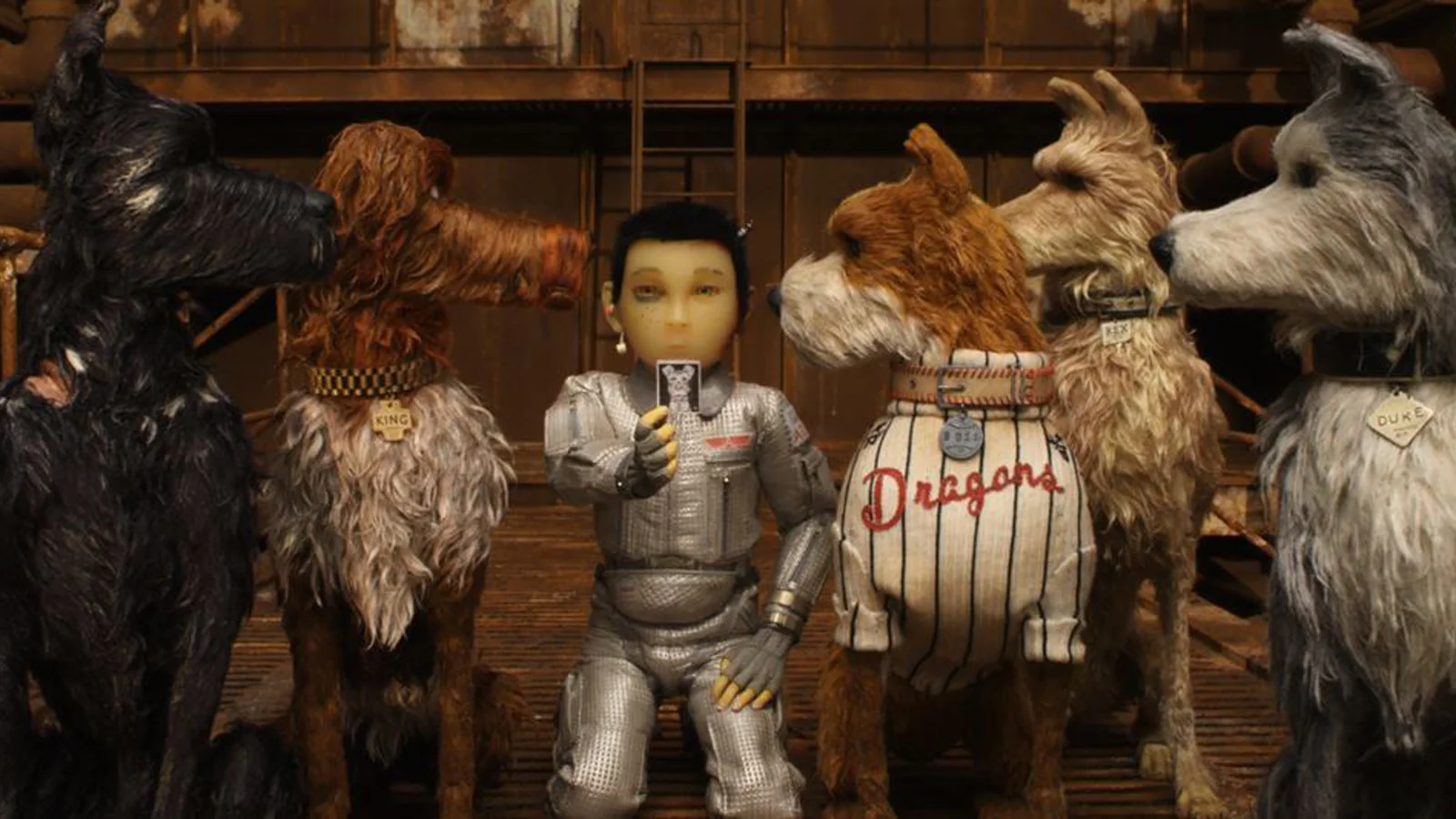
Since Japanese cinema heavily influenced this film, we can tell that Anderson wears those influences heavily on his sleeves. For example, the mechanized dogs look similar in design to Mecha-Godzilla from the Toho’s Godzilla series and the laboratories look like something you would see from a science fiction film. The storyline (written by Anderson from a story from him, Nomura, Roman Coppola, and Jason Schwartzman) is simplistic enough that throughout the 101-minute runtime, you never get confused about what’s transpiring on-screen. The pacing is good for its runtime as well. With the way that Anderson presents the story to the audience, at times, it feels like a story coming to life, which is given since the film is split into five chapters like a book, and most of the characters speak directly to the camera, as if they’re talking to us. Even though it’s a stop motion film, I bought into the story that the film was trying to tell. Like with his previous films, you get the humor that Anderson typically exhibits, whether it’s a deadpan delivery or a visual gag. Truth be told, some of the visual gags were the funniest parts of the film.
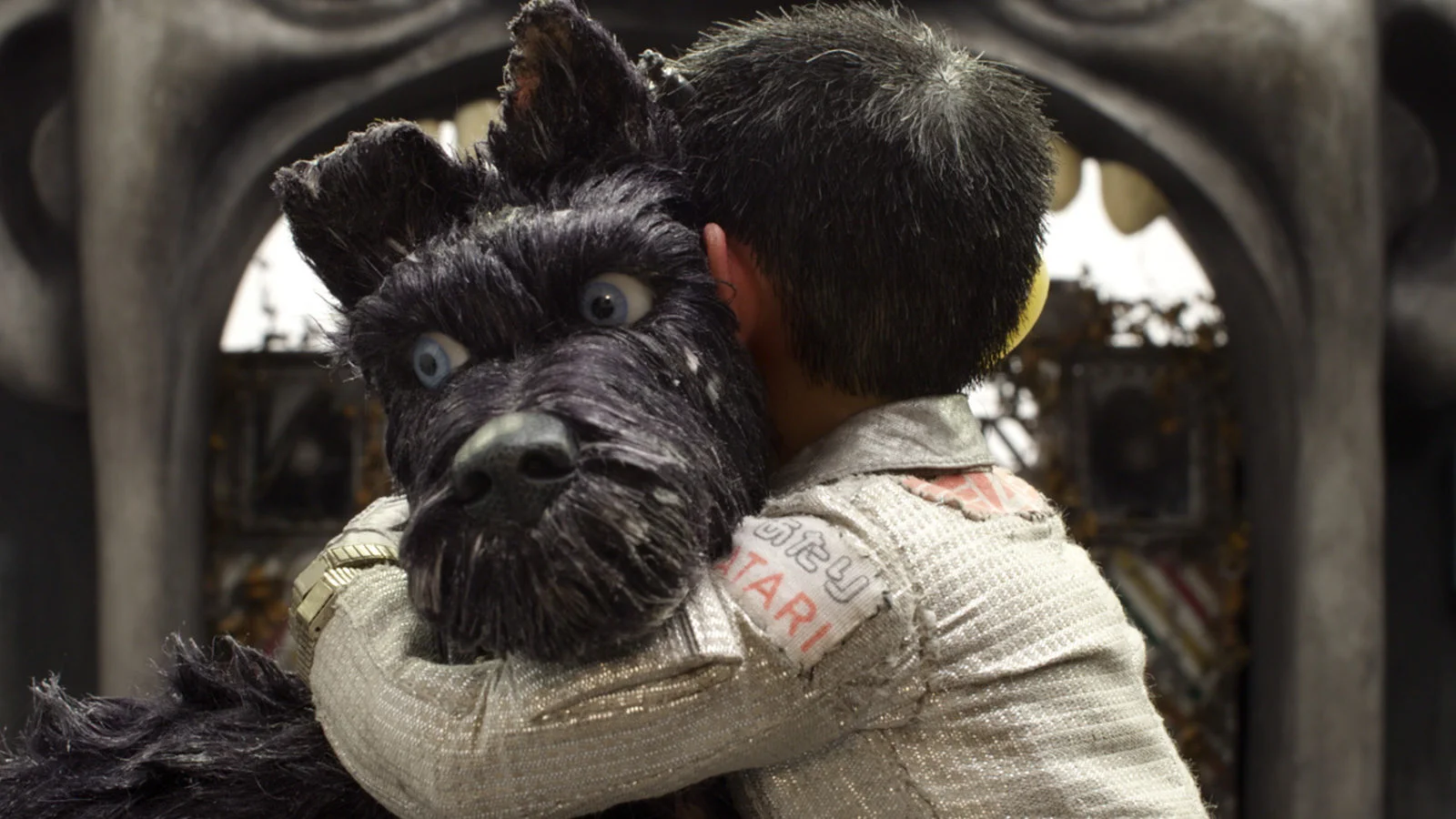
On top of that, all the actors that Anderson assembled for the film (most of them are from his previous films) were enjoyable in the roles they were selected, with the MVP in my opinion being Cranston as Chief, a stray dog in the pack that helps Atari. Like with his other films, Anderson plays with symmetry in the look of the film, and the visual design that was employed was splendid. Case in point, whenever the dogs fight, it becomes a ball of smoke like we’ve seen in previous animated films or shows. The film gets political here and there. Even though it’s a stop-motion film about dogs, Anderson uses it as a springboard to discuss larger topics at hand, like the use of fear mongering, corruption in politics, and uses the plight of the dogs as metaphors. The music choices were spot on, including tracks from Akira Kurosawa’s Seven Samurai and Drunken Angel, since Anderson started that his films were a big influence, and once again, Alexandre Desplat composes another great score for Anderson (he previously won an Oscar for The Grand Budapest Hotel).
If there are any criticisms that I had with this film, it’s that sometimes Anderson throws too much info at the audience. Since we have an overload of information, it feels like as the film gets toward the end it runs out of steam just a tad. Some of the subplots don’t bring anything to the film and if Anderson trimmed some of them out, the film would have played just as well. As usual, if you don’t like the humor his films tend to employ, you might not view this as funny.
Overall, even though we’re in the month of March, it’s safe to say that Isle of Dogs is easily one of the best films of the year so far. At the heart of the film, it’s a story about a boy’s love of his dog, and how dogs are truly man’s best friends. This film shows growth for Anderson as a filmmaker, and is clearly one of his best films to date. I enjoyed this more than what I was anticipating going into it. I urge you to seek this film out as soon as you can, and I would most definitely recommend checking this out in a theater!

"Ghostbusters" (2016) Review
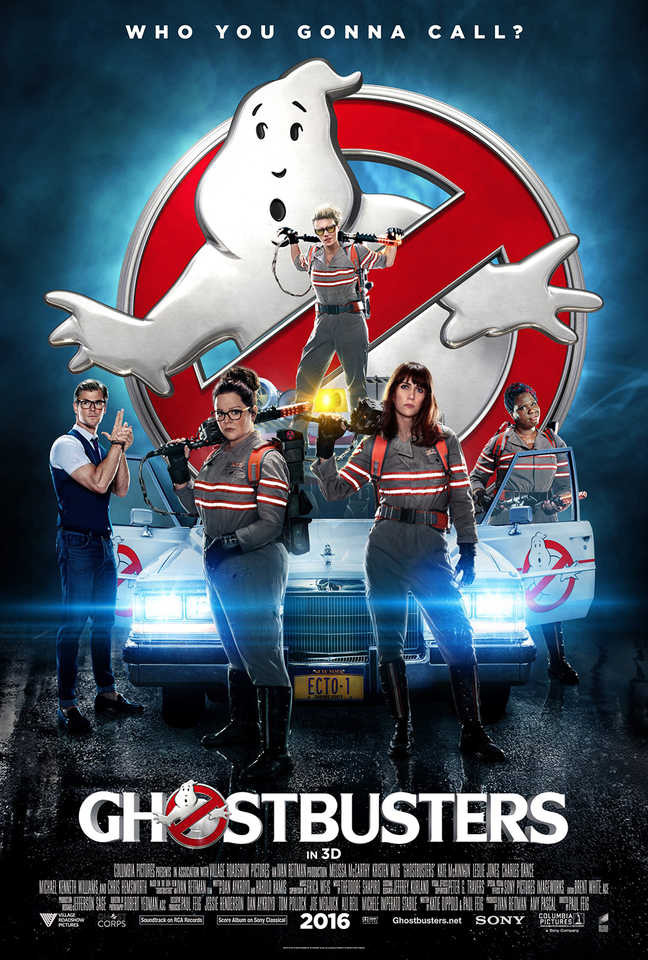
There is a beautiful scene in Ghostbusters in which Melissa McCarthy’s character gives the other members of the team a pep talk after the citizens of New York denounce them as frauds. I’m paraphrasing here, of course, but she essentially says that even though everyone is doubting them, they know what they’re doing and should ignore the vitriol and save the day anyway.
It’s a fitting metaphor for the film itself, when you think about it. From the moment it was announced, Paul Feig’s reboot of Ghostbusters received backlash and bile from fans of the original film from 1984, making it the subject of untold amounts of rage-filled comments. Its trailer has become the single most down-voted trailer in YouTube history.
So, even though the angriest denizens of the Internet were counting them out, director Paul Feig (Bridesmaids, The Heat, Spy) and the four talented comediennes he chose to be our new Ghostbusters were so sure-handed and confident, they rose above the hatred and won the day in the end.
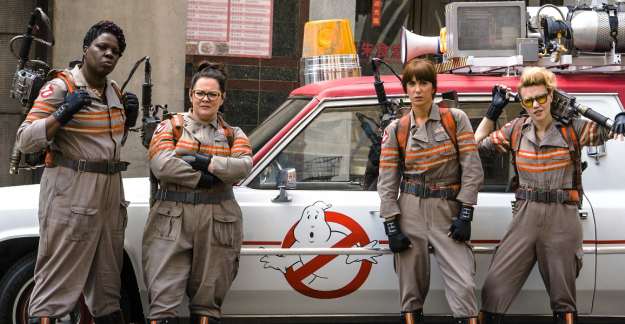
Of course, this new version of Ghostbusters is nowhere near as good as the classic original. It was never going to be. But it’s not worth all the fuss, and it’s far from the disgrace to the original film’s legacy that the angry commenters were expecting (and probably hoping for). When all is said and done, it’s a scrappy, good-natured summer blockbuster that, while not perfect, delivers a lot of laughs, a few chills, and a ton of thrills.
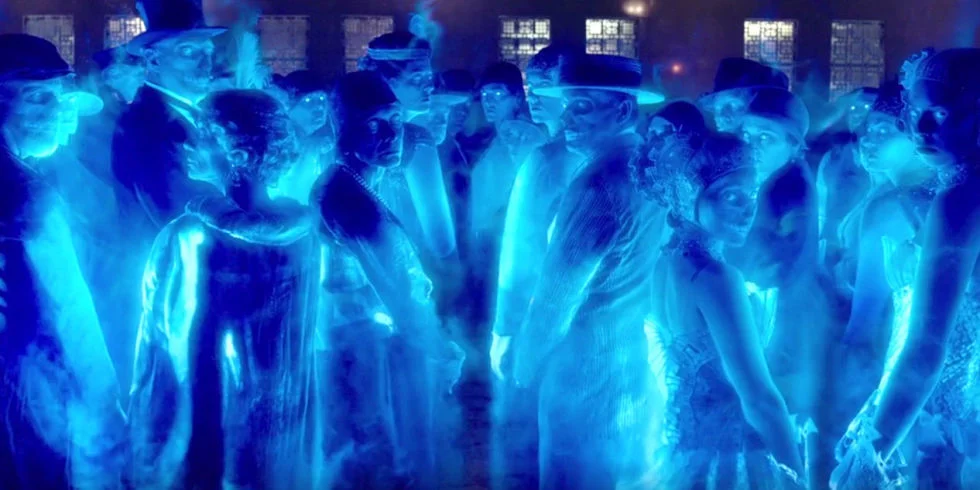
When a book about the paranormal that she co-wrote resurfaces, Dr. Erin Gilbert (Kristen Wiig) is let go from her teaching position at Columbia University. The at-first-skeptical Dr. Gilbert soon realizes that all her theories were true when malevolent ghosts begin to invade Manhattan. Teaming up with her former friend, Dr. Abby Yates (McCarthy); eccentric engineer Dr. Jillian Holtzmann (the particularly outstanding Kate McKinnon); and New York history enthusiast Patty Tolan (Leslie Jones), Dr. Gilbert forms a paranormal extermination team called the Ghostbusters in order to save the world from a demonic entity.
While the story hits a lot of the same beats as the original, it’s the chemistry between these four women, as well as Feig’s unique sense of comedic timing, that keep this reboot feeling fresh. Wiig, McCarthy, McKinnon, and Jones bounce off of each other to great effect, giving us a sense of camaraderie that harkens back to how well Bill Murray, Dan Aykroyd, Harold Ramis, and Ernie Hudson worked with each other in the original. There is genuine wit and inventiveness in the design of the ghosts, and there are even a couple of creepy sequences that sent chills down my spine.
However, even though Ghostbusters gets a lot of things right, that makes the things that it gets wrong all the more frustrating. The film needed some more time in the editing room to tighten up the baggy pacing. As demonstrated in his previous works, Feig encourages improvisation in his cast. While this often leads to some very funny bits, it keeps scenes dragging on for far longer than necessary. There are scenes that begin and end very abruptly, and quite a few of the jokes land with a resounding thud. Additionally, there are several surprise cameos from some recognizable faces, but their presence just serves as a distraction as it takes the focus away from the core group.
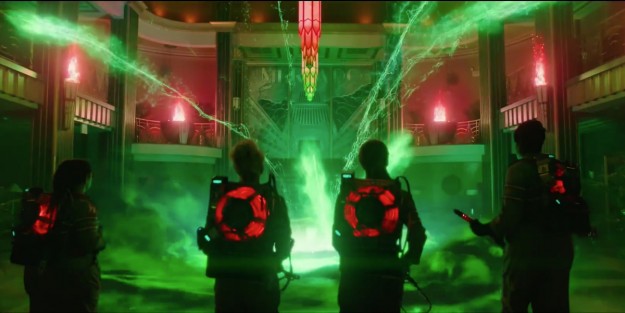
But once the team gets to busting, the proton packs get to firing, and the jokes get to flying, the film is an absolute joy to watch, especially in a 3D presentation that ranks among the best I’ve ever seen. The 3D effects go out and over the black bars on the top and bottom of the screen, so it creates the illusion that slime, ghosts, and laser beams are invading the theater and jumping right at you. It’s a truly effective technique, and it made me wonder why more 3D movies don’t take advantage of it.
So after all that hullabaloo over this new Ghostbusters destroying the integrity of the original and insulting the memory of its co-writer Harold Ramis… it’s time to relax. Paul Feig’s Ghostbusters is not an insult to the original. Harold Ramis, God rest his soul, is not spinning in his grave. The original Ghostbusters is still readily available to watch and enjoy, and is probably on your home video shelf right now. I know it’s on mine. And when the reboot is released on Blu-ray, it will not replace my copy of the original. It will have earned a place right alongside it.
Grade: B-
"The Jungle Book" Review
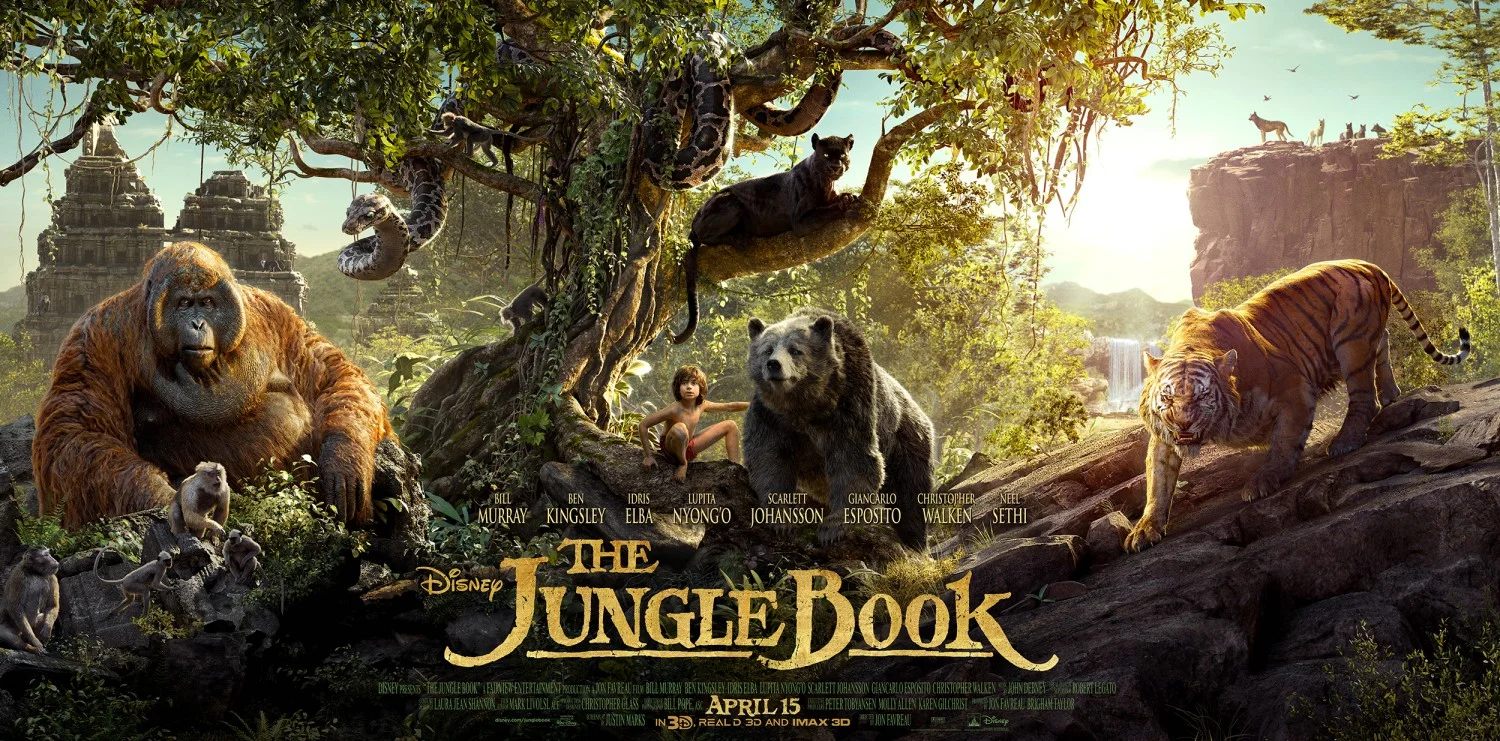
Lately, Disney seems to be rooting through its vault to find classics to remake into big-budget, live-action blockbusters. They stumbled early on with misfires like Alice in Wonderland and Maleficent, but they finally recaptured that Disney magic with last year’s Cinderella. And with live-action adaptations of Pete’s Dragon, Beauty and the Beast, Dumbo, and Peter Pan mapped out as far as 2020, it looks like we’re going to be stuck with this trend for a very long time.
Which won’t be a bad thing if these upcoming projects turn out to be even half as good as The Jungle Book.
This movie rocks. It freaking rocks!
Director Jon Favreau, who brought his proficiently crowd-pleasing sensibilities to such films as Iron Man and Cowboys and Aliens, knocks it out of the park once again here. He simply gets it. He gets what goes into making an effective film: a simple story, well-drawn characters, visual pizazz, and most importantly, heart. The Jungle Book does something that few movies nowadays are able to do: inspire wonder in its audience.
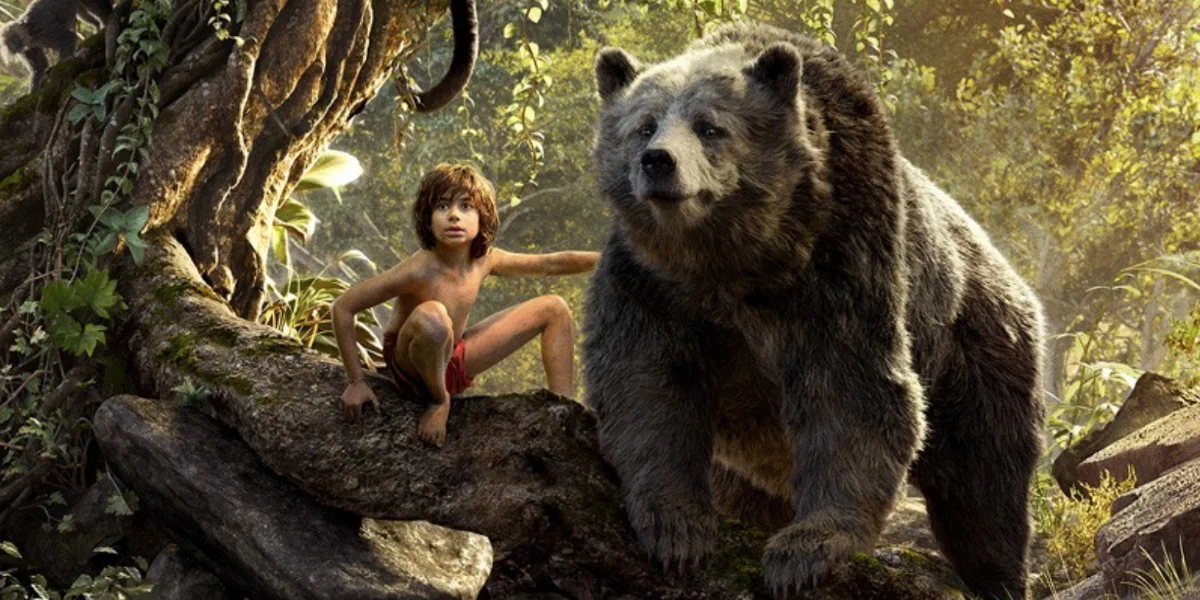
The story concerns a young human boy, Mowgli (Neel Sethi, destined to be a big star), who is abandoned in the jungle and raised by wolves. When a vicious tiger named Shere Khan (a menacing Idris Elba) threatens his life, Mowgli is forced to leave the jungle with the help of stern panther Bagheera (Sir Ben Kingsley) and lazy but lovable bear Baloo (Bill Murray).
While it may sound familiar, this new version manages to pay loving tribute to both the Rudyard Kipling stories as well as the 1967 animated Disney film, while integrating certain elements from each in its own distinct narrative direction. However, like the other incarnations before it, this new version is quite episodic in its structure, with Mowgli wandering from one unrelated set piece to the next.
So while the story itself is pretty conventional fare, it’s how the story is told that is the crucial element, and it’s what Favreau and company get so right. The Jungle Book has it all. There is humor, most of it coming from Murray’s quippy asides. There are valuable morals about right and wrong, facing one’s fears, and the importance of family. And there is spectacle—from a hair-raising stampede to a trippy sequence involving the seductive snake Kaa (Scarlett Johansson), to an exciting and scary chase with the towering orangutan King Louie (the great Christopher Walken).
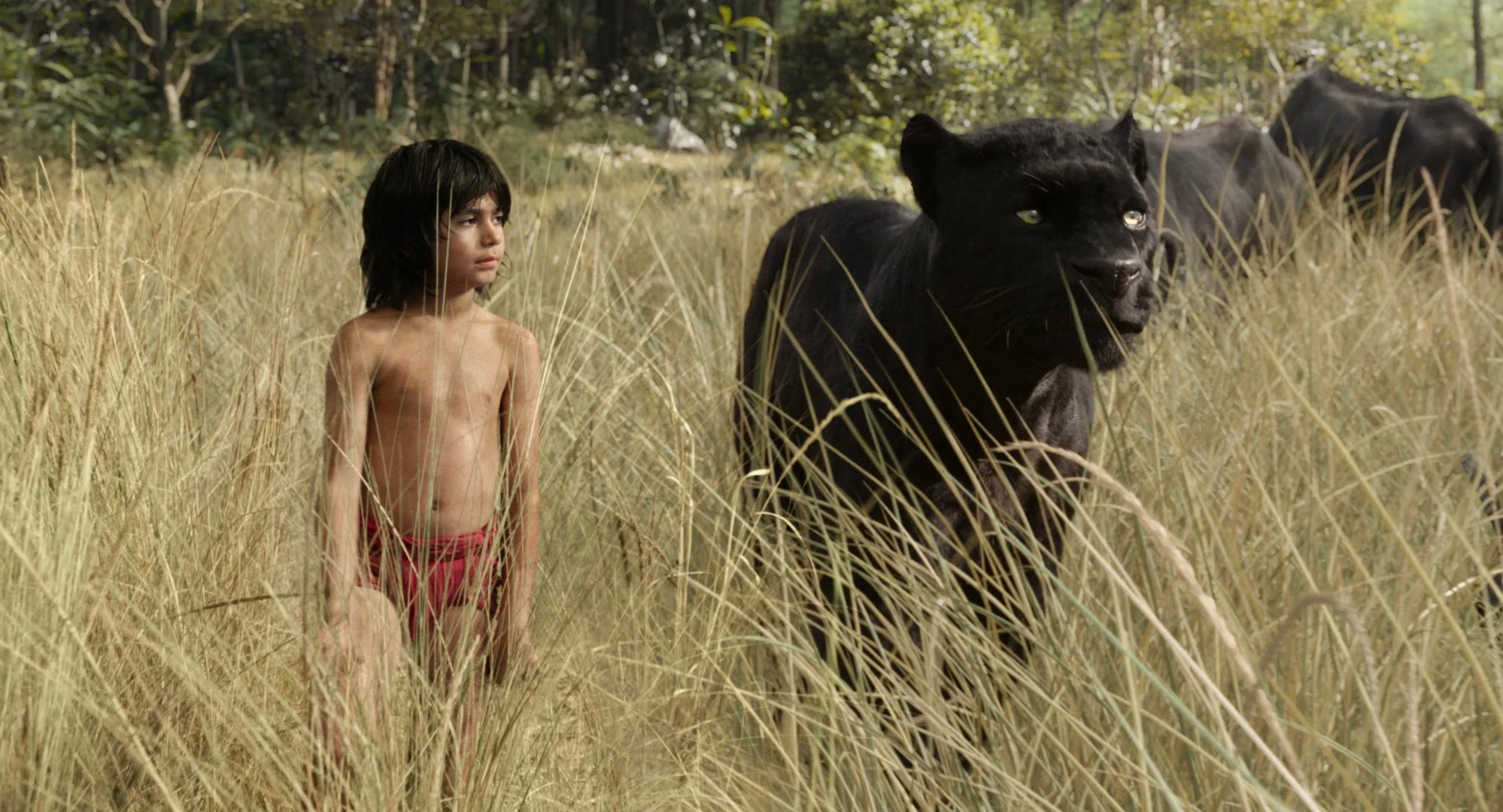
It cannot be understated how fantastic these sequences look. The visual effects featured here are pushing the boundaries of what can be done with visual effects. All one has to do is spend but a moment in the world of the film to be completely immersed in it. With state-of-the-art digital technology, viewers are transported to a jungle so tactile it’s easy to forget that it was shot on a soundstage with a green-screen backdrop. Here, they meet animals so lifelike it’s easy to forget that they were all rendered on someone’s computer. The illusion that these are real, flesh-and-blood animals is never broken. Not even when they break out into classic tunes like “The Bare Necessities” and “I Wanna Be Like You.”
There are many more remarkable things about The Jungle Book, but I recommend you go see the film to find out what they are for yourself. Bring the kids. See it on the biggest screen possible. And prepare to be taken on an exciting, imaginative journey.
Darn you, Disney. You’ve done it again.
Grade: A-