Tribeca 2019: "Slay The Dragon" Review
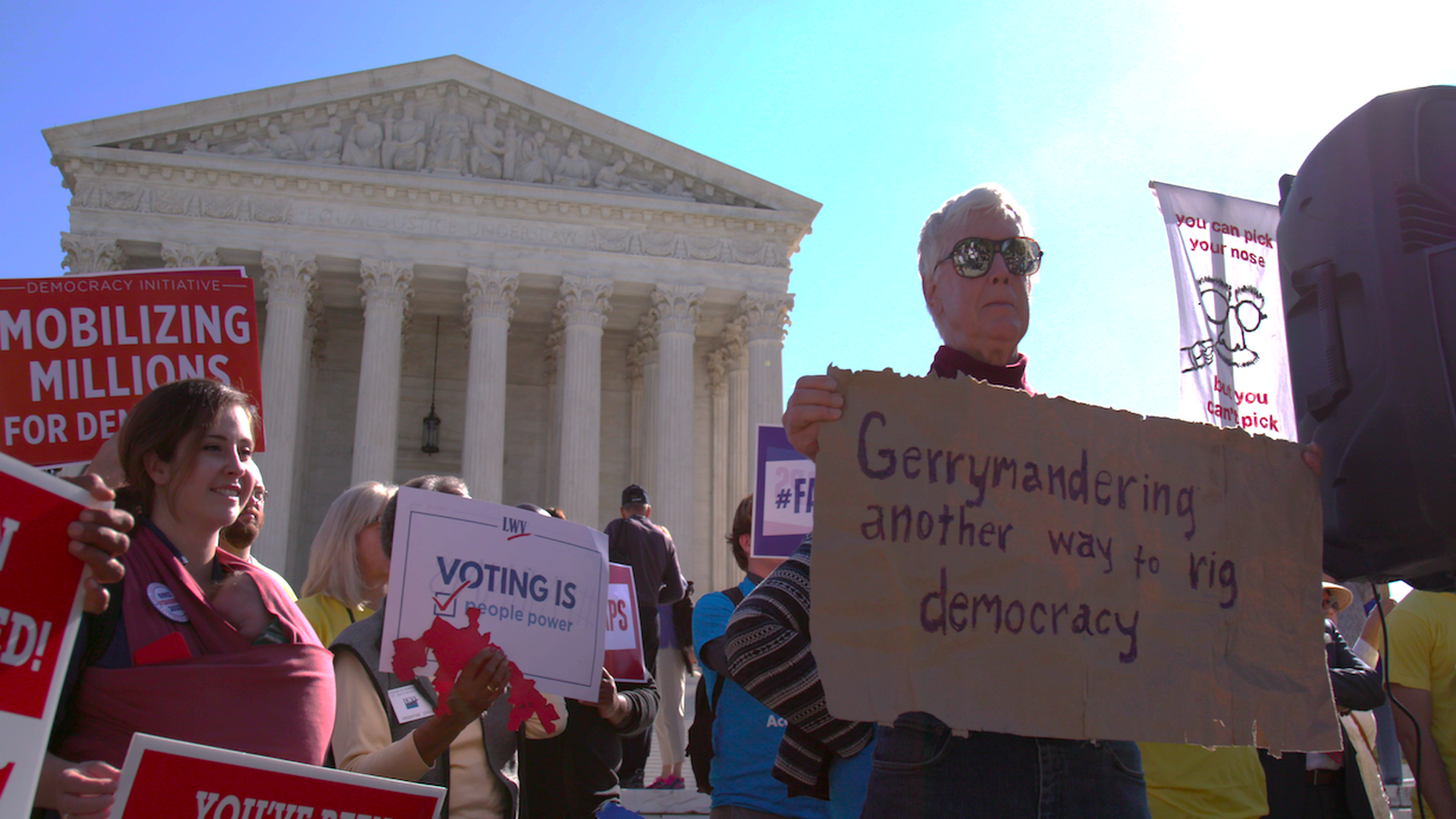
A secretive gerrymandering initiative launched 10 years ago threatens to undermine democracy as we know it, “Slay the Dragon” depicts the everyday people fighting this practice to make their votes matter.
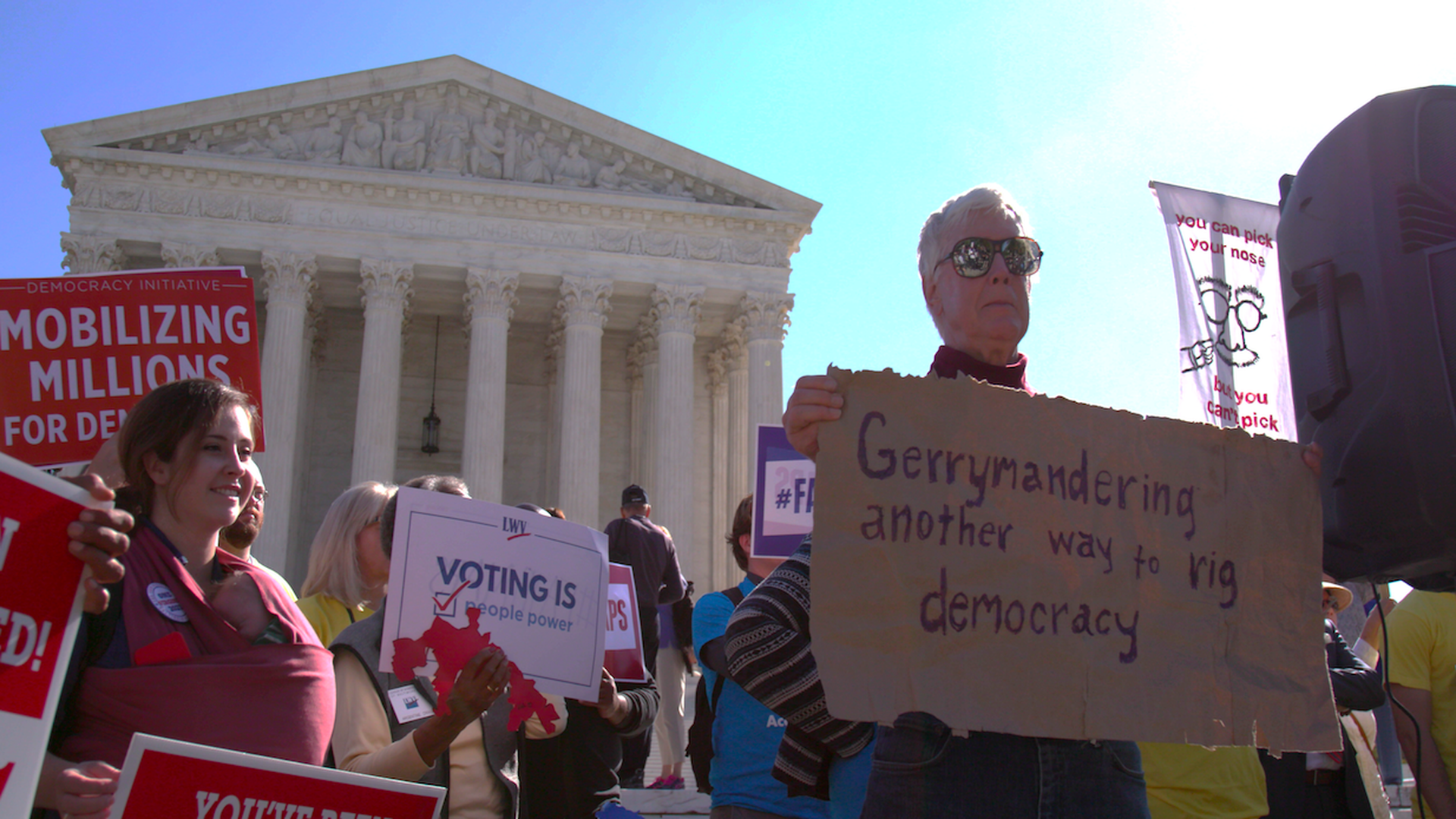
Per the documentary, a well-funded partisan initiative poured money into state legislative races in key swing states to gain control of their redistricting processes and used high-tech analytics to dramatically skew voting maps based on demographic data after the 2008 election. The result is one of the greatest electoral manipulations in U.S. history, one that poses a fundamental threat to our democracy and exacerbates the already polarized atmosphere in Congress and state houses across the country.
Gerrymandering is the practice of redrawing electoral maps to serve the party in power. It is not a new philosophy, however. In fact, it has been around for centuries. But in today’s hyper-partisan political arena, it has been taken to unprecedented extremes, fueled by the elimination of corporate campaign contribution limits and the availability of vast amounts of personal information.
This documentary, directed by Barak Goodman and Chris Durance, is enlightening even for the well informed citizen. It is beautifully infuriating and begs for a call to action. It is polished like the politicians it presents and perfectly articulates the waning faith in democracy across the country. It is bias to a fault, but listening to Chris Janikowski—with all the wiles and smiles—boast his “redmapping” project of 2010 is stomach-turning. That is, I’m all for this bias narrative.
That being said, we also experience hope in the form of Katie Fahey, a Michigander who forms the group Voters Not Politicians working to bring a measure onto the state’s ballot to require an independent group—not the legislature—to draw these aforementioned lines. And in Wisconsin, an activist group challenges the state’s redistricting in a case that makes its way to the US Supreme Court. Voters Not Politicians breathes life on the fire that is hope, and offers a glimmer of positivity in a documentary that is otherwise quite depressing.
Unless, of course, you are a conservative reader. As a year in politics, 2010 was the dam break that opened the levy to a tsunami of republican reform, bringing in a wave of conservative laws and bills in its aftermath. The writing on the wall, however, is that America is getting more diverse, more educated, and the republicans feel their time is dwindling.
Any practice that allows for elected officials to dismiss accountability is an unsafe one. More importantly, you can draw a direct line—no pun intended—from oppressive voter ID laws to election results. If it weren’t for a compelling narrative structure, I would’ve stormed out of the theater. It truly was a well done documentary, but above anything else, “Slay the Dragon” reminds us what is wrong with our democracy. It is split at the seams and we have to find a way to heal the wounds.
Grade: B
Tribeca 2019: "17 Blocks" Review
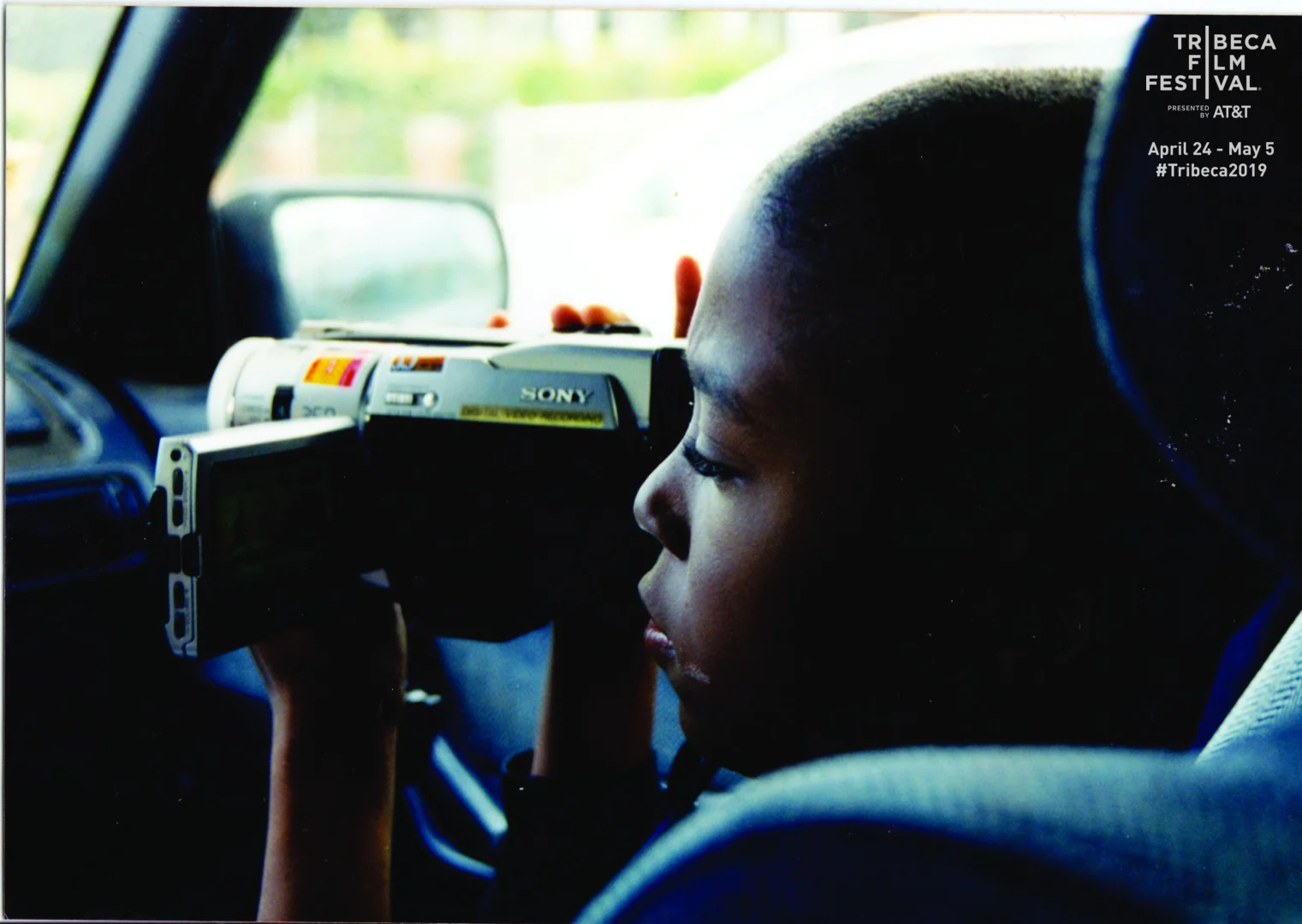
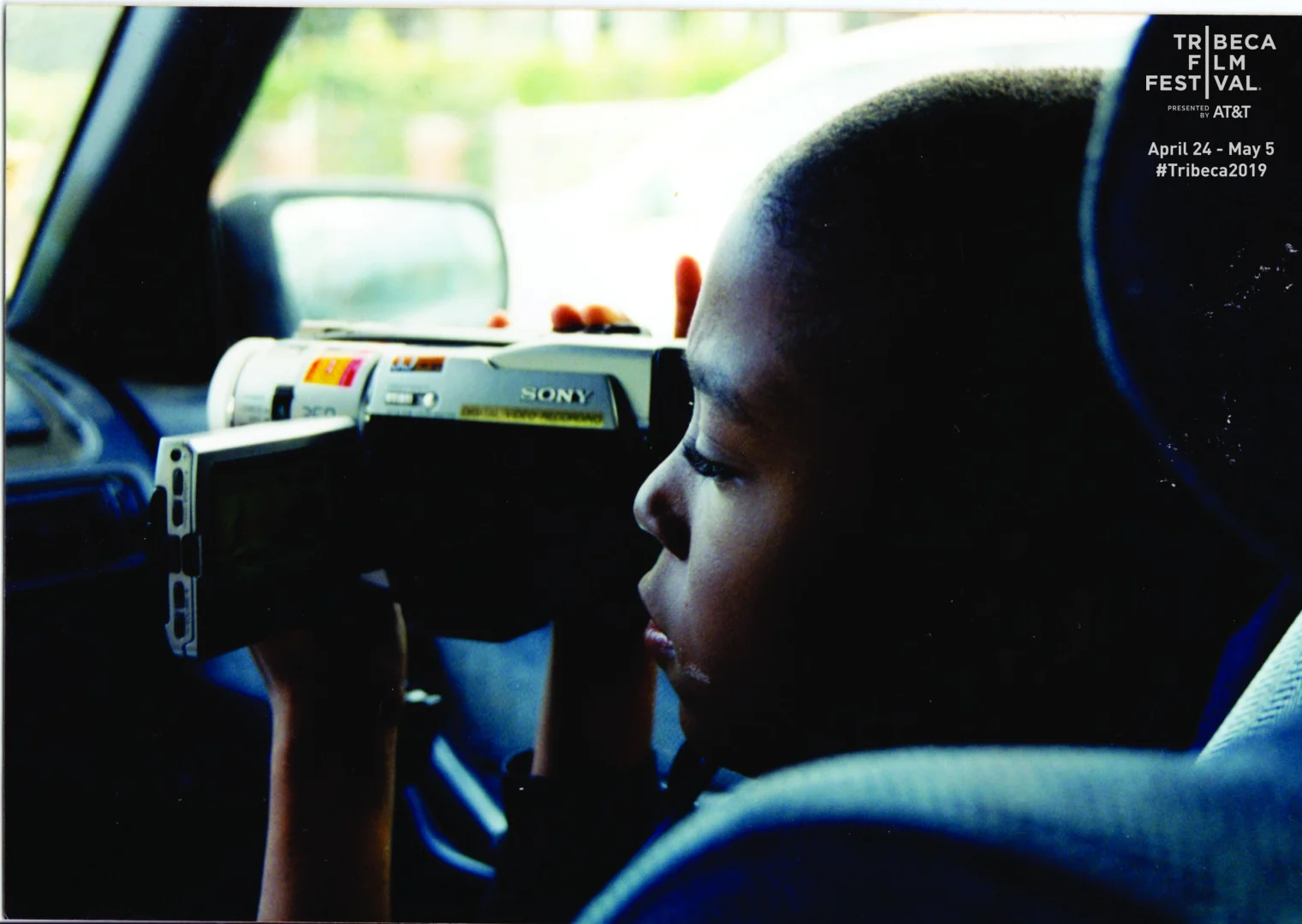
In 1999, nine year old Emmanuel was gifted a video camera. What he captured of his family over the following years would be the most poignant home movie ever cut together. “17 Blocks,” a film by journalist, bestselling author, Emmy® Award-winning filmmaker, creator of Found Magazine and contributor to public radio's This American Life, Davy Rothbart, is a profound narrative piece that takes the ‘Boyhood’ approach to storytelling and blows it out of the water.
“17 Blocks” chronicles—over two decades—a family, which like many, deal with their share of hardships. Cheryl, the matriarch of this ever-growing family, is raising her three kids alone. She is funny and charismatic, always harboring dreams of becoming the next Marilyn Monroe. Her dreams, however, are thwarted by responsibility and a cancerous drug addiction. These tendencies surely rubbed off on her kids who lacked a proper father figure. All but Emmanuel. Emmanuel had a lust for life, a drive and compassion for those he cared for. The only one in his family to graduate high school, Emmanuel had big plans of his own. Until it was all over in a second. The opening shot of this documentary shows a rainbow touching down over Southeast Washington, D.C. However, this story is not all rainbows and butterflies.
The year Emmanuel was shot by two, masked robbers, there were over one-hundred homicides in D.C. alone. The Sanford family and Rothbart have offered us this incredibly intimate insight into their world plagued by gun violence, poverty and addiction. The home-video aspect of much of this ninety minute non-fiction piece, feels invasive. We see what Emmanuel sees. Chilling and all the more impactful. We learned from Sean Baker’s “The Florida Project” that children offer a unique perspective to narratives replete with sadness and maturity because there is a youthful spirit that contests the tragedy head on with ignorant beauty. Emmanuel’s home video offers the cruelest of memories while he smiles through it all. His infectious spirit lives on in his young nieces and nephews who miss him dearly.
There are bright moments amidst all the sorrow, but the film begs the question: Why do bad things happen to good people? A truly introspective twist of emotions, both equally saddening as infuriating. But Cheryl offers a sage response to all the pain in her life in saying, “Hope is real, hope is alive, it’s what keeps us going, hope for better, hope for tomorrow.” Although she also recognizes that “some pain doesn’t go away.”
There is a moment when Emmanuel’s sister Denise is scrubbing his blood off the walls of their tiny apartment with a t-shirt rag as Beyonce’s “Irreplaceable” plays in the background and her children look on asking, “Where is uncle Emmanuel? Where is uncle Emmanuel?” To which all I can muster is a thank you to the Sanford family for being brave enough to share their story with the world. This film rips at the heart with focused blows. It is relentless. It is a cinematic triumph, but more importantly, it hopefully evokes change out of the people who have the ability to make an impact in these communities.
As a wise woman once said, “Hope is real, hope is alive, it’s what keeps us going, hope for better, hope for tomorrow.” I like the sound of that.
Grade: A

Tribeca 2019: "Blow The Man Down" Review- Crime Thriller With Coen Brothers Feel
If the death of their mother wasn’t difficult enough on the Connolly Sisters (Sophie Lowe and Morgan Saylor), now they have to maintain the family business, pay for a large home they cannot afford and deal with the strange behavior of their late mother’s friends. Then one of them kills somebody. If they want to, Bridget Savage Cole and Danielle Krudy are going to be making films for a long time. Both graduates of Wesleyan University, Cole and Krudy teamed up for their first feature with “Blow the Man Down”—a bold first film that, although presents some familiar story beats, offers a gripping narrative that exudes originality.
“Blow the Man Down” begins in song, a fisherman’s hymn you may hear at a bar. The song resurfaces in the film at different occasions as if the images on screen are merely the poetry between the lines of the song. I’d like to think the captain of the fishing boat, boasting his aria, is sitting us down to tell us a tale from long ago over a few pints. This approach to the narrative evokes a classic Coen brothers feel, like a “Fargo” set in Maine. It is the darkest of comedies but the humor works and this writing tandem knows exactly when to implement it.
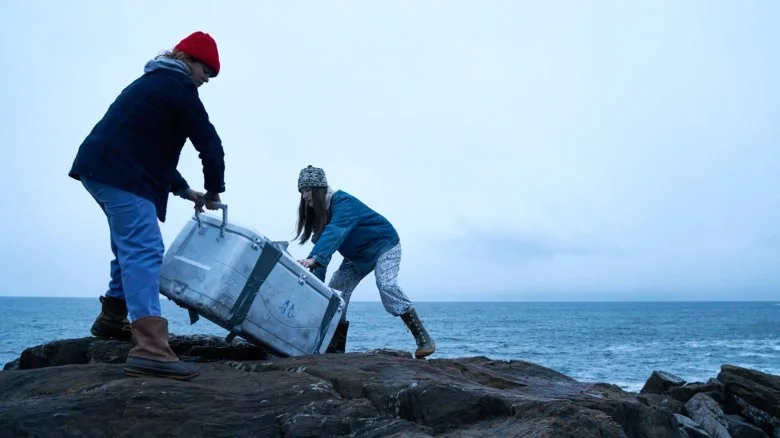
The film is a mystery, a thriller, full of the classic tropes: the bag of cash, the hidden murder weapon. And to stress further, the discoveries of the above by our protagonists feels convenient at times, as if to only serve in pushing the plot forward. I must admit, however, this is a stretch for a criticism. The development of character and story is handled with aplomb. It is clear these two storytellers focus heavily on their characters.
This film boasts a powerfully female-led cast which features Annette O’Toole, June Squibb and is helmed by Margo Martindale who is a force to be reckoned with. Martindale plays Enid Nora Devlin, a businesswoman who presides over an eerie bed-and-breakfast called the Ocean View. Except, the place is a brothel. Enid has been running this joint for years, and although she now flies solo, once had the help of her friends. As the criminal operation soon unfolds, it threatens to unveil the disturbing underbelly of this seaside town.
The photography of the film is beautiful. The geography of the area certainly lends itself well to a majestic looking picture, laden with intense blue hues. While pleasant to look at, the thrilling nature of the story acts like a car crash—impossible to look away from. What Krudy and Cole steer clear of, however, is the ominous-music-thing-lurking-in-the-corner-bit. Of course, this twist is refreshing in that we have but the performances to lean on for the thrill.
After premiering at Tribeca this April, “Blow the Man Down” is still looking for U.S. distribution, but I have no doubt Krudy and Cole will find their audience. This is a true ensemble piece. A film that introduces two cinematic voices that, as Loren Hammonds puts, “won’t soon be forgotten.”
Grade: B+

Tribeca 2019: "Other Music" Review- A Cacophony of Memories
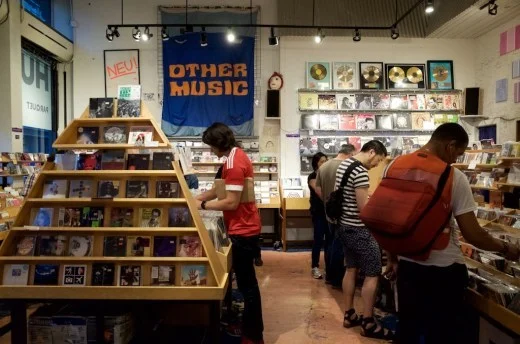
“Other Music” is one of this year’s feature documentaries at Tribeca, a film about a record store that opened in the East Village in 1995. If I took away anything from this documentary, however, it is that Other Music was not just a record store.
This documentary was directed by married couple Puloma Basu and Rob Hatch-Miller, an LA-based team that has specialized in music video production and recently collaborated on the soul music documentary feature Syl Johnson: Any Way The Wind Blows. The film chronicles the store’s 20-year history and features artists and bands such as Regina Spektor, Vampire Weekend, Animal Collective, the Yeah Yeah Yeahs, the Strokes, Interpol and TV On The Radio. The record store, which closed in 2016, was a solace for the independent musician. It was a destination for artists, industry representatives, music lovers and wanderers alike. It was a place where bands were formed and friendships blossomed. Other Music created an environment that supported musicians and allowed bands to grow, which ultimately served as a great influence on the music scene in New York City.
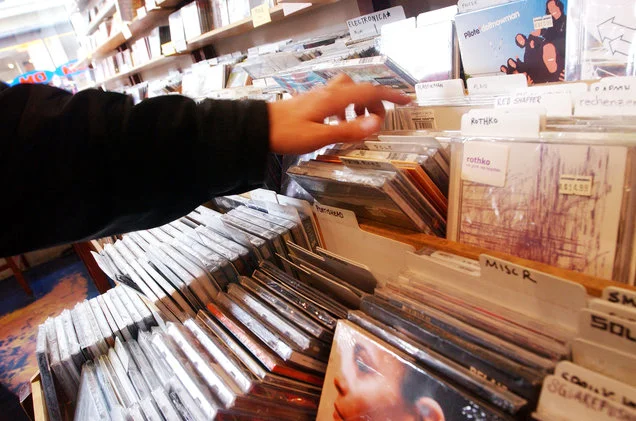
As retail stores lose business to online shopping, Other Music reminds us how human interaction can help nurture a community. When you enter the store there are shelves replete with vinyl, many of which records are labeled with a hand written note card. A professional vote of confidence for the work. There is also something gratifying about owning something tangible you spend money on. The spirit of this record store certainly lives on in a world dominated by online streaming services. The film does a great job focusing on employees of the store as well as customers who frequented the shop, and these customers cried when the store closed. I may have even broken down watching this film and I never had the chance to go there before it closed, but I digress.
From a storytelling perspective, Basu and Hatch-Miller succeed in chronicling a beginning, middle and end. They take you on a journey that offers great company and even better music. They extinguished my only criticism of the piece with a cacophony of noise, but I had to wait until about two-thirds the way through the film. From an editing perspective, the cuts could have been more inventive, creating a rhythm to compliment the narrative. But as the story neared the end and the store closed, the directors made their own music. It was a beautiful and emotional ‘Trashing the Camps’ style tune that satisfied the itch for something more self-reflective.
It is important to note that I don’t typically end a review in personal anecdote, but I’d be remiss if I didn’t articulate the profound impact this film had on me. As the credits rolled the theater erupted in applause, I calmly rose from my seat and exited quietly so as not to disturb the fellow movie goer and I walked. I walked to 15 E 4th St, just blocks south from the theater. There’s a coffee shop there now, one of many in the area. But just a few years ago was a record store that changed many lives.
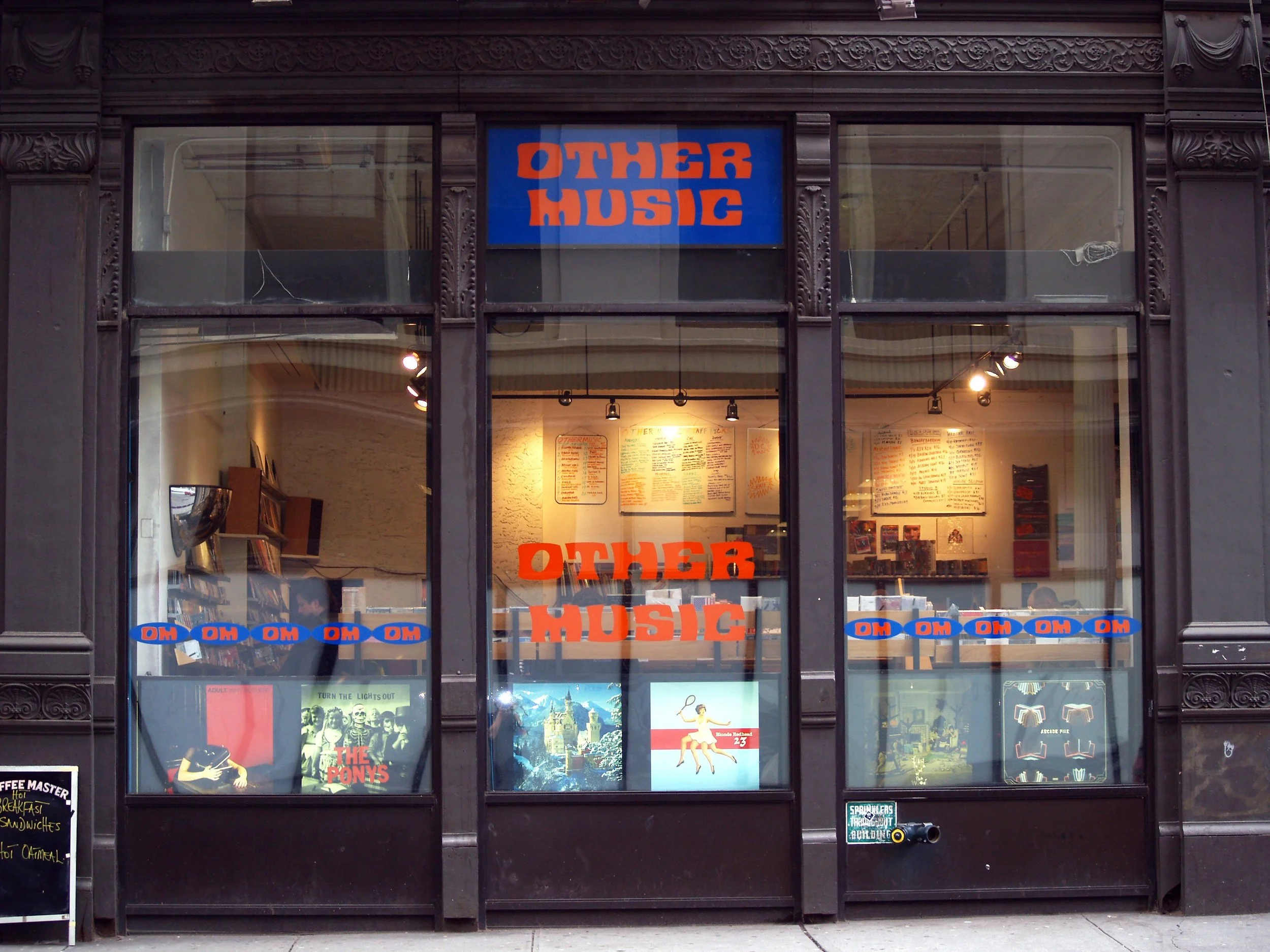
Basu and Hatch-Miller welcomed me into their world of groove and funk, rock and roll, pop and disco, they sat me down for a history lesson and spit me out onto the streets of New York looking for an album that could fill the vacancy they created. In a world cluttered by noise, this film broke through it all with a heartfelt focus and all I can say is ‘thank you.’
Rating: B+

Tribeca 2019: "East of The River" Review

Not every life is a fairy tale, but every life has moments of levity, beauty, and love that can be found in them. East of The River is a day in the life film about a young girl who doesn’t seem to have the best life, but she’s making the best of it. Teonna (Ayiana T. Davis) is unexpectedly suspended from school. After trying to find out why and getting no answer, the only question she has is if she can still get breakfast. Suspended and forced to hit the streets, Teonna links up with her friend Malik (Malachi Mack) who seems to ditch school often. They find Sara (Steloni Mason), who has given up school completely for money opportunities in the streets.

Sara takes Teonna and Malik on an adventure through Washington, DC and east of the Anacostia River. Teonna’s admiration of the older, seemingly more sophisticated Sara is seen through lingering shots of Teonna’s eyeline gazing up at her. Director Hannah Peterson has certainly picked up a few things after serving as a production assistant for Shawn Baker’s The Florida Project. Her use of first time actors to tell this story makes it soaked with authenticity. Peterson’s constraint in allowing a scene to breathe and take shape permits the audience to live in the moment with this group of teenagers. They may not make the most ethical decisions, they’re the kids you wish would be quiet and sit down on the metro, but this is life for them. These are the cards they’ve been dealt and this is how they deal with it.
East of The River is a short that could very well be turned into a feature down the line. Its characters are fully developed and interesting to watch. If nothing else, it’s a good reminder that you can find beauty in the little things of life, and sometimes that gratitude can overcome your surroundings.

Tribeca 2019: "Noah Land" Review
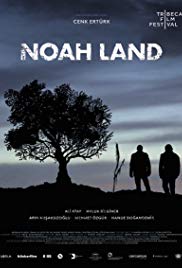
A thoughtful and provoking debut from Cenk Ertürk, “Noah Land” immediately grabs you with a nostalgic score whose auditory familiarity is appropriately somber.
Coming to terms with his terminal illness, Ibrahim (Haluk Bilginer) asks his son Ömer (Ali Atay) to drive him to the village in rural Turkey where he was raised. However, Ömer soon realizes there is an underbelly to this request that slowly surfaces. In short, Ibrahim wants to be buried beneath a tree he planted as a boy. This tree, and more specifically this land, however, had been in dispute which is what cast Ibrahim’s family away from the community years ago. Since, the land has become a holy site of sorts, deemed the “Noah Tree” after the Biblical figure whom the villagers believe first planted it. Ibrahim, adamant of his just burial, must convince his ever-conflicted son for help while he too battles his own demons: a divorce and an insatiable anger brewing out of unaired grievances between himself and his father. Sentimental perhaps, but it is unclear what Ertürk is aiming for with this film. A slow-burning, dry drama that leaves you questioning how you feel about any of it all.
Ertürk uses a conventional color palette nicely throughout, replete with fiery oranges and deep-sea blues. He also uses earth tones as a crutch and the natural beauty of the landscape, for which no one could be faulted. Not as much a conversation piece but more a declaration of fact: rural Turkey is beautiful. Of course, then, Ertürk uses the tree as a central motif to bleed through the photography and color design of the film.
While the score offered a soft blanket to rest on, the sound mixing needed work. Oftentimes too loud, the SFX of breathing felt more like an editing misstep than a creative choice. But the issues didn’t stop there. The film’s problems begin almost immediately, as Ertürk throws the audience into the deep end without explaining how the principal characters connect or even why they act the way they do. Let us begin with the first scene with Ömer and Ibrahim. Ibrahim, sick and elderly, struggles to get out of the car and even more so on his walk into the nearby convenience store. Yet his son, Ömer, not only doesn’t offer to help him, but takes a piece of gum out of his mouth and wedges it into the lock of the passenger side door so that his father must sit in the back. Without the context of their relationship, Ömer’s action appears unnecessarily cruel. Even when we learn more about Ibrahim’s abandonment of Ömer and his mother, it is difficult to sympathize with him.
That being said, as Ibrahim states, “there is a very fine line between revenge and justice,” and Ertürk is using the character to explore that idea. And while Ömer’s relationship with his father is sensibly complicated, it’s his relationship with his ex-wife, Elif (Hande Dogandemir), where things really get muddled. This, of course, is not to discredit the characters themselves because all three actors give incredibly evocative performances. Simply put, Ertürk hasn’t given the audience the means to understand their unique perspectives.
In a thematically driven narrative where metaphor is ubiquitous, it is expected that Ertürk wouldn’t stick every landing. But I’d be doing a disservice to dismiss this film entirely as a failure. It has a plethora of redeeming qualities that would bring me back for a second viewing, including an ending that makes you question—what is it in our dreams that causes us to act in the present? The longer we spend with Ömer and Ibrahim it is clear the apple doesn’t fall too far from the tree, and at its core, this film paints that picture nicely.
Grade: C+

Tribeca Film Festival '18: "Salam" Review
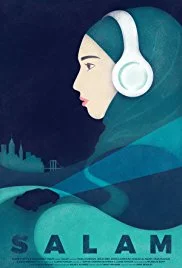
Salam is the type of film you go to a festival to see. Writer/director Claire Fowler’s short film is layered in both its storyline and characters. With a stellar performance by Hana Chamoun, this film is worthy of a conversation after the lights come up.
Salam (Hana Chamoun) is a Lyft driver from a tight knit family, but you can gather that Lyft is a means to a bigger end. A portion of her family lives in Syria. When her New York based family gets word of a bombing in Syria, it’s a waiting game to know if their loved ones are ok. To stay busy and rest her nerves, Salam decides to go make some money and pick up passengers. After dropping off a couple love birds, Salam picks up Audrey (Leslie Bibb), who seems to be in distress herself. The exchange that follows is a layered interaction of surface expectations versus what’s really underneath the surface of our daily lives.
Cinematographer, Nicholas Bupp uses natural lighting to showcase New York’s night life. The dark shadows and color scheme gives the film a grittiness that highlights the serious nature of waiting for information that could literally turn your world upside down. With a less skilled writer, the subject matter could be a very heavy-handed, we’ve seen it before look at immigrants and the now stereotypical Islamaphobic pairing we see in films. Instead, Fowler gives us a complex character that we know. Salam is a sister, an aunt, a wife, and a caring person. In turn, we care about her, and understand the weight she’s carrying in the midst of her drive.
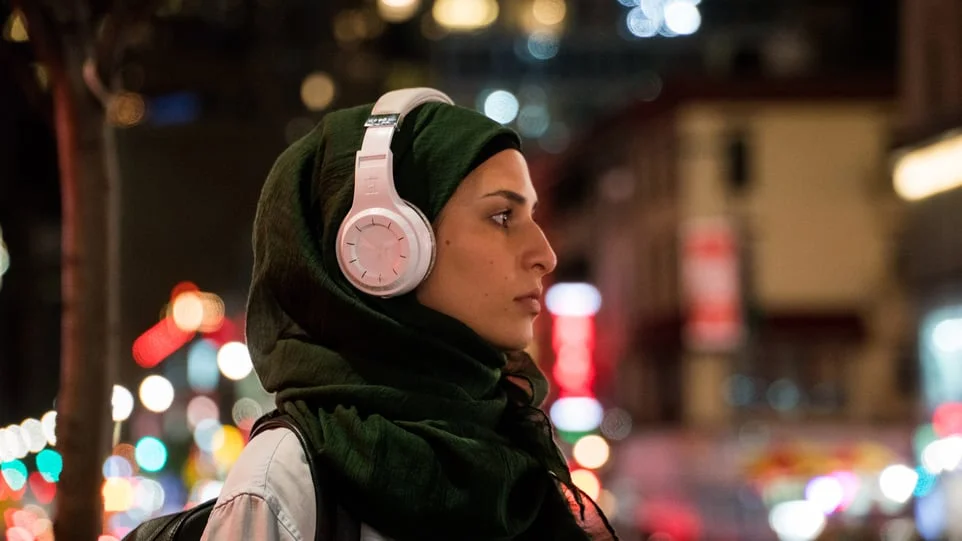
Salam reminds us of the ties that bind us all as a human race, while addressing the blockades we’ve constructed by putting people in boxes of certain races or ethnicities. Fowler’s interest in empathy and her ability to create relatable characters gives us a film that helps us think about how we interact with one another in this complex thing called life. This is one to watch!

Tribeca Film Festival '18: "Bad Peter" Review

Bad Peter is the beginning of a good Black Mirror episode. Directed by Zach Strauss, it’s a slice of life look at what AI capabilities could become in the future. While the Big Brother concept isn’t new, the characterization of Strauss’s characters is what makes it an intriguing peak in.
Rachel (Frankie Shaw) is an expectant mother. Her day is regimented by a personal automated assistant. Peter is a white rectangular boxed speaker with a glowing red light that lights up like Siri or Alexa when it speaks. At first glance, Rachel follows Peter’s suggestions as a way to optimal health for her and the baby. As the film moves forward, Shaw’s performance amps up from happy and relaxed to a stressed and upset mother-to-be in a beautifully revealing way.
Simplicity is key in this film. Cinematographer Noah Greenberg gives the film a bright, clean and sterile look. Susie Mancini’s production design gives the single mother’s home a somewhat rustic and meager look. These elements enhance the viewer’s draw into the story of what eventually makes a dark turn.
Well crafted and directed by Strauss, the film’s noteworthy theme is the intersection of the justice system and artificial intelligence. It’s a future that could indeed be around the corner. Definitely worth checking out!

Tribeca Film Festival '17: "Dear Basketball" Review

Photo courtesy of Tribeca Film Festival
Some stories can’t be filmed and told as artistically as an animation can. “Dear Basketball” is a top notch example of that. The recently retired, world famous, Kobe Bryant pours out his heart to the game in this short animated film. Within six minutes, the film encapsulates a life time of achievement on an intimate level that a documentary might not have captured in the same way.
Glen Keane’s visually stunning animations swirl and dance on the screen. They take us from the little boy who shot hoops in his room as a child using his father’s rolled up socks as a ball, to the phenom on NBA courts. Add to that, the music of the legendary John Williams to score the short and you have something magical.
Take away the glitz and glamour of who the main character is and even the moving score, and you’re still left with a universal story. We all start out as a kid with a dream. That’s the story of “Dear Basketball”, and a beautiful reminder that with hard work and opportunity you can achieve your dream too!
Make sure you catch it: https://tribecafilm.com/filmguide/dear-basketball-2017

Tribeca Film Festival '17: "Big City" Review
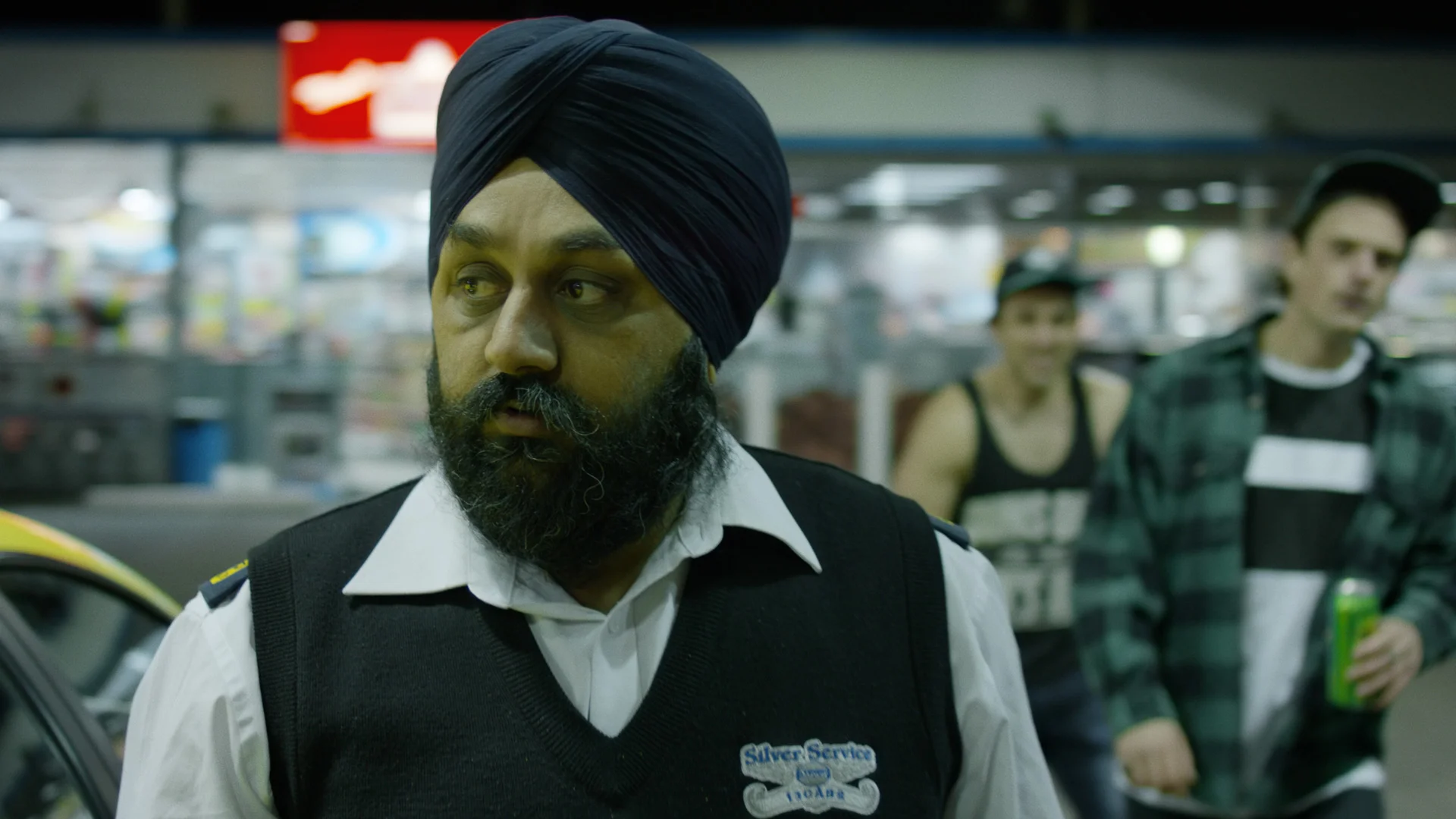
Photo courtesy of Tribeca Film Festival
If Tom Cruise’s Vincent were a nice guy in 2004’s "Collateral", then directors Jordan Bond and Lachlan Ryan’s “Big City” could possibly be the short version of the film (minus guns and shootouts). Vijay (Gurvinder Singh Atwal) is a lonely taxi driver working the streets of Melbourne, Australia at night. After picking up Chris (Chris Fortuna), a seemingly good-hearted drunk, a friendship grows.
The short is a good exercise in establishing characters quickly and tapping into the universal pain and humor in life. Whether exploring Vijay’s ridicule as a minority in Melbourne, or playing a harmless joke on a would-be rider, the film has its’ heartfelt moments. The cinematography of the film really draws you into the city night life, which helps to amplify the film’s morning after conclusion.
There are a few moments in the short that feel a little forced, perhaps due to Atwal’s performance. However, the message of true human connection and the lack there of is certainly felt. Check it out if you have time!
https://tribecafilm.com/filmguide/big-city-2017
Tribeca Film Festival '16: "Live Cargo" Review
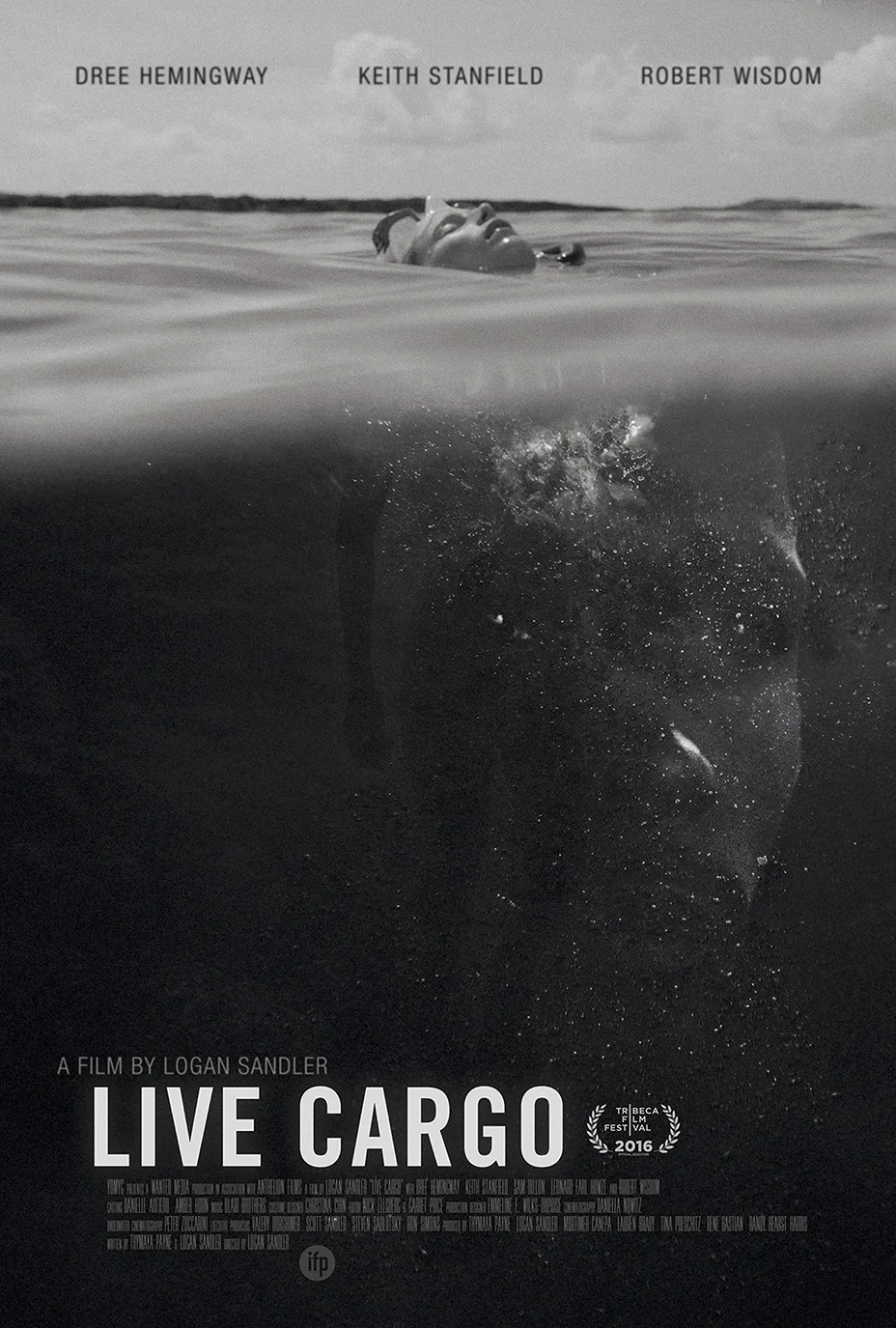
Out of the films I saw at Tribeca this year, one that sticks with me is Live Cargo. It could be the beautiful black and white cinematography. It could be the unconventional storytelling. Or maybe it was the moving performances and skilled direction. Out of the number of reasons that the movie still haunts my film nerd dreams, the number one reason is because I left it feeling like I partook in a refreshing cinematic experience that was as pure and passionate as something from a graduate thesis film but technically proficient enough to study and dissect in the same class!
In the film, we find Nadine (Dree Hemingway) and Lewis (Keith Stanfield) at one of the lowest points of their married life. They’re sitting in a hospital room, noticeably apart, while Nadine holds her newborn baby’s corpse in her arms. The black and white film emphasizes the moment even more, stripped of its color, just like the couple’s world has been. In order to escape and heal, they go to the Bahamas. It’s where Nadine grew up vacationing and learned to dive with Roy (Robert Wisdom), the guy that knows everyone and is the self-described policeman of the island.
Upon arriving they meet Myron (Sam Dillon) who is on the boat helping Roy for the day. Myron is a young man who was abandoned on the island by his parents. He knows the island, he knows how to survive, and he knows he wants Nadine. He survives by working for the major boatmen of the island, Roy and Doughboy (Leonard Earl Howze).
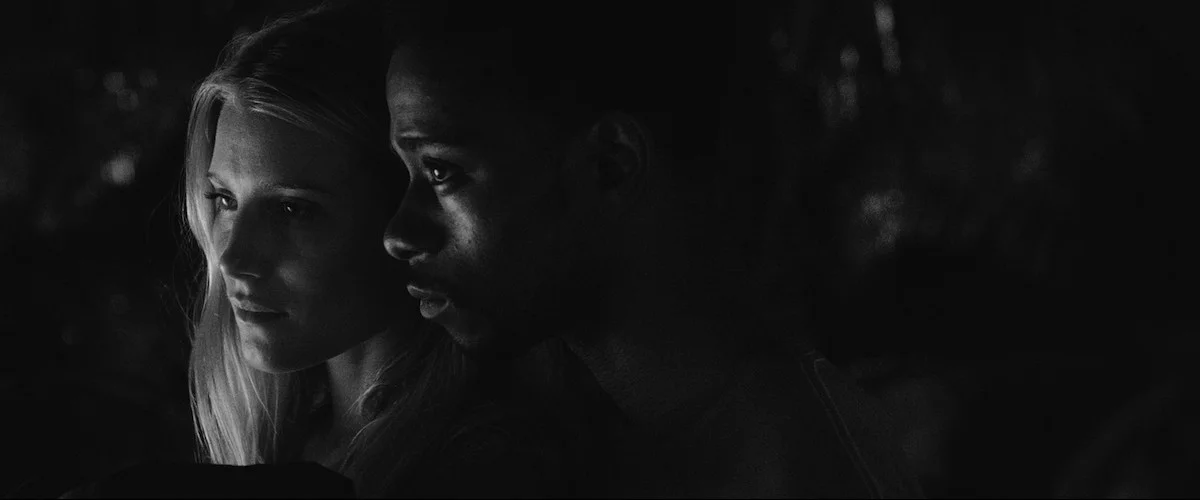
As the film moves forward we witness Nadine and Lewis as they deal with their loss. They’re like similar ends of magnets; attempts at coming back together are thwarted by the ordeal. Yet a slowly brewing turf war on the island just might be what they need to bring them together.
They say a picture is worth a thousand words. Cinematographer Daniella Nowitz captures gorgeous frames worthy of a print ad at times, while using the black and white to simultaneously catch tones and textures we wouldn’t usually notice. The sweat seeping through a shirt, or glistening off of someone’s forehead stresses the heat of the island and the work of the islanders. The lack of color itself, in a place where we would expect to see stunning hues, forces your focus on the story while enhancing the way you take it in.
Director Logan Wyatt allows the images to speak more than his actors at times (and their performances are wonderful). How do you put loss into words? What’s the cost of a life? Wyatt explores these questions by letting his actors be in the moment and cutting the film together in such a way that his audience can contemplate and draw conclusions. Having grown up partially in the Bahamas, his intimate knowledge of island life shines through by acknowledging the beauty of it while not exploiting it like a Sandals commercial.
The cast has the right blend of magic. Veteran Robert Wisdom is a driving force as the patriarch of the island, while Howze brings an underlying jaded ambition to his character. Hemingway, Stanfield, and Dillon give natural, nuanced performances that make for an intense triangle with tension slowly building beneath every interaction.
There is no question that Live Cargo may not appeal to some, because of its unique narrative and shooting style. It’s a mood piece that works visually and aurally to evoke emotion while telling its story. If you go with it, there’s no doubt in my mind that it will stand out in yours as well!
Rating: A
Check out my interviews with the cast and crew:
Tribeca Film Festival '16: "Kicks" Review
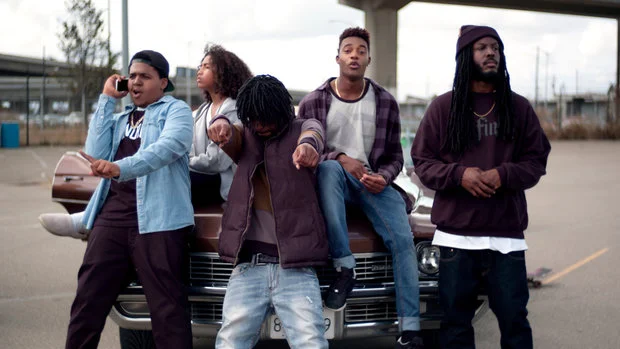
The bus always arrived early at my middle school. We had to wait outside of the building until the bell rang. During that time, the guys would stand around and shoot the breeze, crack jokes, and look at each others’ shoes. If you had fresh kicks, it was a talking point. That was in the suburbs of South Carolina. Co-writer/director Justin Tipping explores a Bay Area world in which shoes equate to self-worth, status, and respect in Kicks, which premiered at Tribeca this weekend.
Brandon (Jahking Guillory) is a high school, latch key kid fending for himself most days. What he lacks in size he has in speed to get away from bullies he tells us in narration. His mom is out providing, while he does the same stuff...different day. That includes hanging with his boys, ladies man Rico (Christopher Meyer) and funny man Albert (Christopher Jordan Wallace). Brandon doesn’t have much, but what he does have is an imagination in which an MTV-like moon man representing his higher self follows him around, and a pair of shoes that he’s had since middle school. His friends are like brothers, but even they have nice sneakers. At the age in which all you have to worry about is going to school, fitting in, and mac’ing girls, a nice pair of kicks would help Brandon be “somebody”.
Tipping does a great job at placing us in Brandon’s world and seeing life through his eyes. It’s rare to see an adult in the film, and therefore the stakes are scaled to the age level of the protagonist, but they quickly mean just as much to us. After scrounging the house for all his birthday money and selling candy on the street, Brandon has enough to purchase some dope Bred Ones from the local hustle man. For a moment, Brandon is about six inches taller, confident, and even has the courage to flirt with a girl. But that changes when Flaco (Kofi Siriboe), the local thug who runs the neighborhood, jumps Brandon and takes his shoes.
From there the film moves forward as Brandon decides to reclaim what was his, regardless of what it may cost. His hunt for Flaco takes him across town to his uncle Marlon’s (Mahershala Ali, who is absolutely stellar in his scenes), a party, and some pretty sticky situations. For an ensemble trio, the chemistry of Guillory, Meyer, and Wallace works well. Their characters’ bond is strong but hasn’t been tested, and the actors do a great job portraying the strain and tension that comes from helping a friend that’s running to the front line of death to recover shoes from a psycho.
If they still sell soundtracks, this will definitely be one for hip hop heads to download. Boasting a mix of Wu-Tang, E-40, Jay Z, Mac Dre, and more, the music sets the tone for the film with quotes from artists breaking the film up into sections. Yet more powerful than the film’s soundtrack is its message. Co-writers Joshua Beirne-Golden and Justin Tipping find a way to explore universal connections in an asinine hyper-masculine world. They use light moments to humanize tough ex-con Marlon as he holds his sick mother’s hand to keep her calm while speaking to Brandon, and show Flaco as a loving father playing basketball with his son. Where most movies have a tough guy or one sided villain, it’s hard to disregard Flaco because he does have a redeeming side. Therein lies the message.
We all have family, we all love, but somewhere along the line society has groomed us to not show the same care to our neighbors, especially someone who is different; even if that just means that they’re from the other side of town. In Kicks’ world of machismo we witness the turning process at various stages: through the eyes of the youngest, Jeremiah; those at the crossroads, Brandon and his crew; one constantly fighting for respect, Flaco; and one lucky enough to survive it, Marlon. While the visuals and music can be entertaining, the message is there as well. Perhaps Kicks can be a great conversation starter for an issue that plagues inner city neighborhoods today.
Rating: B+
Check out these red carpet interviews:
Tribeca Film Festival '15: "Cronies" Review

If “Friday” met “Baby Boy” on a blind date to see “Boyz In the Hood”, the resulting love child would be “Cronies”. As complicated as that equation is, it perfectly sums up the influences and themes the film explores like friendship, loyalty, personal evolution, not letting the past define you, and masculinity. Executive produced by Spike Lee, “Cronies” is the second feature length film from Michael Larnell and likely won’t be the last.
The low budget film is shot in black and white, and uses color to highlight major events much like “She’s Gotta Have It”. Covering the course of a day in St. Louis, the film starts at the home of Louis (George Sample III). Louis is trying to get on the good foot after making a promise to his girlfriend. They are raising a daughter together, and plan to celebrate her birthday the next day. Jack (Zurich Buckner) is Louis’s uncouth, hot headed, live-wire friend. It’s obvious that they were probably best friends at a point, but it’s not quite clear what is dividing their relationship in the beginning of the film.
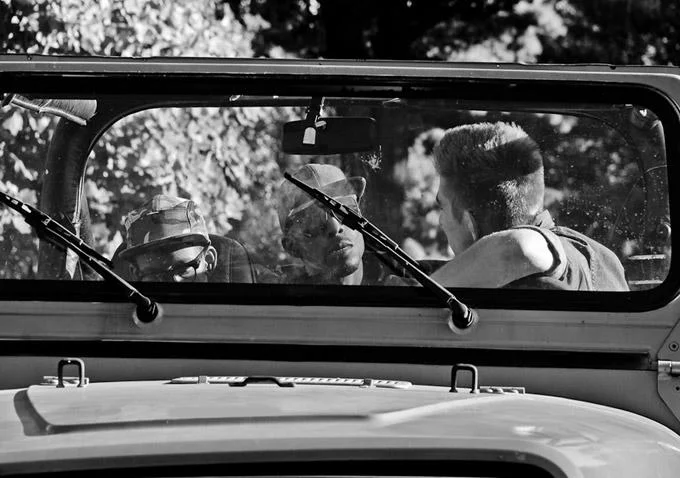
Andrew (Brian Kowalski) is Louis’s stiff, white co-worker from the local car dealership. When Andrew stops by to hang out with Louis, Jack takes it upon himself to inquire as to why. From there, Jack becomes the third wheel as he pushes his way into Louis and Andrew’s activities for the day. It’s an uncomfortable ride as Jack grills Andrew with questions like a jealous ex-girlfriend. Perhaps Jack feels that Louis is moving on in their friendship, and he doesn’t want to be left behind. Regardless, Andrew keeps his cool and stays on Jack’s good side, while Louis barely talks at all.
As the day goes on, Andrew slowly wins favor and a mutual tolerance with Jack. It could be the half naked girl, high on ecstasy, who swims in the pool at Andrew’s friend’s house. It could be because Andrew isn’t afraid to “holla” at random chicks Jack points out. It could be because “Andy” (as Jack calls him) keeps giving him squares (cigarettes) and let’s him smoke his weed when he asks. In all these instances Jack asserts his masculinity for the world to see. It’s in these moments that Larnell examines the perception of masculinity. Whether and how you rise to the occasion seems to define the trios level of manhood and perhaps establish the alpha in the group.
Each character hides behind a costume. Whether it’s Louis’s glasses, Jack’s shades and hat, or Andrew’s clean cut look, everyone uses their exterior wardrobe to shield themselves. It’s something we all do. It’s in Larnell’s one on one, man on the street interviews that their shields are set aside and their true identity is pierced by Larnell’s searing questions. In one scene, Larnell asks Louis if he’s in love with his girlfriend. It takes him a while to admit it and he finally concedes but not without a coinciding statement that asserts he’s not soft. Jack actually takes has his sunglasses off while answering a question. The man on the street interviews serve as story building emotional beats that work.
By the next day, the trio has been through enough to continue their friendship, proving that experiences build relationships. Louis and Jack have squashed their beef, and Andrew is a part of the family. The guys have matured just a little bit and regardless of if they continue to evolve as men, for the moment, they have.
Rating: B-
Tribeca Film Festival '15: "Live Fast Draw Yung", a Missed Opportunity
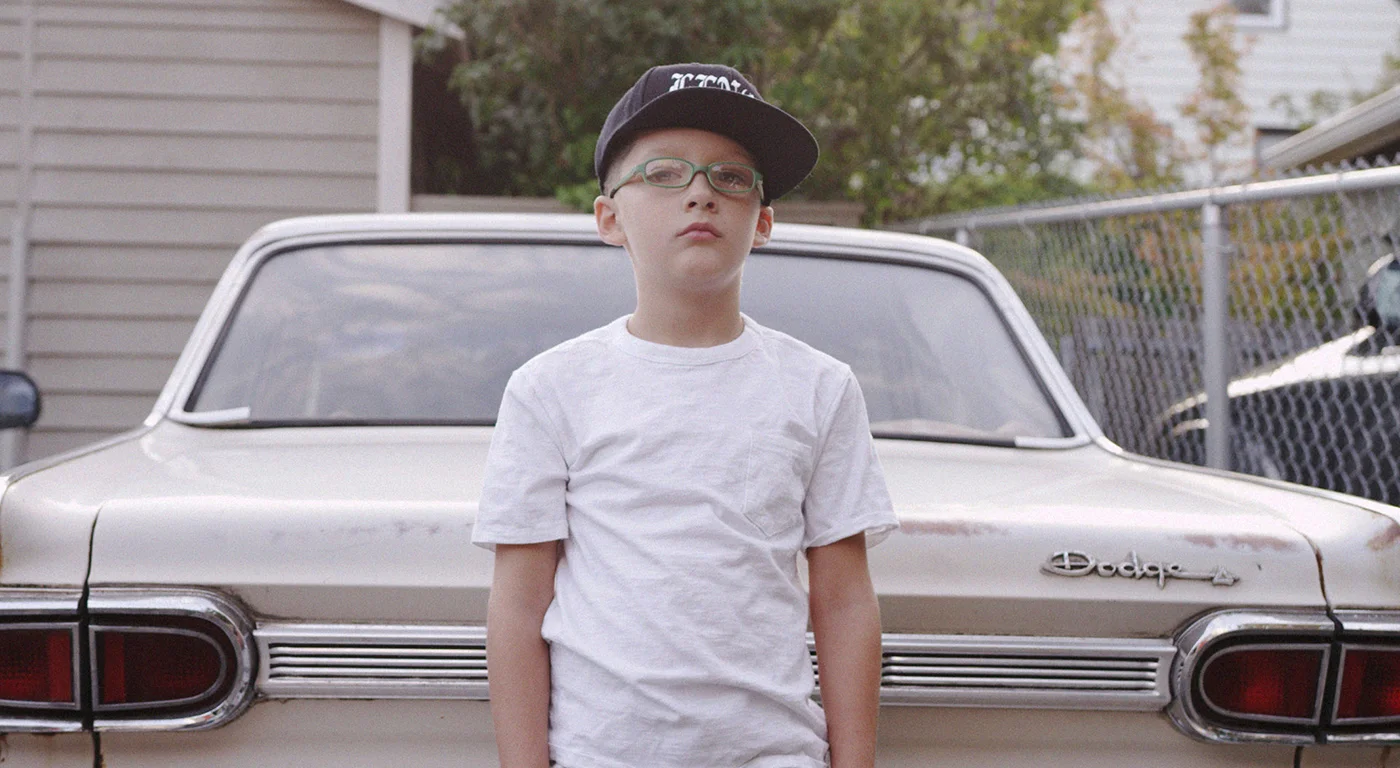
Photo Courtesy of Tribeca Film Festival
One short film that came out of Tribeca this year that I couldn’t shake was “Live Fast Draw Yung”. The film stars Yung Lenox, a 7 (now 8) year old hip hop portraitist who, thanks to his father’s aid, has risen to notoriety in certain hip hop circles. It played as a part of the Be Yourself shorts screenings. The irony is that Yung Lenox isn’t a hip hop lover by choice and inspiration, but by his father’s influence.
While the film displays Lenox’s talent and artwork, it’s not from his perspective. Instead, it’s entirely narrated by his father, Skip Class. The moment a filmmaker picks up a camera, they’re going to shape a story. The story directors Stacy Lee and Anthony Mathile created could have been shaped by Lenox, or shaped in a way that shows his passion for hip hop and his craft but it wasn’t. “Live Fast Draw Yung” has a punk feel with a hip hop twist and a cute kid at the center of it. So if you get swept away in the smoke and mirrors of it, you may miss the fact that Lenox is just a kid in a world created by his father.
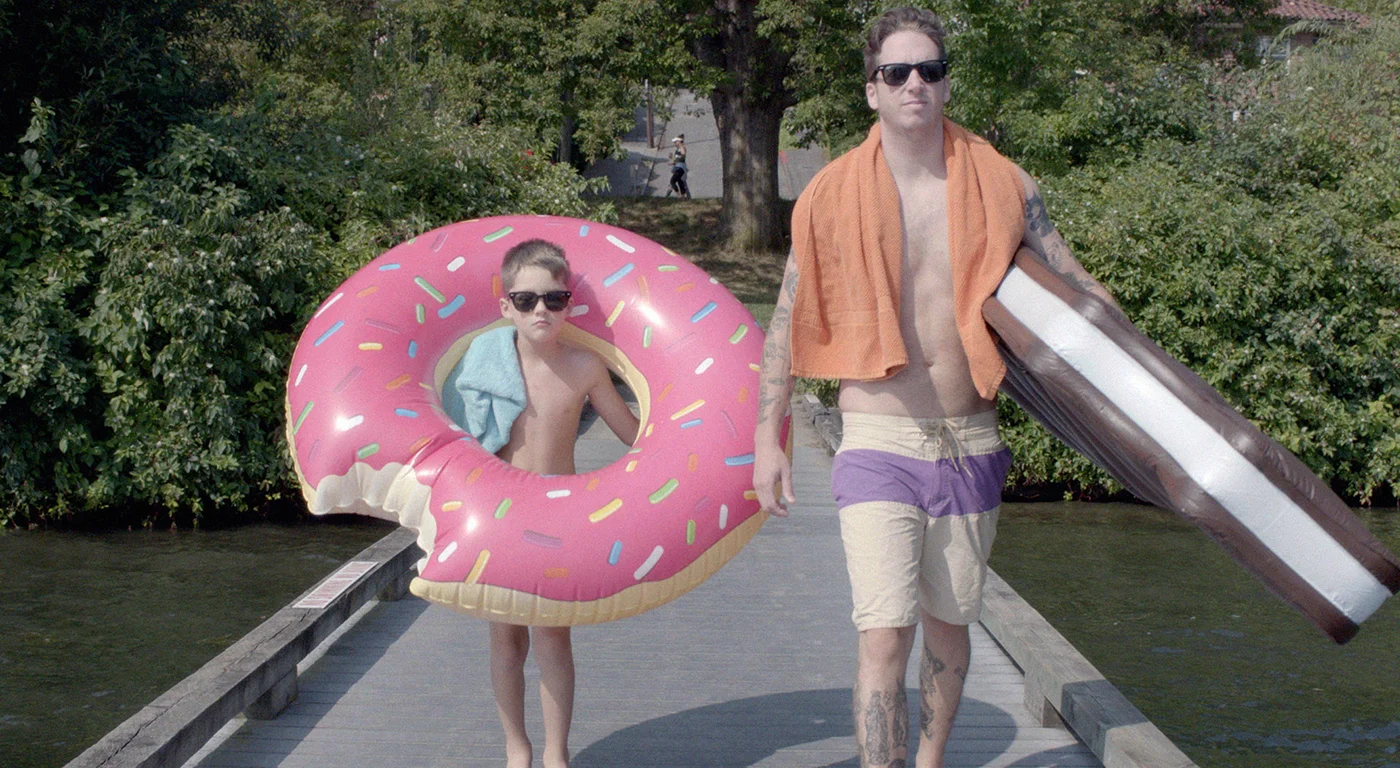
Photo Courtesy of Tribeca Film Festival
So why did the film stick with me? As a hip hop lover, it was evident to me that the drawings Lenox creates could only come from a hip hop lover of a certain age. Lenox isn’t old enough to know some of those classics, so he was pointed in the right direction. No matter how many photo ops Lenox has with rap stars, how the film is shot in a hip hop style, or clothes he wears, Lenox isn’t hip hop. His father loves hip hop and he found a great way to turn a business out of his son’s passion for drawing. Sadly, in its attempt to pose as a film about a phenomenal, young hip hop portraitist, it actually misses the opportunity to tell the story of one of the biggest love letters from father to son.
The apparent thread throughout the film is that Skip loves and adores his son. A chance instagram share of his son’s artwork turned into a business opportunity for the two to work together in a way any good father would love to do. Their collaboration has become so successful that there is now a short documentary focused on them opening at Tribeca! It's one father's love that made dreams come true. That’s something special, and the real story to be told. As a hip hop lover I squirm seeing the spin put on Lenox’s “talent” as hip hop’s Carvaggio, because he's actually just a kid drawing the pictures he's been told to draw. As a father I totally get the love that has propelled Skip to put his son out there, and try to instill lessons of confidence, business and hard work. The film is polarizing, but the message is mixed...or should I say missed? Sometimes even a film should dig deep and “Be Yourself”.
Tribeca Film Festival '15: "Stranded in Canton" Review
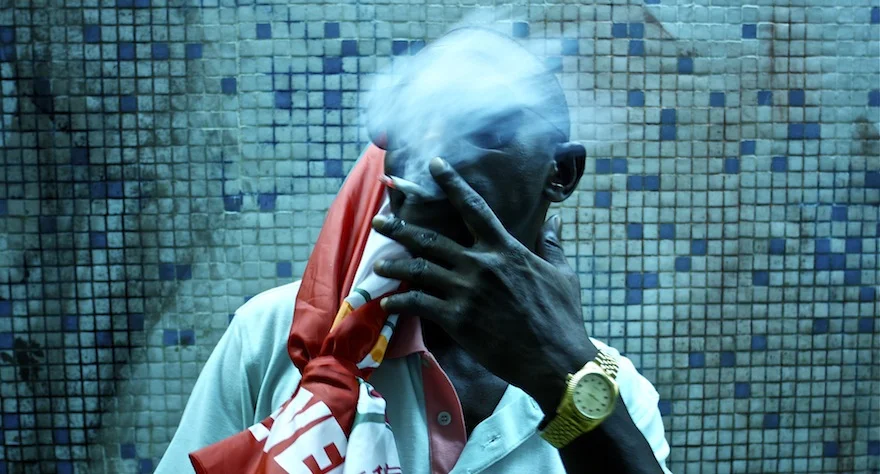
Photo Courtesy of Tribeca Film Festival
Independent cinema allows us to be presented with characters who are typically underrepresented on the big screen. With “Stranded in Canton”, writer/director Mans Mansson gives us an interesting character study in Lebrun (Isibango Iko Lebrun), a Congolese farmer whose dreams for a better life both propel him forward and blind him simultaneously.
Lebrun is a wanna be entrepreneur who believes every excuse that comes out of his mouth and hopes you will too. In fact, he’s counting on it. His most recent endeavor finds him stranded in China after ordering a large amount of t-shirts for the election back home in the Democratic Republic of Congo. Unfortunately, he receives them after the election has passed and with boxes full of shirts that say vote for a president who can not run for office again, Lebrun has to figure out a plan B.
Lebrun doesn’t have much time to figure things out. Wassim (Wassim Hasbini), an overweight storage space owner who rides a moped to travel a few yards away, wants the money he’s owed for holding the t-shirts in storage. The Chinese want the money for making the t-shirts, and Lebrun makes calls to an elder back home who he’s seemed to promise a watch and an engine at least. As the movie continues it becomes more apparent that Lebrun doesn’t really have a plan, and may not have had one when he ordered his shirts, outside of selling them for a profit.
Sylvie (Sylvie N’Dya) is a fellow African living in China, and the one person who takes the time to listen to Lebrun and give him advice. She has her own shop and the wisdom that comes along with it. Yet when she tells Lebrun the truth about his shirts (possible failure), he continues to push forward off of his half-baked idea to make money with an eerie sense of calm and a desire to prove his worth as a businessman.
Mansson has complete control of the direction of the film. He uses pacing and extreme close ups as tools, forcing us to focus on what he wants. In a film in which so many different languages are spoken, he understands that sometimes the eyes convey what the lips are saying. While the film is subtitled, its visuals speak volumes. He let’s moments within the film play out to the point of exhaustion in a way that feels more like a documentary than a fictional narrative.
While we’re left with a real look at what an unskilled businessman looks like, the film spends too much time in the same position. There are not many new developments in plot, nor a major conflict. Everyone wants their money, but there’s not a real threat to Lebrun to give it to them. While the film does raise questions of politics and what success is, it struggles to bring it all together. Like Lebrun, “Stranded in Canton” is a great idea running off fumes rather than cinematic fuel.
Rating: C
Now playing: https://tribecafilm.com/filmguide/stranded-in-canton-2015
Tribeca Film Festival '15: "Cafe Glass" Review

As the internet and social media continues to expand, writer/director Wen Ren paints a future where online dating is the social norm. People walk around with “wearables” (technology that you wear like glasses) that give you automatic access to the internet. Users are alerted when another user is checking them out, and they can reject their virtual advances on the spot. The film’s CG work does the heavy lifting to make this world a reality as it’s main character, Zayn (Devin Goodsell), visits the local cafe to sit with his friends.
As the cafe loses internet connection, the entire patronage is in an uproar as they have to come face to face with one another with no online connection. Zayn is then forced to make a decision as to whether to take his most recent encounter offline. While “Cafe Glass” may be a comedy, it stirs up serious questions for what seems like a not too distant future. As we exchange personal connections for virtual ones, what does that mean for future generations? Are social skills morphing or declining? “Cafe Glass” is sure to give you a couple laughs, but it will equally give you something to chew on.
Now playing: https://tribecafilm.com/filmguide/cafe-glass-2015
Tribeca Film Festival '15: "Catwalk" Review
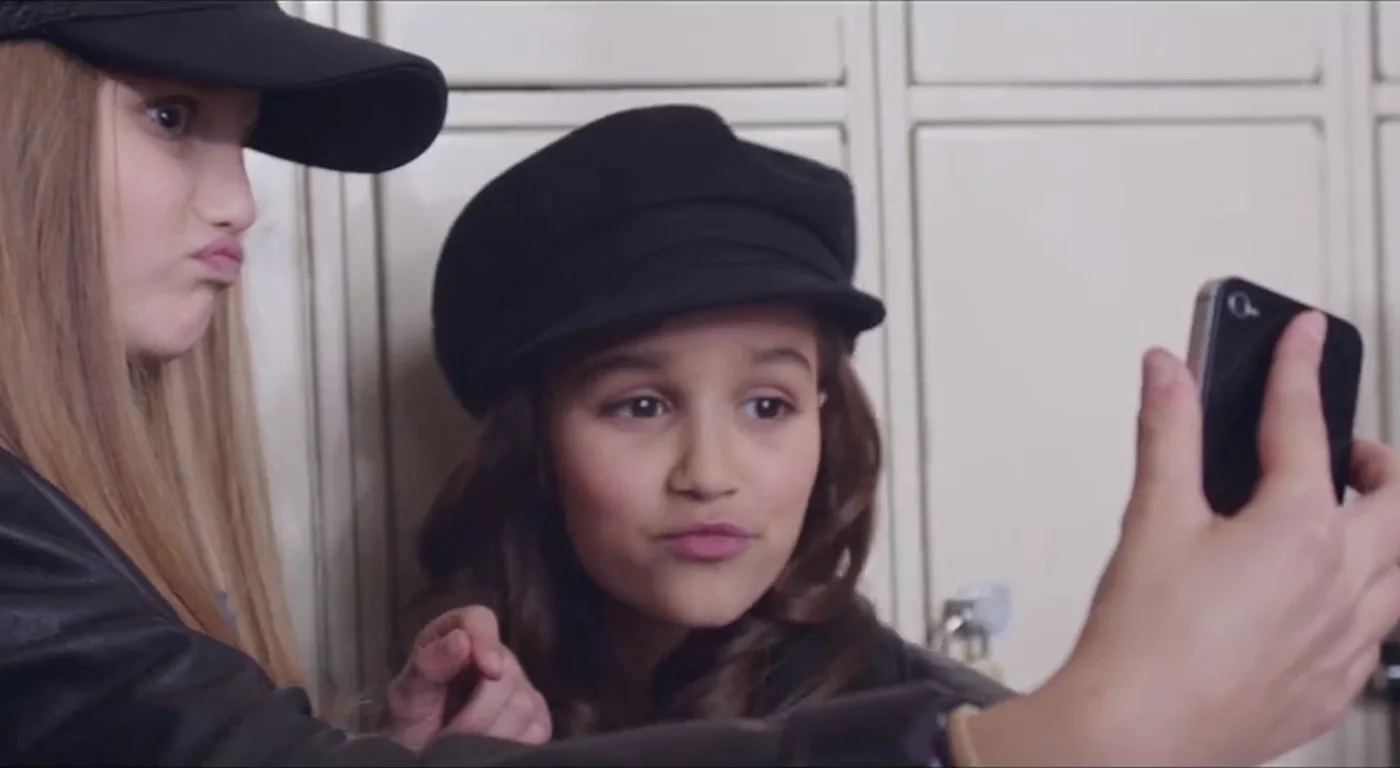
Photo Courtesy Tribeca Film Festival
Much like it’s title, “Catwalk”, is an exploration of the fine line between parenting and allowing your child to find his or herself amidst peer pressure. Ella (Freddie Mosten-Jacob) is nine, an impressionable age, and her classmates are interested in labels, selfies, and fashion blogs. Ella desires to break out of the world of glittery shirts and other “ugly” clothes that she currently wears in order to fit in.
Most of the film is from the perspective of Ella. Freddie’s performance is natural and personal, allowing the audience to remember when they were at her crossroads or dealing with their own child's journey to adolescents. Writer/director Ninja Thyberg presents a well rounded, universal story that makes you think from both sides of the coin as to how to build a child’s confidence. With a pulsing score, and great performances, "Catwalk" is a short to see!
Now playing: https://tribecafilm.com/filmguide/catwalk-2015