
Sundance 2022: "Honk For Jesus. Save Your Soul!" Review
It’s in the title. Honk For Jesus. Save Your Soul! is a satire that takes aim at megachurch culture. There’s no denying that Writer/director Adamma Ebo nails this southern baptist story. It’s the type of comedy that may make some church folk uncomfortable because of how much bitter truth it tells via the medicine of humor. It’s a scathing dissection from a personal, intimate, inside view of this church denomination that will make you think and is worthy of conversation.
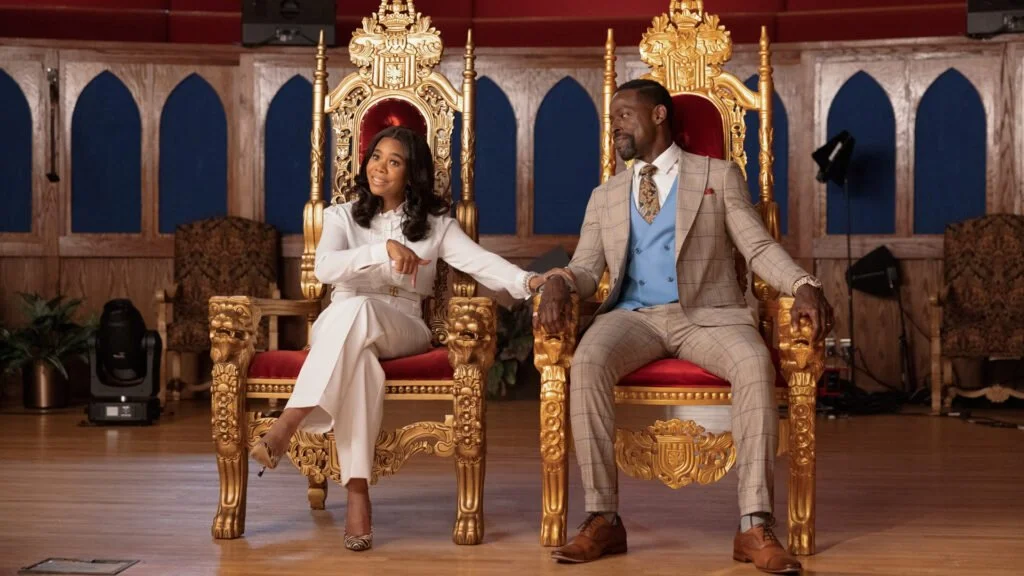
The film starts by introducing us to Trinitie Childs (Regina Hall) and Pastor Lee Curtis Childs (Sterling K. Brown) within Wander To Greater Paths church sanctuary. They are gearing up for their reopening of the church since scandal shut it down. In anticipation of the Easter Sunday return, they have hired a documentary film crew to capture their day to day preparations and show them in a positive light.
We’re slowly pulled into the lifestyle of the Childs. Pastor Lee wears designer clothes. His obliviousness to how conceited he is is matched only by how much he dims his wife’s light in order to shine. It’s obvious he has insecurities and we slowly discovery some of the demons plaguing him. We also get a glimpse of the crushing weight of religious culture, patriarchy and ego gone wrong with Trinitie bearing that load.
Three 6 Mafia’s “Popping My Collar” sets the tone for the film. Not only does the song kick the film off, but throughout it we hear strings and chords from the song that stitch parts of the film together. It’s a song about dressing fresh and pimping for money. It’s a subtle acknowledgement of how this film’s pastor does the same thing to his first lady and congregation in the past. By dressing the part and pimping Trinitie for her ideas, he has created his winning persona. In fact, throughout the film music tells a part of this story in ways that the writing doesn’t. With an unforgettable “Knuck If You Buck” scene, we see the dual nature of the Childs. The pastor and first lady should not be singing the unedited version of the song, but they hit every word. It’s actually an analysis of the dual nature of any human being. We all have good and bad inside. The pressure to appear sinless while being human is what the scene touches on.

Regina Hall is absolutely fantastic as the First Lady. She plays a wife who is holding everything in and portraying a public image of happiness while bitterness, hurt and resentment lay just under the surface. The nuance Hall displays in moving between fragility and strength is noteworthy. In a heartbreaking scene she wears praise makeup (white face with black lips and eyebrows) to try to get people passing by to honk for Jesus.
Sterling K. Brown’s Lee Curtis feels bi-polar as he pushes forward hitting highs and lows from scene to scene. He’s an emotionally abusive husband, masquerading as a man of God. He believes his own lies and forces those closest to him to stroke his narcissism. At first glance, Brown seems to have an easy role but his choices ground the character that may have been less complex on the page.
I didn’t grow up Southern Baptist, but I understand what growing up in a church community looks like. The truth is, a church is a group of imperfect people striving to do the right thing according to the Bible. Ebo’s world has a familiarity that comes from having grown up in a Southern Baptist church and questioning what was seen, both good and bad. The scandal of the film is ripped from the headlines, but the deeper questions being asked come from a personal place. So while this may be a satire, it’s also a manifestation of the artist’s wrestling with their upbringing that we can all benefit from in Honk being a jumping point for further conversation!
Rating: B+
Sundance 2022: "Master" Review
Writer/director Mariama Diallo takes a look at systems, racism, and the haunting of assimilation in Master. Billed as a horror film, it’s not the typical horror in terms of jump scares but rather the real horror of the affects of racism. Master has plot holes riddled throughout it, but its themes are worth exploring.
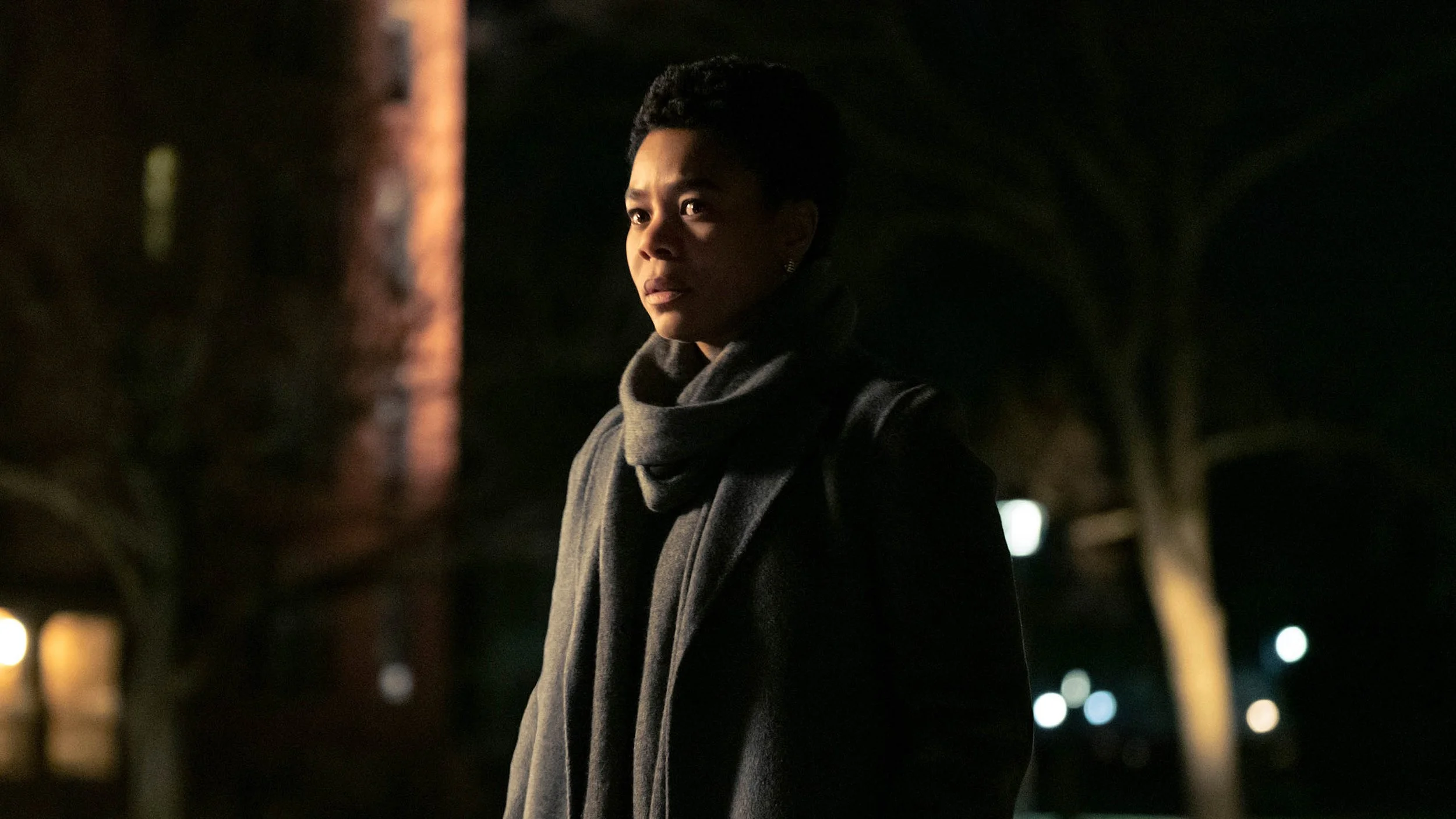
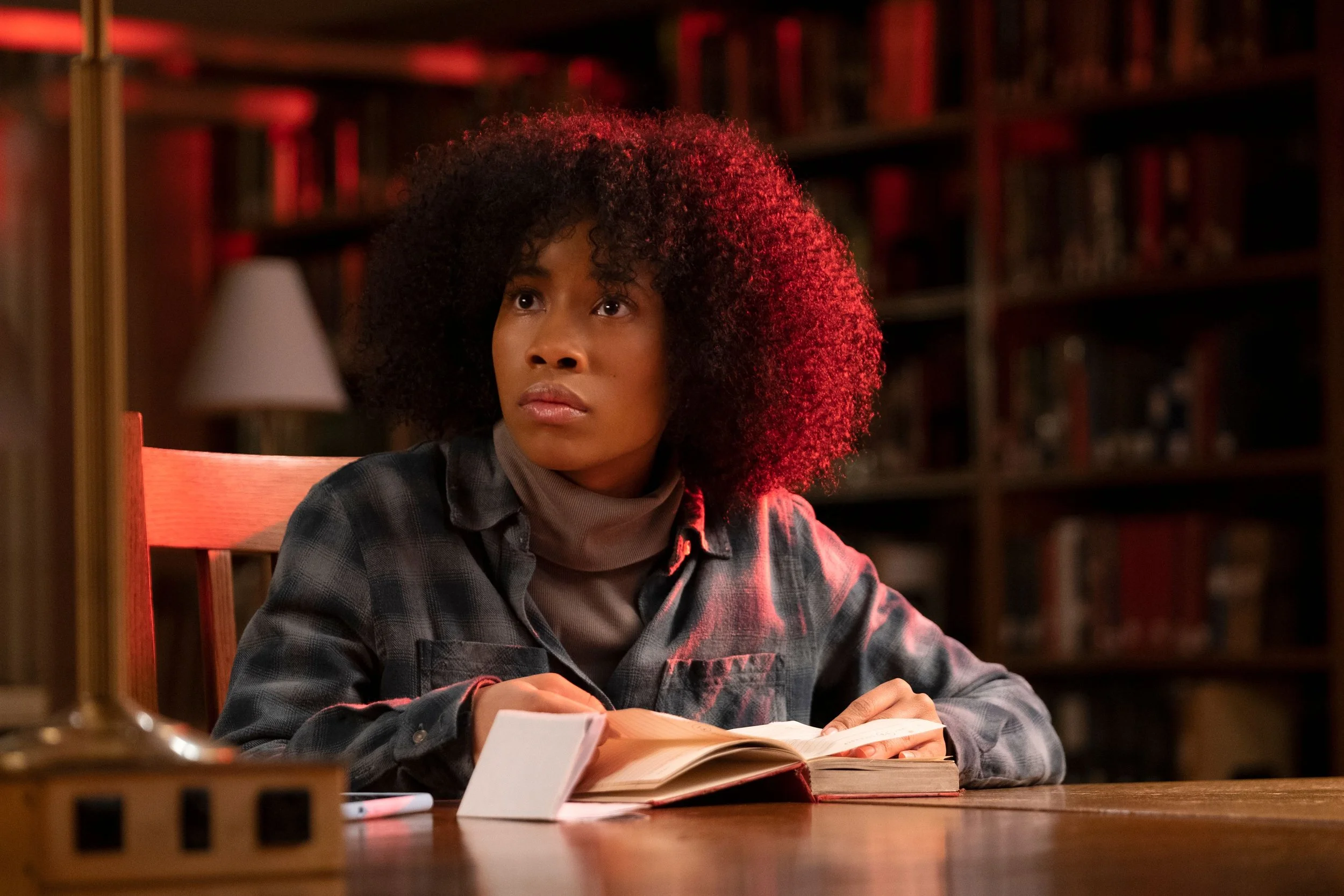
Gail Bishop (Regina Hall) is the new Master at a predominately white college in New England. As she is settling into her role, college freshman Jasmine Moore (Zoe Renee) is settling into hers. The campus has a lot to offer: parties, new friends, education, and hope for the future. As Zoe first steps on to campus with big, beautiful curls in her naturally curly hair. As she acclimates to the new environment, we see her hair straighten and look change.
Simultaneously, Bishop is trying to get acclimated to her new home as a Master, but strange things start to happen. Maggots appear in odd places; mini statuettes representing a Mammy, slave and other racist emblems seem to be hidden within the house. It doesn’t help that rumors of the occult and a witch are a part of campus lore. In fact, Jasmine’s room belonged to a black girl who died under mysterious circumstances and something seems to be coming after Jasmine.
As a mystery starts to unravel, the link between past trauma, how black people deal with it and assimilation becomes more clear. Hall shines as an allegory for black people who “make it” and have to uphold an image of perfection while being human. Or do they? This is the question that Diallo puts before us. Do we still have to put up a front to be accepted while slowly killing ourselves on the inside by not showing up authentically?
The cinematography in the film uses muted earth tones. The brown skin of the main characters fade in to wooden tables, desks and chairs in different scenes. While in comparison, their white counterparts pop out of the environment. This smart decision by Diallo and cinematographer, Charlotte Hornsby, is one of the most subtle but brilliant choices in the film. This need to fit in to the point where the main characters fade into their surroundings is a move that the audience may not notice at first glance but feel subconsciously.
The film is a little off kilter in its handling of its characters. One particular storyline drops off abruptly without questions being answered. Another storyline concludes in such a way that will cause reflection. There is something that Diallo is trying to say and in this case perhaps the mixing of genre throws it off or at a script level some beats could be fleshed out. However, this is a good conversation piece for after the lights come up in a theater or at home.
Rating: B-

American Black Film Fesitval 2021: "Liam White" Review
Harold Jackson III’s latest film Liam White: The Forgettable Life of Liam White explores the life of a dying man as he tries to tackle what his life means to others and himself. It’s an exploration of death, life, and the people who shape us in between.
Liam White (Shaun Woodland) is a writer whose glory days may be in the not too distant rear view. He’s trying to write his next big thing when he finds out he has terminal cancer. Trying to get his house in order, while internally wrestling with this news, Liam goes on a journey to talk with family and friends. Adrianna (Sasha Wakefield), Liam’s seemingly long time partner with no real commitment, walks in step beside him through this journey.
The opening sequences of the film stumbles around with glimpses of Liam’s day to day activities. It mirrors the character’s internal battle as a struggling writer. Throughout the story audio between the scenes is handled similarly. L cuts (when the audio from the preceding scene continues to play over footage from the following scene) and j cuts (when the audio from the next scene plays in the preceding) are used throughout the film to support this stumbling storyline and vibe. It’s important to note this because the film doesn’t play out in the standard format of editing but rather capriciously moves through time and space.

Making his third collaboration with Jackson, Woodland’s performance reeks of preparation. He plays Liam subdued in such a way that you can almost see the cloud over Liam’s head. His internal thoughts are rushing as he tries to come to grips with an expiration date on his life, which manifests in a disconnect in his eyes while interacting with people and going through the motions of what’s left of his life. He’s the center of gravity within a hypnotic film and his performance is an anchor.
Perhaps like our own lives, most of the actors in this film feel like character actors fulfilling a scene not only in the movie but for Liam’s life. It’s truly an ensemble film in which each performance builds the supporting cast around him. Seasoned actors Jasmine Guy and Terrence “TC” Carson give strong performances as Liam’s parents. While their on screen time isn’t extremely long, their presence is felt, allowing their eyes and physicality to do the work of expressing years of bitterness, anger, resentment and regret. We also get a who’s who of DMV actors like Chad Eric Smith, Rick Kain, Tamieka Chavis, and Michael J. Patterson filling in bit parts like the pros they are. If you know you know!
Jackson gives special attention to the world around Liam. Specifically, he looks at the environment of DC that seems to be passing by Liam. Or is it Liam who glides through the District? Usually precise with his camerawork, Jackson breaks the 180 degree rule in a scene right after Liam finds out he’s terminally ill. While it could have been the confines of spacing on set, I have to believe this is done purposefully to subtly throw off the cinematic world much like Liam’s has been. While life doesn’t cut together in a montage like film our memories do. Some memories we can relive precisely and others are a quick glimpse of what was and we are led down that path visually throughout the film. Any of Jackson’s work has something to be aware of from a technical aspect and it’s the editing and visual/audio montages in this one that is important to the storytelling.
Liam White is perhaps Jackson’s most “artsy” piece to date. Most of his films have a direct address of a subject matter through dialogue. Here, sometimes what’s not spoken is important. This film is more of a mosaic that collectively speaks. You have to see the forest for the trees or this movie may be a self titled, self fulfilling prophecy in being forgettable. However, if you let the hour and twenty six minute run time tell you a bigger picture of life from a birds eye view, you just might pause long enough to reflect on your own! Perhaps that’s the point.
Rating: B

Sundance 2021: "CODA" Review
I was lucky to catch “CODA” on the last day of Sundance. By the time I did, it had already broken records as the highest selling film at the festival at a whopping $25 million. So for me, it was like sipping an expensive pour of bourbon; I had to see what $25 million tasted like! While I ingested it with other senses, the film that focuses on the bond of a deaf family had my eyes pouring out tears and belly full of laughs. In short, the film is worth the hype.
The film is a remake of the 2014 French dramedy “La Famille Bélier”. “CODA” stands for Child of Deaf Adults. Within the film, Ruby (Emilia Jones) is the only hearing member of her family. The Rossis are a hardworking, tight knit fishing family living near the coast of Massachusetts. Ruby works on the boat with her father Frank (Troy Kotsur) and brother Leo (Daniel Durant). She acts as interpreter and intermediary between worlds for her family. Her mother Jackie (Marlee Matlin) is a former model and her father’s passion for his beautiful wife is never not on display, even if it humiliates Ruby.
While Ruby works early morning hours with her father and brother, she attends high school with other teens her age. She decides to take a chance and audition for the school choir, led by Bernardo Villalobos (Eugenio Derbez). Bernardo is a character, stating that you can save yourself the embarrassment and call him Mr. V if you can’t roll your R’s. He’s the exact influence that Ruby needs to motivate her to audition for Berklee College of Music.
The clash of Ruby’s desire to go to college and her family’s need for a no cost interpreter to keep their business running is the center of the conflict in the film. However, it’s the layers of issues within that conflict that makes the film so moving. Each family member wrestles with issues of inadequacy. Leo feels as though he isn’t appreciated enough as the older brother who seems to be looked over by his parents. Ruby feels like an outsider as the one in four who can hear. Her parents depend and lean too much on Ruby for assistance, missing or refusing to see that she needs to breathe and be independent.

The film is full of beautiful, moving, and laugh out loud moments. It spotlights relationships within the family and the family bond as a whole. The ensemble cast is absolutely stellar, boasting of Academy Award worthy performance for all the right reasons. The Rossi family use American Sign Language to communicate throughout the film and thus the physical and subtle nuances of their performances are even more powerful. Director Sian Heder captures the importance of communication within her cinematic family and what communication means for the deaf community through framing and sound.
You’ll have to judge for yourself if this film should be valued at $25 million. Much like bourbon, your taste may be different but there are certain films that universally strike a chord and resonate. “CODA” certainly is a winner that deserves the buzz and accolades it will receive!
Rating: A
Sundance 2021: "White Wedding" Review
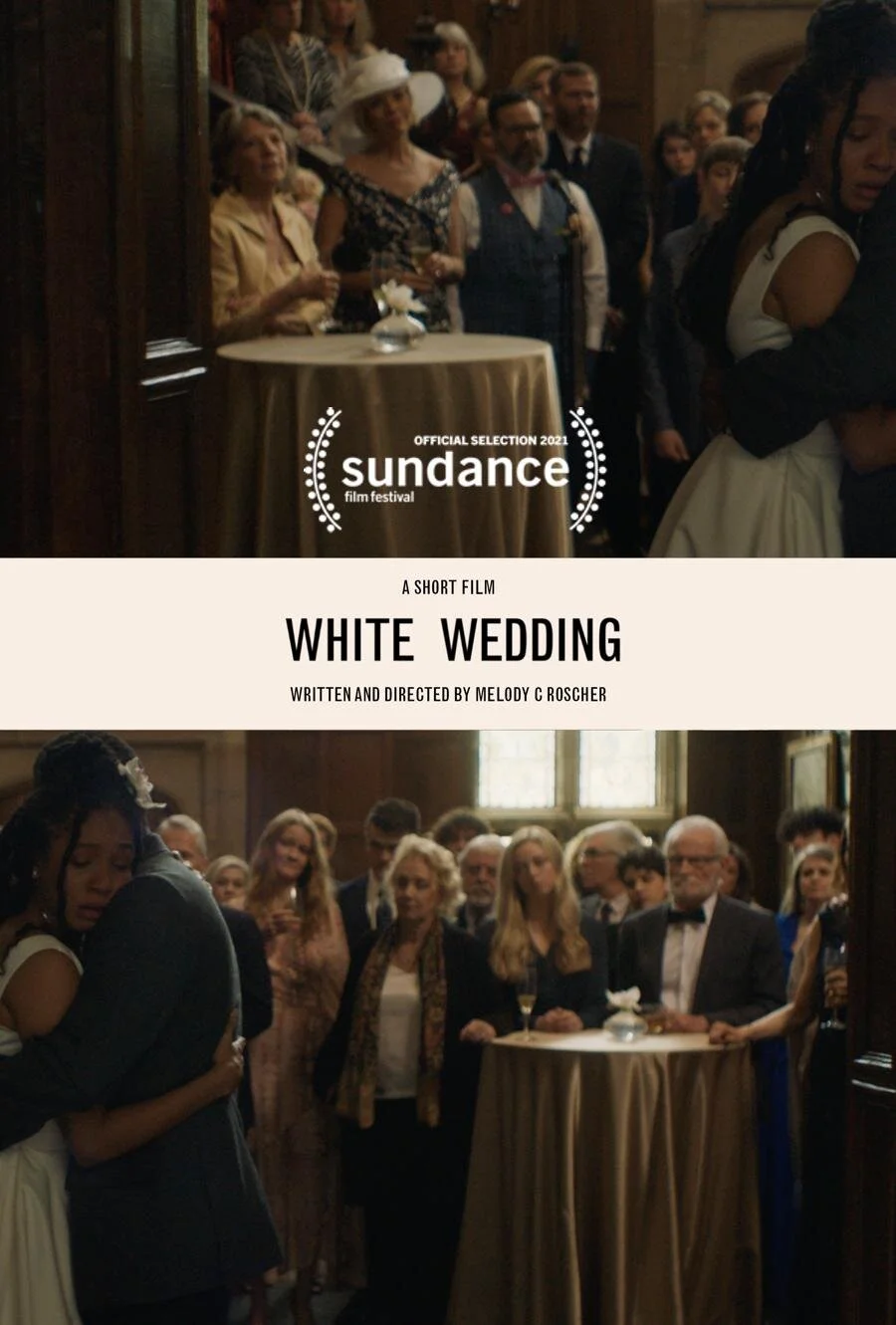
Great films expect you to catch up to it and writer/director Melody C. Roscher understands that. “White Wedding” is a short film that throws you into it and asks you fill in the blanks as it moves along. It starts with the mother of the groom (Mary McMillan) realizing she made a huge mistake. She rushes to tell her daughter, Kelly (Emily Davis), that she made a mistake in hiring the band. It seems the bass player, Bower (Curtiss Cook, “Counselor”), is the bride’s estranged father.
The instant conflict is there. On what should be Bella’s (Nabiyah Be) happiest day, it could instantly be a bittersweet one, marred by her father’s presence. As not to spoil the short, the rest of the film is pushes us toward an inevitable meeting, proving the power of short filmmaking.
Roscher understands the premise of her short, the characters within, and how to deliver the story to the audience. She fills the frame with wedding guests and things you’d expect to see at a wedding. The claustrophobic look at times adds to the tension building in the story. Cinematographer David Paul Jacobson channels a Fincher-esque color palette with lightly desaturated warm colors. A huge tilt of that hat goes to the Art Department on the look of the setting. You’re thrust into the midst of a wedding in progress and you’re quickly invested.
This is an example of a filmmaking team firing on all cylinders to create a cohesive and enjoyable story. The film works as a short and could be a part of a bigger film. Either way, the transition from longtime producer to writer/director for Roscher seems like a smart move and I look forward to seeing more from her!
Rating: A

"Woodstock: Three Days That Defined a Generation" Review
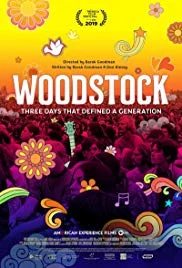
In just over two months, Woodstock, the legendary landmark music festival, will be celebrating its 50th anniversary. To commemorate this occasion, PBS and director Barak Goodman, who previously directed some documentaries for PBS on their American Experience series, have created a documentary about what led up to the events of the music festival and the festival itself. In short, Woodstock: Three Days That Defined a Generation is a nicely done documentary that also serves as a time capsule for what was happening around the time.
Over the span of three days, (technically four days but due to severe storms during the third day, the performers were pushed back by some hours so that it wrapped up that following morning) in August 1969, more than 400,000 people descended upon a dairy farm in New York. It was a last-minute relocation since the original site was no more due to the city pulling out; 32 acts performed on-stage, sometimes in not that great of a condition. The organizers, working around the clock, knew they ran out of time, since the grounds weren’t even remotely close to being done. This could have gone so incredibly wrong. And yet, by some divine miracle, the organizers pulled this event off, with some bumps on the road.
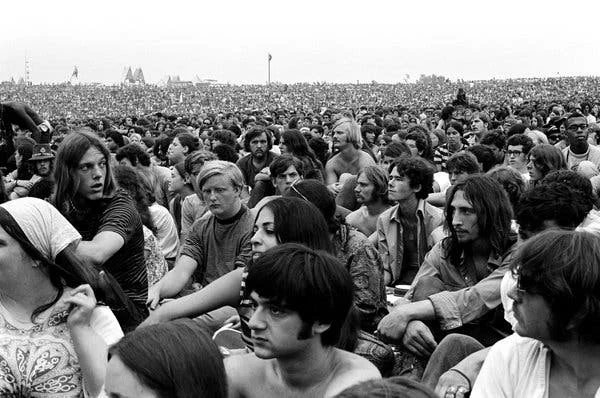
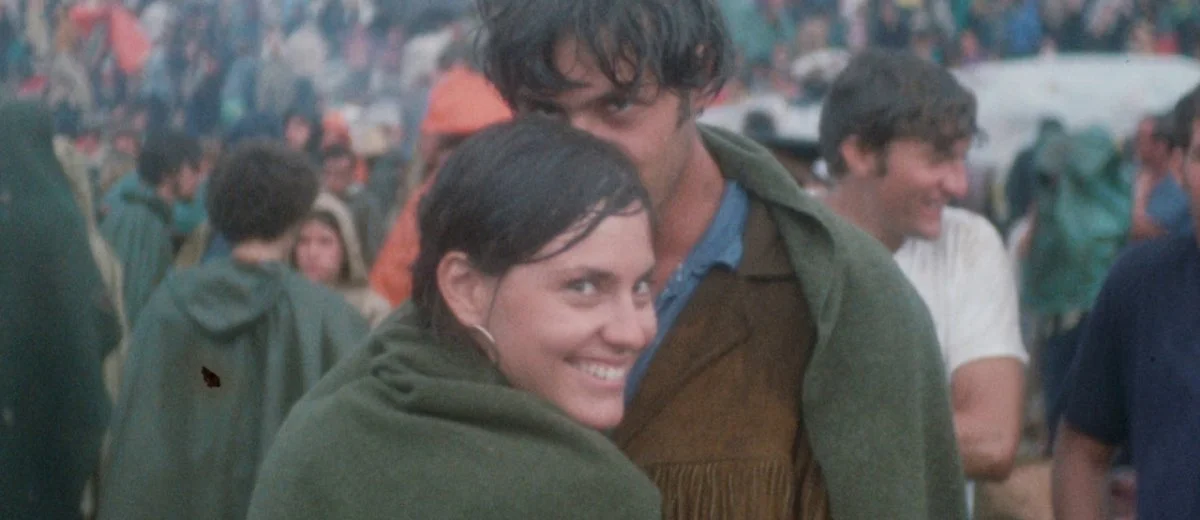
The format that Goodman employed for the film reminded me a lot of what Peter Jackson did last year with his fantastic documentary, They Shall Not Grow Old, in that we never cut back to any talking heads, but have sound bites talk over the carefully selected photos and footage that Goodman and his team tracked down to place in the film. The sound bites range from the organizers of Woodstock, the writers of the documentary providing historical context, those who attended the festival, and even a couple of the musicians who played at Woodstock. So, all in all, it’s a diverse array of talking heads. As you watch the documentary, and see how everything came together, it’s incredibly fascinating that Woodstock didn’t become the 1960s version of the Fyre Festival, since the organizers knew the event wasn’t even remotely ready to go. It’s a marvel that this didn’t become an outright disaster. The archival video from Woodstock is a thing to behold.
Even if you knew absolutely nothing about Woodstock or the significance of the festival, this does a good job in giving the audience an overview of the times surrounding the festival, and a nice history lesson of how everything came to be. At 96 minutes, the pacing is smooth in that it never feels like it’s dragging its feet. The film highlights certain areas, so that each section can stand on its own, from the counterculture movement that was growing to the development of the festival. I had a basic knowledge of the casual information of the festival, so I was surprised with what I learned from this documentary with knowledge and comparison of the modern day Fyre Festival disaster. Even though Woodstock came down to crunch time, the orchestrators were able to focus on what they needed to complete, prepare for the worst, and even make the event free.
With what Woodstock could have done better is allow more of the musicians to talk about their experience playing at the fabled festival, even though we hear from some of the musicians who performed. I don’t know if it was the case that some of the musicians are dead, the archival audio wasn’t that good, or if they weren’t asked or turned down this documentary, but it would have been nice to hear more about their time up on that stage. Also, there were times where the documentary, especially during the first third of the film, relied more on the photos where it became a little bit like a powerpoint presentation.
Overall, if you grew up hearing about Woodstock, or were one of those people who attended this unforgettable festival, then Woodstock: Three Days That Defined a Generation is for you. It’s only fitting that for a festival that’s celebrating its 50th year, we look back on what this meant for so many people. As I mentioned before, this is nicely made, and absolutely mind-boggling that with the images that Goodman puts on display here, this festival didn’t fall by the wayside and collapse. Now, let’s see if they do any follow-ups about Woodstock 99, which didn’t go exactly according to plan, or if the upcoming one that the organizers are trying to get off the ground comes to fruition.
Rating: B
Tribeca 2019: "17 Blocks" Review
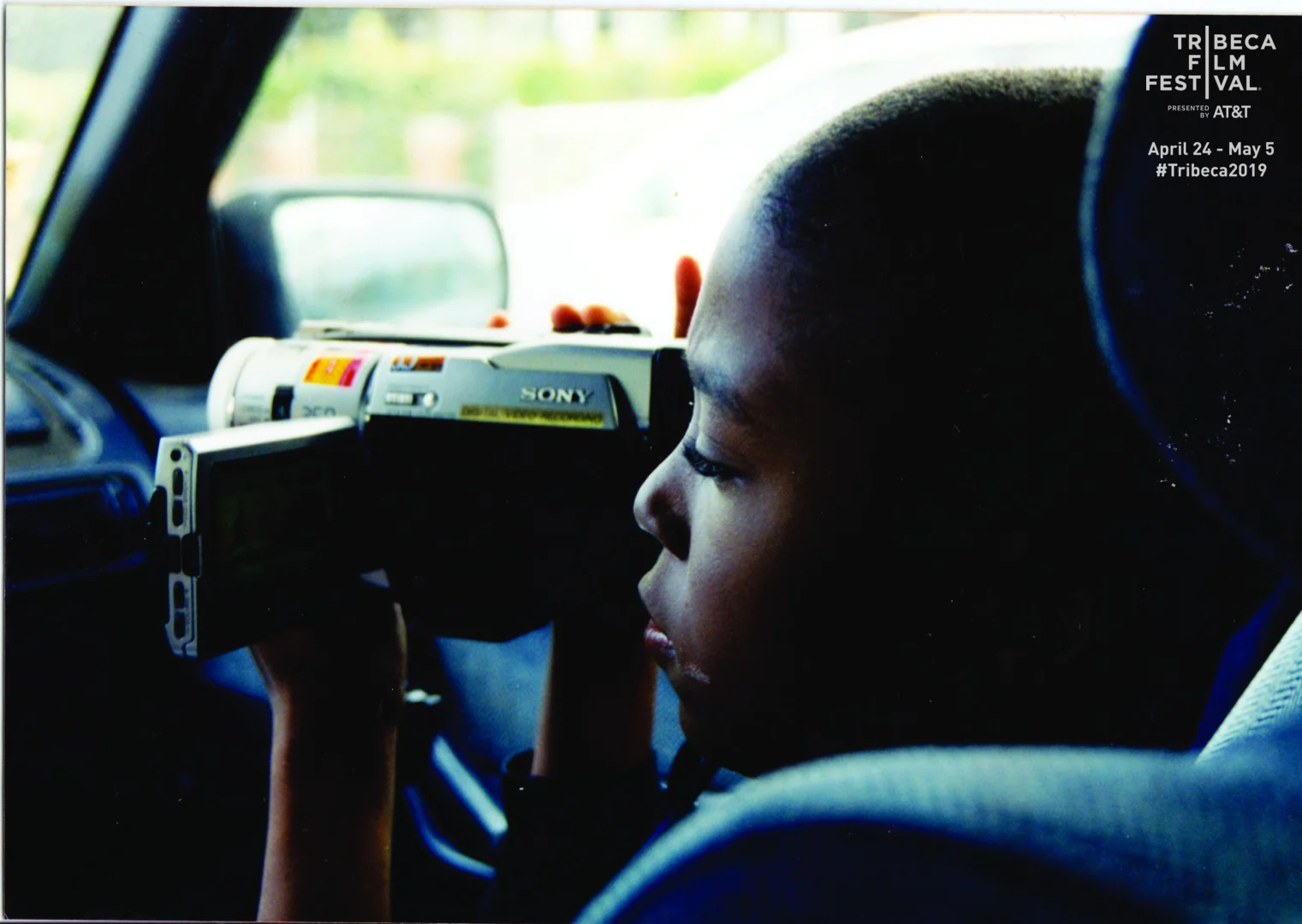
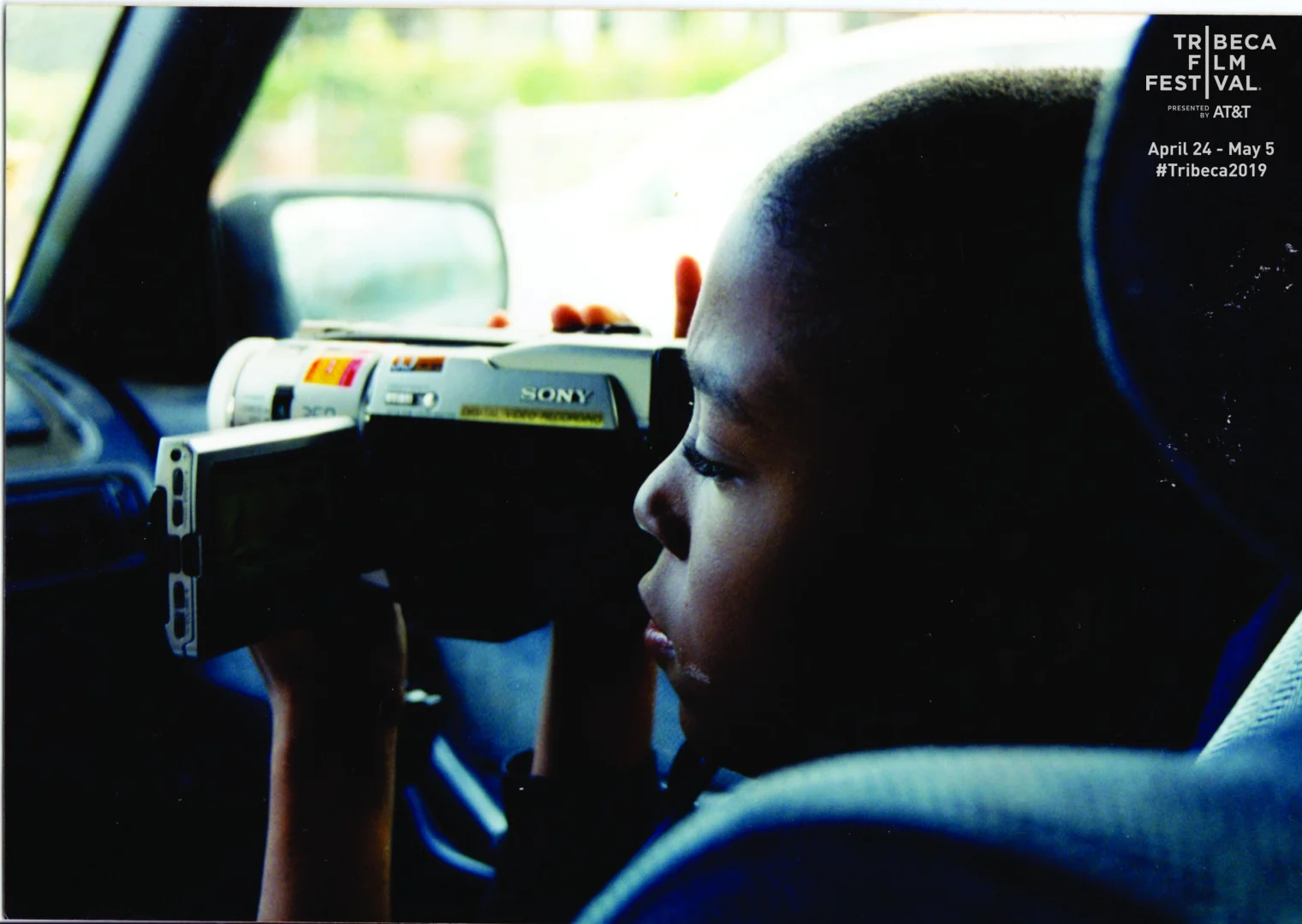
In 1999, nine year old Emmanuel was gifted a video camera. What he captured of his family over the following years would be the most poignant home movie ever cut together. “17 Blocks,” a film by journalist, bestselling author, Emmy® Award-winning filmmaker, creator of Found Magazine and contributor to public radio's This American Life, Davy Rothbart, is a profound narrative piece that takes the ‘Boyhood’ approach to storytelling and blows it out of the water.
“17 Blocks” chronicles—over two decades—a family, which like many, deal with their share of hardships. Cheryl, the matriarch of this ever-growing family, is raising her three kids alone. She is funny and charismatic, always harboring dreams of becoming the next Marilyn Monroe. Her dreams, however, are thwarted by responsibility and a cancerous drug addiction. These tendencies surely rubbed off on her kids who lacked a proper father figure. All but Emmanuel. Emmanuel had a lust for life, a drive and compassion for those he cared for. The only one in his family to graduate high school, Emmanuel had big plans of his own. Until it was all over in a second. The opening shot of this documentary shows a rainbow touching down over Southeast Washington, D.C. However, this story is not all rainbows and butterflies.
The year Emmanuel was shot by two, masked robbers, there were over one-hundred homicides in D.C. alone. The Sanford family and Rothbart have offered us this incredibly intimate insight into their world plagued by gun violence, poverty and addiction. The home-video aspect of much of this ninety minute non-fiction piece, feels invasive. We see what Emmanuel sees. Chilling and all the more impactful. We learned from Sean Baker’s “The Florida Project” that children offer a unique perspective to narratives replete with sadness and maturity because there is a youthful spirit that contests the tragedy head on with ignorant beauty. Emmanuel’s home video offers the cruelest of memories while he smiles through it all. His infectious spirit lives on in his young nieces and nephews who miss him dearly.
There are bright moments amidst all the sorrow, but the film begs the question: Why do bad things happen to good people? A truly introspective twist of emotions, both equally saddening as infuriating. But Cheryl offers a sage response to all the pain in her life in saying, “Hope is real, hope is alive, it’s what keeps us going, hope for better, hope for tomorrow.” Although she also recognizes that “some pain doesn’t go away.”
There is a moment when Emmanuel’s sister Denise is scrubbing his blood off the walls of their tiny apartment with a t-shirt rag as Beyonce’s “Irreplaceable” plays in the background and her children look on asking, “Where is uncle Emmanuel? Where is uncle Emmanuel?” To which all I can muster is a thank you to the Sanford family for being brave enough to share their story with the world. This film rips at the heart with focused blows. It is relentless. It is a cinematic triumph, but more importantly, it hopefully evokes change out of the people who have the ability to make an impact in these communities.
As a wise woman once said, “Hope is real, hope is alive, it’s what keeps us going, hope for better, hope for tomorrow.” I like the sound of that.
Grade: A

Tribeca 2019: "Other Music" Review- A Cacophony of Memories

“Other Music” is one of this year’s feature documentaries at Tribeca, a film about a record store that opened in the East Village in 1995. If I took away anything from this documentary, however, it is that Other Music was not just a record store.
This documentary was directed by married couple Puloma Basu and Rob Hatch-Miller, an LA-based team that has specialized in music video production and recently collaborated on the soul music documentary feature Syl Johnson: Any Way The Wind Blows. The film chronicles the store’s 20-year history and features artists and bands such as Regina Spektor, Vampire Weekend, Animal Collective, the Yeah Yeah Yeahs, the Strokes, Interpol and TV On The Radio. The record store, which closed in 2016, was a solace for the independent musician. It was a destination for artists, industry representatives, music lovers and wanderers alike. It was a place where bands were formed and friendships blossomed. Other Music created an environment that supported musicians and allowed bands to grow, which ultimately served as a great influence on the music scene in New York City.
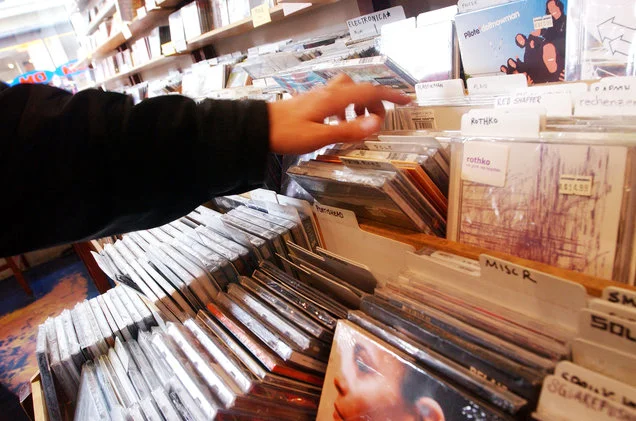
As retail stores lose business to online shopping, Other Music reminds us how human interaction can help nurture a community. When you enter the store there are shelves replete with vinyl, many of which records are labeled with a hand written note card. A professional vote of confidence for the work. There is also something gratifying about owning something tangible you spend money on. The spirit of this record store certainly lives on in a world dominated by online streaming services. The film does a great job focusing on employees of the store as well as customers who frequented the shop, and these customers cried when the store closed. I may have even broken down watching this film and I never had the chance to go there before it closed, but I digress.
From a storytelling perspective, Basu and Hatch-Miller succeed in chronicling a beginning, middle and end. They take you on a journey that offers great company and even better music. They extinguished my only criticism of the piece with a cacophony of noise, but I had to wait until about two-thirds the way through the film. From an editing perspective, the cuts could have been more inventive, creating a rhythm to compliment the narrative. But as the story neared the end and the store closed, the directors made their own music. It was a beautiful and emotional ‘Trashing the Camps’ style tune that satisfied the itch for something more self-reflective.
It is important to note that I don’t typically end a review in personal anecdote, but I’d be remiss if I didn’t articulate the profound impact this film had on me. As the credits rolled the theater erupted in applause, I calmly rose from my seat and exited quietly so as not to disturb the fellow movie goer and I walked. I walked to 15 E 4th St, just blocks south from the theater. There’s a coffee shop there now, one of many in the area. But just a few years ago was a record store that changed many lives.
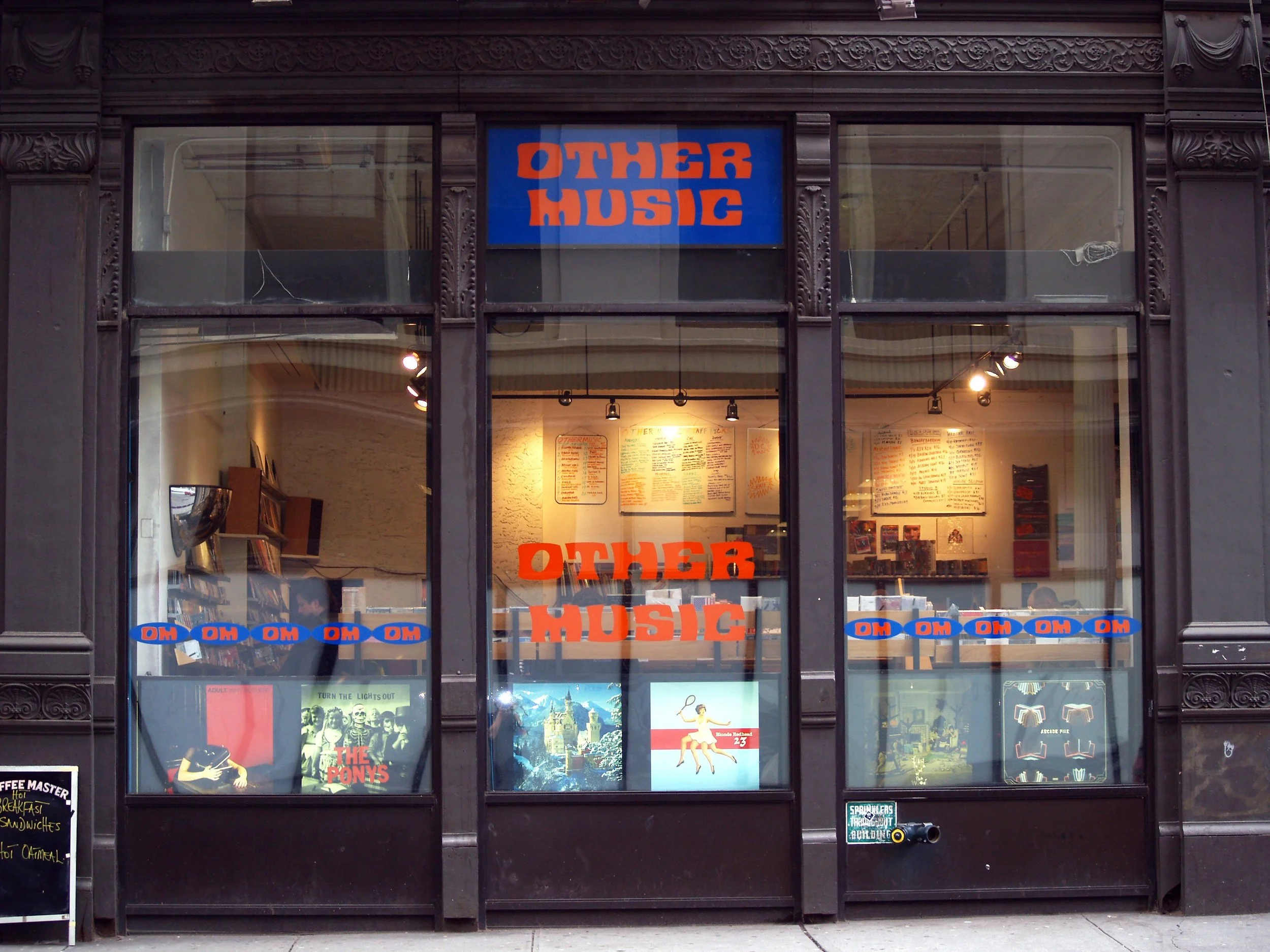
Basu and Hatch-Miller welcomed me into their world of groove and funk, rock and roll, pop and disco, they sat me down for a history lesson and spit me out onto the streets of New York looking for an album that could fill the vacancy they created. In a world cluttered by noise, this film broke through it all with a heartfelt focus and all I can say is ‘thank you.’
Rating: B+
Sundance 2019: "Luce" Review
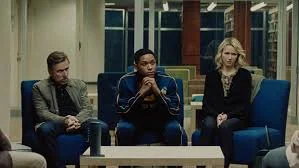
Luce explores the delicate line between the perceptions that people have of other people versus the truth of who they are. While our individual experience is on a spectrum, human nature and history has placed its construction of race in boxes in order to “understand” each other. This film allows its main character to work within the constraints of those boxes to exploit the system in a powerful way that puts some of those ideals on trial.
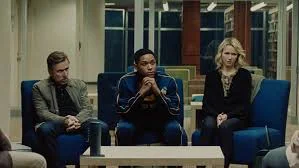
Luce Edgar (Kelvin Harrison Jr.) was adopted from war-torn Eritrea by his white parents, Amy (Naomi Watts) and Peter (Tim Roth) at the age of ten. His parents helped him get through years of therapy to heal wounds from being a child soldier, and sacrifice to provide him the best life possible. Now a senior in high school, he’s fully acclimated to America and in fact, is a stellar student! He’s a beacon of light for his fellow students, especially the black population, and the weight of that is heavy on his shoulders.
The film’s inciting incident occurs when Luce’s teacher, Harriet Wilson (Octavia Spencer), calls Amy in to talk about a discovery she’s made. After tasking the class with an assignment to write a paper in the voice of a historical figure, Luce chose the radical Frantz Fanon, who believed in hurting others for a cause. On top of that, Ms. Wilson searched Luce’s locker and found illegal fireworks that pack the same punch as a shotgun. Ms. Wilson’s motive for bringing Amy in before letting anyone else make the discovery is to protect Luce’s reputation and make sure he succeeds.
With this information and the materials in her possession, Amy talks to her husband as soon as she gets home. This initial conversation is where both Amy and Peter start making judgements on Luce’s character, and we as audience members must make our own conclusions on the situation as well. As the story moves forward, little by little, we find out more of the big picture of what’s happening at school and see how characters in this world make judgement calls based off of pre-conceived and personal thoughts.
Situations like Stephanie Kim’s (Andrea Bang) possible rape during a party, and Luce’s ex-teammate Deshaun (Astro) getting caught with weed in his locker are all brought to the forefront of conversation in the film. What does it mean for Luce’s reputation if he participated in either of these activities? Why does Luce get special treatment over his friends? What does it feel like to be the person that everyone looks at for hope and expects to be virtually perfect?
While the film does interrogate these questions and the American dream on a large scale, screenwriters J.C. Lee and Julius Onah nail what being black, talented, and on a pedestal in America feels like. The ideal of tokenism (the one black person in a room/organization/team/etc.) and pressure to be on is something that Luce feels constantly, and is spot on. They find a sweet spot in making their point without hammering it home, which is hard to do.
Ultimately, this play turned screenplay is brought to life by its stellar cast. Kelvin Harris Jr. is undoubtedly an actor to watch! He commands the screen and authentically connects with the ability to perform in different spaces with uncanny finesse. The scenes where Octavia Spencer and Harris Jr. face off are electric and the things award nominations are made of. Tim Roth and Naomi Watts embody the sacrifice parents make for their children, and the individual struggles of giving blind trust versus questioning your child. Even the supporting cast members like Andrea Bang and Marsha Stephanie Blake (who brilliantly plays Rosemary Wilson, Ms. Wilson’s mentally ill sister) are exhilarating to watch. Their characters are real, dimensional people that you can connect with.
The music by Geoff Barrow and Ben Salisbury swell with tension and put you on edge. It supplements the story that unfolds before your eyes in a way that hits on all cylinders. Luce is a film that you want to watch again to not only to catch what you may have missed in a scene, but also the ideals explored that you may want to ponder over more. It’s a must see!
Rating: A-
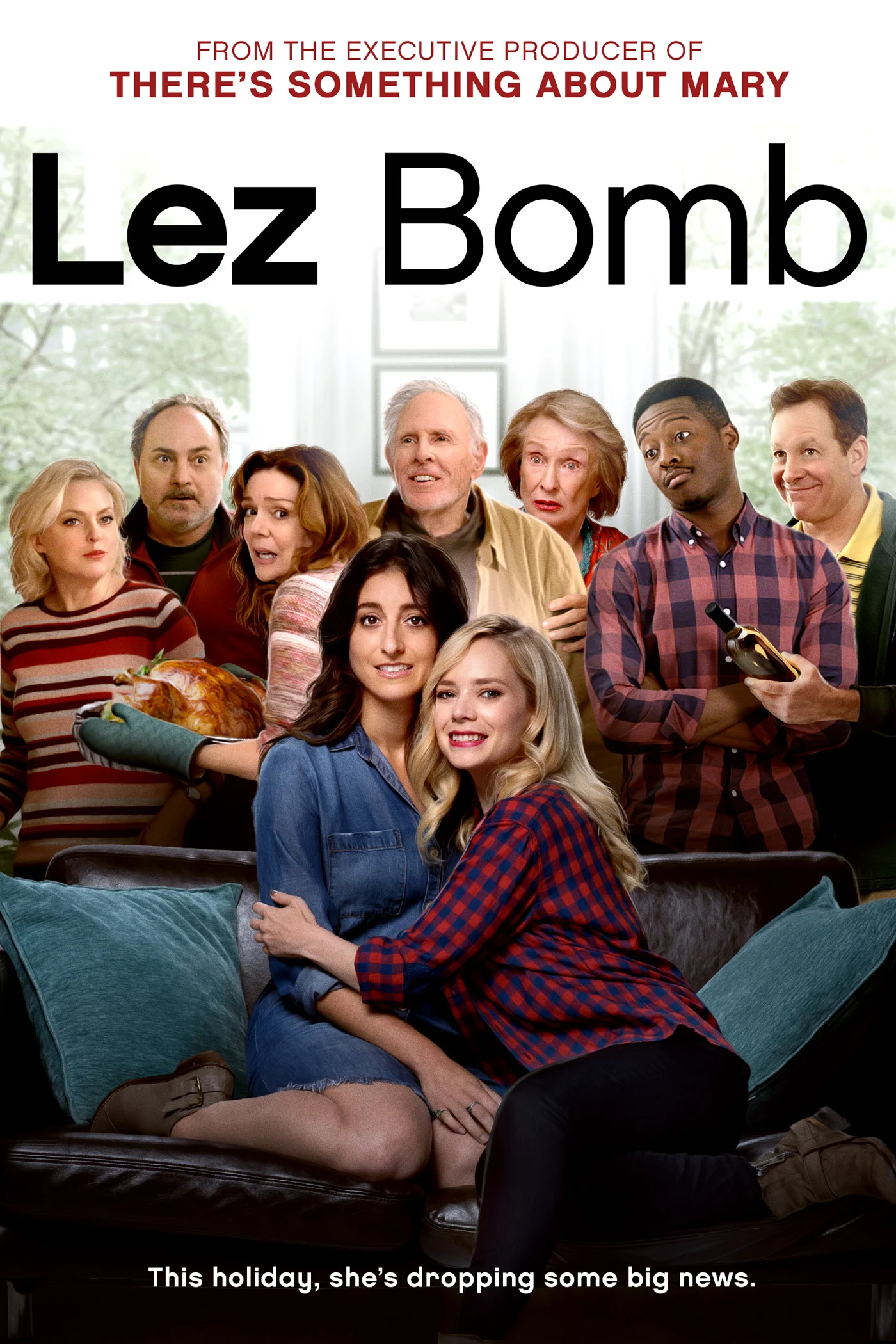
"Lez Bomb" Review
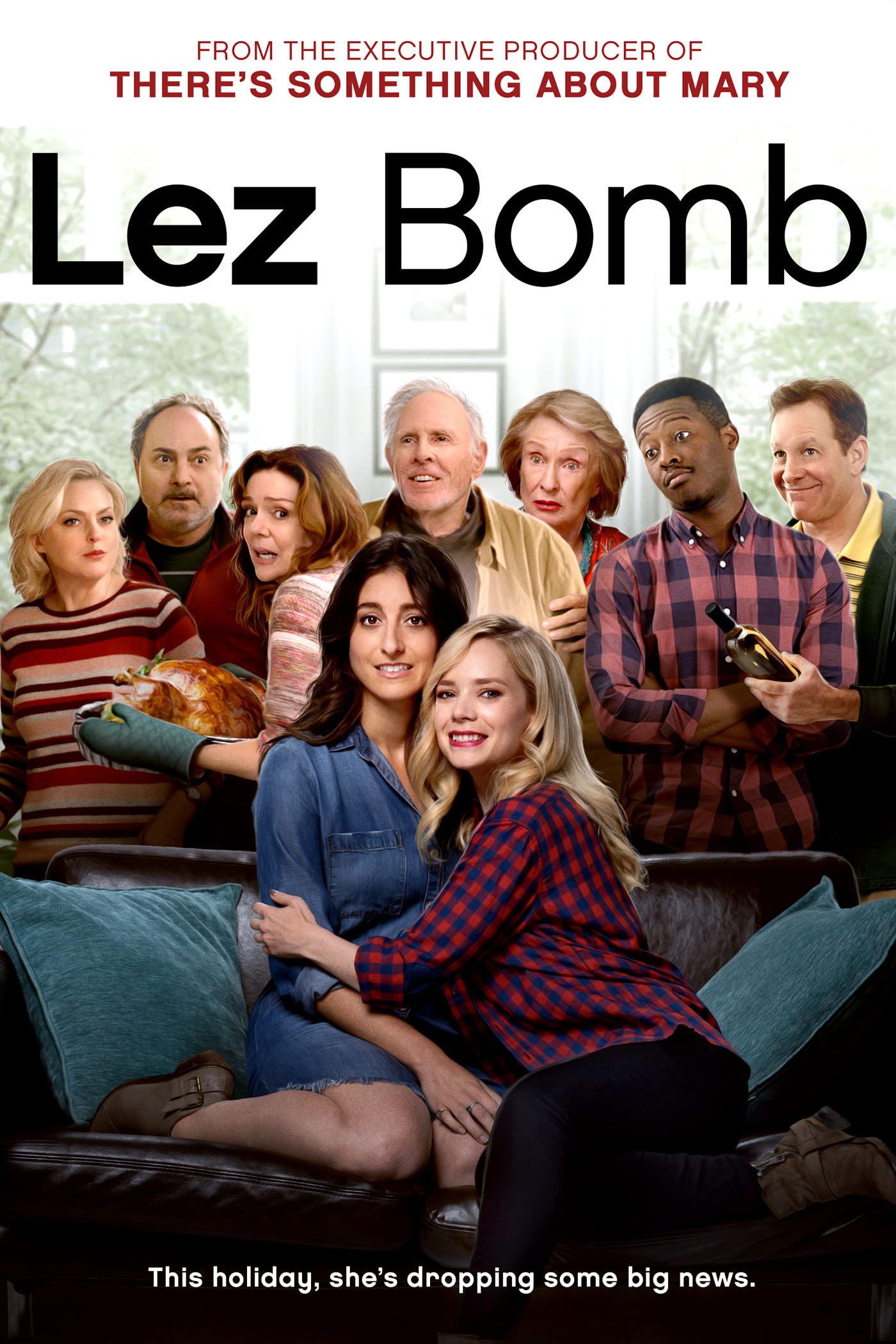
Lez Bomb is a classic movie game of kick the can. Cinematically it’s an extremely difficult game to play because you’re stringing out a big reveal for as long as possible. In this case, the strong cast of characters work with the plot points and crush the dialogue so you’re willing to engage. So while its central bomb feels more like a dud mortar, watching the game of kick the can play out is an absolute joyride!
Writer/director/star Jenna Laurenzo has penned a story in which Lauren (Laurenzo) plans to come out to her family during Thanksgiving by bringing her girlfriend, Hailey (Caitlin Mehner), home for the holiday. Her efforts are thwarted by her roommate Austin’s (Brandon Micheal Hall) arrival. This twist is hilariously smart in itself as Austin happens to be black, and the rest of her family automatically believes that this is the big news.
As Lauren tries to steer her family in the right direction, more family members continue to show up and block her goal for various reasons. Lauren’s on screen family is stacked with powerhouse talent who bring life to their characters as only they can. Kevin Pollak is George, Lauren’s protective father. He makes George a quirky, lovable, and hilarious dad who tows the line between realizing his daughter is a grown woman but still his little girl, which makes for hysterical exchanges between him and Austin. Lauren’s mom Rose (Deirdre O’Connell) is dealing with the recent death of her father, inheriting the family motel, and her misguided attempts to connect with her daughter in her own way. O’Connell’s ability to jump from thought to thought in her dialogue with minimal exterior expression makes Rose that member in your family...you know the one! Bruce Dern and Cloris Leachman make it look easy as Grandpa and Josephine respectively.
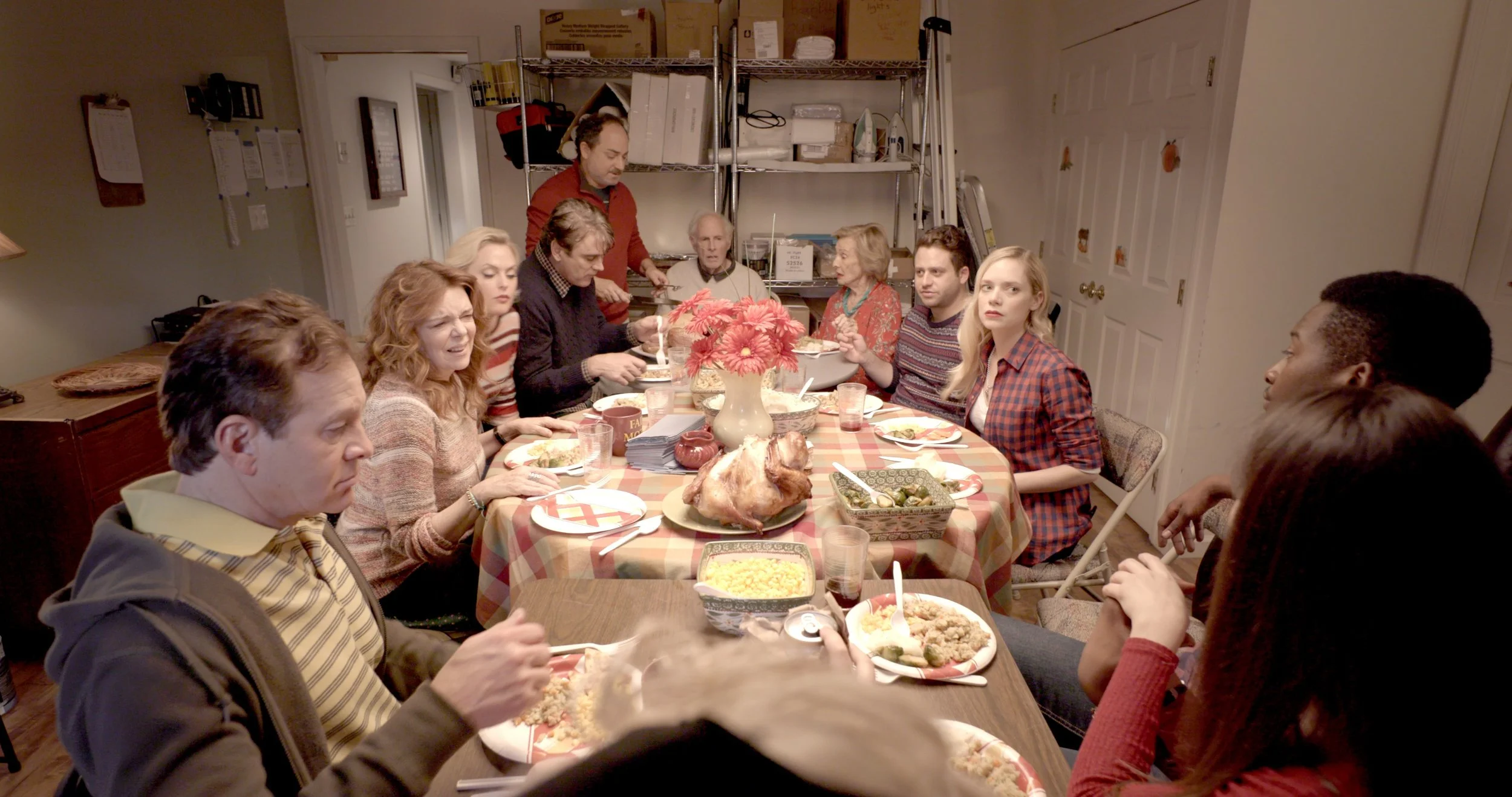
Credit has to be given to Laurenzo for her writing. It’s rare to find dialogue that doesn’t feel scripted, but captures the essence of the natural rhythm of family gatherings. The casting bolsters her words to create an on screen family that has a genuine sense of history in each line delivered. Laurenzo’s camera also catches both the mundane moments and verbal disses with a sprinkle of love and hate that every family can relate to.
The issue with Lez Bomb is that the coming out portion of the film, the bomb, isn’t really a bombshell news item to Lauren’s family, nor is it set up that way. You get the vibe that her news won’t be that big of a deal along the way because her family seems pretty liberal. There’s never a sense of real stakes in what her confession may cost her. Even if relayed through Lauren’s words. Instead, Lauren constantly asks Hailey and Austin, who already know, to give her more time to tell her folks when it’s a good moment. Not every coming out film has to be super dramatic, but the comedy is so good here that a nice dramatic turn or a feeling of risk would have made this movie more memorable. In an honest moment with Hailey, we get a brief glimpse of Lauren’s internal struggle and self worth, but it’s gone before it’s truly explored.
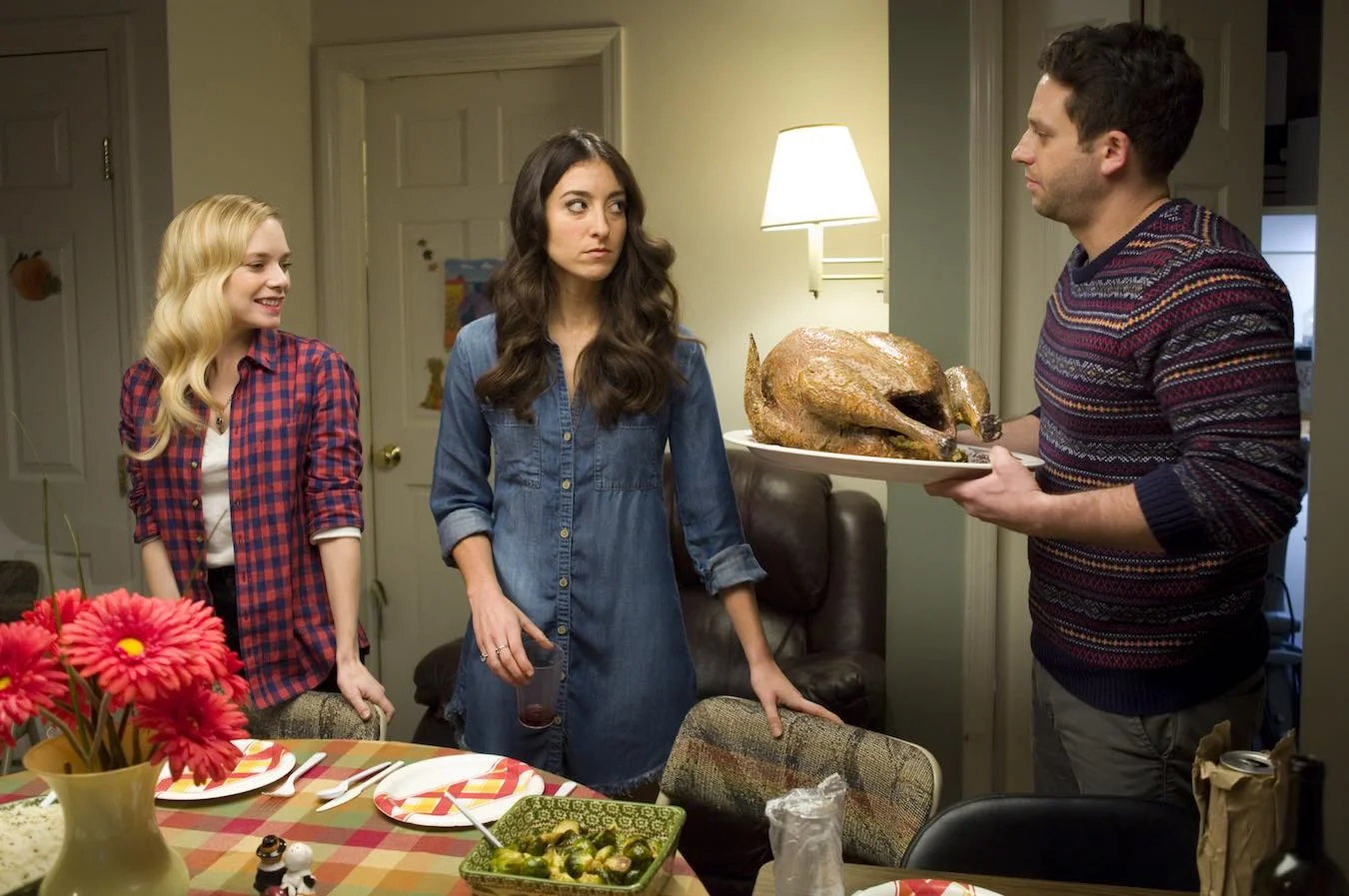
Also, the chemistry between Mehner and Laurenzo lacks authenticity. There’s a real sense of love and history between Lauren and Austin in a playful moment in the beginning of the film. One that’s powerful enough to set up a love triangle in subtext. This missing link sets Hailey up to look like a one note, complaining girlfriend, rather than the true love of Lauren’s life that she gives lip service to being.
Lez Bomb is certainly a feel-good, family holiday movie that’s filled with laugh out loud jokes. It’s quick witted dialogue separates it from similar indie fair. Director Jenna Laurenzo said she “wrote Lez Bomb because it was the movie I wanted to see but couldn’t find.” Perhaps it will inspire others to do the same. It’s certainly the perfect arthouse film to see with a group in theaters.
Rating: B-
"Studio 54" Review
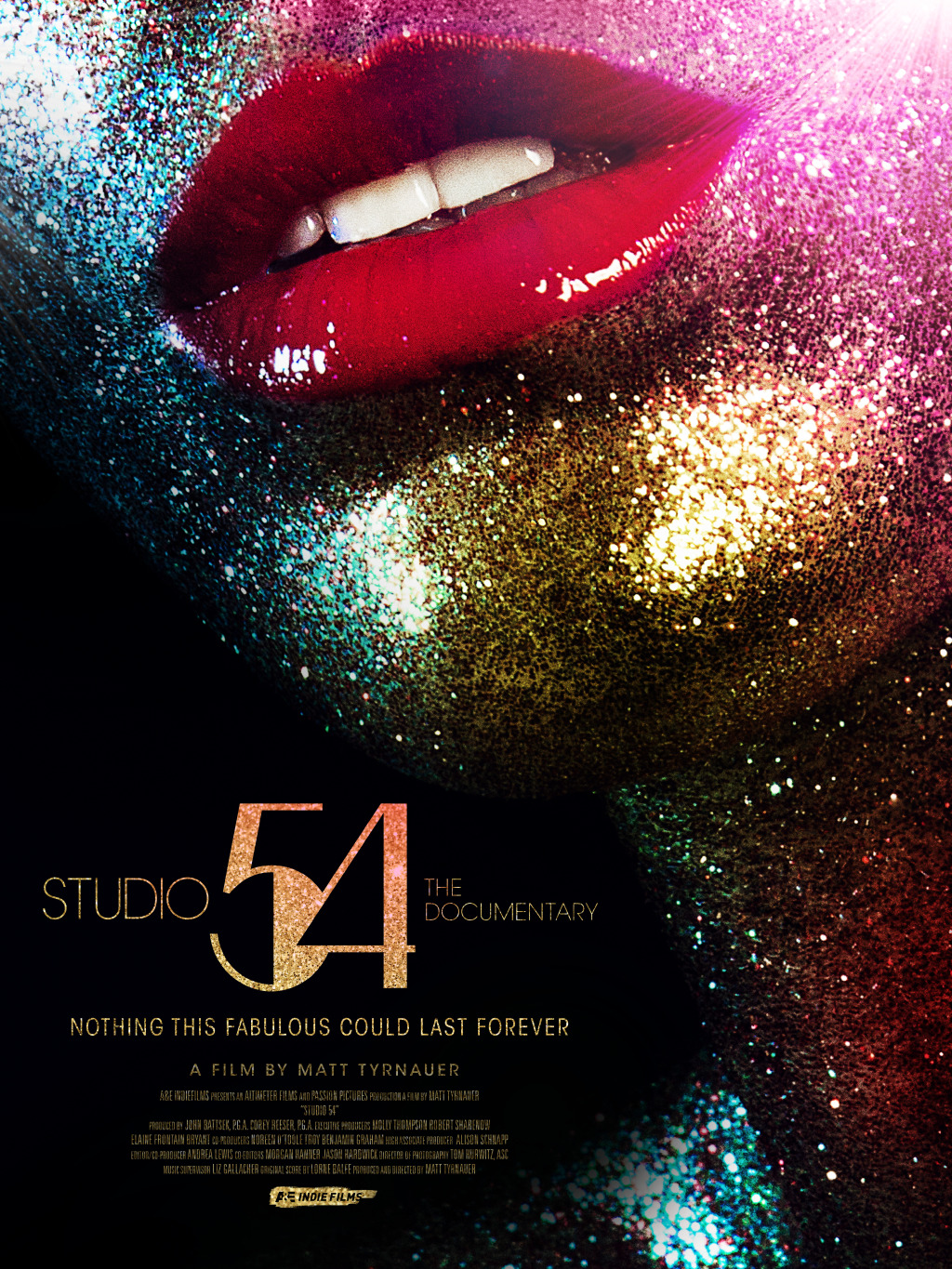
Studio 54 is the new documentary that takes a look at the famous New York City nightclub, or infamous, depending on how you look at it. From director Matt Tyrnauer, who’s past documentaries include 2008’s Valentino: The Last Emperor and 2017’s Scotty and the Secret History of Hollywood, Studio 54 is an entertaining look at a club that, if you could somehow get in, would transport you to a different world. This is a nightclub that quickly rose to the heavens, only for it to come crashing back down to earth. The doc succeeds in letting the owners tell the story themselves, giving the viewer the inside look at the impact Studio 54 had on everyone involved.
In the late 70s, college friends Ian Schrager and Steve Rubell opened up a nightclub on West 54th Street in NYC. At the time, it was considered by many to be one of the sleaziest blocks in town, due to it being rundown and a place you wouldn’t want to be at night. Taking over the building that used to be where CBS Television produced some of their hit shows, Schrager and Rubell created what they called the “ultimate club” and paradise. An overnight success that went beyond their wildest dreams, this became the hottest ticket in town for close to three years, where celebrities frequently attended. But like the story of Icarus, Schrager and Rubell flew too close to the sun, and after awhile, especially after comments made by Rubell that only the Mafia made more money than them, the IRS and the feds started knocking on their doors.
For the most part, Tyrnauer does a good job in balancing the documentary. While the nightclub is the main meat of the story, Tyrnauer wraps it around what’s essentially a biography on both Schrager and Rubell by covering how they met in college, decided to be business partners, why they decided to create Studio 54, and so forth. In a sense, they were perfect for each other. I think it was wise that Schrager waited until enough time has past so that he could properly reflect and tell his side of what went down. Like this summer’s Won’t You Be My Neighbor?, Rubell speaks through archival footage so that we hear from him also (Rubell sadly died from AIDS complications in 1989). Another neat effect that Tyrnauer and his editor employ is that we see a photo of a surviving member of the nightclub which transitions to them in present day giving their side as well.
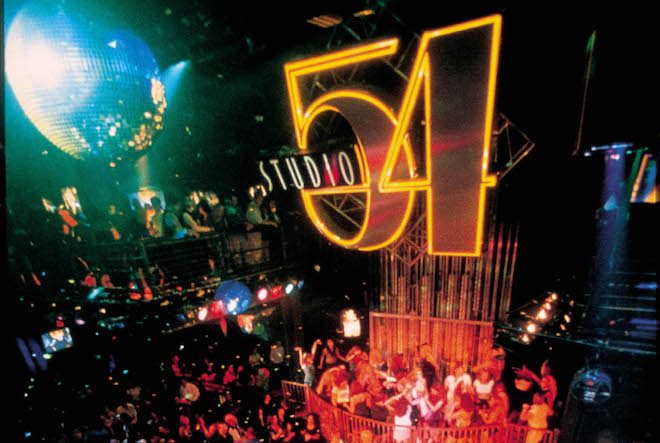
Studio 54 was basically a social experiment, ahead of its time in its inclusivity of the LGBTQ community. If the outside world shunned you, once you came inside Studio 54, it felt like home and no one cared about what you were as long as you were having a good time. The doc makes good use of old footage, from photographs to never before seen footage inside the nightclub it gives us a sense of what it was like to be there. Using news footage and interviews as well, including where Michael Jackson crashes an in progress interview with Rubell, is quite fascinating to see. For a 98-minute documentary, the pacing is good in that there’s never a dull moment within the film.
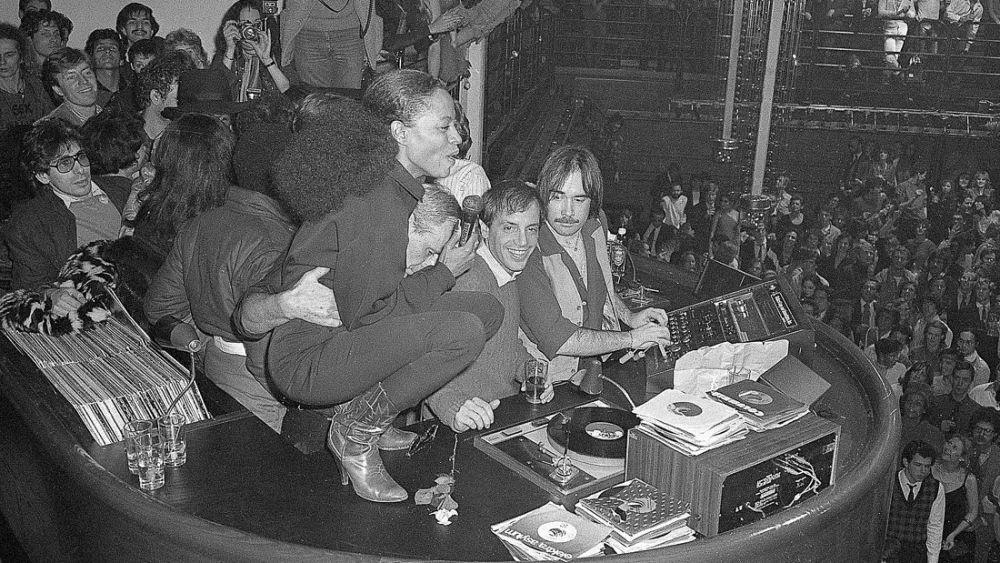
I think my biggest complaint about this documentary is that since the club was infamous in certain aspects, it somewhat skims the surfaces of how hedonistic and crazy it was to be inside the club. If you managed to get in in the first place, there are the wild tales of drugs floating around, hooking up inside, or having physical relations with someone you just met. They briefly discuss it, but it never dives deep into those areas. I also wished that they got more of the celebrities who attended Studio 54 to tell about their experiences within the club, since it was a popular hotspot for them. There are a lot of different avenues that this documentary could have taken, but it makes me wonder if they chose this route to get Schrager on-board to finally open up. One of the best moments of the film involves the prosecutor telling his side of the story after searching for evidence after Studio 54 was raided, and then the manager of Studio 54 tells it from his perspective. The juxtaposition was beautiful, and I wished that there were more moments sprinkled into the documentary where we see a back and forth like that.
Overall, if you’re looking for a more in-depth, critical look, you should probably look someplace else. From a documentary standpoint, while I wished that Studio 54 delved deeper in more aspects, the parts that Tyrnauer does treat us to are quite interesting and does provide some nice insight into it all. Even showing us how Schrager changed his life for the better (he was pardoned last January by President Obama). So in a way, it’s more of a celebration about what the nightclub was to everyone. If you’re in the mood to watch a good doc, I would suggest checking this out sometime.
Rating: B
Maryland Film Festival '18: "Charm City" Review
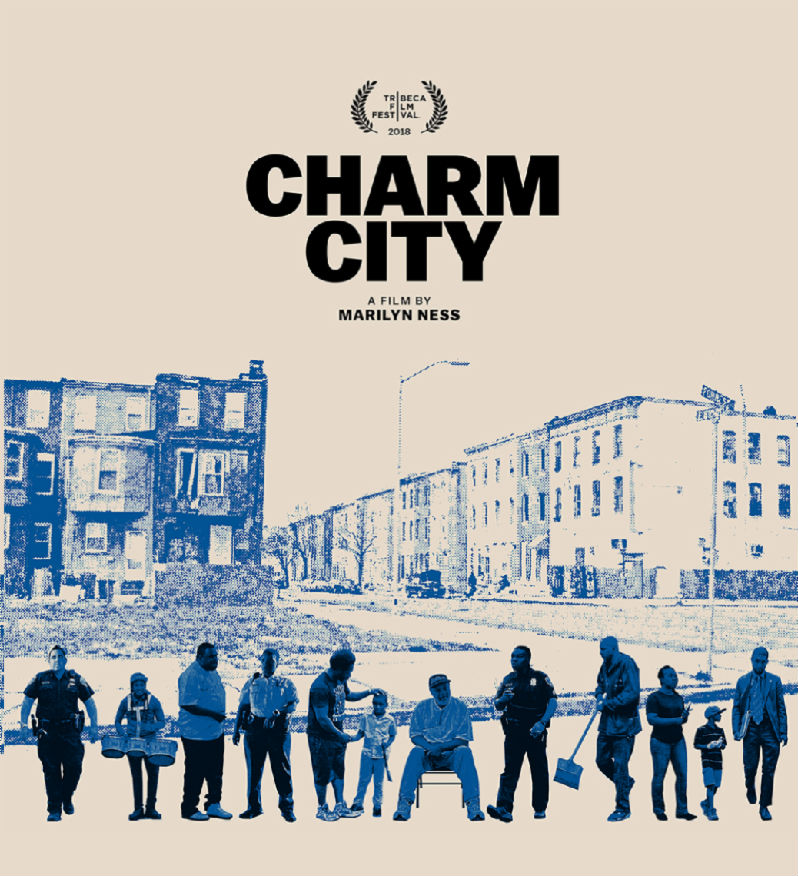
When you hear names like Freddie Gray and Michael Brown you immediately think of their respective cities: Baltimore, Maryland and Ferguson, Missouri. The lives of its community members are usually depicted via news footage, twitter images, or Facebook streams during the cities’ peaceful protests or outbreaks of violence. But what do these cities look like from day to day? Charm City aims to show two sides to the same story of how Baltimore deals with its’ violence in a heart-wrenching look at a city in crisis.
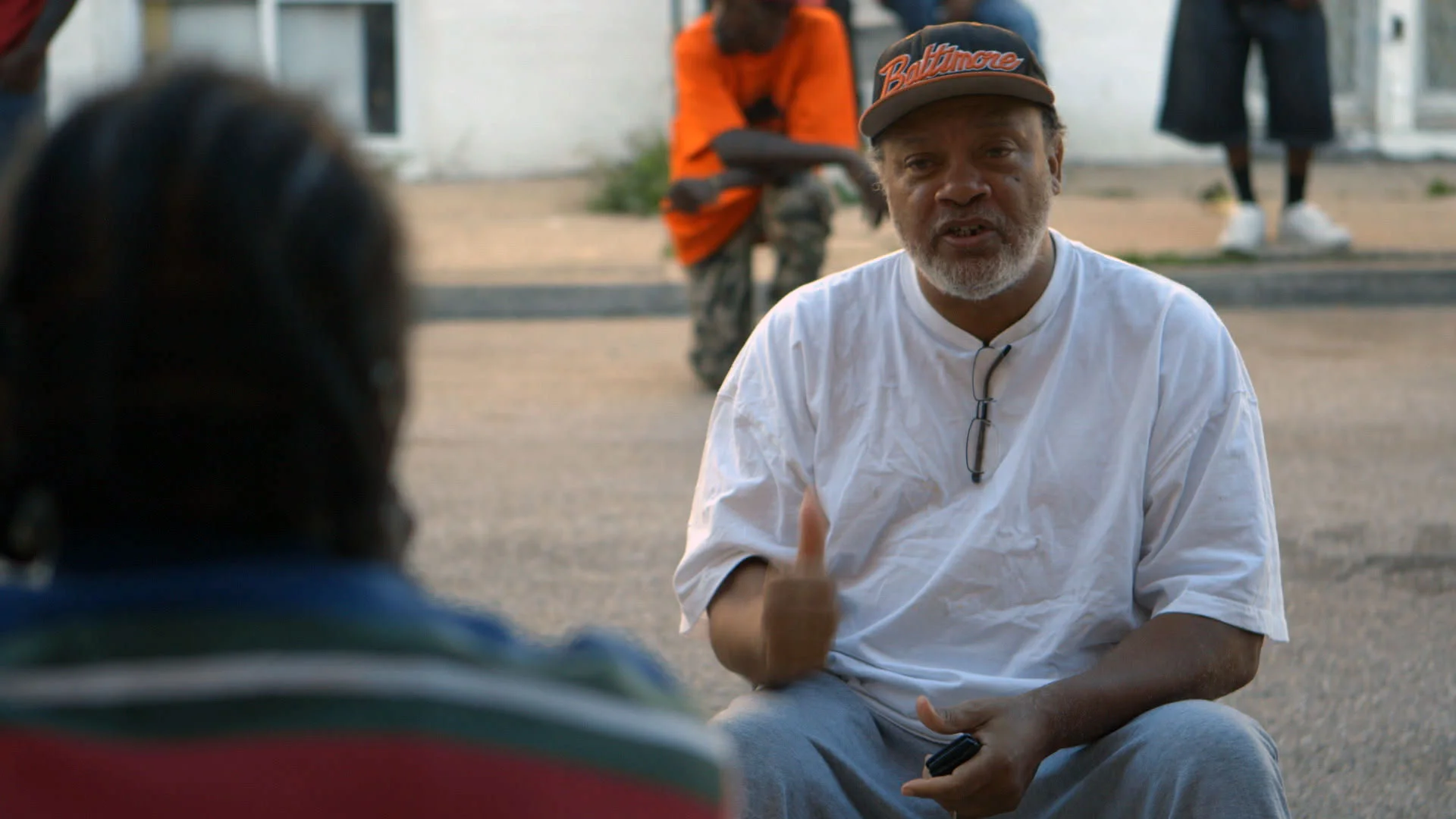
Baltimore filmmaker and award winning director Marilyn Ness spent three years in the Rose Street area of East Baltimore. The opening scene of the documentary sets the tone and pace for the rest of the film. As one of the doc’s main characters, Mr. C., a former corrections officer, talks with residents about the latest act of violence that has brought the police to their block in the middle of the night. Ness’s camera rests in the scene and editor Don Bernier gives us long takes of shots that won’t move on to the next like our brain wants it to. The result, is a feeling of actually being there. This is what a late night/early morning looks like for these residents. It’s reality, and reality isn’t roses.
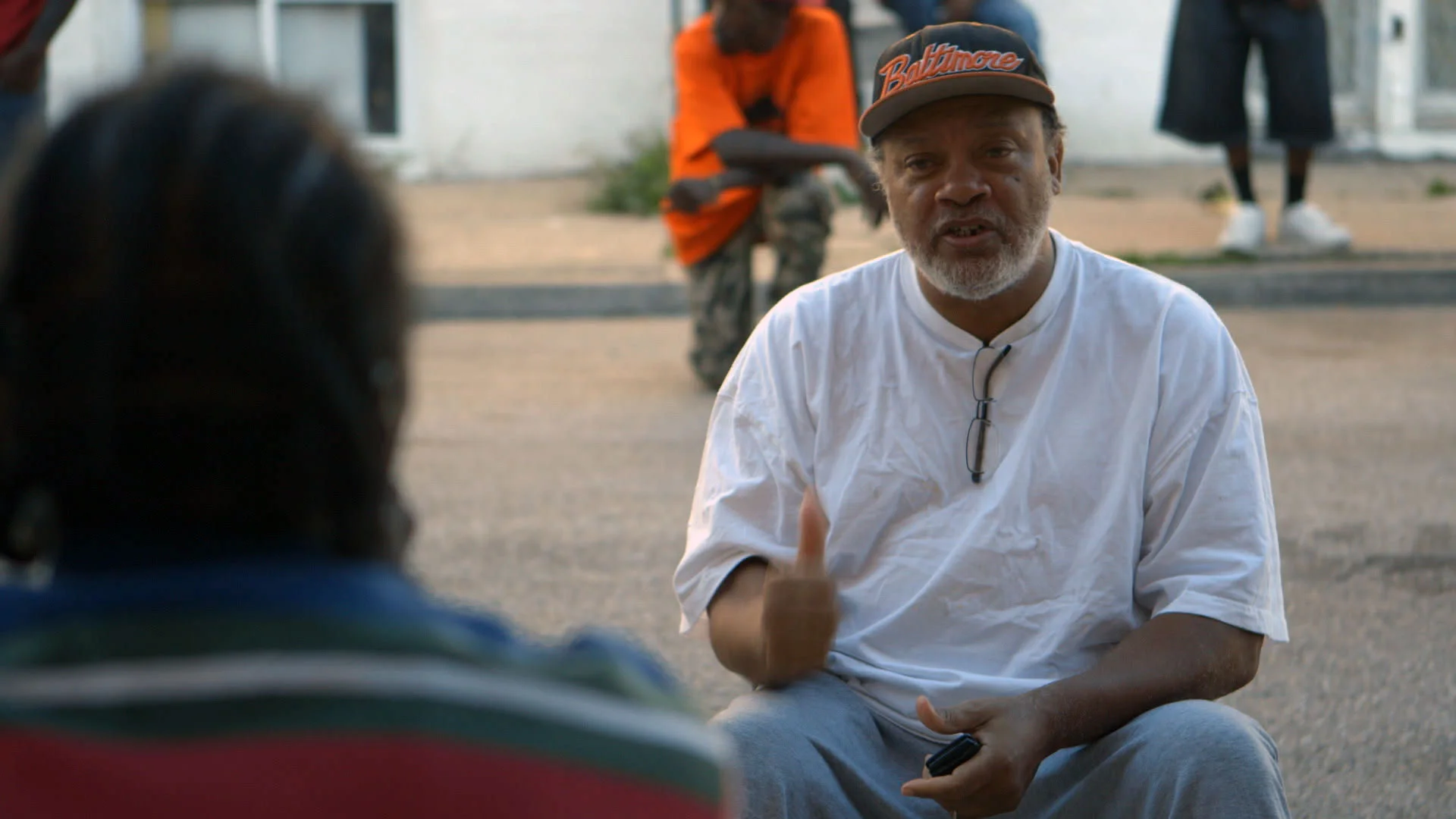
Mr. C leads the Rose Street Community Center. He is the heart of the community, hosting morning meetings that begin with a strong “good morning” that he expects to hear returned in the same way. He gives direction to the residents who participate in the Safe Streets initiative in which they clean the alleys and streets of Baltimore. Mr. C gives bus fare, acts as a male mentor, and distributes job opportunity information to those who need it. This is the way he combats the violence in the streets.
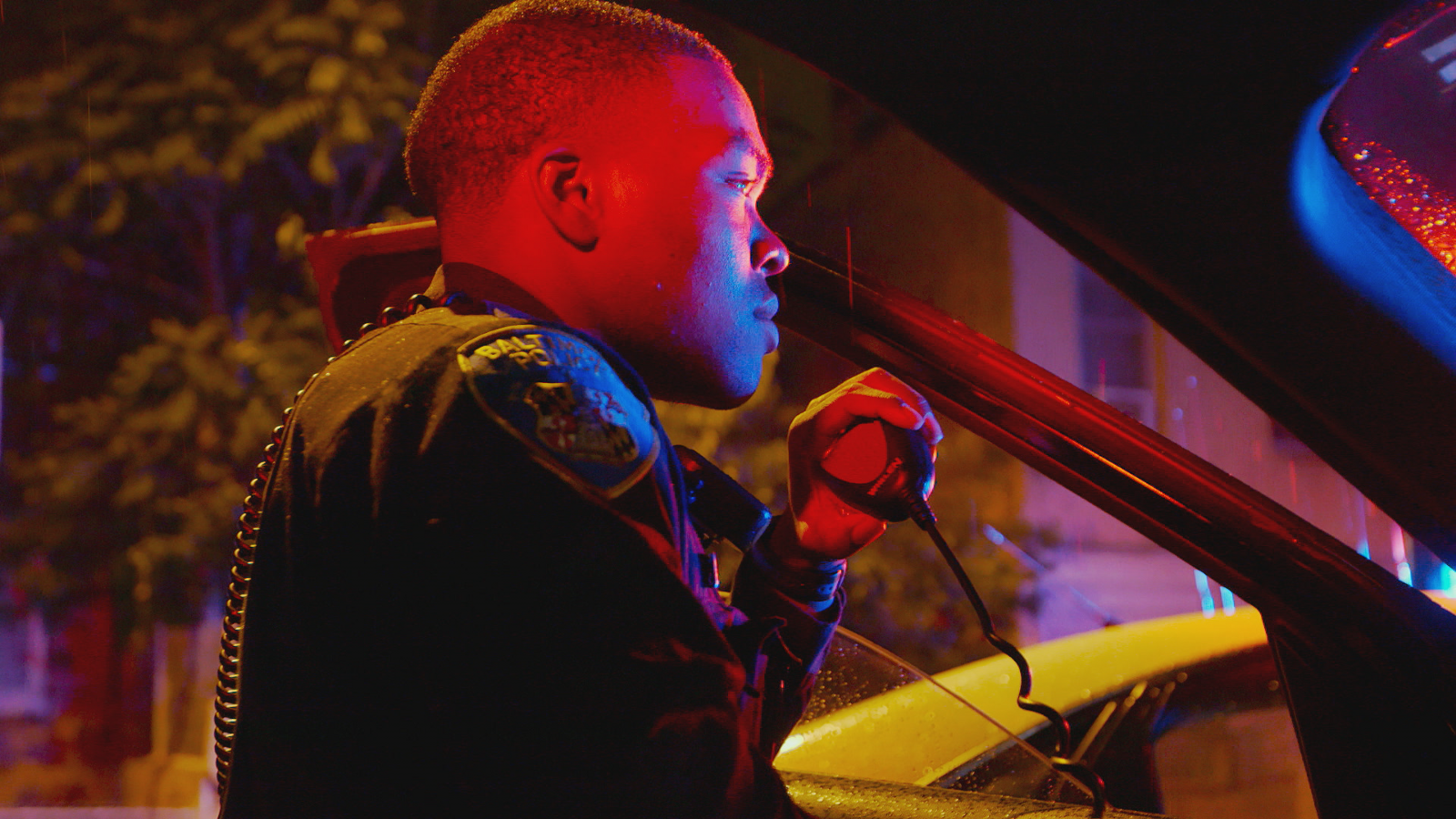
In the same way, we’re embedded in the police department with a variety of officers. We ride with officer Eric Winston as he answers calls. Again, the editing of these calls is sublime as we see Officer Winston respond to a call as humorously simple as an older woman trying to figure out how to block a woman that her husband of 27 years has been communicating with on Facebook, to a serious shooting that interrupts a stop he’s in the midst of that we hear on camera. The viewer feels embedded in a way that’s not like the old Cops TV show we used to watch. That show gave us wide shots during many scenes in order to “not miss anything”. Here, cameramen Andre Lambertson and John Benam direct our eyes to universal moments. Officer Winston’s hand riding the air out of an open window, the unnatural look of a face hit by flashing police lights, or the glimpse of an old man on the street as the police car moves past. By being integrated in such a way that can feel mundane at times, we get a real sense of the stress that officers feel as they try to protect and serve the nearly 620,000 people of Baltimore.
If you’re looking for a formal three act story, you won’t find it in this film. Instead it builds by giving us the day to day look at those involved. We attend a funeral of a young man, in a small church. His father gives an impassioned speech near his deceased son claiming “we ain’t afraid to die, we afraid to live!” It’s this statement and other’s like “there’s too much policing but not enough justice” from Alex Long, one of the Safe Streets leaders, that give us the feeling of life as a resident in this area of Baltimore. Charm City gives us the faces of wariness, hopelessness, and despair from violence. Yet, somewhere in it’s run time a resilient hope continues to pop up on both sides of city officials and residents.
If the film meanders without a predictable structure, it wraps with a moment that keen film lovers may have seen foreshadowed, as the painful sting of life on Rose Street hits home. It’s in this moment that the film gives another glimmer of hope in a difficult world. It gives the viewer tremendous respect for the subjects of the film, because as I watched the movie, I kept asking myself questions like “why do some people have it so hard?”, “why am I still watching this depressing film?”, “why can’t officials help the people?” and more. Charm City answers simply: whether you want to close your eyes and shut your ears to what you’ve seen and heard or not, this is life for us, we make the most of it and we’re going to do our best to beat the odds with or without you.
Rating: B+

Tribeca Film Festival '18: "Salam" Review
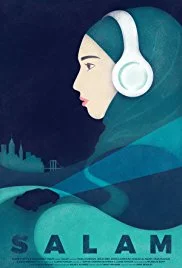
Salam is the type of film you go to a festival to see. Writer/director Claire Fowler’s short film is layered in both its storyline and characters. With a stellar performance by Hana Chamoun, this film is worthy of a conversation after the lights come up.
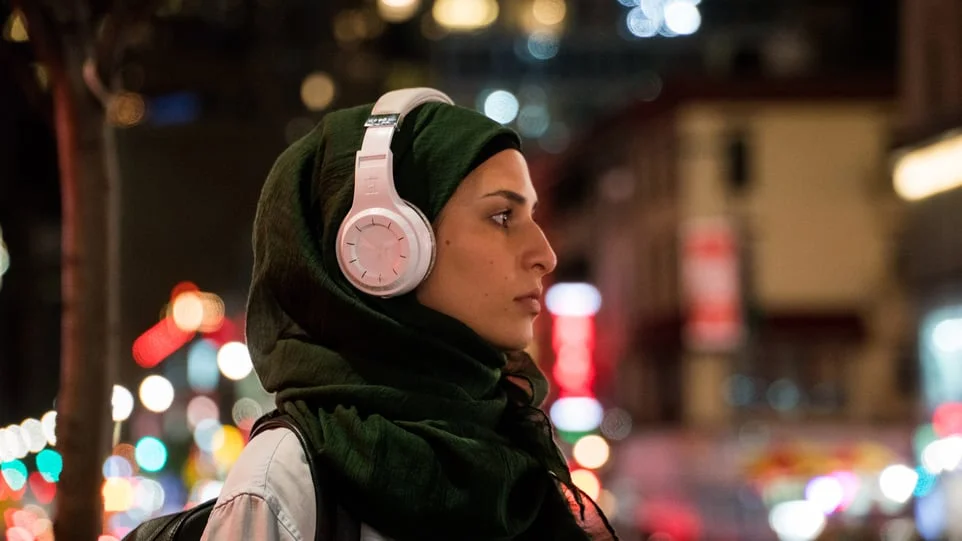
Salam (Hana Chamoun) is a Lyft driver from a tight knit family, but you can gather that Lyft is a means to a bigger end. A portion of her family lives in Syria. When her New York based family gets word of a bombing in Syria, it’s a waiting game to know if their loved ones are ok. To stay busy and rest her nerves, Salam decides to go make some money and pick up passengers. After dropping off a couple love birds, Salam picks up Audrey (Leslie Bibb), who seems to be in distress herself. The exchange that follows is a layered interaction of surface expectations versus what’s really underneath the surface of our daily lives.
Cinematographer, Nicholas Bupp uses natural lighting to showcase New York’s night life. The dark shadows and color scheme gives the film a grittiness that highlights the serious nature of waiting for information that could literally turn your world upside down. With a less skilled writer, the subject matter could be a very heavy-handed, we’ve seen it before look at immigrants and the now stereotypical Islamaphobic pairing we see in films. Instead, Fowler gives us a complex character that we know. Salam is a sister, an aunt, a wife, and a caring person. In turn, we care about her, and understand the weight she’s carrying in the midst of her drive.
Salam reminds us of the ties that bind us all as a human race, while addressing the blockades we’ve constructed by putting people in boxes of certain races or ethnicities. Fowler’s interest in empathy and her ability to create relatable characters gives us a film that helps us think about how we interact with one another in this complex thing called life. This is one to watch!

"Dream, Girl" Review: A Must See For All Genders
What does a business leader look like? More than likely your first thought isn’t of a woman. Dream, Girl is here to change that! The documentary introduces its viewer to a diverse group of go-getter entrepreneurs who happen to be women.
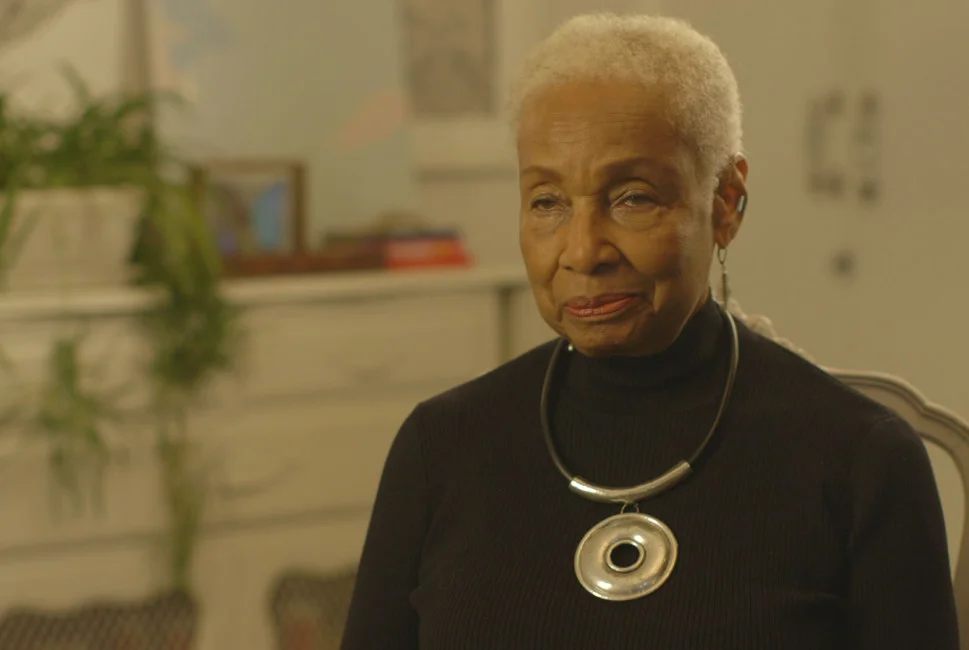
We all need to see images of ourselves, no matter what color, gender, religion, etc., in positive roles. Dream, Girl gives a snapshot of women who are able to rock numerous roles while wearing the boss hat in style. Bosses like Co-Founder and Co-President of Senvol, Annie Wang, and Mariama Camara, Co-founder of There Is No Limit Foundation, shine light on industry leaders in engineering and humanitarian efforts. Sure to be a favorite is Clara Villarosa. She’s 83 years young and running her third business, Villarosa Media, with enough enthusiasm and spark to inspire any viewer.
Where the documentary succeeds is in its effort to portray an honest depiction of the women showcased in the film. While the film has a clear message, each woman is candid and willing to share the ups, downs and everything in between of being a woman in business. From the successes they’ve achieved in building multi-million dollar businesses and growing their family, to experiencing self-doubt, being talked past in business meetings or harassed, the documentary allows its subjects to put it all on the table which in turn creates a resounding authenticity and relatability that's inspirational.

The backstory behind the film is an inspirational story in itself. Directed by Erin Bagwell, founder of Feminist Wednesday, the film was launched after a successful Kickstarter campaign rose over $100,000 to produce the movie, her first feature. So the film is personal and infused with passion in just the right kind of way.
While the pacing of the film is a little choppy at times, there is no question that Dream, Girl is an important film to watch, and for us to show our daughters and sons. The images the world sees of women matters, because those images help shape perception, which can become reality. The reality that women open 1,200 businesses a day should not be a surprise, but a statement, just like this film!
Rating: B+
Full Disclosure: I was a Kickstarter backer for the film, but this review, like all others, is my opinion and thoughts. I was not asked to write this by any representative of Dream, Girl.

Middleburg Film Festival '16: "The Eagle Huntress" Review
As children, we look up to our parents and are impacted by their example whether positive or negative. So why would it be alarming that 13 year old Aisholpan Nurgaiv would want to follow in her father’s footsteps as a hunter in Kazakh tradition? Perhaps because for centuries, the role of eagle hunter has been held by men. The new documentary, The Eagle Huntress, follows Aisholpan on her harrowing journey to buck tradition and make her family proud.
The film introduces us to the Nurgaiv family in the mountains of Mongolia. The tight knit family lives an isolated but busy life. We find Aisholpan on the cusp of getting her own golden eagle, the beautiful bird used to assist in hunting. The eagles aren’t just handed to hunters. Hunters have to scale the mountains to get eaglets at a time when they can’t yet fly in order to raise and train them. With the help of her father, she does, and it’s absolutely breathtaking!


Armed with her eagle, Aisholpan trains to compete in the annual eagle hunter festival. Traditionally an all male competition, eyes roll and heads turn as she rides in with her father. Yet that doesn’t stop Aisholpan. Perhaps her youth allows her to ignore her haters, or maybe it’s the insurmountable love and pride that her father instills in her. Whatever it is, Aisholpan is confident and unwavering in her quest to be an eagle hunter. Which gives us comical moments with the quick juxtaposition of the elders talking against her, and then being forced to eat humble pie quickly after.
Director Otto Bell uses his camera and drone technology to beautifully capture the unforgiving landscape, while telling an intimate story. This film could only be told now. Using his life savings to help fund the film, drone footage gives us beautiful aerials while mountable cameras allow us to see Aisholpan’s first person view as she scales the mountain to retrieve her eaglet. While the visuals and David vs. Goliath story is incredible, Bell never loses sight of the heart of the film. The relationship between Aisholpan and her father is a universal, tangible display of love.

While viewing The Eagle Huntress you’ll forget that you’re watching a documentary because it is so gorgeously shot that it looks more like a narrative feature. It has everything from action to comedy within the film and manages to keep a complex story simple. While Aisholpan is a heroine in her own right with the amazing feats she accomplishes, she’s also a teenage girl who likes to laugh with her friends at school. Honestly, that’s what makes her that much more awesome!
Rating: A
Check out my interview with director Otto Bell and the film's stars here:
http://picturelockshow.com/podcast/2016/11/11/picture-lock-radio-ep-26-alexandria-film-festival-the-killing-season-the-eagle-huntress
"Daddy Don't Go" Review
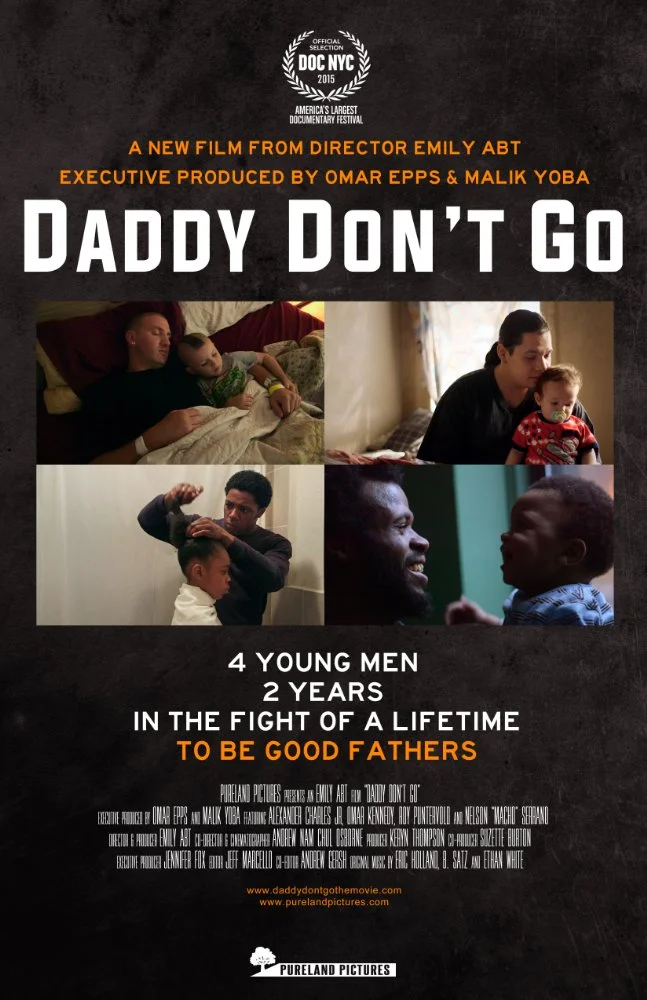
Film is a universal language, but before film was created, humans had love. It’s the original universal language. You automatically know it when you see it. When you combine the two, you can create a film like Daddy Don’t Go. It’s a movie that strives to address the urgent social issue of the link between fatherless homes, child poverty and incarceration, while saluting men who do their best to step up to the plate.
The film follows four fathers- Alex, Nelson, Roy and Omar- as they try to be present in their children’s lives despite certain socioeconomic hardships. Nelson is from the Bronx, and is a former Latin Kings gang member. He has a child with his girlfriend, Rebecca, and also serves as father to her other two children. Omar lives in the North Bronx and his severe learning disabilities affect his ability to find consistent work. The oldest of his three children, Milagros, is dealing with serious mental health issues that may stem genetically from Omar. Roy is an ex-con who lives with his parents in Long Island, raising his son amidst the on again off again presence of his son’s mother. Alex has sole custody of his 2-year-old son, Alex Jr. He’s trying to pass an automotive-training course to put himself in a position to earn more money, but a past assault charge has him in and out of court.
Producer/director Emily Abt takes viewers on an honest walk along in these four men’s shoes. It’s a fly on the wall look at these fathers in their situations with no handholding. When Roy can’t find work, we see what that means for him and his son. When Nelson loves Rebecca’s biological children like his own, we see what that looks like. When Alex goes to court, we see the judge come down on him (deservedly so) and how that affects him and his son. When Omar’s elementary aged daughter, Milagros, says “I want to kill myself”, we can’t help but feel distraught by the situation. Yet through all of it, we see each man’s love for his child(ren) rise to the occasion.
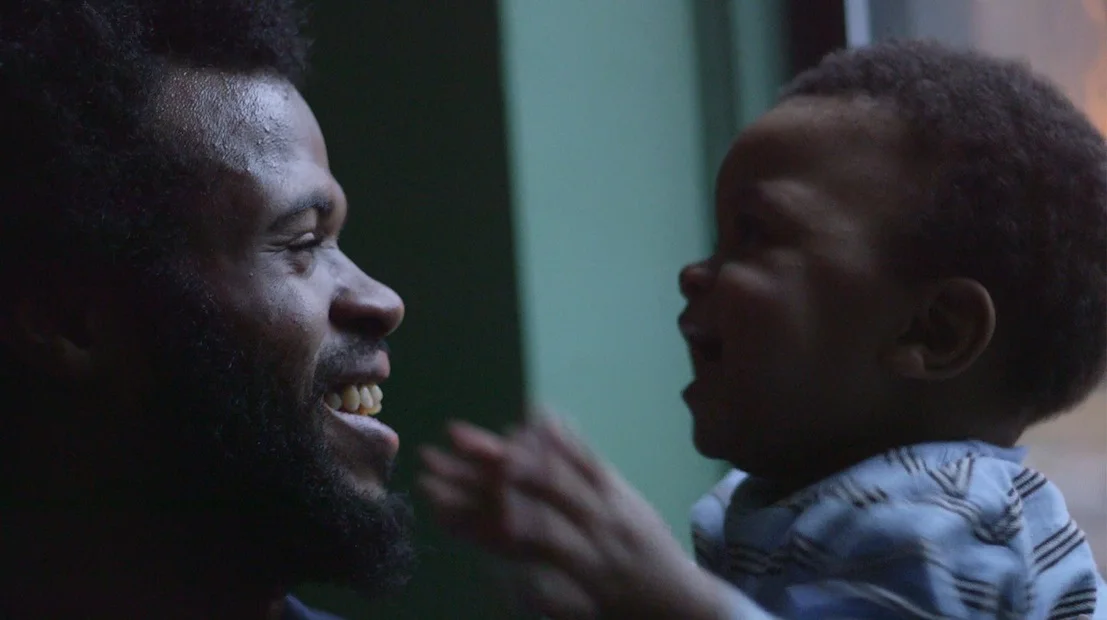
There in lies the beauty of this film. Even in spite of hardships, a father’s love can rise above it all. These fathers are in it to win with their children, and that is unmistakable. It can’t be denied, and it can’t be faked. Despite the difficulties, it’s a beautiful thing to see.
The editing and camerawork on this film is worth mentioning. While both categories have too many names to mention, their work is what helps the film soar. We slide in and out of each story smoothly, while never losing a sense of what’s happening. The camera always captures those moments that can only be displayed cinematically and told in cinematic language. Whether it’s a close up of handholding, or a mid-shot of an embrace; the film turns these everyday moments that we wish lasted a little longer into a wonderful, visual display of love.
Daddy Don’t Go will release nationwide this Father’s Day, June 19, 2016 on Vimeo. It’s certainly worth viewing! The statistics on the growing negative results of fatherless homes is alarming. The love generated from these men is certainly admirable!
Rating: B+

"Presenting Princess Shaw" Review

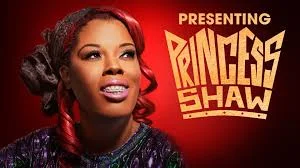
Presenting Princess Shaw is the feel good documentary of the year thus far in my book! It’s a film about two incredible artists sharing in each others dreams. One who has the strength to carry herself like the star as she pursues her dreams of becoming a singer, while all the chips seem to be against her. The other, a talented musician who mixes sounds from around the world via YouTube videos. The two artists, passionate about their craft, come together to make beautiful music, and an inspiring documentary.

Samantha Montgomery’s days consist of helping the elderly at the local nursing home. At night she sings wherever she can be heard. She also runs her own YouTube channel as Princess Shaw in which she sings, and shares her personal story of dealing with the sexual abuse she suffered as a child, hoping someone is listening. Little does she know that nearly 7,000 miles away someone is.
Ophir Kutiel, a musician out of Israel who goes by the name of Kutiman, has made a name for himself in the world of fine art by mashing up amateur YouTube videos. He finds Princess Shaw’s videos and starts putting together a hit! When you see how he does it, you have to respect the time it takes to construct each song, and the vision to hear the final product made from Frakensteined videos. When asked, Kutiman says heplans to put the video out online, and let the people who hear it be the ones that notify Shaw.
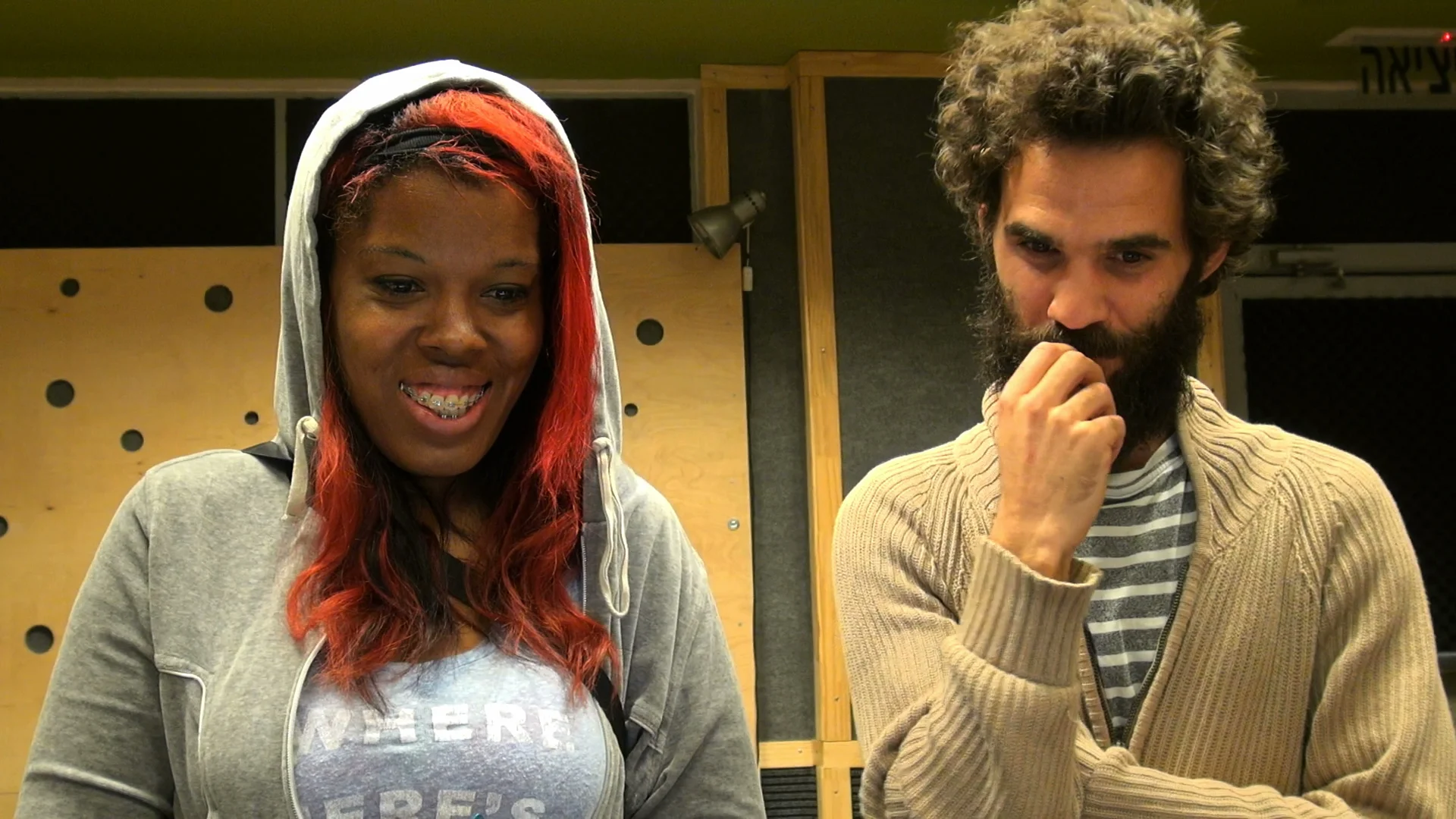
The film manipulates time in a way that works. We’re able to learn about Shaw through her YouTube videos. The videos that served much like an open diary to the world for Shaw, become the backstory of the film we’re watching. Juxtapose that with Kutiman, working up a masterpiece on the other side of the world and instantly we’re in on the secret that Princess has no idea about. While she struggles to keep the lights on (there’s a scene in which she’s using candles to light her apartment), and plays at a club for five people, she doesn’t give up on her goal. She’s the type of person you want to win though! She’s kind hearted, confident, and determined in spite of the difficulties in her life. So when Shaw and Kutiman finally meet, it's a beautiful, heart-warming scene.
Writer/director Ido Haar originally set out to film a documentary about YouTubers and thus was filming Princess Shaw while Kutiman was constructing the songs. So it was a perfect storm for the film to come together. Haar also edits the film to perfection. He cuts together moments in time, trusting there is enough in each scene to make a point and then jump ahead. It’s cut in such a way that Kutiman rarely speaks until the end of the film. Instead, he silently observes Shaw’s videos while working on his music. Yet his silence still speaks, because it’s a good bet that just as he’s falling in love (figuratively) with Shaw, we feel the same way as observing viewers.
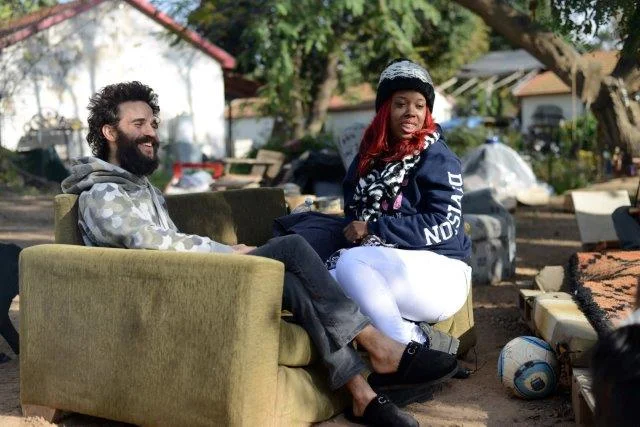
Presenting Princess Shaw is a film that’s about not giving up, pursuing your passion, and overcoming odds. Shaw’s attitude and outlook on life is admirable. Rather than complaining or carrying a large chip on her shoulder, she gives to others. So when she wins, we win! It’s a film that gives you hope that sometimes good things happen to good, deserving people!
Rating: A-
Tribeca Film Festival '16: "Live Cargo" Review
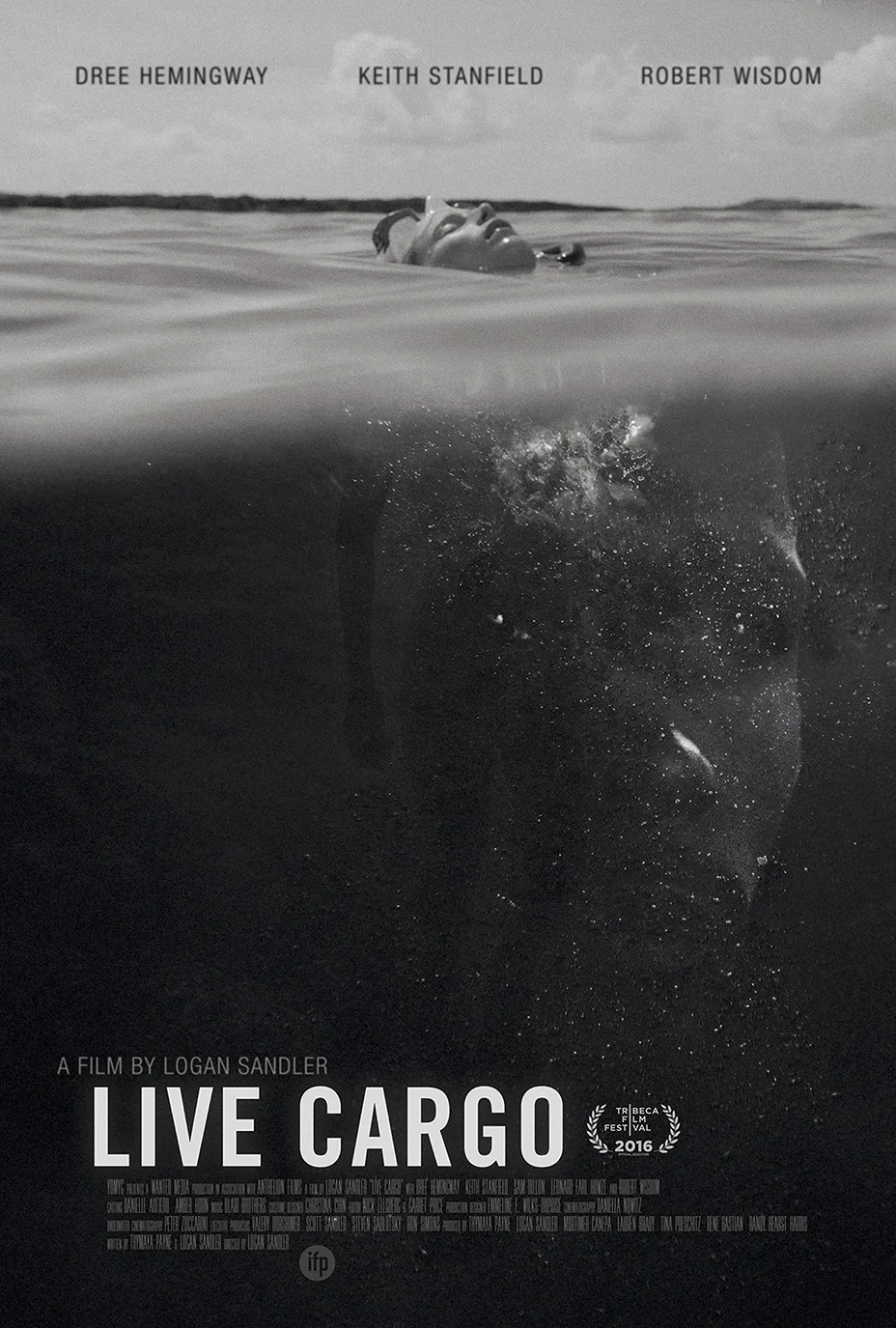
Out of the films I saw at Tribeca this year, one that sticks with me is Live Cargo. It could be the beautiful black and white cinematography. It could be the unconventional storytelling. Or maybe it was the moving performances and skilled direction. Out of the number of reasons that the movie still haunts my film nerd dreams, the number one reason is because I left it feeling like I partook in a refreshing cinematic experience that was as pure and passionate as something from a graduate thesis film but technically proficient enough to study and dissect in the same class!
In the film, we find Nadine (Dree Hemingway) and Lewis (Keith Stanfield) at one of the lowest points of their married life. They’re sitting in a hospital room, noticeably apart, while Nadine holds her newborn baby’s corpse in her arms. The black and white film emphasizes the moment even more, stripped of its color, just like the couple’s world has been. In order to escape and heal, they go to the Bahamas. It’s where Nadine grew up vacationing and learned to dive with Roy (Robert Wisdom), the guy that knows everyone and is the self-described policeman of the island.
Upon arriving they meet Myron (Sam Dillon) who is on the boat helping Roy for the day. Myron is a young man who was abandoned on the island by his parents. He knows the island, he knows how to survive, and he knows he wants Nadine. He survives by working for the major boatmen of the island, Roy and Doughboy (Leonard Earl Howze).
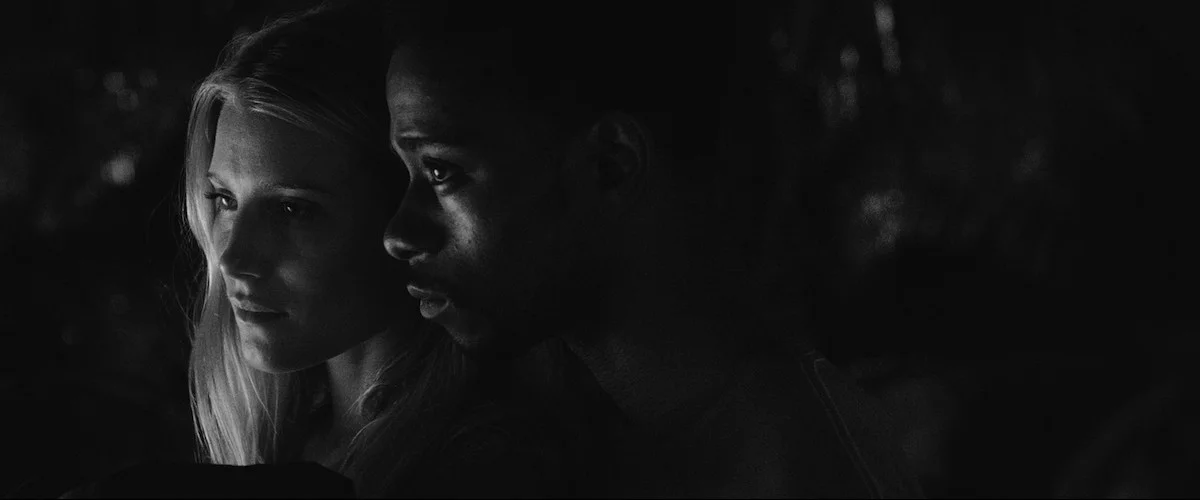
As the film moves forward we witness Nadine and Lewis as they deal with their loss. They’re like similar ends of magnets; attempts at coming back together are thwarted by the ordeal. Yet a slowly brewing turf war on the island just might be what they need to bring them together.
They say a picture is worth a thousand words. Cinematographer Daniella Nowitz captures gorgeous frames worthy of a print ad at times, while using the black and white to simultaneously catch tones and textures we wouldn’t usually notice. The sweat seeping through a shirt, or glistening off of someone’s forehead stresses the heat of the island and the work of the islanders. The lack of color itself, in a place where we would expect to see stunning hues, forces your focus on the story while enhancing the way you take it in.
Director Logan Wyatt allows the images to speak more than his actors at times (and their performances are wonderful). How do you put loss into words? What’s the cost of a life? Wyatt explores these questions by letting his actors be in the moment and cutting the film together in such a way that his audience can contemplate and draw conclusions. Having grown up partially in the Bahamas, his intimate knowledge of island life shines through by acknowledging the beauty of it while not exploiting it like a Sandals commercial.
The cast has the right blend of magic. Veteran Robert Wisdom is a driving force as the patriarch of the island, while Howze brings an underlying jaded ambition to his character. Hemingway, Stanfield, and Dillon give natural, nuanced performances that make for an intense triangle with tension slowly building beneath every interaction.
There is no question that Live Cargo may not appeal to some, because of its unique narrative and shooting style. It’s a mood piece that works visually and aurally to evoke emotion while telling its story. If you go with it, there’s no doubt in my mind that it will stand out in yours as well!
Rating: A
Check out my interviews with the cast and crew:
Annapolis Film Festival '16: "Pervert Park" Review
Film can be a powerful tool. It can serve as a conversation starter, and allow you to experience something without having to get your hands dirty. Pervert Park has to be the darkest, most disturbing film coming out of the Annapolis Film Festival this year, and probably one of the bravest choices by its’ programming committee. Someone saw the opportunity to use film as a conduit to a conversation on a generally rarely talked about topic and let the viewer come to their own conclusions about it.
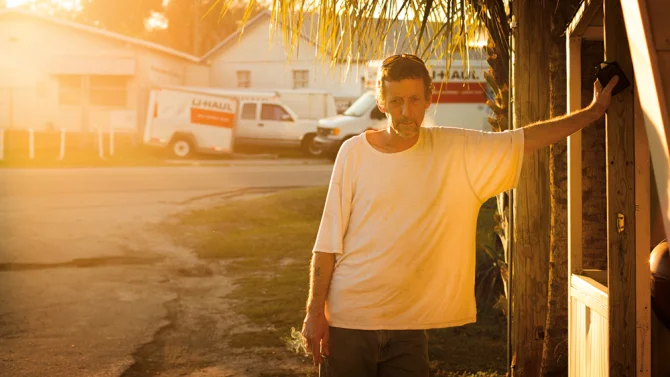
Pervert Park captures the stories of select individuals that live in Florida Justice Transitions, a trailer park in St. Petersburg, Florida. In Florida, sex-predator laws are in place where offenders can not live within 1,000 feet of places where children regularly assemble. Sexual offenders are looked at as the lowest of society, but they all have a story. Directors Frida and Lasse Barkfors capture the stories of park residents with no cinematic flare, just straight shooting and following.
The stand out story in the doc is that of Tracy Hutchinson, who was abused by her father as early as second grade. By the age of 11 she had already had an abortion, and years later she seduced her own son, who later molested a 3 year old boy. Hearing Tracy confess about taking her son’s trust and dismantling it by sexually abusing him is absolutely heart wrenching. The guilt, shame, and deep regret is so apparent that it’s hard not to get emotional yourself. It’s clear that a life of abuse had adverse affects on her, but her vulnerability in being honest and apologetic can be felt on a gut level.
While everyone in the film seems to take ownership of their crimes, they also seem to rationalize them with twisted logic. If there is one thing that is clear from the film, it’s that getting help and being open about abuse is a necessary resource. Many of the individuals in the film kept their past pain buried inside and hidden from society, which in their particular stories manifested into sexual offenses. It shows how much counseling can play a key role in an attempt to transform and unlearn behavior.
Watching the film is an absolute test in self control, staying in your seat and sitting through it. (Plenty of people walked out of the screening.)There is no way of getting around the fact that it is a disturbing documentary on a soul level. The filmmakers obviously worked to keep a balance of letting you hear the horror, and then changing the tone to something that humanizes the offenders. Most people won’t view a documentary like this, but for those who can stomach it, it examines and challenges how and why we should deal with the taboo issue.
Rating: B-
"Until 20" Review

Childhood cancer is one of those topics that I believe we don’t want to address as a society. Numbers don’t lie; only 4% of the budget of the National Cancer Institute goes to pediatric cancer research. As long as it doesn’t affect us personally, by those numbers, sadly it seems we’d rather keep living our lives with no regard to the issue, myself included. Perhaps it’s because we’d be faced with our own mortality, our children’s, or because to be honest, it’s somber. So when it comes to a movie, why would you want to watch one about childhood cancer? Keep reading and I’ll tell you!
James Ragan was diagnosed with bone cancer at age 13. When we first meet him, he’s bald, skinny from treatments, and way stronger than most of us. He’s viewing the latest results from a scan with his doctor and family. He tells the doctor that he’d like to “preserve a little bit of quality for when we’ve sorta kicked the can as far as we can kick it so to speak.” It’s this statement and James’ strength in the face of a doctor telling him that without further treatment he has six months to live- within the first five minutes of the film- that engages you to want to see and learn more about James and his journey.

What “Until 20” provides is a pure look into a young man and his family’s life as they’re going through it. There’s no doubt that when the film picks up James has already been through the fire, and his strength and resolve to help other pediatric cancer patients is inspiring. James created the Triumph Over Kid Cancer Foundation in 2007 as a way to raise money and awareness to the cause. Throughout the film it’s obvious that because life isn’t promised to him, he lives his to the fullest, enriching and encouraging the lives of those around him.

Typically in a film like this you expect to focus on how awesome the main character is, and hear from people who will testify to it. While that is a part of the film, you slowly get to know the people surrounding James, pulling you into his family and village of loved ones. Whether it’s his mother Gloria, who is trying to keep it together and be there for her son, while simultaneously missing out on being present for her daughter because of it. Or his sister Mecklin, who loves her brother with all her heart, and yet sacrifices attention and love from her parents at times because her brother needs it more. The doctor, who has to tell James (and one would assume other cancer patients) the bad news, while also viewing him as someone that he hopes his sons will grow up to be like. The list goes on, but the evidence of how cancer’s effects ripple out to those surrounding James is apparent. Yet, a constant sense of love and resilience comes through in every frame. That’s what makes the film powerful.

Another thing that stands out about “Until 20” is the stylistic shot choices and poetic technical nature of the film. One would usually expect a film of this theme to be run and gun, with not much thought into the shooting style outside of capturing the events. While a couple of times the style choice feels a little too much (some scenes in which an interviewee is emotional and the camera continues to dolly side to side), it is aesthetically beautiful. The time and care given to the film by directors Geraldine Moriba-Meadows and Jamila Paksima is evident in the film’s construction from production value to the way the story is laid out. As I watched, I couldn’t help but feel like the Ragan family came together and agreed to tell their story, unfiltered, as a unit, and that James wanted to document his journey for the world to see. Faced with that responsibility, Meadows and Paksima stepped up to the plate and hit a home run.
Sitting through “Until 20” is in no way a walk in the park. It’s unsettling at times, causes you to put your own life in proper perspective, and has its Kleenex moments. Grounded in the reality of life, the film puts a face to childhood cancer and allows you to experience the love, trials, and pain that a family affected by cancer must endure. At the same time it’s uplifting and beautiful! It's cliche to say, but the film is truly more about living your life and embracing each moment. The love that the Ragan family has for one another is undeniable. I couldn’t help but think that the film is exactly what James wanted. While our lives are but a mist, film is forever, and with this film his message lives on and speaks to the heart of a viewer in ways that a speech never could! Hopefully with this film, one family’s loss is the world’s gain, as it inspires us to get involved in some small or large way.
You can learn more at http://triumphoverkidcancer.org/.
Visit http://until20.com/ to find out more about the film and future screenings.
Rating: A+