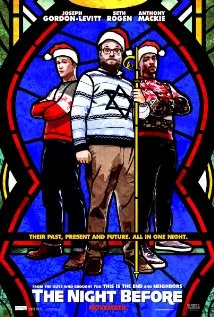
"The Night Before" Review

Deck the halls with weed and mushrooms, Fa-la-la-la-la, la-la cocaine.
That’s pretty much the mindset that this film occupies. Combine a Christmas movie with a stoner movie and you’ll get The Night Before, the latest comedy starring Seth Rogen. Those who have seen Rogen’s past efforts (This is the End, Neighbors, The Interview) are well aware of what to expect by this point: vulgar humor, pop culture references, and a laid-back, improvisational approach to storytelling. The Night Before is no exception, and whether that’s a good or bad thing is entirely dependent upon the viewer’s tolerance for that sort of thing.
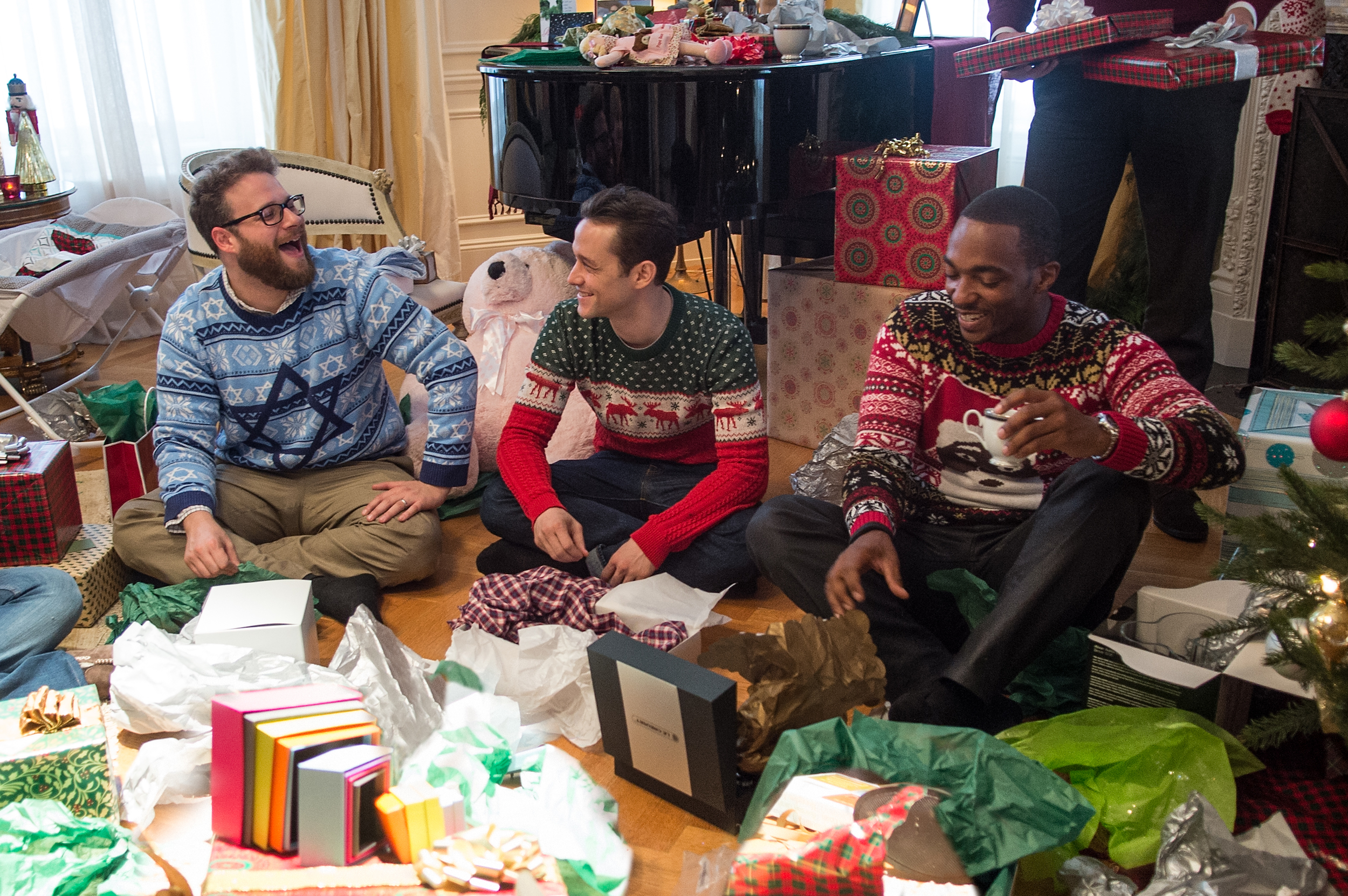
Me? I laughed when I saw it, in spite of myself. The Night Before is equal parts naughty and nice, relishing its raunchiness while pausing for sobering, heartfelt moments as well. This is a film about friendship, forgiveness, growing up, and the spirit of Christmas… that also features a scene in which Rogen, wearing a sweater bearing the Star of David, vomits in the middle of a church during Christmas Eve service.
The film concerns three childhood friends—Ethan (Joseph Gordon-Levitt), Chris (Anthony Mackie), and Isaac (Rogen)—who are on the cusp of some big changes in their lives. Before adulthood claims their freedom to party forever, they gather on Christmas Eve for one last night of bacchanalian shenanigans. On a quest to find the Christmas party to end all Christmas parties, they traverse from one outrageous set piece to the next. This is not so much a story as it is a collection of things that happen.

Like with all Rogen comedies, the sheer level of talent assembled is impressive. In addition to the believable chemistry and snappy banter of the three leads, there are also hysterical supporting turns from actresses Jillian Bell (22 Jump Street) and Mindy Kaling (The Office), who often overshadow their male costars with their radiant comedic timing. But the most brilliant—and surprising—comic performance of the film comes from Michael Shannon (yes, General Zod from Man of Steel) as the mysterious marijuana dealer Mr. Green. He runs away with the film.
But too often the humor relies on lazy pop culture references and random celebrity cameos that will date the movie instantly. Miley Cyrus appears in one scene. What’s the joke? I guess it’s meant to be funny because she’s there. Or is there irony in the way the characters lay the praise on thick by saying things like “Miley Cyrus is so amazing! Isn’t her song ‘Wrecking Ball’ timeless?”

It’s unnecessary detours like these that take precious screen time away from our heroes and grind the film’s momentum to a halt. Had the script stayed focused a bit more on its central characters, I would have found myself caring if Ethan gets the girl or if Isaac learns to be a responsible father or if Chris becomes less of an egotistical jerk.
But perhaps I’m being a bit of a Scrooge. People don’t go to a film like The Night Before looking for well-developed characters or a polished script. They go to laugh. And when Christmas brings us such lumps of coal as Jingle All the Way, Deck the Halls, and Christmas with the Kranks, we can be thankful that The Night Before is as funny and warmhearted as it is. After all, isn’t being thankful what the holidays are all about?
Grade: B-
"Spectre" Review

Well… Spectre is a James Bond movie, all right.
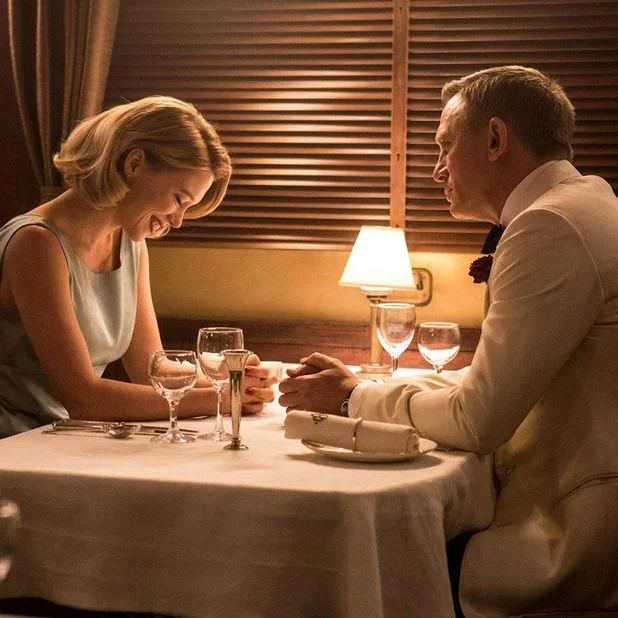
It certainly ticks all the boxes on the Bond Movie Checklist. Exotic locales? Check. Sexy ladies? Check. High-speed car chases? Check. A vodka martini, shaken and not stirred? Check. Et cetera. Viewers should prepare for little that’s new or surprising in the twenty-fourth Bond film overall, and the fourth starring Daniel Craig. That’s not to say that the film doesn’t have its distinct pleasures; the reason why the Bond series has endured for over 50 years is because it has followed a formula that works. But it’s hard to not be a little let down by Spectre, which plays things a little too safe when it would have been much more interesting to see something new.
Things start out promisingly enough. The usual globetrotting begins in Mexico City, where Bond tracks down an assassin with plans to bomb a parade during El Dia de los Muertos. It’s a real corker of an opening sequence, with lots of running and jumping and shooting and hanging out of helicopters. It’s business as usual from there though, as Bond intercepts a clue that leads him to investigate a terrorist organization known as SPECTRE.
In Star Trek: Into Darkness, the reveal of the villain led to nearly beat-for-beat recreations of scenes from Star Trek 2: The Wrath of Khan. Terminator: Genisys used time travel as a convoluted excuse to essentially rehash the first two films in the franchise. Jurassic World exploited your love for Jurassic Park to such a degree that the film became a satire of itself. Following in the footsteps of such recent films as these, Spectre is a part of an unfortunate Hollywood trend of screenwriters being more interested in triggering nostalgia than telling a unique and original story. Instead of creating its own memorable, iconic images and moments, Spectre dredges up those from Bond films of the past.
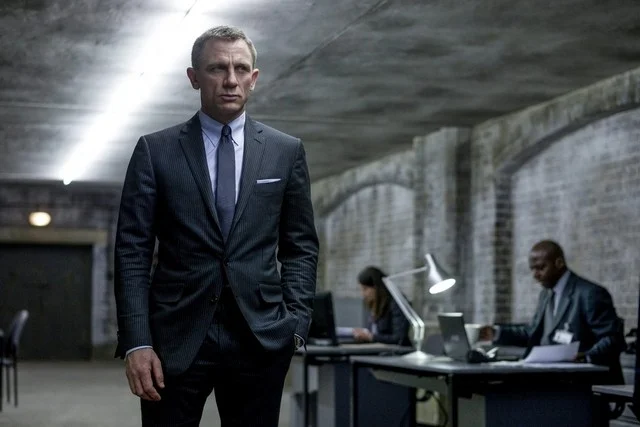
With that being said, there is a lot of fun to be had here. The action sequences are well staged, exciting, and unlike those in Quantum of Solace, visually coherent. Craig, as always, is a serviceable Bond, while Christoph Waltz gives an appropriately theatrical performance as Franz Oberhauser, a villain with mysterious ties to Bond’s past. There is also a lot of humor; most of it coming from the banter between Bond and Ben Whishaw’s Q. Though it is long (clocking in at nearly two and a half hours) it never once feels bloated.
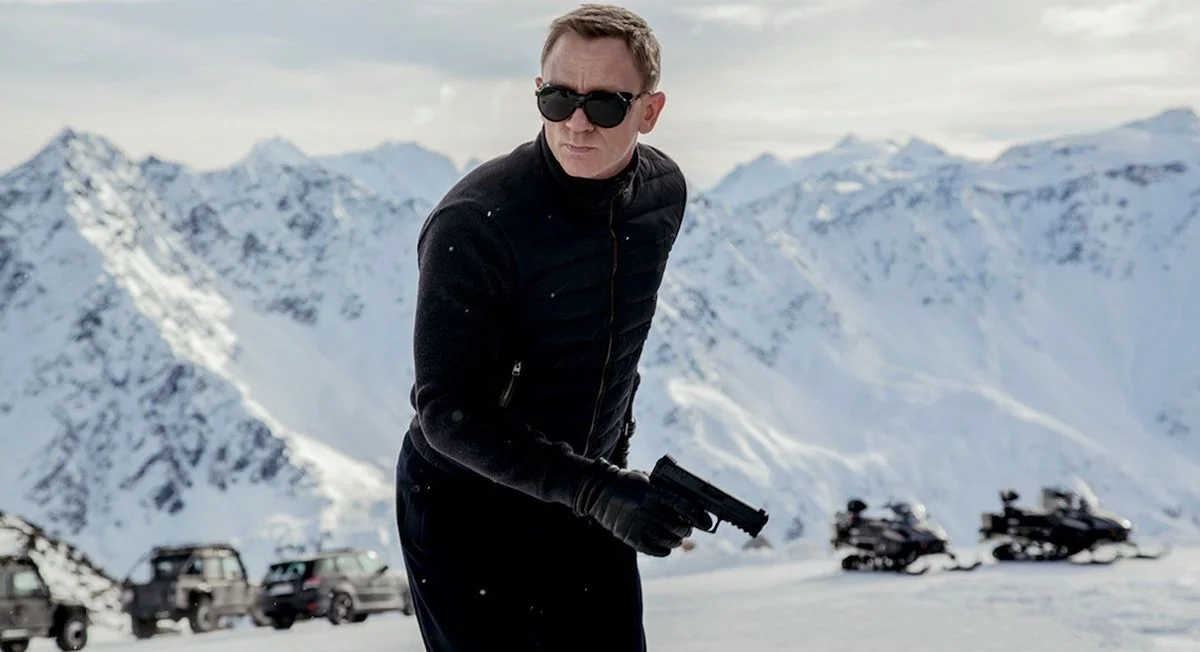
How disappointing, then, when this well-oiled movie machine suddenly rusts and screeches into its somewhat clunky third act. It’s here that Spectre tries a bit too hard to connect its storyline with the previous Craig Bond films, in a way that stretches the bounds of plausibility. The series rarely bothered with labored continuity and connecting plot threads before. Why start now?
You will probably have a good time watching Spectre. You should go see Spectre. It’s a fun time. But the series should try something—anything—new for the next installment. Casino Royale and Skyfall took the series in fresh and interesting new directions while still keeping those quintessential Bond elements. In comparison, Spectre falls short, but on its own terms, it’s… well, a Bond Film. You know exactly what you’re getting into here, and maybe that’s the problem.
Grade: C+
"The Peanuts Movie" Review

Much care needed to be taken when bringing Snoopy, Charlie Brown, and the rest of Charles M. Schulz’s beloved Peanuts gang to the big screen. The comic strip and subsequent television specials were microcosms of the world viewed from the eyes of a child, free of snark or cynicism. So when it was announced that there would be such a thing as The Peanuts Movie, worries were high that Schulz’s legacy would be tarnished. Advertising that proudly boasted that the film was “from the creators of Ice Age and Rio” did not inspire much confidence.
Fear not, for The Peanuts Movie is an absolute delight!
Consider how shallow and soulless many recent cartoon-to-film adaptations of beloved properties have been: The Smurfs, Garfield, Alvin and the Chipmunks. The Peanuts Movie is different from those products in that it doesn’t pander to its audience, nor does it appeal to the lowest common denominator by inserting poop jokes, product placement, or modern-day slang. Like its source material, it’s good-natured through and through. And in an age where the G rating hardly exists anymore, it’s commendable that Peanuts remains something that the entire family can enjoy together.
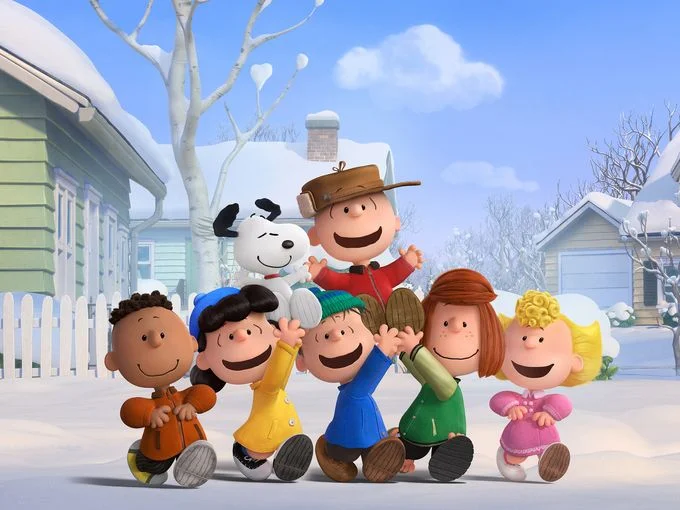
The story is slight. It involves loveable loser Charlie Brown (Noah Schnapp) trying in vain to overcome his deficiencies in order to win the affections of the new girl in class. Not particularly earth-shattering storytelling here, but the film’s unassuming stakes and laid-back pace—keeping in the tradition of the television specials—is somewhat refreshing. Kids will have a blast with the slapstick antics of that sly beagle Snoopy, and adults who grew up on Peanuts will no doubt be overcome by crashing waves of nostalgia.

However, that nostalgia is a double-edged sword. In trying to please die-hards while also attempting to initiate newcomers, screenwriters Craig Schulz (Charles’ son) and Bryan Schulz (Charles’ grandson) occasionally lift scenes and dialogue wholesale from past Peanuts lore. Everyone loves that moment in A Charlie Brown Christmas when, after being licked by Snoopy, fussbudget Lucy Van Pelt screams, “Ugh! I’ve been kissed by a dog! I have dog germs! Get hot water! Get some disinfectant! Get some iodine!” That same moment is repeated in The Peanuts Movie. Twice. Fan service is not always a bad thing, but there is a way to include what fans love about the property without cutting and pasting some of its most iconic scenes.
Of course, this is a small complaint to be made when the movie as a whole is just so gosh-darn charming. It’s lovingly made, with the spirit of the strip and its characters fully intact. It’s beautifully animated, taking advantage of today’s 3D technology without losing Schulz’s endearingly untidy, two-dimensional animation style. And, probably most importantly, it has a big, beating heart. We cheer for Charlie Brown when he succeeds. We ache for him when he doesn’t. He may not be able to fly that kite or kick that football, but for 65 years, he’s never stopped trying. Let’s hope he never does.
Grade: A-
"Our Brand Is Crisis" Review
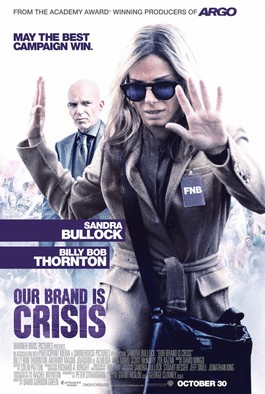
Political satire is an art form. From Veep to SNL’s approach to the presidential candidates each year — the formula that generates great political commentary involves a delicate balance of humor, tact, intelligence and a willingness to take everything to the next level. “Our Brand is Crisis”, directed by David Gordon Green (“Pineapple Express”), mixes politics and humor, creating a film with genuine insight and a laugh-out-loud approach to the world of political campaigns.
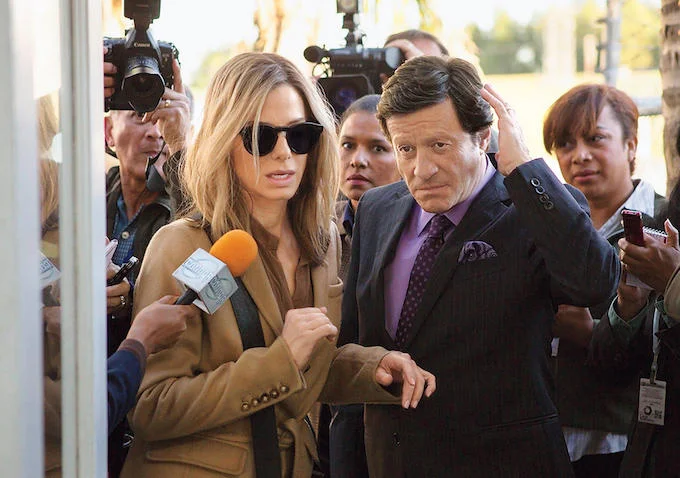
Jane Bodine (Sandra Bullock), or Calamity Jane as she is known in the political world, has retired from politics. For years she rolled with the top-dogs, working on some of the biggest campaigns, but her dedication to the craft took a toll on her personal life — resulting in several stints in rehab. Seemingly content with her cabin in the mountains and pottery-making, bad news comes knocking in the form of Nell (Ann Dowd), a former colleague. Nell is currently working for a Bolivian candidate, Castillo (Joaquim de Almeida), and she wants Jane on the campaign. Castillo is 28 points behind in the polls and in desperate need of Jane’s expertise. Jane isn’t convinced to join the team until one name is brought up: Pat Candy (Billy Bob Thornton), her political campaign nemesis. At the mere mention of his name Jane is on a flight to Bolivia, off to save Castillo’s campaign.
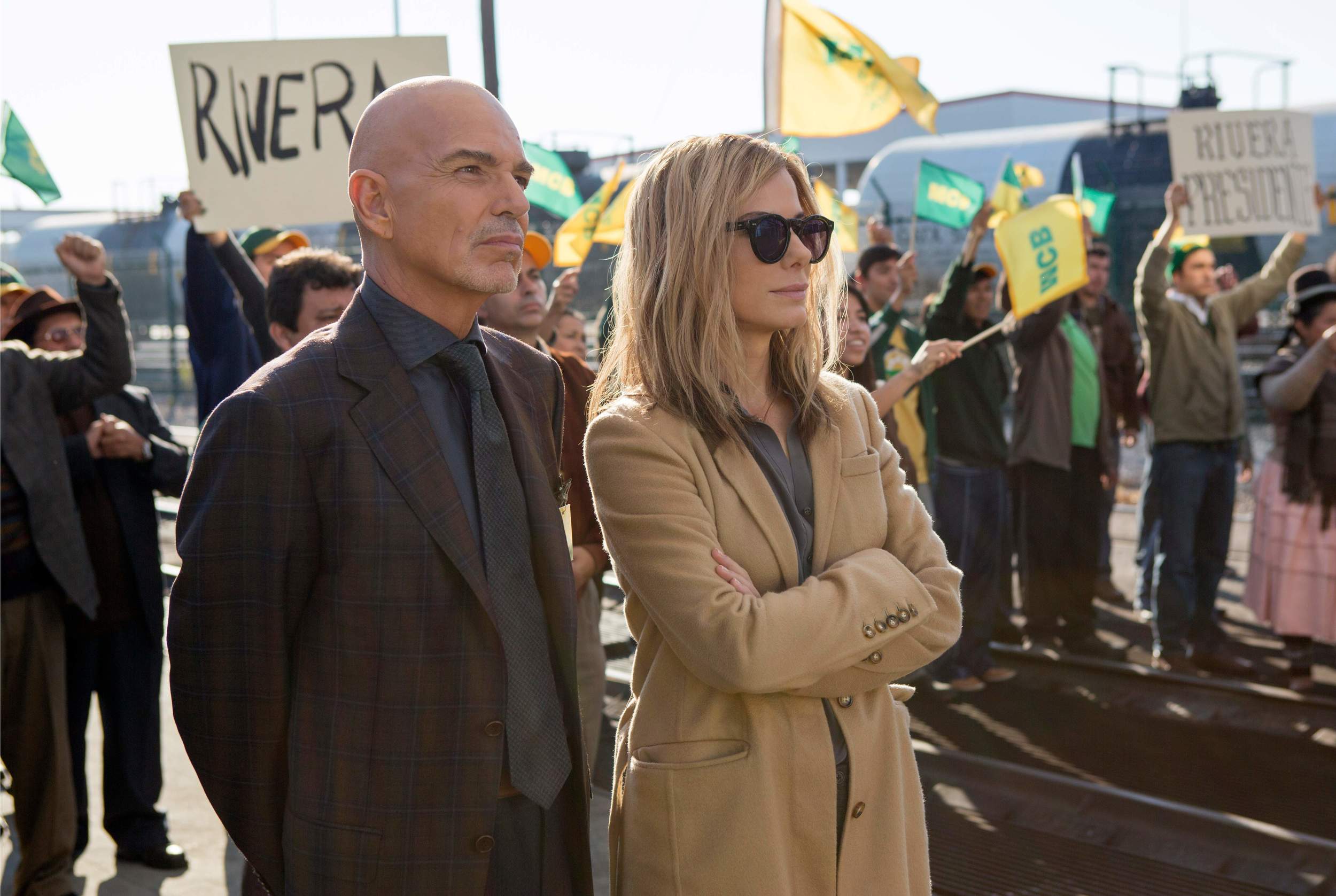
“Our Brand is Crisis” is Sandra Bullock at her finest. As Jane, she delivers a bull-headed personality, perfectly countered by an off-kilter charm and sense of humor. There is something classically physical and consistently effortless about Bullock’s comedic chops and this role allowed her to bring what she does best to the table. Her performance turns what could’ve been a deeply-flawed, stoic woman into a riveting, can’t-wait-to-see-what-she-does-next character. An added bonus to Bullock’s performance: Billy Bob Thornton as Pat and Zoe Kazan as political ingenue, LeBlanc. The relationship between Jane and Pat is dark and twisted and to watch this play out onscreen is a pure delight. Time slows down as Pat and Jane come together in a series of biting and witty conversations and Billy Bob Thornton plays his character to a twisted tee. Zoe Kazan’s LeBlanc is mysterious, but Kazan stands as the perfect partner to Bullock’s comedy.
As a lazy, but always intrigued, political junkie what I found so fascinating about this film is its ability to touch on the truth of political campaigns while also managing to have a lot of fun. As Jane and her team work to bring their candidate up in the polls, you really get to see the art of political communication — how it is not about honesty or doing what it is right, but it is about telling the right story at the right time and convincing the people to believe in that story. It’s as simple as that. “Our Brand is Crisis” tells the story of the type of people it takes to get the political job done, and its humor comes from the eccentricities of their different personalities. The writing is fantastic, and if you’ve ever wondered what might lead Sandra Bullock to flash her bare bottom at a passing bus of political enemies, this movie is definitely for you!
Grade: B+
"Steve Jobs" Review
There are two things I was looking forward to in regards to the highly-anticipated premiere of 'Steve Jobs': Aaron Sorkin’s writing and Michael Fassbender in a turtleneck! There are other things people might be looking forward to: a chance to learn more about the infamous man behind some of our favorite pieces of technology, and a new piece of work from Danny Boyle (127 Hours, Slumdog Millionaire). For this film chick, however, it was all about Sorkin’s quick dialogue and a scantily-clad Michael Fassbender — and on those two fronts, the film did not disappoint.
Steve Jobs, co-founder and CEO of Apple Inc. is the 21st century version of a mythological hero. Passionate, driven and gifted with an unrivaled talent for the art and business of technology, he has both devoted followers and enemies. He goes to battle on the stage of multiple product launches and his fighting skills are a terrifying mix of bravado and finesse. Like any hero though, Steve is plagued by a dark past: he was given up for adoption by his birth parents and this abandonment has gone on to affect his business relationships and his acceptance of his daughter. "Steve Jobs", as a film, follows this hero behind-the-scenes as he creates a technological revolution while conquering his own personal demons.
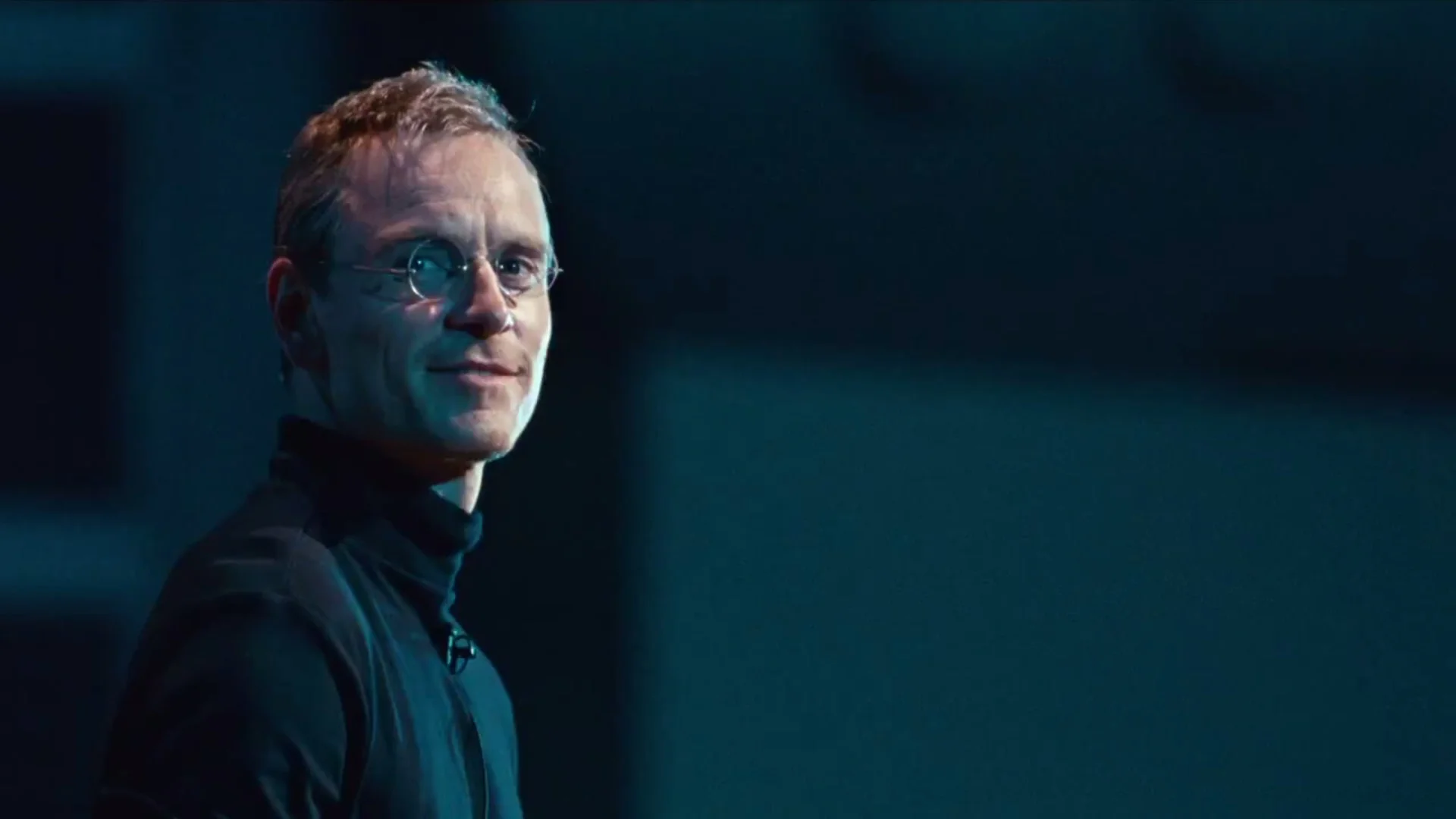
Taking on a subject matter for a man of Jobs’ stature is a tough call. To create a biography via film, you go up against what people think they already know about him and then you have to carefully select what you’re going to show and what parts of the story you are going to leave out — essentially creating a new reality. For this take on Steve, director Danny Boyle decides to focus on two major areas of Steve’s life: the early days of Apple (the film only covers Steve’s life up until the 1998 reveal of the iMac) and his troubled relationship with his daughter, Lisa. This choice makes sense because it gives you the ability to see both the genius and the man behind it, but ultimately, it’s an unsatisfying choice. The film becomes stuck between the two, leading to repetition and predictability.
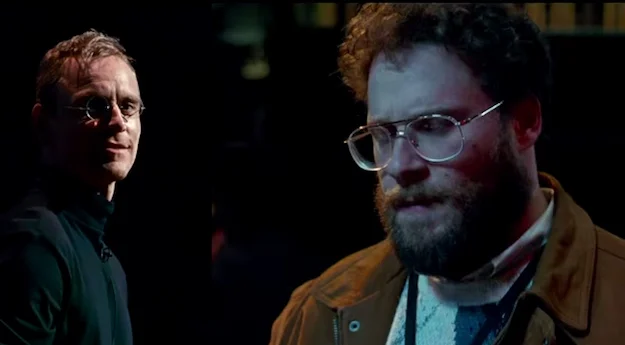
The best, and most interesting choice made for this film is that it plays out in practically the same setting for the entirety of the film. Product launches were Steve’s bread and butter and because of this the film’s story follows Steve’s life through three product launches. For each of the launches we meet up with Steve the day of, at the venue, and then we follow him as he prepares for the show. It’s like watching a behind-the-scenes documentary on your favorite theater production. One the most poignant scenes in the film takes place in the orchestra pit of one of the theaters. Steve and his business partner/friend Steve Wozniack (Seth Rogen) are arguing about comments Wozniack has made to the press about Steve. The two friends confront each other among the empty orchestra set-up and the metaphor of Steve Jobs’ becomes so clear, the ultimate performer and the performance. The theatrical nature and the peek behind the curtain aesthetics of the film help turn the story and its characters into an enjoyable performance.
Ultimately, "Steve Jobs" falls short. It’s too quick of a snapshot of a brilliant man’s life and you’ll mostly likely leave the theater wishing they had shown you a little bit more. What the film does offer is a fantastic set of individual performances and a great study on how to use location to a story’s advantage.
Grade: C+
"Bridge of Spies" Review
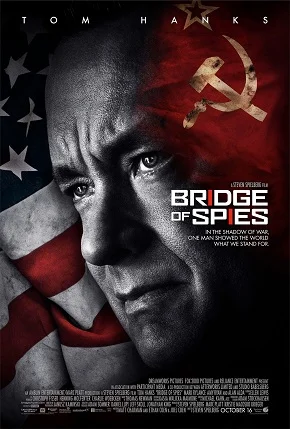
I’m going to be honest here and admit I did not know “Bridge of Spies” was a Steven Spielberg film before the credits rolled at the end of the film. As soon as I saw the famed director’s name though, it all made sense. Spielberg films perfectly walk the line between thrilling and comforting — and “Bridge of Spies” is no different. The film, starring Spielberg favorite Tom Hanks, takes on a small (but important) story in America’s history with heartwarming humor and provides us all with a reassuring look at the many faces bravery can take on.
“Bridge of Spies” is the “based on true events” tale of James B. Donovan, an insurance lawyer who is called to serve his country when he is asked to defend accused Soviet spy Rudolf Abel (Mark Rylance). It’s a job no one wants — the country’s extreme distaste for anything Soviet related means defending Abel is equivalent to treason — but Donovan gladly takes on the case, citing that every man brought to trial deserves due process. As Abel’s trial moves forward, a separate story involving the CIA’s new spy plane technology comes into play. The two stories meet when an American pilot is captured after his spy plane is shot down while on a mission over Soviet territory. Donovan is sent to East Berlin to negotiate the return of the American pilot, in exchange for his client, Abel.
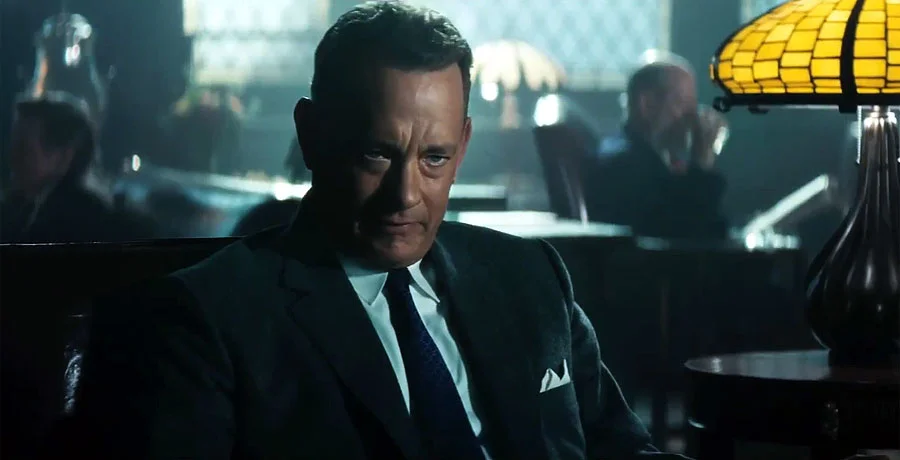
Aesthetically, “Bridge of Spies” is a dark film. The film plays out in dimly lit offices, the frozen streets of Soviet Russia, and a decent amount of prison cells. What’s so great about the film’s dark cinematography is that it lulls you in to unexpected humor and tender interactions between certain characters that really shines through. For a movie about one of America’s darkest moments in time, there were a decent amount of laughs. It is refreshing to see a historical film that seems to really take some time to focus on comedic writing and timing. Much of this is due in part to the brilliance of Tom Hanks, but his performance would not have worked had the film not decided to balance out its darkness with a little bit of light.
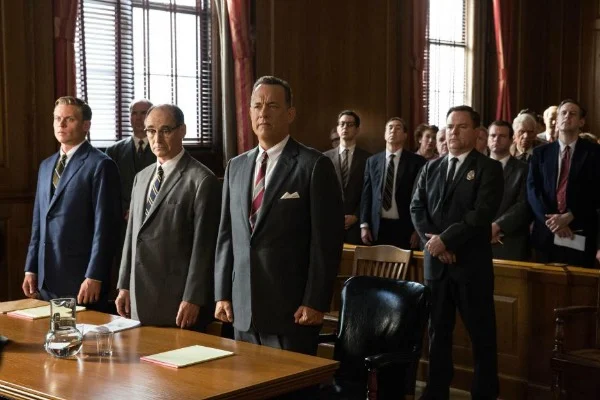
Another area where the film succeeds is its take on the Cold War’s defining characteristic: intelligence gathering. As the film notes, the Cold War was a war of information rather than one built on human sacrifice. There are no large battle scenes to be played out in a bloody, glorified mess — instead, the war takes place on a much smaller, intimate scale. Battles scenes are replaced by intense conversations in back offices and sketchy hotel rooms — and the effects of this war seem to take on a new meaning without the physicality of war to emphasize it. Between Donovan’s interactions with his family, the close relationship he develops with his client Abel, and his dedication to bringing home an American soldier, the film really brings the idea of “war” down a notch, making a hero of Donovan without trying to hard to do so.
With Oscars on the brain, I think it is safe to say that “Bridge of Spies” will be garnering at least a couple of nominations — historical films are always a hit and this one has all the tell-tale signs that it will be celebrated as such. What’s even better is it has real entertainment value. Besides, what could be better than two hours spent with Tom Hanks?
Grade: A
"In My Father's House" Review
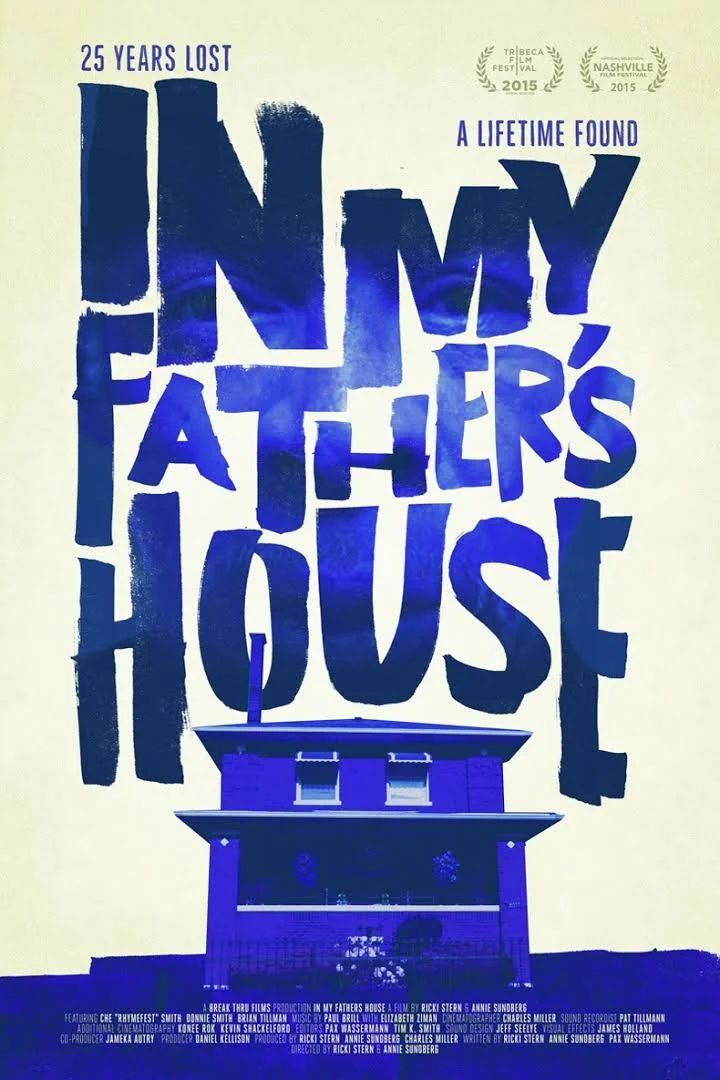
“In My Father’s House” is one man’s journey to turning around his family’s legacy. The set up is much like that of an after school special. The difference is the level of sheer honesty that celebrity Che “Rhymefest” Smith gives to the viewer, making it a poignant, extremely relevant film for this generation.
You may not know the name Rhymefest, but you certainly have heard his work. Having co-wrote the Grammy winning “Jesus Walks” with Kanye West, and Oscar winning “Glory” with Common, his talent is undeniable. Smith’s story is a rags to wisdom story. No matter how successful Smith has become, the impact of life without his father has left an imprint. After purchasing his childhood home, Smith sets out to reunite with his father, Brian Tillman, who abandoned him 25 years earlier.
After finding his father, now homeless and an alcoholic, the film covers a one year journey of Smith trying to assist his father’s rehabilitation. While the normal grievances, questions, and judgement that one may have for the person who abandoned them during Smith and Tillman's reunion comes to light, this is when the film turns. Smith informs viewers about a child that may or may not be his, the struggle for him and his wife to conceive and reach full term, and even losing wealth due to lack of knowledge.
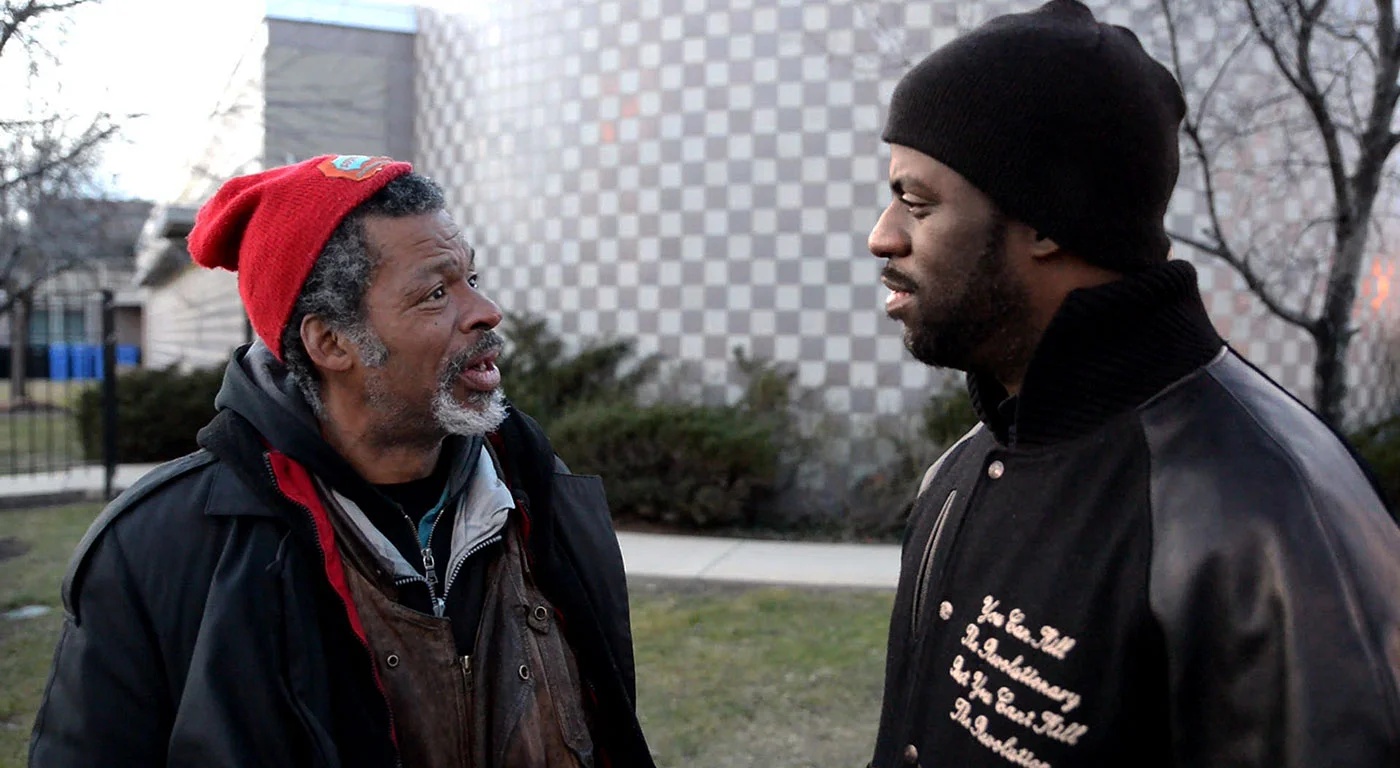
It’s in the depth of vulnerability that Smith is willing to share his life, and how co-directors Ricki Stern and Annie Sundberg piece together Smith’s story that the documentary shines. It exposes the unsure footing we all experience in life in trying to make the right decision. No one is quite sure of their next steps in the film. Whether Smith is putting together a rap or putting together his family, or Tillman is fighting to stay clean, there is a message of human frailty that is beautiful.
We make decisions every day in our lives. Some decisions are small, and others can have consequences that touch multiple generations. “In My Father’s House” documents the decision for Che Smith to take back what was missing in his life, and take control of his next generation's story by becoming the father that he needed for his children and forgiving the one he wish he had when he was younger.
Rating: B+
"The Final Girls" Review:
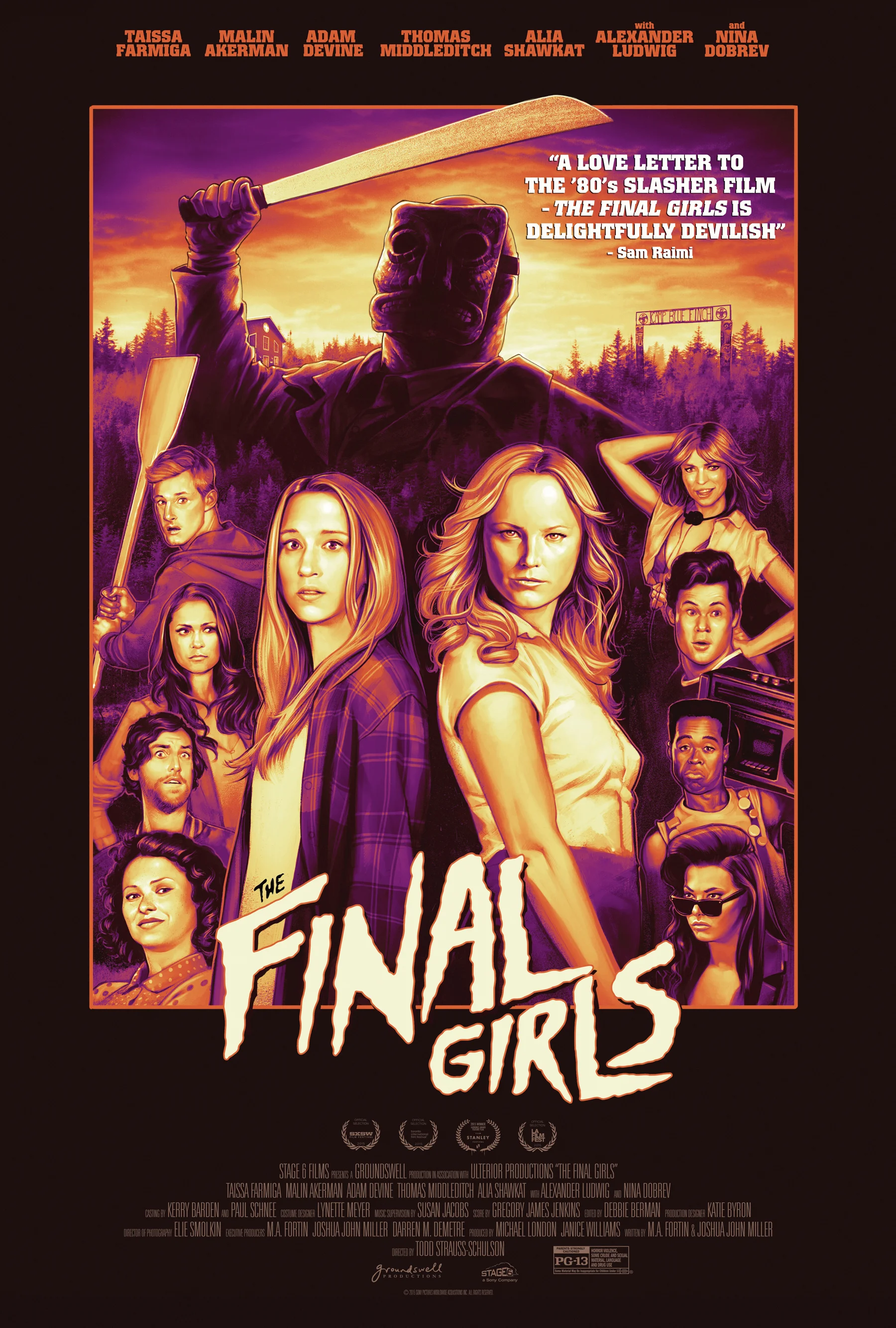
I remember watching “Friday the 13th” and “Nightmare on Elm Street” marathons on the occasional Friday the 13th back in the day. Even though I would watch from underneath a blanket in fear, it was something about the slasher flicks that I enjoyed. “The Final Girls” is a celebration of the 1980s style slasher flicks. It knows what it is and what it’s doing. It’s a movie on the timeline of a cinematic history full of movies and it uses tropes from over the years to make its point. There is so much going on in the film that highlights the past through a contemporary lens, but in the best way possible!
Max (Taissa Farmiga) was always playing the role of the grown up with her mother, Amanda (Malin Akerman), a one time star of “Camp Bloodbath” 1 and 2. Three years after losing her mother in a car accident, Max is invited to a movie marathon of her mother’s biggest role by the franchise’s biggest fan, Duncan (Thomas Middleditch). Max drags her best friend Gertie (Alia Shawkat) to the theater. They run into Max’s possible new flame Chris (Alexander Ludwig) and his ex/mean girl, Vicki (Nina Dobrev). The teens double for the stereotypical characters that can be seen in “Camp Bloodbath”.
After a fire breaks out in the theater, the group try to escape through the theater screen to the back exit but are transported into the “Camp Bloodbath” movie, “Last Action Hero”-style. They soon discover they are stuck in a continuous 92-minute loop of the film and the only way to get out is to get involved in it. As the film moves forward, each cast member steps into their position. Duncan is the genius who knows the Camp Bloodbath movies in and out. While you may assume that you know how everyone else fills their roles, it’s their interaction with their counterparts that makes the film so interesting!
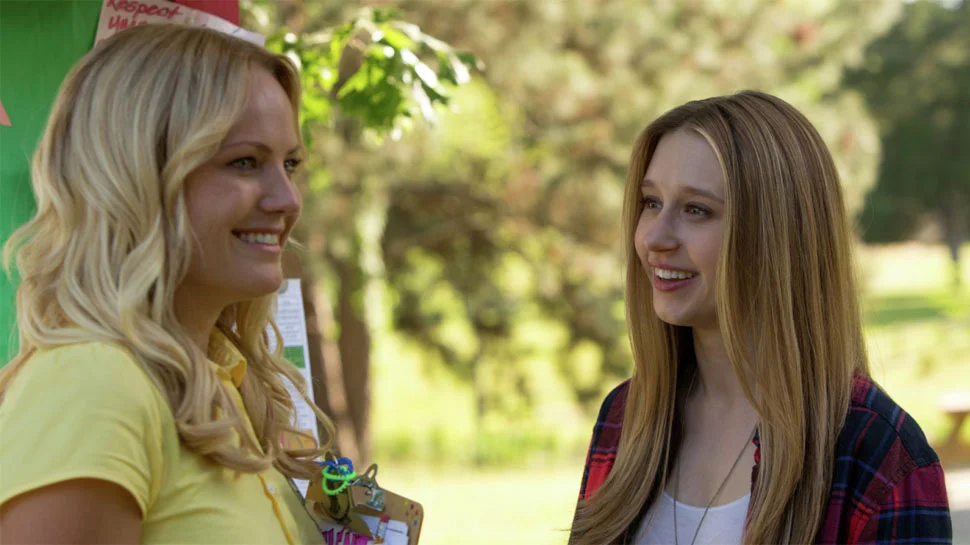
As Chris interacts with Kurt (Adam DeVine), the jock of Camp Bloodbath, viewers can see the 80’s definition of the athletic male stereotype versus the 2015 version. Yet, where the movie finds a lot of it’s emotional depth is in the interaction with Max and her mom’s character, Nancy. The chance for Max to speak to her mom again turns “The Final Girls” into a fun movie with wit and heart.
For the film geeks, the movie is technically proficient and brilliantly executed. All the elements of slasher films are there for dissecting through humorous scenes thatserve the story: slow motion running, backstory flashbacks, stepping over titles, jump screams from the killer appearing in the window, swelling scores, and so much more that this review could turn into a paper. There are plenty of spoof horror films out that you probably can roll your eyes thinking about right now, but this I assure you is not one of those.
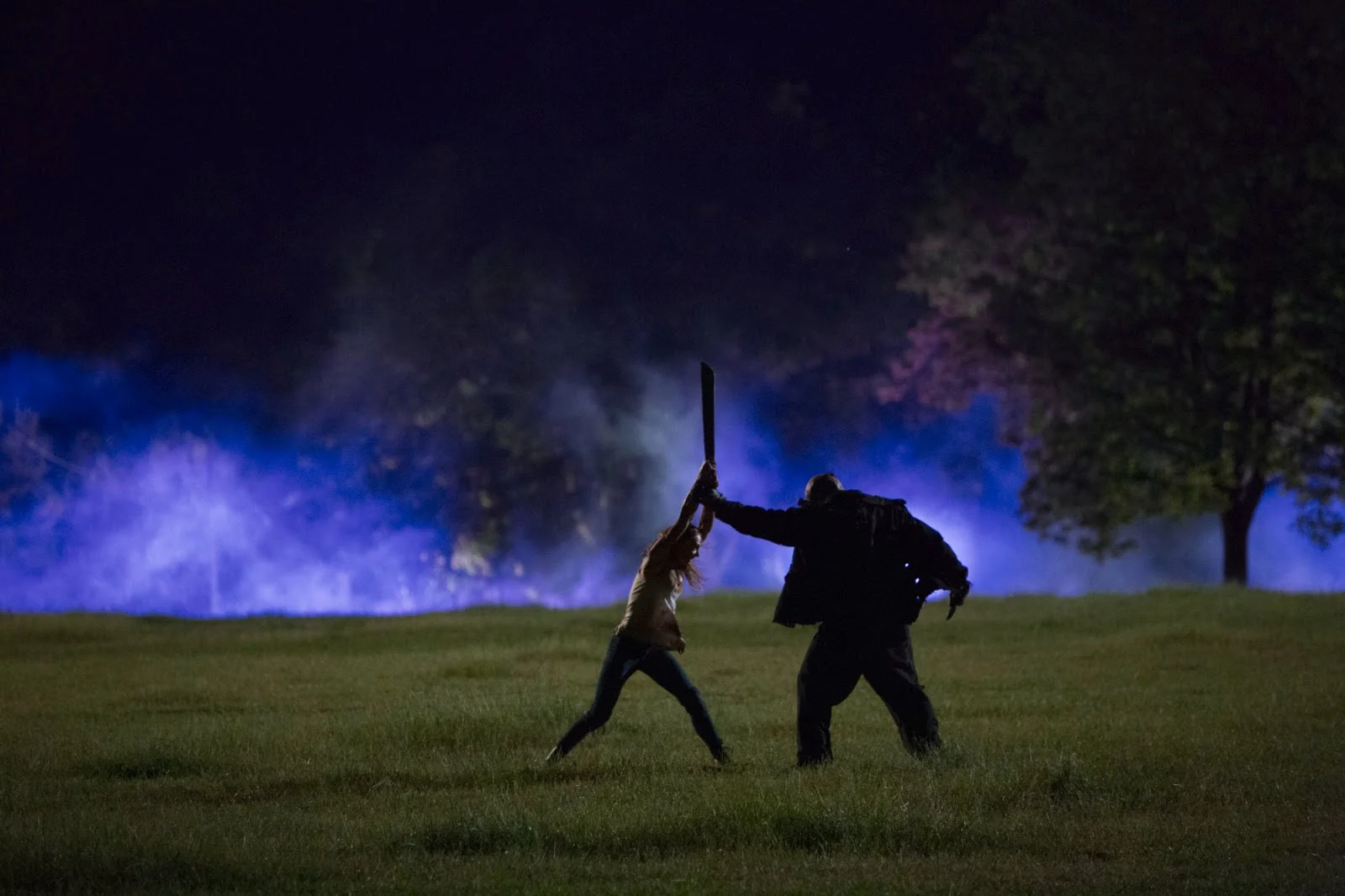
“The Final Girls” is an absolutely brilliant film that celebrates the process of filmmaking, the history of slasher films, and the emotions we feel as viewers when we go to the movies. You can’t reinvent the wheel that Wes Craven created in “Scream”. However, you can create your own brand. “The Final Girls” does that and some! Go see it now!
Rating: A+
"The Martian" Review
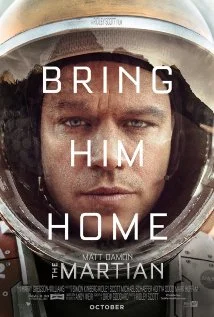
Space seems to be having a moment. It’s always been there, in real life and in the movies, but it seems 2013’s “Gravity” took space to a whole new level cinematically. If “Gravity” was Alfonso Cuaron’s call to the final frontier, The Martian is Ridley Scott’s response and an attempt to reclaim his territory after 2012’s not so critically acclaimed “Prometheus”. Mix in Christopher Nolan’s “Interstellar” (2014) and we’ve got ourselves a little trinity of (recent) epic space dramas. “The Martian" stands out for its own reasons, but it also fits right in.
Astronaut Mark Watney (Matt Damon) is all alone. Left behind on Mars after being separated from his crew during an emergency evacuation, Mark is presumed dead by his fellow crew mates and NASA. This all changes when satellite images from Mars prove Mark is very much alive and somehow surviving on the barren planet. The rescue mission begins, but it will be no easy feat. Time, funding and Mars’ atmosphere are all working against every effort to bring Mark home.
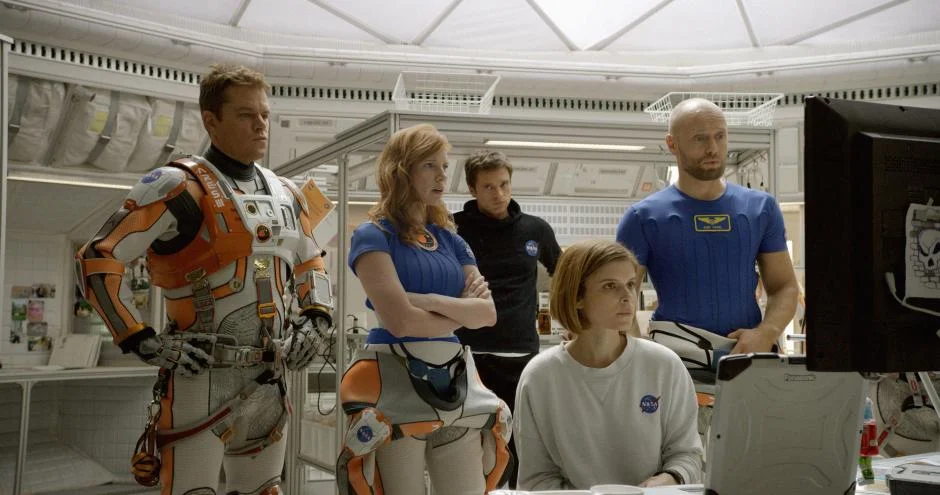
“The Martian” essentially takes place in three different locations. There is Mark’s Mars, a vast rust-colored landscape captured through sweeping extreme wide shots. Next, there’s Planet Earth, which is essentially the various offices and airplane hangars of NASA. And finally, there is space — where Mark’s crew is aboard a shuttle, completing their next mission. This separation works in favor of the film in that we stay in each area just long enough to build a decent amount of anticipation for our return to the next location. This is especially important considering the isolation of Damon’s performance on Mars. With no one to interact with, Damon’s Mark is a one-man show. He cracks jokes, airs his frustrations and explores his surroundings all by himself. While Damon is fun to watch, Matt Damon all by himself does not a movie make. The plot points presented in the other two locations (NASA and the shuttle) give Mark’s solo mission the tension it needs to move forward.

A major setback for Mark on Mars eventually creates a sense of much-needed urgency for the film and for Mark’s rescue mission. Mark has been able to “science the sh*t” out of his time on the planet, but in the end his stay on Mars becomes a life or death situation. A cooky, so-crazy-it-could-work plan is playfully delivered by a nerded-out Donald Glover and NASA is given the choice to either abandon Mark or put the lives of his crew members in danger in order to rescue him.
For an almost two and a half hour long film, The Martian does provide enough thrills and nerd-talk to satisfy the space movie lover in all of us. And on a much deeper level, there is some interesting commentary on our society’s dependence on technology — Mark is presumed dead because the technology on his suit fails to communicate his vital signs to his team — which would make for a fantastic college paper. Personally though, Armageddon still stands as this reviewer’s top film about space.
"99 Homes" Review

If you’re like me, there is nothing more thrilling than a glass of red wine and an episode of House Hunters. The show simply follows someone as they pick out their next home and while the formula is predictable, it does not make the show any less addicting. There is something about getting a peek into someone else’s living situation — it satisfies a natural curiosity. “99 Homes”, a film written and directed by Ramin Bahrani, is the exact opposite of a comforting episode of House Hunters. It is an exploration of the much darker sides of home ownership and the realities of the real estate business.
The film’s tone is immediately set as we meet Dennis Nash (Andrew Garfield) and his son as they fight their forthcoming eviction in a local courtroom. Dennis is unwilling to accept that the house he grew up in- the house his son is now growing up in- can be taken from them. He pleads with the judge, but to know avail. He has 30 days to appeal the court’s foreclosure of the property, but it’s done — they have lost their home. The music for this scene is heart-pounding, a deep bass that signals this is just the beginning of the troubles Dennis and his family are about to face.

Dennis and his family (which includes his son and mother, played by Laura Dern) are evicted from their home the next day, by Rick Carver (Michael Shannon) — a cold-hearted real estate broker whose only bit of sympathy for those he is evicting comes in the form of the two minutes he grants the families to gather any possession that they don’t want thrown out on the curb. Rick is evil personified. He has gotten rich off the backs of those far less fortunate and by working the housing crisis caused by the recession to his advantage. He is savvy in all the wrong ways and Shannon turns the Miami-vice clad monster into a multi-dimensional villain that you’ll hate, but secretly understand.
The movie truly takes off when Rick recognizes in Dennis an entrepreneurial spirit that can be used to his advantage. Rick takes Dennis on as his assistant, teaching him the how to run a real estate business through shady deals and bank foreclosures. Dennis, who walks a fine line between hopeless and hopeful, makes the perfect errand boy for Rick — Dennis needs the money and Rick needs someone who is just desperate enough not to ask questions. As their predator-prey relationship plays out, Dennis becomes someone he and his family thought he would never become. His decision to take a walk on the dark sideeventually comes to head leaving Dennis, Rick and the audience to wonder — was it worth it?
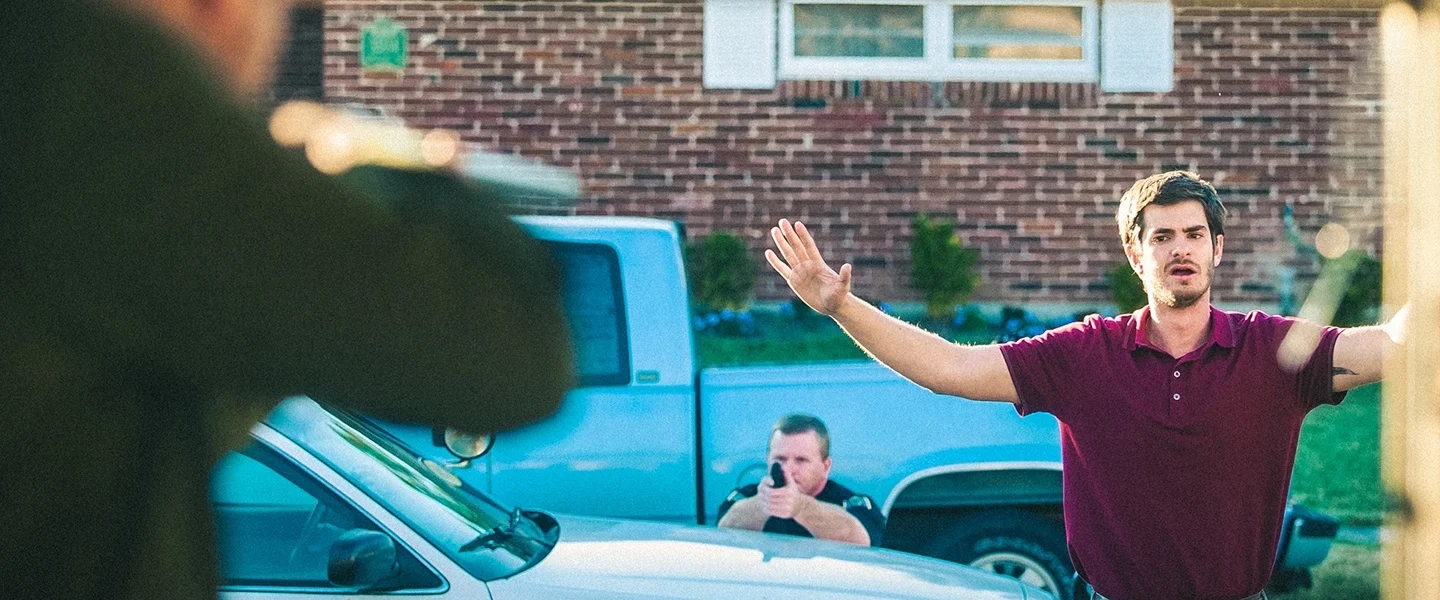
The brilliance of “99 Homes” comes from the context of the film. It’s not an original story, but the context of the housing crisis feels like uncharted territory. There is something so sacred about the home: it is a comforting space (unless of course you’re in a horror movie). “99 Homes” removes all the feel-good amenities of domestic life and exposes several sides of the white picket fence that haven’t really been given this level of dramatic treatment. It’s fresh and thrilling, despite the somber subject matter. Well worth the watch!
Grade: B
"Sicario" Review
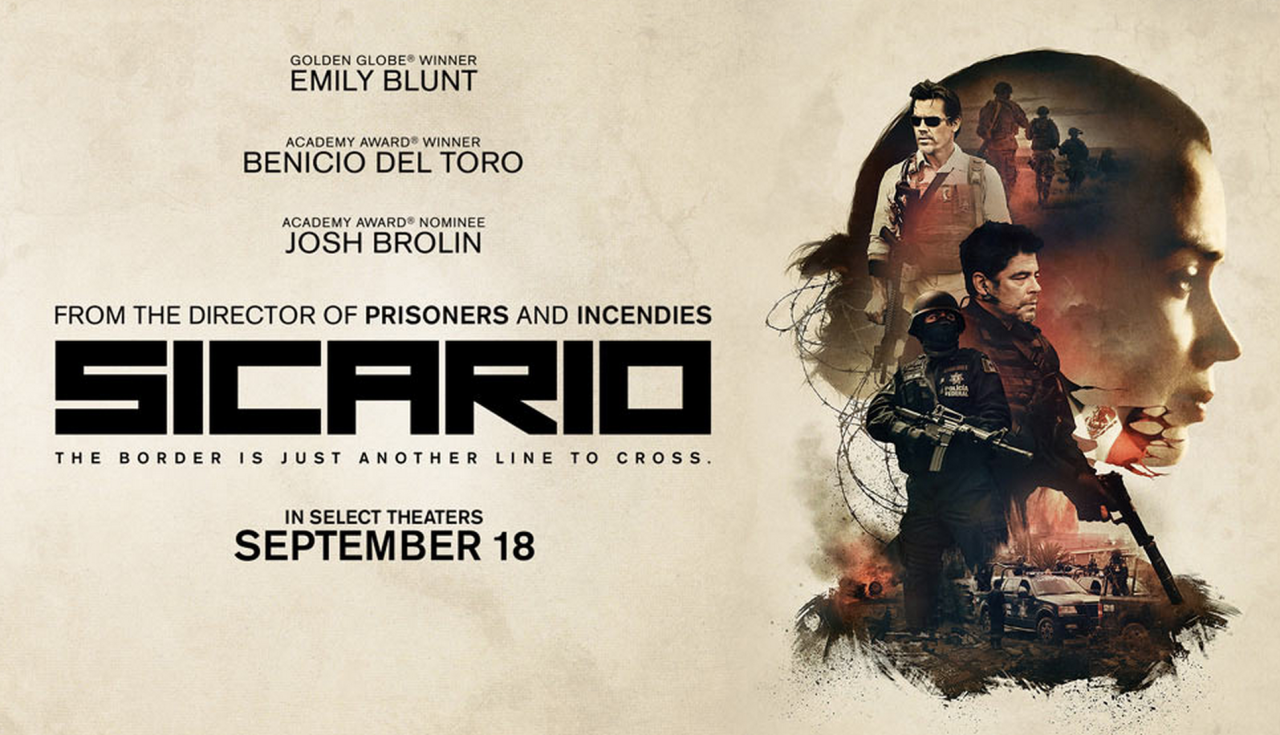
Buzz! Buzz! Buzz! Can you hear it? It’s Oscar Buzz season and the rumors of which films may or may not be contenders have begun their yearly journey. Depending on your interest level in Oscar Buzz season, Sicario may or may not be on your radar. The film premiered at the Cannes Film Festival earlier this year and the Oscar contender talk immediately followed.
As the film notes in a series of title cards, sicario means hitman. The journey of the word, from a term used during the Roman Empire to its modern meaning of hitman in Mexico, perfectly captures the main concern of the film: the U.S. government’s struggle to control Mexican drug cartels. It’s an ancient battle, one captured in a countless number of films, and Sicario is the latest film to tackle the subject.

Sicario begins with a gruesome discovery during an FBI raid. (Side Note: This reviewer feels the need to emphasize the word gruesome, for those readers that might be more faint of heart). It is during this raid that we meet Kate Macer (Emily Blunt), a leading agent with the FBI. After the raid, Kate is handpicked to volunteer with a task force going after the men responsible for the discoveries at the raid. Hellbent on seeking justice, Kate agrees to join the task force. As their mission becomes clear, the lines between right and wrong become blurred, leaving Kate to decide where her allegiances lie.
Sicario is one of the most beautifully shot films this reviewer has seen in a long time. If I would not have gotten kicked out of the screening, I would’ve been taking pictures on my phone, some of these shots were that fantastic! Besides the creativity of the shots — which ranged from simply well-done to blow your mind splendor — the film adhered to a color scheme to such a detailed degree, that I want to both thank and applaud the team that worked on color correction. No matter if we were in the Kate’s bedroom or the ghettos of Juarez, Mexico, the film was awash in tans and blues which worked to emphasize the film’s steady calm against some of the more chaotic moments.
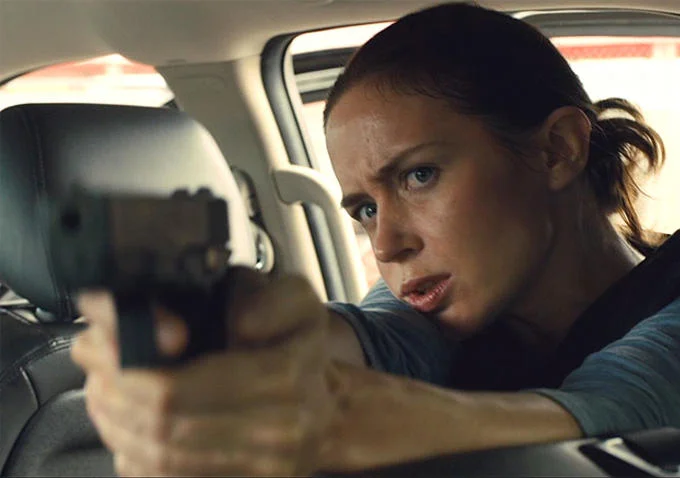
Besides the aesthetics, Sicario offers up two great performances by Emily Blunt and Benicio Del Toro. For many, Emily Blunt is still the comedic assistant in 2006’s The Devil Wears Prada. She has taken on serious roles since then — The Young Victoria (my personal favorite), Salmon Fishing in the Yemen, Edge of Tomorrow — but none of them have really won her award show gold. Why Blunt may deserve the praise for her Sicario performance comes from her ability to create a fully fleshed out character out of what may typically be stone. Her character is a serious woman but Blunt brings flickers of realness that balance out, or intensify the complexities of an outwardly austere exterior. She makes this no-nonsense agent a human being. Pairing Blunt with the experience of Del Toro also gives the film a unique chemistry that helps bring the drama of the film to another level.
Where the film takes an unfortunate dip is the storyline. To be brutally honest, it’s generic, made of bits and pieces that we have all seen before. There’s not much an edge-of-your-seat dramatic arc, but even with that said, it still offers up a steady train of twists that will keep any viewer enticed.
Grade: B+
"The Perfect Guy" Review
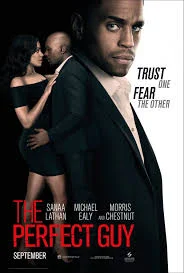
“The Perfect Guy” is a movie that you can be late to. You can go get popcorn during the opening credits (credits not trailers) and be back in time to not miss anything you don’t already know from the film’s trailer. It’s the same old tale with new characters, but that doesn’t mean it can't be good popcorn chompin’, throw it at the screen while you yell fun.
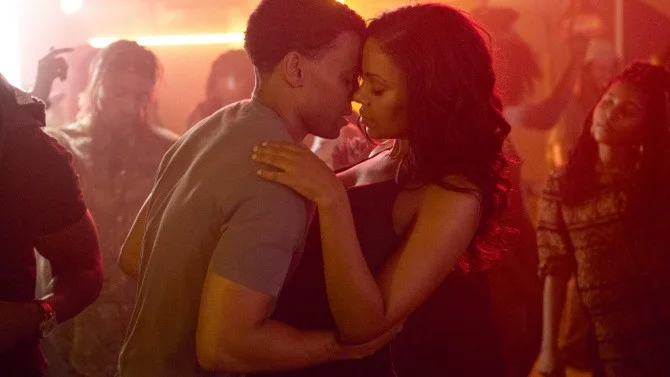
Leah Vaughn (Sanaa Lathan) is a 36 year old, hard working woman who by all signs has a lot going for her. She’s got a beautiful house, a great job, and a handsome boyfriend, Dave (Morris Chestnut), to come home to. The only thing she’s missing is a ring on her finger and the pitter patter of little feet running around the house, which Dave doesn’t want to rush into. Unfortunately, that’s the motivation that causes her to chase after completion and happiness by breaking up with Dave and shortly after, getting involved in with Carter (Michael Ealy).
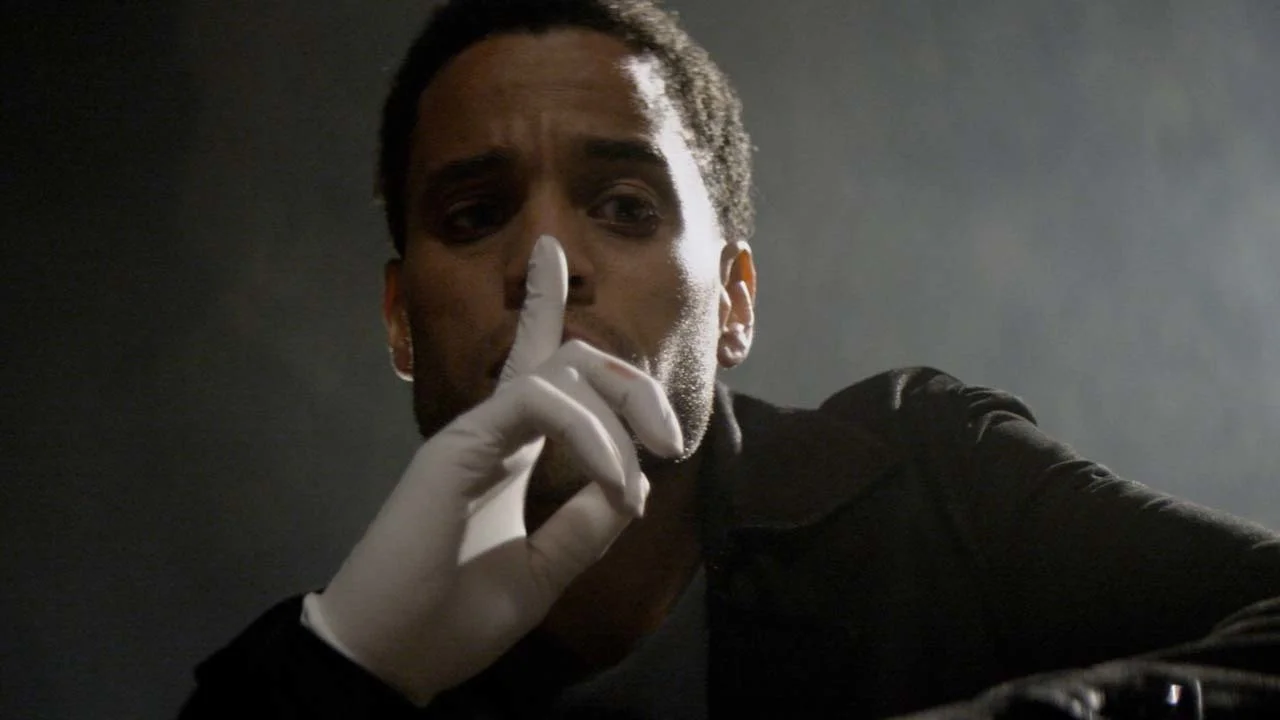
Blinded by her desires, Leah has the time of her life with Carter. She introduces him to her inner circle of girlfriends, and even her parents. Everyone loves him. That’s all you missed while getting popcorn. Over the top, rushed vignettes of Carter being the “perfect” guy in the first half hour is what writer Tyger Williams cooked up for us so that we can finally get to Carter giving us a moment of explosive behavior.
From there, the movie gets decent, tense, and suspenseful in the “I wonder how this will play out” kind of way. You know how it’s going to end. You just don’t know the steps the film will take to get there. Lathan and Chestnut give performances that are good enough to receive their check but nothing more. Ealy shows signs that he tried to get inside Carter's psychopathic head and actually have some fun with his character.
I had a great time laughing at how dumb Sanaa’s character is with my wife. We had fun picking up the bread chunks of foreshadowing that the movie threw at us. We didn’t mind that we paid matinee price to see the film, and neither will you if you know what you’re getting yourself into. Otherwise, you can wait for it to come on Netflix and be entertained from home.
Rating: C-
"The Visit" Review
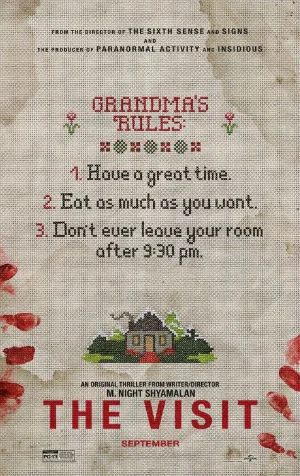
These days, the name M. Night Shyamalan doesn’t hold much cinematic weight. The director of “The Sixth Sense” has probably had more failures than successes at this point in his career. With “The Visit”, Shyamalan displays an ember that we hope he fans into flame for all future work!
Becca (Olivia DeJonge) and Tyler (Ed Oxenbould) have never met their grandparents. After their mom (Kathryn Hahn) left her parents’ home after a feud for a relationship with an older man (who became Becca and Tyler’s father) as a teenager, she never reconciled with them. Even though she doesn’t care to see them, she let’s her children go on a week long trip to meet Nana (Deanna Dunagan) and Pop Pop (Peter McRobbie) for the first time after being contacted by them online.
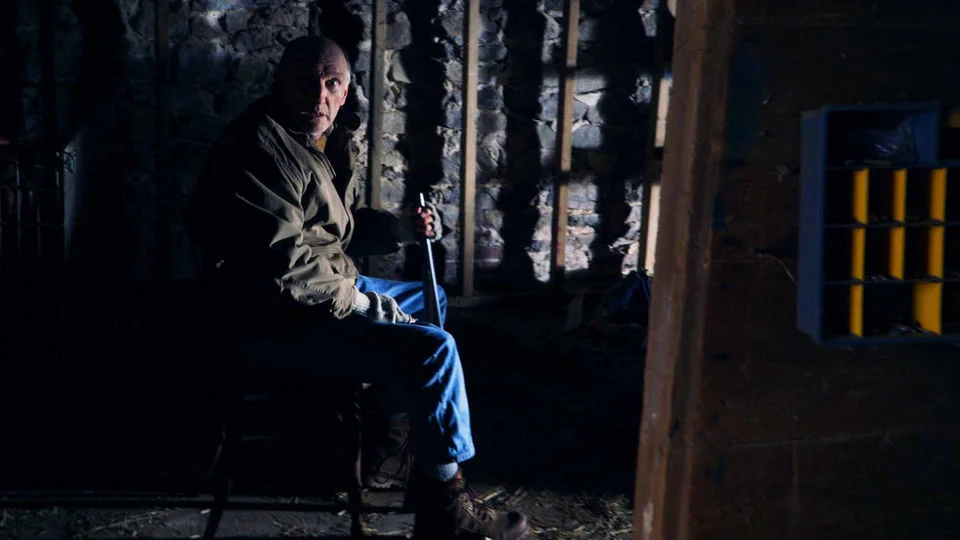
The film takes on the found footage genre from the perspective of aspiring documentarian Becca. Becca enlists the help of her rapper wanna-be brother as a camera operator during the week. As the days unfold, the two teenagers slowly realize that Nana and Pop Pop are a bit strange. While Pop Pop has incontinence and is forgetful, and Nana struggles with sun downing, there seems to be more there than “old people problems”.
The fun of the film is trying to unravel the mystery of what’s going on with Nana and Pop Pop with the kids. In fact, Shyamalan perfectly plays on our fears that we had as youngsters throughout the film. We wonder what the sound on the other side of the door is, but we’re afraid to investigate. We wonder what Pop Pop might be hiding or doing in the barn just like Tyler. We wonder why Nana wants Becca to climb into the oven and clean it. It’s our curiosity that puts us on the edge of our seat, right where Shyamalan wants us.
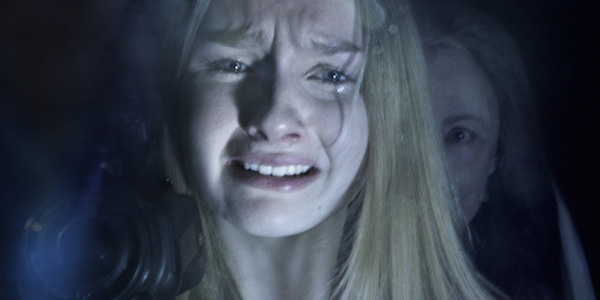
Always a visual storyteller, Shyamalan uses the entire frame to tell the story, placing the camera with purpose and forcing us to observe what the camera sees. He combines his technical use of the frame with going back and forth between comic, heartfelt, and utterly creepy moments in the film. Each emotion serves the other. We’re able to laugh after a scary scene, learn more about the characters during a sincere interview for the camera, and cover our eyes when things get scary after sunset. It all blends together into a uniquely told tale.
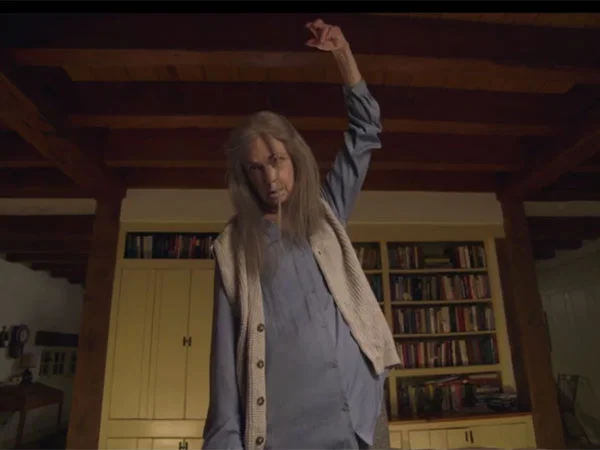
The cast and performances within the film are solid. Deanna Dunagan deserves a special mention as Nana. She steals almost every scene she’s in effortlessly by embracing the irrational and equally sincere sides of her character.
While the kids can be a little over-precocious at times, and the film asks us to turn a blind eye to some moments, it’s a great ride! Known for making surprised twists, this one sucks the air out of the theater, as the crowd I screened the film with could be heard collectively gasping. “The Visit” will have you sleeping with one eye open next time you visit the grands, as Shyamalan seems to be saying “don’t sleep on me!”
Rating: B+
"Learning to Drive" Review
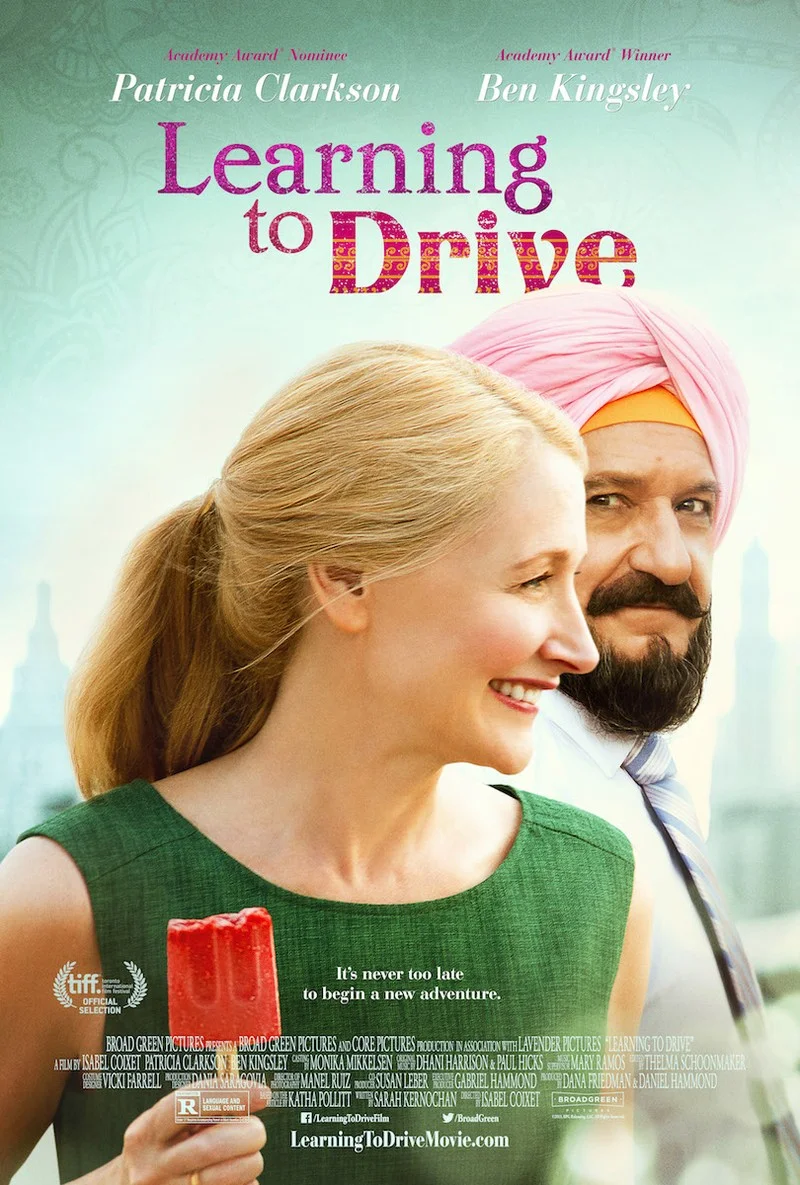
If there is one guarantee about our time here on planet Earth, it is the fact that our lives will become entangled in someone else’s. The hermit in the cave may be the one exception, but even he has a mother and a father. Some of the most true-to-heart movies are about the complicatedly simple process of two strangers coming together. Learning to Drive is one of those films.
In New York City, not having a driver’s license is a badge of honor — except for when the husband who always drove you around, leaves for his younger mistress. For Wendy (Patricia Clarkson), an unplanned divorce and a fortuitous cab ride lead her to Darwan (Ben Kingsley) — a Sikh cab driver by night and a driving instructor by day. Unsure of what life has coming for her next, Wendy decides to take driving lessons from Darwan. And what starts out as a way to gain some footing in the chaos, ends up as a teachable moment on paying attention to what is in front of you, for both Wendy and Darwan.
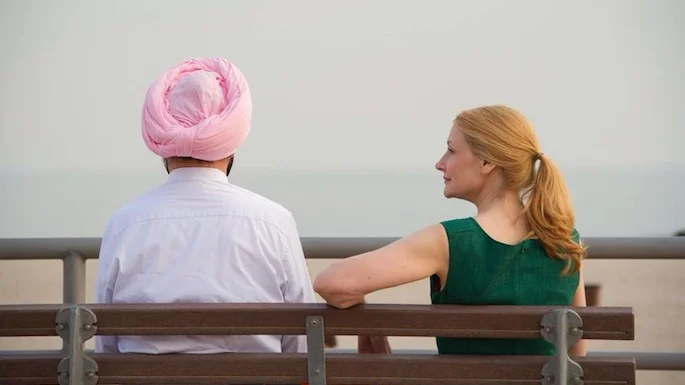
It seems unfair to call an independent movie quaint, but Learning to Drive is just that. It is a comfortable and sweet story about an unexpected bond between two strangers. Wendy and Darwan come from two separate worlds. She is a well-respected critic who lives comfortably in a brownstone filled to the brim with the bits and pieces of a life dedicated to culture and academia. While he is a hardworking immigrant scraping and saving to provide himself and his family with the American dream. These characters are not supposed to meet, but they do. It is under the charming circumstances of their driving lessons that we learn that most of us have something to learn from the people we think we may have the least in common with. The film’s focus on two adults as they go through a somewhat juvenile adventure — learning to drive — creates a story that resonates with the part in all of us that doesn’t want to grow up, even though the rest of you has.
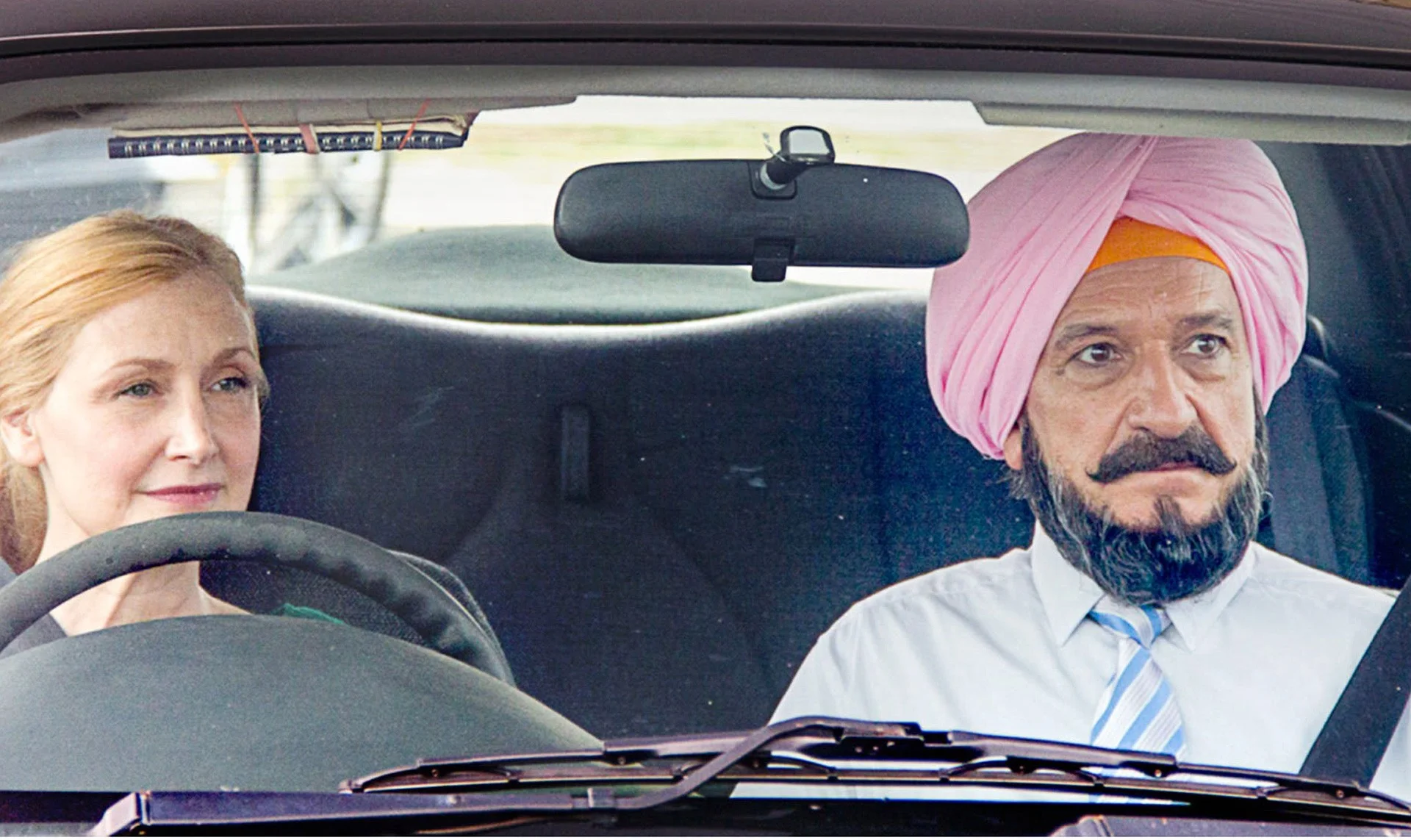
While Learning to Drive excels at charm, the missing piece of the puzzle seems to be the rhythm of the humor. As to be expected, the majority of the film is spent in the car with Wendy and Darwan. During each lesson the two characters go back and forth in earnest conversation, but it is far from the spirited conversation you might see between friends. The result of this somewhat stoic relationship leads to some clunky writing choices between making a joke and taking the time to set up a life lesson. The humor is still heartwarming, but more attention could’ve been paid to how it was executed.
Speaking after the screening I attended, Patricia Clarkson discussed the mechanics of making this film — from the years spent trying to get it made to the rough-and-tumble nature of the filming process. Learning to Drive began as an essay in the New Yorker, written by Katha Pollit in 2002. Clarkson fell in love with the piece and knew immediately that she wanted to make it into a film. The film finally found a home that Clarkson was comfortable with in Broad Green Pictures. Once Kinsley agreed to take part, filming began immediately, with no rehearsals. Clarkson and Kingsley, who are close friends in real life, stayed apart during the filming — mindfully keeping their intimate relationship from bleeding into the new friendship between Wendy and Darwan.
Learning to Drive is a charismatic film about the different roles people play in our lives as we grow-up and learn how to appreciate the relationships around us. It is worth the watch, but maybe save it for a Sunday afternoon on your couch.
Rating: B-
"Grandma" Review

On the scale of cinematic grandmothers, Grandma falls somewhere in between Ramona Calvert, Sandra Bullock’s sweet, but still tough mother in Hope Floats and the rapping grandmother featured in The Wedding Singer. The film has humor and heart — and just enough grit to make you feel like you got a good talking to from the sweetest woman alive.
Elle Reid (Lily Tomlin) was not expecting her granddaughter Sage (Julia Garner) to show up when she did. She and her girlfriend had just broken up that morning and Elle was looking forward to a maudlin day of vacuuming and reminiscing about the past, as most of us tend to do post-breakup. Eighteen-year-old Sage is pregnant and although she has scheduled her abortion — for 5:45pm that day — she doesn’t have the cash to pay for it. Pushing her present heartache aside, Elle ushers Sage into her aging car and their road trip begins.
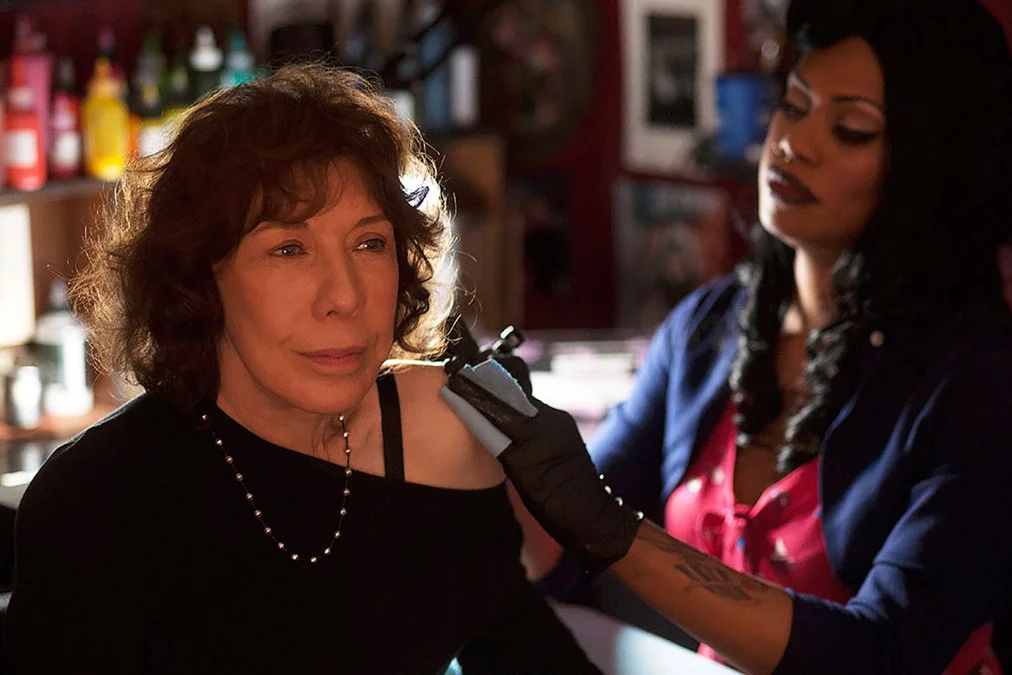
Grandma immediately separates itself in a moment not often seen on screen: a woman, over the age of 50, sobbing in the shower, after a breakup. The emotional reality of this scene is one typically reserved for the younger set, perhaps a grieving young mother who just lost her child, but never for a baby boomer who has fallen out of love. Hidden within the film’s witty dialogue and sun-soaked landscape is a statement about where different generations come together, and where they divide. The film takes on ageism, sexuality, and women’s rights without throwing them in your face. Instead, each topic is addressed through realistic, laugh-out-loud performances delivered by a primarily female cast.
There is no denying that the major force behind this delectable film is comedienne extraordinaire, Lily Tomlin. Speaking after the screening I attended, Paul Weitz (director and writer of the film) discussed how Tomlin was the voice in his head as he wrote the script. After working with her in Admission, Weitz was eager to work again with Tomlin’s edgy, transgressive and ageless style. His courting paid off and Tomlin agreed to work on the film, which was shot in 19 days with a budget under $600,000.

Tomlin’s performance just doesn’t quit for the entirety of the film. No matter who she is playing out the scene with, from her daughter Judy (Marcia Gay Harden), to Sage’s boyfriend Cam, played by new teen heartthrob Nat Wolff (Fault in Our Stars/Paper Towns), Tomlin brings an unmatched level of humor and truth. She’s definitely the coolest grandma on the block!
Grab your mom, your sister or your best friend and go see this film as soon as you can! Better yet, use all that birthday money from over the years and bring your grandmother.
Rating: A
"Z For Zachariah" Review
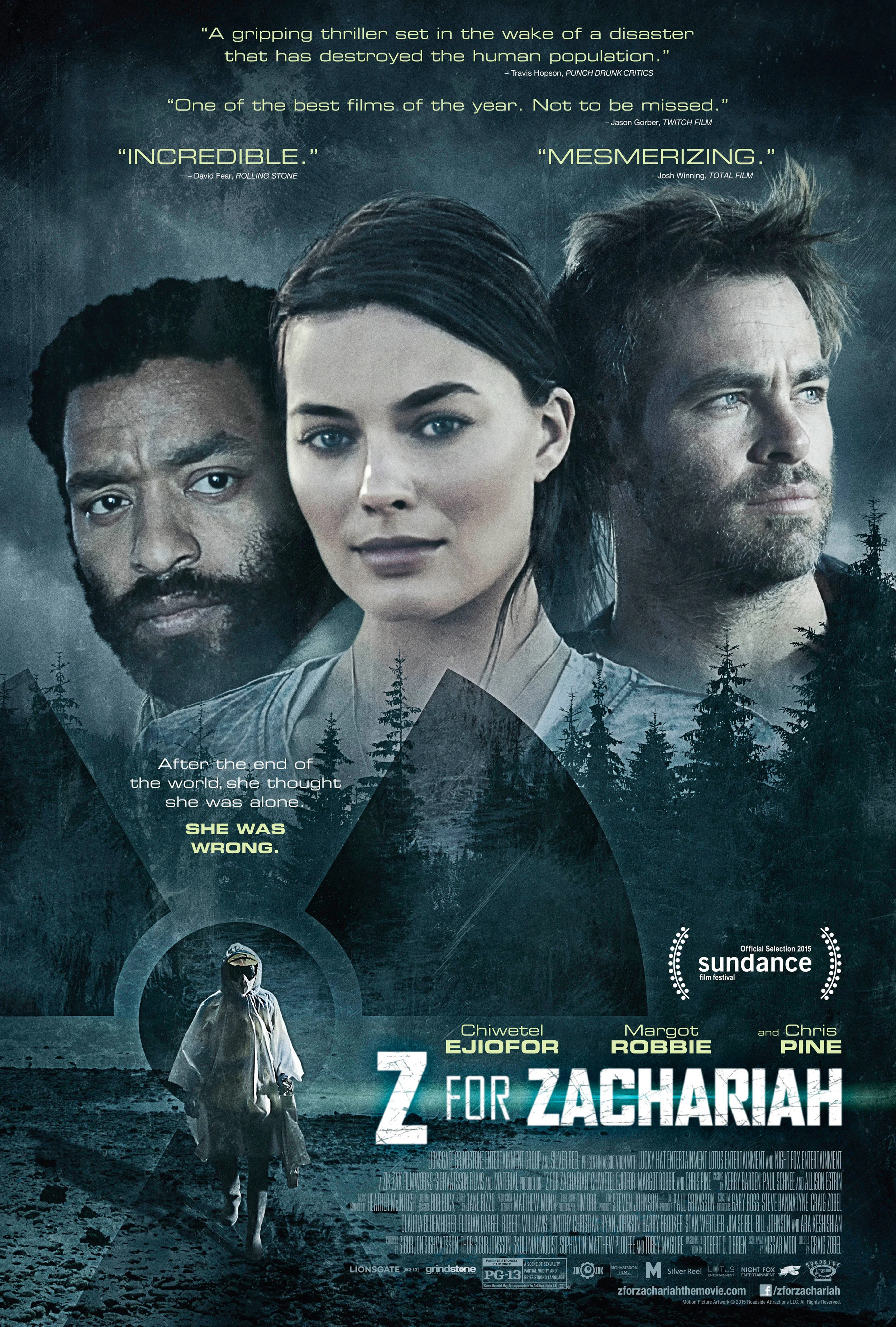
When you’re out on the lake fishing, you have to be patient sometimes, but the wait is worth it when you catch one. “Z for Zachariah” is the type of slow burn thriller that slowly gets you invested in its characters and hooks you in without realizing it. With a stellar cast, and breath stopping tension, it’s certainly a film to see!
After an unknown disaster wipes out most of civilization, Anne Burden (Margot Robbie) survives on her father’s farm, an unaffected sliver of the world. She hunts, works the land and stays busy with her dog. As far as she knows she’s the only person alive, until a man named Loomis (Chiwetel Ejiofor) comes along in a laboratory made, radiation safety suit.
After mistakenly bathing in polluted water, Anne nurses Loomis back to health. It’s just the kind of kind act that can create a spark of romance in a world left to two people. Loomis is an intelligent man. He helps the pure hearted and deeply religious Anne around the house by doing things like getting her plow running. Just as their connection starts to grow into love, a mysterious wanderer named Caleb (Chris Pine) comes upon the farm.
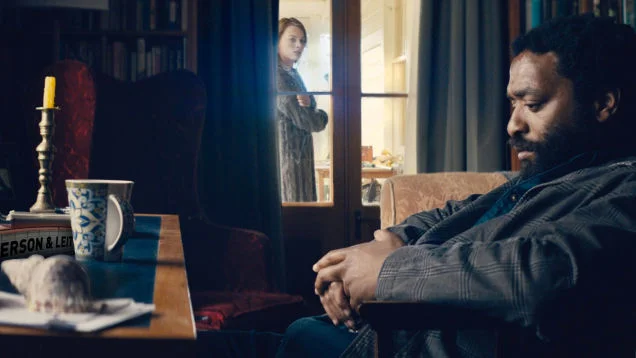
As a love triangle starts to take shape, a competition between Loomis and Caleb does as well. The linchpin of the film is superb performances from its cast and pace. Director Craig Zobel is no stranger to unnerving tension. His 2012 film “Compliance” certainly was filled with it, and with “Z” he’s honed it. Zobel knows how to let a scene breathe and not only direct his cast, but his audience’s thoughts and emotions as well in what he chooses to show.
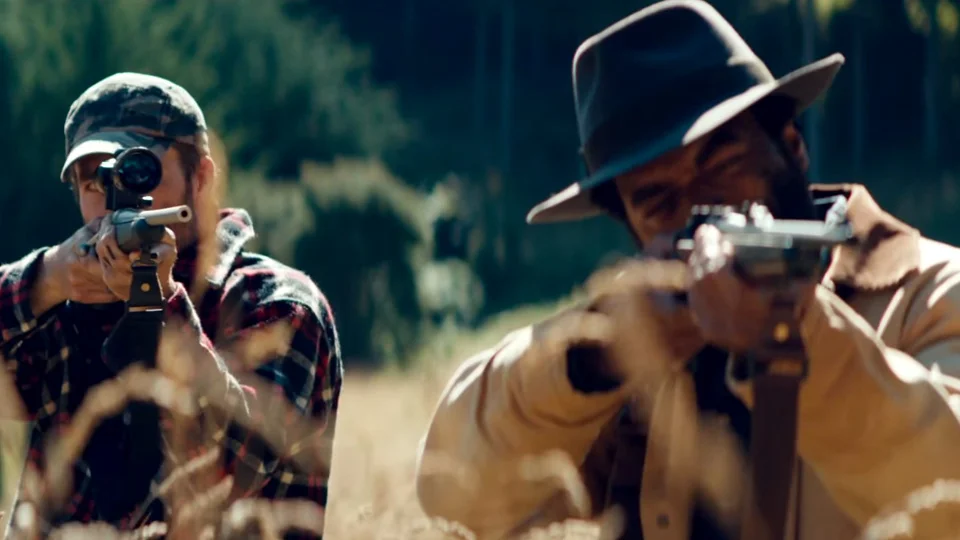
Robbie, Ejiofor and Pine bring three uniquely different and fleshed out characters to the film. It’s never about what they’re saying so much as what they’re thinking or omitting from their conversations together that really pulls you in. You’re left without a doubt that Margot Robbie is more than the beautiful face that recent blockbusters have sold her as. In this role, she looses the makeup and gives an excellent performance as a woman stuck between the world before disaster and after, and eventually the two men. Ejiofor brings his usual polarizing presence to the flawed Loomis. Pine has just the right amount of boy next door charm, sprinkled with just beneath the surface darkness that makes his character a worthy wrench in what appears to be a happily ever after between Anne and Loomis.
“Z For Zachariah” shows what you can do with a talented storyteller in the director’s chair, and an equally talented cast. It’s a good reminder that sometimes a simple, minimalist approach can entertain more than crowded, action sequences and explosions! The fact that only three characters make the story, should be an instant grab for any indie filmmaker. Yet, the film’s ability to entertain on various levels of complexity and evoke near tangible suspense, makes it one to see for anyone!
Rating: A
"No Escape" Review
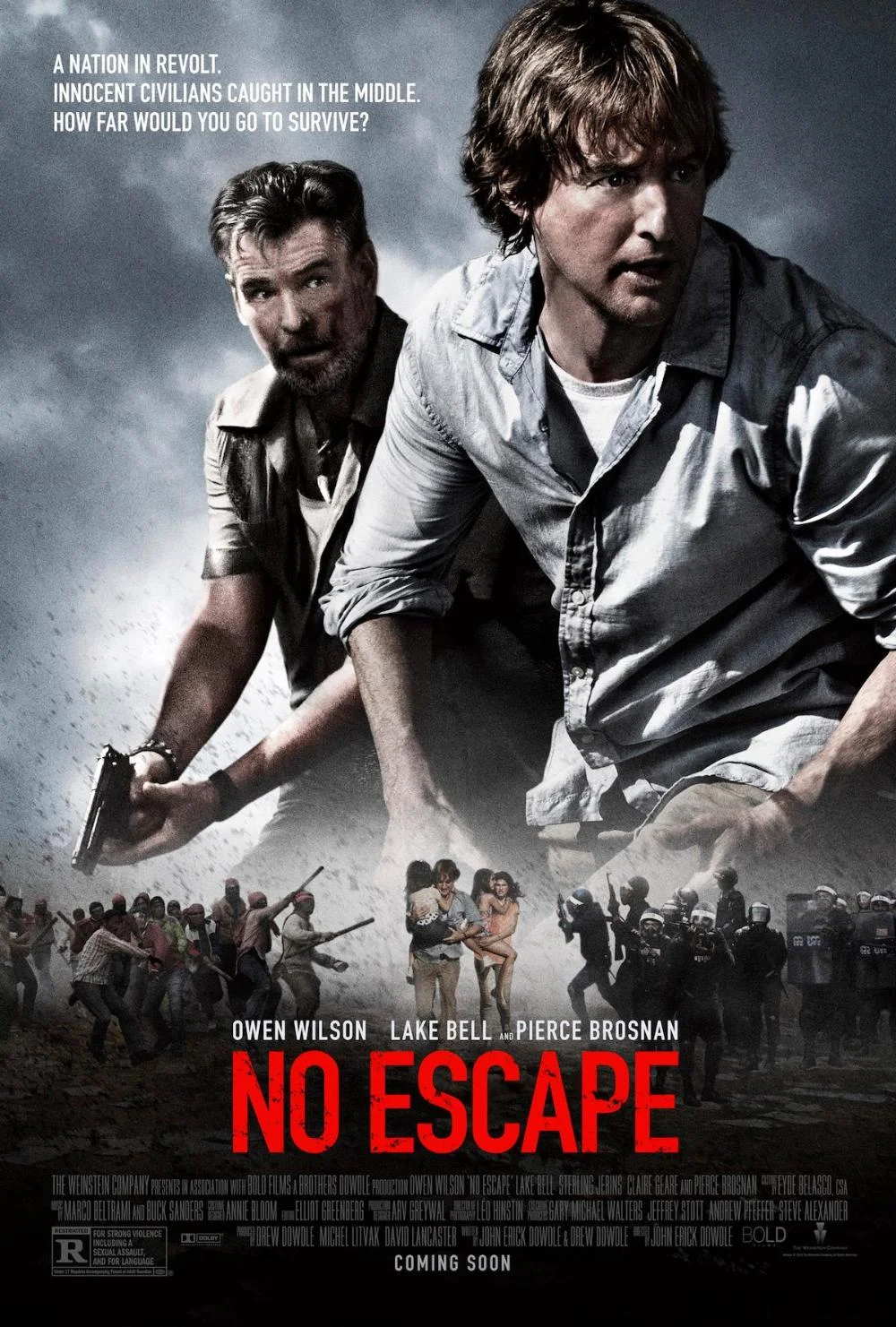
Summer blockbuster season is winding down. There have been some major misses: Fantastic Four, Tomorrowland, Aloha; we’ve seen major hits: Jurassic World, Mad Max: Fury Road, The Avengers: Age of Ultron. For moviegoers, summer premieres offer up a buffet of adrenaline driven plots and extreme visuals. Maybe it’s the hazy heat of August, but this reviewer thinks No Escape could be the cinematic thrill ride needed to cap off your list of hits this season.
No Escape, which stars the sometimes serious — almost always funny — Owen Wilson and Lake Bell, follows the Dwyer family as they attempt at a fresh start. Jack Dwyer (Owen Wilson) has been offered a job with Cardiff, an engineering company that specializes in water treatment facilities. With one failed business behind him, Jack is desperate for this Cardiff opportunity, even though it means uprooting his family and moving them from Texas to Asia. Unbeknownst to the Dwyers, the never-named Asian country is now under the control of a violent group of rebels after the assassination of its prime minister. Stick with me here!
There are many reasons to go to the movies — a chance to see friends, good-looking celebrity leads, the air-conditioning — but the most satisfying reason to see a film is to escape. There is nothing better than leaving the real world at the theater entrance and surrendering yourself to whatever is flashed up on to the big screen. No Escape is not a perfect film, but it delivers enough heart-stopping moments that for an an hour and forty-one minutes, you are simply engrossed.

Those familiar with the trailer of the film know that as the Dwyer family attempts to escape the bloodthirsty rebels they make the unbelievable decision to hurl themselves off of the roof of their hotel, onto the roof of a nearby building. That’s no spoiler, it’s there, right in the trailer! What the trailer does not detail, what you can only get from the watching the film, is just how gut-wrenching the scene is to watch. With their lives at stake, and two young children in tow, this mother and father have to make the decision of a lifetime and as a viewer you cannot help but hold your breath and wait to see where it lands (pun, fully intended). As a viewer, the film continuously forces you to decide what you would do in these adrenaline-pumping moments, bringing you right into the mental space of the Dwyers’ as they run for their lives.
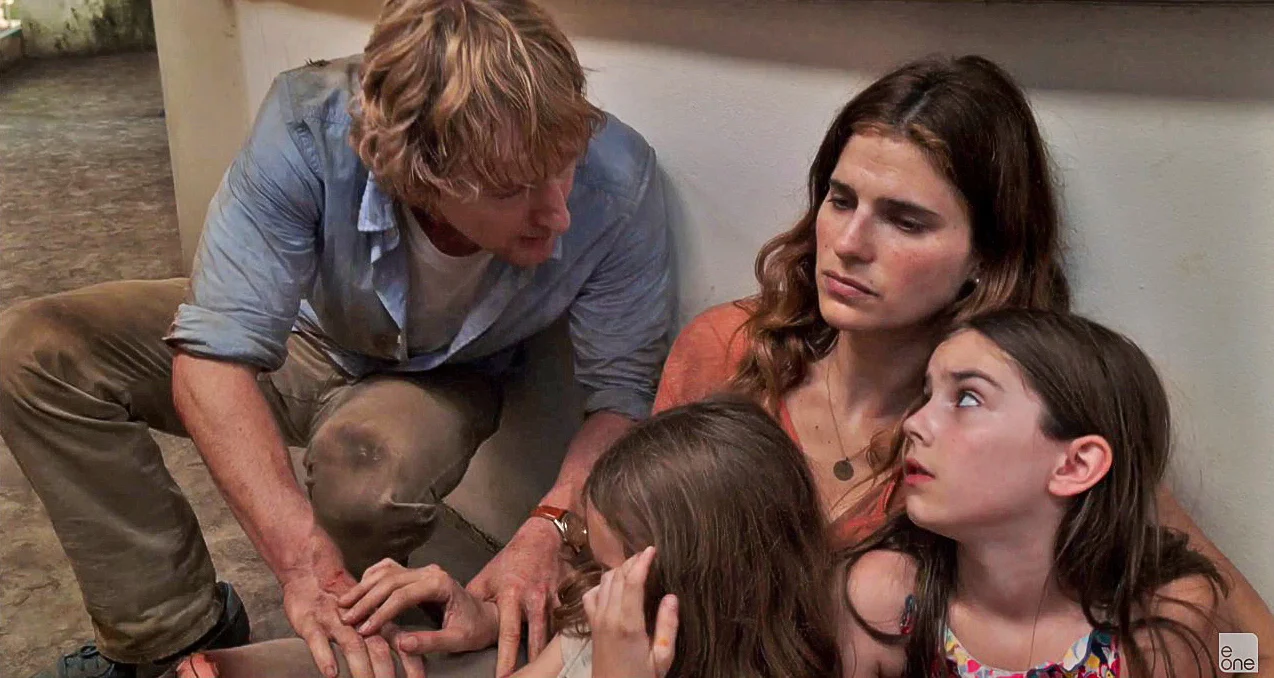
Story-wise, No Escape has some gaping holes. One, the Asian country, where all of this is taking place, is never identified accept to say they’re close to the Vietnam border — a plot detail that would’ve given some more weight to the military coup and made the film less generic. Next, there is Pierce Brosnan, whose character functions as more of a narrative device than an actual person. And finally, there is the film’s final standoff between the Dwyers and the rebels, which is suspiciously calm as compared to the duck-and-cover speed of the rest of the film. These are major mistakes, but this reviewer is willing to forgive them for the breathtaking moments when the film does deliver.
No Escape is a visceral getaway. For those looking for a comparison, the Dwyers’ fight to survive recalled many of the gripping emotions found in The Impossible, from 2012. If you’re willing to forgive some of the film’s letdowns, you’re in for a good time.
Grade: B-
"American Ultra" Review
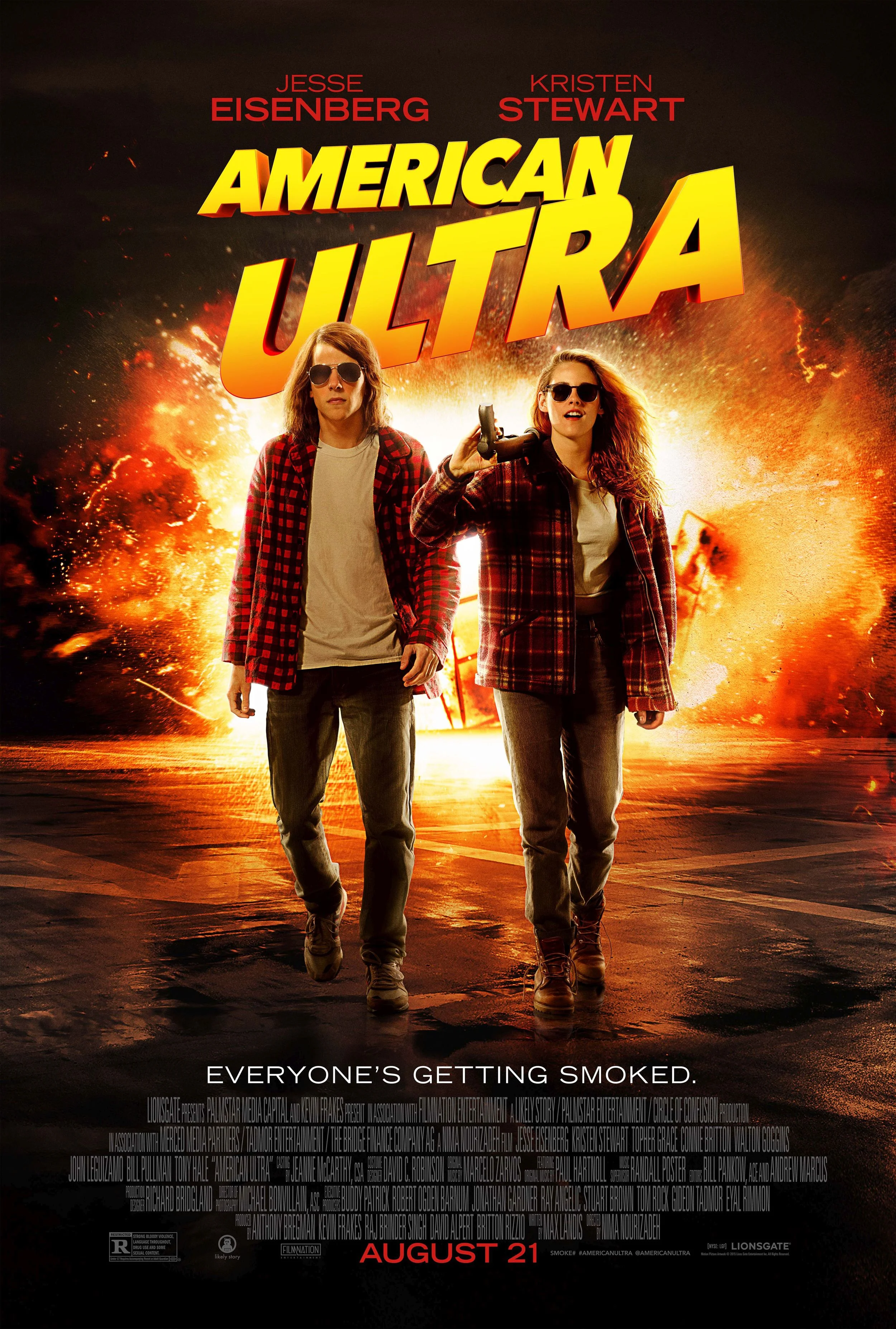
The psychedelic posters for American Ultra make the film’s purpose clear: it’s a bold, stoner comedy. The film’s tagline — “Everyone’s getting smoked” — further drives the point home. Unfortunately, like most potheads, American Ultra fails to deliver on its promise.
Mike Howell (Jesse Eisenberg) is a stoner with an ambition problem. He wants something beyond the life he has created in the small West Virginian town he lives in. Unfortunately, he’s all too content working at the local convenient store, getting high while doing so, and coming home to his all too understanding girlfriend Phoebe (Kristen Stewart). Things begin to shift for Mike when a federal agent (played by Connie Britton) comes to visit him at the convenient store one night. Through a string of nonsensical words, the agent activates a deadly night of gun-slinging, bomb-blasting debauchery for Mike and Phoebe — just your normal stoner comedy, right?
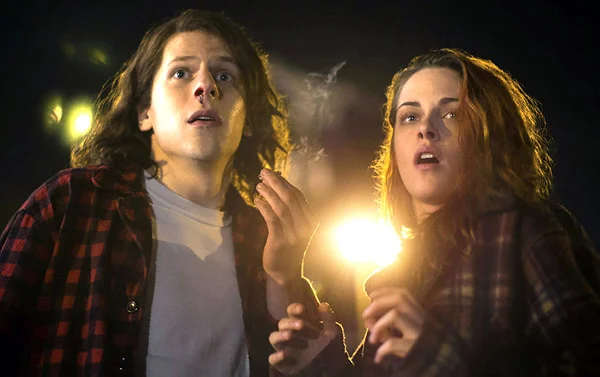
Comedy is by far one of the hardest genres when it comes to telling a good story. When the main purpose of a film is to get a good laugh, major details like structure and plot can get lost in the name of going for the joke. For American Ultra, the comedy seems to have been prioritized and the all important question of “What is at stake?” is simply forgotten. Between the rushed introduction of the “romantic” leads and the disjointed CIA storyline, there is no space for the audience to get to know these characters or give us a reason to care about them. This set-up worked in the sense that the film is just bizarre enough to be funny, but the humor is one-note, rarely going beyond a well-written line or two. The surface level humor of American Ultra is further compounded by the sheer violence of the film. Guns were a plenty, as were other cringe-worthy kills brought about by dust pans and spoons. Yes, spoons.
A case could be made that this was simply a wrong person, wrong film situation, but as a big believer in comedy, this reviewer stands by the sour taste left in her mouth by American Ultra. There is also the chance that maybe, just like it’s main characters, American Ultra is best watched while stoned. Maybe then this peculiar film would make a little more sense.
Grade: D+
"Mistress America" Review

There is something very necessary about portraying the female experience in all its varying forms. It is a story often left behind — or at least out of focus. Mistress America — directed by Noah Baumbach and cowritten with Greta Gerwig — is a unique approach to the complicated relationships that enrich and detract from being a girl in this world. And no, this isn’t about a boy.
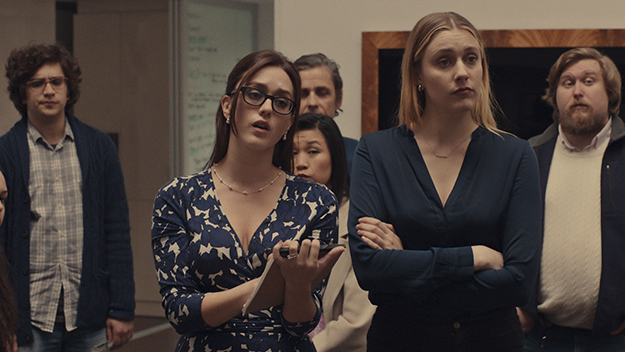
Tracy (Lola Kirke) is the Barnard babe we all wish we were when we started our freshman year at college. She is intelligent, knows how to rock a blazer and her literary aspirations are classically indie. There is one tiny problem though: she does not fit in, or at least her peers seem to have little interest in letting her join in on the freshmen fun. Tracy laments to her mother about her lonely days and nights on campus and her mother reminds her to get in touch with Brooke (Greta Gerwig), her soon-to-be step sister.
Brooke is the thirty-flirty-and-thriving NYC woman, hitting all of the benchmarks of a fabulous New York City lifestyle. At first glance, she does not seem to be the answer to Tracy’s dashed college dreams, but in girl world, the solution to the problem is not about finding the perfect solution — it’s about finding the best solution for right now. Fans of Gerwig’s character from Frances Ha may find Brooke a little grating. She’s manic and blissfully unaware of her shallowness. For Tracy though, Brooke offers up the fun and sophistication that has been lacking from her college experience. They are an immediate pair, informed by Gerwig and Kirke’s obvious chemistry.
Mistress America could’ve easily turned into a self-aware commentary on this generation and the plight of the aimless twenty-something. Instead, the film becomes a situational comedy featuring quick-witted characters who offer a plethora of depth depending on the life experience of the audience member. By stepping away from the will-the-girl-get-the-boy formula, Baumbach and Gerwig have created a film about the other, if not more important, relationships that come in and out of a girl’s life. This film is about the positive and negative experiences we all go through as we chose who to align ourselves with — how you find yourself through the good and the bad.
Baumbach and Gerwig clearly know how to get things done. Speaking after the screening I saw, Gerwig noted that Mistress was shot in only 60 days — an extended vacation compared to the 50 days the pair used to shoot Francis Ha. Baumbach and Gerwig also know how to use their time to tell a story that is often not told. Combining an 80s touch and feel (especially apparent in the soundtrack) with quick dialogue, Mistress America offers up the charm, quirk and depth of your favorite short story.
Rating: B
Mistress America releases this weekend in select theaters!
Why "Straight Outta Compton" is a Powerful Biopic (Review)

“Straight Outta Compton” is worthy to be mentioned in awards talk this year. Clocking in at 147 minutes, the bio-drama will keep you riveted in your seat without glancing at your watch. While the film takes certain liberties with history, there is no doubt that N.W.A took a stand, transformed music, and made an impact on a generation that can still be felt today.
From 1986-91 the group N.W.A made a mark in hip hop music that crossed boundaries and changed the landscape of American music, and some may argue the world. One of the earliest groups to popularize gangsta rap, N.W.A consisted of Ice Cube (O’shea Jackson Jr.), Dr. Dre (Corey Hawkins), Eazy-E (Jason Mitchell), DJ Yella (Neil Brown Jr.), and MC Ren (Aldis Hodge). Formed at a time when police brutality and harassment in black communities was turning up, the group’s message was forged out of that oppression and living in the tough Compton neighborhood, which gave them a spirit and drive to have their voices heard.
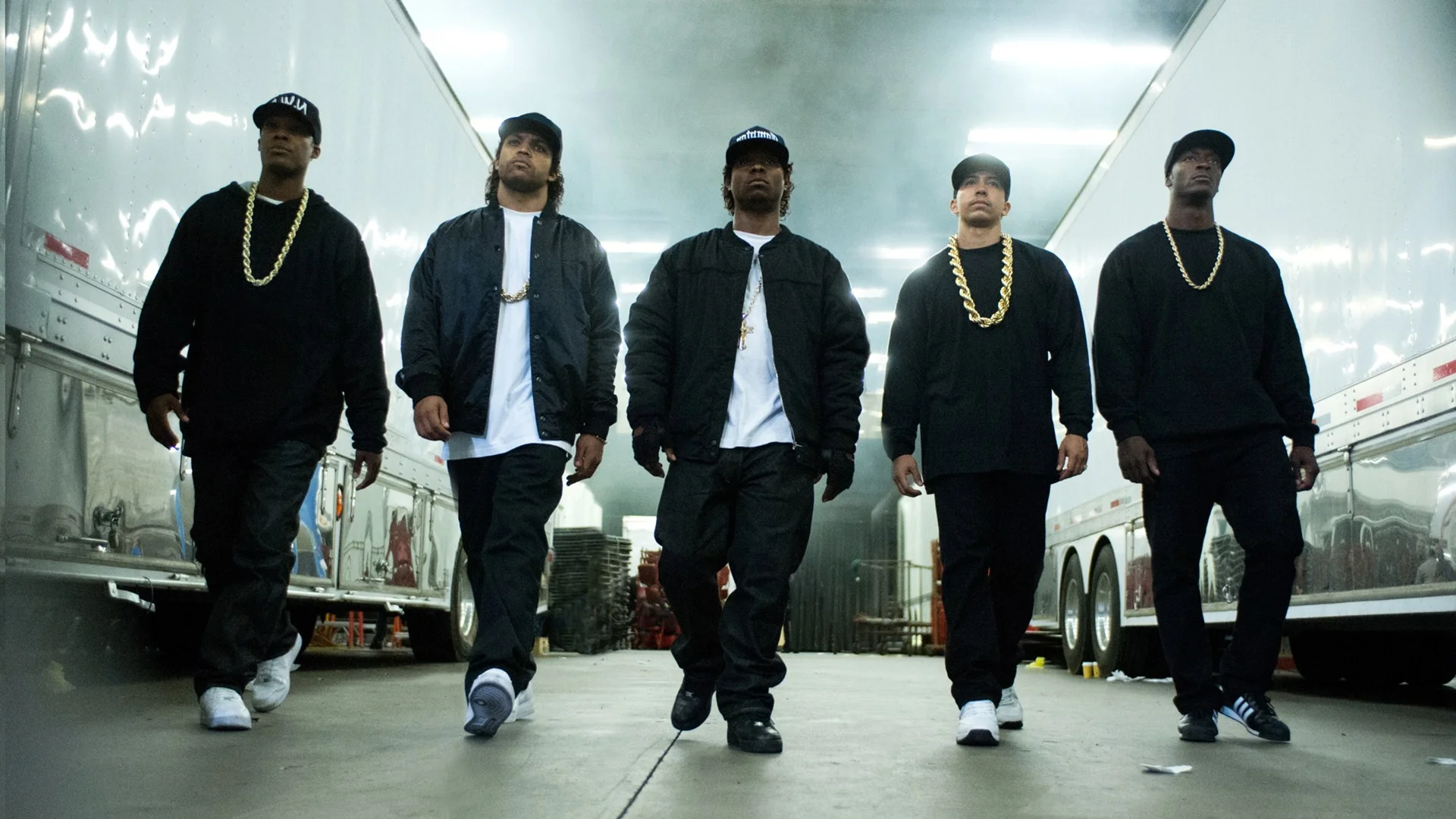
The film covers the group over a ten year period. It focuses mainly on Eazy-E, Ice Cube, and Dr. Dre’s journey during that time. As the three most notorious members of the group, we’re able to see their home lives and stage life, and how they all mixed together. Each of the three get just the right amount of time to shine, while pushing the story forward. Fans will definitely enjoy seeing other famous performers like Snoop Dogg (Keith Stanfield) and Tupac (Marcc Rose) portrayed and sprinkled in throughout the film.
The movie’s power is found on numerous levels. Writers Jonathan Herman and Andrea Berloff do a great job of harnessing the intrinsic drama of the rise and fall of N.W.A. They started out as teens with a dream, and accomplished it! Yet, with the success came egos and issues surrounding money which led to the group splitting up. Another issue that the film deals with is violence against the black community from police officers. Unfortunately, almost 25 years after Rodney King, young black men are still a target of not just police batons but unwarranted bullets on what feels like a monthly occurrence in the news. So the energy that stems from perhaps their largest record, “F**k the Police”, sadly still resonates today.
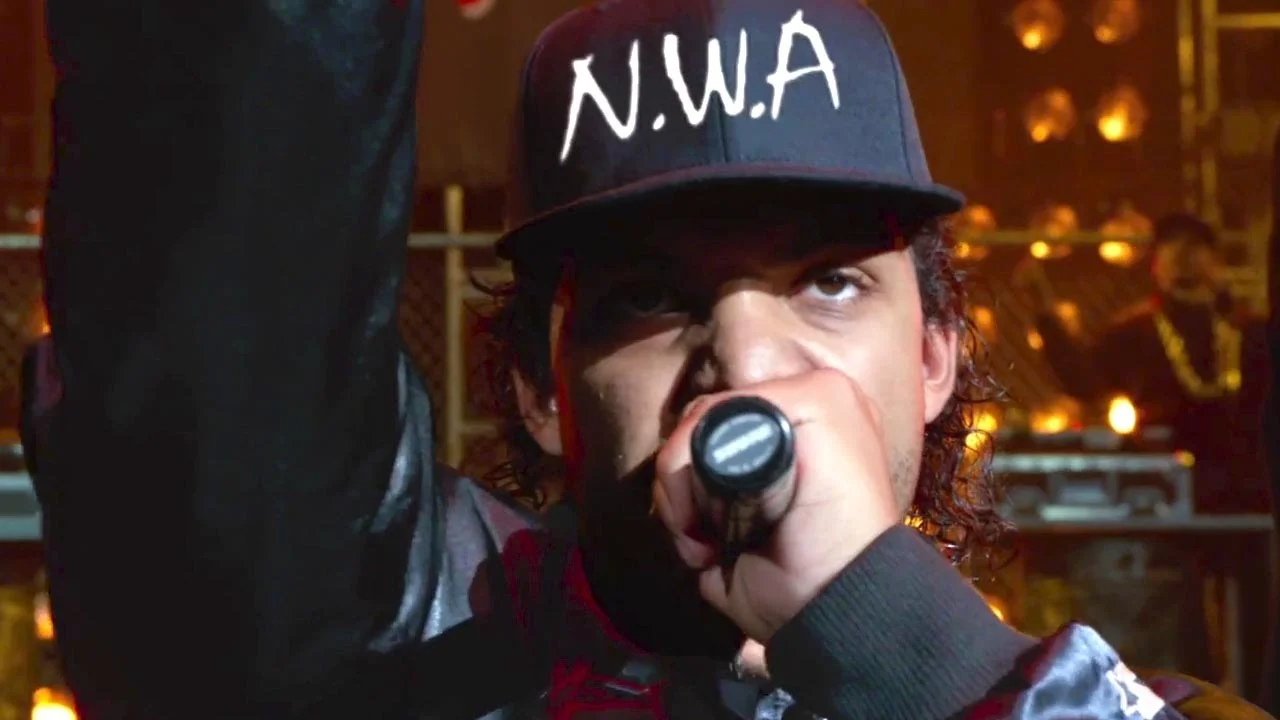
The film paints a picture of N.W.A as fighters for free speech and self expression. While they spoke explicitly about their environment and the movie covers the media, FBI, and certain groups of people trying to suppress their message, it excludes the misogyny in their music. This was a large part of the protest in real life, but is conveniently left out in the motion picture. So the group looks more like oppressed freedom fighters, which works for Hollywood but some may take issue to.
Regardless of slight alterations or omissions, director F. Gary Gray captures and paints a masterpiece in this biopic. His camera frames the glamour of the come up, their wild lifestyle during the height of their success, and the ugliness of oppression. The pacing of the film is warranted even under the lengthy running time. The performances of these young actors are excellent. Entertaining, funny, and solemn at times, “Straight Outta Compton” is the perfect combination and a must see!
Rating: A