
"Thor: Ragnarok" Review
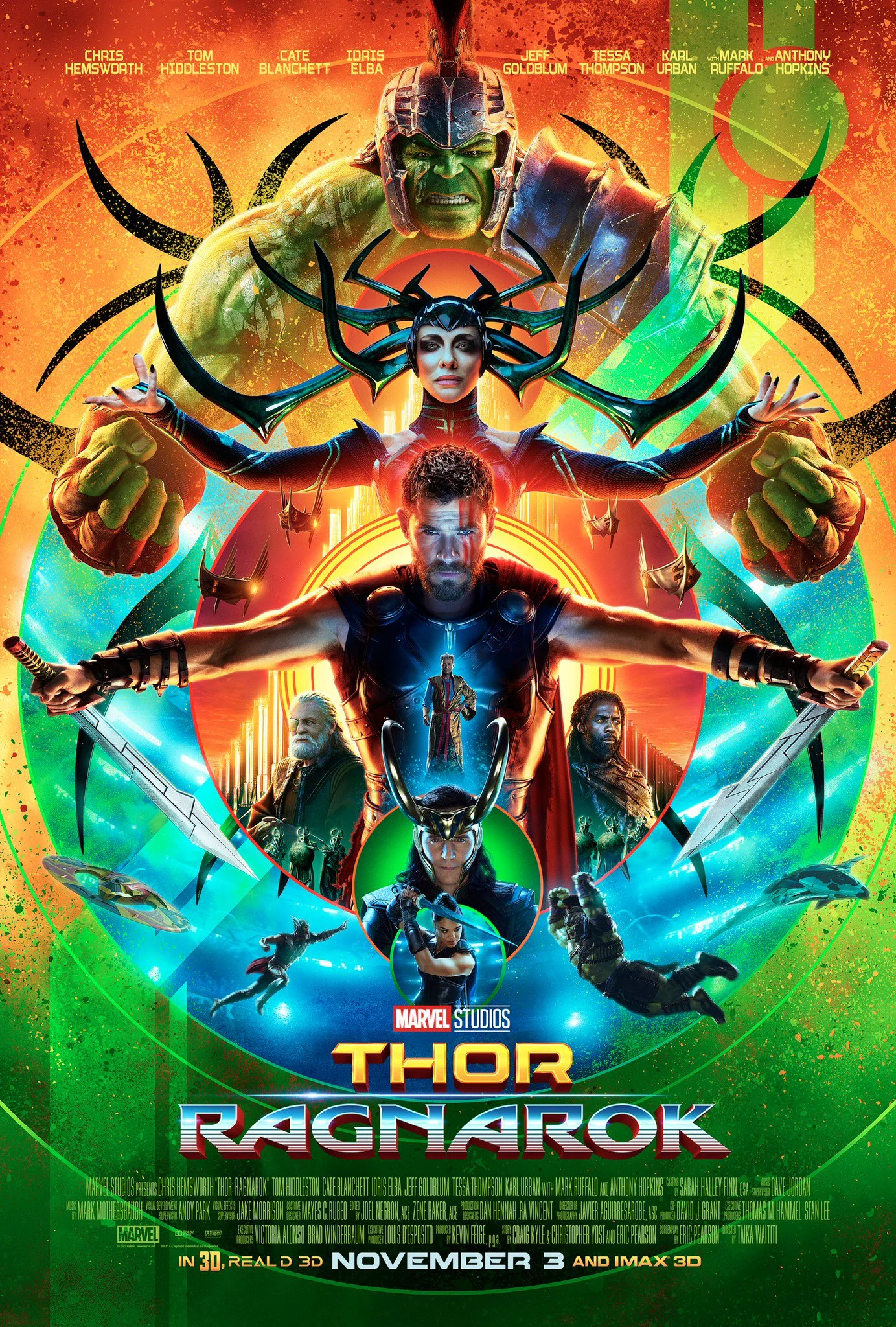
Thor: Ragnarok is a very fun film, and sometimes extremely funny. The third film in the Thor series, and the seventeenth film overall in the Marvel Cinematic Universe, this latest installment comes from filmmaker Taika Waititi, who after directing indie hits such as What We Do in the Shadows and Hunt for the Wilderpeople (which was one of my favorite films last year), makes his big budget debut. Fully embracing the comedy aspect that the first two Thor films explored, you’re in for a fun time in the theaters. While the story itself is a little lacking, Thor: Ragnarok makes up for it with some huge laughs from start to finish. Truth be told, this might just be my favorite of the Thor films.
The basic plot of the film follows Thor (Chris Hemsworth) who after an encounter with Hela (Cate Blanchett) finds himself on the planet of Sakaar and gets taken prisoner by The Grandmaster (Jeff Goldblum). Forced to battle his old friend Bruce Banner/The Hulk (Mark Ruffalo) in a gladiatorial arena, Thor must find a way to get back to Asgard to battle Hela and prevent Ragnarok from occurring on Asgard with some assistance from old and new allies.
Right off the bat, this is a much better film then his last solo film, 2013’s Thor: The Dark World. The humor from Waititi’s films translates well to this film. If you’re a fan of the type of humor his films provide, you’ll have enjoyment with this. The jokes come fast and furious, and there were times that I was laughing so hard that I missed the next joke. Essentially, this is a buddy comedy film with good comedic timing throughout and a lot of improv. There are some fun callbacks to other MCU films. For 95% of the film, it finally did what I was hoping a Thor film would be: a story that’s set in the cosmos and not on Earth. The production design from Dan Hennah and Ra Vincent is on point. The colors are vibrant and the design really stands out, especially on Sakaar. I could watch a movie set on that planet or get lost in that for hours. This film would make Jack Kirby proud, since it seemed like they looked at his artwork for inspiration.
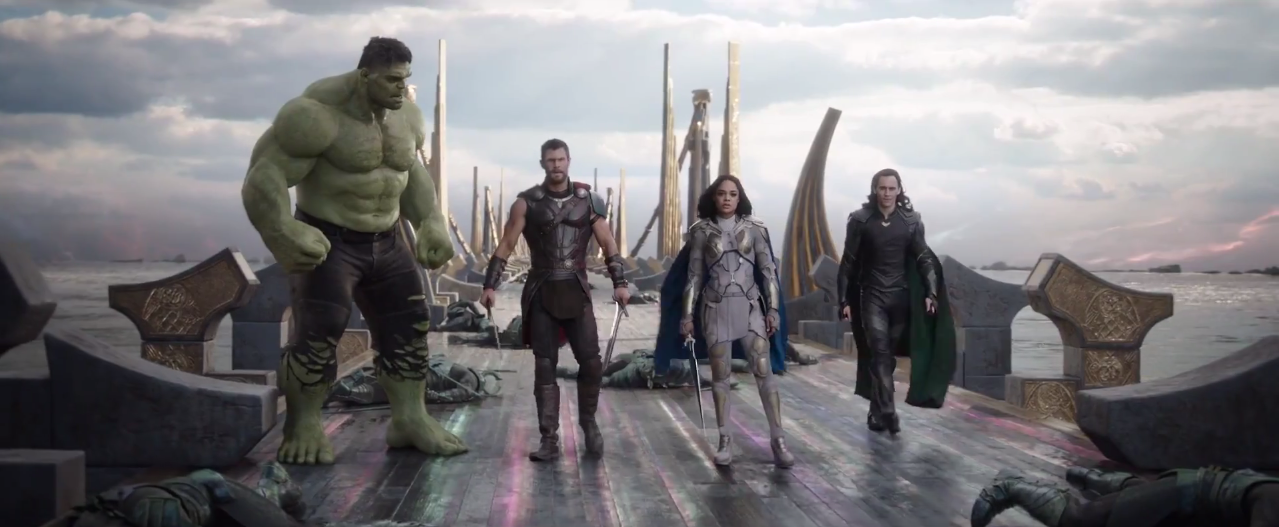
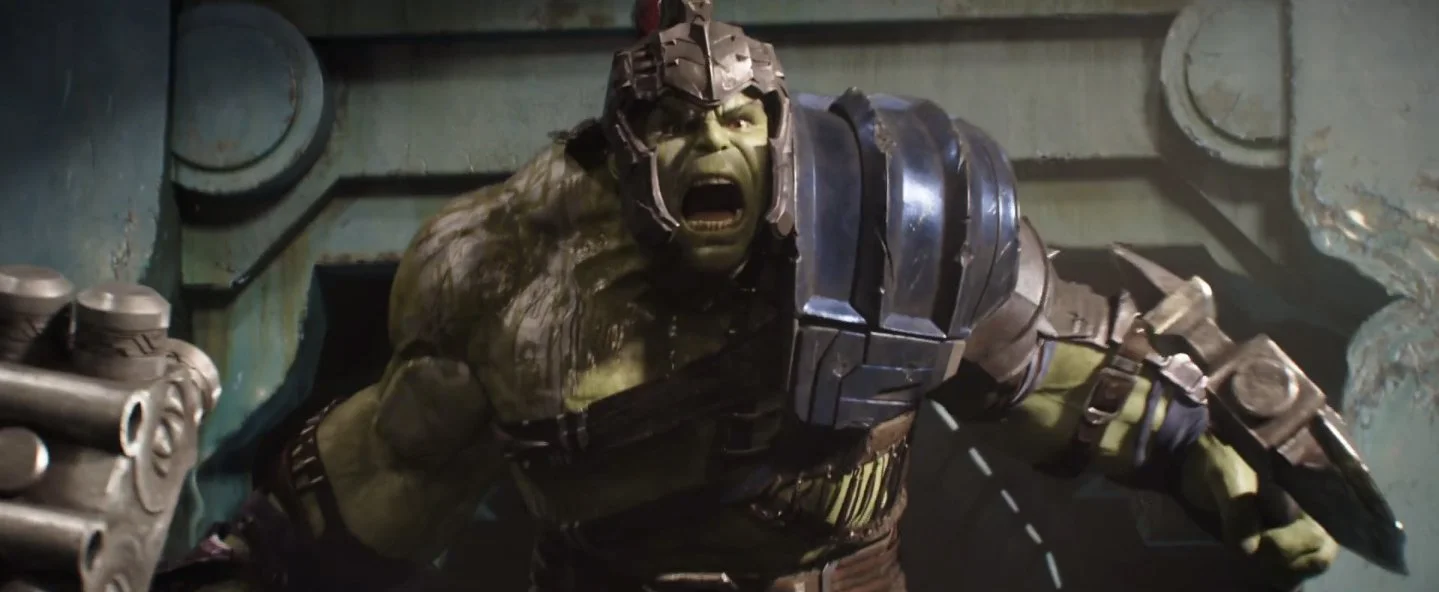
The acting across the board is good. Blanchett appears to have a ball as Hela. Tessa Thompson (a new face to the group) is solid as Valkyrie, and she holds her own in every scene she’s in. Hemsworth, as always, embodies the role. This film features my favorite portrayal of Banner yet in the MCU, and the CGI when he’s The Hulk is probably the best looking so far. The way that Ruffalo plays him is brilliant. Since you can’t have a Thor film without Loki (Tom Hiddleston), I thought what they did with their storyline was good and how they basically have to come to terms with one another. There are funny cameos throughout, especially with the one and only Stan Lee! When the film was set on Sakaar, I dug the 80s synth score that composer Mark Mothersbaugh provides. The use of Led Zeppelin’s “Immigrant Song” was great. Instead of getting bogged down with exposition, screenwriters Eric Pearson, Craig Kyle, and Christopher L. Yost basically give you the bare minimum without overly complicating it. Finally, for a 130-minute film, the pacing was good.
If there are any drawbacks I had with the film, the story isn’t particularly deep and somewhat skims the surface. Some of the characters aren’t developed well, and maintain their one note status in the choir, like Karl Urban’s Skurge. There is a little too much CGI in certain scenes, and noticeable in others. If you’re coming in looking for explanation to what happened to certain characters, you either won’t find it, or it’s said in passing dialogue. I saw this in 3D, but the 3D aspect didn’t do much for me and nothing really stood out.
Overall, Thor: Ragnarok is a fun comedy adventure film. It’s the most fun of the series. It felt like I was watching a comic come to life. For his first big budget film, Taika Waititi succeeded. This is yet another winner from Marvel Studios, which did their own version of a 80s buddy comedy sci-fi film. If you’re looking to spend some time in the theaters and laugh your head off, you can’t go wrong with this. As always, be sure to stay until the end of the credits. Go see it!
Rating: B+
"Dear White People" Review
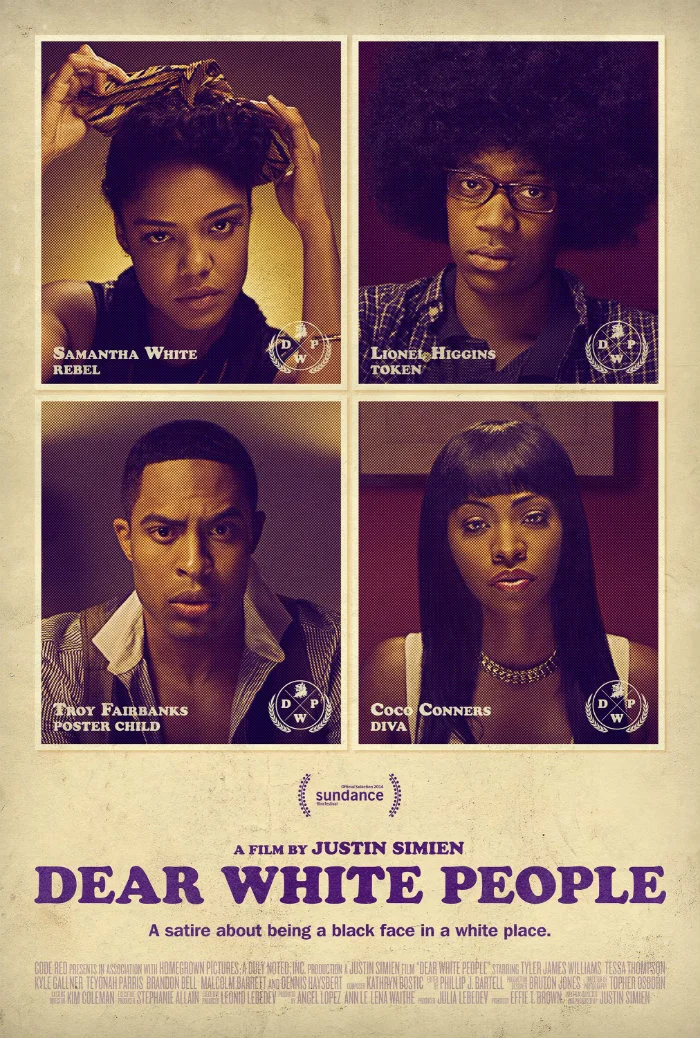
“Dear White People” is a movie that you should see more than once to catch everything in it. It’s a movie that you watch with a group and discuss after. It’s a movie that will be studied in black film classes. That being said, in his attempt to put everything on the table, writer/director Justin Simien falls just short of greatness with his debut effort by not telling an entirely cohesive story.
The film focuses on four main characters. Sam White (Tessa Thompson) is the “voice of the people” on the Ivy League-esque campus of Winchester University. Her campus radio show Dear White People has just the right amount of edge and truth that it makes her a target of the Dean. Lionel Higgins (Tyler James Williams) is a loner and writer whose afro screams that he wants to be noticed, but he can’t seem to fit in as a gay black nerd. CoCo’s (Teyonah Parris) real name is Colandrea Conners, but she’s ditched her southside Chicago roots for designer clothes and high society life. Troy Fairbanks (Brandon P Bell) is everything his father Dean Fairbanks (Dennis Haysbert) has groomed him to be, but not the comedian he wants to be.
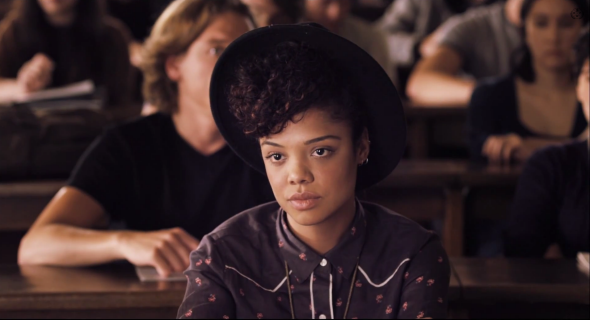
After winning an election to be head of Armstrong House, the historically minority house on campus, Sam decides to implement new rules. No one can eat in the house who isn’t a resident. That includes Kurt Fletcher, son of the president of the university, and his white frat brothers who come for the “fried chicken and waffles”. This is just the beginning of a back and forth between the two races on campus. It eventually culminates into an on campus brawl as Kurt and company throws a party in which white students dress as black caricatures.
As the film moves toward the brawl we see a story of hypocrisy on all sides. It’s about who people project themselves to be versus who they really are. Each of the main characters have a part of their identity hidden to help them fit into a group and ideal. The biggest issue is that not all of the stories come together to push the overall film forward as a collective. For instance, Troy writes jokes and smokes weed in the bathroom, but we never see him pursue his passion outside of the glimpses in the bathroom. Is it really his passion, or just a plot point in the movie to show Troy has “another side”?
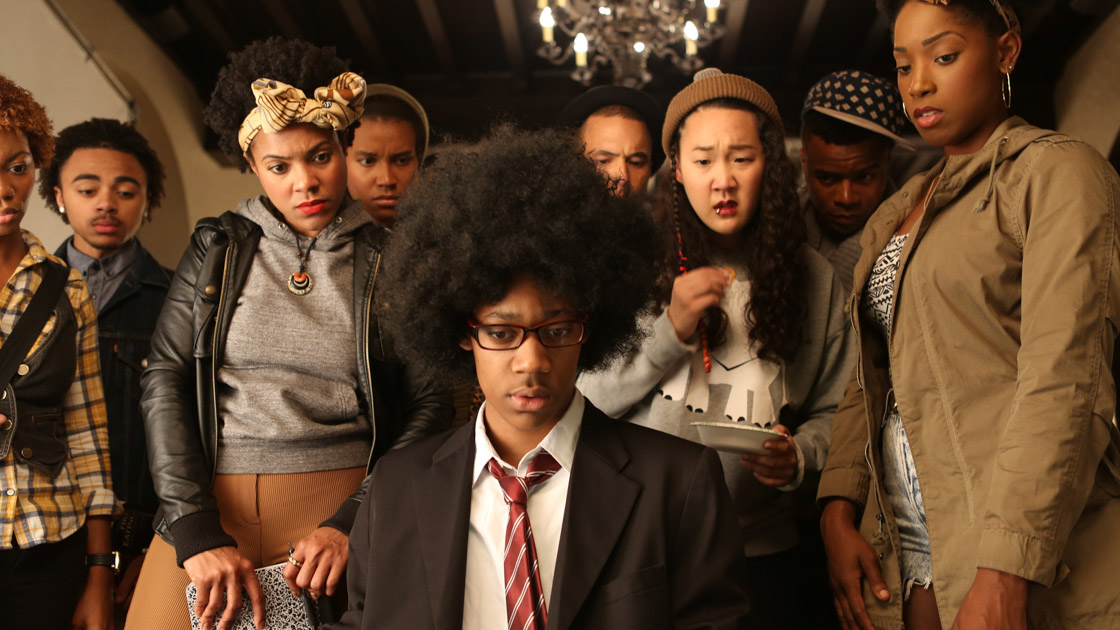
Visually, Simien shows skill in his grasp of the craft. From the opening frame, Simien tells us that we’re all going to consume his film differently. As a news story reports of the on campus brawl that happens in the film, we’re introduced to the main players. Each character sits center frame in their own environment taking in the news with varying level of concern. From black militant Reggie who hangs on every word, to Kurt who simply has it on as background noise. The frame says so much without saying a word.
Throughout the film characters are positioned speaking or walking at the edge of the frame as the camera pans with them. It’s a visual acknowledgement that “Dear White People” is pushing race conversations forward. It’s uncomfortable to see the characters without lead space to talk. As characters are framed within frames we subconsciously get a feeling of being boxed in. In one scene, Troy sits across from his dad in his office. A lamp sits right in front of Dean Fairbanks in the foreground, separating the dean from his son as if to suggest Dean Fairbanks is enlightened and Troy has a ways to go to be like his father. While the good dean may just be jaded and wise from life experiences, it’s visual nuggets like these that keep the film visually engaging and stimulating in keeping with its script.
“Dear White People” hits a lot of truths about the various experiences within the black community and how we assimilate with one another as human beings. While the story isn’t as compelling as films that it may be compared to like “Do the Right Thing” or “Higher Learning”, overall the film is fresh, unique, and entertaining.
Rating: B