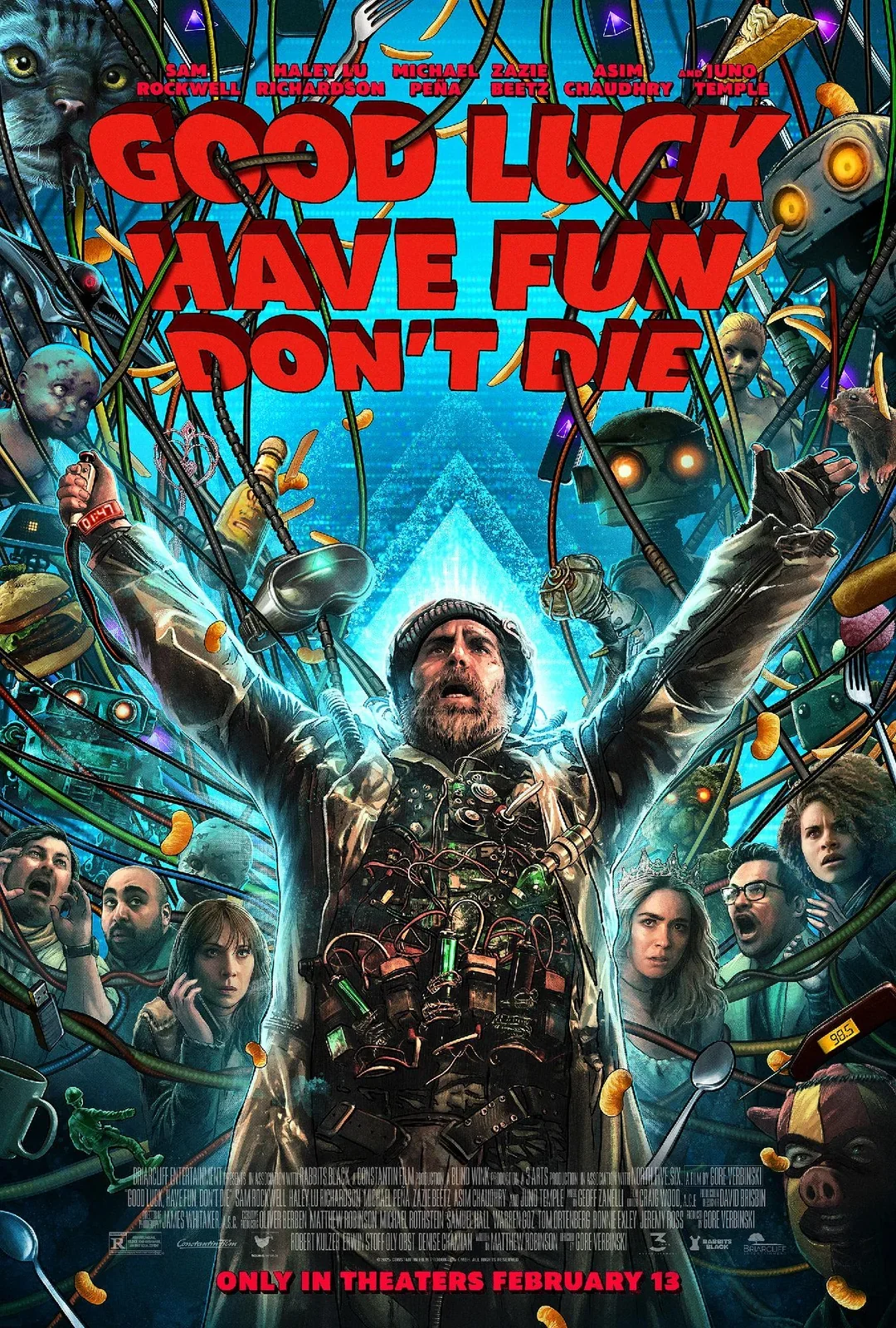
"Good Luck, Have Fun, Don't Die" Review: A Message From A Plausible Future?
There’s nothing like being in the hands of a director that has a vision for the story they want to tell. Director Gore Verbinski’s Good Luck, Have Fun, Don’t Die is one of those films. This one had me from the beginning with a closeup of a bottle of Cholula, because it told me further smart choices would be made from this director! (Cholula should be everyone’s hot sauce of choice.) In all seriousness, the opening imagery is a visual spectacle that should be studied in regard to taking a scene we’ve seen a million times and making it interesting. Admittedly, it goes off the tracks in Act III, but it’s refreshing to see a film that swings for the fences!
In a world where people are addicted to their phones, will anyone speak out against it? Hmmm, it sounds like our present day and writer Matthew Robinson obviously has something to get off his chest with his messaging of how we currently live with tech in the story that ensues. In the film, The Man From The Future (Sam Rockwell) bursts into a crowded LA diner to preach a message about the dangers of our technological addiction. The Man’s goal is to find the right combination of people in the diner who will come with him to stop humanity’s impending apocalyptic future. It’s a future in which AI has it out for humanity. Yes, it sounds like The Matrix meets The Terminator but this takes a more eccentric, fantastical approach to its storytelling.
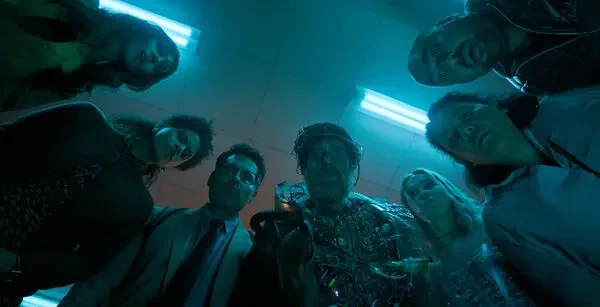
As the rag tag group of patrons, made up of Susan (Juno Temple), Ingrid (Hayley Lu Richardson), Mark (Michael Peña), Janet (Zazie Beetz) and Scott (Asim Chaudhry), are assembled for the over one hundredth time, it becomes clear that The Man seems to know a lot about each patron; this sparks their curiosity to follow him on the journey. Once the film gets going, we get the backstory of each patron. The stories interweave into a clear picture of the motivations for why this just might be the group that saves the world. Will they?
The strength in this film lies in the script. We’ve all probably had a moment where we come out of a doom scroll, had an instance when we look around a restaurant at other tables with people looking down at their phone instead of at each other, or found it strange that what we just said out loud is now an ad presented in our feed. Robinson takes these moments and throws a mirror up to say “this is where we are headed”. It’s a picture of the disconnected, cold-hearted society that we could easily become. It’s a world where a school shooting is an everyday run of the mill thing, classrooms are full of students where phones are stuck to their hands and it gets darker from there. It’s a film that, as a film critic, it forces you to stop taking notes and go for the ride.
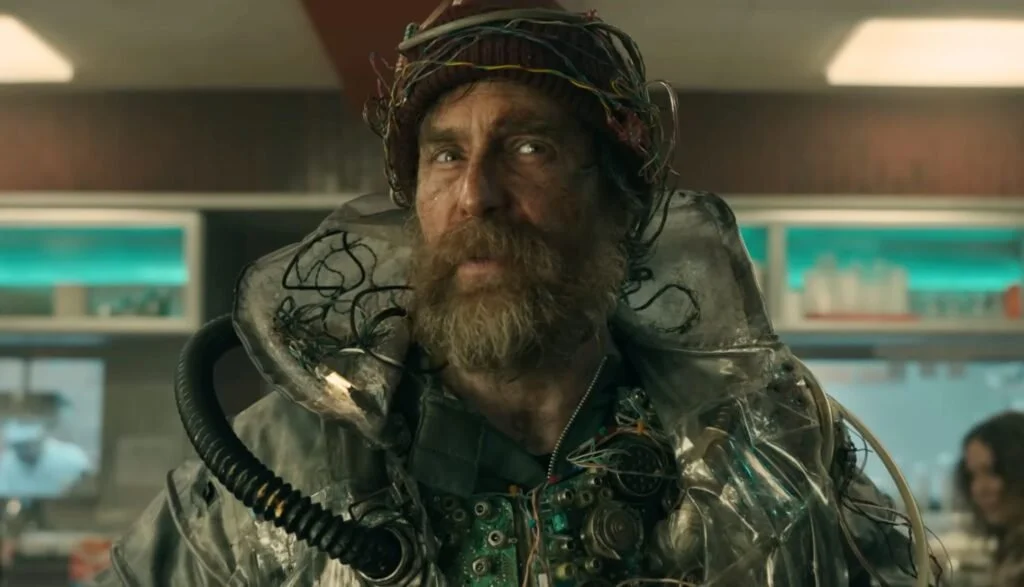
Let me be clear, this film gets bonkers. Sam Rockwell does a lot of the heavy lifting in landing on a protagonist that we can follow through his delivery and nuanced performance. The ensemble cast does their part as well, but this feels like vignettes of “Black Mirror” turned into a dark comedy movie over the course of its running time. Robinson’s message is loud, reminiscent of Boots Riley’s Sorry To Bother You, but doesn’t land as sharply. Verbinski and cinematographer James Whitaker paint a picture of a pretty world that doesn’t realize how ugly it is with the camera and light. That’s what resonates and translates. Society never gets to a bad place overnight. It’s the slow burn into apathy that gets us there. If you’re a fan of quirky, adventure, sci-fi films with a message, this might be worth seeing in theaters this weekend.
Rating: B-

"Captive State" Review: An Earnest Attempt At Something New But Familiar
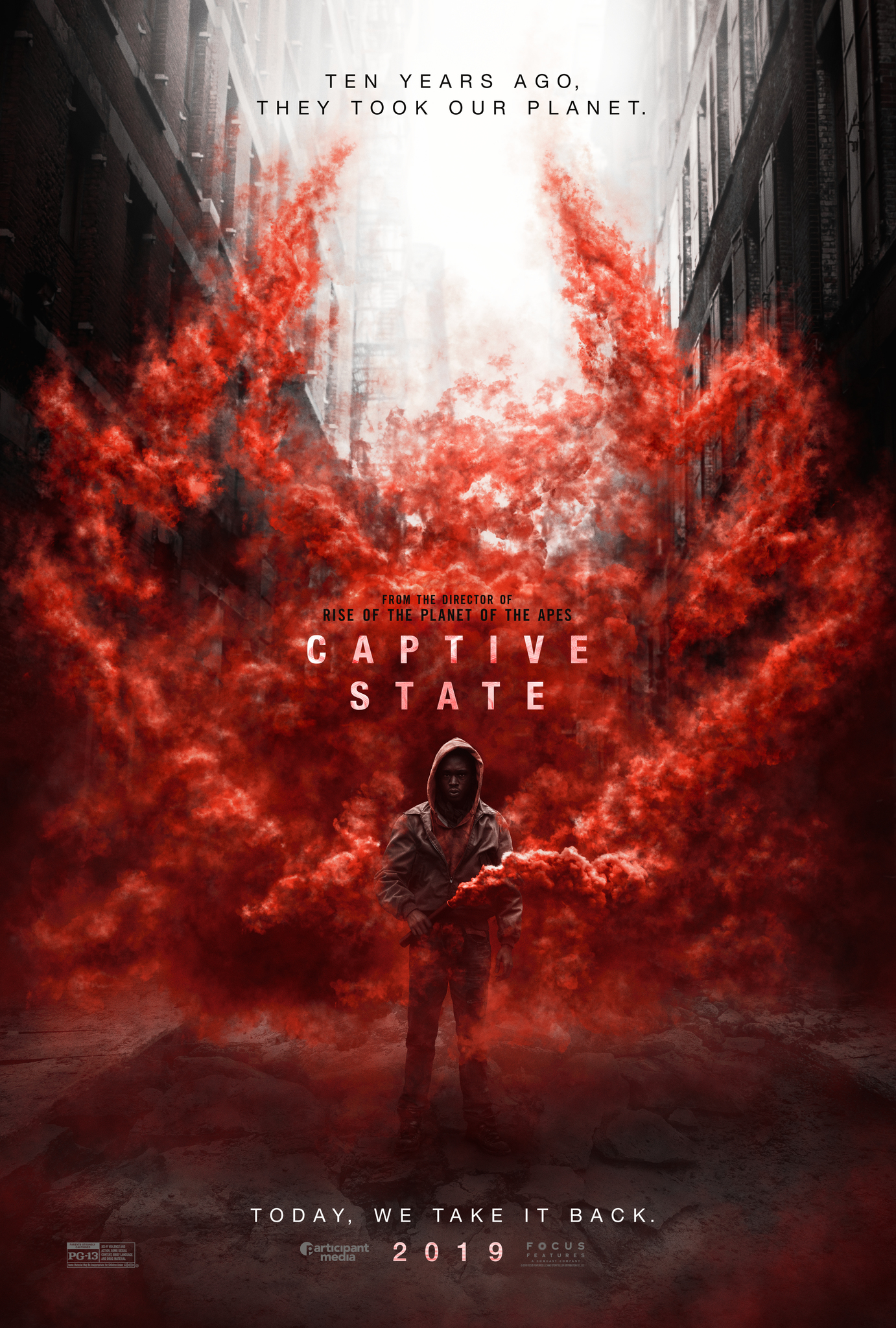
Science fiction films have an amazing way of drawing out the collective wonder, mystery about the universe, and our relationship to it. Good sci-fi finds a balance between questions unknown and what we do know. Captive State works because it shies away from what we expect to see in a film about an invasion of our planet. We expect to see aliens. We expect to see technology we don’t understand. Instead, co-writer/director Rupert Wyatt gives us a tense thriller dealing with what the beginnings of an uprising looks like with science fiction as the backdrop.
We’re immediately dropped into a family car tearing through the streets of Chicago just after a species has descended upon us and are making their dominant presence known. Lines are drawn, and there are certainly places that humans can’t or won’t go. The Drummond family ignores the rules, resulting in the mother and father being vaporized in front of their two sons, Gabriel (Ashton Sanders) and Rafe (Jonathan Majors). Nine years later, humanity is fully submissive to the alien race.
There is no exposition as to what the new world order and rule is. We learn through characters and their actions. John Goodman is detective William Mulligan. Crime is at an all time low because the aliens (rarely seen) apparently don’t play that. So police not only serve and protect us, but now observe and keep tabs on humans that may step out of line for the invaders. Mulligan is keeping tabs on his ex-partner’s son Gabriel, whose brother, Rafe, became a recent martyr for an underground resistance called Phoenix. With an upcoming peace rally in which the aliens will make an appearance, surveillance is at an all time high.
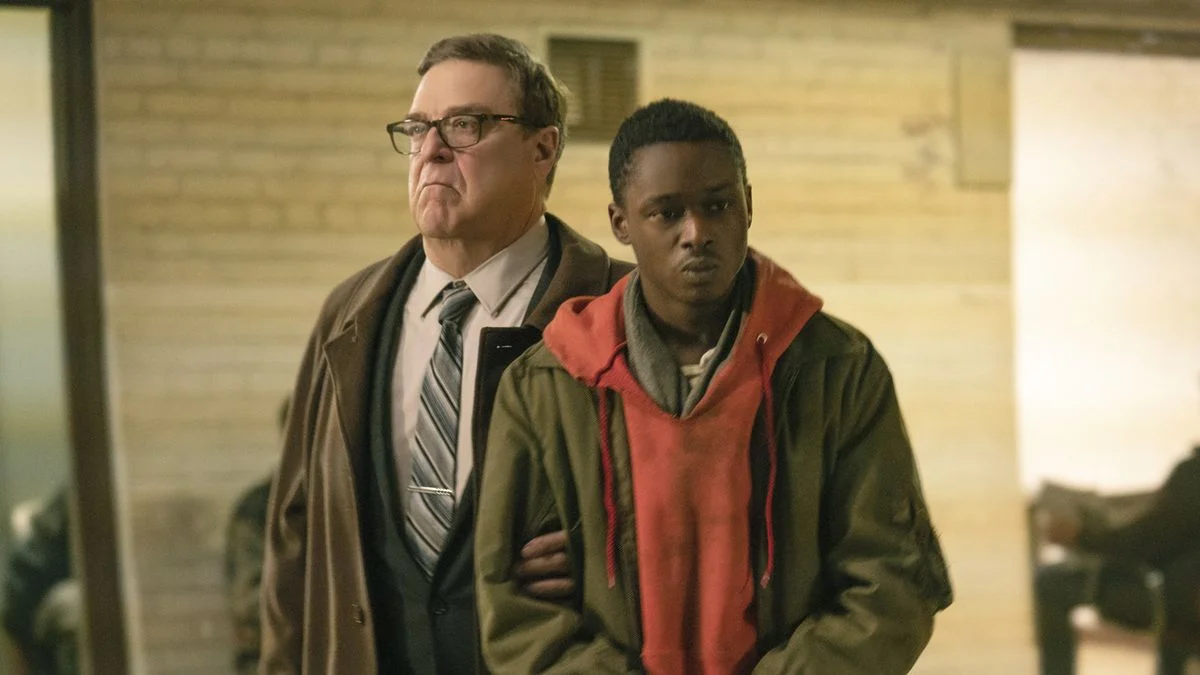
Captive State may be fifteen minutes too long, but there is no doubt that screenwriters Erica Beeney and Rupert Wyatt have thought this world through from A to Z. That’s what makes this particular sci-fi film fun. It may take itself too seriously, but you don’t have time to realize that because you’re too busy trying to keep up with what’s unfolding. With strong performances from Goodman, Majors, Sanders and Vera Farmiga as Jane Doe, the world of Captive State feels authentic, lived in, and realistic.
This is the type of film that may not take the box office by storm this weekend, but people will say “that was actually pretty good” as they discover it on streaming platforms in the future. I think its worthy of the big screen treatment for your plans this weekend. Its earnest attempt at giving us something refreshingly new but familiar might just captivate your mind and imagination.
Rating: B
"The Predator": A Case for Diversity & Feminism In The Sci-fi Genre
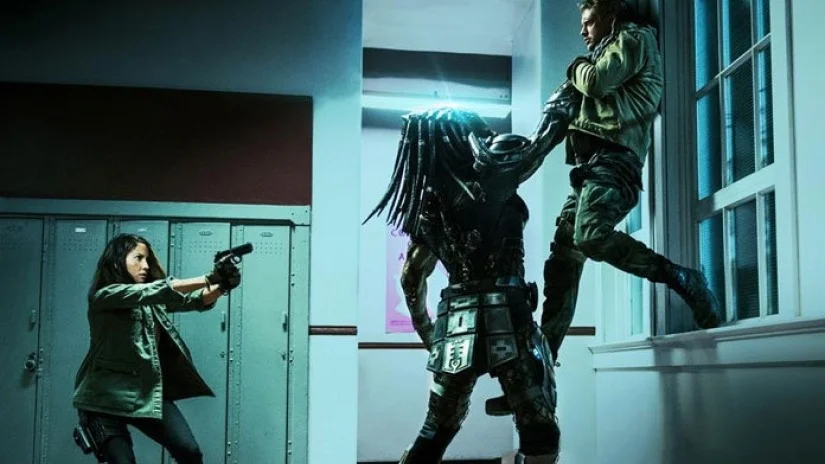
Seasoned director Shane Black is no novice when it comes to making action films. In the past he’s been known for the Lethal Weapon Series, The Last Action Hero, and The Long Kiss Goodnight; and he doesn’t hold back in 2018’s The Predator. Not only did Black direct, but he also co-wrote the script for this film, which explains the superb dialogue. Black is considered one of the pioneer screenwriters of the action genre. While he made his mark with the Lethal Weapon Series, he also wrote the cult classic Kiss Kiss Bang Bang. So it’s no surprise that this installment in the Predator franchise is stand out in comparison to similar films in the Sci-Fi genre. The diversity of representation is truly thoughtful, the humor is timely, and the amount of blood and guts is just right. I’d go even as far to say the film pays homage to the original in a clever, new age way.
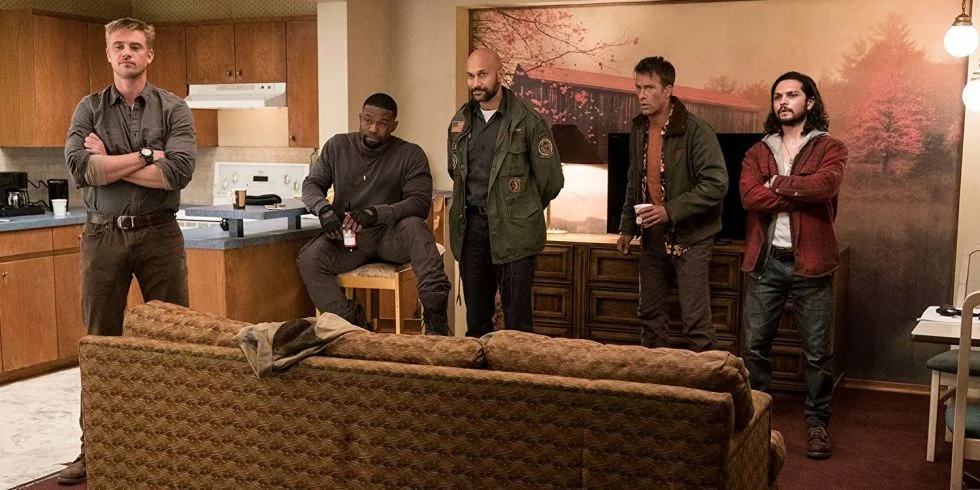
First and foremost the comic relief is perfectly timed, and every character has their quick-witted moment. However, something that is most prevalent is the politically correct lens that the humor is placed under. In a film that one may expect to have hyper-masculine dialogue, no one makes a sexist joke, and if a character makes a comment that is remotely sexist it is always thwarted with a feminist response. There are many types of comedy reflective of the film’s diverse characters. Of course, there is the typical archetype in all action films, “the comedian”, played by Keegan-Michael Key, but he is by no means the sole funny person in the film; the film doesn’t depend on his humor. Not only did the humor add a wonderful element to the film, the diverse humor from the characters also makes it a unique film. This type of humor isn’t often found in action films, but it can be found in the sci-fi genre; Shane Black hones in on the comedic diversity of his cast and plays to their strengths, making their humor inclusive yet different.
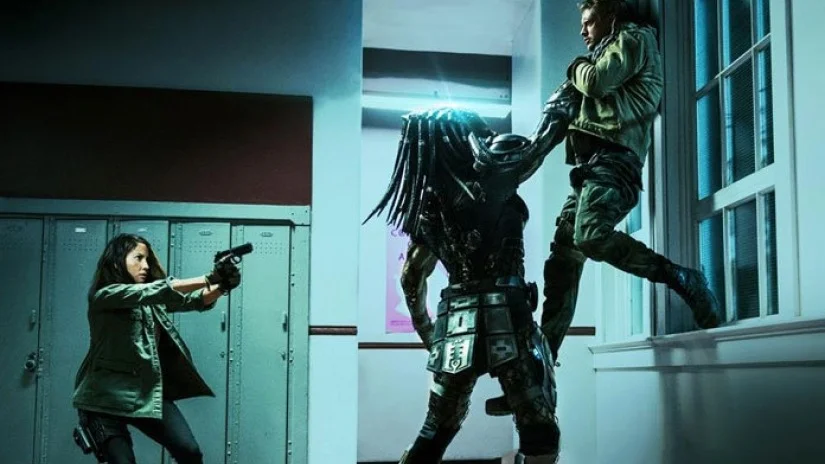
Another strong aspect of the film is the diverse cast. The Sci-fi genre hasn’t always been incredibly inclusive with diversity, especially for people of color and women. This film broke the barriers by upholding people of color and women in a positive light within the script; even the “evil” characters were relatable on some level. With that being said, there are only two women in the film, which is typical of the Sci-Fi genre (usually there’s only one female lead and she is almost always the love interest). However in this film, there are two women. Emily (Yvonne Strahovski) is the wife of the main crazy soldier, Quinn McKenna played by Boyd Holbrook. Within the film the other male characters expect Emily to be like the other female archetypes of the Sci-Fi genre (just an ignorant love interest) but she is not only the wife of a soldier, she is trained like a soldier as well. There is a moment where I was actually surprised; Emily starts commanding the men around her to do things and as she proceeds to take a gun off the wall she clearly knows how to use it. Emily’s character isn’t a huge role by any means, but she certainly made an impression by being a badass. The second badass female character who is featured prevalently in the film is Olivia Munn who plays scientist Casey Bracket. She is clearly the most informed character on the Predator and she is also trained in combat. The main thing that stands out to me about Olivia Munn’s character is the fact that the other male soldiers expect her to be strong-willed and cunning; they even make jokes about how she surprises them. Throughout the film Olivia’s character is surrounded by men, and yet none of them really made a pass at her, beyond giving her a pathetic tinfoil unicorn as a gift. She does not become a love interest and she is a key character to understanding the “ultimate” Predator. There is even an eco-feminist lens that could arguably be placed on Olivia Munn’s character as well; she is the only character to interact with the alien dogs within the film, as she alone plays fetch with them. Both of these female characters outsmart men within the storyline multiple times; they are independent, smart, refreshingly tactful and well equipped to handle weapons.
Not only does this film represent women in a positive way, it represents men in a way that’s also unique to the genre. Male characters show more emotions than usual, they have heart to hearts with each other, and they understand that nobody is perfect. What makes these characters perfect, is their imperfections. Keegan-Michael Key plays the comedic soldier Coyle who I mentioned before, he has PTSD from being an incredibly accurate sniper. Key even has an anxiety attack in the film and one of the other male characters consoles him then says, “Its okay, this happens sometimes.” The fact that his PTSD is addressed along with Coyle’s anxiety attack is a big advancement in Hollywood action filmmaking, in the past soldiers would probably say something toxic like, “man up!” or “No time for tears soldier!” In action films, men are oftentimes displayed as emotionless and violent, especially men of color. However this group of crazy soldiers is a diverse bunch. Key is one of three men of color within the group and there are more men of color throughout the film as well including the actor behind the Predator, government officials, and scientists. Nebraska Williams, played by Trevante Rhodes, is an especially interesting character. He is clearly an insane man, but he is also loyal to his fellow soldiers and has a good heart. There is a moment in the film where Nebraska opens up about being a suicidal soldier, which is something I have never seen in Hollywood cinema before unless it is the sole focus of the film. This moment where he confides about his past depression is a monumental step away from the toxic masculinity that has hindered so many films in the past. The fact that the character felt comfortable to talk about his mental troubles truly is an important highlight of how men should be able to talk to each other.
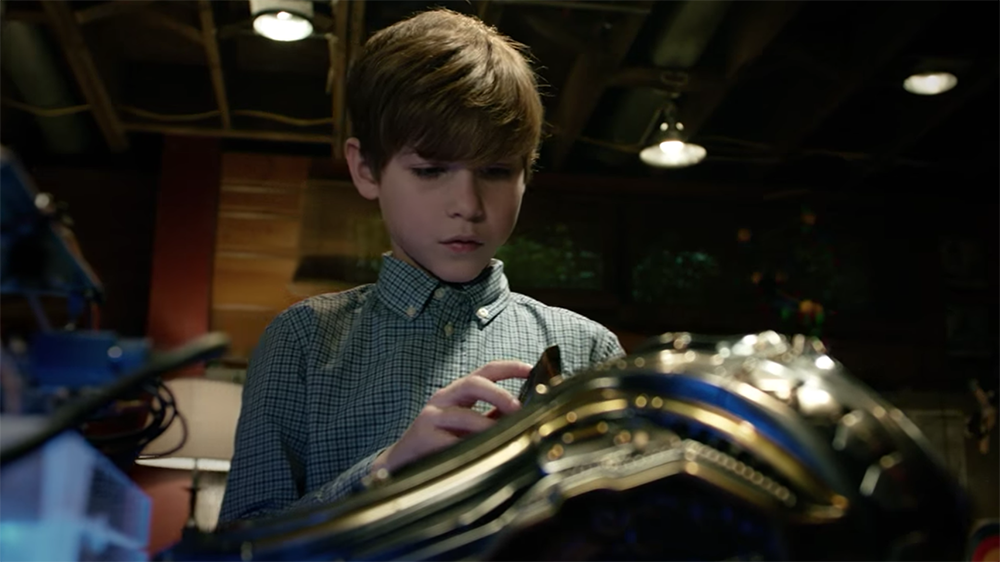
Alongside the soldiers defeating toxic masculinity, Quinn McKenna’s son Rory (Jacob Tremblay) is an interesting character as well. Rory is on the spectrum and it is believed that he has Aspergers (other kids tease him by calling him ASS-Burgers). This representation is certainly underrepresented in cinema and this film finds an interesting way to highlight how smart some people with Aspergers can truly be. Even though Rory is a child, he is one of the smartest characters in the film. In films of the past, the soldier father imposes toxic masculinity onto their child, yet in this film that was not the case. Quinn and Rory seem to have a wonderful relationship and communication, which says a lot when you have a son who has Aspergers. Alongside all of these characters, there is a Latino character that is incredibly religious and socially awkward, and a character with turrets syndrome. These representations might not seem like a lot, but they are incredibly important if we want to create meaningful cinema that is relatable to the population as a whole. This is a film that relates to more people than other Sci-Fi films in the past, which is important because white men are not the only demographic in this world.
Finally, let’s talk about the gore. Horror films are one of my favorite genres of cinema and oftentimes Sci-Fi films dabble in horror elements to improve the action of the film. The Predator had the exact amount of gore that was needed to make the film great. There are still guts and blood but it isn’t to the degree where you feel queasy after you watch the film. Someone with a feint heart probably shouldn’t watch the film (I am quite desensitized to horror), but if you are a horror fanatic like myself, you will truly enjoy the effort behind the special effects horror makeup. Alongside the blood and guts, the costuming was great. I remember making a note while watching the film that the female scientists aren’t sexualized much like I have seen in the past. They don’t have a ridiculous amount of makeup on, they aren’t showing cleavage and they are viewed as equals to the male scientists. There is even a part where Olivia Munn’s character is naked and she is still not sexualized. This is almost revolutionary for the sci-fi genre, a naked woman who ISN’T sexualized.? Again, the costuming for the female scientists is great simply because they are equal to their male counterparts. The special effects makeup and 3D animation of The Predator was chilling! It’s both terrifying to look at and yet you can’t look away; its almost as if you want to figure out how they operate biologically. This element truly made the film, because in the past you could easily point out what is digitally added and what is makeup. This felt like they have finally found a perfect blend that makes the Predator more realistic than ever.
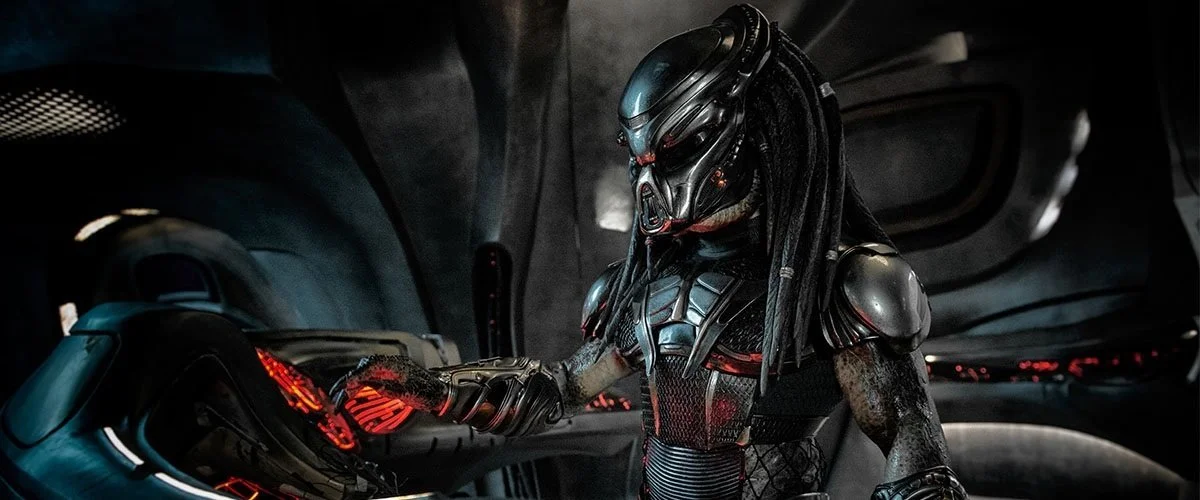
Overall I truly enjoyed the film, I think it is the first of many modernized and diverse Sci-Fi films that are to come. Of course the film isn’t perfect, there are still only two women in the film, and the majority of the main cast is still white, but these efforts of diversity are note-worthy and appreciated. As an audience, we need to support more films that are focusing on a diverse lens; we need to make it known that these types of films are welcomed. The world is not filled with only white men, so our films should not be filled with only white people, this change in diversity and inclusion will create a new generation of cinema that will possibly be even more enjoyable than the past; simply because the voiceless will now have a voice.
Overall Grade: A-

"Annihilation" Review: Subverting The Norm For The Win!

It’s been a while since I’ve watched a sci-fi thriller that used silence in such a way that I could hear the leather of my neighbor’s seat when they moved. Annihilation is one of those film’s that reminds us of what a big budget Hollywood machine can do if given the opportunity. It takes us to perhaps one of the scariest places, our own imagination, and asks us to probe the unknown along with its protagonists.
Lena (Natalie Portman) is a biologist and Army veteran whose husband just returned home after twelve months of radio silence. Army sergeant Kane (Oscar Isaac) was thought to be dead, but his presence brings up more questions than a joyful reunion. Lena finds out that he went on a mission inside what’s called the shimmer. It’s a growing bubble that looks and glistens just like the stuff we used to play with as kids but is far from something to be toyed with. All we know is that things go in, but don’t make it out.
With Kane deathly sick, Lena decides to join the next ragtag group of people going into the mysterious shimmer that only her husband has come back out of. She joins psychologist leading the team, Dr. Ventress (Jennifer Jason Leigh), Anya (Gina Rodriguez), a paramedic from Chicago, Sheppard (Tuva Novotny), an anthropologist, and Josie (Tessa Thompson), a physicist. The film unfolds over various points in time. It’s told in present day with Lena being investigated by a man in a hazmat suit, so we know one part of how the story ends, but through flashback, we’re able to fill in the gaps.

Director Alex Garland (Ex Machina) is in full control of his film as he cleverly parses out information at just the right pace. He allows us the film to push forward by constantly dangling a question before us. Whether it is what’s the shimmer? How has time passed within it? How has a shark and crocodile crossbred? Or something as simple as what’s that noise? We constantly question what’s happening on screen right along with the group of women who are trying to get the same answers.
As the group slowly begins to unravel and questions themselves and each other, we too are pushed to stretch our minds as to what’s possible within the shimmer. The casting in this film is exquisite as each woman is playing a character that goes against type for what we’ve come to see them in. Sheppard says at one point in the film “we all are damaged”. The way that Portman, Leigh, Rodriguez, Novotny, and Thompson display that on the screen through nuanced performances is a joy to watch. Tessa Thompson certainly stands out as the shy physicist with her physicality and ability to make her character seem so small in compared to the larger than life personas we’ve seen her take on in past works.
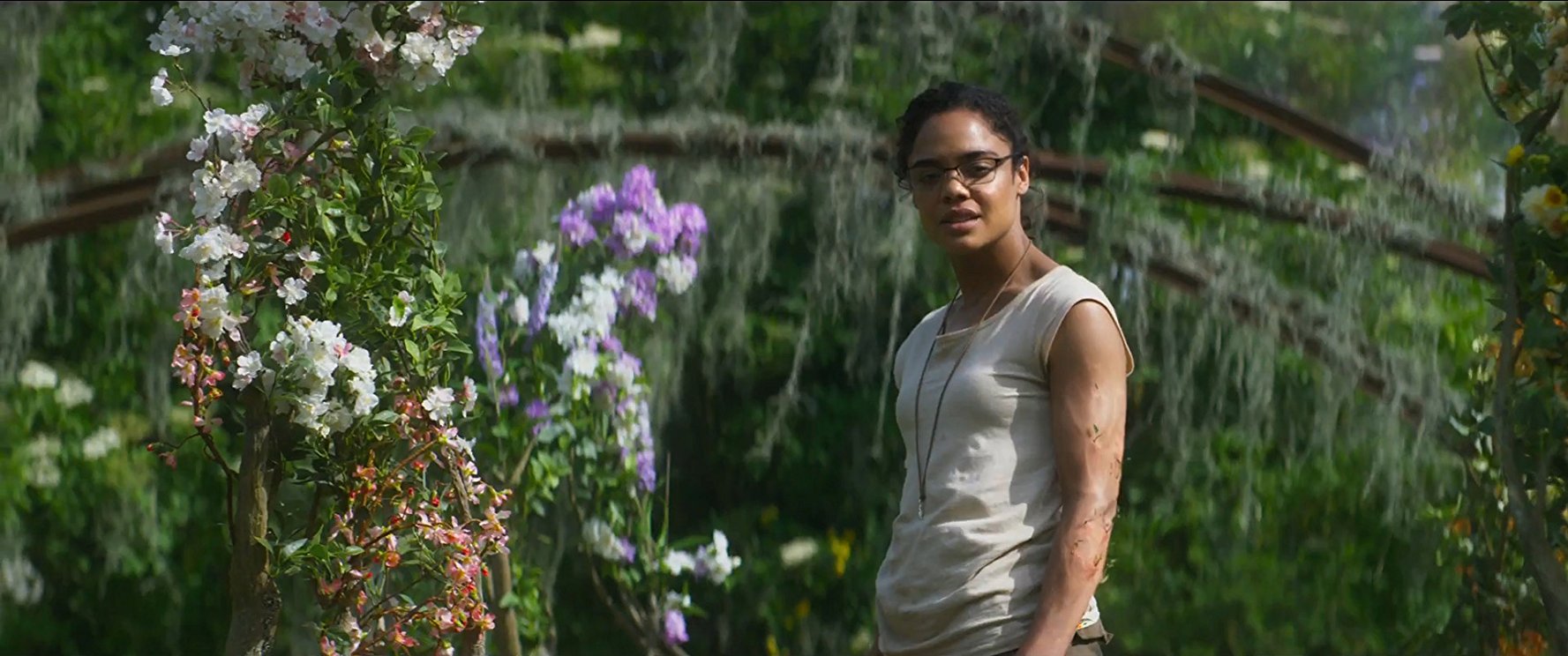
Garland’s imagery of this world is beautiful. Yet, he drops clues to what the world is through mise-en-scene (things specifically placed before the camera) by shooting through a glass of water, or plants in the shape of humans. What Garland keeps off screen is equally important as what is on at times and shows his understanding of the power of suspense and mystery in a film like this. In a film like this, the third act is the difference between a downer or a memorable film. Annihilation certainly delivers on a trippy but suspenseful third act that will leave you questioning the future of its world.
While Annihilation may not be on par with Ex Machina, it is a solid addition to the sci-fi/fantasy genre. It’s reminiscent of The Thing in how it constantly makes us and its cast question what we know. The fact that its all women in the lead makes it that much more exciting as they handle the material in a beautiful way that’s subversive of the norms we expect!
Rating: B+
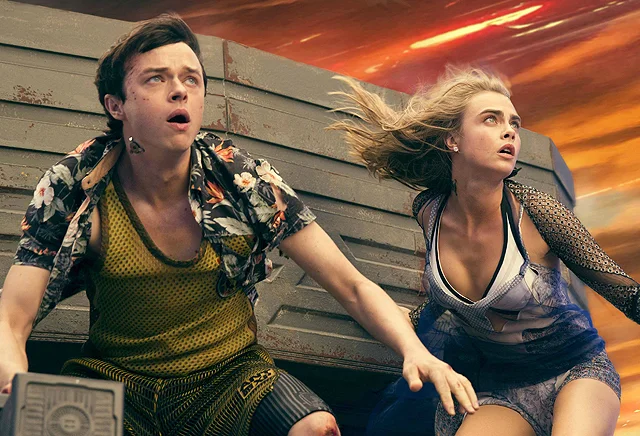
"Valerian and The City of a Thousand Planets" Review
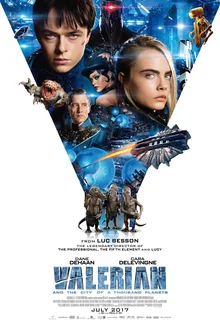
Valerian and the City of a Thousand Planets has been a lifelong passion project for filmmaker Luc Besson (The Professional, The Fifth Element, Lucy). Based on a French comic book series entitled Valerian and Laureline, Besson has been trying to get a film version off the ground during his entire filmmaking career. After scoring his biggest hit yet in 2014 with Lucy, Besson finally decided to pull the trigger and make the film. While there were parts of the film that I enjoyed, there were other parts that stopped the film dead in its tracks.
During the opening credits of Valerian, we are treated to a montage about how the space station Alpha became the city of a thousand planets. Hundreds of years later, special operatives Valerian (Dane DeHaan) and Laureline (Cara Delevingne) are assigned by the government to investigate a dark force that’s taking place within the center of Alpha. Not only could it affect Alpha, but it could have ramifications across the entire universe.
One of the things that I liked about Valerian is the visual look that Besson and his longtime DP, Thierry Arbogast, gave the film. At times, the film looked like it was leaping off the pages of the comic book. It’s probably one of the most colorful films you will come across this summer. Both the production and creature designs in this were great as well. They did a really good job in making sure one stood out from the other. The production design, especially with Alpha, was astounding. I will say that for both DeHaan and Delevingne, this was better then their last films they were both in (A Cure for Wellness (the 2nd worst film I’ve seen this year) and Suicide Squad). The action scenes were cool, well designed, and imaginative, especially during a sequence at the Big Market that takes place on different dimensions. Including the mostly single take shot from the trailers of Valerian running through different sections of Alpha. When the film was good, it was fun.

One of the biggest problems that I had with this film is the runtime. The story that Besson presented to us in no way warranted the 137-minute runtime that this had. Even though this was his passion project, Besson needed to trim the fat. There are characters and scenes in this film that could be easily eliminated and the film still would have played the same way. With this runtime, the film takes awhile for the plot to kick in (the same issue Guardians of the Galaxy, Vol. 2 had earlier this summer). As soon as the film started to get good, it would stop dead in its tracks and nothing would happen. So it keeps you waiting and waiting for developments.
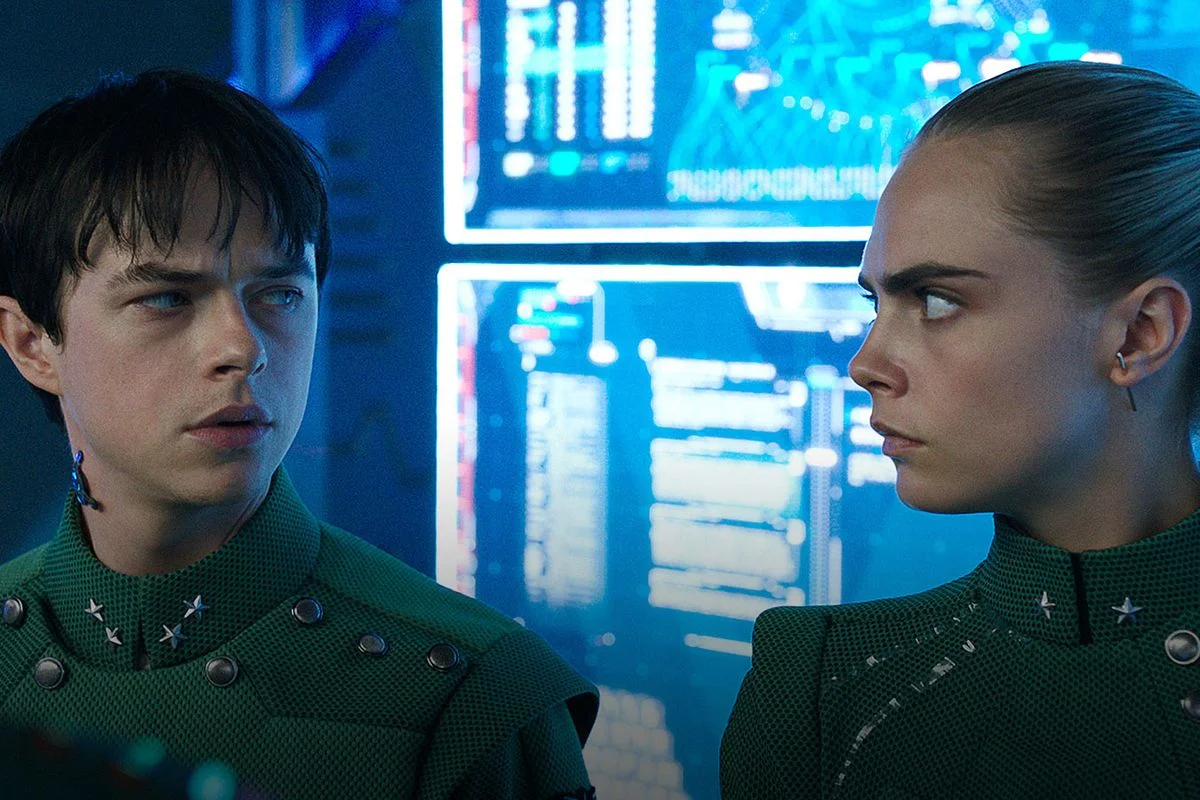
The plot itself was a little confusing to follow, and it’s not particularly exciting. Also, while I said that this was better then their last films respectively, DeHaan and Delevingne had zero chemistry with one another. Maybe there were better actors for these roles. The music from Alexander Desplat was a little disappointing as well in that it’s not particularly memorable. When I first saw the ads, I thought it would be a great film to see in 3D. Sadly, the 3D doesn’t add much to the film, and only a couple of spots here and there. Lastly, the subtitles for a film like this weren’t particularly imaginative, and oddly, they were framed on the extreme edges of the screen.
Overall, Valerian and the City of a Thousand Planets wasn’t a bad film per say, but it wasn’t a great film. I wished it fully embraced the weirdness that the ads were showing us. For some of the runtime, it delivered what I was hoping for. If they would have cut down the runtime, I think I would have a much more positive outlook on the film. It’s a film that sometimes goes around in circles not knowing what it wants to be. I don’t see this doing well here in the United States, but it’ll be interesting to see how it does overseas. If you want a great sci-fi film from Besson, stick with The Fifth Element. You don’t need to pay the price for a 3D ticket. If you must, go see this during a matinee screening. If not, catch it on TV sometime.
Rating: B-