
Is ‘Dunkirk’ Nolan’s Magnum Opus?: Review
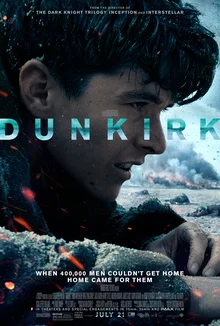
The filmmaking virtuoso who brought us Memento and The Dark Knight is back to dazzle us once more with Dunkirk, the gripping WWII story of heroic sacrifice.
Christopher Nolan has never been one to shy away from cinematic challenges, and Dunkirk is no outlier to this methodology. The film was beautifully shot by Hoyte van Hoytema in 70mm (watch it in IMAX 70mm if possible), and not a single frame in the 120 minute thriller is wasted. Nolan’s use of this format is masterful and commemorates the artistry of filmmaking, unlike Tarantino’s The Hateful Eight. The conventionality of Nolan’s color scheme in this film is not only aesthetically enjoyable, it makes sense. The deep blues and vibrant oranges pop off the screen while the grey of war leaves us with holes in our hearts. Nothing with Nolan is fake. Therefore, appreciate the long sequences in the air tailing fighter planes, the terrifying underwater scenes and the explosions, because it is all real. More accurately, it is jaw-dropping and equally horrific. Only Nolan could make the massive Dunkirk beach feel claustrophobic.
The film is set in 1940 during WWII, and Hitler has pushed 400,000 British, French, Canadian and Belgian soldiers to sea, trapping them on the beaches of a small French town called Dunkirk. The soldiers all await evacuation while the imminent threat of death looms over their shoulders. To put it simply, the Allied troops are dead-men walking, stuck on a beach that allows for a pain-staking spectacle to watch. The English Channel is too shallow for large rescue ships to pass through, meaning the lives of 400,000 men rest in the hands of brave civilians daring enough to pass underneath the German air fleets. Nolan states in the opening titles of the film that a miracle is the only thing that would save these men. Well a miracle is what they got.
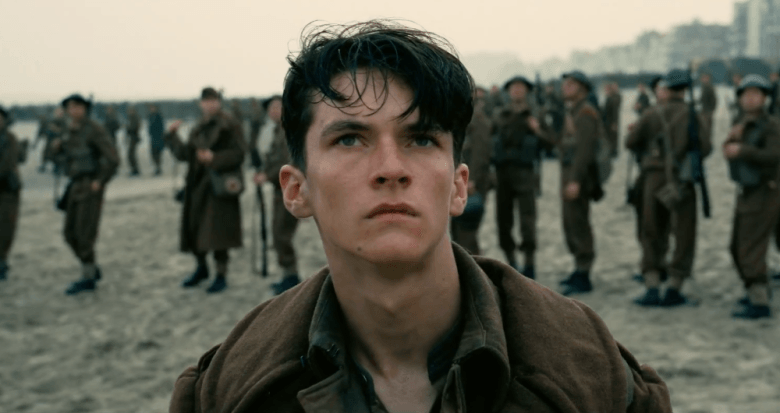
The successful evacuation of these troops was only made possible by a handful of prominent heroes the story follows. First, civilian boat captain Mr. Dawson (Mark Rylance), fighter pilot Farrier (the always masked Tom Hardy) and Commander Bolton (Kenneth Branagh) to name a few. Although Nolan cuts right to the action leaving out any backstory, it is easy to empathize with the incredible heroes that fought for each other and for their country. On the other hand, Nolan strips the Nazis of any human quality. They stand merely as grey wisps in the sky, bomber planes but never faces. The soldiers on the beach and the audience can hear them coming but we never are truly connected to the enemy.
The sounds of the planes and the explosions, the panting and running, gasping and breathing, the underlying ticking of a clock to emphasize the importance of haste, all of these sounds contribute to a riveting, viewing atmosphere. Hans Zimmer’s all so familiar score pulsates through this film with an electrifying cadence that may only be out-shined by Hoytema’s cinematography. The cacophony of war is so breathtaking that not a moment of relief goes by until the final cut to black. Dunkirk leaves us hanging to the edge of our seats, looking to the horizon for the British ships, and it isn’t until the sun finally rises in the end that we can exhale.
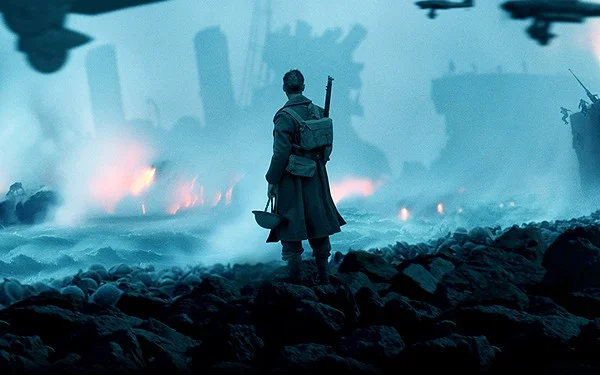
Undoubtedly, this Christopher Nolan film is Oscar-worthy and one of his highest rated films to date, which begs the question: is Dunkirk Nolan’s magnum opus? Historical war films often receive waves of historical accuracy criticism, however, Nolan tackles this story with such honest grace that all the critics will be talking about this summer is the raw emotion of the narrative. In a present-day that offers a world of doubt and uncertainty, Nolan gifts to his audience solace. Solace in a film that shows the suppressed fighting together and forging bonds out of suffering. It is the best film so far this year, and I would be remiss if I did not answer my own titular question. Yes, this is Nolan’s magnum opus.
Rating: A
"Mad Max: Fury Road" Review: Believe the Hype!
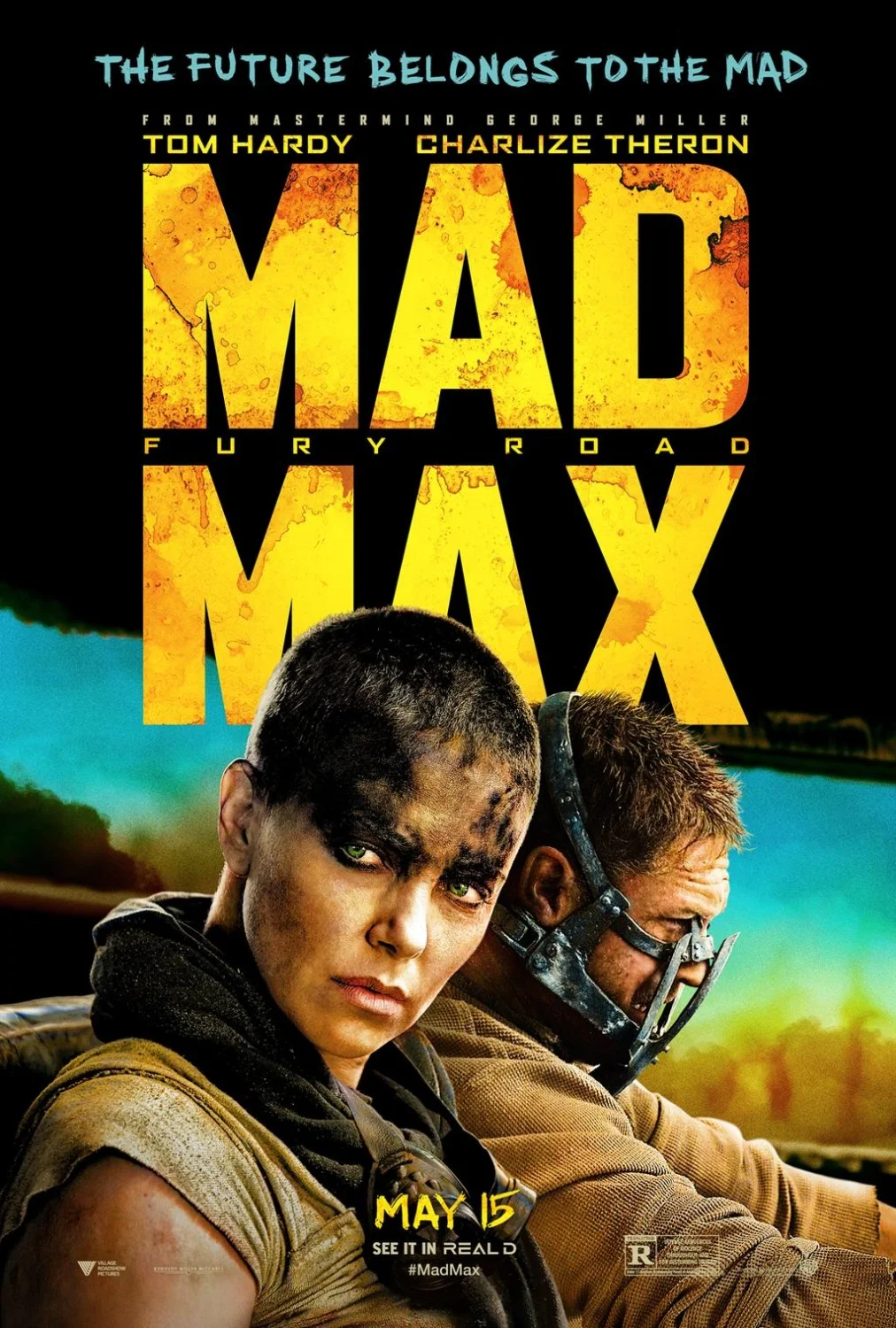
“Mad Max: Fury Road” is a cinematic sensory experience for the action movie genre, and movies in general! It’s truly the work of a writer/director who has had 30 years to think about the world that put him on the map, and go back to it with impeccable precision in his vision. Yes, George Miller has set another bar for the post-apocalyptic action genre, and challenges other artists to reach it.
The film doesn’t boast of intricate plot points. In fact, Max (Tom Hardy) informs us in the opening monologue that his mission in life is to survive, and that’s what the movie is in a nutshell. It’s the chase and how our heroes survive that’s so exciting.
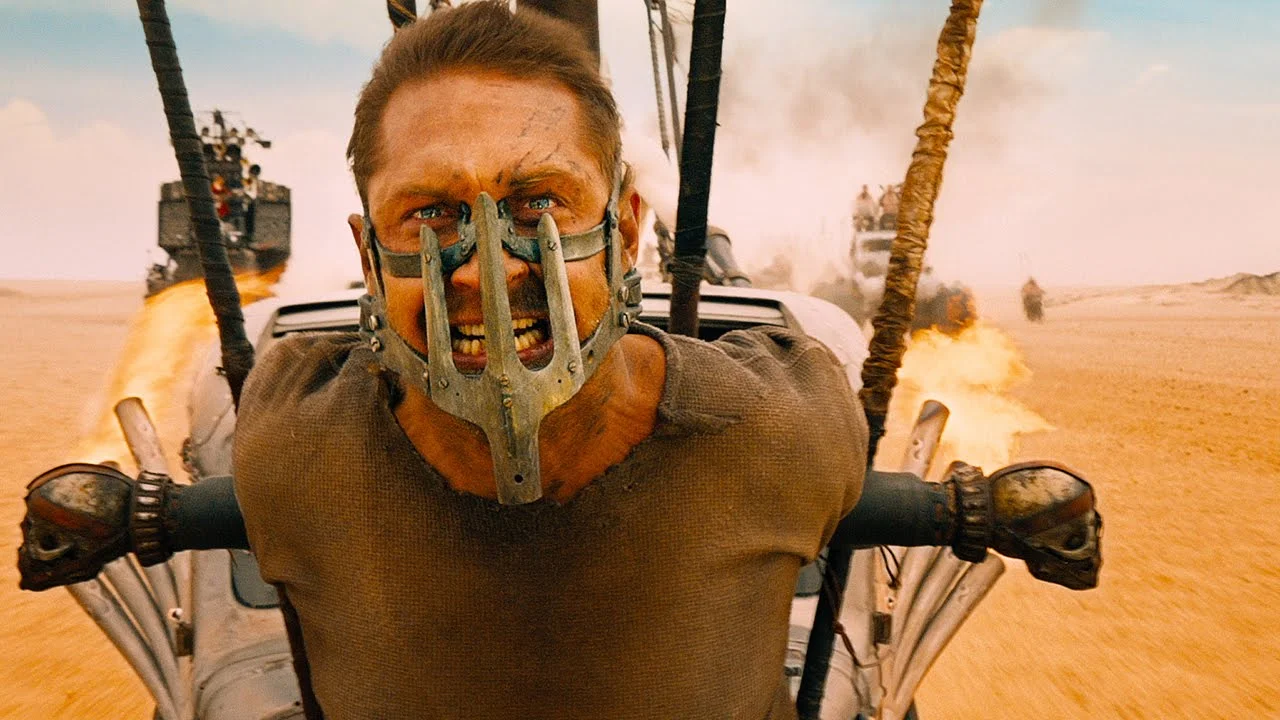
In the opening scene, Max is captured by shirtless, branded warriors in white body paint. They use him as a living blood bag for a War Boy named Nux (Nicholas Hoult). After their ruler, Immortan Joe (Hugh Keays-Byrne), realizes one of his trusted drivers has taken off with his prized breeding wives, he chases after them with the War Boys. Nux, looking for glory, straps Max to the front of his car as an ornament and way to keep isolated from Max.
Imperator Furiosa (Charlize Theron) has one goal, to free the wives and get everyone in the stolen rig to the Green Land. After trying to lose her hunters in a massive sandstorm, everyone who survived wakes from the carnage. Finally free from his captors but carrying his chain gang War Boy Nux with him, Max gets free from his chain and commandeers Furiosa’s rig. While playing a quick game of “Can I trust you?” with weapons, Furiosa and Max decide they need each other to survive.
Max takes shotgun literally and figuratively to Furiosa for most of the rest of the film. This is what makes “Mad Max” great; Miller finds all kinds of creative ways to divert the norms of the genre and owns it. As Miller’s lead character plays support for his second billed, a beautiful chemistry forms between a woman who can hold her own against any man and a man who seeks redemption in helping her cause.

Theron’s Furiosa takes her seat with memorable female action heroes like Weaver’s Ripley and Hamilton’s Sarah Connor! Furiosa has an unmatched toughness, calculated intelligence, and compassion that knows when to cut through her fierce outer shell. Theron is able to convey so much with her eyes, which helps continue to push the story forward without having to spell it out. Hardy takes the reigns of the franchise with an equally stunning performance built from subtle moments. His character is a man of few words, but like Furiosa speaks volumes in his actions.
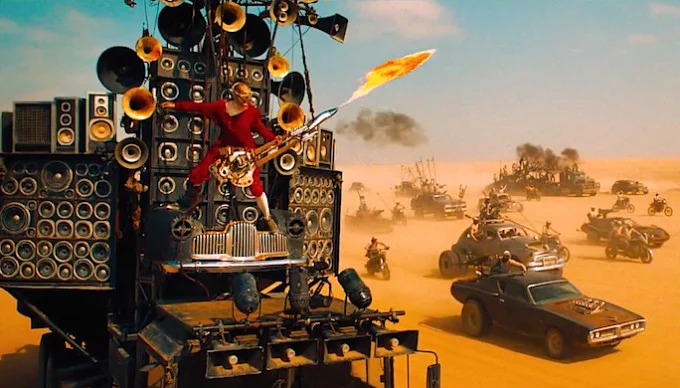
Miller uses all elements of filmmaking to his advantage. He makes you blink as your ride into the sand storm with Furiosa. The screen flashes hot white and cuts to black multiple times as though you’re in the storm. So many action films have roaring scores during chase sequences, and Miller jokingly throws a flame throwing guitarist on the front of a truck who plays the score along with another truck of drummers. As the score escalates at multiple points in the film, the on screen musicians jump in the frame and race forward on their rigs playing with diegetic and non-diegetic sound in a refreshing way. John Seale’s cinematography paints a vivid picture and eases into soft hues at the appropriate times that supplement the story. These are just a few examples of what makes this film a cohesively beautiful, innovative work of storytelling.
The film has taken a little heat because of Miller’s feminist approach to the film as it introduces and highlights female road warriors, and a heroine who looks to free sex slaves. In actuality, it simply highlights what we rarely see in films like this. What do women who have to survive in a world like this actually look like? Butt-kickin’ survivors! Rather than giving us underwritten characters, every character shines through and has a moment in the film. That’s something to be celebrated!
“Mad Max: Fury Road” is a film achievement to see on the big screen! Believe the hype. It’s worth your hard earned cash this weekend, and next!
Rating: A