
"Gladiator II" Review: Standing In The Shadow of Its Predecessor
Twenty four years ago, the world of cinema was in a different place. Upon Gladiator’s 2000 release, CGI (computer generated imagery) was burgeoning. The film boasted of scenes of a coliseum built by a computer’s hand. A lot has changed since then. What once was done by trained professionals can be done by anyone with an app on their cell phone. This idea of a culture being shaped and moved into different directions by time is a theme within Gladiator II as well. What will become of our legacy? The statement that Maximus (Russell Crowe) made “What we do in this life echoes in eternity.” before his death, is still wrestled with here. The question is, is this legacy sequel worthy to stand with its predecessor?
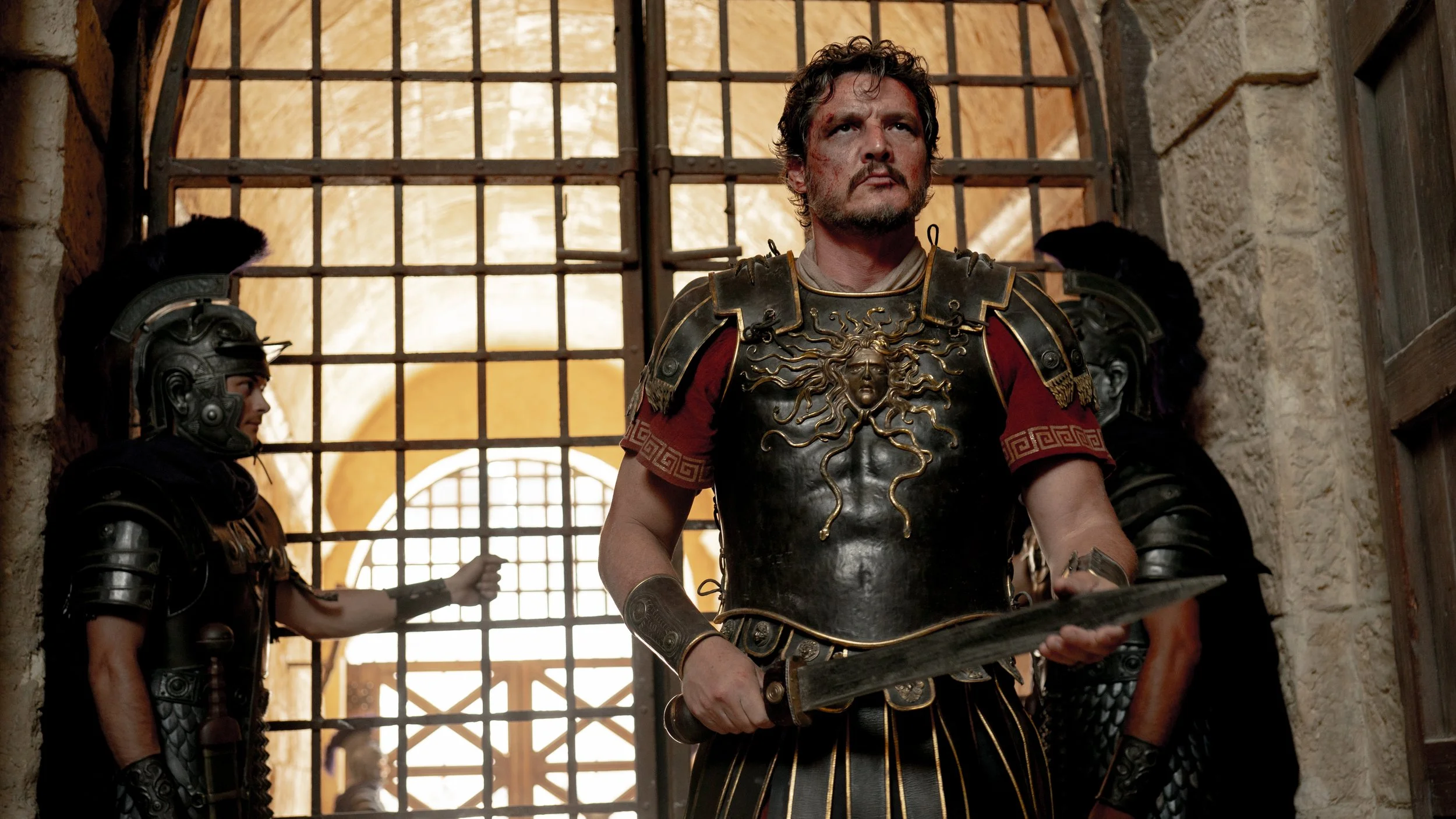
Photo Credit Cuba Scott
Copyright © 2024 PARAMOUNT PICTURES. ALL RIGHTS RESERVED.
Taking place sixteen years after the death of Maximus, a farmer-soldier named Hanno (Paul Mescal) stands between Rome and the impending conquest of his home, Numidia. Surviving the battle but losing the war makes Hanno a prisoner of war; he is sold into the gladiatorial system and shipped to Rome to become entertainment for her people. Of course, this means that he enters the system with a chip on his shoulder and a fury that burns for General Acacius (Pedro Pascal) who took away his former life and loved ones that existed in it.
Rome has changed since we last saw it. It is now governed by twin Emperors Geta (Joseph Quinn) and Caracalla (Fred Hechinger). The twins lust for blood and conquering nations has secretly driven their hero General Acacius to be tired of all the bloodshed. He and his wife, Lucilla (Connie Nielsen), the daughter of Marcus Aurelius, are conspiring to overthrow the twins. This b story is perfect for Hanno’s storyline as he is proving himself to be a fierce competitor for gladiator trader Macrinus (Denzel Washington). Hanno’s one request in exchange for giving his all for Macrinus is the head of Acacius. Thus, a race between the two desires sets course, pitted against the backdrop of three days of Coliseum games.
As different mysteries are revealed, the fading cloud of a dream that Marcus Aurelius had of Rome is continually brought to the forefront by characters. While various characters have their dream of how to achieve a better Rome, it’s clear, the current path and generation at the helm must be ousted. This is the difference between Gladiator and Gladiator II. The former had heart and conviction from a rooted place, while the latter is a shadow imprinted by its forerunner. There is a breaking point in the film in which questions being answered and plots revealed totally let’s out the steam of this engine.
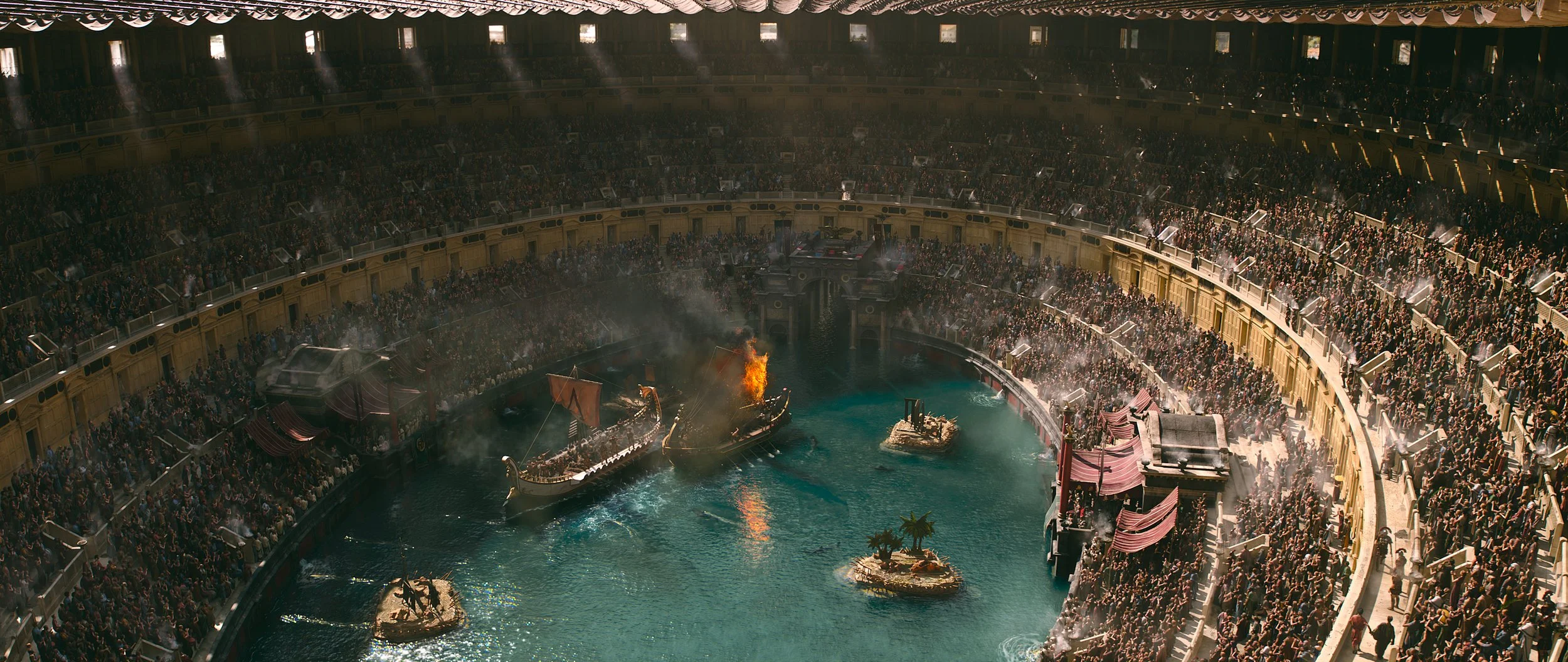
Photo Credit Paramount Pictures
That said, Gladiator II is a spectacle that should be seen on the big screen. Director Ridley Scott’s vision for this time period, the Coliseum, the games, and the bloodlust that still can be prevalent today is on full display. With fights involving baboons, sharks, a rhinoceros, and gladiators there is an impressive use of camera work and fight choreography. Costume designers David Crossman and Janty Yates craftsmanship is exquisite to look at as well.
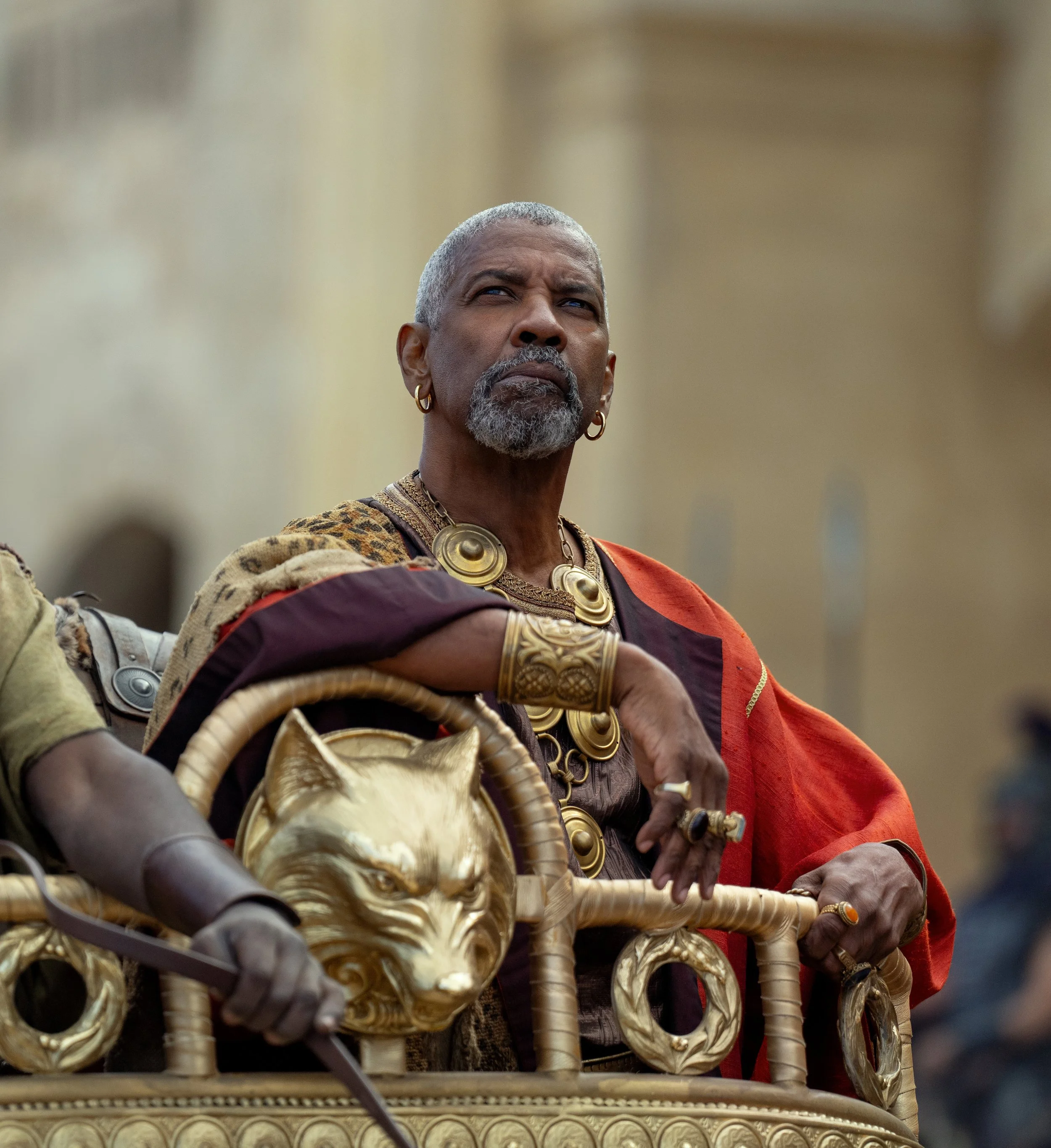
Photo Credit Aidan Monaghan
Denzel Washington’s Macrinus is certainly worth the hype. As the film moves along and we get to know his character better, his delivery of dialogue and physical gestures may afford him a supporting actor nod if the hype machine is loud enough. Either way, he is fun to watch!
Ultimately, Gladiator II, while uninspired in some ways is still an entertaining movie. Nostalgia is another character that interweaves itself in this storyline. It’s mixed into the opening credits and Harry Gregson-Williams score. It makes the film a popcorn blockbuster that will pass the time, but I’m not sure it will stand the test of time as a classic like Gladiator.
Rating: B-

Middleburg Film Festival '18: "Boy Erased" Review
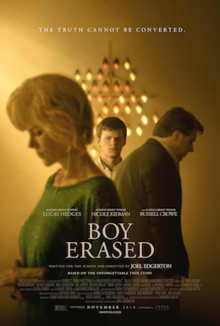
Boy Erased is based on the memoir of Garrard Conley’s experience with gay-conversion therapy. Adapted to screen by writer/director Joel Edgerton, the film allows its audience to come to a conclusion based on what’s presented. At its heart, the movie is about where we draw lines in our love, and if we do, is it truly unconditional love?
Lucas Hedges is Jared Eamons, son of minister Marshall Eamons (Russell Crowe) and first lady Nancy Eamons (Nicole Kidman). Growing up a preacher’s kid, Jared finds himself at a crossroads between his faith and family after coming to terms with the fact that he’s gay. Upon his son’s coming out, Marshall seeks wisdom through church elders, while Nancy defers to Marshall’s leadership.
Marshall and Nancy enroll their son in a conversion program called Love in Action that’s directed by Victor Sykes (Joel Edgerton). As time moves forward, Jared quickly sees that something is off in the therapy. His dutiful trust in his parents becomes shaken as he witnesses the degradation of his fellow participants. This sparks action in Jared to take his destiny into his own hands.

The film jumps around in chronology to give us a picture of Jared’s life leading up to Love in Action and beyond while giving us the “full picture” of Jared’s struggle. The key to this film is that Edgerton makes Jared our eyes into this world. Hedges has a way of displaying his internal conflict without wearing it on his sleeve. Instead, his journey in finding himself, standing up to his abusers, and charting his path in life is easier to understand because the message is not clouded by accusation or heavy judgement. Crowe and Kidman turn in authentic performances as well with both sides clinging to to their belief system.
Boy Erased’s conspicuous restraint allows its viewer to be haunted after the film by what they witnessed. After all, it’s the quiet, solitary moments in life in which we wrestle with the big questions.
Rating: B
"The Nice Guys" review
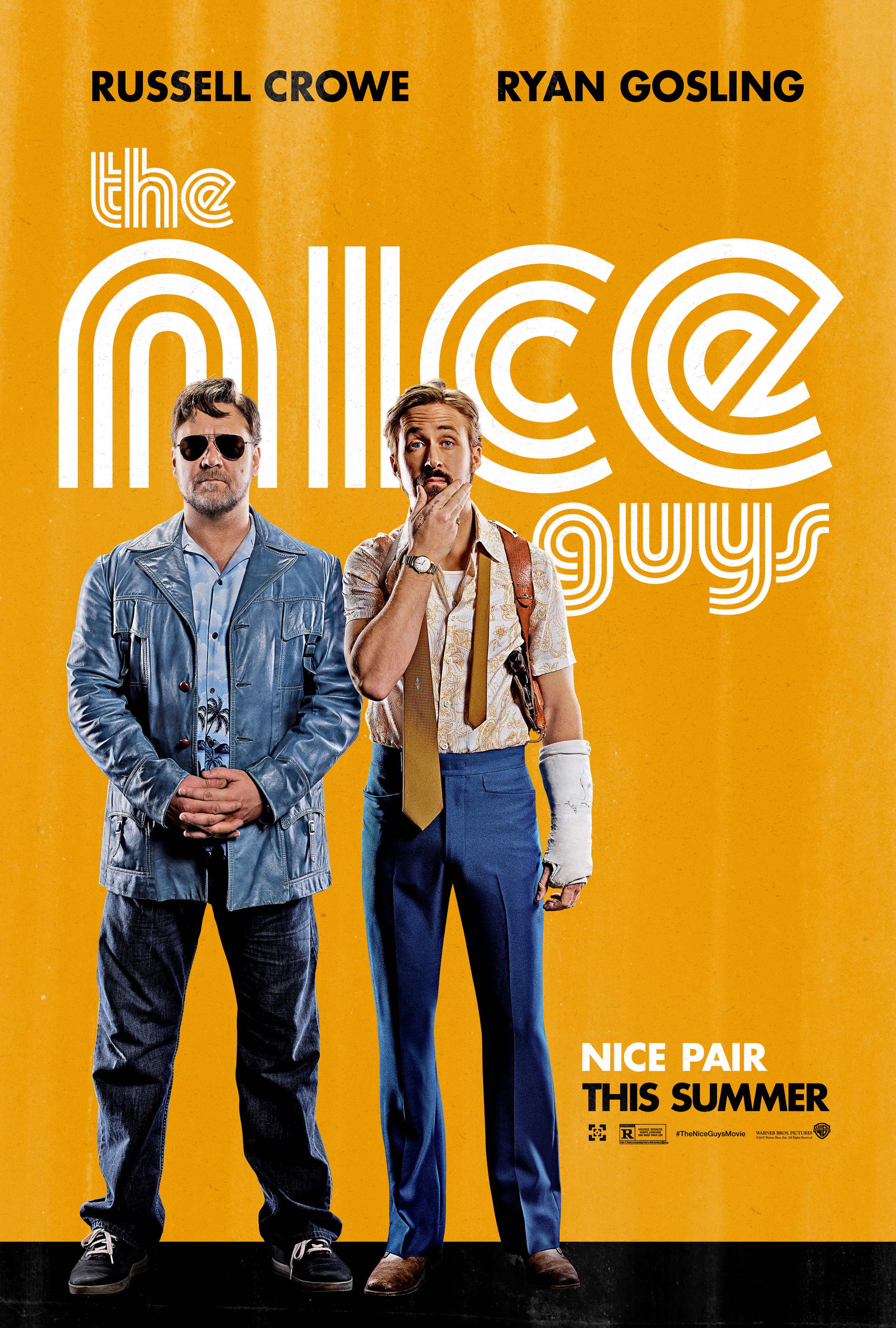
Co-writer/director Shane Black is back at it again with a buddy action-comedy film. Known for penning hits like Lethal Weapon, modern noir Kiss Kiss Bang Bang, and mixed genred Iron Man 3, this time around he’s cooked up a 70’s retro-noir starring Russell Crowe and Ryan Gosling. The duo come together to solve the case of an alleged suicide of a female porn star in The Nice Guys.
The film asks you to set aside your brain and understand that coincidences are going to happen from the opening sequence. A young boy is checking out his father’s adult magazine, when a car crashes into the house. The car happens to be driven by adult-film actress, Misty Mountains (Murielle Telio), the same woman the boy was just looking at in the magazine. From there, you can expect the rest of the story to follow suit.
Enter muscle-for-hire Jackson Healy (Crowe) and alcoholic/private eye Holland March (Gosling). Although they first meet when Healy breaks March’s arm for a seemingly separate case, they combine forces to search for a missing girl named Amelia (Margaret Qualley), who seems to be connected to the dead adult film star. As the two begin down the rabbit hole, they eventually run into plenty of dead bodies from the porn industry and uncover a large conspiracy.
Did I mention they allow March’s tween-age daughter, Holly (Angourie Rice) to tag along for a lot of the ride? While her character is a "girl who has had to grow up quickly by looking after her to-drunk-to-drive father" at times throughout the movie (and we can assume in the past), the humor that she’s supposed to infuse doesn’t always work. Should a little girl really be watching pornography at an adult industry party? Drunk or not, should March and Healy really allow her to tag along? (Although at times they do try to send her away.) Holly is a major part in the film who works and doesn’t work throughout the movie in such a way as to act as a speed bump rather than acceleration pad.
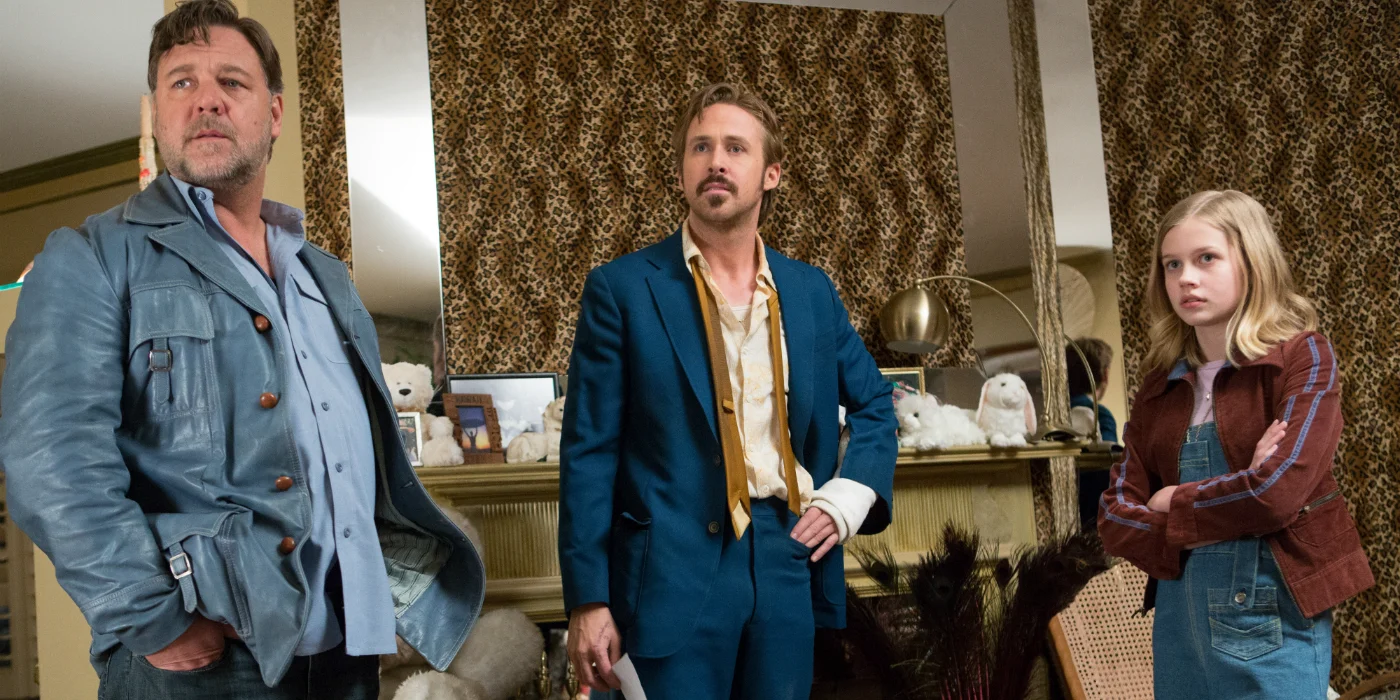
Crowe and Gosling give performances worth most of the buzz the film has been getting. Crowe’s straight man compliments Gosling’s entertaining physical humor. They play off each other well and own the dialogue.
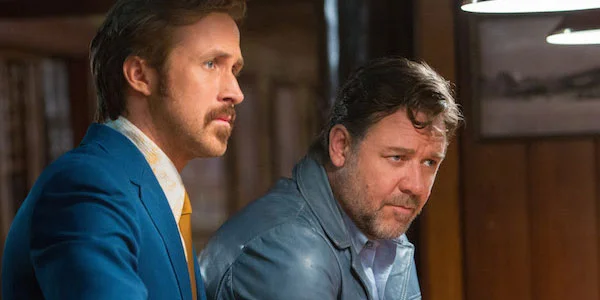
Black has fully developed characters in The Nice Guys. He has nice touches of mystery and restraint with issues like Healy’s aversion to alcohol versus March’s indulgence. He hits many of the twists and turns that you expect from a film noir. Yet it’s the plot that is too convoluted, asking you to just go with it as the detectives make random connections through happenstance. I just wish the plot was as thorough as it’s likable characters.
Rating: C+