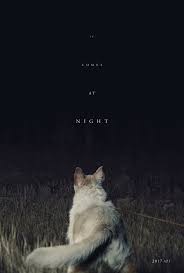
"It Comes At Night" Review
Americans are primed for the apocalypse. Whether the deluge of doomsday preparation and undead apocalypse TV shows or cardio-based zombie evasion fun runs, we’re a nation steeped in the possibility that all men will eventually become zombies. And when that time comes we’ll have achieved a 40-yard-dash time quick enough to outrun the bloodthirsty masses to a fortified armory and help rebuild civilization. Escaping danger is our collective middle name.
Thing is, once we’ve hacked and slashed our way to safety, all that time spent locked away in the abandoned fort will be tedious. There’s drama, sure. Leaders will emerge and be challenged, resources will go dry and need replenishing and all our social networks will be useless. Survival is a waiting game, meal after meager meal, day after dull day, month after miserable month.
It Comes at Night, the second feature-length movie from Trey Edward Shults (Krisha), is laced with small doses of excitement, but spends much of its running time watching its characters wait in fear. Shults employs the camera as a tight third-person observer. While boogeymen real and imagined circle the limited world of the script, the camera is focused on the mental and physical strain our heroes suffer as they undertake survival. They are bound to a day-to-day exercise in trust, regiment and they hold a skeptical gaze toward any stranger in their midst.
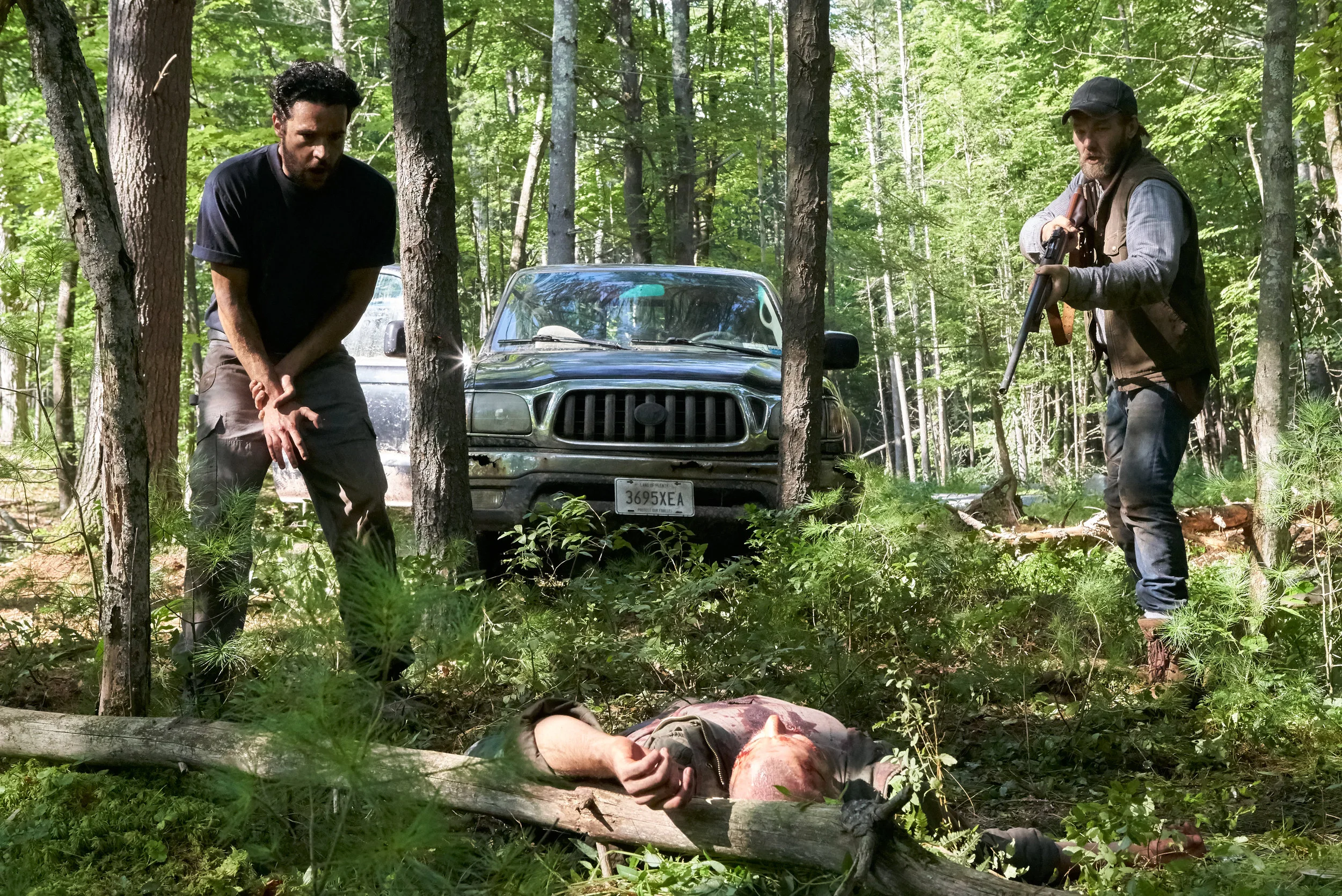
The family in question is only identified as father Paul (Joel Edgerton), mother Sarah (Carmen Ejogo) and son Travis (Kelvin Harrison Jr.), as fear has a way of grinding units down to individuals. The familial clan of survivalists are holed up in the woods while an ambiguous plague threatens the world around them. At the start of the film, the illness has already claimed one other family member, but little else is explained about its origin or effects. It Comes At Night is not about the fight against the undead, but the threat of sickness penetrating the family unit. It opens in a tragedy meant to solidify the family unit and warn the viewer of both the outsider itself and the fear of outsiders.
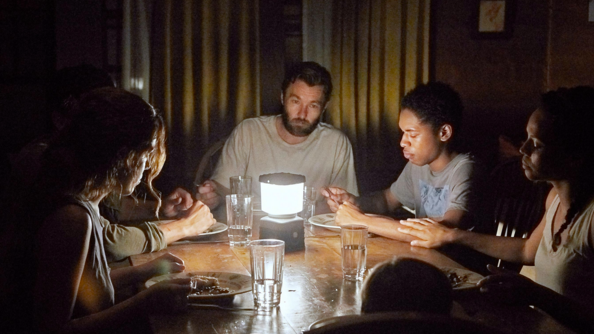
After the deceased is laid to rest Paul, Sarah and Will must move on and bury sadness with trust and routine. When a young father, Will (Girls’ Christopher Abbott) barges in on the trio in search of supplies, it takes some time before Paul agrees to bring Will’s family into their fold. Joel Edgerton’s Paul is nothing if not a cautious realist, but he’s flawed in his fearfulness. While the two families attempt to live together in tension and mistrust, Travis has visions that wind the daily tension with nightly terror. His insomnia is the lens of horror tropes. He sees his mouths filled with blood, animal corpses and one of the film’s very few jump scares.
Shults uses Travis’s nightmare sequences to explicate both the characters fears and his desires. It Comes At Night follows through with a drama film that plays as horror because the viewer, through close camera focus, is meant to watch the characters diligently to see how and when they break. While the familiar beats of zombie films and backwoods horror will delight enthusiasts of both genres, the subdued action may disappoint some. Still, It Comes At Night holds so steadily in its watchful gaze that the viewer must see themselves walking down every empty hallway. And as horror films are often a chance to live out death from the safety of an armchair, It Comes At Night is a chance to be the weary eye of a survivor, waiting and watching in fear.
Rating: A-

"Alien: Covenant" Review
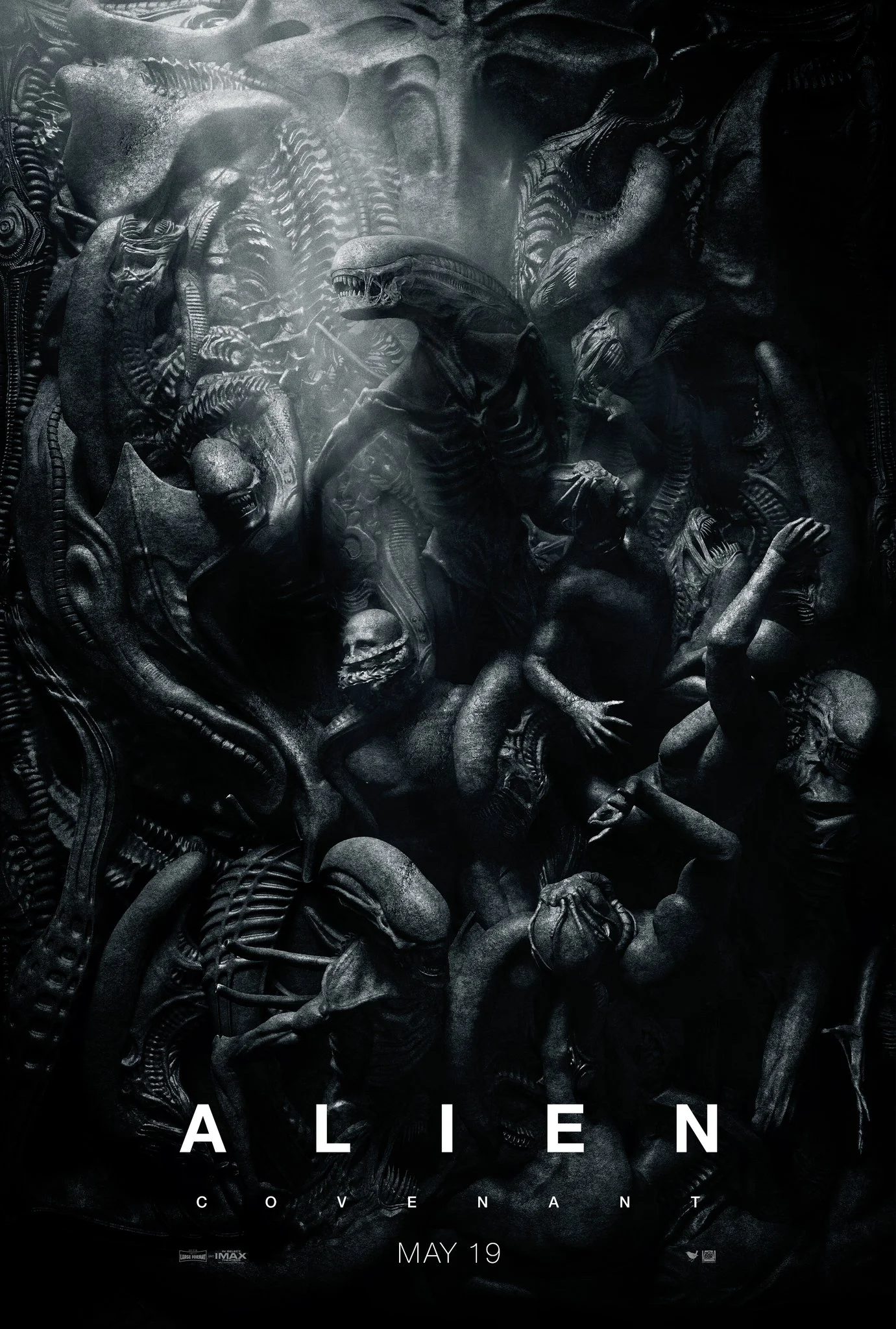
Ridley Scott may have a disdain for humanity. At least he has little affection for us. This film, for its many talented actors, is concerned visually and narratively with the non-human stars. As a result, the characters and humanity by proxy seem…well, disposable.
The newest addition to the Alien franchise opens on a conversation between synthetic, David (Michael Fassbender) and ubiquitous financier from the Weyland-Yutani Corporation, Peter Weyland (an uncredited Guy Pearce.) Weyland is a megalomaniacal creator and the Alien franchise has done a pavlovian number on the audience with the Weyland name. He commands David to play music and fetch tea, generally marveling at the product of his own genius, but David asks questions about the chain of origination that begat himself and that kind of reflection doesn’t sit well with Weyland. This sets the tone for a movie that often looks down upon the fertile homo sapiens, who are constantly looking for a savior, but won’t do the damned work of saving themselves.
But let’s backtrack. It is December 5th, 2104 and the starship Covenant is en route in colonization mission to the outer reaches of the galaxy. In tow, a crew of 15 and a payload of 2000 colonists and 1400 human embryos cryogenically stored away. The ship is a floating starter kit for humanity on the more habitable planet of Origae-6. Awake on the ship is a new synthetic, Walter, still played by the wonderfully game Michael Fassbender. Trouble begins immediately, when a random localized event (space glitch?) forces an emergency crew revival from cryogenic stasis.
Reborn into chaos and doom, the crew of the Covenant fight against fate to correct their course. Christopher Oram (Billy Crudup) assumes command, but his rigid faith-based leadership quickly isolates members of the crew and he struggles to unite the team or even properly memorialize their fallen captain. The rest of the crew are mostly coupled up, including Branson’s partner Daniels (Katherine Waterston), for population purposes narratively and stakes for the audience.
Meanwhile, while fixing external damage to the ship, crew member Tennessee (Danny McBride in a Danny McBride role) picks up a ghostly transmission from a nearby planet. As the crew is not eager to get back into their cryo-coffins, Oram decides that this planet is likely as good as Origae-6 for colonization. He leads all but three of the ill-fated crew on a scouting mission.
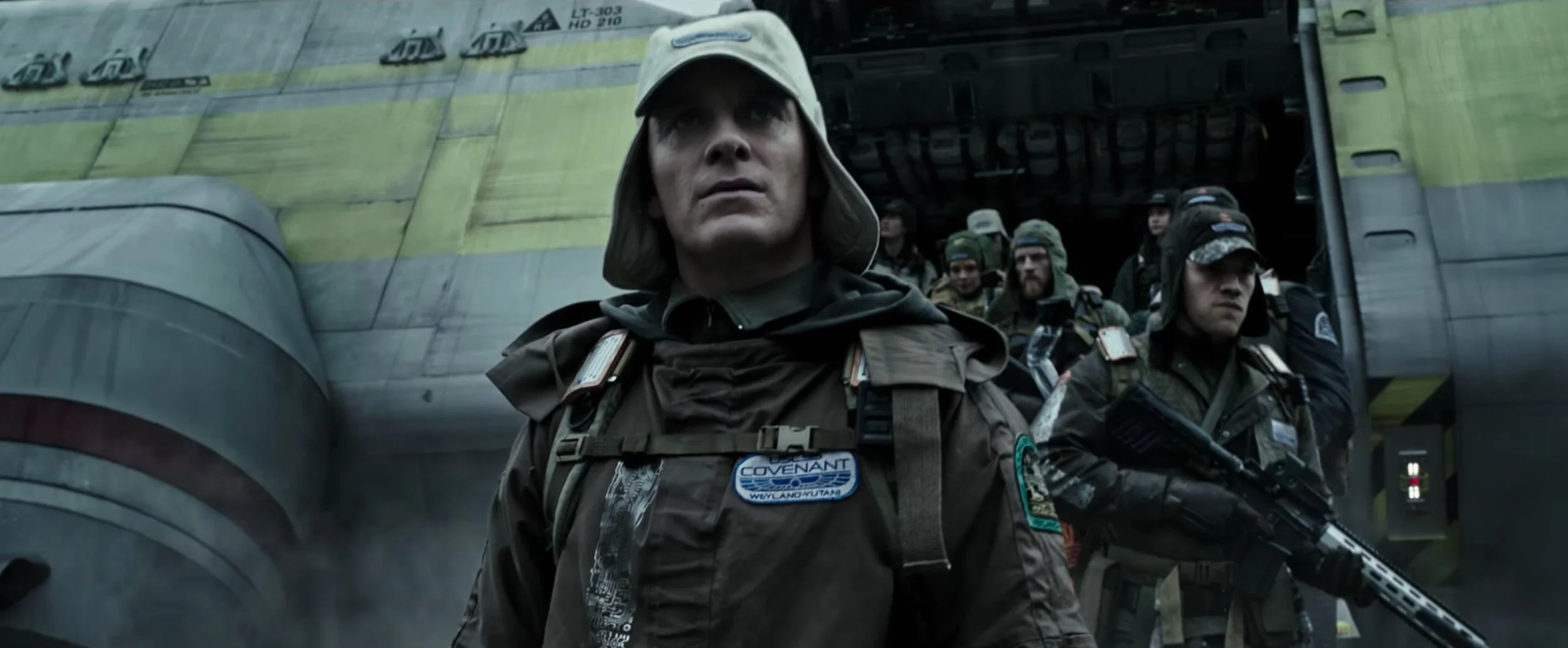
No sooner have they split up in their eerily-empty surroundings than pod-born nano-dust impregnates the least of these with the usual body-bursting aliens. The crew discovers a few familiar faces in the otherwise deserted planet, including David (Michael Fassbender) in an spirited Fassbender on Fassbender duo that Covenant thoroughly explores. David is still harboring ulterior motives and, well, it gets weird. Any more and the reader will be robbed of Covenant’s best bits.
Working from a script by John Logan (Gladiator, Spectre) and screenplay newbie Dante Harper, Ridley Scott embraces a universe outside the spacecraft. Far gone are the claustrophobic thriller or doomed exploration mission of Alien and Prometheus. Instead, we’re given a one part greatest hits creature feature and one part world-building techno-thriller.
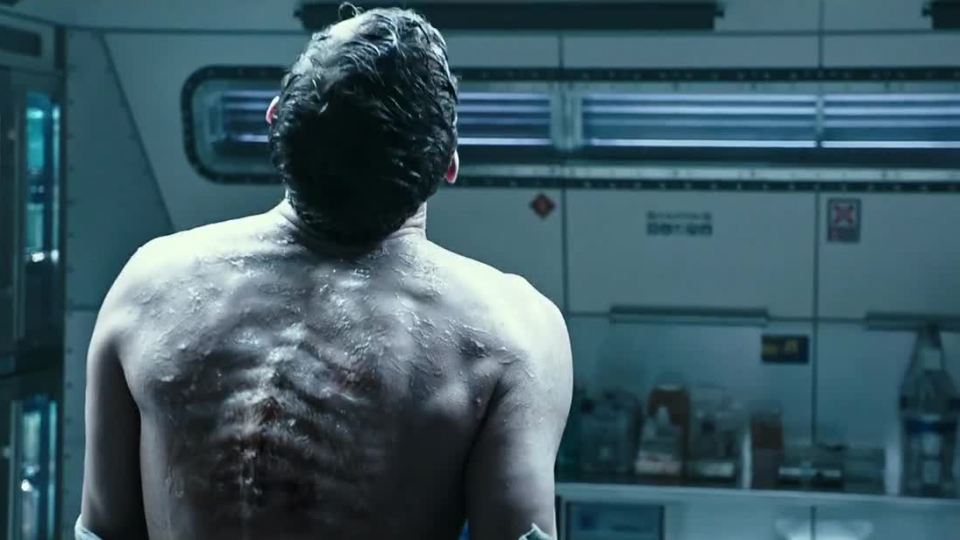
In a way, Alien: Covenant looks a lot like The Lost World: Jurassic Park, complete with its own sequence of raptors in the tall grass. As the second film in the Ridley Scott revival, Covenant may be answering to the anger of Alien fans upset at the distance between the xenomorph/neomorph-centered plots of the preceding films and the myth-building plot holes of Prometheus. During an exploration scene in the deserted engineer city, Daniels says, “There’s so much here that doesn’t make sense” as if to apologize for the confusion of Prometheus and acknowledge the strange turns Covenant takes. And for the most part the madness benefits the film’s many set pieces. There are plenty of gruesome body-hatching scenes and old-school face hugger deaths to make this writer practically giddy. And the mix of hyper-tech space ships and ancient architecture offers an expansion of Prometheus’ visual design.
In the last act of the movie, Fassbender’s character attempts to reassure a crew member, “I think if we are kind, it will be a kind world.” It is the least reassuring arrangement of words uttered in the movie and speaks directly to the thinning veil of civility (even naivety) keeping humanity from tearing itself apart. The optimism injected into the line makes it ring all the hollower. True horror is despair, not spectacle. But Alien: Covenant delivers a meal of both, with all the grotesque comforts of the franchise.
Rating: B

"Raw" Review

Justine (Garance Marillier) is a new veterinary student taking the transition from home to university a little harder than her peers. She over-drinks like everyone else, explores confusing sexual feelings and ends up on too many leering camera phones, but who hasn’t? College is the time to test the limits oflust, intoxication and academic rigor. But Justine is undergoing another type of change, one that isn’t part of rush week depravity and she’s a bit confused about whether her upper-classman sister Alexia (Ella Rumpf) will understand. After Justine wakes up in bed with her roommate near the end of the movie, she stares solemnly into the mirror like so many screen teens before her, assessing how much she’s changed. But this is not a typical coming-of-age movie and Justine is wishing that her regrets were simply carnal.
Raw is hungry for the ecstasy and ugliness of the human body. In college, when people are perhaps at their most beautiful (or at least beautifully unaged) and their urges are least restrained, the teen comedy take on fraternal excess doesn’t explicate the dangers of a hedonistic attitude. Raw sinks its teeth deep into that idea. Director Julia Ducournau nabbed honors at Cannes and Toronto for this feature-length debut that, alongside films like It Follows, Green Room, and even The Purge, push the horror genre toward an ideological craftsmanship. It’s less of a horror film than say the Babadook which held up a gothic grotesquery to lure audiences into a mature thriller about the dangers of grief. Raw is really a fable, a cannibalistic twist on the adolescent experience. Though humans are just meat-bags, Raw posits peer pressure is not a good enough reason to bow to such crude reductionisms.

As Juliet takes part in the hazing rituals of the upper-classmen, the once staunch vegetarian is pushed to eat a raw rabbit kidney. Soon after, she breaks out in a full-body rash and begins the steep descent into a carnivorous diet. Raw isn’t a buckets-of-blood grindhouse flick. It gets far more mileage out of a girl chewing on (and later regurgitating) her own hair than the bloody car wrecks that pop up throughout. It is a practical gore-fest that’s far more gristly than out-and-out brutal. The French-Belgian film doesn’t exactly belong in the canon of New French Extremity but Ducournau lingers on shocking scenes with much the same spirit of complicit punishment. Whereas Gaspar Noe’s troublesome morality could be called a social commentary, his twisted style and focus are the draw. Raw is held together by the humanity in its characters and especially the relationship between Justine and Alexia.
But just as vivid are the parallels between human and animal. The veterinary-school setting is filled with unsettling interactions between the two, such as an early scene where a group of freshman help tranquilize and transport a horse. This interaction is a normal part of vet work, but the tremendous size of the equine is an uncanny glimpse into the evolutionary power human minds wield over physically superior animals. When Juliet accidentally scissors off Alexia’s finger-tip as part of a botched Brazilian waxing (you read that correctly), their pet German Shepard comes into frame in search of a treat. We’re expecting the dog to find the severed digit, but Raw is not a movie about unsavory animal behaviors. And there is a strong argument that the film reflects the audience’s appetite for gore as much as the character’s appetite. Justine chews at the finger like a buffalo wing, in a perfect parallel to an earlier scene depicting a late-night shawarma feast. It serves the viewer more than the character. Audiences should know what they are getting into.
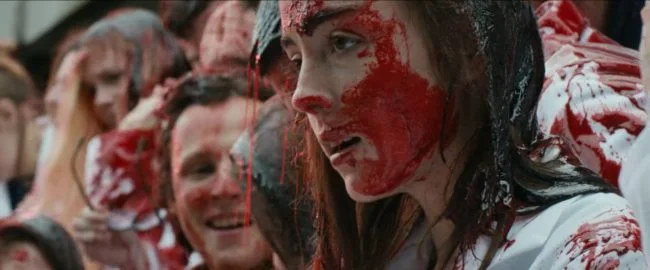
Since Raw doesn’t bring much animal cruelty to the table, Ducournau does not appear to be making a case for treating all God’s creatures better. Instead Raw serves up the unpalatable indulgences of vice and corruption that draw the characters and the audience a little closer to their own creature-ness. Raw will satisfy gore hounds and art house audiences alike but this vicious tale bucks the average viewer with ease. You probably won’t need the barf bags being passed out at screenings, but for most it’s grimy exterior will leave a bad taste in your mouth.
Grade: B