
"Gladiator II" Review: Standing In The Shadow of Its Predecessor
Twenty four years ago, the world of cinema was in a different place. Upon Gladiator’s 2000 release, CGI (computer generated imagery) was burgeoning. The film boasted of scenes of a coliseum built by a computer’s hand. A lot has changed since then. What once was done by trained professionals can be done by anyone with an app on their cell phone. This idea of a culture being shaped and moved into different directions by time is a theme within Gladiator II as well. What will become of our legacy? The statement that Maximus (Russell Crowe) made “What we do in this life echoes in eternity.” before his death, is still wrestled with here. The question is, is this legacy sequel worthy to stand with its predecessor?
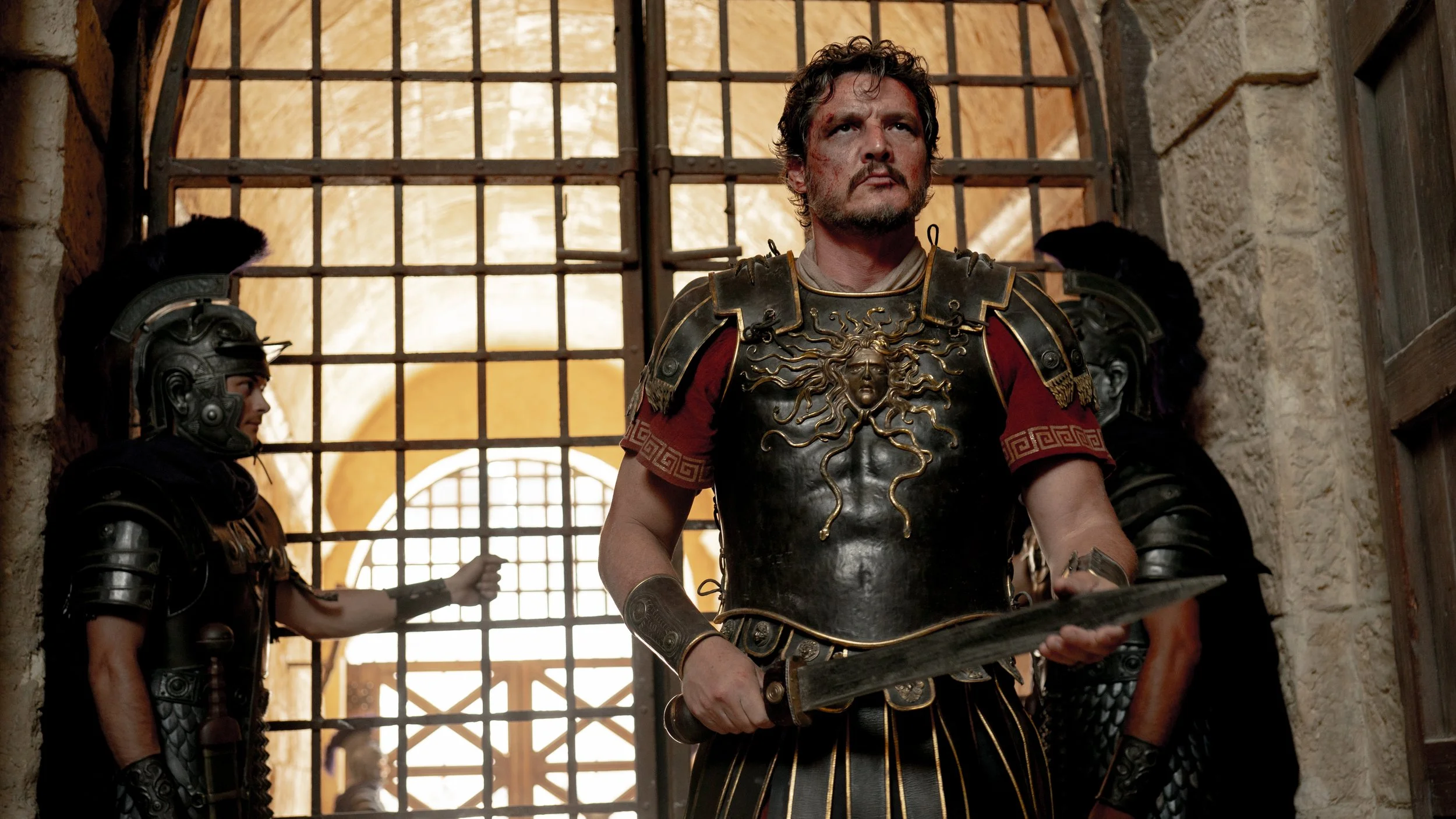
Photo Credit Cuba Scott
Copyright © 2024 PARAMOUNT PICTURES. ALL RIGHTS RESERVED.
Taking place sixteen years after the death of Maximus, a farmer-soldier named Hanno (Paul Mescal) stands between Rome and the impending conquest of his home, Numidia. Surviving the battle but losing the war makes Hanno a prisoner of war; he is sold into the gladiatorial system and shipped to Rome to become entertainment for her people. Of course, this means that he enters the system with a chip on his shoulder and a fury that burns for General Acacius (Pedro Pascal) who took away his former life and loved ones that existed in it.
Rome has changed since we last saw it. It is now governed by twin Emperors Geta (Joseph Quinn) and Caracalla (Fred Hechinger). The twins lust for blood and conquering nations has secretly driven their hero General Acacius to be tired of all the bloodshed. He and his wife, Lucilla (Connie Nielsen), the daughter of Marcus Aurelius, are conspiring to overthrow the twins. This b story is perfect for Hanno’s storyline as he is proving himself to be a fierce competitor for gladiator trader Macrinus (Denzel Washington). Hanno’s one request in exchange for giving his all for Macrinus is the head of Acacius. Thus, a race between the two desires sets course, pitted against the backdrop of three days of Coliseum games.
As different mysteries are revealed, the fading cloud of a dream that Marcus Aurelius had of Rome is continually brought to the forefront by characters. While various characters have their dream of how to achieve a better Rome, it’s clear, the current path and generation at the helm must be ousted. This is the difference between Gladiator and Gladiator II. The former had heart and conviction from a rooted place, while the latter is a shadow imprinted by its forerunner. There is a breaking point in the film in which questions being answered and plots revealed totally let’s out the steam of this engine.
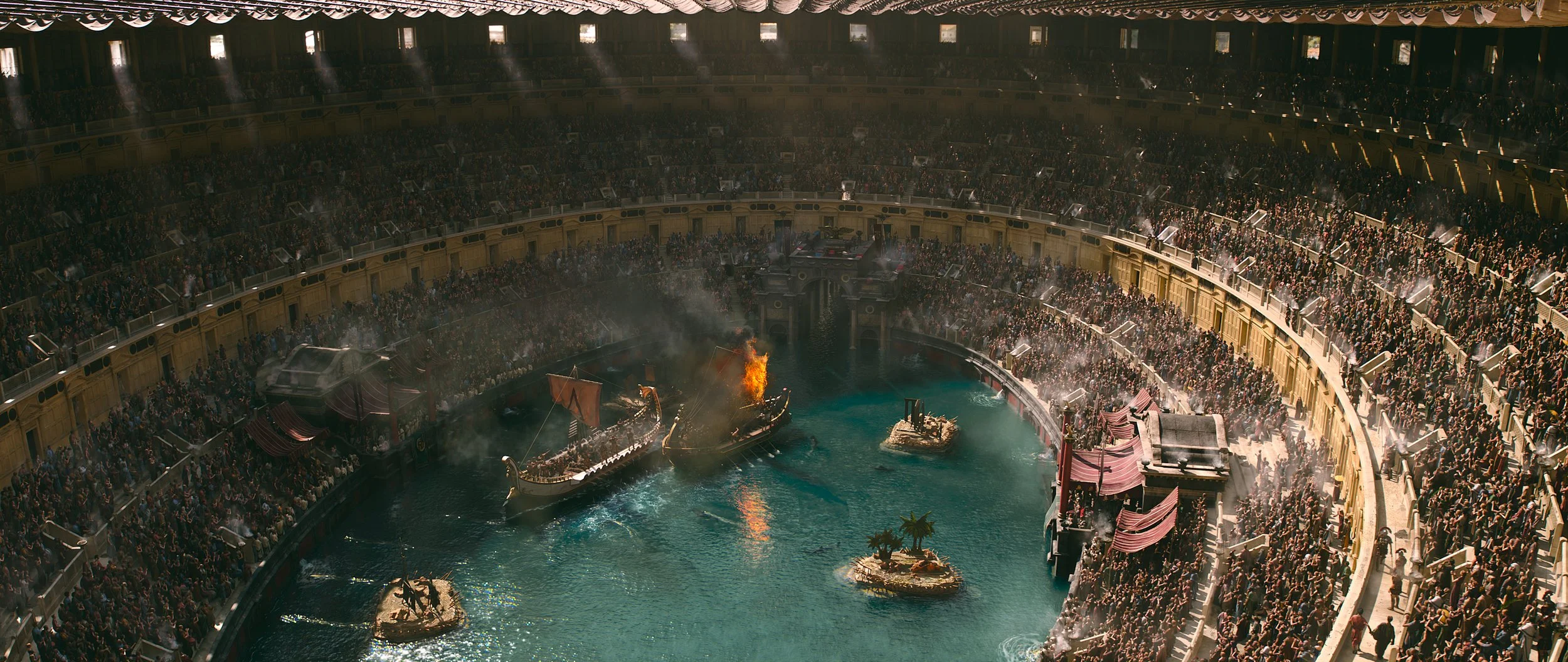
Photo Credit Paramount Pictures
That said, Gladiator II is a spectacle that should be seen on the big screen. Director Ridley Scott’s vision for this time period, the Coliseum, the games, and the bloodlust that still can be prevalent today is on full display. With fights involving baboons, sharks, a rhinoceros, and gladiators there is an impressive use of camera work and fight choreography. Costume designers David Crossman and Janty Yates craftsmanship is exquisite to look at as well.
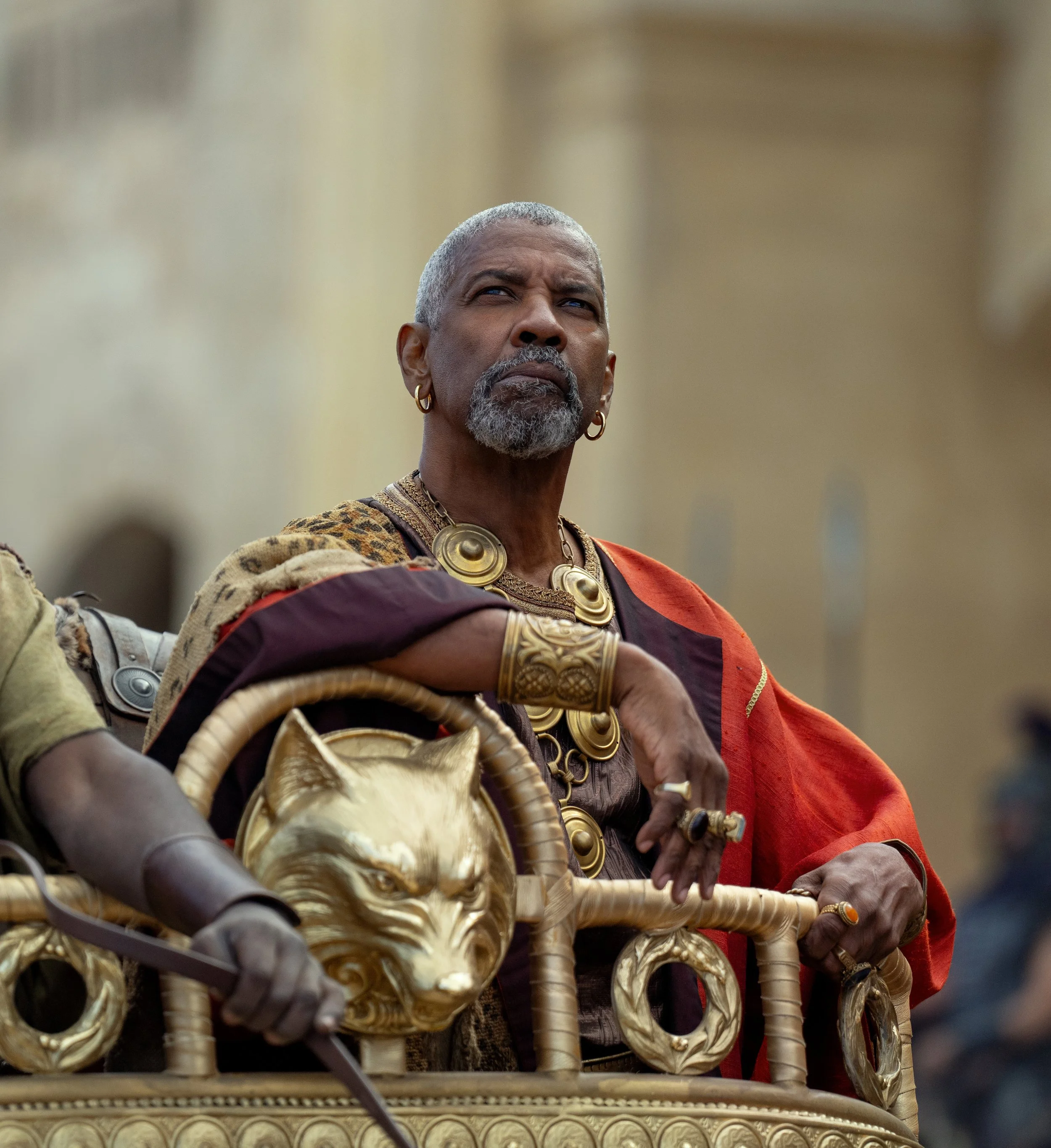
Photo Credit Aidan Monaghan
Denzel Washington’s Macrinus is certainly worth the hype. As the film moves along and we get to know his character better, his delivery of dialogue and physical gestures may afford him a supporting actor nod if the hype machine is loud enough. Either way, he is fun to watch!
Ultimately, Gladiator II, while uninspired in some ways is still an entertaining movie. Nostalgia is another character that interweaves itself in this storyline. It’s mixed into the opening credits and Harry Gregson-Williams score. It makes the film a popcorn blockbuster that will pass the time, but I’m not sure it will stand the test of time as a classic like Gladiator.
Rating: B-

"Alien: Covenant" Review
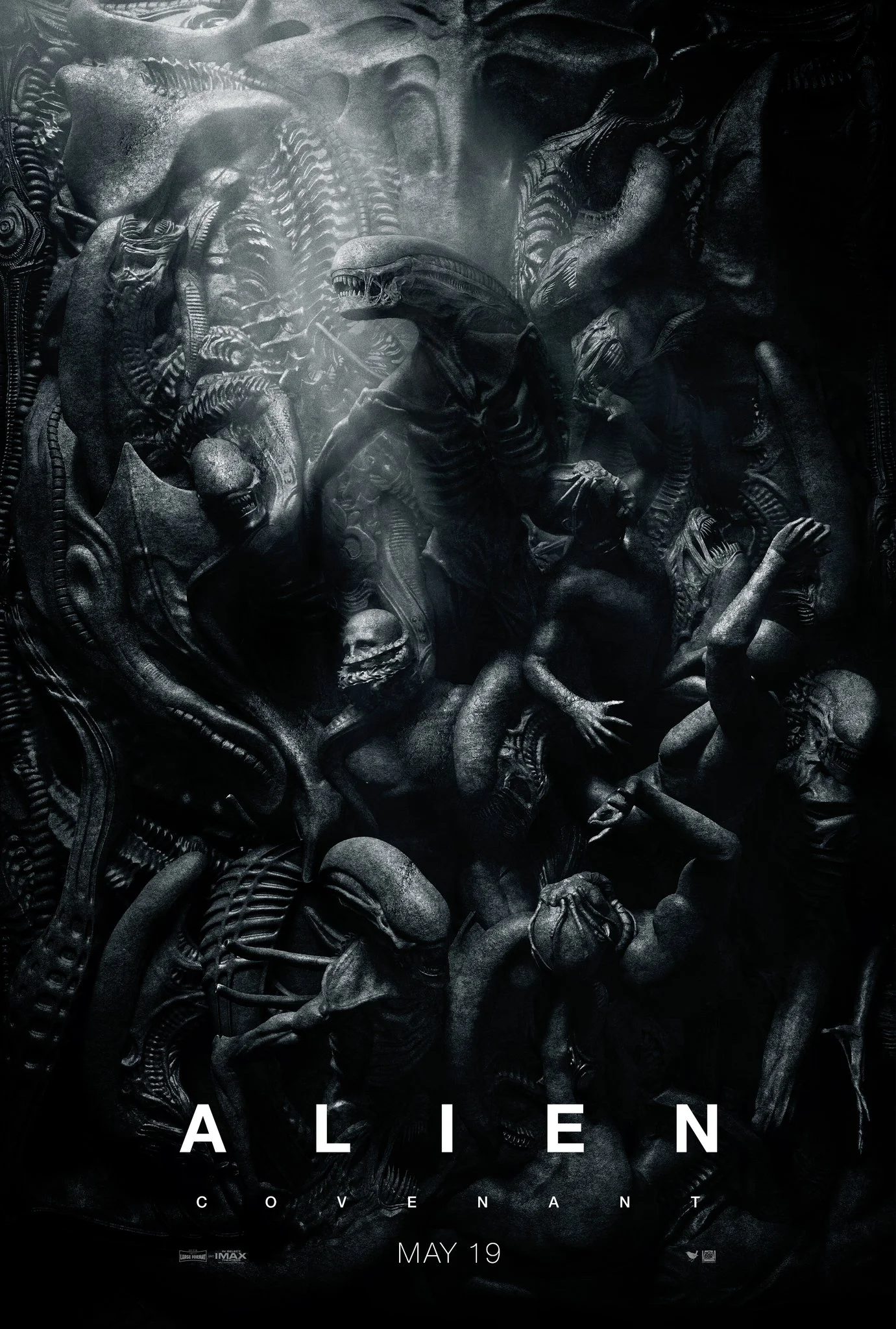
Ridley Scott may have a disdain for humanity. At least he has little affection for us. This film, for its many talented actors, is concerned visually and narratively with the non-human stars. As a result, the characters and humanity by proxy seem…well, disposable.
The newest addition to the Alien franchise opens on a conversation between synthetic, David (Michael Fassbender) and ubiquitous financier from the Weyland-Yutani Corporation, Peter Weyland (an uncredited Guy Pearce.) Weyland is a megalomaniacal creator and the Alien franchise has done a pavlovian number on the audience with the Weyland name. He commands David to play music and fetch tea, generally marveling at the product of his own genius, but David asks questions about the chain of origination that begat himself and that kind of reflection doesn’t sit well with Weyland. This sets the tone for a movie that often looks down upon the fertile homo sapiens, who are constantly looking for a savior, but won’t do the damned work of saving themselves.
But let’s backtrack. It is December 5th, 2104 and the starship Covenant is en route in colonization mission to the outer reaches of the galaxy. In tow, a crew of 15 and a payload of 2000 colonists and 1400 human embryos cryogenically stored away. The ship is a floating starter kit for humanity on the more habitable planet of Origae-6. Awake on the ship is a new synthetic, Walter, still played by the wonderfully game Michael Fassbender. Trouble begins immediately, when a random localized event (space glitch?) forces an emergency crew revival from cryogenic stasis.
Reborn into chaos and doom, the crew of the Covenant fight against fate to correct their course. Christopher Oram (Billy Crudup) assumes command, but his rigid faith-based leadership quickly isolates members of the crew and he struggles to unite the team or even properly memorialize their fallen captain. The rest of the crew are mostly coupled up, including Branson’s partner Daniels (Katherine Waterston), for population purposes narratively and stakes for the audience.
Meanwhile, while fixing external damage to the ship, crew member Tennessee (Danny McBride in a Danny McBride role) picks up a ghostly transmission from a nearby planet. As the crew is not eager to get back into their cryo-coffins, Oram decides that this planet is likely as good as Origae-6 for colonization. He leads all but three of the ill-fated crew on a scouting mission.
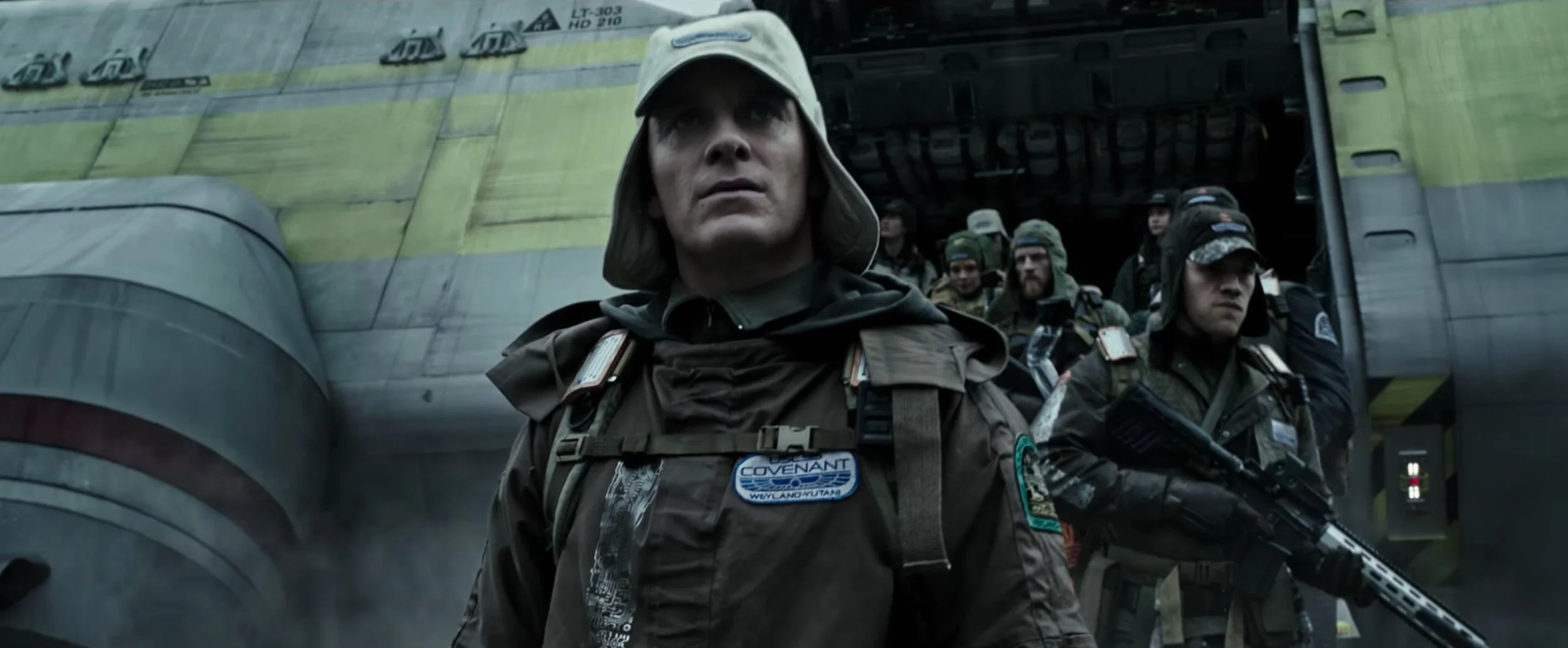
No sooner have they split up in their eerily-empty surroundings than pod-born nano-dust impregnates the least of these with the usual body-bursting aliens. The crew discovers a few familiar faces in the otherwise deserted planet, including David (Michael Fassbender) in an spirited Fassbender on Fassbender duo that Covenant thoroughly explores. David is still harboring ulterior motives and, well, it gets weird. Any more and the reader will be robbed of Covenant’s best bits.
Working from a script by John Logan (Gladiator, Spectre) and screenplay newbie Dante Harper, Ridley Scott embraces a universe outside the spacecraft. Far gone are the claustrophobic thriller or doomed exploration mission of Alien and Prometheus. Instead, we’re given a one part greatest hits creature feature and one part world-building techno-thriller.
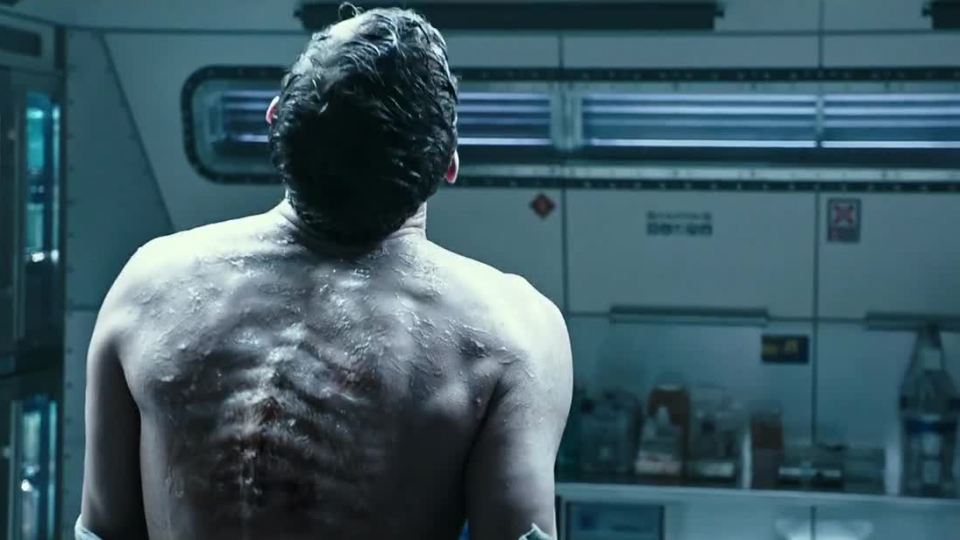
In a way, Alien: Covenant looks a lot like The Lost World: Jurassic Park, complete with its own sequence of raptors in the tall grass. As the second film in the Ridley Scott revival, Covenant may be answering to the anger of Alien fans upset at the distance between the xenomorph/neomorph-centered plots of the preceding films and the myth-building plot holes of Prometheus. During an exploration scene in the deserted engineer city, Daniels says, “There’s so much here that doesn’t make sense” as if to apologize for the confusion of Prometheus and acknowledge the strange turns Covenant takes. And for the most part the madness benefits the film’s many set pieces. There are plenty of gruesome body-hatching scenes and old-school face hugger deaths to make this writer practically giddy. And the mix of hyper-tech space ships and ancient architecture offers an expansion of Prometheus’ visual design.
In the last act of the movie, Fassbender’s character attempts to reassure a crew member, “I think if we are kind, it will be a kind world.” It is the least reassuring arrangement of words uttered in the movie and speaks directly to the thinning veil of civility (even naivety) keeping humanity from tearing itself apart. The optimism injected into the line makes it ring all the hollower. True horror is despair, not spectacle. But Alien: Covenant delivers a meal of both, with all the grotesque comforts of the franchise.
Rating: B
"The Martian" Review
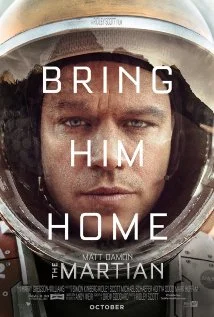
Space seems to be having a moment. It’s always been there, in real life and in the movies, but it seems 2013’s “Gravity” took space to a whole new level cinematically. If “Gravity” was Alfonso Cuaron’s call to the final frontier, The Martian is Ridley Scott’s response and an attempt to reclaim his territory after 2012’s not so critically acclaimed “Prometheus”. Mix in Christopher Nolan’s “Interstellar” (2014) and we’ve got ourselves a little trinity of (recent) epic space dramas. “The Martian" stands out for its own reasons, but it also fits right in.
Astronaut Mark Watney (Matt Damon) is all alone. Left behind on Mars after being separated from his crew during an emergency evacuation, Mark is presumed dead by his fellow crew mates and NASA. This all changes when satellite images from Mars prove Mark is very much alive and somehow surviving on the barren planet. The rescue mission begins, but it will be no easy feat. Time, funding and Mars’ atmosphere are all working against every effort to bring Mark home.
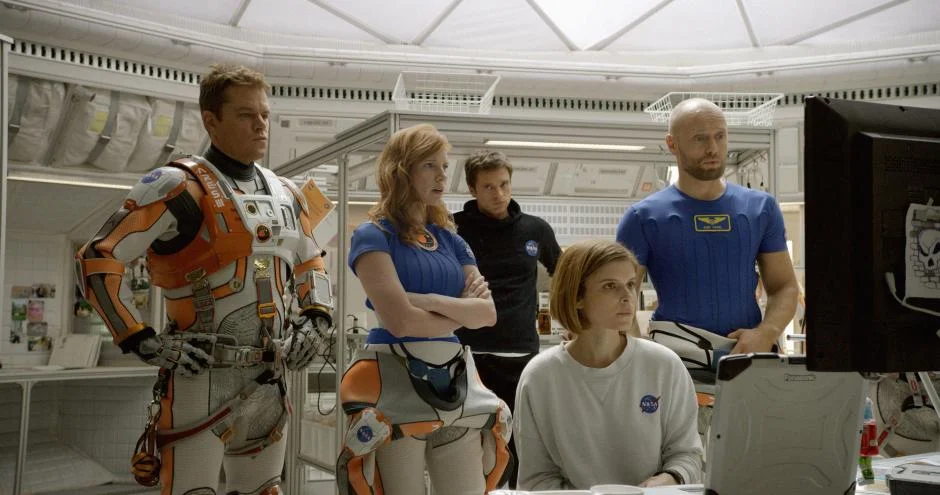
“The Martian” essentially takes place in three different locations. There is Mark’s Mars, a vast rust-colored landscape captured through sweeping extreme wide shots. Next, there’s Planet Earth, which is essentially the various offices and airplane hangars of NASA. And finally, there is space — where Mark’s crew is aboard a shuttle, completing their next mission. This separation works in favor of the film in that we stay in each area just long enough to build a decent amount of anticipation for our return to the next location. This is especially important considering the isolation of Damon’s performance on Mars. With no one to interact with, Damon’s Mark is a one-man show. He cracks jokes, airs his frustrations and explores his surroundings all by himself. While Damon is fun to watch, Matt Damon all by himself does not a movie make. The plot points presented in the other two locations (NASA and the shuttle) give Mark’s solo mission the tension it needs to move forward.

A major setback for Mark on Mars eventually creates a sense of much-needed urgency for the film and for Mark’s rescue mission. Mark has been able to “science the sh*t” out of his time on the planet, but in the end his stay on Mars becomes a life or death situation. A cooky, so-crazy-it-could-work plan is playfully delivered by a nerded-out Donald Glover and NASA is given the choice to either abandon Mark or put the lives of his crew members in danger in order to rescue him.
For an almost two and a half hour long film, The Martian does provide enough thrills and nerd-talk to satisfy the space movie lover in all of us. And on a much deeper level, there is some interesting commentary on our society’s dependence on technology — Mark is presumed dead because the technology on his suit fails to communicate his vital signs to his team — which would make for a fantastic college paper. Personally though, Armageddon still stands as this reviewer’s top film about space.