
"Black Widow" Review: The Long Awaited MCU Espionage Thriller
Black Widow opens with arguably one of the top 3 openings in a Marvel film to date! Much like its television shows, Black Widow doesn’t feel like most Marvel films. It’s an espionage thriller with a mix of super heroes. It start strong, lulls, and finds its footing again. A solid entry in the development of a long-overdue solo film for Natasha Romanoff (Scarlett Johansson).

The film is a snapshot of what happened after the battle of Leipzig/Halle Airport in Captain America: Civil War. It starts further back in Natasha’s childhood, setting up an understanding of her psyche and her family dynamics. The opening sequence is equal parts you name it Spielberg kids scene and Jason Bourne action. From there, the film is off to the races sending us to present post-battle life.
While this film struggled to the release finish line, the film’s secret weapon is its ensemble cast. Florence Pugh’s entrance into the Marvel Cinematic Universe (MCU) is worth the film being created alone. As Natasha’s sister, Yelena, Pugh establishes herself as a take no prisoners, dark humor, force to be reckoned with. There is no doubt that she will make a mark and quickly become a fan favorite in future films. David Harbour and Rachel Weisz bring the gravity and nuance to their roles as Natasha’s parents. Harbour’s comic timing as a dad reliving his greatest battles/missions is reminiscent of Mr. Incredible from The Incredibles, but a real life version.

There are some pacing issues with this stand alone film. Somewhere in act two the film comes to a halt as it settles into one of its themes of family. While the moment provides reflection and character building, it’s hard not to notice the difference in pace and change of tone. It’s as though we can see writer, Eric Pearson, step into a hole and try to write his way out without thinking of how to skip the hole in the first place.
Ultimately, Black Widow is a fun, espionage installment in the MCU with big set pieces and action sequences that give a nice curtain-call for Romanoff. We know her fate, but now we know a little more of her backstory. Most importantly, she has a sister that we’ll see a lot more of!
Rating: B-

"The Light Between Oceans" Review
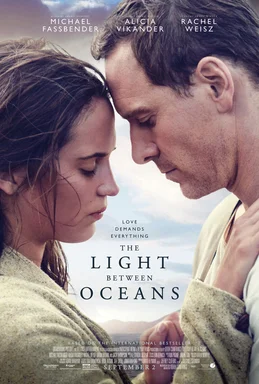
“I’m just looking to get away from things for a little while,” remarks Tom Sherbourne (Michael Fassbender), a single man and veteran of the Great War. Sherbourne has been hired for a six-month stint at Janus lighthouse, whose caretaker has taken a convalescent leave. The name of the lighthouse, taken from the dual-faced Roman god of beginnings and endings, lends its name to this movie and the novel it’s adapted from. The lonely lighthouse, while only a few decades old, carries the faiths of its patron town. Residents hope that the beacon will “guide wealth and prosperity” to their edge of the map.
Such is our introduction to The Light Between Oceans, a deceptively dark, symbolist tale about the weight of postwar guilt and parental loss. The film is ultimately a redemptive one. However, it takes more than a few narrative bends before arriving at final conflict between the rightful parent of a baby girl and the two who have raised her to a toddler from infancy.

For the first half of the movie, Director Derek Cianfrance (Blue Valentine, The Place Beyond the Pines) delivers a thoughtful, beautiful, even sensual movie about love as a redeeming and renewing force. Alicia Vikander’s Isabel Graysmark quickly takes a liking to Tom. While it is not clear whether Isabel is simply attracted to Tom or sees a wounded man to save, the sparks between them ignite a flame and they are married. This is the first of several quick turns the film makes in order to get to the central conflict.
With The Light Between Oceans, Cianfrance breezes through the couple’s brief seaside courtship and two harrowing miscarriages, the latter of which foreshadows the doomed narrative ahead, in order to balance happiness and companionship atop the weary Tom’s back. No sooner than Tom has literally wrestled with the grave markers of his lost children, does a newborn arrive on the shore, deceased father in tow. Do they report the incident as every other meticulous entry in Tom’s log, or is this a divine sort of coincidence for a childless couple?
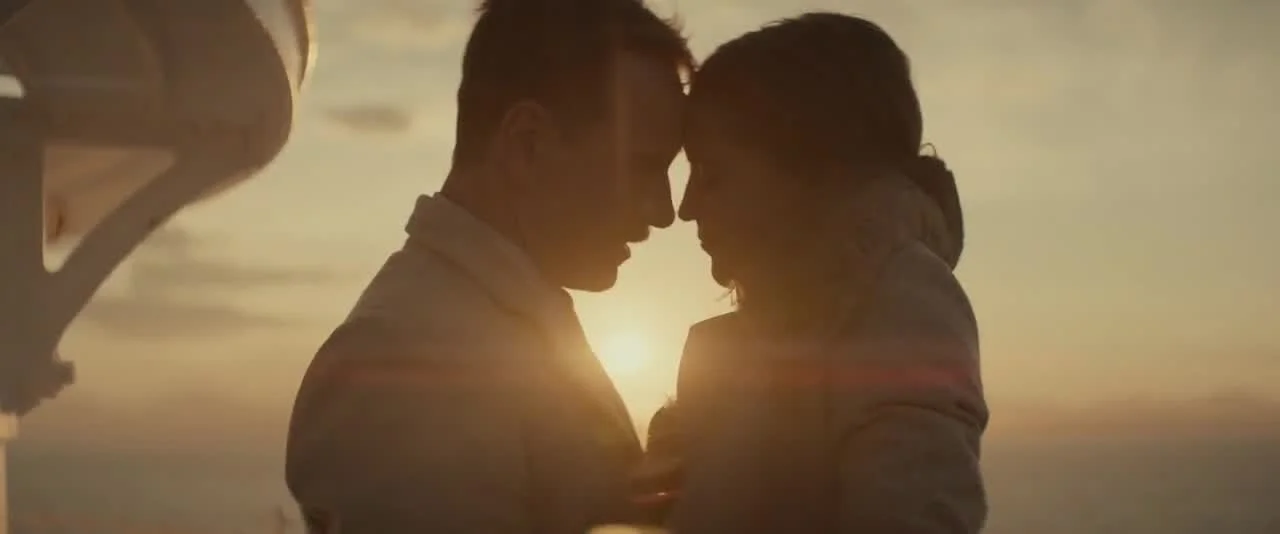
Adam Arakpaw’s cinematography captures the breathtaking isolation and splendor of the lighthouse as well as the intimacy of love and loss. Alexandre Desplat’s piano-driven score is equally brilliant, filled with moments of true uncanny to demonstrate the connections between hope and despair. As the movie drifts on, that spare beauty is traded in for heavy plotting and one beat-you-over-the-head biblical allegory. Some of this could be forgiven, but the tacked-on conclusion guides its vessel right into the rocks.
The Light Between Oceans also offers committed performances from leads Rachel Weisz, Michael Fassbender and Alicia Vikander. Fassbender is a particular chameleon, despite always looking like himself. In that way, The Light Between Oceans disappoints by bumbling a trifecta of excellent cinematography, stirring score and strong acting. This is a film too accomplished to ignore, but too poorly plotted to satisfy.
Rating: C+