
"Dark Phoenix" Review: Bring the Reboot Already

The real hero in Dark Phoenix is Hans Zimmer. His score elevates the film to a darker, more somber mood. It’s just unfortunate that the writing doesn’t quite match the composition, because if it had, this would be an excellent final bow!
The X-Men have elevated themselves to friends of humanity thanks to Professor Charles Xavier’s (James McAvoy) crafting. After a mission to space goes awry, the team is sent up to retrieve the astronauts. Of course, no mission can go perfectly and rather than letting the solar flare hit her team, Jean Grey (Sophie Turner) absorbs it. Fortunately, she doesn’t die, but unfortunately, it wasn’t a solar flare she absorbed either. As time proves, it’s something more powerful.
This franchise is known to have horrible or half baked villains. Enter Vuk (Jessica Chastain). I wish I could tell you what she is and the depth of her power, but the movie didn’t tell me. So all I know is that she’s an alien life form who came to Earth with what was left of her fledgling empire and took the body of a bleach blonde woman. Their goal is to retrieve the power that went in to Jean, rebuild on Earth and they will stop at nothing to get it.
Where Dark Phoenix soars is in the action sequences. Seeing certain characters’ power on display is entertaining. Magneto (Michael Fassbender) shines with some of the sheer might he possesses. Nightcrawler (Kodi Smit-McPhee) gets to go ham for a moment of line of sight teleportation at it’s finest. The climactic train sequence is definitely of note.

The problem that we’ve come to expect with these films is its character development. You just don’t care. Jean’s backstory is shown, but her family is nothing more than a setup. Quite frankly, for this to be the classic ascension of Jean to the Phoenix, she barely gets to do much on screen. There was an opportunity to make her really dark, but that didn’t happen. They could have put her full power on display. She can wipe out planets in the comics for goodness sake! Instead, you could call her the Accidental Phoenix in this film because many of the bad things she does aren’t necessarily on purpose. They come from an “oops I did it again” motive. Wins and losses are just beats on a screenwriter’s page here. The big bad Vuk is certainly just an antagonist in the film whose team seems invincible without explanation.
I’ll give co-writer/director Simon Kinberg credit for trying here. This was an effort in the right direction. The tone felt right, the costume design tried, the cast tried, Hans Zimmer infused his superhuman score, but alas, they just couldn’t get this up the hill of good filmmaking. Did I mention Hans Zimmer’s score is awesome? It’s entertaining, but if you wait to catch it when it’s streaming you’ll probably do yourself and your wallet a favor this weekend!
Rating: C-

"Alien: Covenant" Review
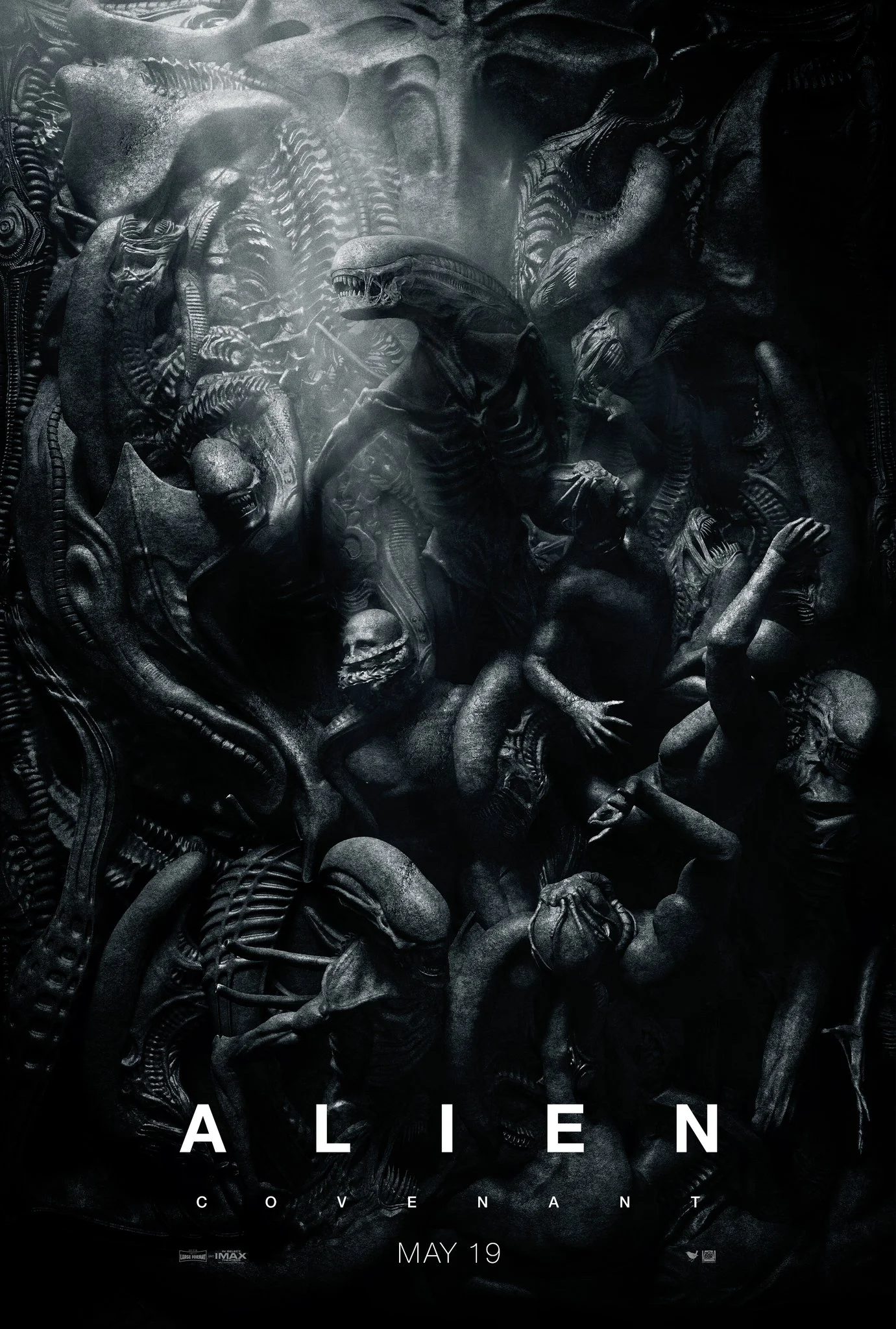
Ridley Scott may have a disdain for humanity. At least he has little affection for us. This film, for its many talented actors, is concerned visually and narratively with the non-human stars. As a result, the characters and humanity by proxy seem…well, disposable.
The newest addition to the Alien franchise opens on a conversation between synthetic, David (Michael Fassbender) and ubiquitous financier from the Weyland-Yutani Corporation, Peter Weyland (an uncredited Guy Pearce.) Weyland is a megalomaniacal creator and the Alien franchise has done a pavlovian number on the audience with the Weyland name. He commands David to play music and fetch tea, generally marveling at the product of his own genius, but David asks questions about the chain of origination that begat himself and that kind of reflection doesn’t sit well with Weyland. This sets the tone for a movie that often looks down upon the fertile homo sapiens, who are constantly looking for a savior, but won’t do the damned work of saving themselves.
But let’s backtrack. It is December 5th, 2104 and the starship Covenant is en route in colonization mission to the outer reaches of the galaxy. In tow, a crew of 15 and a payload of 2000 colonists and 1400 human embryos cryogenically stored away. The ship is a floating starter kit for humanity on the more habitable planet of Origae-6. Awake on the ship is a new synthetic, Walter, still played by the wonderfully game Michael Fassbender. Trouble begins immediately, when a random localized event (space glitch?) forces an emergency crew revival from cryogenic stasis.
Reborn into chaos and doom, the crew of the Covenant fight against fate to correct their course. Christopher Oram (Billy Crudup) assumes command, but his rigid faith-based leadership quickly isolates members of the crew and he struggles to unite the team or even properly memorialize their fallen captain. The rest of the crew are mostly coupled up, including Branson’s partner Daniels (Katherine Waterston), for population purposes narratively and stakes for the audience.
Meanwhile, while fixing external damage to the ship, crew member Tennessee (Danny McBride in a Danny McBride role) picks up a ghostly transmission from a nearby planet. As the crew is not eager to get back into their cryo-coffins, Oram decides that this planet is likely as good as Origae-6 for colonization. He leads all but three of the ill-fated crew on a scouting mission.

No sooner have they split up in their eerily-empty surroundings than pod-born nano-dust impregnates the least of these with the usual body-bursting aliens. The crew discovers a few familiar faces in the otherwise deserted planet, including David (Michael Fassbender) in an spirited Fassbender on Fassbender duo that Covenant thoroughly explores. David is still harboring ulterior motives and, well, it gets weird. Any more and the reader will be robbed of Covenant’s best bits.
Working from a script by John Logan (Gladiator, Spectre) and screenplay newbie Dante Harper, Ridley Scott embraces a universe outside the spacecraft. Far gone are the claustrophobic thriller or doomed exploration mission of Alien and Prometheus. Instead, we’re given a one part greatest hits creature feature and one part world-building techno-thriller.
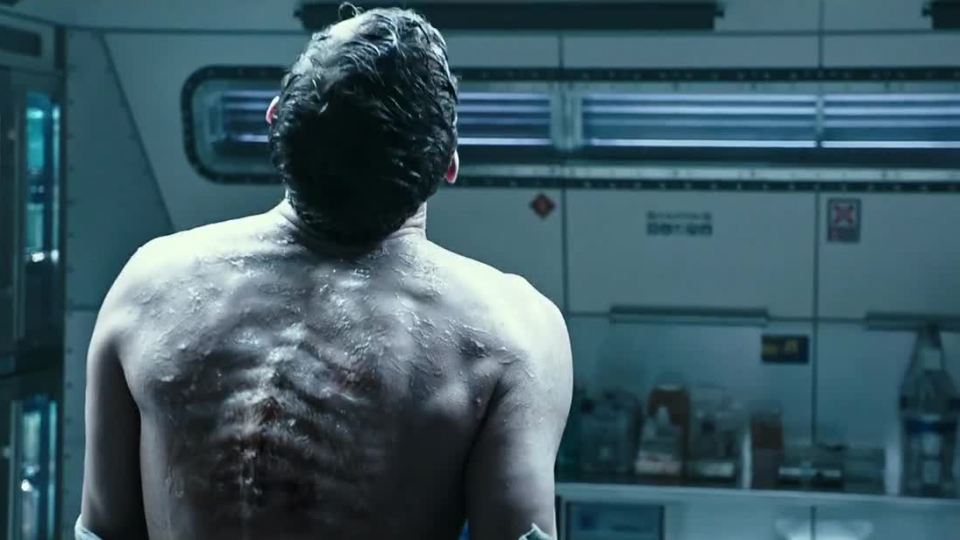
In a way, Alien: Covenant looks a lot like The Lost World: Jurassic Park, complete with its own sequence of raptors in the tall grass. As the second film in the Ridley Scott revival, Covenant may be answering to the anger of Alien fans upset at the distance between the xenomorph/neomorph-centered plots of the preceding films and the myth-building plot holes of Prometheus. During an exploration scene in the deserted engineer city, Daniels says, “There’s so much here that doesn’t make sense” as if to apologize for the confusion of Prometheus and acknowledge the strange turns Covenant takes. And for the most part the madness benefits the film’s many set pieces. There are plenty of gruesome body-hatching scenes and old-school face hugger deaths to make this writer practically giddy. And the mix of hyper-tech space ships and ancient architecture offers an expansion of Prometheus’ visual design.
In the last act of the movie, Fassbender’s character attempts to reassure a crew member, “I think if we are kind, it will be a kind world.” It is the least reassuring arrangement of words uttered in the movie and speaks directly to the thinning veil of civility (even naivety) keeping humanity from tearing itself apart. The optimism injected into the line makes it ring all the hollower. True horror is despair, not spectacle. But Alien: Covenant delivers a meal of both, with all the grotesque comforts of the franchise.
Rating: B

"The Light Between Oceans" Review
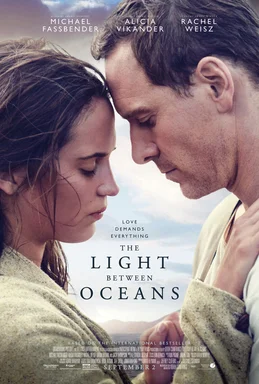
“I’m just looking to get away from things for a little while,” remarks Tom Sherbourne (Michael Fassbender), a single man and veteran of the Great War. Sherbourne has been hired for a six-month stint at Janus lighthouse, whose caretaker has taken a convalescent leave. The name of the lighthouse, taken from the dual-faced Roman god of beginnings and endings, lends its name to this movie and the novel it’s adapted from. The lonely lighthouse, while only a few decades old, carries the faiths of its patron town. Residents hope that the beacon will “guide wealth and prosperity” to their edge of the map.
Such is our introduction to The Light Between Oceans, a deceptively dark, symbolist tale about the weight of postwar guilt and parental loss. The film is ultimately a redemptive one. However, it takes more than a few narrative bends before arriving at final conflict between the rightful parent of a baby girl and the two who have raised her to a toddler from infancy.

For the first half of the movie, Director Derek Cianfrance (Blue Valentine, The Place Beyond the Pines) delivers a thoughtful, beautiful, even sensual movie about love as a redeeming and renewing force. Alicia Vikander’s Isabel Graysmark quickly takes a liking to Tom. While it is not clear whether Isabel is simply attracted to Tom or sees a wounded man to save, the sparks between them ignite a flame and they are married. This is the first of several quick turns the film makes in order to get to the central conflict.
With The Light Between Oceans, Cianfrance breezes through the couple’s brief seaside courtship and two harrowing miscarriages, the latter of which foreshadows the doomed narrative ahead, in order to balance happiness and companionship atop the weary Tom’s back. No sooner than Tom has literally wrestled with the grave markers of his lost children, does a newborn arrive on the shore, deceased father in tow. Do they report the incident as every other meticulous entry in Tom’s log, or is this a divine sort of coincidence for a childless couple?

Adam Arakpaw’s cinematography captures the breathtaking isolation and splendor of the lighthouse as well as the intimacy of love and loss. Alexandre Desplat’s piano-driven score is equally brilliant, filled with moments of true uncanny to demonstrate the connections between hope and despair. As the movie drifts on, that spare beauty is traded in for heavy plotting and one beat-you-over-the-head biblical allegory. Some of this could be forgiven, but the tacked-on conclusion guides its vessel right into the rocks.
The Light Between Oceans also offers committed performances from leads Rachel Weisz, Michael Fassbender and Alicia Vikander. Fassbender is a particular chameleon, despite always looking like himself. In that way, The Light Between Oceans disappoints by bumbling a trifecta of excellent cinematography, stirring score and strong acting. This is a film too accomplished to ignore, but too poorly plotted to satisfy.
Rating: C+