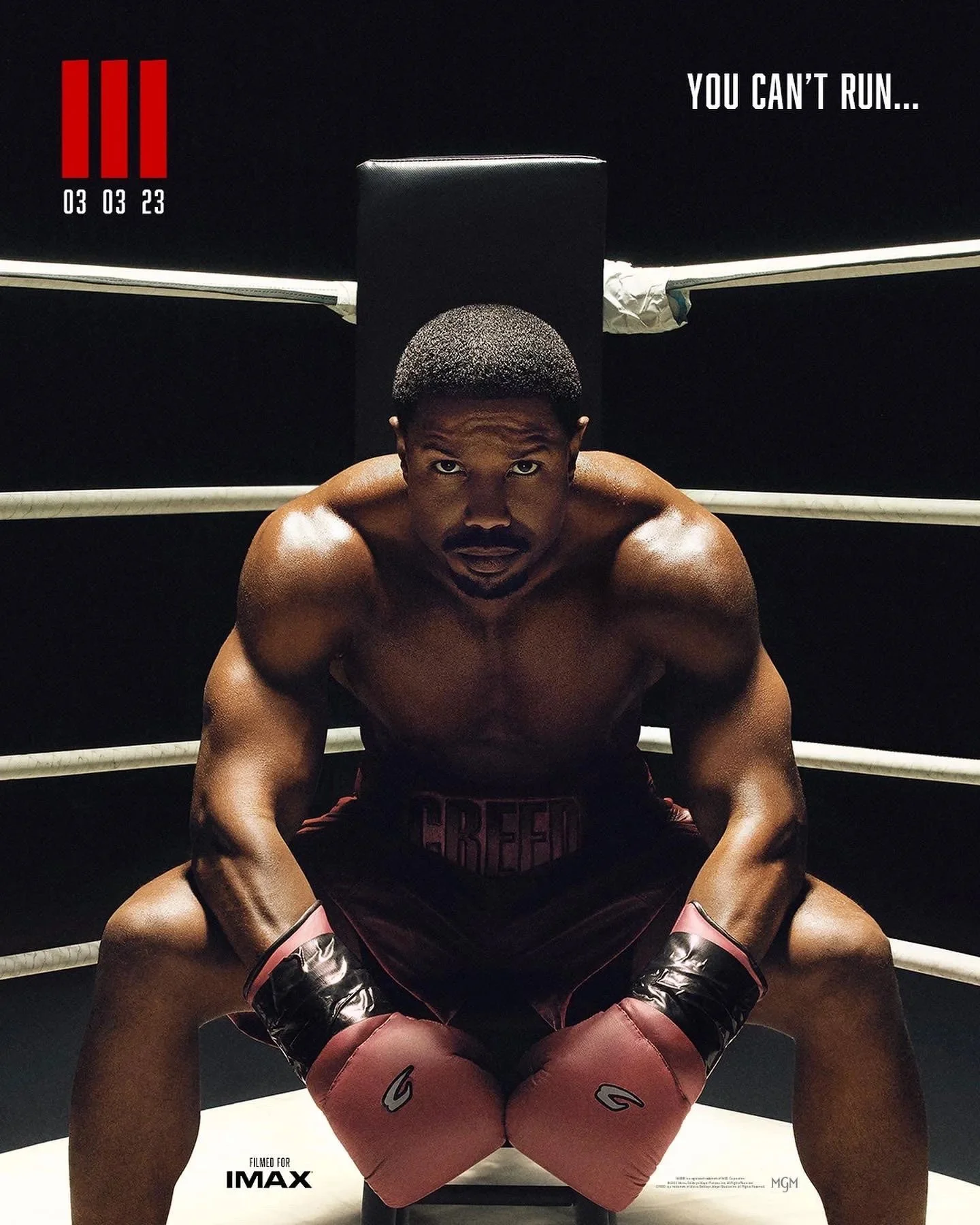
"Creed III" Review: The Message in The Whisper
In 1 Kings YHWH speaks to Elijah in a whisper after an earthquake and a fire. Now, Creed III is not a Biblical epic nor am I putting it on that level. I’m only using that example to illustrate how it speaks in a whisper if you can see past the boxing action and grudge match rivalry, and the film did speak to my soul. It lands on a poignant character drama with themes of overcoming trauma, being emotionally vulnerable, letting go of grudges and of course, the underdog story we’ve come to love.
The film picks up at a time where Adonis (Michael B. Jordan) has decided to step away from the sport while he’s on top. No sooner does he do that than an old friend, Damian Anderson (Jonathan Majors) comes back into his life. Damian has been locked up for the past eighteen years. He’s watched Adonis’s meteoric rise to a position he feels should have been his. How their history is intertwined is a major key to the story.
This is a by-the-numbers Creed movie, infused with intimacy and originality that makes the film stand out. You get what you would expect but it continually strives to slip the predictable as well. From a technical perspective, Jordan (in his directorial debut) finds a way to show boxing visually from a fresh point of view. He uses the camera, sound and fight choreography to allow us to see the fight but step into the mentality of the fighter in the present moment of it. This is seen throughout the film but is beautifully executed in the final act.

Jonathan Majors is showing that he is a force to be reckoned with on screen. His physicality of Dame in the film is like a character choice from a Kurosawa picture. He has certain ticks that he repeats throughout the film that embody his raw rage. He’s carrying eighteen years of baggage internally and it comes out in his voice, movement and how he makes eye contact. He’s constantly studying. Jordan is serviceable as Adonis and gives a nuanced nod to being an aged fighter. Tessa Thompson gives Bianca a soul. Many times, the “wife” can be lost in the film as a side character, but here she is a present, integral part of Adonis’s life. Mila Davis-Kent is a welcomed addition as Amara Creed. Amara uses ASL to communicate and the relationship with her parents is beautiful.
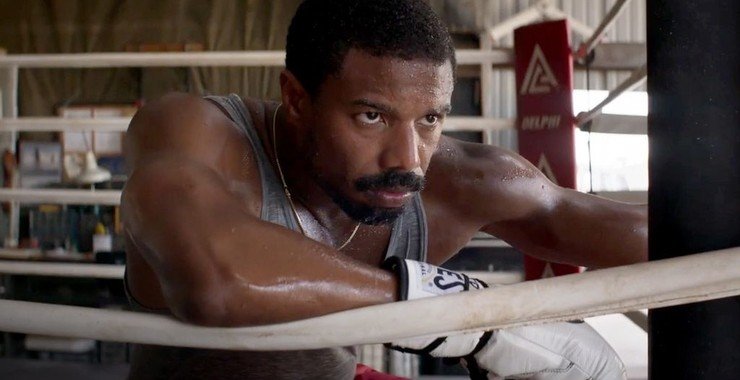
Some may note the lack of a certain figure in this film. However, I think it’s intentional. Sylvester Stallone and the shadow of Rocky has been in the first two films. This installment allows Adonis Creed to make a name for himself. Ties have not been cut, and while Rocky’s absence is noticed it certainly doesn’t hinder the movie in anyway.
Whether you are looking for entertainment at the theater or dealing with middle aged thoughts and issues, this movie delivers on all levels. We’re reminded that at the heart of every Creed film, there is an intimate, dramatic story that is universally understood. You just might have to catch the message in the whisper!
Rating: A

"The Harder They Fall" Review: A Refreshing Western Genre Entry
The Harder They Fall is a stylish, fully realized vision from co-writer/director Jeymes Samuel. Rooted in the western genre it borrows French New Wave characteristics as well. With a stellar cast, engaging dialogue, and a bumpin’ soundtrack, this movie is not only an entertaining watch but memorable as well. With a predominately black cast, the film tells a fictional, swagged-out tale of real-life black cowboys who once roamed the American West.
The film starts out giving us the backstory of Nat Love (Jonathan Majors) as a child. After witnessing the murder of his parents and receiving a scar from Rufus Buck (Idris Elba), we find Nat as an adult years later on the path to finishing his revenge. Layered through this journey we’re introduced to Mary Fields (Zazie Beets), Bass Reeves (Delroy Lindo), Trudy Smith (Regina King), and Cherokee Bill (Lakeith Stanfield) amongst other notable/familiar faces. That’s about all I’ll reveal as far as the plot goes because how the story unfolds is where so much of the enjoyment lies.

There are way too many beautiful shots to talk about in this film but let’s dig into a couple. In a scene where Cherokee Bill is introduced to us, he slowly glides down the center of the train, center framed while the rest of the gang is blocked by his head. He gives a young boy an alternative telling him to “put the gun down or we’ll kill everyone on this train”. When no movement is made, Bill draws his weapon and simultaneously arms from fellow gang members shoot out of his head in the background. This camera placement and blocking of the actors conveys the danger while showing us in one shot, a stylistic but thoughtful use of framing. This is consistent throughout the film as Samuel uses his camera to show instead of tell.

Samuel takes his framing even further with the use of music and sound. Whether it’s pushing in on a character to the thump of a gun hitting the floor or the kick of a drum in the soundtrack, there is intentionality on full display. Two percussion hits reveal one character behind another in step with a camera move to the right. Samuel’s chucking of conventional framing and attention to the fact that we, the audience, are aware we’re watching a movie, has French New Wave written all over it but shows his creativity in constructing a movie that draws on western genre traits while being refreshingly unique.
Cinematographer, Mihai Malaimare Jr. (The Master, Jojo Rabbit) adds his gift of painting with light to the film. The colors in each scene are vibrant while shifting from cool to warm temperatures with ease. Understanding when to implement the shift in palettes may be missed by the average viewer, but it builds this story to perfection. When a character tells something from their past, warm colors are used to bolster the vulnerability of discussing an old memory.
The dialogue in this film is handled masterfully in its delivery from each main cast member. Silence is used where it’s needed to allow the visuals of the film to speak for themselves. If someone speaks, it's important to the forward progression of the film’s storytelling. Otherwise, nothing needs to be said. The southern drawl or New Orleans accent of characters not only rings authentic but serves as a layer to this delicious cake of a film. Each cast member gives nuance and life to their role. To highlight one individual performance would slight this ensemble of no weak links. The soundtrack of the film fills in the role of an additional, unseen character, telling a part of this tale. Turn on the subtitles and you’ll see the lyrics align perfectly with each scene they are heard in.
At a two hour and ten minute running time, you won’t notice it. The Harder They Fall is engaging from start to finish and if we got more from this world we’d be lucky! Grab your popcorn and turn on Netflix as soon as you can!
Rating: A

"Captive State" Review: An Earnest Attempt At Something New But Familiar
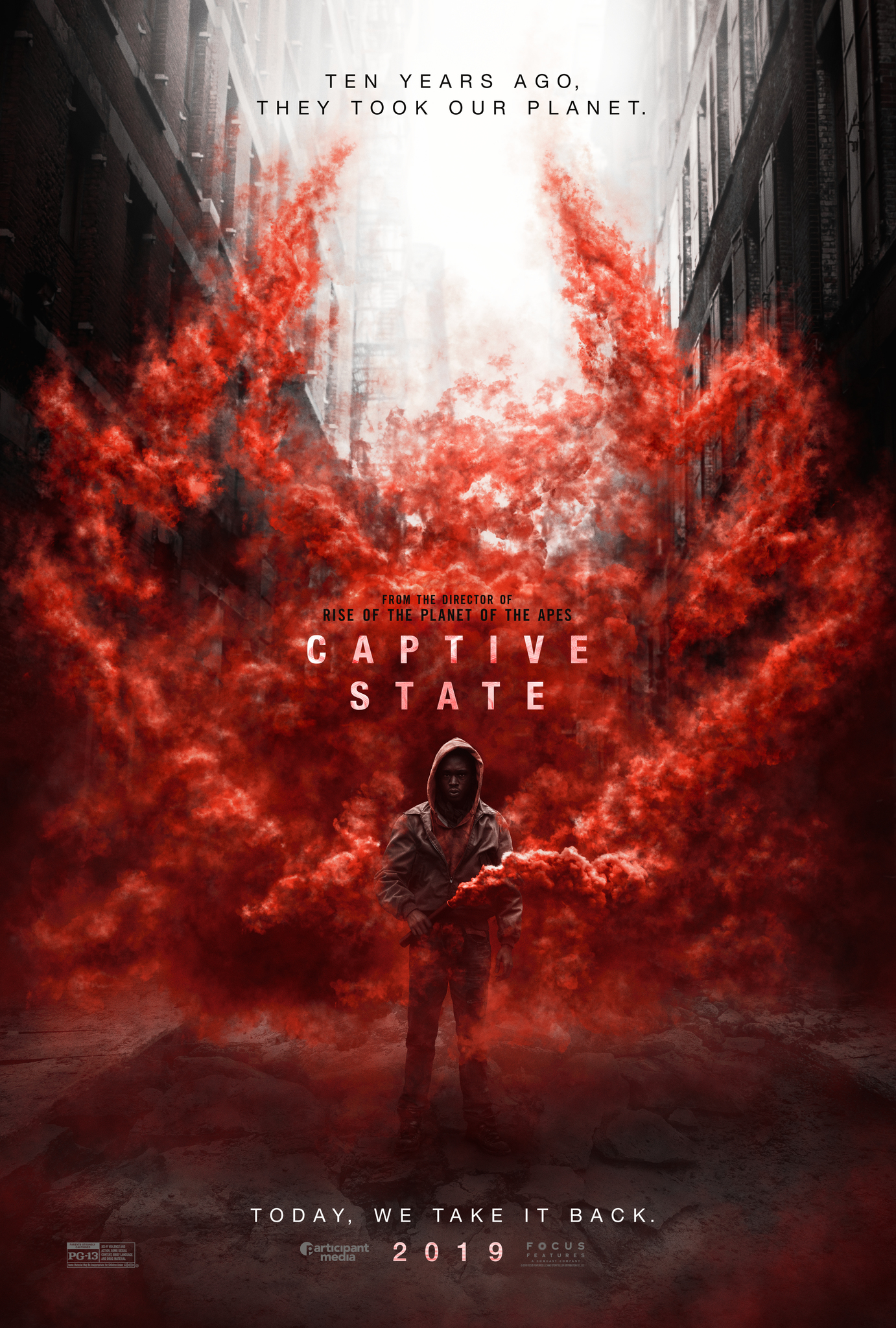
Science fiction films have an amazing way of drawing out the collective wonder, mystery about the universe, and our relationship to it. Good sci-fi finds a balance between questions unknown and what we do know. Captive State works because it shies away from what we expect to see in a film about an invasion of our planet. We expect to see aliens. We expect to see technology we don’t understand. Instead, co-writer/director Rupert Wyatt gives us a tense thriller dealing with what the beginnings of an uprising looks like with science fiction as the backdrop.
We’re immediately dropped into a family car tearing through the streets of Chicago just after a species has descended upon us and are making their dominant presence known. Lines are drawn, and there are certainly places that humans can’t or won’t go. The Drummond family ignores the rules, resulting in the mother and father being vaporized in front of their two sons, Gabriel (Ashton Sanders) and Rafe (Jonathan Majors). Nine years later, humanity is fully submissive to the alien race.
There is no exposition as to what the new world order and rule is. We learn through characters and their actions. John Goodman is detective William Mulligan. Crime is at an all time low because the aliens (rarely seen) apparently don’t play that. So police not only serve and protect us, but now observe and keep tabs on humans that may step out of line for the invaders. Mulligan is keeping tabs on his ex-partner’s son Gabriel, whose brother, Rafe, became a recent martyr for an underground resistance called Phoenix. With an upcoming peace rally in which the aliens will make an appearance, surveillance is at an all time high.
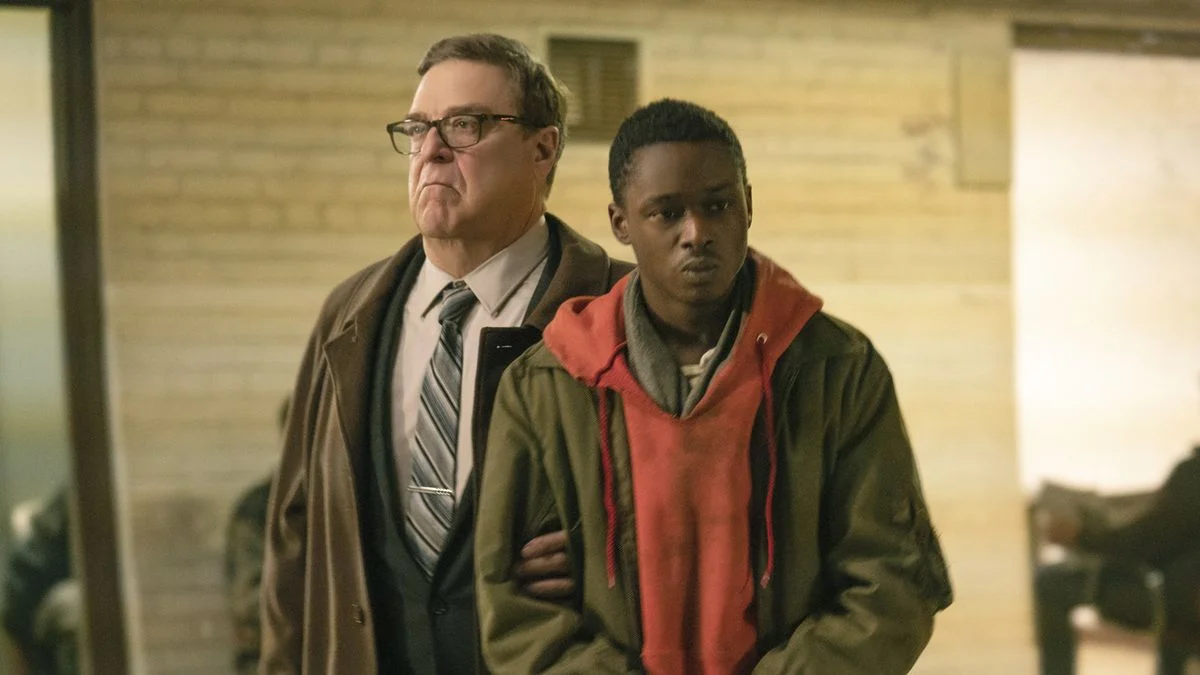
Captive State may be fifteen minutes too long, but there is no doubt that screenwriters Erica Beeney and Rupert Wyatt have thought this world through from A to Z. That’s what makes this particular sci-fi film fun. It may take itself too seriously, but you don’t have time to realize that because you’re too busy trying to keep up with what’s unfolding. With strong performances from Goodman, Majors, Sanders and Vera Farmiga as Jane Doe, the world of Captive State feels authentic, lived in, and realistic.
This is the type of film that may not take the box office by storm this weekend, but people will say “that was actually pretty good” as they discover it on streaming platforms in the future. I think its worthy of the big screen treatment for your plans this weekend. Its earnest attempt at giving us something refreshingly new but familiar might just captivate your mind and imagination.
Rating: B