
"Joker" Review: The Beautiful, Dark, & Twisted Origin Story
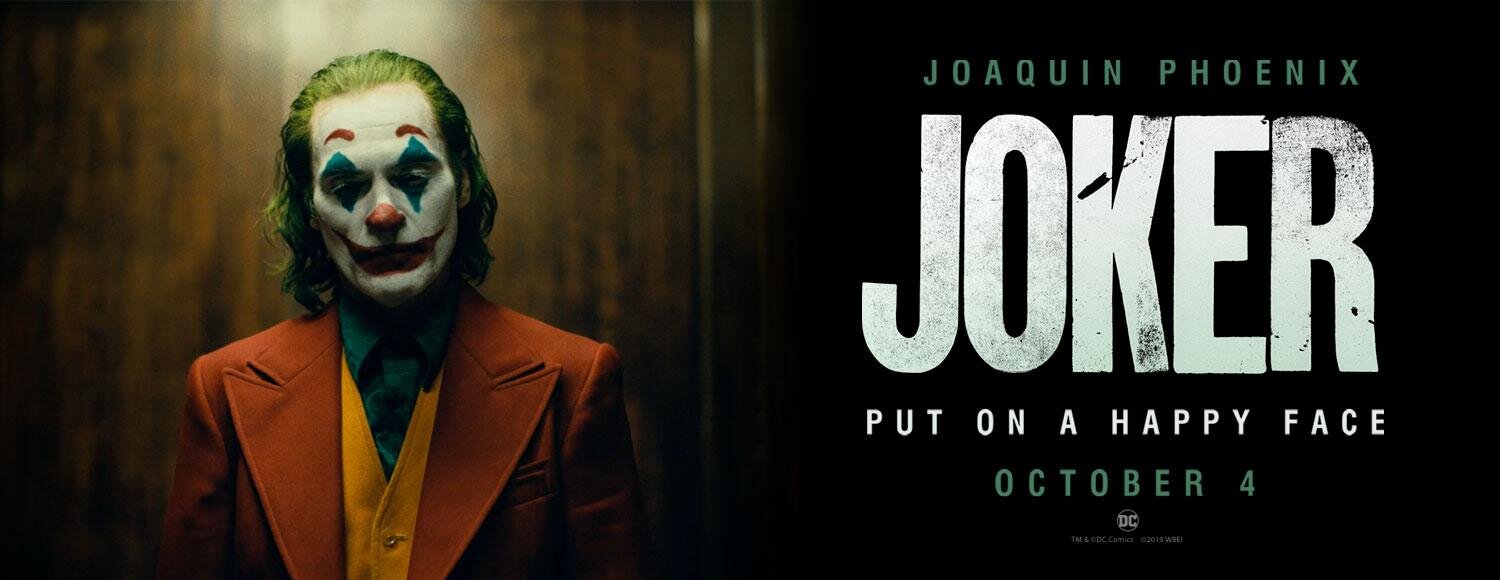
With Warner Bros officially creating a new movie genre, DC Black (DC- based standalone films), who better a character to start with than with their most iconic villain himself, the Joker? With all the great actors who’ve played the villain (Jack Nicholson, Heath Ledger, Mark Hamil and Jared Leto) my initial thought was that it was going to be hard to fill those sinister clown shoes. I couldn’t have been more wrong. Director Todd Phillips and Joaquin Phoenix take the comic book villain and give him a beautifully dark, twisted, gritty anti-hero reintroduction.
Taking a few pages out of Martin Scorsese’s Taxi Driver with character development and some references, Phillips peels back the layers of the complex character to humanize him and show how he began his path of brutal destruction. This is a period place that takes place in the early 80’s and shows the grislier and faint side of Gotham City like we’ve never seen it. It follows Arthur Fleck (Joaquin Phoenix), a mentally ill misfit, who works as a clown by day and failed comedian by night. His journey to menacing criminal is perhaps all the more horrific because it’s grounded in reality.
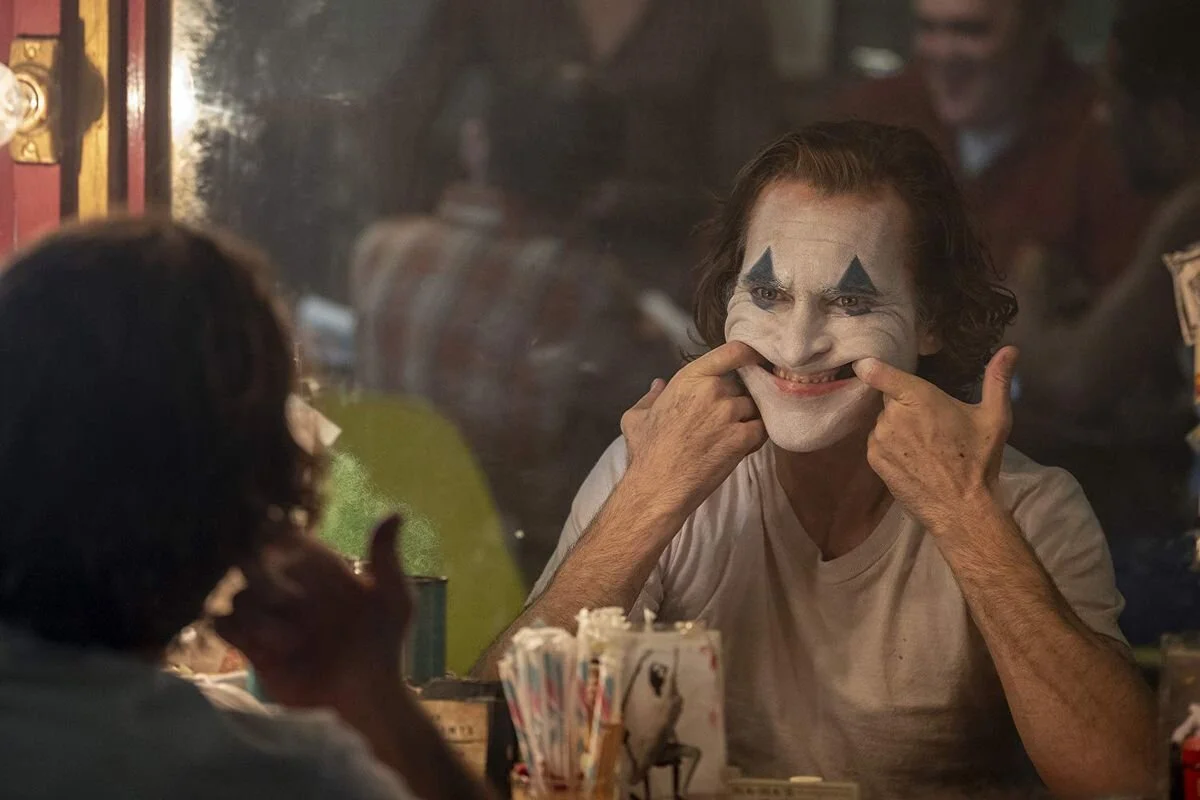
One of the opening images is of Fleck, working as a clown, looking in the mirror while contorting his face into that creepy, iconic smile while laughing uncontrollably from his pathological laughing disorder while crying. It’s immediately followed by a portrait of the city of Gotham, and it’s not compassionate to say the least. In the first few minutes Fleck endures mental and physical abuse by everyone from his job, his therapist, civilians, his job again, and then his mother (Francis Conroy). It’s a hard watch. Throughout the movie this seems to be a trend as life itself continues to punch Fleck in the face, increasing its power at every turn. In his lighter moments, when life isn’t knocking him down, he pursues a career in comedy. His jokes are dark and twisted, writing what he believes society deems as funny, wishing to one day be on the Murray Franklin (Robert De Niro) late night show.
Something that sets this movie apart is the progression of Fleck’s character. He evolves from and awkward, gentle loner to the malicious, confident Joker. Robert De Niro and Zazzie Beetz interactions with Phoenix give more depth to the character’s development with their limited but memorable interactions as Fleck’s idol and love interest respectively. Conroy also helps identify some of the loose ends of his childhood that viewers may find interesting. Rather than being eaten by the dog eat dog world, Fleck eventually embraces it with a cynical twist that feels so natural.
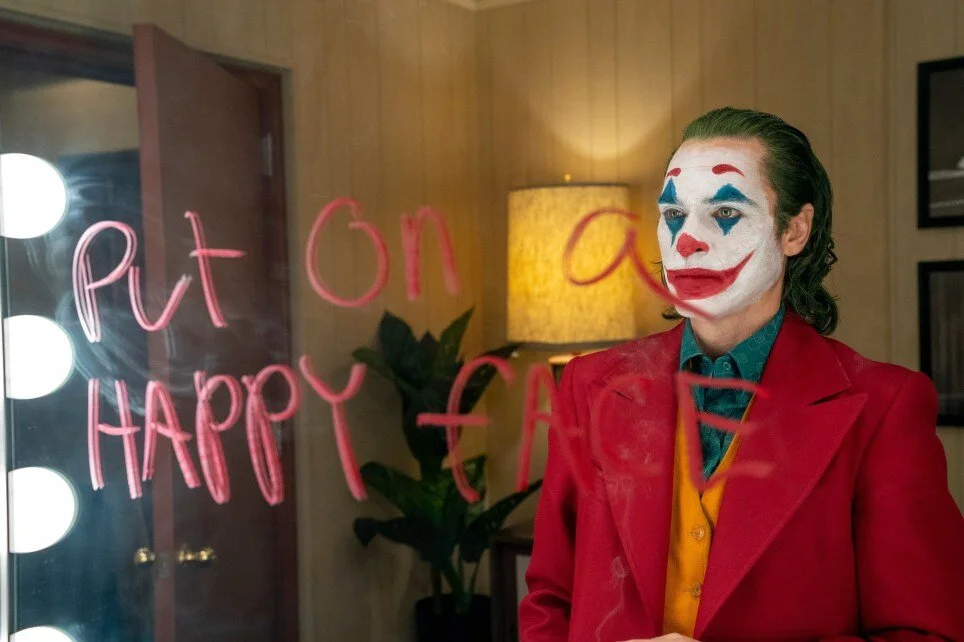
This is ultimately a standalone film that we’ve never seen in the comic universe that has a sinister and refreshing twist to it. It’s well crafted, with a vintage, grunge look that captures the mood and tone being portrayed in the film. From beginning to end, Phoenix owns the character. It has remnants and a few nods to them but Phoenix pushed my perception of the character or new uncharted anti-hero territory. The only knock I have toward the movie is the slow, build but once it started you were invested. Overall the casting, the story, the development and the conclusion of this film is phenomenal and gives you the ultimate satisfaction of an origin story. I wouldn’t be surprised if this movie gets an Oscar nod.
Rating: A-

"You Were Never Really Here" Review
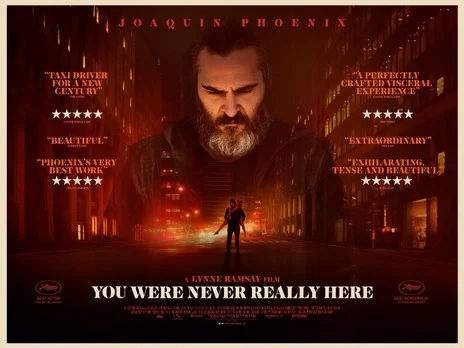
You Were Never Really Here is a gripping film from start to finish. The new film from filmmaker Lynne Ramsey, whose last film was 2011’s We Need to Talk About Kevin, is an adaptation of a 2013 novella from Jonathan Ames. Anchored by an incredible performance from Joaquin Phoenix, the film premiered at Cannes Film Festival last year where it won Best Actor and Best Screenplay. This is the type of film that will stay with you long after the credits roll.
The basic plot of You Were Never Really Here centers on Joe (Phoenix), a hired man who specializes in finding missing girls. No matter the job, he always gets it done. After completing his latest job, Joe is recruited by Senator Albert Votto (Alex Manette) to find his missing daughter Nina (Ekaterina Samsonov), who Senator Votto believes is part of a local sex trafficking ring. As Joe searches for Nina, he unknowingly stumbles onto a conspiracy that’s much bigger than him.
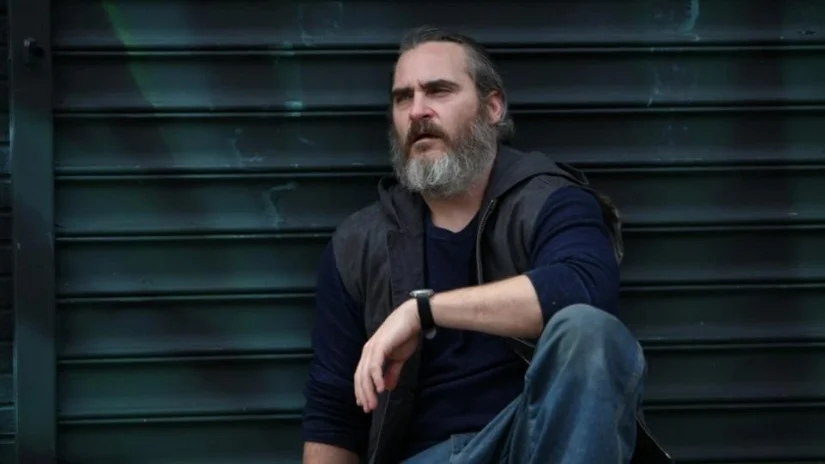
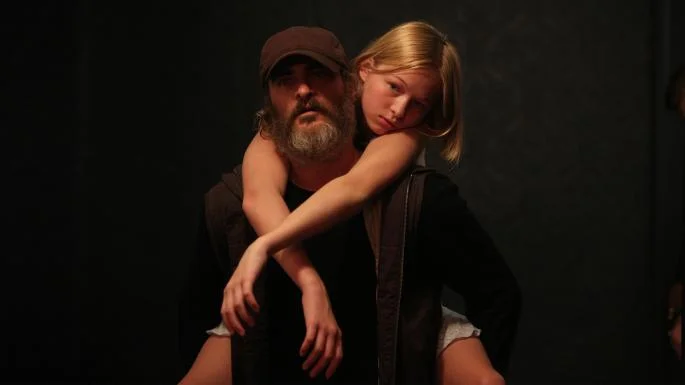
As I said in my opening statement, Phoenix’s performance as Joe is simply phenomenal; he’s a man of few words but will get the job done by any means necessary. No matter what Joe does, whether suffocating himself or playing chicken as he tries to hurt himself, pain is never far from him. For the violent subject matter at hand, Ramsey chooses to play the violence off-screen or won’t let us clearly see what’s going on until its aftermath. It’s always blocked out or obscured, even though we know what’s transpiring is swift and brutal. Ramsey also does a good job of visually portraying PTSD on screen. The flashbacks that are presented in the film are fast, furious, unpleasant, and painful, communicating to us that Joe doesn’t have any pleasant memories. The 90-minute length of the film was absolutely perfect to get in and out of the world, and the story that Ramsey adapted for the screen is pretty simple and straightforward.
The visual look that Ramsey and her DP Tom Townend gave Here did its part in highlighting the loneliness and emptiness that Joe exhibits. At times he blends into the darkness, much like the title of the film. The colors are muted and not vibrant, showing the seediness of the world that Joe is a part of. What we see are simple, yet powerful images that are beautiful to look at. Unlike some directors who would go overboard with their shot selections, Ramsey lets the scene play out to focus squarely on the actors, and there are a lot of close-up shots that she employs throughout the film. Ramsey puts the visuals over exposition, emphasizing more of a characterization of Joe. Like the saying goes, actions speak louder than words, and it’s evident here.
This might be one of the best film scores that Jonny Greenwood has composed, if not his best. One minute, it’s synth music we would normally hear from an 80s film, the next it’s screeching music that’s in your ears to represent Joe’s mindset. Greenwood does a great job in blending all those sounds together. Finally, in addition to the music, the sound design is also superb, showcasing that Joe is basically a ghost in the world. If he wasn’t there, no one would notice.
I think if there are any drawbacks that this film has, it’s that the pacing might put some people off. Even though it's methodical, people might not like how one scene could go quickly, while another scene could take its sweet time. Some might be confused about the lack of exposition in the film, but if you stick with it, you will figure out what’s going on. Lastly, Joe is a strongly developed character, but other characters aren’t quite as developed as him. Then again, maybe that was the point since the film is squarely focused on him.
Overall, I strongly enjoyed You Were Never Really Here and what it brought to the table. I thought it was refreshing to see how Ramsey put her spin on a story we’ve undoubtedly seen countless times before. It will make you uncomfortable as you watch the film, as it slowly gets underneath your skin to the point of having you sit in silence after watching it, which happened to me, but you’ll be rewarded with a masterful film. I wouldn’t be surprised if this ended up being in my top ten films of the year by year’s end. I would definitely recommend checking this film out in a theater.
Rating: A