"Dark Places" Review
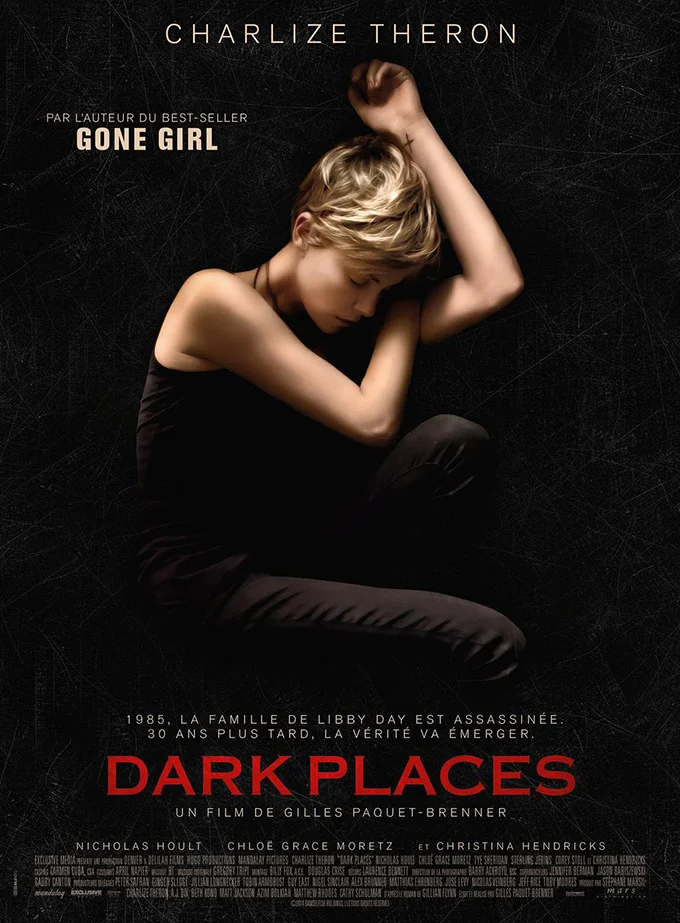
When a book becomes a movie there is always one main question: how will it compare? For Dark Places, there is a second, more challenging question: how does it compare to Gone Girl? Fans of Gillian Flynn have most likely read all three of the author’s spectacular books: Dark Places, Gone Girl and Sharp Objects. As an author, Flynn weaves tales of women facing a grim (often self-imposed) challenge. There are consistent themes throughout all three of her novels, creating quite the challenge for turning these books into movies, especially with Gone Girl’s critical success.
Dark Places is intentionally disorienting as the pieces of Libby Day’s past and present are brought to screen. Between grainy flashbacks, we meet current day Libby as she grapples with a dismal financial future. We learn that she has been living off donations from strangers who want to show their support after the gruesome murder of her mother and two sisters. Libby and her brother Ben survived that night — although Ben has spent many years locked away after being charged with the murders. Faced with a shrinking bank account (and no job to speak of) Libby turns to the Kill Club, a gathering of murder super fans, who are willing to shell out $500 bucks for her to make an appearance at their latest gathering. Much to Libby’s dismay, the Kill Club is not just a group of fans, they are vigilantes — hoping to prove that her brother Ben was wrongly accused of the murders. Libby’s financial motivation, coupled with the persistence of the Kill Club, get the story going and takes the audience back and forth in order to figure out who really killed the Day family.
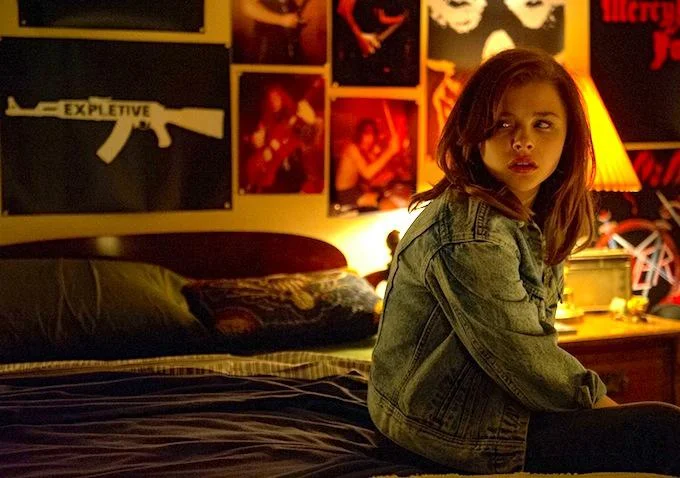
There is no doubt about it, the cast for Dark Places is stacked. Libby’s mother is played by Mad Men’s Christina Hendricks, the treasurer of the Kill Club is played by X-Men’s Nicholas Hoult and Drea de Matteo even makes an appearance as old classmate turned stripper. By and far, the most notable performance is delivered by Chloe Grace Moretz, who plays a teenage love interest of Ben’s. Moretz is a fiery scene stealer and this reviewer wishes the whole film was based around her character, Diondra. Charlize Theron plays present day Libby Day and delivers a “dark” performance, but at times she simply tries too hard. Moretz pulls off enigmatic Diondra naturally, in a rather frightening way.
Although Dark Places sprang from the same mind of Gone Girl, the two films simply do not compare. While Gone Girl takes on Flynn’s twisted tale with a cool and crisp approach, Dark Places feels clunky and all too aware of its purpose. Director Gilles Paquet-Brenner’s jerky camera movements and approach to the film’s major themes feel forced, put in as part of a checklist rather than as an artistic statement. Separating it from its Gone Girl counterpart, Dark Places does function as a somewhat thrilling, more decadent episode of Law and Order: SVU, which is always worth a watch.
Rating: B-
"Mad Max: Fury Road" Review: Believe the Hype!
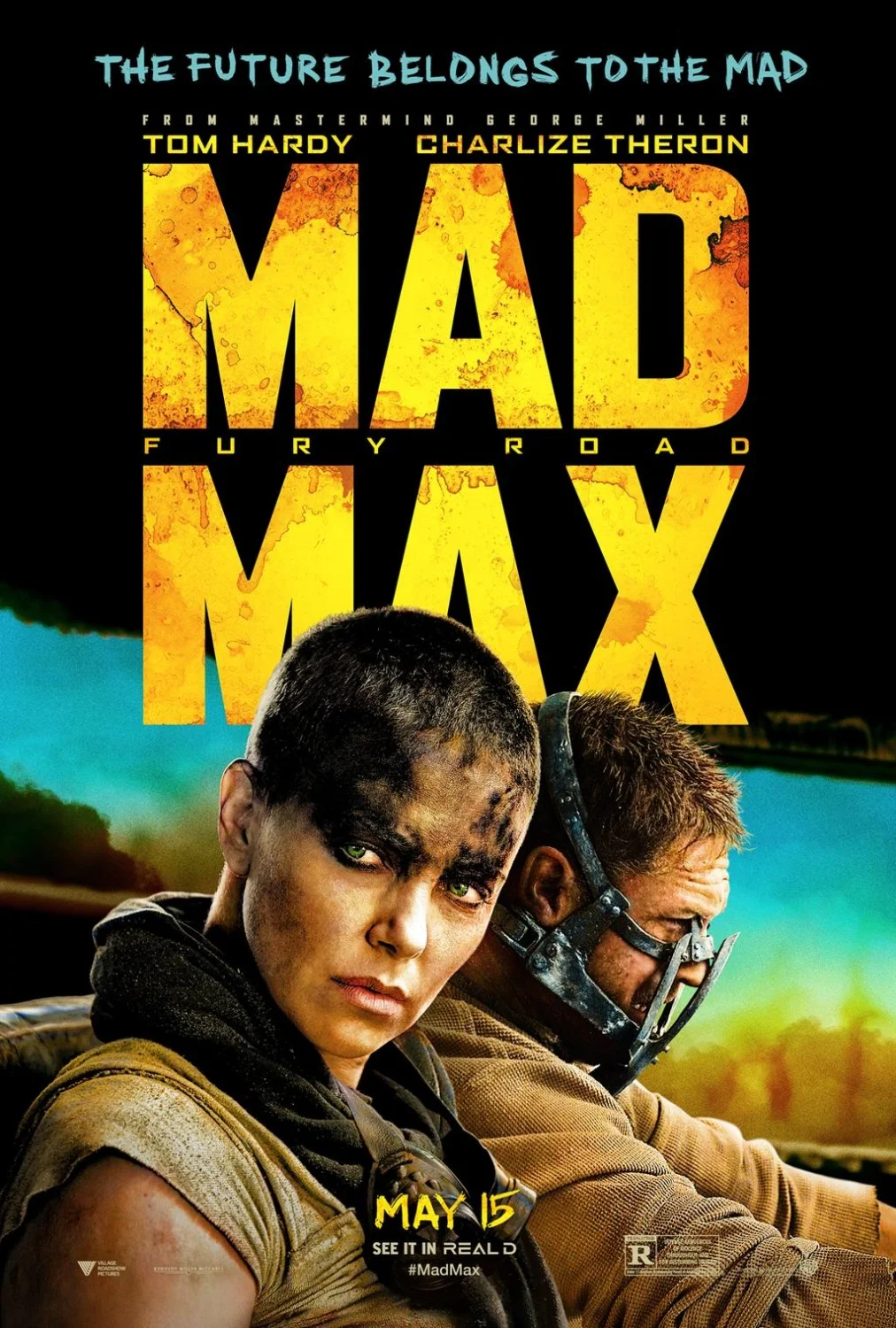
“Mad Max: Fury Road” is a cinematic sensory experience for the action movie genre, and movies in general! It’s truly the work of a writer/director who has had 30 years to think about the world that put him on the map, and go back to it with impeccable precision in his vision. Yes, George Miller has set another bar for the post-apocalyptic action genre, and challenges other artists to reach it.
The film doesn’t boast of intricate plot points. In fact, Max (Tom Hardy) informs us in the opening monologue that his mission in life is to survive, and that’s what the movie is in a nutshell. It’s the chase and how our heroes survive that’s so exciting.
In the opening scene, Max is captured by shirtless, branded warriors in white body paint. They use him as a living blood bag for a War Boy named Nux (Nicholas Hoult). After their ruler, Immortan Joe (Hugh Keays-Byrne), realizes one of his trusted drivers has taken off with his prized breeding wives, he chases after them with the War Boys. Nux, looking for glory, straps Max to the front of his car as an ornament and way to keep isolated from Max.

Imperator Furiosa (Charlize Theron) has one goal, to free the wives and get everyone in the stolen rig to the Green Land. After trying to lose her hunters in a massive sandstorm, everyone who survived wakes from the carnage. Finally free from his captors but carrying his chain gang War Boy Nux with him, Max gets free from his chain and commandeers Furiosa’s rig. While playing a quick game of “Can I trust you?” with weapons, Furiosa and Max decide they need each other to survive.
Max takes shotgun literally and figuratively to Furiosa for most of the rest of the film. This is what makes “Mad Max” great; Miller finds all kinds of creative ways to divert the norms of the genre and owns it. As Miller’s lead character plays support for his second billed, a beautiful chemistry forms between a woman who can hold her own against any man and a man who seeks redemption in helping her cause.

Theron’s Furiosa takes her seat with memorable female action heroes like Weaver’s Ripley and Hamilton’s Sarah Connor! Furiosa has an unmatched toughness, calculated intelligence, and compassion that knows when to cut through her fierce outer shell. Theron is able to convey so much with her eyes, which helps continue to push the story forward without having to spell it out. Hardy takes the reigns of the franchise with an equally stunning performance built from subtle moments. His character is a man of few words, but like Furiosa speaks volumes in his actions.
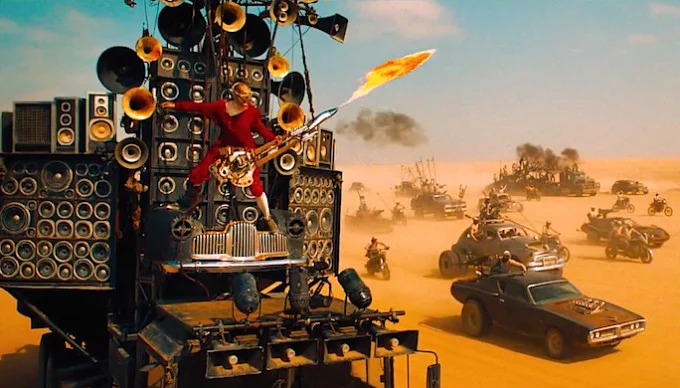
Miller uses all elements of filmmaking to his advantage. He makes you blink as your ride into the sand storm with Furiosa. The screen flashes hot white and cuts to black multiple times as though you’re in the storm. So many action films have roaring scores during chase sequences, and Miller jokingly throws a flame throwing guitarist on the front of a truck who plays the score along with another truck of drummers. As the score escalates at multiple points in the film, the on screen musicians jump in the frame and race forward on their rigs playing with diegetic and non-diegetic sound in a refreshing way. John Seale’s cinematography paints a vivid picture and eases into soft hues at the appropriate times that supplement the story. These are just a few examples of what makes this film a cohesively beautiful, innovative work of storytelling.
The film has taken a little heat because of Miller’s feminist approach to the film as it introduces and highlights female road warriors, and a heroine who looks to free sex slaves. In actuality, it simply highlights what we rarely see in films like this. What do women who have to survive in a world like this actually look like? Butt-kickin’ survivors! Rather than giving us underwritten characters, every character shines through and has a moment in the film. That’s something to be celebrated!
“Mad Max: Fury Road” is a film achievement to see on the big screen! Believe the hype. It’s worth your hard earned cash this weekend, and next!
Rating: A