
"Ghostbusters" (2016) Review
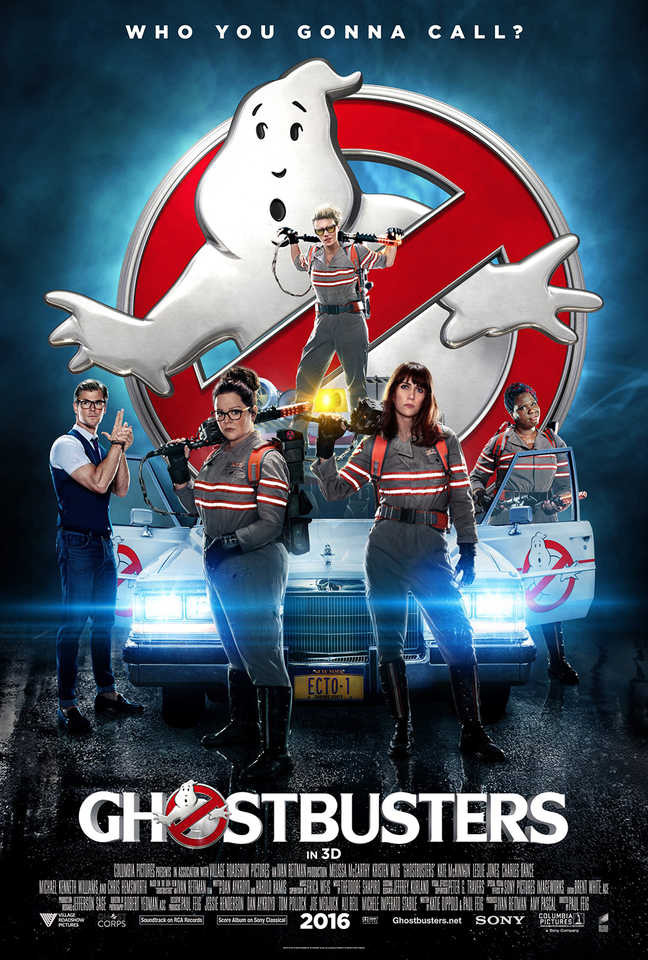
There is a beautiful scene in Ghostbusters in which Melissa McCarthy’s character gives the other members of the team a pep talk after the citizens of New York denounce them as frauds. I’m paraphrasing here, of course, but she essentially says that even though everyone is doubting them, they know what they’re doing and should ignore the vitriol and save the day anyway.
It’s a fitting metaphor for the film itself, when you think about it. From the moment it was announced, Paul Feig’s reboot of Ghostbusters received backlash and bile from fans of the original film from 1984, making it the subject of untold amounts of rage-filled comments. Its trailer has become the single most down-voted trailer in YouTube history.
So, even though the angriest denizens of the Internet were counting them out, director Paul Feig (Bridesmaids, The Heat, Spy) and the four talented comediennes he chose to be our new Ghostbusters were so sure-handed and confident, they rose above the hatred and won the day in the end.
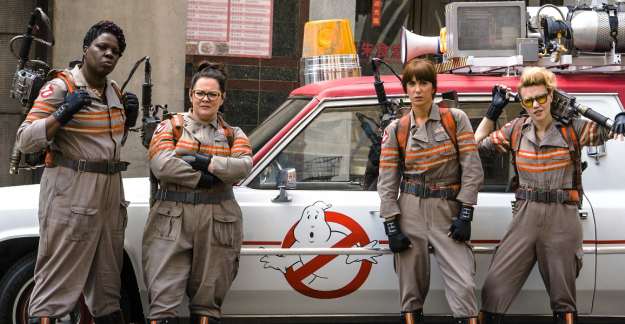
Of course, this new version of Ghostbusters is nowhere near as good as the classic original. It was never going to be. But it’s not worth all the fuss, and it’s far from the disgrace to the original film’s legacy that the angry commenters were expecting (and probably hoping for). When all is said and done, it’s a scrappy, good-natured summer blockbuster that, while not perfect, delivers a lot of laughs, a few chills, and a ton of thrills.
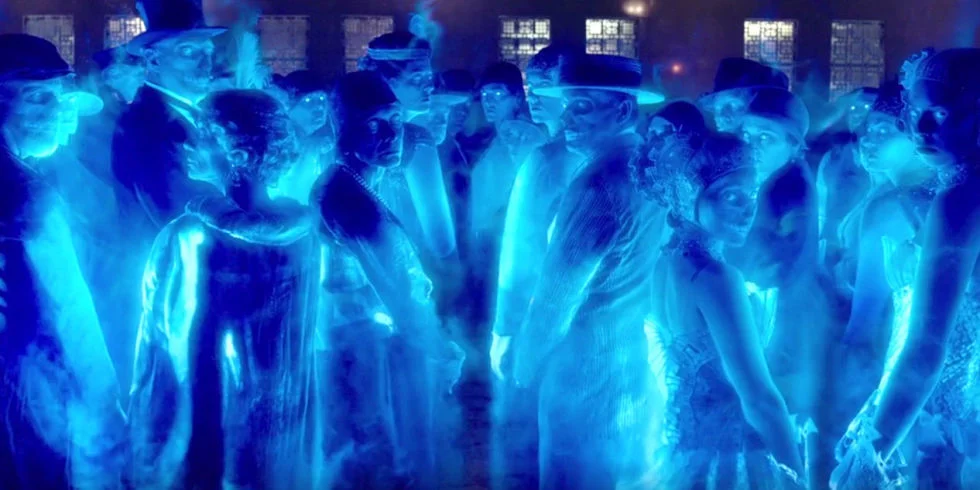
When a book about the paranormal that she co-wrote resurfaces, Dr. Erin Gilbert (Kristen Wiig) is let go from her teaching position at Columbia University. The at-first-skeptical Dr. Gilbert soon realizes that all her theories were true when malevolent ghosts begin to invade Manhattan. Teaming up with her former friend, Dr. Abby Yates (McCarthy); eccentric engineer Dr. Jillian Holtzmann (the particularly outstanding Kate McKinnon); and New York history enthusiast Patty Tolan (Leslie Jones), Dr. Gilbert forms a paranormal extermination team called the Ghostbusters in order to save the world from a demonic entity.
While the story hits a lot of the same beats as the original, it’s the chemistry between these four women, as well as Feig’s unique sense of comedic timing, that keep this reboot feeling fresh. Wiig, McCarthy, McKinnon, and Jones bounce off of each other to great effect, giving us a sense of camaraderie that harkens back to how well Bill Murray, Dan Aykroyd, Harold Ramis, and Ernie Hudson worked with each other in the original. There is genuine wit and inventiveness in the design of the ghosts, and there are even a couple of creepy sequences that sent chills down my spine.
However, even though Ghostbusters gets a lot of things right, that makes the things that it gets wrong all the more frustrating. The film needed some more time in the editing room to tighten up the baggy pacing. As demonstrated in his previous works, Feig encourages improvisation in his cast. While this often leads to some very funny bits, it keeps scenes dragging on for far longer than necessary. There are scenes that begin and end very abruptly, and quite a few of the jokes land with a resounding thud. Additionally, there are several surprise cameos from some recognizable faces, but their presence just serves as a distraction as it takes the focus away from the core group.
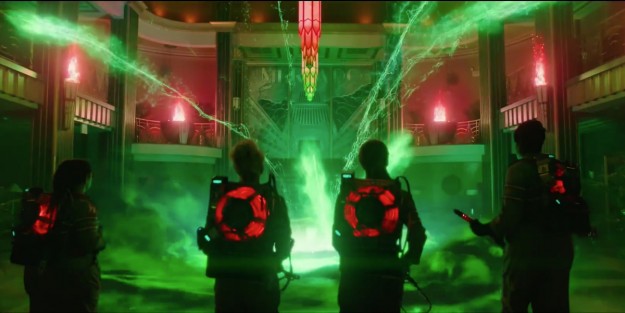
But once the team gets to busting, the proton packs get to firing, and the jokes get to flying, the film is an absolute joy to watch, especially in a 3D presentation that ranks among the best I’ve ever seen. The 3D effects go out and over the black bars on the top and bottom of the screen, so it creates the illusion that slime, ghosts, and laser beams are invading the theater and jumping right at you. It’s a truly effective technique, and it made me wonder why more 3D movies don’t take advantage of it.
So after all that hullabaloo over this new Ghostbusters destroying the integrity of the original and insulting the memory of its co-writer Harold Ramis… it’s time to relax. Paul Feig’s Ghostbusters is not an insult to the original. Harold Ramis, God rest his soul, is not spinning in his grave. The original Ghostbusters is still readily available to watch and enjoy, and is probably on your home video shelf right now. I know it’s on mine. And when the reboot is released on Blu-ray, it will not replace my copy of the original. It will have earned a place right alongside it.
Grade: B-
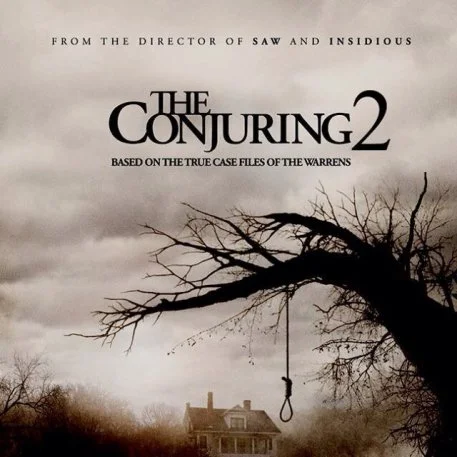
"The Conjuring 2" Review: Wan is Back in the Zone!
Horror fans, indulge me for a moment. Think of all the elements that go into a masterful horror film: Nerve-jangling scares; a sense of dread permeating throughout; imagery that sticks with you and keeps you up at night; brilliant production design; a great score; believable performances; and yes, even genuine emotion.
It sounds too good to be true in today’s world, where fecal matter like Ouija, The Gallows, and The Forest clogs the toilet that is mainstream horror. Yet there is hope in the form of our savior, the almighty and all-knowing James Wan, who has come to show us the way. Wan has always been a master of his craft, as he has demonstrated in the original Saw, Insidious, and The Conjuring, but now he has perfected it. With The Conjuring 2, he has made a perfect horror film.
Yes. The Conjuring 2 is a perfect movie. As in, it has practically zero flaws.
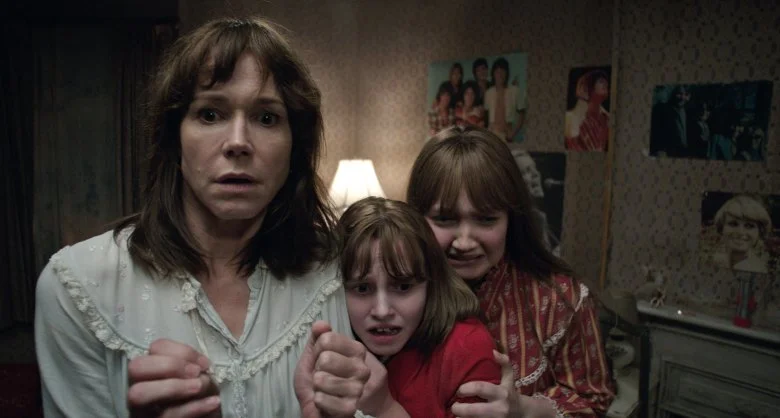
Like its 2013 predecessor, The Conjuring 2 is set in the 1970s and delves into the so-called “true case files” of Ed and Lorraine Warren (played by Patrick Wilson and Vera Farmiga, respectively), a real-life husband-and-wife team of renowned demonologists. This time, the Warrens travel to Enfield, England, where a single mother (Frances O’Connor) and her four children are being tormented, possessed, and generally inconvenienced by a demonic presence.

What transpires at the Hodgson household is pretty standard stuff: A chair moving on its own, strange voices, bumps in the night. Of course, we’ve seen it all done before in plenty of other movies, but rarely have we seen it done so well. Like a certain Mr. Spielberg, Wan has a gift for manipulation, and not in a bad way—he meticulously crafts each individual moment for maximum effect, so that the audience is completely wrapped around his finger. The tension Wan creates is palpable, and while he often makes use of those dreaded jump scares, they never feel cheap and they always feel earned. The man simply knows what he’s doing.
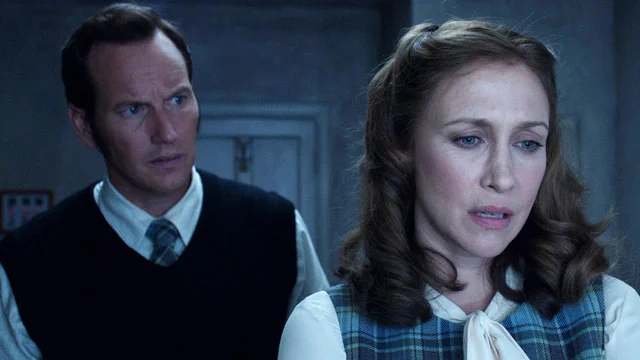
He’s aided by terrific production design by Julie Berghoff and a spine-tingling score by Joseph Bishara. Both add authenticity to the period setting and an uncanny unease to the film’s atmosphere. Sweeping camerawork by director of photography Don Burgess glides placidly, putting the viewer on edge for what awaits just around the corner. And the performances—with standout turns once again by Wilson (TV’s Fargo) and Farmiga (TV’s Bates Motel)—bring humanity and heart to the spooky proceedings.
I loved this movie. As a horror fan, I want to shout it from the mountaintops: “The Conjuring 2 is not only the rare sequel that’s as good if not better than its predecessor, it’s a masterpiece of the genre!” It’s a rickety, demented funhouse ride that, despite its 135-minute running time, doesn’t overstay its welcome (unlike those pesky spirits). That’s quite an accomplishment. And though there have been some phenomenal indie horror films as of late, such as It Follows, The Babadook, and The Witch, James Wan is king as far as mainstream, wide-release horror goes. With all the heavenly blessings, I thank James Wan for turning down Fast 8 to direct this film. Horror is where he belongs.
Grade: A+
"Demolition" Review
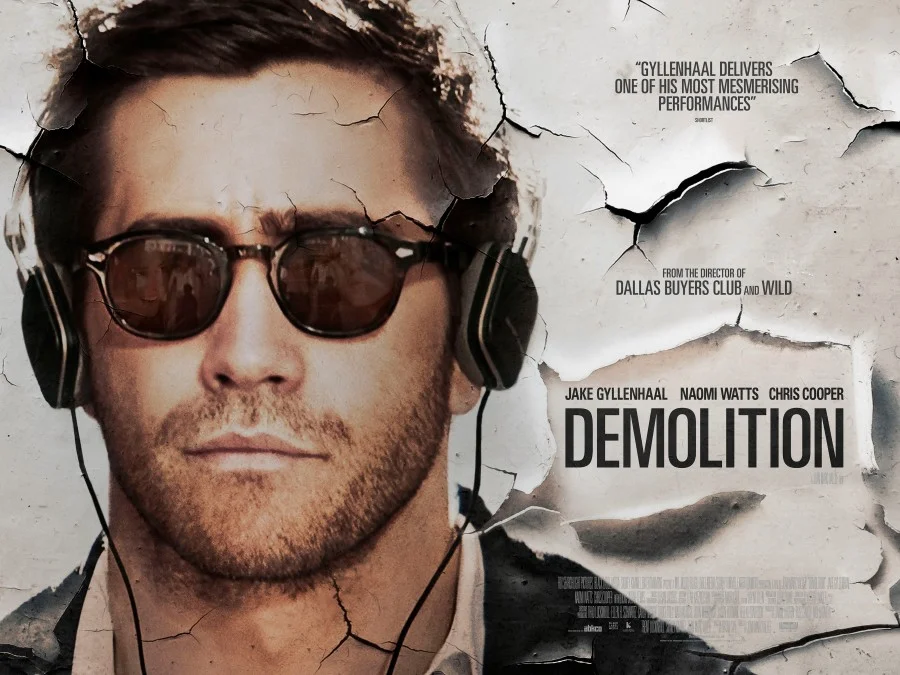
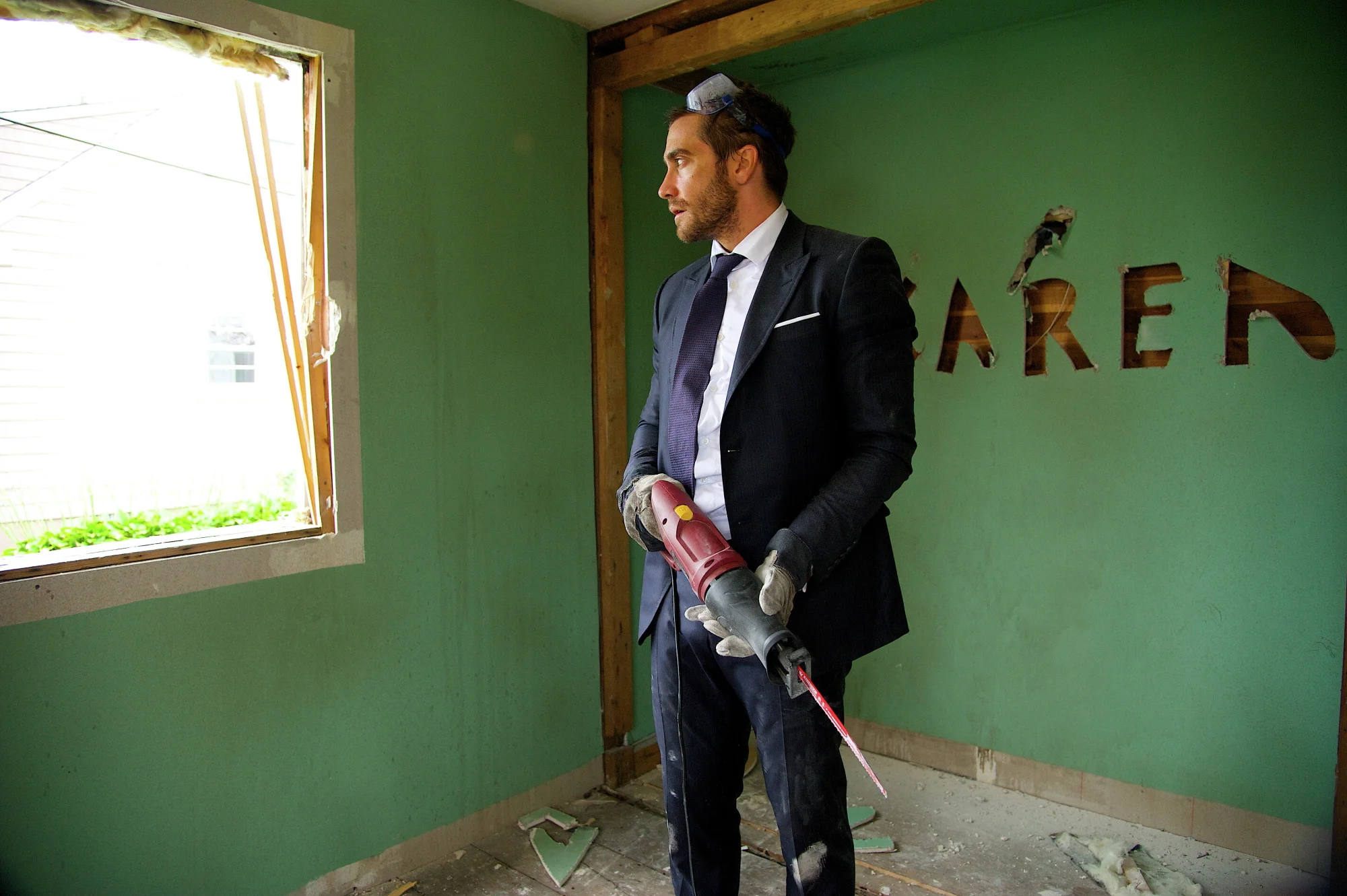
Jake Gyllenhaal spends much of Demolition smashing things into tiny pieces with a hammer. I envied him. It’s what I wish I could have done to this film.
Demolition is a horrible movie about horrible people doing horrible things. In it, Gyllenhaal plays Davis Mitchell, a sociopath-slash-investment banker who watches his wife Julia (Heather Lind in a thankless role) die in a tragic car accident. Naturally, Davis’ next step is to reveal the private details of his loveless marriage, Julia’s death, and his whole life story in a series of complaint letters to a vending company after his Peanut M&M’s get stuck in the hospital vending machine. Yes, it’s really that contrived.
Karen Moreno (Naomi Watts, whose talents are completely wasted) is the woman reading these letters. She’s a sociopath-slash-customer service representative who takes pity upon Davis and begins to stalk him around town. Eventually the two meet, form a bond of some sort, and Davis learns to cope with the death of his wife by smashing his refrigerator full of San Pellegrino and Vita Coco with a large hammer. Or something.
The film is desperate to correlate this imagery of broken walls, furniture, and appliances with its message: that sometimes life needs to be broken down before it can be built back up again. A noble sentiment, but does it require symbolism that’s as subtle as a bulldozer driving through a house? Can’t the point be conveyed without having Davis literally drive a bulldozer through the luxurious modern home that he and his wife used to share?

This protagonist is toxic, hateful, and approximately a thousand times creepier than Gyllenhaal’s character in Nightcrawler (2014). Throughout the film, Davis lies to people, spies on people, manipulates people, belittles people, and generally acts like a selfish asshole. He impulsively destroys others’ property. He’s frigid and rude to his grieving in-laws (Chris Cooper and Polly Draper). He ignores his wife while she’s alive, and insults her memory when she’s dead.
I could go on and on, but I’ll let the MPAA’s R rating “for disturbing behavior” speak for itself. Needless to say, this abhorrent character made the act of watching the film extremely unpleasant. This is despite a fantastically committed performance by Gyllenhaal, who continually proves to be one of his generation’s greatest talents, and is far and away the best thing about the film.
The director, Jean-Marc Vallée (Dallas Buyers Club, Wild) attempts to give the limp, aimless story some kind of energy by stuffing the film with rock tunes, shaking the camera about, and employing some flashy, artsy editing flourishes. But these techniques can’t mask the falseness of writer Bryan Sipe’s script, which is flawed at its very core. Davis didn’t love his wife. He didn’t even like her very much. We know this because he writes it in one of his letters to Karen. So why is he acting out this way? It’s certainly not out of grief or despair. Thus, if the central conflict doesn’t make any sense, why should we as an audience care?
If one were to take a wrecking ball to Demolition and rebuild it from the ground up, it would be possible to create a powerful, sturdy foundation. But, despite the best efforts of Gyllenhaal, Watts, Cooper, and bright newcomer Judah Lewis as Karen’s rebellious teenage son, it’s a hollow shell of a film.
Grade: D+