
"mid90's" Review

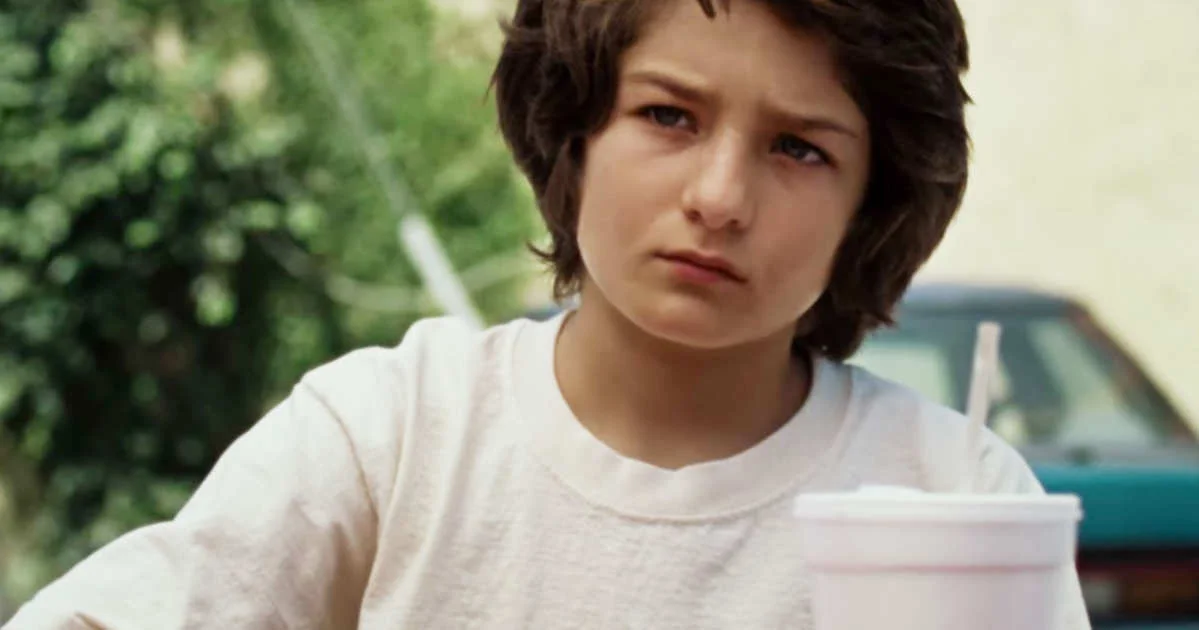
Jonah Hill’s directorial-debut film Mid90s is a movie, at face-value, about a group of skateboarders; but it is certainly more profound than that.
In 1990s Los Angeles, 13-year-old Stevie (Sunny Suljic) flees from a turbulent home life by finding solace in a new group of friends he meets at a local skate shop. The eldest, and leader of the group, Ray (Na-Kel Smith), takes Stevie under his wing and shows him what a family outside the home can look like. Like most families, however, this one has their fair share of tribulations. Their journey is beautifully honest on screen. In fact, their acting is possibly the only thing that rivals the poise of their skating.

There is a scene in the film, a close-up shot of Ray gripping Stevie’s new board and drilling in the wheels, that’s gloriously over-the-top. It is evident that Hill wanted to make a film about skating and hip hop, but it isn’t until the final frame that it becomes clear these two vehicles for narrative offer a unique metaphor for perseverance. Perseverance, I submit, is an underlying message in the film. Can you fall and get up? How hard can you get hit, rather, and still find the strength to get back on your feet? Falling is inevitable. As Hill eloquently puts it, “we are all under construction.” But what Hill finds more important, and what is expressed through the film, is the journey to loving yourself.
This idea is similarly expounded upon in the magazine Hill released in conjunction with A24 and Mid90s. It serves as a companion piece to the film but is also quite an engaging read on its own. In short, Hill interviewed some of his close friends and asked them about the process of loving yourself or, reversely, hiding a part of yourself you are ashamed of. In a way, the film is a representation of how these tough questions can materialize within friend groups.
In that regard, the magazine feels like a director’s notebook for the film. However, there is the film you write, the film you shoot and the film you edit, and it is difficult not to get the impression that much of the film was cut out in the final edit. Although not much change happens over the course of the movie, it runs a mere 90 minutes in length and has ubiquitous quick cuts that are jarring at times. This editorial style is only used effectively during a tense scene towards the end of the film, but I’d be remiss if I gave too much away.
On the other hand, the music in the film is beyond redeemable. Fantastic. A Tribe Called Quest meant to Hill what the Beatles meant to his parents. It was clear before the film began that music would have a significant role in the piece and kudos to Hill for curating and developing this soundtrack with his team, because it carries you through the melodic roller coaster splendidly. I even found myself bouncing my head up and down to the beats.
You may vibe with the music as well if you grew up in the 90s. Or even if you didn’t. You may be brought to tears by the film because it is, like The Florida Project a year ago, wonderfully sad. You may find yourself laughing hysterically because it is filled with wit. And although it is unconventional, the story still seems to work. Jonah Hill may have made this film for himself, and for those kids who feel they do not belong, but I believe everyone can enjoy this film.
Rating: B+

"A Ghost Story" Review
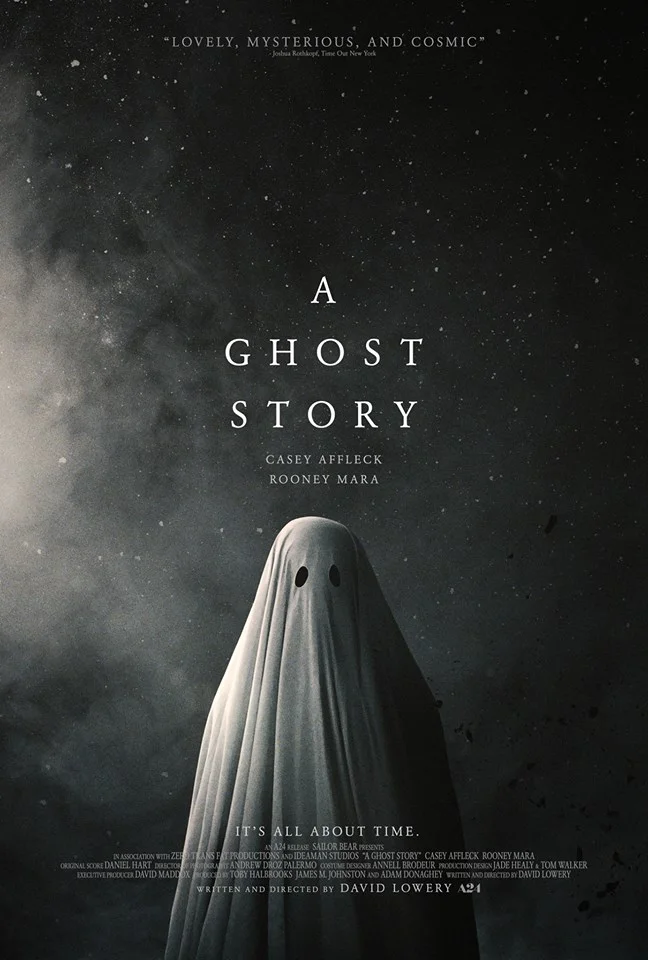
Well, I certainly wasn’t expecting that. A Ghost Story is the new film by director David Lowery, who directed Ain’t Them Bodies Saints and last year’s remake of Pete’s Dragon (which I contend is probably the best of the Disney remakes to have come out in recent years). This film reunites his Ain’t Them Bodies Saints stars Casey Affleck and Rooney Mara and this was shot quickly and quietly after Lowery finished post-production work on Pete’s Dragon. This is a film that captivates you throughout the 87-minute runtime.
In this film, Affleck’s C and Mara’s M are a married couple living in a house. After he gets killed in a car accident off-screen, C wakes up in a morgue and walks back to his house. There, C watches M grieve over his death. I don’t want to talk more about the film out of fear of spoilers, but from the trailers I was expecting one thing, but I was quite surprised (in a good way!) when the film becomes something else entirely, with themes about death, the concept of time, and life after death, but told in a straightforward storytelling. All of this is set within the confines of their house to brilliant use.

One of the things that this film does well are the long takes that Lowery and his DP, Andrew Proz Palermo, employ throughout the course of this film. In particular, a scene with Rooney Mara’s M and a pecan pie plays out almost as if we, the audience, are ghosts observing what’s happening on screen. Lowery also does a smart move in not overly editing the film, given that he edited this film himself. Each frame is pretty simple in its execution. A Ghost Story also employs an interesting visual palette, in that it’s presented in 1.33:1 aspect ratio. So it plays out like you are looking at old photographs or home videos. Some of the images in this film are absolutely haunting as Lowery and Palermo frame C’s ghost within the shots. The use of the music and sound design works well for this kind of story. Even the extended use of silence in scenes compliments the story. They could have easily been overly dramatic, but Affleck and Mara both give restrained performances.
While I very much enjoyed this movie and its themes, this film isn’t for everyone. The pacing, especially in its first third, is slow. While I get what Lowery was going for, some might be bored with it. With the use of silence, there are long periods where there’s no dialogue or music forcing us to focus on the visuals on screen.

Overall, I can’t stop thinking about A Ghost Story. It’s a film that will stay with you long after the credits roll. I could easily write more paragraphs about just how much I liked this film. A24 has another winner on its hands. With this and Pete’s Dragon, Lowery has shown us that he’s one of the best young filmmakers working today and a filmmaker that to watch. Even though it may feel like a small story, Lowery is showing us something much bigger than ourselves. Please, do yourself a favor and watch this film. It’s seriously one of the best films to have come out so far this year.
Rating: A-
"It Comes At Night" Review
Americans are primed for the apocalypse. Whether the deluge of doomsday preparation and undead apocalypse TV shows or cardio-based zombie evasion fun runs, we’re a nation steeped in the possibility that all men will eventually become zombies. And when that time comes we’ll have achieved a 40-yard-dash time quick enough to outrun the bloodthirsty masses to a fortified armory and help rebuild civilization. Escaping danger is our collective middle name.
Thing is, once we’ve hacked and slashed our way to safety, all that time spent locked away in the abandoned fort will be tedious. There’s drama, sure. Leaders will emerge and be challenged, resources will go dry and need replenishing and all our social networks will be useless. Survival is a waiting game, meal after meager meal, day after dull day, month after miserable month.
It Comes at Night, the second feature-length movie from Trey Edward Shults (Krisha), is laced with small doses of excitement, but spends much of its running time watching its characters wait in fear. Shults employs the camera as a tight third-person observer. While boogeymen real and imagined circle the limited world of the script, the camera is focused on the mental and physical strain our heroes suffer as they undertake survival. They are bound to a day-to-day exercise in trust, regiment and they hold a skeptical gaze toward any stranger in their midst.
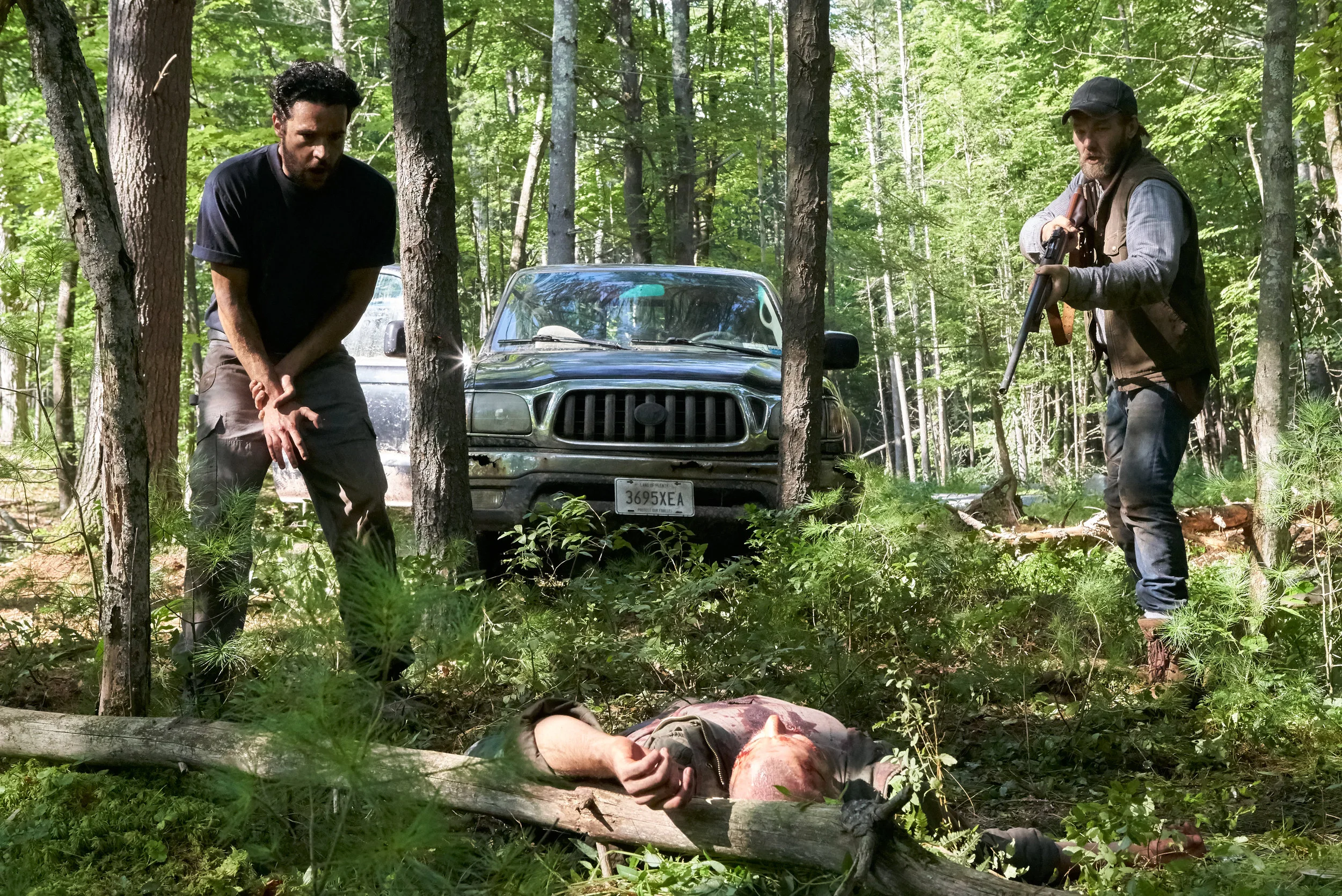
The family in question is only identified as father Paul (Joel Edgerton), mother Sarah (Carmen Ejogo) and son Travis (Kelvin Harrison Jr.), as fear has a way of grinding units down to individuals. The familial clan of survivalists are holed up in the woods while an ambiguous plague threatens the world around them. At the start of the film, the illness has already claimed one other family member, but little else is explained about its origin or effects. It Comes At Night is not about the fight against the undead, but the threat of sickness penetrating the family unit. It opens in a tragedy meant to solidify the family unit and warn the viewer of both the outsider itself and the fear of outsiders.
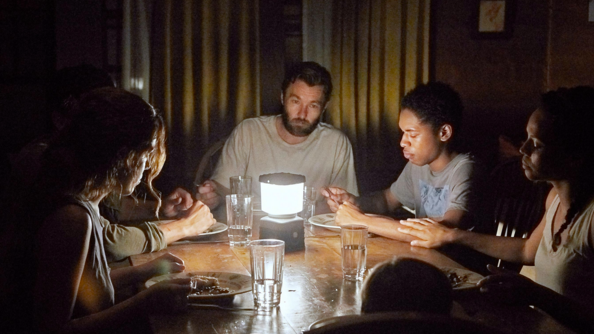
After the deceased is laid to rest Paul, Sarah and Will must move on and bury sadness with trust and routine. When a young father, Will (Girls’ Christopher Abbott) barges in on the trio in search of supplies, it takes some time before Paul agrees to bring Will’s family into their fold. Joel Edgerton’s Paul is nothing if not a cautious realist, but he’s flawed in his fearfulness. While the two families attempt to live together in tension and mistrust, Travis has visions that wind the daily tension with nightly terror. His insomnia is the lens of horror tropes. He sees his mouths filled with blood, animal corpses and one of the film’s very few jump scares.
Shults uses Travis’s nightmare sequences to explicate both the characters fears and his desires. It Comes At Night follows through with a drama film that plays as horror because the viewer, through close camera focus, is meant to watch the characters diligently to see how and when they break. While the familiar beats of zombie films and backwoods horror will delight enthusiasts of both genres, the subdued action may disappoint some. Still, It Comes At Night holds so steadily in its watchful gaze that the viewer must see themselves walking down every empty hallway. And as horror films are often a chance to live out death from the safety of an armchair, It Comes At Night is a chance to be the weary eye of a survivor, waiting and watching in fear.
Rating: A-
"Swiss Army Man" Review

My first Swiss Army Knife was crimson colored and already missing the toothpick. These things are either midnight QVC showpieces or elementary flirtations with danger and utility--passably good at widdling sticks into spears and not much else. Perhaps one would suffice in a dire circumstance, but TV shows like Naked and Afraid have demonstrated the value of a simple machete in survival situations. Swiss Army Man trades on the cinematic junk of wilderness survival movies. The setting either molds or swallows up its players, but such movies succeed on the spirit and imagination of their creators. Like a kid with a Swiss Army Knife, the tool as a portal is greater than the sum of its cheap parts. Swiss Army Man also reflects how much we’ve been raised on the pop culture junk that litters our earth much as our minds and souls. In the world of Swiss Army Man, the forest floor is decorated with a constant carpet of waste, 20 years of Sports Illustrated: Swimsuit Editions, food wrappers, plastic bottles, and one talisman bag of cheese puffs.
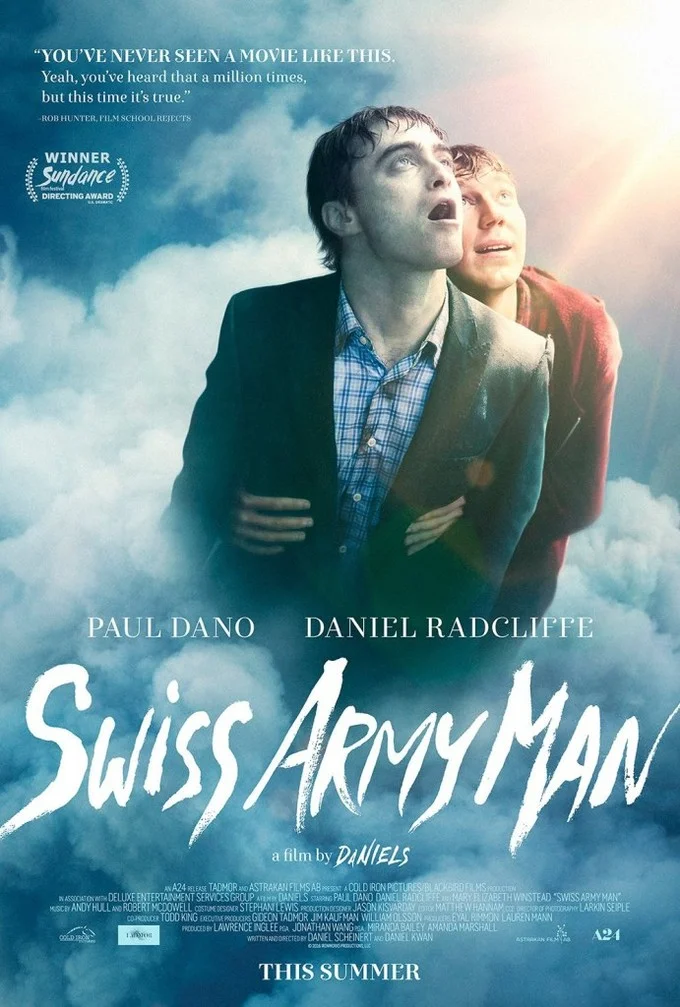
The film’s titular body Manny (a spectacular Daniel Radcliffe) has the supernatural abilities of his title, but has neither a memory of his pre-corpse life nor humanity at all. Meanwhile, Hank Jones (Paul Dano) is buried in the memories of his own life and lacks the courage to pursue love and friendship. He can’t gather the courage to talk to the winsome girl on the bus (Mary-Elizabeth Winstead), though the secret photo he snapped of her is prominently displayed on his smartphone. It is this photo that churns the friendship between Hank, the man-child and Manny the corpse-man.

Hank discovers Manny just as he is about to end his own life on a deserted island somewhere in the Pacific Northwest. He soon discovers that, while the body appears dead, it contains an unfathomable amount of flatulence. So powerful is the corpse’s rear-engine that Hank is able to ride it/him across the water like a bare-assed jet ski, before capsizing and washing ashore on the mainland. In case you didn’t know what you were getting into, Swiss Army Man drops its trousers early. If you keep watching, it gets even better.
Manny’s transition from farting corpse to wood-chopping, fire-lighting, water-spewing Swiss Army Man takes place mostly in montages. Even though he is returning to life through the shared conversations with Hank, Manny is the one saving Hank’s hide. Chalk it up to the sparks between them--bromance, necro-mance, or otherwise. Manny is a like a scatological marriage of Pete’s Dragon Elliott, Zooey Deschanel’s Summer (500 Days of Summer) and a dash of Encino Man. At times, Hank is very easily carrying Manny’s farting corpse through the forest and other times really struggling with it. Dano apparently preferred to carry Radcliffe’s actual weight instead of a dummy. So the otherwise brute strength of a survivalist flick is realized in Hank’s very real struggle with a limp body. Likewise, Radcliffe wanted to do as much stunt work as possible, so the magical realism is grounded in very physical acting.

Written and directed by first-time film dabblers Daniel Kwan and Daniel Scheinert, Swiss Army Man is fresh and thoroughly motivated. Daniels, as the team is known, garnered fame for their music video for Lil John & DJ Snake’s “Turn Down for What” plus many other short compositions. Swiss Army Man sometimes feels like series of individual explorations that are self-contained enough to be a series of music videos starring the same characters. The soundtrack was composed by Manchester Orchestra’s Andy Hull and Robert McDowell (both of whom appear in cameo roles). The score evolves from Hank’s frequent choral renditions of songs like “Cotton-Eyed Joe”, where his voice is doubled and looped into a mesmerizing chorus that often touches the life-affirming buzz of a Polyphonic Spree song. Hank’s songs take on a supernatural quality and reveal one of Hank’s only coping mechanisms for his lonely life. Additionally, they reinforce the film’s theme of scatological alchemy, spinning fart’s and Eurotrash music into gold.
Swiss Army Man, for all its weirdness, seeks to prick the very real emotional center of existential crisis. It does so by shuffling performances of wilderness ritual with juvenile sensibility and arrested development. When the two leads are trapped in a valley, with little to do but re-create the bus-stop interaction that initially motivated Hank’s suicide, the movie channels Michel Gondry and shines because of its commitment to weirdness and not in spite of it. Swiss Army Man uses the beats of rom-com and survival movies to jostle an audience laboring under the delusions of pop-culture truths. Witness a triumphant film that throws a lot of paint on the canvas and beams proudly at its mess. Swiss Army Man is a bit aimless, but packed with committed performances and a weird beating heart.
Rating: B+