"Dom Hemingway" Review
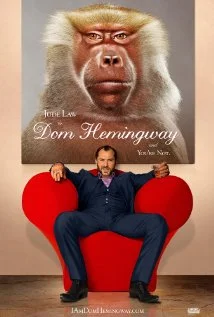
The opening monologue sets up the rest of “Dom Hemingway”. We hear a prison door open while visually we see red, and then we watch in a mid-shot as a naked Dom (Jude Law) gives a three minute monologue about his private part. It’s a scene that writer/director Richard Shepard won’t let you turn away from. It’s something that shows the insecurity, vulnerability, anger, poetic wordsmithing and self-taught swagger that is stored up inside Dom. It sets the rules for a stylistic character study of Dom Hemingway, a flawed safe-cracker who despite his bravado is just a man who wants to be loved.
After finishing a 12-year sentence in prison, Dom is let back out into the real world. While serving his time for an untold crime for boss Mr. Fontaine (Demian Bichir), Dom didn’t name names or talk with authorities. For that, his best friend Dickie (Richard E. Grant) has been sent to pick him up, show Dom a good time, and bring him to Mr. Fontaine. Before he arrives in the French countryside, we see how volatile Dom is as he finds the man who dated his wife while he was in prison and rearranges his face. It’s this “rules don’t apply to me” attitude that makes Dom such a colorful anti-hero scumbag.
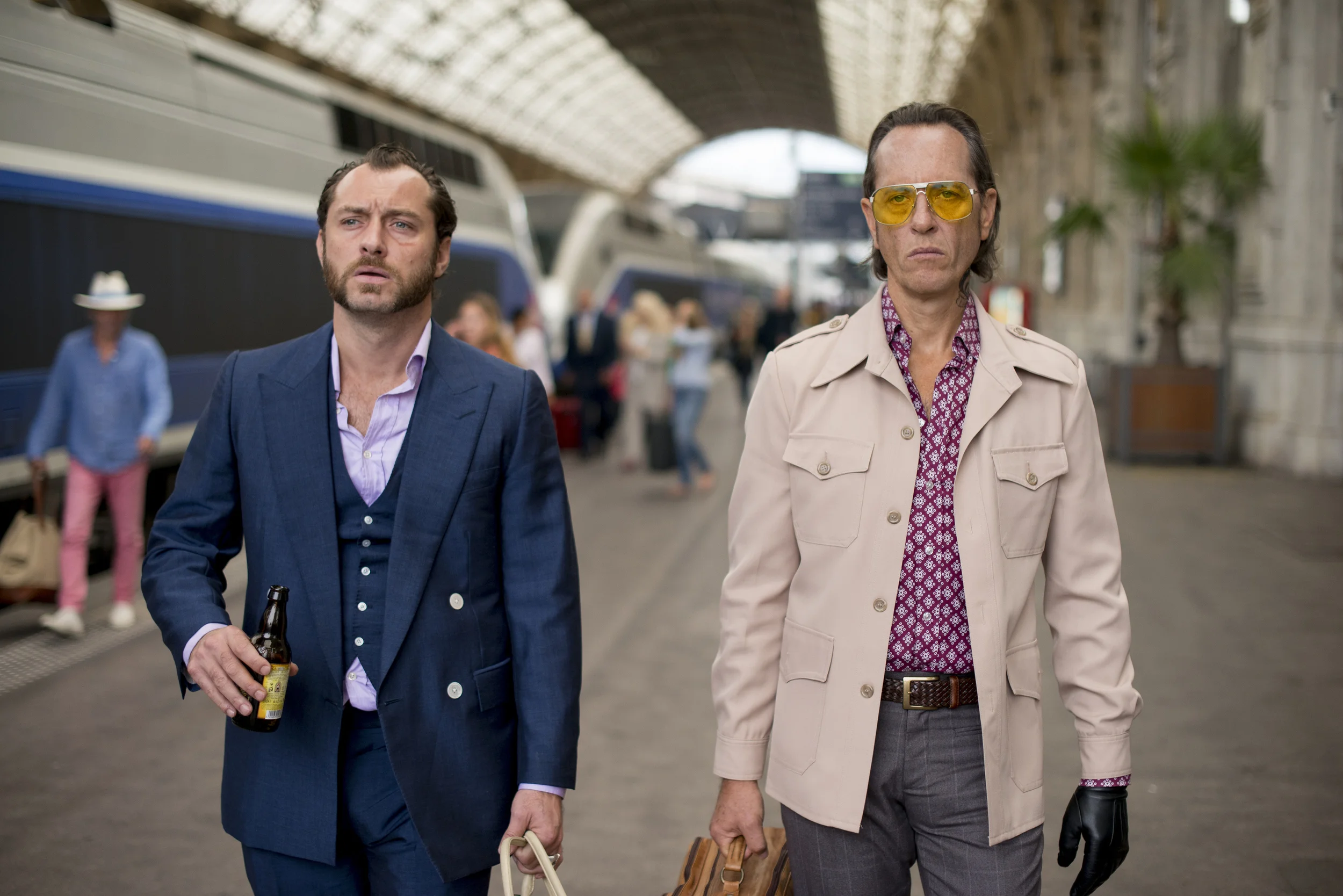
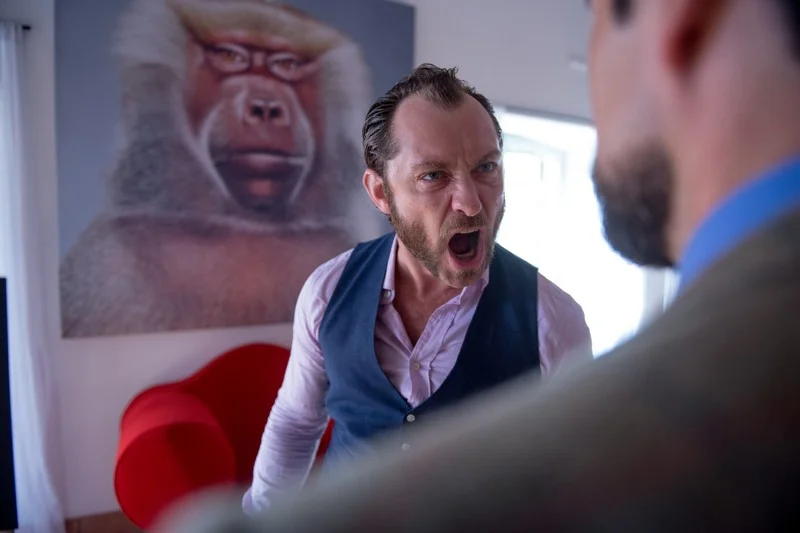
Wherever he goes, calamity seems to ensue as his mouth tends to get him in trouble. He has an explosive outburst with Mr. Fontaine that, while speaking the absolute truth about how 12 years has been taken away from him, he crosses the line and asks for Mr. Fontaine’s girl Paolina (Madalina Diana Ghenea) as a gift. He later asks for forgiveness and is given an enormous amount of money instead. As Dom parties with Mr. Fontaine and Dickie, he crashes the car he’s driving drunk and coked up. The accident allows Dom to show us his soft side as he rescues Melody (Kerry Condon) but gives Paolina the opportunity to steal and getaway with his cash.
With no money, and a busted up body, Dom turns to the one person he can think to go to; his daughter Evelyn (Emilia Clarke) wants nothing to do with her father. Yet even through the twelve years of pain, Evelyn is still kind enough to help her father get back to where “he can pee on two legs” before kicking him out. The rest of the movie is about Dom trying to get back on his feet and back into Evelyn’s life.
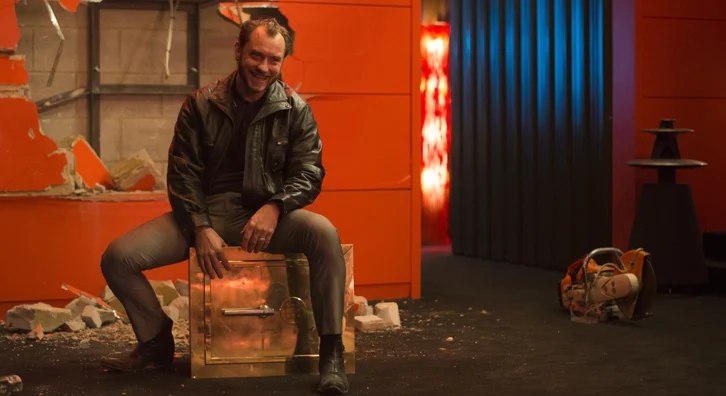
“Dom Hemingway” is one of the most memorable movies to come out so far this year. Jude Law’s performance is trans-formative as a train wreck of an anti-hero. While the film isn’t totally fluid in its’ story, Dom takes you to the finish line as only he can!
Rating: B
LUV
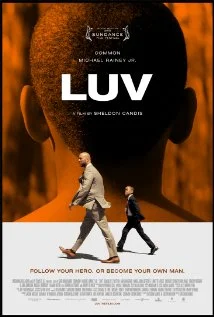
If you haven’t seen “LUV”, it’s a great indie pick for your Netflix instant queue (as of this review). It’s a unique look at masculinity, the absence of fathers and positive role models in the black community. In other ways it’s a “Training Day” meets “Boyz in the Hood” type of film. Although some parts of the film seem far fetched, this is a ride along that you can’t take your eyes off of.
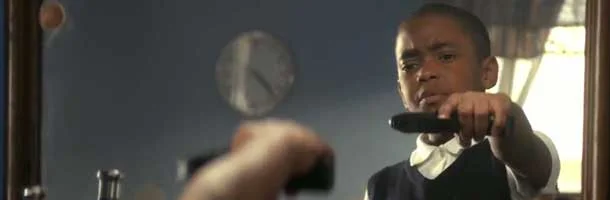
The film stars rapper/actor Common as Vincent. Having recently left prison, Vincent has big dreams of making a life for himself as an owner of a crab shack on Baltimore’s waterfront. Living with his mother for the moment, the day begins with Vincent takes his nephew Woody (Michael Rainey Jr.) to school. As some men do, Vincent asks Woody how he’s doing with the ladies at school. Woody replies as most 11 year olds trying to impress their uncle would, with a lie. When Woody hesitates to talk to the prettiest girl in front of the school after being pressured by his uncle, Vincent decides to take Woody on a day long lesson in the “real world”.
From there, the film plays like a film school master thesis...the refreshing “this kid is on to something kind”. Their first stop is at a tailor, where Vincent helps Woody to dress the part. Then it’s off to the market where Vincent meets with Cofield (Charles S. Dutton) to get a stolen identity and paperwork in order to apply for a loan for his crab shack at the bank. It’s this weaving in and out of loving moments and then into the crime world that makes the film interesting. The entire time young Woody sits close by watching, listening, and being influenced. His innocence being taken away slowly, meeting by meeting.
I hate when exposition is handed to you on a silver platter. That doesn't happen in this film even though it could. Instead, this film makes Woody our “eyes in” character. He asks the questions we want to know in a natural flow throughout the day. How did Vincent get out of jail early? Every grown up he deals with seems to be worried about that answer but we’re not sure why. Where’s Woody’s mother? Woody obviously misses her and pines for her return. This helps to create and extend the suspense throughout the film.
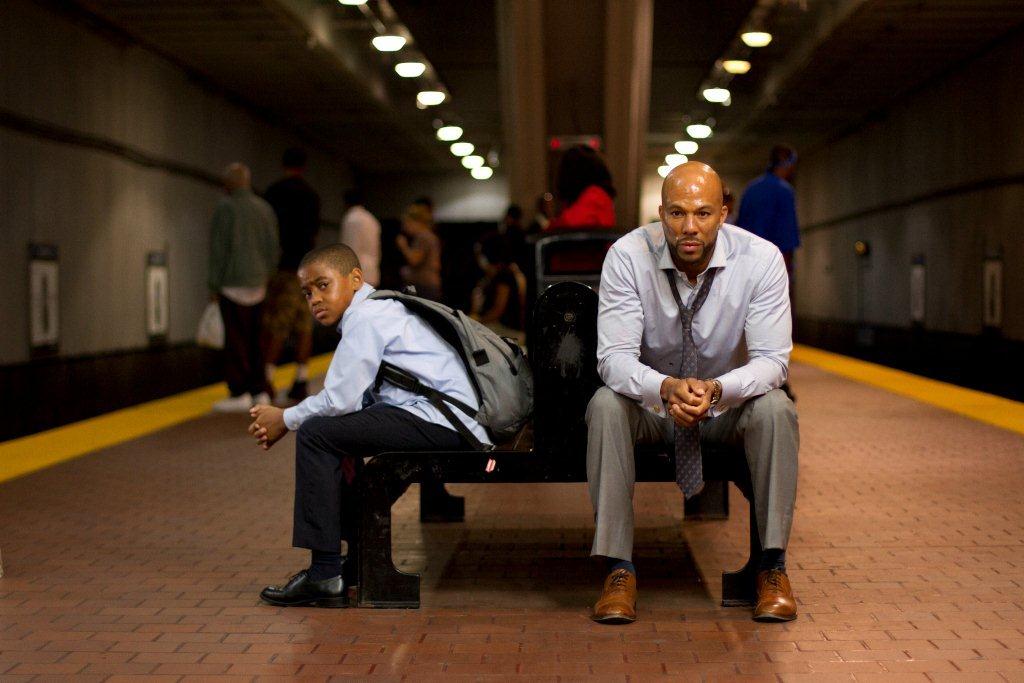
As the day moves forward, Woody is exposed to Uncle Vincent’s world of deceit and criminal history. Every journey to a new location builds on the last. Woody learns by seeing and doing with his uncle. The “skills” that Vincent equips Woody with early in the day come into use later on as well. The truth is, Vincent is a morally confused ex-con whose outer dashing appearance cloak his darker thoughts. Showing Woody how to dress and drive his car in one scene, and then how to shoot a gun in the next. Yet, this is so believable because it happens all the time in portions of all communities. Kids have ideals of what manhood means impressed upon them by those around them that may not have a total grasp on it themselves.
The film is a who’s who of black actors with Common, Dennis Haysbert (Fish), Charles S. Dutton, Danny Glover (Arthur), Meagan Good (Beverly), Russell Hornsby (Det. Pratt), and the list goes on and on. Being able to swing to either extreme of the pendulum of morality throughout the film, Common shows real growth in his performance as an actor. Michael Rainey Jr. gives a decent performance as a young boy in need and looking for love.
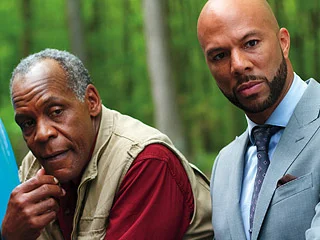
There are a few scenes in the film that call for you suspension of disbelief, but writer/director Sheldon Candis helps us to move through it with the help of Cinematographer Gavin Kelly’s visual handy work, and Composer Nuno Malo’s brooding scores. Candis is definitely a young director to watch. He has delivered a solid film, that refreshingly makes social and demographic statements without hitting you over the head. By taking familiar stereotypes but not giving an uplifting lesson, the film allows its viewer to have their own takeaways.
Rating: B
Compliance

Compliance is an experiment in how long its viewer will comply to watching the film before walking out of the theater or shutting your TV off. Director Craig Zobel has created a technically stellar film, but the backbone of his creation-its script-is missing too many vertebrae, asking for your suspension of disbelief to hold it together.
The film begins with Sandra (Ann Dowd), the insecure middle-aged manager of the local Chickwich fast food joint, giving a pep speech to her teenage employees before the store opens. Shortly after the speech, the teens take their positions behind the counters and engage in trivial conversation. In fact, Becky (Dreama Walker) talks to her shift supervisor Marti (Ashlie Atkinson) about how one of the three guys she’s dating wants her to send him racy photos via her cell phone. Sandra, seeking the spotlight, expresses to Marti that she thinks she’s going to get engaged and how she too “sexts”. This is the beginning of competition between the insecure manager and her immature teenage employee.
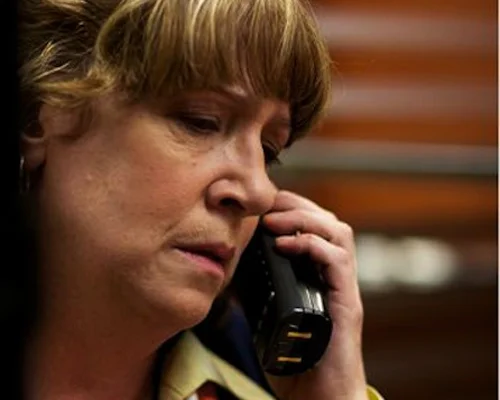
Shortly into the shift, Sandra receives a call from someone who claims to be a police officer. Based on the call, compliance-the disposition to yield to others, continues for the next hour of the film. The caller informs Sandra that Becky stole money from a customer’s purse, and that he has the victim with him. He also informs her that it’s all a part of a larger bust that he is currently consumed in on location at Becky’s home. These lies become the justification of why the caller can’t come to the restaurant and why those there must follow out his instructions. This film is based on real events, which is a sad statement on some portion of America. Not to be insensitive to those who fell victim, but the fact that a voice over the phone would incite someone to allow the atrocities that followed to take place is unbelievable. That’s the film's point. That’s the exploration. It’s something that is so unbelievable it could only happen in real life, and therefore perhaps it was not fit for screen...or at least this screenplay.
As the day moves forward, the caller gains his victims trust and submission through flattery and intimidation. He humiliates young Becky by having her be stripped searched to find the missing money, and then having almost every employee watch her at some point during the day. Most of the day Becky is only wearing an apron, and once Sandra is out of employees to watch Becky she resorts to calling her boyfriend to come and “stand guard” to watch Becky while they wait for him to come to the store.
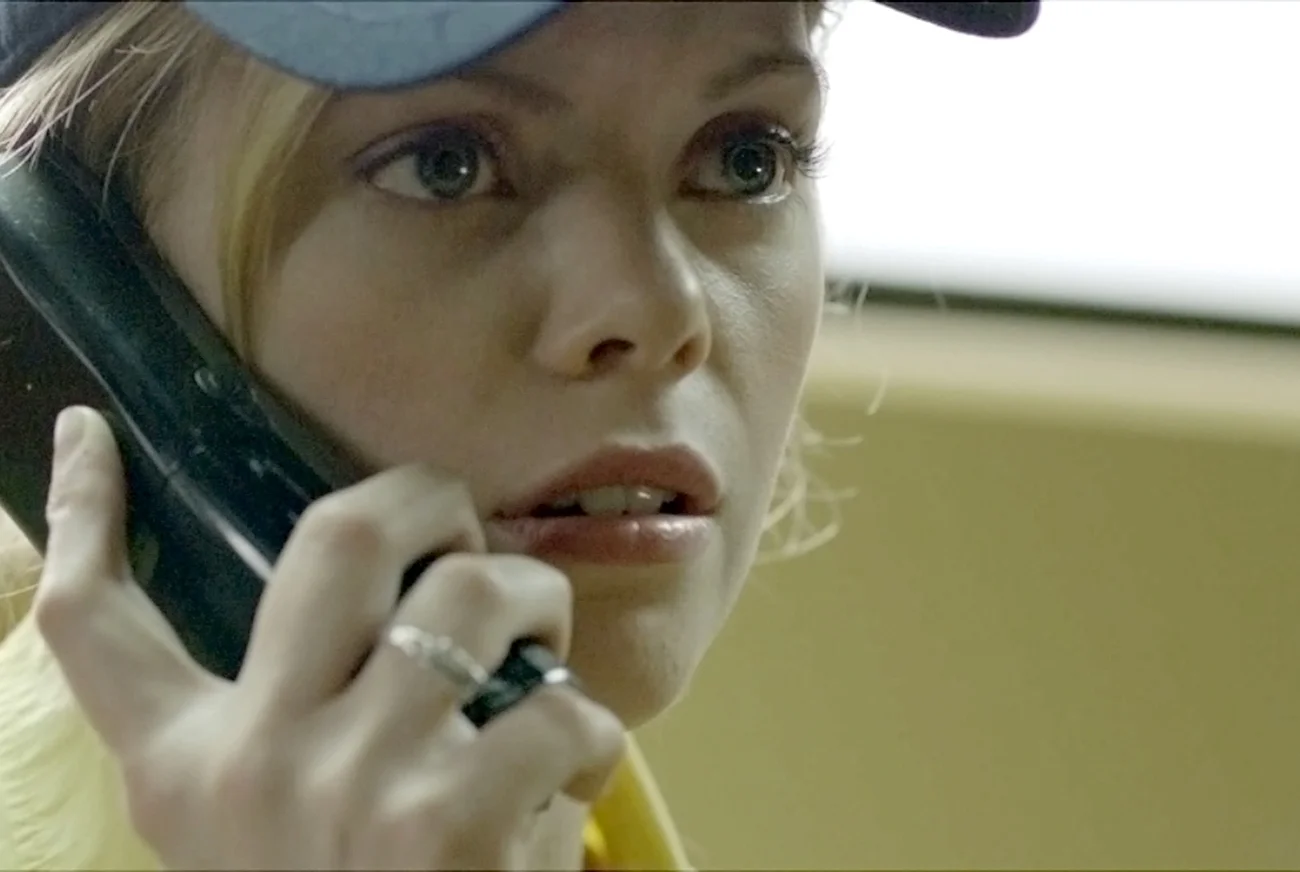
There’s no question that Zobel has a mastery of direction. His camera work and pacing helps the viewer to feel uncomfortable. Shots of scum, old fries, and gunk embodies visually how dirty we feel as we watch the characters sink lower and lower in their moral decisions as they comply to a voice on the other line.
In spite of that, the film feels like a joke. It’s supposed to be a high pressure environment, but it’s not brought to reality on the screen. At one point, the caller actually fixes a sandwich while talking with his victims. The most believable part is when the caller runs to get another calling card to keep the session going. I know, I get it. We’re watching how apathetic the caller is, but the dramatization is just poor.
Compliance is an examination of how humans can let a situation spiral out of control. There have been many mob mentality films that have achieved and passed this test, but this one doesn’t because it doesn't feel authentic. The final twenty minutes allows logical thought to come back into the film, but after putting aside logic for the first hour and change it’s far too late unless you too complied. Technically the film is just short of a master class, but the script just doesn’t work, even if it’s based on real events.
C+