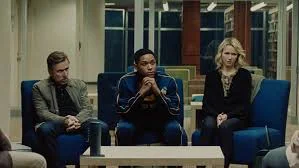
Sundance 2019: "Luce" Review
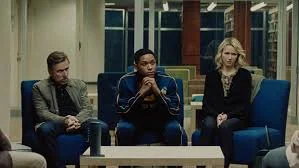
Luce explores the delicate line between the perceptions that people have of other people versus the truth of who they are. While our individual experience is on a spectrum, human nature and history has placed its construction of race in boxes in order to “understand” each other. This film allows its main character to work within the constraints of those boxes to exploit the system in a powerful way that puts some of those ideals on trial.
Luce Edgar (Kelvin Harrison Jr.) was adopted from war-torn Eritrea by his white parents, Amy (Naomi Watts) and Peter (Tim Roth) at the age of ten. His parents helped him get through years of therapy to heal wounds from being a child soldier, and sacrifice to provide him the best life possible. Now a senior in high school, he’s fully acclimated to America and in fact, is a stellar student! He’s a beacon of light for his fellow students, especially the black population, and the weight of that is heavy on his shoulders.
The film’s inciting incident occurs when Luce’s teacher, Harriet Wilson (Octavia Spencer), calls Amy in to talk about a discovery she’s made. After tasking the class with an assignment to write a paper in the voice of a historical figure, Luce chose the radical Frantz Fanon, who believed in hurting others for a cause. On top of that, Ms. Wilson searched Luce’s locker and found illegal fireworks that pack the same punch as a shotgun. Ms. Wilson’s motive for bringing Amy in before letting anyone else make the discovery is to protect Luce’s reputation and make sure he succeeds.
With this information and the materials in her possession, Amy talks to her husband as soon as she gets home. This initial conversation is where both Amy and Peter start making judgements on Luce’s character, and we as audience members must make our own conclusions on the situation as well. As the story moves forward, little by little, we find out more of the big picture of what’s happening at school and see how characters in this world make judgement calls based off of pre-conceived and personal thoughts.
Situations like Stephanie Kim’s (Andrea Bang) possible rape during a party, and Luce’s ex-teammate Deshaun (Astro) getting caught with weed in his locker are all brought to the forefront of conversation in the film. What does it mean for Luce’s reputation if he participated in either of these activities? Why does Luce get special treatment over his friends? What does it feel like to be the person that everyone looks at for hope and expects to be virtually perfect?
While the film does interrogate these questions and the American dream on a large scale, screenwriters J.C. Lee and Julius Onah nail what being black, talented, and on a pedestal in America feels like. The ideal of tokenism (the one black person in a room/organization/team/etc.) and pressure to be on is something that Luce feels constantly, and is spot on. They find a sweet spot in making their point without hammering it home, which is hard to do.
Ultimately, this play turned screenplay is brought to life by its stellar cast. Kelvin Harris Jr. is undoubtedly an actor to watch! He commands the screen and authentically connects with the ability to perform in different spaces with uncanny finesse. The scenes where Octavia Spencer and Harris Jr. face off are electric and the things award nominations are made of. Tim Roth and Naomi Watts embody the sacrifice parents make for their children, and the individual struggles of giving blind trust versus questioning your child. Even the supporting cast members like Andrea Bang and Marsha Stephanie Blake (who brilliantly plays Rosemary Wilson, Ms. Wilson’s mentally ill sister) are exhilarating to watch. Their characters are real, dimensional people that you can connect with.
The music by Geoff Barrow and Ben Salisbury swell with tension and put you on edge. It supplements the story that unfolds before your eyes in a way that hits on all cylinders. Luce is a film that you want to watch again to not only to catch what you may have missed in a scene, but also the ideals explored that you may want to ponder over more. It’s a must see!
Rating: A-
"Birdman or (The Unexpected Virtue of Ignorance)" Review
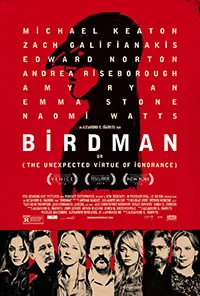
“Birdman or (The Unexpected Virtue of Ignorance)” is a cinematic experience. It’s one of the films that going into knowing very little about it, makes the viewing that much better. From the opening frame you’ll be swept up in its direction.
Michael Keaton is Riggan, once a big movie star of a franchise entitled Birdman, he is now directing and starring in an adaptation he’s written of a Raymond Carver story. He’s doing if for glory and redemption. He wants the court of public opinion to be swayed back in his favor. He wants to mend the relationship with his fresh out of rehab daughter, Sam (Emma Stone). Most of all, he wants to prove to himself that he still has what it takes.
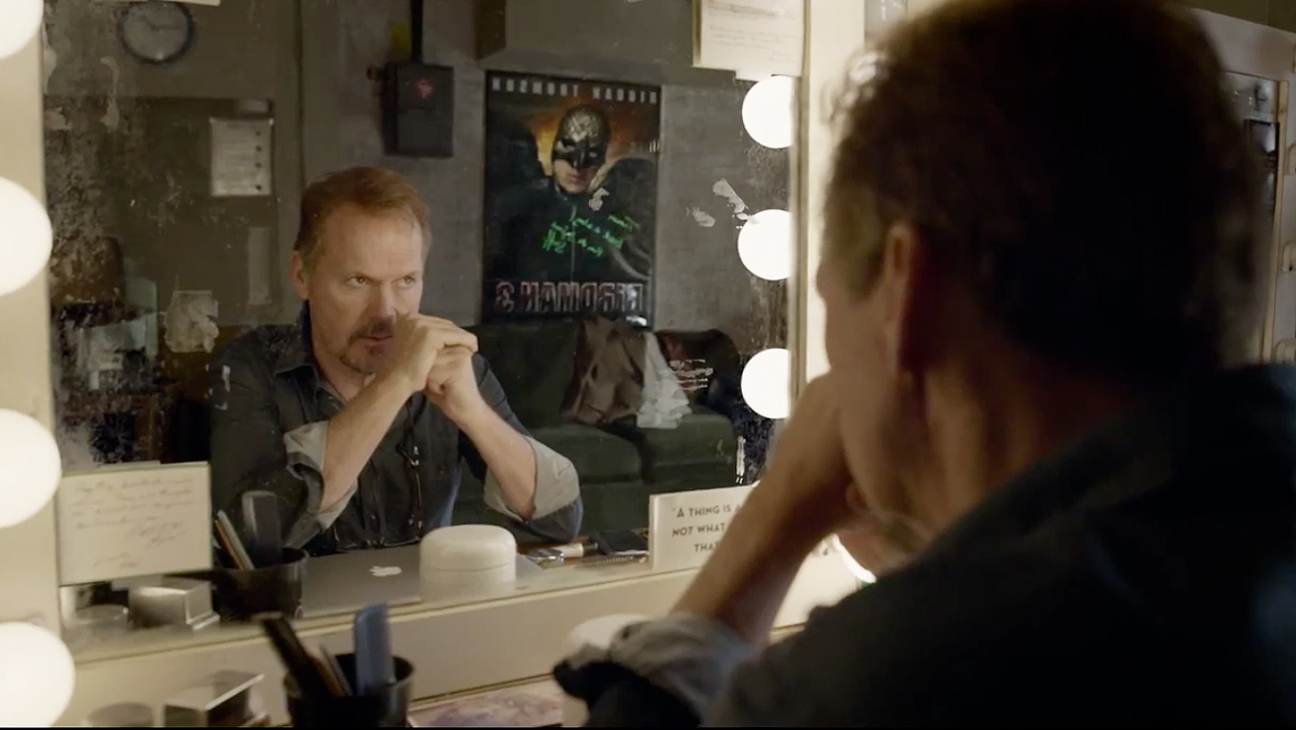
Throughout the film, Riggan is haunted by the voice of Birdman. His younger self continues to taunt him by telling him about how great he could, should or would be if. It’s the voice that we all have heard in our own heads at some point, but the difference is our voices don’t give us magical powers. It’s not even clear if the “powers” Riggan has are real in this cinematic world or not, but that’s part of the fun of the film.
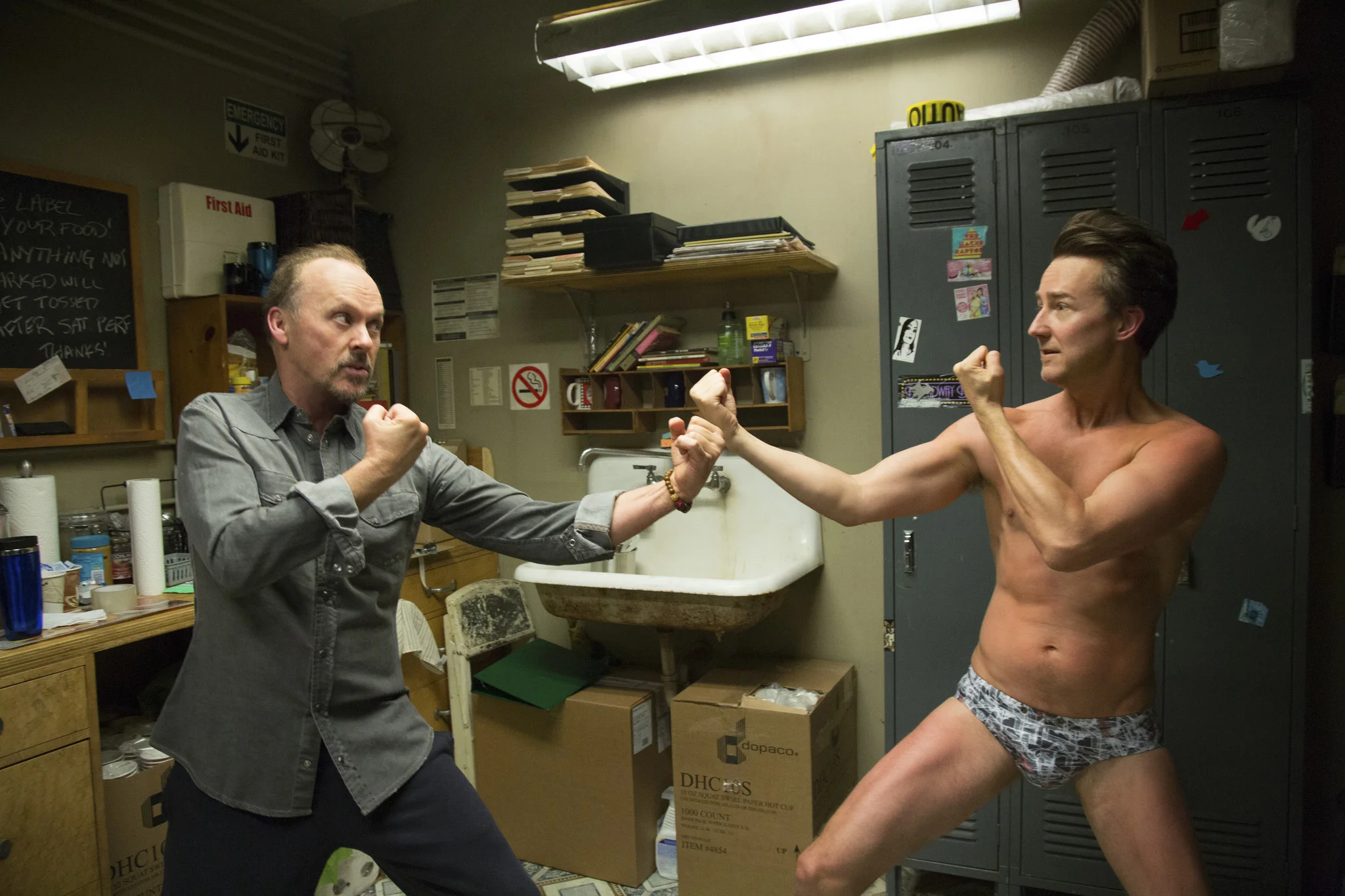
It doesn’t help that Mike Shiner (Edward Norton), the darling of Broadway, is now slowly making himself the star of Riggan’s play by inserting his method acting into the show. As the film moves forward, Riggan fights against himself and his young co-star for the praise of Tabitha (Lindsay Duncan). With one stroke of the pen, Tabitha’s critique can launch Riggan’s play to Broadway heaven or hell.
Co-writer/director Alejandro Inarritu and cinematographer Emmanuel Lubezki deserve more credit for the brilliance of this film. Inarritu’s vision to use single takes with invisible cuts makes the film flow seamlessly and forces the actors to deliver strong, in the moment performances. The occasional time jump that happens so discretely your mind has to catch up makes the film even more magical. It’s engaging and exciting to watch, and that kind of filmmaking doesn’t just happen. It’s a great collaboration between the visionary and the painter who ensures the picture will support that vision.
The intensity and mundaneness of life behind the curtain on Broadway is captured with just the right amount of ebb and flow pacing. The buzz surrounding Keaton’s performance is warranted as he quarterbacks the ensemble team. Each actor brings it in the film.
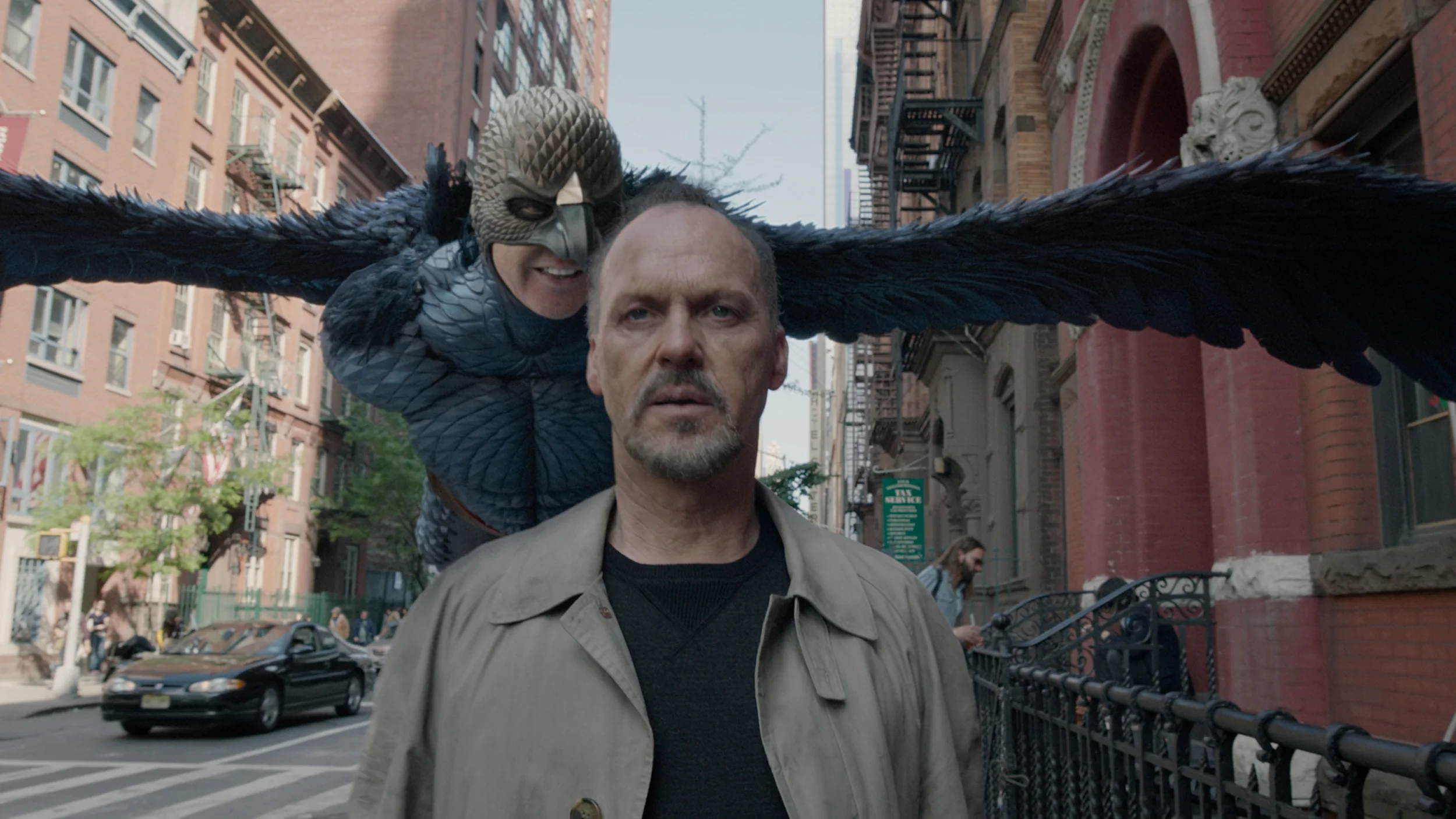
Overall, the “Birdman” is a bit trippy and sometimes you don't know what's real and what's not, but it's done in such an artistically inspired way that works for the objective of the film. Which on the surface is about a one time celebrity's internal struggle and fight to make himself relevant again, but ultimately it's about our desire/need as humans to be loved and remembered.
Rating: A