
Tribeca 2019: "East of The River" Review

Not every life is a fairy tale, but every life has moments of levity, beauty, and love that can be found in them. East of The River is a day in the life film about a young girl who doesn’t seem to have the best life, but she’s making the best of it. Teonna (Ayiana T. Davis) is unexpectedly suspended from school. After trying to find out why and getting no answer, the only question she has is if she can still get breakfast. Suspended and forced to hit the streets, Teonna links up with her friend Malik (Malachi Mack) who seems to ditch school often. They find Sara (Steloni Mason), who has given up school completely for money opportunities in the streets.

Sara takes Teonna and Malik on an adventure through Washington, DC and east of the Anacostia River. Teonna’s admiration of the older, seemingly more sophisticated Sara is seen through lingering shots of Teonna’s eyeline gazing up at her. Director Hannah Peterson has certainly picked up a few things after serving as a production assistant for Shawn Baker’s The Florida Project. Her use of first time actors to tell this story makes it soaked with authenticity. Peterson’s constraint in allowing a scene to breathe and take shape permits the audience to live in the moment with this group of teenagers. They may not make the most ethical decisions, they’re the kids you wish would be quiet and sit down on the metro, but this is life for them. These are the cards they’ve been dealt and this is how they deal with it.
East of The River is a short that could very well be turned into a feature down the line. Its characters are fully developed and interesting to watch. If nothing else, it’s a good reminder that you can find beauty in the little things of life, and sometimes that gratitude can overcome your surroundings.

Tribeca 2019: "Noah Land" Review
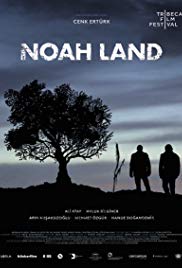
A thoughtful and provoking debut from Cenk Ertürk, “Noah Land” immediately grabs you with a nostalgic score whose auditory familiarity is appropriately somber.
Coming to terms with his terminal illness, Ibrahim (Haluk Bilginer) asks his son Ömer (Ali Atay) to drive him to the village in rural Turkey where he was raised. However, Ömer soon realizes there is an underbelly to this request that slowly surfaces. In short, Ibrahim wants to be buried beneath a tree he planted as a boy. This tree, and more specifically this land, however, had been in dispute which is what cast Ibrahim’s family away from the community years ago. Since, the land has become a holy site of sorts, deemed the “Noah Tree” after the Biblical figure whom the villagers believe first planted it. Ibrahim, adamant of his just burial, must convince his ever-conflicted son for help while he too battles his own demons: a divorce and an insatiable anger brewing out of unaired grievances between himself and his father. Sentimental perhaps, but it is unclear what Ertürk is aiming for with this film. A slow-burning, dry drama that leaves you questioning how you feel about any of it all.
Ertürk uses a conventional color palette nicely throughout, replete with fiery oranges and deep-sea blues. He also uses earth tones as a crutch and the natural beauty of the landscape, for which no one could be faulted. Not as much a conversation piece but more a declaration of fact: rural Turkey is beautiful. Of course, then, Ertürk uses the tree as a central motif to bleed through the photography and color design of the film.
While the score offered a soft blanket to rest on, the sound mixing needed work. Oftentimes too loud, the SFX of breathing felt more like an editing misstep than a creative choice. But the issues didn’t stop there. The film’s problems begin almost immediately, as Ertürk throws the audience into the deep end without explaining how the principal characters connect or even why they act the way they do. Let us begin with the first scene with Ömer and Ibrahim. Ibrahim, sick and elderly, struggles to get out of the car and even more so on his walk into the nearby convenience store. Yet his son, Ömer, not only doesn’t offer to help him, but takes a piece of gum out of his mouth and wedges it into the lock of the passenger side door so that his father must sit in the back. Without the context of their relationship, Ömer’s action appears unnecessarily cruel. Even when we learn more about Ibrahim’s abandonment of Ömer and his mother, it is difficult to sympathize with him.
That being said, as Ibrahim states, “there is a very fine line between revenge and justice,” and Ertürk is using the character to explore that idea. And while Ömer’s relationship with his father is sensibly complicated, it’s his relationship with his ex-wife, Elif (Hande Dogandemir), where things really get muddled. This, of course, is not to discredit the characters themselves because all three actors give incredibly evocative performances. Simply put, Ertürk hasn’t given the audience the means to understand their unique perspectives.
In a thematically driven narrative where metaphor is ubiquitous, it is expected that Ertürk wouldn’t stick every landing. But I’d be doing a disservice to dismiss this film entirely as a failure. It has a plethora of redeeming qualities that would bring me back for a second viewing, including an ending that makes you question—what is it in our dreams that causes us to act in the present? The longer we spend with Ömer and Ibrahim it is clear the apple doesn’t fall too far from the tree, and at its core, this film paints that picture nicely.
Grade: C+
"The Trouble With The Truth": An Indie Gem
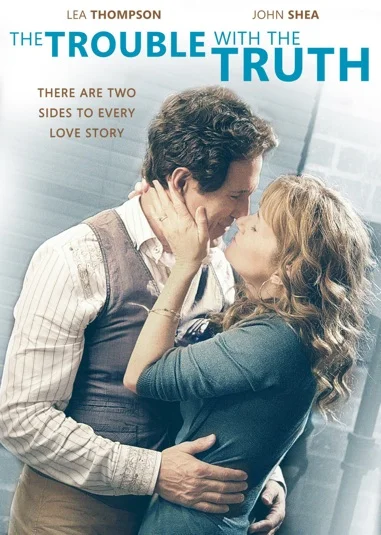
Similar to “My Dinner with Andre” and Linklater’s “Before” trilogy, “The Trouble with The Truth” hinges on a conversation between its main characters. Real time conversational movies are difficult to master because the dialogue and actors who deliver it have to be on point. It lives or dies with both components. Writer/director Jim Hemphill, however, has the perfect storm in this romantic indie drama.
Robert (John Shea) and Emily (Lea Thompson) were married for 14 years before they divorced. Now, their daughter Jenny (Danielle Harris) is engaged to be married and as most marriages do, it brings her parents together. After receiving a call from Robert, Emily agrees to meet him for dinner during her next trip to LA.
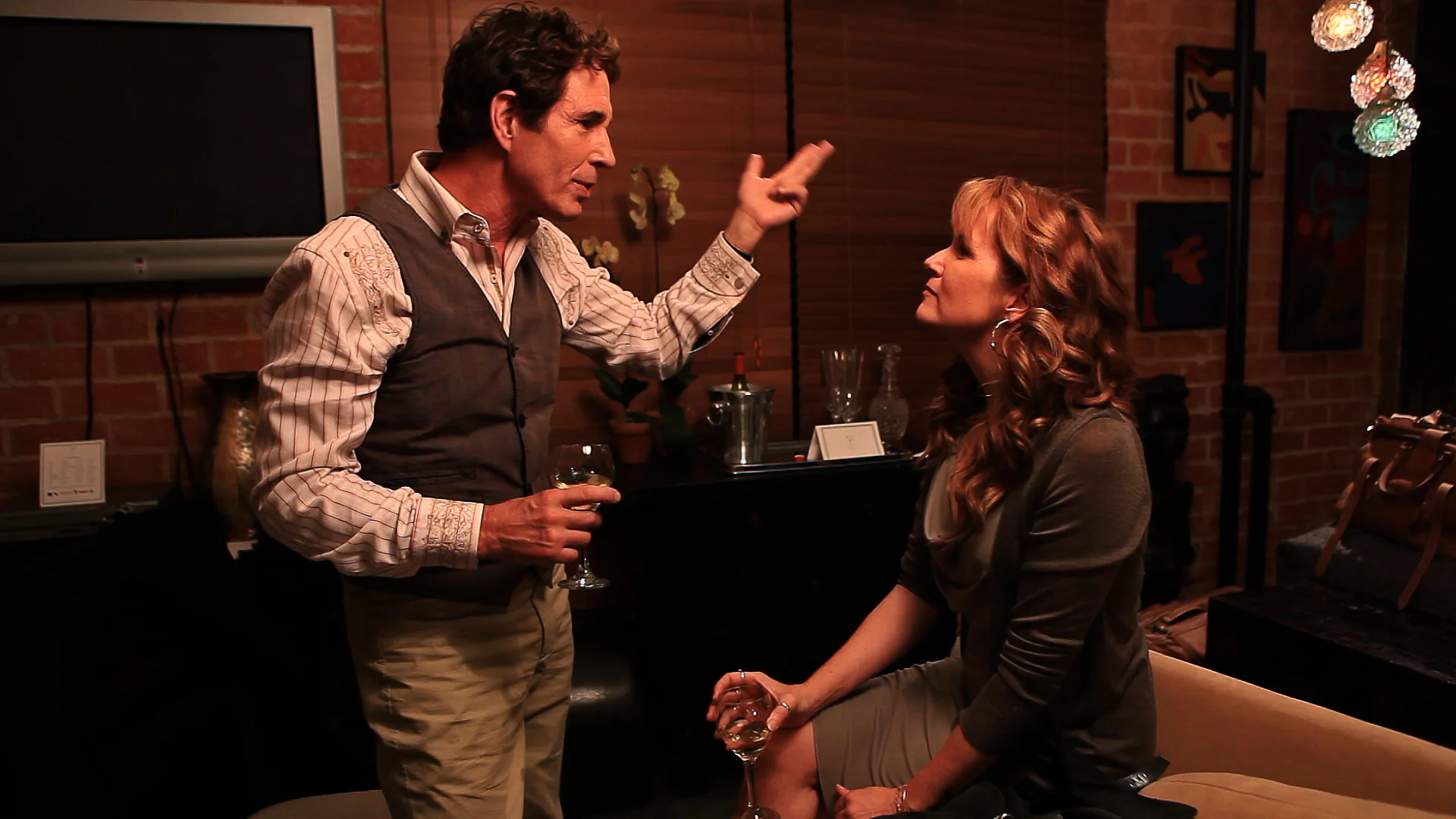
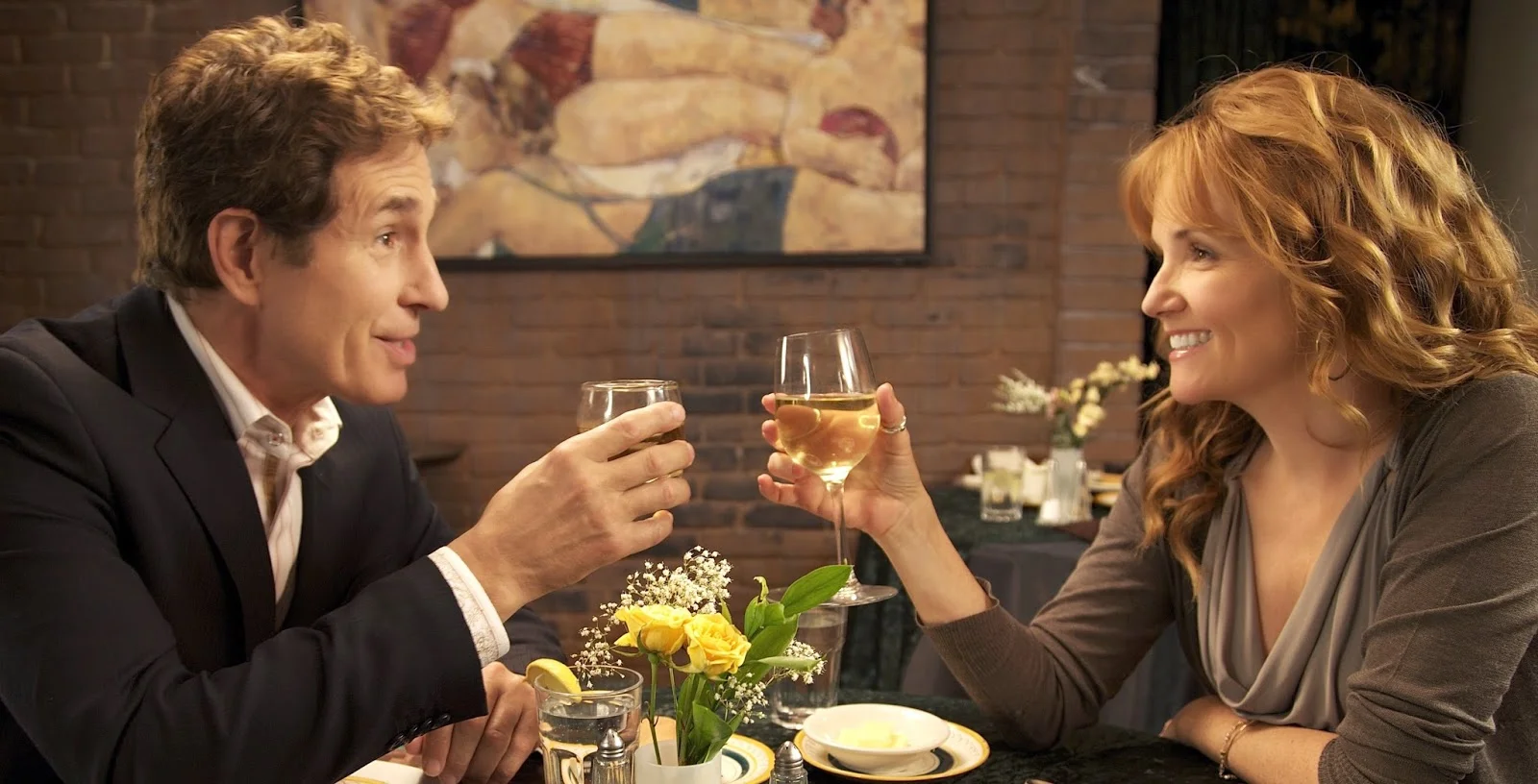
The two make small talk about Emily’s work as a novelist and Robert’s career as a musician at the bar before settling upstairs for dinner. The meat and potatoes (excuse the pun) of the film takes place at the dinner table. The two discuss their relationship, what went wrong, regrets, and their present relationships in one long conversation.
Hemphill’s dialogue is as close to perfect as scripted dialogue can be in a film like this! As the two talk, they dance around what they truly want to say at times and get to the point at others. This game of cat and mouse constantly throws logs and breathes life onto their old flame, building the romance of the drama.
The chemistry between Shea and Thompson is indisputable! As the conversation continues, the underlying attraction between the two grows as well. The simultaneous maturity of the actors (in real life) and character’s (on screen) wisdom spills out into their dialogue and acting nuances, creating a sexy concoction of suspense. Both actors connect with their characters in such a way that makes you want to continue eavesdropping for the rest of the 96 minute film!
Hemphill’s “Truth” rings true indeed. Every moment feels authentic, and is sprinkled with the right amount of humor to break up the serious tone. The build up to the finish line makes for a satisfying conclusion.The result is a romantic indie drama that’s worth the view and worthy of study for the low budget filmmaker!
Rating: A
Purchase the film on iTunes:
Check out my interview w/ writer/director Jim Hemphill:
"Bound to Vengeance" Review
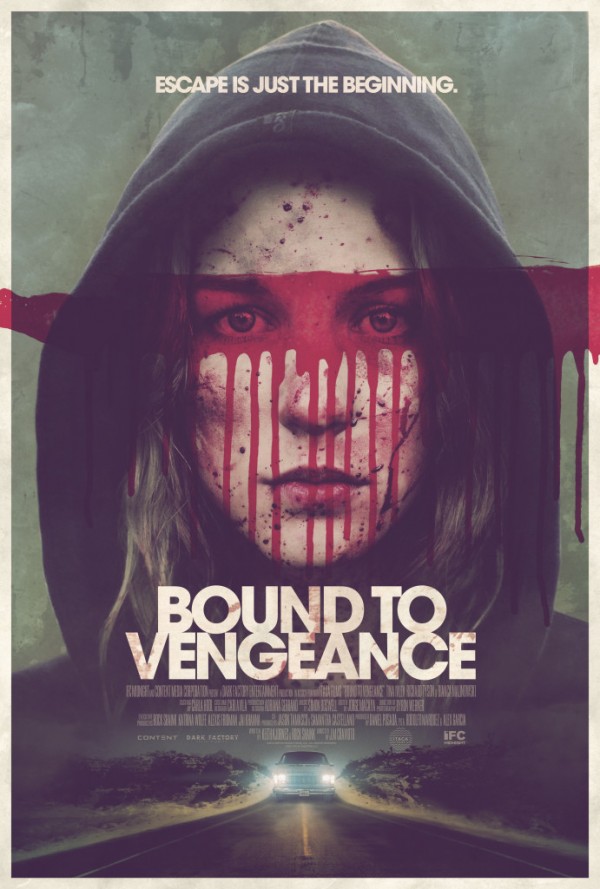
“Bound to Vengeance” is the definition of an indie thriller. In all honesty the movie asks for you to suspend your disbelief from the beginning to the end and there are a few predictable plot points. However, the style, minor twists, and willingness to play with the medium makes it bearable to watch as an average viewer and inspiring for any up and coming indie filmmaker.
Eve (Tina Ivlev) has been held captive in the highly secured basement of a sexual predator named Phil (Richard Tyson). We don’t know how long she’s been there, but the film picks up moments before her escape. Eve is smart, and it seems she’s thought through how to subdue her captor but it’s apparent that she doesn’t know where she is as she exits the house at dusk. With the keys to the only vehicle outside missing, she reenters the place that she knows.
As she rummages through the house, she comes across polaroids of other young girls with numbers by them- including her own. Eve creates a makeshift dog pole catcher with a shower rod and telephone line and uses it to keep Phil at bay as they begin an overnight journey to free the rest of the girls from the polaroids. Of course, this is where the movie derails logically. Why doesn’t she just drive off and call the police? What if Phil has a trap ready for her at another house? If you can swerve around those major plot holes, and accept the movie for what it is, you will be drawn in to Eve’s journey.
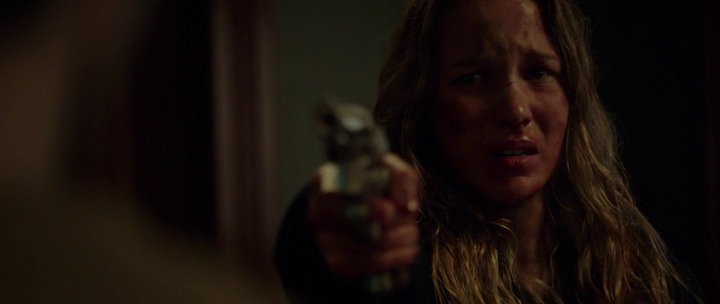
With each house she visits and girl she interacts with, Eve learns something different. There’s no doubt that there’s something about Eve that makes her an awesome heroine. With each stop she puts together the pieces of the puzzle of her kidnapping and so many other girls, while getting some revenge along the way.
Ivlev takes the weight of the movie and carries it in a worthy manner as the lead. She plays Eve with enough gravity to be feared and nuance to be believable. Based on his work in this film, I’m curious to see director Jose Manuel Craviato’s native language films. Craviato plays with the medium in a way that big budget movies rarely do. In one scene, Eve searches for the end of a land line phone, tugging on the chord. With each tug, the camera moves, until it falls to the floor as Eve rushes over to it. This small moment in the film is one of many that shows Craviato’s skill regardless of the script. The cinematography by Byron Werner is also worth a mention as he paints with reds and greens throughout the film, helping to support the repulsive nature of sex trafficking.
While it showed potential for being a revenge thriller with a great female lead, it falls short of the mark. “Bound to Vengeance” is a good choice for Netflix or Redbox.
Rating: C-