Annapolis Film Festival '16: "Little Miss Perfect" Review
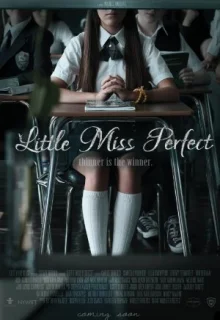
I saw Little Miss Perfect knowing nothing about the film. Admittedly, the dreamlike filter on the camera’s lens, prep school uniforms, and main character’s over-achieving persona as laid out in the opening scenes had me thinking I wouldn’t be able to relate to the film at all. Then, with one click on a website by the film’s protagonist, I was instantly hooked on a universal story about how we face the insecurities we all face in life!
Belle (Karlee Roberts) is the go-getter high school freshman who has the grades, proper ambition, and kind heart that other kids either ridicule or envy. She’s the school’s class president and headed for major success. Her father is in the home, but that seems to be the extent of it at the moment, as he deals with work and the new void of his wife. Her mom is a free spirit photographer, who has just left the family when the film begins. While Belle seems used to handling pressure, the vacancy of her parents in her life, and regular emotional instabilities that come with being a teenager, compound into an inescapable pressure cooker.

As the film moves forward, Belle begins to choose to do things that will make her happy and relieve stress. Unfortunately, those choices consist of dating Gus (Jeremy Fernandez), a decent-hearted flunky from the neighboring all male private school, and joining an online competitive eating disorder site where girls find pleasure in watching the numbers on the scale drop to unhealthy levels. While Little Miss Perfect explores eating disorders on a story level, it really serves as a backdrop to the deeper issues behind it like self-doubt, abandonment and feeling worthless. It also exposes the dangers of not asking questions or talking about the elephant in the room. As Belle’s weight continues to drop, everyone around her either helps her hide what she’s doing, like her best friend Lyla (Izzy Palmieri), or is too self involved to ask what’s going on and push past her seemingly perfect appearance.
First time feature writer/director Marlee Roberts does an excellent job of pacing and capturing each step of Belle’s downward spiral visually. Her frame speaks so the characters don’t have to. Whether Belle decides to confirm friending someone on the site, or shifts her salad around on her plate to make it look like she ate, the camera sees all. Subtle choices like Marlee (as not to confuse her w/ her sister/star of the film) keeping the camera on sticks throughout the film, but going handheld when Belle throws up in the bathroom for the first time or argues with her boyfriend, exhibit savvy skills of a budding director who is in tune to the cinematic story and technical side of filmmaking.
Little Miss Perfect is a timely film that speaks to members of today’s online generation who may chase likes and follows for self-esteem. We all want to be loved, and for a teenager with a vulnerable mind, it can be a dangerous thing when left unchecked. Yet, the message of the film for parents is to stay involved in your child’s life, and for teens is that you don’t have to struggle alone and it’s never too late to change. It’s a message I hope many people receive!
Rating: B+
Annapolis Film Festival '16: (T)ERROR Review
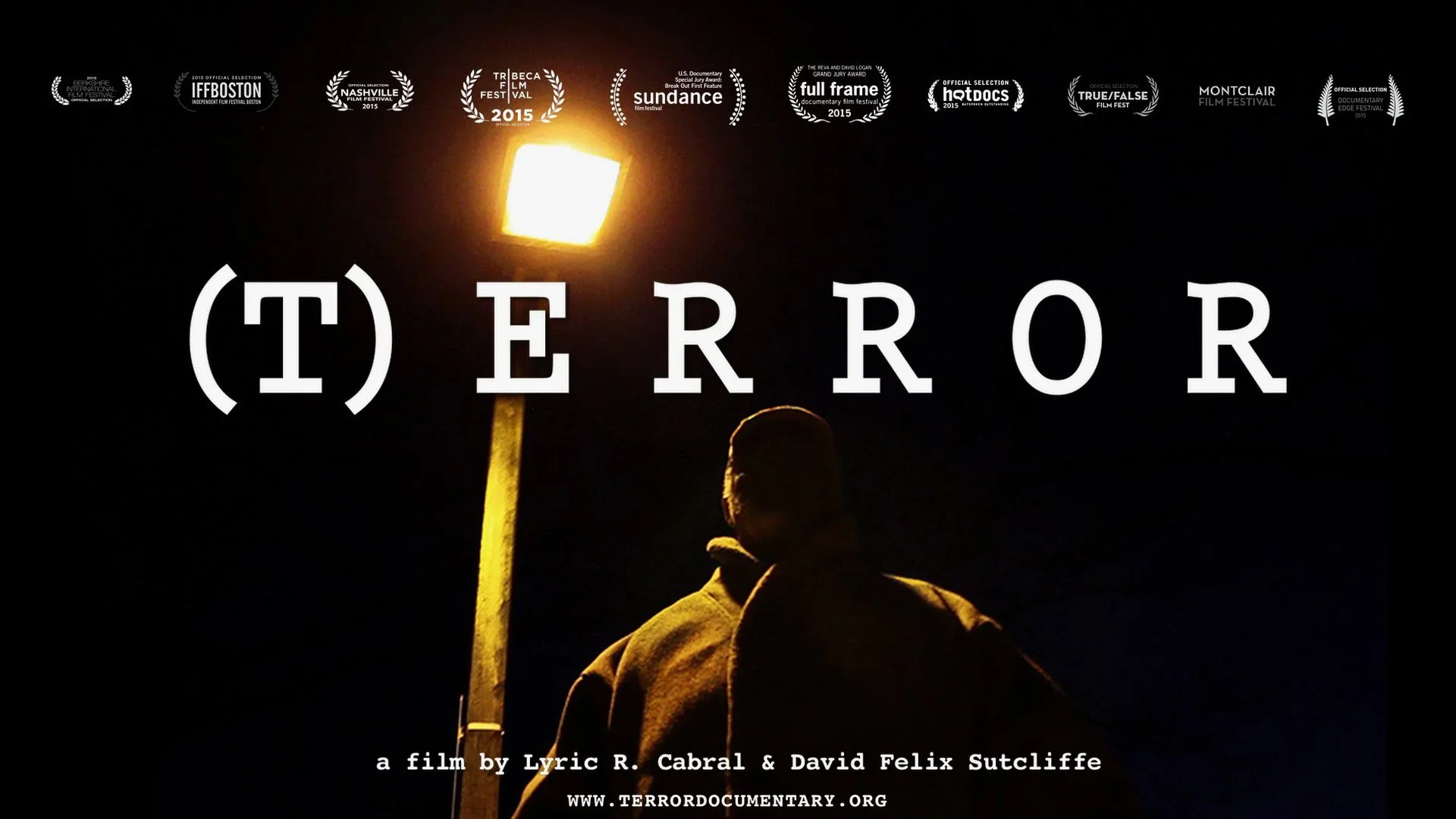
In a world where terrorists make the news weekly, someone has to be on the lookout for people who want to harm others. But what’s the price of that security? Who watches the watcher? What does it take to catch the bad guy? Saeed "Shariff" Torres, the main subject in (T)ERROR, is a documentarian’s golden goose. After two years of knowing the filmmakers, he confessed to being an FBI informant, and then proceeded to ask them to document his next assignment. What the viewer is presented with, is an astonishing, albeit limited look, at surveillance and the human impact of it.
We’re first introduced to Saeed as he complains about being on camera. It’s interesting because we find out that he wanted to be documented. Shortly after, he’s calm and enjoying a basketball game. He explains that he became an informant in exchange for a reduced prison sentence for a New York City robbery he committed. We find him getting ready to go to another assignment in Pittsburgh. He needs the money, and he doesn’t have any love for muslims who malign the teaching of the Quran. He only has an obvious love for his son.
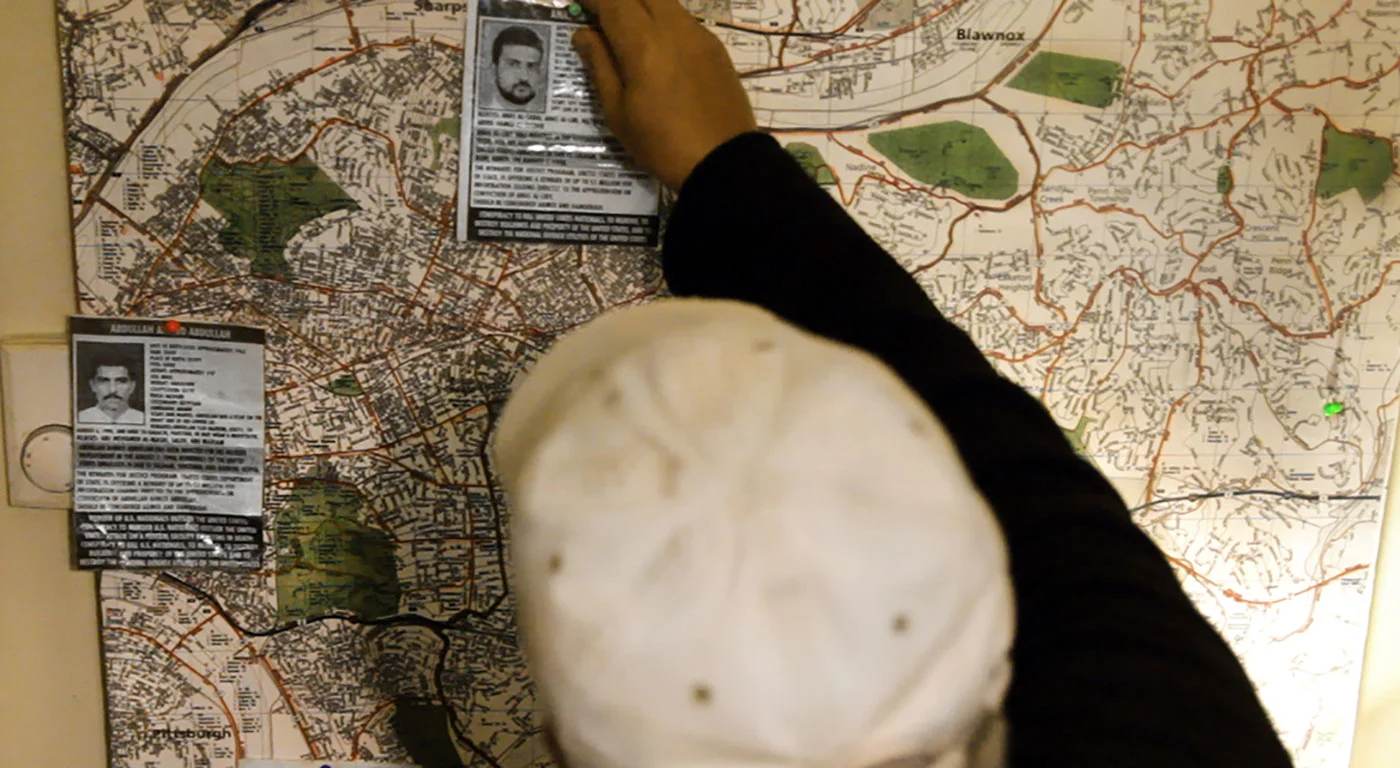
As Saeed begins to settle in the safe house in Pittsburgh we see a map that he pins photos on. He explains that he has a POI (person of interest) that he is going to befriend at the local mosque. He makes it clear that he has his own way of gaining their trust, and that if he did things the way the FBI wanted he would never get any of the busts he’s gotten. His arrogance is somewhat off putting, but the espionage drama pulls you in closer.
When we’re first introduced to Khalifa, Saeed’s POI, we see him in black and white surveillance photos. We see a picture of him with an automatic weapon. Probably most importantly, we see his appearance in muslim garb. So it’s easy to side with the FBI and Saeed. What directors Lyric R. Cabral and David Felix Sutcliffe do next is stunning as they interview Khalifa himself behind Saeed’s back.
As the viewer, you’re instantly hypnotized at watching a documentary being made without the FBI’s awareness with their paid informant Saeed; at the same time you get to see and hear the extremely intelligent, other side of the story through Khalifa’s own account of what he believes is happening. You’re able to put the truth together yourself seeing all sides “straight from the horse’s mouth” as they say.
(T)ERROR successfully leads us down a path of preconceptions and shocks us by providing truths that disturbs them. Perhaps the most disturbing realization is the questionable entrapment schemes set up by the FBI as shown in the documentary. Yes, it is limited in scope. No, paid informants aren’t new. But the questionable ethics of counter-terrorism as displayed is worth analyzing.
Rating: B+