
Sundance 2022: "Honk For Jesus. Save Your Soul!" Review
It’s in the title. Honk For Jesus. Save Your Soul! is a satire that takes aim at megachurch culture. There’s no denying that Writer/director Adamma Ebo nails this southern baptist story. It’s the type of comedy that may make some church folk uncomfortable because of how much bitter truth it tells via the medicine of humor. It’s a scathing dissection from a personal, intimate, inside view of this church denomination that will make you think and is worthy of conversation.
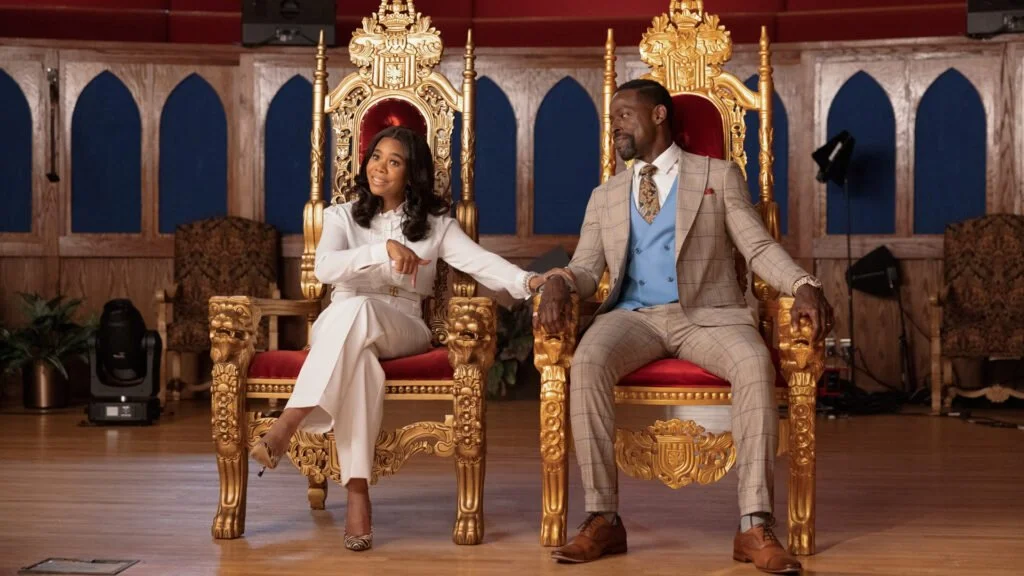
The film starts by introducing us to Trinitie Childs (Regina Hall) and Pastor Lee Curtis Childs (Sterling K. Brown) within Wander To Greater Paths church sanctuary. They are gearing up for their reopening of the church since scandal shut it down. In anticipation of the Easter Sunday return, they have hired a documentary film crew to capture their day to day preparations and show them in a positive light.
We’re slowly pulled into the lifestyle of the Childs. Pastor Lee wears designer clothes. His obliviousness to how conceited he is is matched only by how much he dims his wife’s light in order to shine. It’s obvious he has insecurities and we slowly discovery some of the demons plaguing him. We also get a glimpse of the crushing weight of religious culture, patriarchy and ego gone wrong with Trinitie bearing that load.
Three 6 Mafia’s “Popping My Collar” sets the tone for the film. Not only does the song kick the film off, but throughout it we hear strings and chords from the song that stitch parts of the film together. It’s a song about dressing fresh and pimping for money. It’s a subtle acknowledgement of how this film’s pastor does the same thing to his first lady and congregation in the past. By dressing the part and pimping Trinitie for her ideas, he has created his winning persona. In fact, throughout the film music tells a part of this story in ways that the writing doesn’t. With an unforgettable “Knuck If You Buck” scene, we see the dual nature of the Childs. The pastor and first lady should not be singing the unedited version of the song, but they hit every word. It’s actually an analysis of the dual nature of any human being. We all have good and bad inside. The pressure to appear sinless while being human is what the scene touches on.

Regina Hall is absolutely fantastic as the First Lady. She plays a wife who is holding everything in and portraying a public image of happiness while bitterness, hurt and resentment lay just under the surface. The nuance Hall displays in moving between fragility and strength is noteworthy. In a heartbreaking scene she wears praise makeup (white face with black lips and eyebrows) to try to get people passing by to honk for Jesus.
Sterling K. Brown’s Lee Curtis feels bi-polar as he pushes forward hitting highs and lows from scene to scene. He’s an emotionally abusive husband, masquerading as a man of God. He believes his own lies and forces those closest to him to stroke his narcissism. At first glance, Brown seems to have an easy role but his choices ground the character that may have been less complex on the page.
I didn’t grow up Southern Baptist, but I understand what growing up in a church community looks like. The truth is, a church is a group of imperfect people striving to do the right thing according to the Bible. Ebo’s world has a familiarity that comes from having grown up in a Southern Baptist church and questioning what was seen, both good and bad. The scandal of the film is ripped from the headlines, but the deeper questions being asked come from a personal place. So while this may be a satire, it’s also a manifestation of the artist’s wrestling with their upbringing that we can all benefit from in Honk being a jumping point for further conversation!
Rating: B+
Sundance 2022: "Master" Review
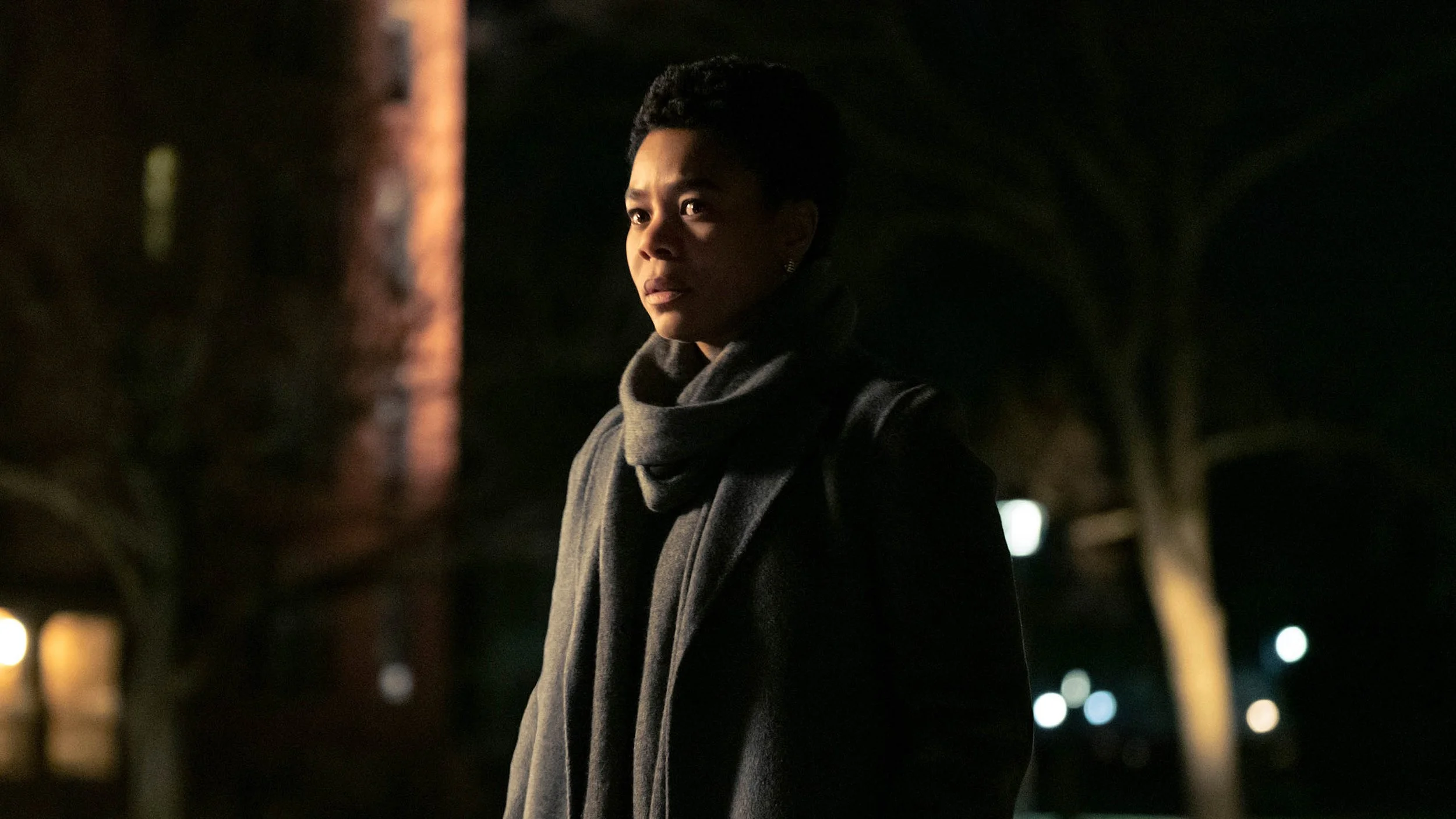
Writer/director Mariama Diallo takes a look at systems, racism, and the haunting of assimilation in Master. Billed as a horror film, it’s not the typical horror in terms of jump scares but rather the real horror of the affects of racism. Master has plot holes riddled throughout it, but its themes are worth exploring.
Gail Bishop (Regina Hall) is the new Master at a predominately white college in New England. As she is settling into her role, college freshman Jasmine Moore (Zoe Renee) is settling into hers. The campus has a lot to offer: parties, new friends, education, and hope for the future. As Zoe first steps on to campus with big, beautiful curls in her naturally curly hair. As she acclimates to the new environment, we see her hair straighten and look change.
Simultaneously, Bishop is trying to get acclimated to her new home as a Master, but strange things start to happen. Maggots appear in odd places; mini statuettes representing a Mammy, slave and other racist emblems seem to be hidden within the house. It doesn’t help that rumors of the occult and a witch are a part of campus lore. In fact, Jasmine’s room belonged to a black girl who died under mysterious circumstances and something seems to be coming after Jasmine.
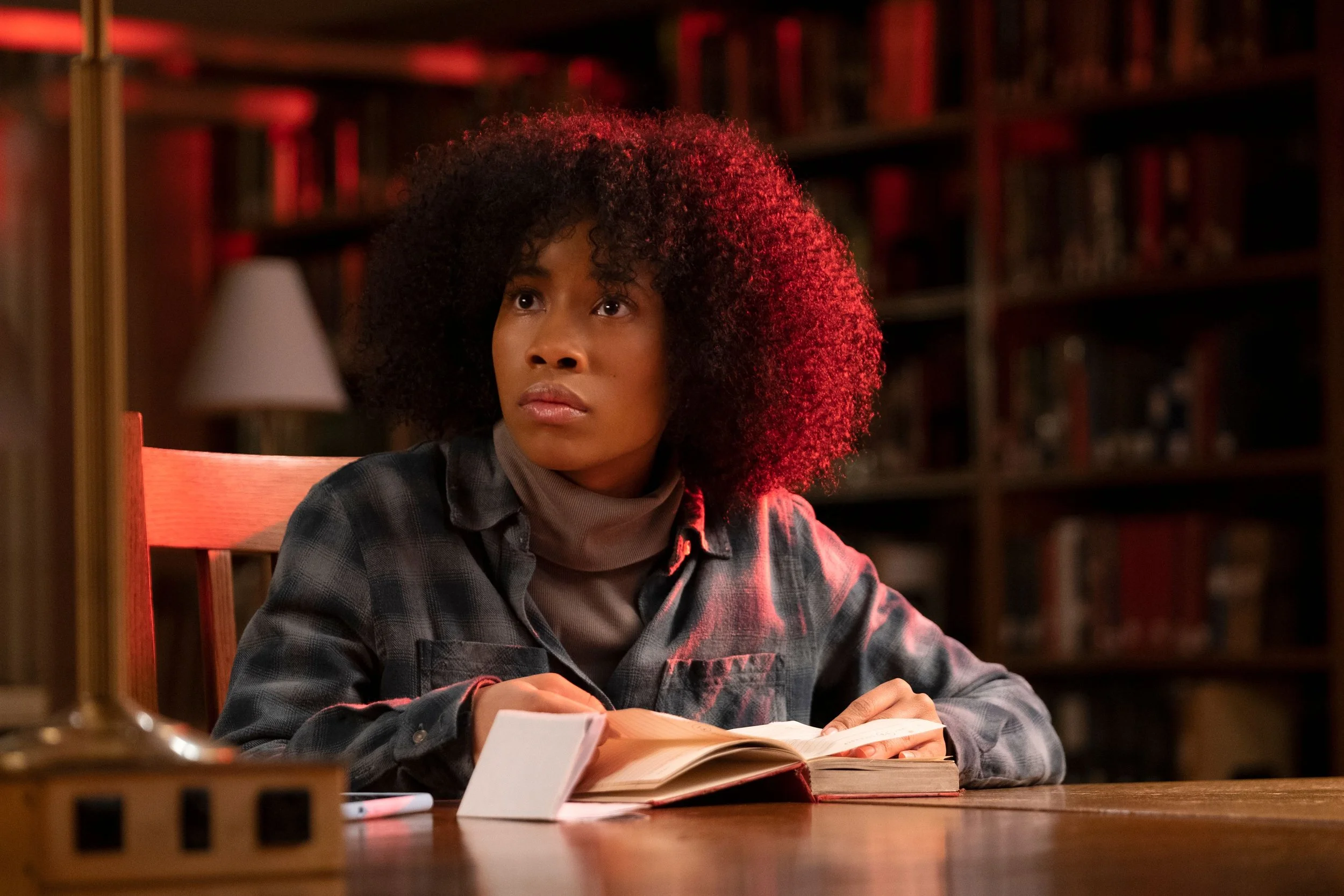
As a mystery starts to unravel, the link between past trauma, how black people deal with it and assimilation becomes more clear. Hall shines as an allegory for black people who “make it” and have to uphold an image of perfection while being human. Or do they? This is the question that Diallo puts before us. Do we still have to put up a front to be accepted while slowly killing ourselves on the inside by not showing up authentically?
The cinematography in the film uses muted earth tones. The brown skin of the main characters fade in to wooden tables, desks and chairs in different scenes. While in comparison, their white counterparts pop out of the environment. This smart decision by Diallo and cinematographer, Charlotte Hornsby, is one of the most subtle but brilliant choices in the film. This need to fit in to the point where the main characters fade into their surroundings is a move that the audience may not notice at first glance but feel subconsciously.
The film is a little off kilter in its handling of its characters. One particular storyline drops off abruptly without questions being answered. Another storyline concludes in such a way that will cause reflection. There is something that Diallo is trying to say and in this case perhaps the mixing of genre throws it off or at a script level some beats could be fleshed out. However, this is a good conversation piece for after the lights come up in a theater or at home.
Rating: B-