AFI Docs '15: "The Three Hikers"
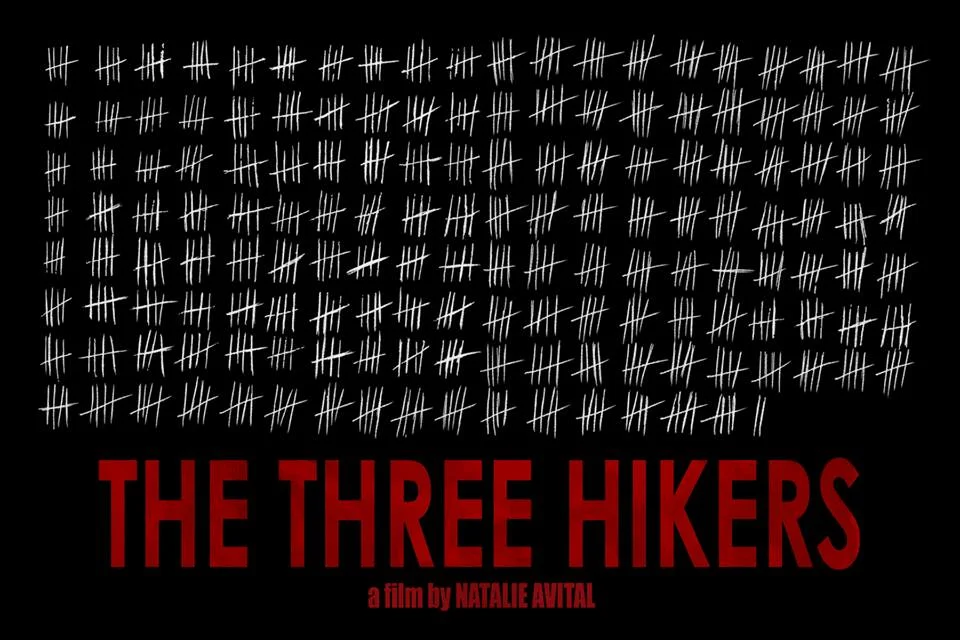
Much like 2014’s hit “Citizen Four”, “The Three Hikers” informs us of a story that received national attention. While most of us remember the story of three American hikers- Sarah Shourd, Shane Bauer, and Josh Fattal- who were detained against their will in July 2009, we don’t know the story from an insider’s perspective. The documentary gives us an intimate portrayal of the journey of the families of the political prisoners.
On July 31, 2009 Iranian border guards took Sarah, Shane and Josh into custody for crossing into Iran while hiking near the border. As the film begins we never see the three in an interview setup, but hear them in voiceover with reenactments visually detailing what happened. Occasionally we see footage taken by the hikers in the days leading up to being detained. The parallel story that runs is the families’ reaction to the news of their child/brother/sister being detained, drawing us in to the conflict and keeping us on pins and needles even though we know the outcome.

In truth, “The Three Mothers” may be a better title for the film because the story follows their fight to free their children. It’s in their story that the universal truth of the impact that a mother’s love can have on a person, situation, event, and beyond is told! The emotional journey is arduous, beautiful, and universally understood. The film also shows other family members (including Sarah after she was freed) who were truly integral in fighting for the hikers’ release.
Writer/director Natalie Avital strays away from the typical talking head set up usually seen in documentaries and keeps it intimate by getting family member’s thoughts on the go or in their homes. Going against having family members constantly give feedback to the camera in a controlled environment allows viewers to get a fly on the wall view that feels more personal rather than clinical. Avital obviously had the families’ confidence and trust as evident by the openness of each person who gave an interview.
Many documentaries end after a climactic event, and in this case it’s the release of Shane and Josh. In fact, the emotional reunion of them with their families would leave viewers on a high note by itself in which we can assume they lived “happily ever after”. Yet Avital continued to capture their lives after their release showing Shane and Sarah’s marriage, Josh becoming a father, and the group’s pursuit of advocacy. By taking the film a step further, it answers the "what happened?" after their release and gives closure to the tumultuous part of their lives but instills the hope and power the hikers have from bouncing back from it.
The film has its slow moments and the reenactments feel rushed and disconnected from the film at times, but overall it’s a solid documentary. There’s no question that the hikers and their families are closer because of this traumatic period in their lives. For all involved, they answered the question of: how far would you go to save a loved one?
Rating: B
"Maggie" Review: Almost but Not Quite
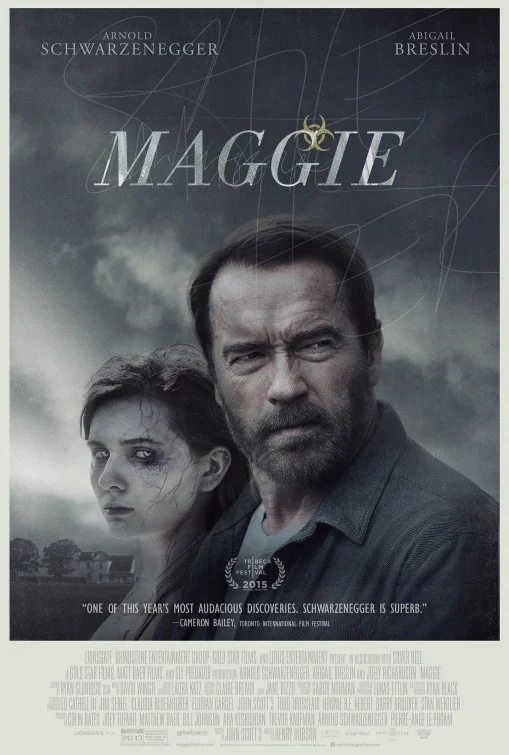
When your child is sick you feel helpless, but when your child is dying a part of you is too. Boiled down, that’s what “Maggie” is, or should be about. If director Henry Hobson and writer John Scott III focused on that phrase, then the film wouldn’t have been an average tale with a small twist on the zombie genre. It could possibly have been a movie that people would be talking about in early 2016!
There’s nothing more powerful than a parent’s love for their child. Wade (Arnold Schwarzenegger), a small town farmer, has spent weeks out in the zombie-ravaged city searching for his daughter Maggie (Abigail Breslin). He brings her back home after finding her in a hospital with an oozing zombie bite.
With limited time until she “turns”, Wade must decide what he will do once she turns into a zombie and Maggie has to deal with her “death sentence”. Most bite victims in town are taken away during the last couple of weeks before they turn or are killed, and the local police make sure Wade knows Maggie is no special case. Maggie’s step mom, Caroline (Joely Richardson) is equally skeptical of Wade’s decision but supports it with both eyes open.
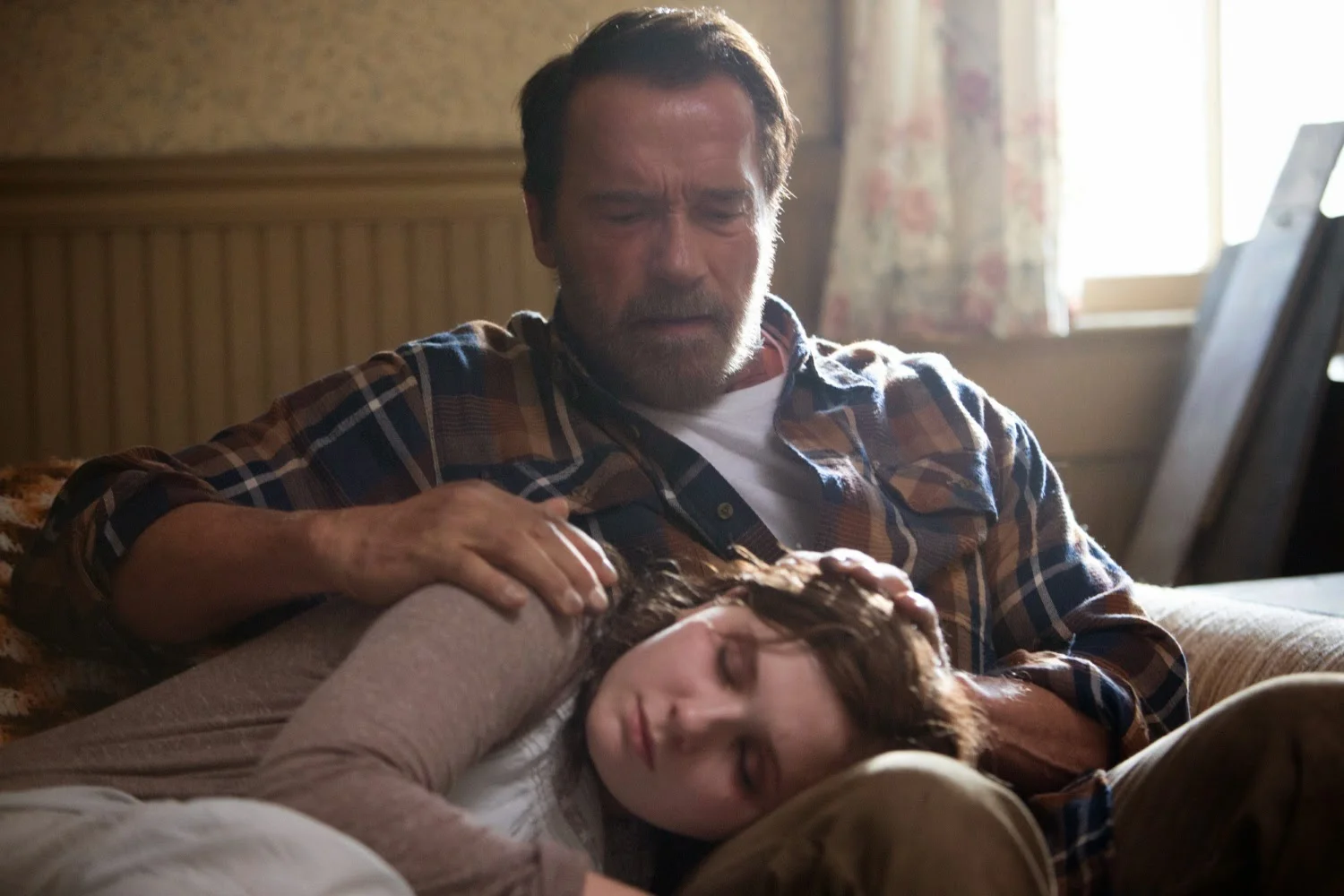
The anticipation of the end and the journey to get there has all the makings of a suspenseful, slow burn drama. Unfortunately, it derails a third of the way into the film. As Maggie deals with the loneliness of exile, she reaches out to Trent (Bryce Romero) an old flame further along in the turn then she is. Rather than keeping the drama to an intimate family problem, we’re forced to watch Maggie and her teen friends that we don’t care about deal with the turn.
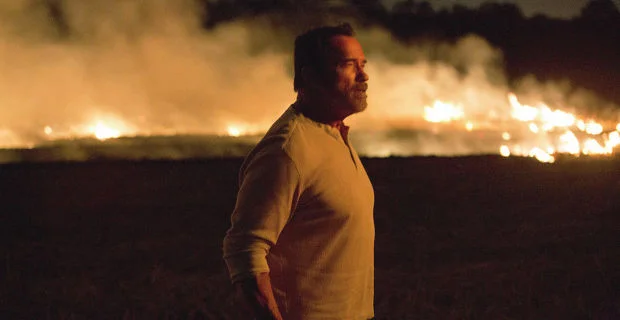
You can tell that Arnold dug deep for this performance, and while his dialogue and acting is still stiff at times, he certainly displays his internal conflict in his eyes. Breslin, on the other hand, seems to be swallowed by the character and disconnected from emotional gravity of the situation, which results in an awkward performance. Sure, she’s a teenager and teenager’s emotions are all over the place, but even a teenager can pinpoint and articulate their feelings verbally and nonverbally.
“Maggie” has moments of emotional significance that if explored further would have made it a better film. While on the surface it’s about a parent’s love, when the film plays out, it doesn’t quite tap into that power. Instead, it is an interesting concept that missed the mark.
Rating: C-
Tribeca Film Festival '15: "Stranded in Canton" Review
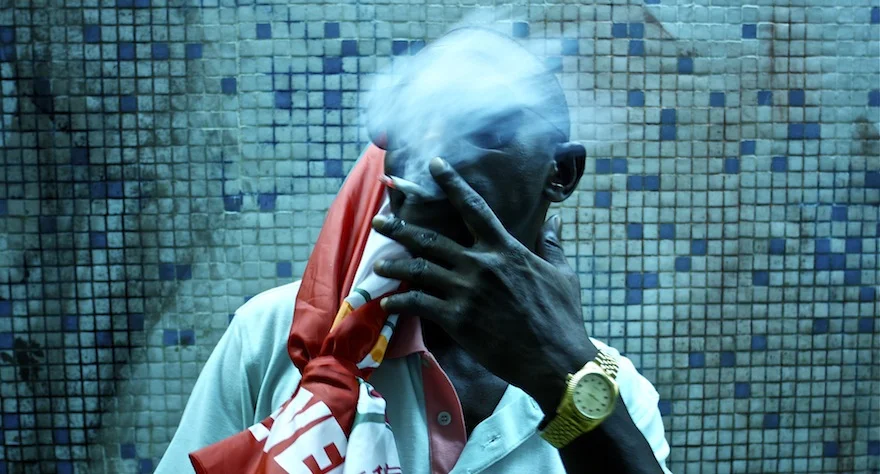
Photo Courtesy of Tribeca Film Festival
Independent cinema allows us to be presented with characters who are typically underrepresented on the big screen. With “Stranded in Canton”, writer/director Mans Mansson gives us an interesting character study in Lebrun (Isibango Iko Lebrun), a Congolese farmer whose dreams for a better life both propel him forward and blind him simultaneously.
Lebrun is a wanna be entrepreneur who believes every excuse that comes out of his mouth and hopes you will too. In fact, he’s counting on it. His most recent endeavor finds him stranded in China after ordering a large amount of t-shirts for the election back home in the Democratic Republic of Congo. Unfortunately, he receives them after the election has passed and with boxes full of shirts that say vote for a president who can not run for office again, Lebrun has to figure out a plan B.
Lebrun doesn’t have much time to figure things out. Wassim (Wassim Hasbini), an overweight storage space owner who rides a moped to travel a few yards away, wants the money he’s owed for holding the t-shirts in storage. The Chinese want the money for making the t-shirts, and Lebrun makes calls to an elder back home who he’s seemed to promise a watch and an engine at least. As the movie continues it becomes more apparent that Lebrun doesn’t really have a plan, and may not have had one when he ordered his shirts, outside of selling them for a profit.
Sylvie (Sylvie N’Dya) is a fellow African living in China, and the one person who takes the time to listen to Lebrun and give him advice. She has her own shop and the wisdom that comes along with it. Yet when she tells Lebrun the truth about his shirts (possible failure), he continues to push forward off of his half-baked idea to make money with an eerie sense of calm and a desire to prove his worth as a businessman.
Mansson has complete control of the direction of the film. He uses pacing and extreme close ups as tools, forcing us to focus on what he wants. In a film in which so many different languages are spoken, he understands that sometimes the eyes convey what the lips are saying. While the film is subtitled, its visuals speak volumes. He let’s moments within the film play out to the point of exhaustion in a way that feels more like a documentary than a fictional narrative.
While we’re left with a real look at what an unskilled businessman looks like, the film spends too much time in the same position. There are not many new developments in plot, nor a major conflict. Everyone wants their money, but there’s not a real threat to Lebrun to give it to them. While the film does raise questions of politics and what success is, it struggles to bring it all together. Like Lebrun, “Stranded in Canton” is a great idea running off fumes rather than cinematic fuel.
Rating: C
Now playing: https://tribecafilm.com/filmguide/stranded-in-canton-2015
Tribeca Film Festival '15: "Catwalk" Review

Photo Courtesy Tribeca Film Festival
Much like it’s title, “Catwalk”, is an exploration of the fine line between parenting and allowing your child to find his or herself amidst peer pressure. Ella (Freddie Mosten-Jacob) is nine, an impressionable age, and her classmates are interested in labels, selfies, and fashion blogs. Ella desires to break out of the world of glittery shirts and other “ugly” clothes that she currently wears in order to fit in.
Most of the film is from the perspective of Ella. Freddie’s performance is natural and personal, allowing the audience to remember when they were at her crossroads or dealing with their own child's journey to adolescents. Writer/director Ninja Thyberg presents a well rounded, universal story that makes you think from both sides of the coin as to how to build a child’s confidence. With a pulsing score, and great performances, "Catwalk" is a short to see!
Now playing: https://tribecafilm.com/filmguide/catwalk-2015